Transcriberâs Note:
The cover image was created by the transcriber and is placed in the public domain.

The impression of this Edition consists of 550 Copies, of which this is No. 313.
THE POWER OF SYMPATHY:
or, the Triumph of Nature. Founded in Truth.

Editorâs Introduction.
AN errant perusal of half the pages of this little volume once caused me to determine to eschew literary criticism in the preface I was asked to write, and to speak of the book solely according to its historical and hence its intrinsic value.
Continual reading here and there, and, at length, a careful examination of the work as a whole have convinced me that several merits may be attributed to the book which range themselves separately in my mind and which are distinct and wholly unique characteristics. They seem to me to be as follows: the bare antiquarian valueâas a relic, rare, and old; the historical-literary value, as an expression of the times in which it was written; and its purely artistic worth, as a specimen of English novel writing.
xThe book was published, as the title page shows, early in 1789, and the self-acknowledged author was Mrs. Perez Morton whose maiden name was Sarah Wentworth Apthorp. Miss Apthorp was born in Braintree in 1759, and had, before her marriage in 1777 with Mr. Morton, gained something more than a local reputation as a clever maker of rhymes, having contributed many poems to the early New England Magazineâthe first periodical published in America. These, with additional verses and short didactic essays, were together brought out in 1823, under the title of âMy Mind and Its Thoughts.â The edition was small, and sold entirely by subscription. Miss Apthorp wrote over the pseudonym of âPhilenia.â Her longer poems, epics, are âOuabi, or The Virtue of Nature: an Indian Tale in Four Cantos,â and âBeacon Hill,â in which is told the story of the American Revolution. This last is said to have moved Robert Treat Paine to designate her as the âAmerican Sappho.â
In 1788, while Mr. and Mrs. Morton were occupying the historical Taylor mansion in Dorchester, a painful domestic tragedy occurred, which, taken in connection with similar contingencies that were happening in the society in which they moved, xidoubtless gave âPhileniaâ the impetus and raison dâêtre for the âPower of Sympathy,â published anonymously the following year.
Although evidently written with the purest motive, the good people of that day were not anxious to receive the lesson, probably because many of them figured as examples. The edition was bought up and destroyed,âas Drake remarks in his âHistory of Roxburyâ, âso effectually suppressed that no copy is now known to exist.â With the exception of the book now before me, I believe this to be true.
The condition of affairs in America, immediately following the Revolution, was not what many suppose. The people were not completely united in raving against John Bull and his institutions. It is true the lower classes and those of the middle class, who had been excited into believing that delusive and, for them, hypocritical motto; âNo taxation without representationâ, or who had gained or lost all through the late fratricidal struggle, were thriving wonderfully on âspread eagleâ patriotism stimulated by âYankee Doodleâ and âHail Columbiaââwhich, today, unfortunately bandage the eyes of Americaâs native civilizationâand entertained xiia cordial hatred of England and all things English. Later they were to sympathize with Mirabeau, with Robespierre and others, and cry death to that French King who had so lately saved them from the dismal caprices of George III and his ignorant and haughty ministers. Politically, they gloried in the name of Democrat.
Nevertheless, there existed an aristocracy in America; an aristocracy that had refrained from becoming Tory solely because personal interest demanded that it should become rebel. Its members were English in taste and manner, in their hearts they were Royalists. They called themselves Federalists. To this category belonged the Hancocks, John Adams, Hamilton, perhaps even Washington himself; and here we find the Apthorps and the Mortons. They had a fondness for court and ceremonyâthought and culture were still colonial; they talked of the American gentleman, while they dreamed of the English nobleman; for all that, there was a rapidly growing strain of independence, of confidence in self. All of which qualities have today evolved the best type of the American lady and gentleman.
Early in the second half of the eighteenth century, xiiia literary revolution was in progress in England: sentimentalism, which so long had been mistaken for sentiment, was given its proper place; knightly romance was sneered at and shelved, the hale hearty laughter of Fielding disturbed the spinsters and gossip mongers sipping their tea in the corners; Laurence Sterne, that sentimentalist in realism, condemned in caricature what the foolish thought he defended in truth; and Sheridan, the hater of sham and conventionality, satirized the social deformity of the times in drama, drawing scenes and characters from real life as found in the famous Pump-room at Bath.
To the aristocracyâhence to the reading classâof the young American republic this atmospheric change, toned and tempered and with an influence less radical, was transmitted. It cried out aloud against the sham of character, while it maintained the poetry of diction; it was realistic in subject, romantic in method; it openly lauded the âSentimental Journey,â while it secretly emulated âTom Jonesâ; its aim was to portray life through truth rather than artâbut the latter often unconsciously asserted itself; its grave defect was the attempt to commingle art and moral philosophy. In this literary atmosphere the âPower of Sympathyâ was xivwritten, in character and color colonial, indigenous, to English soil, and true to humanity at all time.
A little more than a century ago the style of telling a story through the medium of epistles was revived; it was thus Richardson wrote âClarissa Harloweâ and âPamela,â and Fielding his âJoseph Andrews.â In this form Mrs. Morton sought to tell her story.
Both Richardson and Fielding are famous for the amount of detail with which they fetter some otherwise natural descriptions leaving no opportunity for the imagination. Tedious detail we do not find in the pages of the âPower of Sympathyââall here is not written; the phraseology is well balanced, paragraphing is handled with consummate skill, the chapters are for the most part short, the color suggestive; and if detail be employed at all, it is only when the author waxes mildly pedanticârobbed of which quality, she would not be true to the humanity of her time.
What then can I say of her diction? Simply that it is of the best. To say so, is seemingly audacious. The modern grammarian may dispute it. Yet viewed against the background of her period and station, taking her style all in all as a medium of xvvivid, natural expression, where the economy of attention is second only to striking portrayal, where elegance, simplicity, directness are ever present but never obtrusive, there is reason enough for our remark. An examination of the suicideâs letters alone would excuse us from all prejudice in the matter.
The âPower of Sympathy,â in facsimile form, is surely a valuable acquisition to the antiquarian; to the student of culture, the book is the realistic expression of life of a people and an era that are by no means lacking in interest and importance; and to the littérateur, it is not an unworthy example of more than ordinary literary art.

PREFACE
NOVELS have ever met with a ready reception into the Libraries of the Ladies, but this species of writing hath not been received with universal approbation: Futility is not the only charge brought against it.âAny attempt, therefore, to make these studies more advantageous, has at least a claim upon the patience and candour of the publick.
IN NOVELS which expose no particular VICE, and which recommend no particular Virtue, the fair Reader, though she may find amusement, must finish them without being impressed with any particular idea: So that if they are harmless, they are not beneficial.
xviiiOF the Letters before US, it is necessary to remark, that this errour on each side has been avoidedâthe dangerous consequences of SEDUCTION are exposed, and the Advantages of FEMALE EDUCATION set forth and recommended.

LETTER I.
Harrington to Worthy.
YOU may now felicitate meâI have had an interview with the charmer I informed you of. Alas! where were the thoughtfulness and circumspection of my friend Worthy? I did not possess them, and am graceless enough to acknowledge it. He would have considered the consequences, before he had resolved upon the project. But you call me, with some degree of truth, a strange medley of contradictionâthe moralist and the amorosoâthe sentiment and the sensibilityâare interwoven in my constitution, 2so that nature and grace are at continual fisticuffsâTo the point:â
I PURSUED my determination of discovering the dwelling of my charmer, and have at length obtained access. You may behold my Rosebud, but should you presume to place it in your bosom, expect the force of my wrath to be the infallible consequence.
I DECLARED the sincerity of my passionâthe warmth of my affectionâto the beautiful HarriotâBelieve me, Jack, she did not seem inattentive. Her mien is elegantâher disposition inclining to the melancholy, and yet her temper is affable, and her manners easy. And as I poured my tender vows into the heart of my beloved, a crimson drop stole across her cheek, and thus I construe it in my own favor, as the sweet messenger of hope:â
3âDO not wholly despair, my new friend; excuse the declaration of a poor artless femaleâyou see I am not perfectly contented in my situationâ(Observe, Jack, I have not the vanity to think this distress altogether upon my account)âTime may therefore disclose wonders, and perhaps more to your advantage than you imagineâdo not despair then.â
SUCH vulgar, uncongenial souls, as that which animates thy clay, cold carcase, would have thought this crimson drop nothing more than an ordinary blush. Be far removed from my heart such sordid, earth-born ideas: But come thou spirit of celestial language, that canst communicate by one affectionate lookâone tender glanceâmore divine information to the soul of sensibility than can be contained in myriads of volumes!
HAIL gentle God of Love! While thou 4rivetest the chains of thy slaves, how dost thou make them leap for joy, as with delicious triumph. Happy enthusiasm! that while it carries us away into captivity, can make the heart to dance as in the bosom of content. Hail gentle God of Love! Encircled as thou art with darts, torments, and ensigns of cruelty, still do we hail thee. How dost thou smooth over the roughness and asperities of present pain, with what thou seest in reversion! Thou banishest the Stygian glooms of disquiet and suspense, by the hope of approaching ElysiumâBlessed infatuation!
I DESIRE you will not hesitate to pronounce an amen to my Hymn to Love, as an unequivocal evidence of your wish for my success.
LETTER II.
Worthy to Harrington.
âWISH you successââIn what? Who is this lady of whom you have been talking at such an inconsistent rate? But before you have leisure to reply to these inquiries you may have forgotten there is such a person, as she whom you call HarriotâI have seen many juvenile heroes, during my pilgrimage of two and twenty years, easily inflamed with new objectsâagitated and hurried away by the impetuosity of new desiresâand at the same time they were by no means famous for solidity of judgement, or remarkable for the permanency of their resolutions. There is such a tumultâsuch an ebullition of the 6brain in their paroxisms of passion, that this new object is very superficially examined. These, added to partiality and prepossession, never fail to blind the eyes of the lover. Instead of weighing matters maturely, and stating the evidence fairly on both sides, in order to form a right judgement, every circumstance not perfectly coincident with your particular bias, comes not under consideration, because it does not flatter your vanity. âPonder and pauseâ just here, and tell me seriously whether you are in love, and whether you have sufficiently examined your heart to give a just answer.
DO you mean to insinuate that your declaration of love hath attracted the affection of the pensive Harriot? If this should be the case, I wish you would tell me what you design to do with her.
LETTER III.
Harrington to Worthy.
I CANNOT but laugh at your dull sermons, and yet I find something in them altogether displeasing; for this reason I permit you to prate on. âWeigh matters maturely!â Ha! ha! why art thou not arrayed in canonicals? âWhat do I design to do with her?â Upon my word, my sententious friend, you ask mighty odd questions. I see you aim a stroke at the foundation upon which the pillar of my new system is rearedâand will you strive to batter down that pillar? If you entertain any idea of executing such talk, I foresee it will never succeed, and advise 8you timely to desist. What! dost thou think to topple down my scheme of pleasure? Thou mightest as well topple down the pike of Teneriffe.
I SUPPOSE you will be ready to ask, why, if I love Harriot, I do not marry herâYour monitorial correspondence has so accustomed me to reproof, that I easily anticipate this piece of impertinenceâBut who shall I marry? That is the question. Harriot has no fatherâno motherâneither is there aunt, cousin, or kindred of any degree who claim any kind of relationship to her. She is companion to Mrs. Francis, and, as I understand, totally dependent on that lady. Now, Mr. Worthy, I must take the liberty to acquaint you, that I am not so much of a republican as formally to wed any person of this class. How laughable would my conduct appear, were I to trace over the same ground marked out by thy immaculate 9footstepsâTo be heard openly acknowledged for my bosom companion, my daughter of the democratick empire of virtue!
TO suppose a smart, beautiful girl, would continue as companion to the best lady in Christendom, when she could raise herself to a more eligible situation, is to suppose a solecismâShe might as well be immured in a nunnery. Now, Jack, I will shew you my benevolent scheme; it is to take this beautiful sprig, and transplant it to a more favorable soil, where it shall flourish and blossom under my own auspices. In a word, I mean to remove this fine girl into an elegant apartment, of which she herself is to be the sole mistress. Is this not a proof of my humanity and goodness of heart? But I know the purport of your answerâSo pray thee keep thy comments to thyself, and be sparing of your compliments on this part of my conductâfor I do 10not love flattery. A month has elapsed since my arrival in town. What will the revolution of another moon bring forth?
LETTER IV.
I HAVE somehow bewitched a new lover, my dear Myraâa smart, clever fellow tooâand the youth expresses such fondness and passion that I begin to feel afraid even to pity himâfor love will certainly follow. I own to you I esteem him very much, but must I go any farther? He is extremely generousâpoliteâgayâand I believe if you were to see him, your partiality in his favor would exceed mine.
I NEVER saw my poor swain so seemingly 12disconcerted and abashed as he was a few days agoâhe appeared to have something very particular to communicate, but his tongue faulteredâought not one to help out a modest youth in such cases?
LETTER V.
Miss Myra Harrington to Mrs. Holmes.
ARE the rural pleasures of Belleview, my dear friend, so engaging as to debar us of the pleasure of your company forever? Do your dear groves, and your books, still employ your meditating mind? Serious sentimentalist as you are, let me ask, whether a Ball, a Concert or Serenade, would not afford you the satisfaction of a contemplative walk in your garden, listening to the love tales of the melodious inhabitants of the air?
RAILLERY apartâwhen shall I take upon 14myself the honour to wait upon you here?âI want to advise with you on certain points of female conduct, and about my new dressâI have heard you say, lessons to a volatile mind should be fresh and fresh applied, because it either pretends to despise them, or has a tendency to degeneracyâNow you must know I am actually degenerating for want of some of your Mentor-like lessons of instruction. I have scarcely any opinion of my own, these fashions, changing about so often, are enough to vitiate the best taste in the world.
I FORGOT to tell you my brother has been at home this month; but, from certain indubitable symptoms, I suspect the young man to be in love.
HEIGHHO! what is become of Worthy? The time of my liberty steals away, for you know I was to have three or four months of 15liberty before I gave myself up to his authority, and relinquished all my right and title to the name of
LETTER VI.
Harrington to Worthy.
ABASHEDâconfoundedâdefeatedâI waited upon my beloved with my head well furnished with ready made arguments, to prevail on her to acquiesce in my benevolent schemesâshe never appeared so amicableâgrace accompanied every word she uttered, and every action she performed. âThink, my love,â said I, in a tone something between sighing and tears, and took her hand in a very cordial manner,ââThink, my love, on your present, unhappy, menial situation, in the family of Mrs. Francis.â I enlarged on the violence of my passionâexpatiated most 17metaphysically on our future happiness; and concluded by largely answering objections. âShall we not,â continued I, âobey the dictates of nature, rather than confine ourselves to the forced, unnatural rules of ââ and ââ and shall the halcyon days of youth slip through our fingers unenjoyed?â
DO you think, Worthy, I said this to Harriot?âNot a syllable of it. It was impossibleâmy heart had the courage to dictate, but my rebellious tongue refused to utter a wordâit faulteredâstammeredâhesitated.
THERE is a language of the eyesâand we conversed in that language; and though I said not a word with my tongue, she seemed perfectly to understand my meaningâfor she lookedâ(and I comprehended it as well as if she had said)âIs the crime of dependence to be expiated by the sacrifice of virtue? 18And because I am a poor, unfortunate girl, must the little I have be taken from me? âNo, my love,â answered I, passionately, âit shall not be.â
OF all those undescribable things which influences the mind, and which are most apt to persuadeânone is so powerful an oratorâso feelingly eloquent as beautyâI bow to the all-conquering force of Harriotâs eloquenceâand what is the consequence? I am now determined to continue my addresses on a principle the most just, and the most honourable.
HOW amiable is that beauty which has its foundation in goodness! Reason cannot contemplate its power with indifferenceâWisdom cannot refrain from enthusiasmâand the sneering exertions of Wit cannot render it ridiculous. There is a dignity in conscious virtue that all my independence cannot bring 19me to despiseâand if it be beauty that subdues my heart, it is this that completes the triumphâIt is here my pompous parade, and all my flimsy subterfuges, appear to me in their proper light. In fine, I have weighed matters maturely, and the alternative isâHarriot must be mine, or I miserable without her.âI have so well weighed the matter that even this idea is a flash of joy to my heartâBut, my friend, after the lightning comes the thunderâmy father is mortally averse to my making any matrimonial engagement at so early a periodâthis is a bar to my way, but I must leap over it.
LETTER VII.
Mrs. Holmes to Miss Harrington.
ALTHOUGH my attachment to Belleview is not so romantick as your airy pen has described it, I think its quiet and amusements infinitely preferable to the bustle and parade with which you are surrounded.
THE improvements made here by my late husband (who inherited the virtues of his parents, who still protect me, and endeavour to console the anguish of his loss by the most tender affection) have rendered the charms of Belleview superior in my estimation to every gilded scene of the gay world.
IT is almost vanity to pretend to give you 21a description of the beauty of the prospectâthe grandeur of the river that rolls through the meadow in front of the house, or any eulogium of rural elegance, because these scenes are common to most places in the country. Nature is everywhere liberal in dispersing her beauties and her varietyâand I pity those who look round and declare they see neither.
A GREAT proportion of our happiness depends on our own choiceâit offers itself to our taste, but it is the heart that gives it relishâwhat at one time, for instance, we think to be humour, is at another disgustful or insipidâso, unless we carry our appetite with us to the treat, we shall vainly wish to make ourselves happy, âwere I in a desert,â says Sterne, âI would find wherewith in it to call forth my affectionsâIf I could do no better, I would fasten them on some sweet 22myrtle, or seek some melancholy cypress to connect myself toâI would court their shade and greet them kindly for their protectionâIf their leaves withered, I would teach myself to mourn, and when they rejoiced, I would rejoice along with them.â
I BELIEVE you could hardly find the way to the summer house, where we have enjoyed many happy hours together, and which you used to call âThe Temple of Apollo.â It is now more elegantly furnished than it formerly was, and is enriched with a considerable addition to the library and musick.
IN front of the avenue that leads to this place, is a figure of Content, pointing with one hand to the Temple, and with the other to an invitation, executed in such an antique style, that you would think it done either by the ancient inhabitants of the country, or by 23the hand of a Fairyâshe is very particular in the characters she invites, but those whom she invites she heartily welcomes.
THESE are the scenes to which I have chosen to retreat; contented with the suffrage of the virtuous and the good, and inattentive to the contemptuous sneer of the giddy and the futile, for even these have the vanity to look with pity on those who voluntarily remove from whatever agrees with their ideas of pleasure. He who has no conception of the beauties of the mind, will contemn a person aukward or illfavoured; and one whose store of enjoyment is drawn from affluence and abundance, will be astonished at the conduct of him who finds cause to rejoice, though surrounded with inconvenience and penury. Hence we judge of the happiness of 25others by the standard of our own conduct and prejudices.
FROM this misjudging race I retire, without a sigh to mingle in their amusements, nor yet disgusted at whatever is thought of sufficient consequence to engage their pursuits. I fly from the tumult of the townâfrom scenes of boisterous pleasures and riot, to those of quietness and peace, âwhere every breeze breathes health, and every sound is the echo of tranquillity.ââOn this subject I give my sentiments to you with freedom, from a conviction that I bear the world no spleen; at the same time with a degree of deference to the judgement of others, from a conviction that I may be a little prejudiced.
I HOPE to be with you soonâin the meantime continue to write.
LETTER VIII.
Worthy to Harrington.
I APPLAUD your change of sentiment. Harriot is a good girl, and your conduct is extremely praiseworthy and honourable. It is what her virtues incontestibly merit.âBut I advise you certainly to gain your fatherâs approbation before you proceed so far as to be unable to return. A contrary step might terminate in the utter ruin of you both.ââDirect to me at Belleviewâfor I intend to stop there in my return to Boston.
LETTER IX.
Harrington to Worthy.
I HAVE had a conversation with my father on the subject of early marriages, but to no purposeâI will not be certain whether he understood my drift, but all his arguments are applicable to my situation. One must be an adept to argue with him; and interested as he thinks himself in the result of the debate, he can not be prevailed upon to relinquish his settled opinion. I am too much chagrined to write to you even the heads of our conversation. I now stand upon my old ground.
LETTER X.
Worthy to Myra.
I AM very happy at present enjoying the sweets of Belleview with our excellent friend Mrs. Holmes. To dwell in this delightful retreat, and to be blest with the conversation of this amiable woman, cannot be called solitude. The charms of Nature are here beheld in the most luxuriant varietyâit is here, diversified with beautiful prospect, the late Mr. Holmes planned his garden; it is elegant, but simple. My time glides off my hands most happilyâI am sometimes indulging my solitary reflections in contemplating 29the sublimity of the scenes around meâand sometimes in conversation with Eliza and the old people.
THE old gentleman is a man of the most benevolent heart; he continues to preachâis assiduous in the duties of his profession, and is the love and admiration of his flock. He prescribes for the health of the body, as well as that of the soul, and settles all the little disputes of his parish. They are contented with his judgement, and he is at once their parson, their lawyer, and their physician.âI often read in the little building that was finished by his son. He was a man of an excellent taste, and I have paid my tribute to his memoryâIt is the same place that you used to admire, and perhaps I improve more of my time in it on that very account.
LETTER XI.
Mrs. Holmes to Myra.
I SIT down to give you, my dear Myra, some accounts of the visitants of today, and their conversation. We are not always distinguished by such company, but perhaps it is sometimes necessary; and as it is a relaxation from thought, it serves to give us more pleasure in returning to the conversation of people of ideas.
MRS. Bourn assumes a higher rank in life than she pretended to seven years ago.âShe then walked on footâshe now, by good fortune, rides in a chariot. Placed, however, in 31a situation with which her education does not altogether comport, she has nothing disagreeable but her over assiduity to pleaseâthis is sometimes disgusting, for one cannot feast heartily upon honey: It is an errour which a candid mind easily forgives. She sometimes appears solicitous to display her mental accomplishments, and desirous to improve those of her daughter; but it is merely apparent. Notwithstanding a temporary wish may arise toward the attainment of this point, a habitual vacancy nips it in the bud.
MISS Bourn is about the age of fourteenâgenteel, with a tolerable share of beauty, but not strikingâher dress was elegant, but might have been adjusted to more advantageânot altogether aukward in her manner, nor yet can she be called gracefulâshe has a peculiar air of drollery which takes her by fits, and for this reason, perhaps, does not 32avail herself of every opportunity of displaying the modesty of her sexâshe has seen much company, but instead of polishing her manners, it has only increased her assurance.
THUS much of the characters of our company. After some small chat which passed as we took a turn in the garden, we entered the Temple.
âWHAT books would you recommend to put into the hands of my daughter?â said Mrs. Bourn, as she walked into the libraryââit is a matter of some importance.â âIt is a matter of more importance,â answered Worthy, âthan is generally imagined, for unless a proper selection is made one would do better never to read at all:âNow, Madame, as much depends on the choice of books, care should be taken not to put those in the way of young persons, which might leave on their 33minds any disagreeable prejudices, or which has a tendency to corrupt their morals.âââAs obvious as your remark is,â added Mr. Holmes, âit is evidently over looked in the common course of education. We wisely exclude those persons from our conversation, whose characters are bad, whose manners are depraved, or whose morals are impure: but if they are excluded from an apprehension of contaminating our minds, how much more dangerous is the company of those books, where the strokes aimed at virtue are redoubled, and the poison of vice, by repeatedly reading the same thing, indelibly distains the young mind?â
âWE all agree,â rejoined Worthy, âthat it is as great a matter of virtue and prudence to be circumspect in the selection of our books, as in the choice of our company.âBut, Sir, the best things may be subverted to 34an ill use. Hence we may possibly trace the course of the ill tendency of many of the Novels extant.â
âMOST of the Novels,â returned my father, âwith which our female libraries are over run, are built on a foundation not always placed on strict morality, and in the pursuit of objects not always probable or praiseworthy.âNovels, not regulated on the chaste principles of true friendship, rational love, and connubial duty, appear to me totally unfit to form the minds of women, of friends, or of wives.â
âBUT, as most young people read,â says Mrs. Bournââwhat rule can be hit upon to make study always terminate to advantage?â
âIMPOSSIBLE,â cried Miss, âfor I read as much as anybody, and though it may afford 35amusement, while I am employed, I do not remember a single word, when I lay down the book.â
âTHIS confirms what I say of Novels,â cried Mr. Holmes, addressing Worthy in a jocular manner, âjust calculated to kill timeâto attract the attention of the reader for an hour, but leave not one idea on the mind.â
âI AM far from condemning every production in the gross,â replied Worthy; âgeneral satire against any particular class, or order of men, may be viewed in the same light as a satire against speciesâit is the same with booksâif there are corrupt or mortified members, it is hardly fair to destroy the whole body. Now I grant some Novels have a bad tendency, yet there are many which contain excellent sentimentsâlet these receive their deserved rewardâlet those be discountenanced; 36and if it is impossible âto smite them with an apoplexy, there is a moral certainty of their dying of a consumption.ââBut, as Mrs. Bourn observes, most young persons read, I will recommend to those who wish to mingle instruction with entertainment, method and regularity in reading. To dip into any book burthens the mind with unnecessary lumber, and may rather be called a disadvantage, than a benefitâThe record of memory is so scrawled and blotted with imperfect ideas, that not one legible character can be traced.
âWERE I to throw my thoughts on this subject,â said my good father-in-law, as he began to enter more and more warmly into the debateâdrawing his chair opposite Worthy, and raising his hand with a poetical enthusiasmââWere I to throw my thoughts on this subject into an Allegory, I would describe 37the human mind as an extensive plain, and knowledge as the river that should water it. If the course of the river be properly directed, the plain will be fertilized and cultivated to advantage; but if books, which are the sources that feed this river, rush into it from every quarter, it will overflow its banks, and the plain become inundated: When, therefore, knowledge flows on in its proper channel, this extensive and valuable field, the mind, instead of being covered with stagnant waters, is cultivated to the utmost advantage, and blooms luxuriantly into a general efflorescenceâfor a river properly restricted by high banks, is necessarily progressive.â
THE old gentleman brought down his hands with great solemnity, and we complimented him on his poetical exertion. âI cannot comprehend the meaning of this matter,â said the penetrative Miss Bourn. âI will explain 38it to you, my little dear,â said he, with good natureââIf you read with any design to improve your mind in virtue and every amiable accomplishment, you should be careful to read methodically, which will enable you to form an estimate of the various topicks discussed in company, and to bear a part in all those conversations which belong to your sexâyou see, therefore, how necessary general knowledge isâwhat would you think of a woman advanced in life, who has no other store of knowledge than what she has obtained from experience?â âI think she would have a sorry time of it,â answered Miss.
âTO prevent it in yourself,â said Mrs. Bourn to her daughter, âbe assiduous to lay in a good stock of this knowledge, while your mind is yet free from prejudice and care.â
âHOW shall I go to work, Madam?â enquired the delicate daughter.
39MRS. Bourn turned toward Mr. Holmes, which was hint enough for the good old man to proceed.
âTHERE is a medium to be observed,â continued he, âin a ladyâs reading; she is not to receive everything she finds, even in the best books, as invariable lessons of conduct; in books written in an easy, flowing style, which excel in description and the luxuriance of fancy, the imagination is apt to get heatedâshe ought, therefore, to discern with an eye of judgement, between the superficial and penetratingâthe elegant and the tawdryâwhat may be merely amusing, and what may be useful. General reading will not teach her a true knowledge of the world.
âIN books she finds recorded the faithfulness of friendshipâthe constancy of true love, and even that honesty is the best policy. 40If virtue is represented carrying its reward with it, she too easily persuades herself that mankind have adopted this plan: Thus she finds, when, perhaps, it is too late, that she has entertained wrong notions of human nature; that her friends are deceitfulâher lovers falseâand that men consult interest oftener than honesty.
âA YOUNG lady who has imbibed her ideas of the world from desultory reading and placed confidence in the virtue of others, will bring back disappointment, when she expected gratitude. Unsuspicious of deceit, she is easily deceivedâfrom the purity of her own thoughts, she trusts the faith of mankind, until experience convinces her of her errourâshe falls a sacrifice to her credulity, and her only consolation is the simplicity and goodness of her heart.
41âTHE story of Miss Whitman[1] is an emphatical illustration of the truth of these observations. An inflated fancy not restricted by judgement, leads too often to disappointment and repentance. Such will be the fate of those who become (to use her own words)
1. THIS young lady was of a reputable family in Connecticut. In her youth she was admired for beauty and good sense. She was a great reader of novels and romances, and having imbibed her ideas of THE CHARACTERS OF MEN, from those fallacious sources, became vain and coquettish, and rejected several offers of marriage, in expectation of receiving one more agreeable to her fanciful idea. Disappointed in her FAIRY hope, and finding her train of admirers less solicitous for the honour of her hand, in proportion as the roses of youth decayed, she was the more easily persuaded to relinquish that STABILITY which is the honour and happiness of the sex. The consequences of her amour becoming visible, she acquainted her lover of her situation, and a HUSBAND was proposed for her, who was to receive a considerable sum for preserving the reputation of the lady; but having received security for payment, he immediately withdrew. She then left her friends, and travelled in the stage as far as Watertown, where she hired a young man to conduct her in a chaise to Salem. Here she wandered alone and friendless, and at length repaired to the Bell-Tavern, in Danvers, where she was delivered of a lifeless child, and in about a fortnight after (in July, 1788) died of a puerperal fever, age about 35 years.
Before her death she amused herself with reading, writing and needlework, and though in a state of anxiety, preserved a cheerfulness, not so much the effect of insensibility, as of patience and fortitude. She was sensible of her approaching fate, as appears from the following letter, which was written in characters.
âMUST I die alone? Shall I never see you more? I know that you will come, but you will come too late: This is I fear, my last ability. Tears fall so, I know not how to write. Why did you leave me in so much distress? But I will not reproach you: All that was dear I left for you; but do not regret it.âMay God forgive in both what was amiss: When I go from hence, I will leave you some way to find me; if I die, will you come and drop a tear over my grave?â
In the following Poem, she, like the dying Swan, sings her own Elegy, and it is here added, as a sorrowful instance, how often the best, and most pleasing talents, not accompanied by virtue and prudence, operate the destruction of their possessor.
The description of her unfortunate passion, will remind the critical reader of the famous ode of Sappho. In genius and in misfortune, these poetical ladies were similar.
42âWITH a good heart she possessed a poetical imagination, and an unbounded thirst for novelty; but these airy talents, not counterpoised with judgement, or perhaps serious reflection, 43instead of adding to her happiness, were the cause of her ruin.â
44âI CONCLUDE from your reasoning,â said I, âand it is besides, my own opinion, that many fine girls have been ruined by reading Novels.â
45âAND I believe,â added Mrs. Bourn, âwe may trace from hence the causes of spleen in many persons advanced in life.â
âYOU mean old maids, Madam,â cries the sagacious Miss, âlike my aunt Deborahâshe calls all men deceitful, and most women, with her, are no better than they should be.â
âWELL said!â exclaimed Worthy, âthe recollection of chagrin and former disappointment, sours oneâs temper and mortifies the heartâdisappointment will be more or less 46severe in proportion as we elevate our expectations; for the most sanguine tempers are the soonest discouraged; as the highest building is in the most danger of falling.â
âIT appears from what I have said,â resumed Mr. Holmes, âthat those books which teach us a knowledge of the world are useful to form the minds of females, and ought therefore to be studied.â
I MENTIONED Rochefoucaultâs maxims.â
âDO they not degrade human nature?â enquired my father.
âTHIS little book,â answered Worthy, âcontains much truthâand those short sketches traced by the hand of judgement, present to us the leading features of mankind.â âBut,â 47replied my father, âthat interest should assume all shapes, is a doctrine, which, in my mind, represents a caricature rather than a living picture.â âIt is the duty of a painter to produce a likeness,â said Worthy,ââAnd a skilful one,â cried my father, continuing the metaphor, âwill bring the amiable qualities of the heart to light; and throw those which disgrace humanity into the shade.â âI doubt,â rejoined Worthy, âwhether this flattery will answer the purpose you aim to accomplishâYou entertain a high opinion of the dignity of human nature, and are displeased at the author who advances anything derogatory to that dignity. Swift, in speaking of these maxims, in one of his best poems, affirms,
âAS I began this subject,â added I, âit shall be ended by one observationâAs these 48maxims give us an idea of the manners and characters of men, among whom a young person is soon to appear; and as it is necessary to her security and happiness that she be made acquainted with themâthey may be read to advantage.â
âTHERE is another medium,â said Mr. Holmes, assenting to my observation, âto be noticed in the study of a ladyâshe takes up a book, either for instruction or entertainmentâthe medium lies in knowing when to put it down. Constant application becomes labourâit sours the temperâgives an air of thoughtfulness, and frequently of absence. By immoderate reading we hoard up opinions and become insensibly attached to them; this miserly conduct sinks us to affectation, and disgustful pedantry; conversation only can remedy this dangerous evil, strengthen the judgement, 49and make reading really useful. They mutually depend upon, and assist each other.
âA KNOWLEDGE of HISTORY which exhibits to us in one view the rise, progress and decay of nationsâwhich points out the advancement of the mind in society, and the improvements in the arts which adorn human nature, comes with propriety under the notice of a lady. To observe the origin of civilizationâthe gradual progress of society, and the refinements of manners, policy, morality and religionâto observe the progress of mankind from simplicity to luxury, from luxury to effeminacy, and the gradual steps of the decline of empire, and the dissolution of states and kingdoms, must blend that happy union of instruction and entertainment, which never fails to win our attention to the pursuit of all subjects.
âPOETRY claims her due from the ladies. 50POETRY enlarges and strengthens the mind, refines the taste and improves the judgement. It has been asserted that women have no business with satireânow satire is but a branch of poetry. I acknowledge, however, much false wit is sent into the world, under this general title; but no critick with whom I am acquainted ever called satire false witâfor as long as vice and folly continue to predominate in the human heart, the satirist will be considered as a useful member of society. I believe Addison calls him an auxiliary to the pulpit. Suffer me to enlarge on this new idea. Satire is the correction of the vices and follies of the human heart; a woman may, therefore, read it to advantage. What I mean by enforcing this point, is, to impress the minds of females with a principle of self correction; for among all kinds of knowledge which arise from reading, the duty of self-knowledge is a very eminent 51one; and is at the same time, the most useful and important.
âOUR ordinary intercourse with the world, will present to us in a very clear point of view, the fallacious ideas we sometimes entertain of our own self-knowledge.âWe are blinded by pride and self love, and will not observe our own imperfections, which we blame with the greatest acrimony in other people, and seem to detest with the greatest abhorrence; so that, it often happens, while we are branding our neighbour for some foible, or vanity, we ourselves are equally guilty.
âRIDICULOUS as this conduct must appear in the eyes of all judicious people, it is too frequently practised to escape observation.
âI WILL drop this piece of morality, with a charge to the fair reader, that whenever she 52discovers satire, ridiculing or recriminating the follies or crimes of mankind, that she look into her own heart, and compare the strictures on the conduct of others with her own feelings.â
LETTER XII.
Mrs. Holmes to Myra.
MY good father-in-law being so strenuous in proving the eligibility of reading satire, had spurn out, what he called his new idea, to such a metaphysical nicety, that he unhappily diminished the number of his hearers; for Mrs. Bourn, to whom he directed his discourse, had taken down a book and was reading to herself, and Miss was diverting herself with the cuts in Gayâs Fables.
A CONSIDERABLE silence ensued, which Worthy first broke, by asking Mrs. Bourn what book she had in her hand. 54Everyoneâs attention was alarmed at this important enquiry. Mrs. Bourn, with little difficulty, found the title page, and began to read. âA Sentimental Journey through France and Italy, by Mr. Yorick.â
âI DO not like the title,â said Miss Bourn.
âWHY, my dear!â apostrophized the mother, âyou are mistakenâit is a very famous book.â
âWHY, my dear!â retorted the daughter, âIt is sentimentalâI abominate everything that is sentimentalâit is so unfashionable too.â
âI NEVER knew before,â said Mr. Holmes, âthat wit was subject to caprice of fashion.â
âWHY âSquire Billy,â returned Miss, âwho is just arrived from the centre of 55politeness and fashion, says the bettermost genii never read any sentimental booksâso you see sentiment is out of date.â
THE company rose to go out.â
âSENTIMENT out of date!â cries Worthy, repeating the words of Miss Bourn, and taking the book from her mother, as she walked towards the doorââSentiment out of dateâalas! poor Yorickâmay thy pages never be soiled by the fingers of prejudice.â He continued his address to them, as they went out, in the same Shandean toneââThese antisentimentalists would banish thee from the society of all books! Unto what a pitiful size are the race of readers dwindled! Surely these antis have more to do with thee, than the gods of the CanaanitesâIn character and understanding they are alikeâeyes have they, but they see notâears have they, but they hear not, neither is there any knowledge 56to be found in them.â âIt is hardly worth while to beat it into them,â said my father-in-law, âso let us follow the company.â
WE did soâthey walked toward the house, and Worthy and myself brought up the rear.
I COULD not but remark, as we went on, that Miss Bourn had spoken the sentiments of many of her sex;ââand whence,â said I to Worthy, âarises this detestation of books in some of us females, and why are they enemies to anything that may be called sentiment and conversation: I grant it often happens there is such rapidity of speeches that one may be at a loss to distinguish the speakers; but why is there such a calm silence, should an unfortunate sentiment inadvertentlyâââI will tell you,â interrupted he, âYou all read, and it is from the books which engage your attention, that you generally imbibe your ideas of the 57principal subjects discussed in companyânow, the books which employ your hours of study, happen to be Novels; and the subjects contained in these Novels are commonly confined to dress, balls, visiting, and the like edifying topicks; does it not follow, that these must be the subjects of your conversation? I will not dispute whether the Novel makes the woman, or the woman makes the Novel; or whether they are written to engage your attention, or flatter your vanity. I believe the results will shew they depend, in some measure, upon each other; and an uninformed woman, by reading them, only augments the number of her futile ideas. The female mind, notwithstanding, is competent to any talk, and the accomplishments of an elegant woman depend on a proper cultivation of her intelligent powers; a barrennessâa sterility of conversationâimmediately discovers where this cultivation is wanting.â
58âGIVE me leave,â answered I, âto espouse the cause of this class of females. Tell me candidly, Mr. Worthy, whether that insipid flattery, perhaps sacrificed at the expense of truth, does not misguide many of us into erroneous paths? You declare we are handsomeâand your conduct demonstrates you to be more solicitous for the possession of beautiful, than of mental charms. Hence is the deluded female persuaded of the force of her fascinating powers, and vainly imagines, one glance of her eye sufficient to reduce a million of hearts whenever she chooses: Her aims, therefore, are confined to the decoration of her person, and her views centre solely in finishing herself in those attractive, all-powerful graces, with which you declare yourselves to be enchanted. How then are they to be censured for neglecting to improve the mind, when your adulation diverts their attention to an external object?â
59âI JOIN with you,â replied Worthy, âin calling it insipid flatteryâand the vain cox-comb, the powdered beau, the insignificant petit maître, are those who make use of it. Will women of real merit, and sound sense, believe what is said by them to be their real sentiments?âNoâThere must be a congeniality in the minds of those who give and receive flatteryâHas not the vain coquette as much inclination to be thought a goddess, as the empty admirer to declare her so?
âFLATTERY is become a kind of epidemical distemper: many run into it, perhaps, without designing it, or only through civility. There are some women who expect itâwho dress to be admiredâand who deem it a mark of impoliteness and rudeness in men, who do not pay them the tribute of compliment and adulation. A man of sense may comply with their expectationâhe will still 60think them agreeable playthings, to divert him at an hour of relaxation; but I cannot suppose he will entertain any serious thoughts of a more permanent connection.
âMAY we not conclude these things to be productive of many evils that happen in societyâdo they not frighten all sentiment from conversationâintroduce affectationâprideâenvyâclandestine marriagesâelopementsâdivision of familiesâand ultimately terminate in the ruin of very many innocent, but inconsiderate females?â
By this time we had got into the house, and our company soon after departed, leaving us at full leisure to contemplate on the many wrong ideas entertained, and fallacious steps pursued by the generality of mankind, in the sentimental part of female education.
LETTER XIII.
Worthy to Myra.
A PEACEFUL, recluse life, is suited to my temperâthere is something in the soft breath of Natureâin the delicacy of smiling meadows and cultivated fieldsâin the sublimity of an aged woodâof broken ROCKSâof rivers pouring along their lucid waves, to which the heart always gives a ready receptionâthere is something within us congenial to these scenes; they impress the mind with ideas similar to what we feel in beholding one whom we tenderly esteem.
62I WAS making this observation to Mrs. Holmes, and she told me I was in loveââThese are the very scenes,â said she, âwhich your beloved Myra used to praise and admire, and for which you, by a secret sympathy, entertain the same predilection. The piece of embroidery which she worked at an early age, and which ornaments the Temple, I have seen you gaze upon several timesâyou seem to trace perfection in every part of it, because it was executed by the hand of Myra.â
I ACKNOWLEDGE I have often gazed upon it (as Mrs. Holmes terms it) but did not recollect it to be a piece of your work. I stole an opportunity to revisit it by myself and I instantly remembered itâI remembered when you finished it, and all the happy, inoffensive scenes of our childhood, returned fresh upon my heart.
IT is the work Myra, said I to myselfâDid 63not her fingers trace these beautiful expanding flowers?âDid she not give to this carnation its animated glow, and to this opening rose its languishing grace? Removed as I amâcontinued I in a certain interiour language that every son of nature possessesâRemoved as I am, from the amiable object of my tenderest affection, I have nothing to do but to admire this offspring of industry and artâIt shall yield more fragrance to my soul than all the bouquets in the universe.
I DID not care to pursue the thoughtâit touched a delicate stringâat first, however, I flattered myself I should gain some consolationâbut I lost in every reflection.
I CONSIDERED the work as coming from your hand, and was delighted the more with it. A piece of steel that has been rubbed with a loadstone, retains the power of attracting 64small bodies of iron: So the beauties of this embroidery, springing from your hands, continue to draw my attention, and fill the mind with ideas of the artist.
LETTER XIV.
Harrington to Worthy.
HOW incompetent is the force of words to express some peculiar sensations! Expression is feeble when emotions are exquisite.
I WISH you could be here to see with what ease and dignity everything comes from the hand of HarriotâI cannot give a description equivalent to the great idea I wish to conveyâYou will tell me I am in loveâWhat is love? I have been trying to investigate its natureâto strip it of its mere term, 66and consider it as it may be supported by principleâI might as well search for the philosopherâs stone.
EVERY one is ready to praise his mistressâshe is always described in her ânative simplicity,â as âan angelâ with a âplacid mein,â âmild, animated,â âaltogether captivating,â and at length the talk of description is given up as altogether âundescribable.â Are not all these in themselves bare, insignificant words? The world has so long been accustomed to hear the sound of them, that the idea is lost. But to the questionâWhat is love? Unless it is answered now, perhaps it never will be. Is it not an infinitude of graces that accompany everything said by Harriot? That adorn all she does? They must not be taken severallyâthey cannot be contemplated in the abstract.âIf you proceed to chymical analysis, their tenuous essence 67will evaporateâthey are in themselves nothing; but the aggregate is love.
WHEN an army composed of a great number of men, moves slowly on at a distance, nobody thinks of considering a single soldier.
LETTER XV.
Harrington to Worthy.
AM I to believe my eyesâmy ears-my heart!âand yet I cannot be deceived.âWe are generally most stupid and incredulous in what most materially concerns us. We find the greatest difficulty in persuading ourselves of the attainments of what we most ardently desireâShe loves!âI say to myself, âHarriot loves me,â and I reverence myself.
I THINK I may now take upon me some share of happinessâI may say I have not 69lived in vainâfor all my heart holds dear is mineâjoy and love encompass meâpeace and tranquillity are before me; the prospect is fair and promising as the gilded dawn of a summerâs dayâThere is none to supplant me in her affectionsâI dread no rival, for our tempers are similar, and our hearts beat in unison together.
LETTER XVI.
Harrington to Worthy.
LOVE softens and refines the mannersâpolishes the asperities of aukwardness, and fits us for the society of gentle beings. It goes further, it mends the heart, and makes us better menâit gives the fainthearted an extraordinary strength of soul, and renders them equal and frequently superior to danger and distress.
MY passions you know are quick, my prejudices sometimes obstinateâShe tells me these things are wrongâThis gentle reprimand is so tempered with love that I think 71she commands me. I however promise a reform, and am much pleased with my improvement. Harriot moulds my heart into what form she chooses.
A LITTLE party is proposed tomorrow evening and I shall attend Harriot. These elegant relaxations prevent the degeneracy of human nature, exhilarate the spirits, and wind up this machine of ours for another revolution of business.
LETTER XVII.
Harrington to Worthy.
OUR little party was overthrown by a strange piece of folley. A Miss Pââ was introduced, a young lady of beauty and elegant accomplishments. The whole company were beginning to be cheerfulâbusiness and care were disgusted at the sight of so many happy countenances, and had gone out from among us. Jollity and good humour bade us prepare for the danceâunhappily at this juncture a lady and a gentleman were engaged in a conversation concerning Miss Pââ, and one of them repeated the words âa mechanickâs daughterââit is supposed the 73word âmechanickâ was repeated scornfullyâShe heard itâthought herself insultedâand indignantly retiredâdisorder and confusion immediately took place, and the amusement was put an end to for the evening.
I WISH people would consider how little time they have to frollick hereâthat they would improve it to more advantage, and not dispute for any precedence or superiority but in good nature and sociabilityââa mechanickââand pray whence the distinction!
INEQUALITY among mankind is a foe to our happinessâit even affects our little parties of pleasureâSuch is the fate of the human race, one order of men lords it over another; but upon what grounds its right is founded I could never yet be satisfied.
FOR this reason, I like a democratickal better than any other kind of government; 74and were I a Lycurgus no distinction of rank should be found in my commonwealth.
IN my tour through the United States, I had an opportunity of examining and comparing the different manners and dispositions of the inhabitants of the several republicks. Those of the southern states, accustomed to a habit of domineering over their slaves, are haughtier, more tenacious of honour, and indeed possess more of an aristocratick temper than their sisters of the confederacy. As we travel to the northward, the nature of the constitution seems to operate on the minds of the peopleâslavery is abolishedâall men are declared free and equal, and their tempers are open, generous and communicative. It is the same in all those countries where the people enjoy independence and equal liberty. Why then should those distinctions arise which are inimical to domestick quietude? Or why 75should the noisy voice of those who seek distinction, so loudly reecho in the ears of peace and jollity, as to deafen the sound of the musick? For while we are disputing who shall lead off the dance, behold! the instrument gets out of tuneâa string snapsâand where is our chance for dancing?
LETTER XVIII.
Harrington to Worthy.
MY beloved has left me for a whileâshe has attended Mrs. Francis in a journey to Rhodeislandâand here am Iâanxiousâsolitaryâalone!â
NO thoughts, but thoughts of Harriot, are permitted to agitate me. She is in my view all the day long, and when I retire to rest my imagination is still possessed with ideas of Harriot.
LETTER XIX.
Harrington to Harriot.
IF a wish, arising from the most tender affection, could transport me to the object of my love, I persuade myself that you would not be troubled with reading this letter.
YOU must expect nothing like wit or humour, or even common sense, from me; wit and humour are flown with you, and your return only can restore them. I am sometimes willing to persuade myself that this is the caseâI think I hear the well known voice, I look around me with the ecstasy of Orpheus, but that look breaks the charm, I find myself 78alone, and my Eurydice vanished to the shades.
I HOPE you will not permit yourself to grow envious of the beauties of Rhodeisland. Of the force of their charms I am experimentally acquainted. Wherever fortune has thrown me, it has been my happiness to imagine myself in love with some divine creature or other; and after all it is but truth to declare that the passion was seated more in fancy than the heart; and it is justice to acknowledge to you that I am now more provident of my passion, and never suffer the excursion of fancy, except when I am so liberal as to admit the united beauty of the Rhodeisland ladies in competition with yours.
WHERE there are handsome women there will necessarily be fine gentlemen, and should they be smitten with your external graces, I cannot but lament their deplorable situation, 79when they discover how egregiously they have been cheated. What must be his disappointment, who thought himself fascinated by beauty, when he finds he has unknowingly been charmed by reason and virtue!
BUT this you will say contains a sentiment of jealously, and is but a transcript of my apprehensions and gloomy anxieties: When will your preference, like the return of the sun in the spring, which dispels glooms, and reanimates the face of nature, quiet these apprehensions? If it be not in a short time, I shall proceed on a journey to find you out; until then I commit you to the care of your guardian angel.
LETTER XX.
Harrington to Harriot.
LAST night I went on a visit to your house: It was an adventure that would have done honour to the Knight of La Mancha. The moon ascended a clear, serene sky, the air was still, the bells sounded the solemn hour of midnightâI sighedâand the reason of it I need not tell you. This was, indeed, a pilgrimage; and no Musselman ever travelled barefooted to Mecca with more sincere devotion.
YOUR absence would cause an insufferable ennui in your friends, were it not for the art 81we have in making it turn to our amusement. Instead of wishing you were of our party, you are the goddess in whose honour we performed innumerable Heathenish rites. Libations of wine are poured out, but not a guest presumes to taste it, until they implore the name of Harriot; we hail the new divinity in songs, and strew around the flowers of poetry. You need not, however, take to yourself any extraordinary addition of vanity on the occasion as your absence will not cause any repining:
BUT to give you my opinion on this important matter, I must descend to plain truth, and acknowledge I had rather adore you a present mortal, than an absent divinity; and therefore wish for your return with more religious ardour than a devout disciple of the false prophet for the company of the Houri.
82THANKS to the power of imagination for our fanciful interview. Methought I somewhere unexpectedly met youâbut I was soon undeceived of my imaginary happiness, and I awoke, repeating these verses:â
LETTER XXI.
Harriot to Myra.
WE arrived here in safety, but our journey is not without incidentâan incident which exhibits a melancholy picture of the wickedness and depravity of the human heart.
WHEN we came to the house of Mrs. Martin, who I suppose you know is cousin to Mrs. Francis, we were not a little astonished at the evident traces of distress in her countenance; all her actions were accompanied with an air of solemnity, and her former gaiety of heart was exchanged for sad, serious 84thoughtfulness: She, however, put on a face of vivacity upon our being introduced, but her cheerfulness was foreign to the feelings of her heart.
MR. Martin was equally agitated: he endeavoured to dispossess himself of an uncommon weight of remorse, but in vainâall his dissimulation could not conceal his emotion, nor his art abate the continual upbraidings of conscious guilt.
MRS. Francis was anxious to enquire the cause of this extraordinary change, but wisely forebore adding to the distress of her friend, by desiring her to explain it, in a manner too precipitate. She was in a short time made acquainted with the particulars of the storyâwhich is not more melancholy than uncommon.
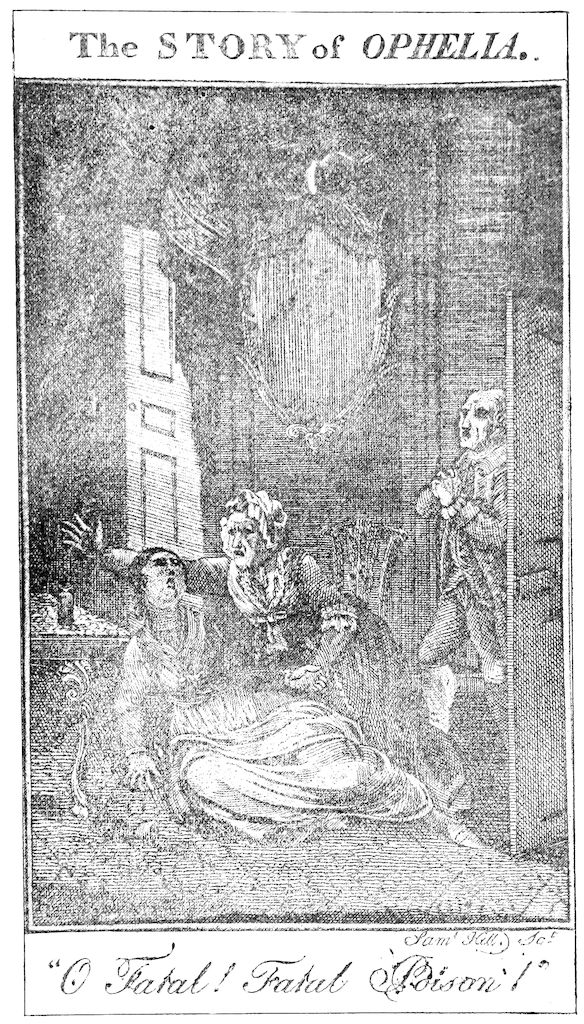
SOMETIME after the marriage of Martin, 85the beautiful Ophelia, sister to Mrs. Martin, returned from a European visit to her friends in Rhodeisland. Upon her arrival, she received a polite offer from her brother-in-law of an elegant apartment of his house in town, which was cheerfully acceptedâFatal acceptation! He had conceived a passion for Ophelia and was plotting to gratify it. By a series of the most artful attentions, suggested by a diabolical appetite, he insinuated himself into her affectionâhe prevailed upon the heart of the unsuspicious Ophelia, and triumphed over her innocence and virtue.
THIS incestuous connection has secretly subsisted until the present timeâit was interrupted by a symptom which rendered it necessary for Ophelia to retire into the country, where she was delivered of a child, at once the son and nephew of Martin.
86THIS event was a severe mortification to the proud spirit of Shepherd, the father of Ophelia. His resentment to his daughter was implacable, and his revenge of the injury from Martin not to be satiated. The blaze of family dispute raged with unquenchable furyâand poor Ophelia received other punishment from the hand of a vindictive father than base recrimination.
THE affection of Martin now became changed to the vilest hatred.
THUS doomed to suffer the blackest ingratitude from her seducer on the one hand, and to experience the severity of paternal vengeance on the otherâand before her the gloomy prospect of a blasted reputationâwhat must be the situation of the hapless Ophelia! Hope, the last resort of the wretched, was forever shut out. There was 87no one whom she durst implore by the tender name of father, and he, who had seduced her from her duty and her virtue, was the first to brand her with the disgraceful epithets of undutiful and unchaste.
PERHAPS it was only at this time, that she became fully sensible of her danger; the flattery and dissimulation of Martin might have banished the idea of detection, and glossed over that of criminality; but now she awoke from her dream of insensibility, she was like one who had been deluded by an ignis fatuus to the brink of a precipice, and there abandoned to his reflection to contemplate the horrours of the sea beneath him, into which he was about to plunge.
WHETHER from the promises of Martin, or the flattery of her own fancy, is unknown, but it is said she expected to become his wife, 88and made use of many expedients to obtain a divorcement of Martin from her sister: But this is the breath of rumour: Allowing it to be truth, it appears to be the last attempt of despair; for such unnatural exertions, with the compunction attending them, represent a gloomy picture of the struggle between sisterly affection and declining honour. They however proved inavailable, and her efforts to that end, may with propriety be deemed a wretched subterfuge.
IN the mean while the rage of Shepherd was augmenting. Time, instead of allaying, kindled the flame of revenge in the breast of the old man. A sense of the wounded honour of his family, became every day more exquisite; he resolved to call a meeting of the parties, in which the whole mystery should be developedâthat Ophelia should confront her 89seducer, and a thorough enquiry and explication be brought about.
OPHELIA exercised all her powers to prevent it; she intreated her father to consent to her desire, but her tears and entreaties were vain. To this earnest desire of his daughter, Shepherd opposed the honour of his family. She replied that a procedure would publish its disgrace and be subversive of his intention: That she hoped to live retired from the world, and it was in his power to accept her happy repentance: In extenuating, she wished not to vindicate her errours, but declared herself to be penetrated with a melancholy sense of her misconduct, and hoped her penitence might expiate her guilt: She now beheld the sin in the most glaring colours, the dangers to which she had been exposed, and acknowledged the effects of her temerity had impressed her mind with sincere contrition: âAll 90persons,â continued she, âare not blest with the like happiness of resisting temptation:â she intreated her father, therefore, to believe her misfortunes proceeded from credulity and not from an abandoned principleâthat they arose more from situation than a depraved heart: In asking to be restored to the favour and protection of a parent, she protested she was not influenced by any other motive, than a wish to demonstrate the sincerity of her repentance, and to establish the peace and harmony of the family.
OPHELIA now became melancholy, and her intentions visibly bent on the manner of her death. As the time drew nigh, her sensibility became more and more exquisite: What was before distress, she now averred to be horrour: Her conduct bordered on insanity.
91THE day was appointed to bring to a settlement this unhappy businessâthe time of hearing arrivedâthe parties metâthe presence of Ophelia was necessaryâshe was missingâthe unfortunate Ophelia died by her own hand.
MRS. Shepherd entered the apartment of her daughterâshe beheld her pale and tremblingâshe saw the vial, and the cup with the remains of the poisonâshe embraced her lostââMy Ophelia! my daughter! returnâreturn to life.â
AT this crisis entered the fatherâhe was muteâhe beheld his daughter struggling with the pangs of dissolutionâhe was dumb with grief and astonishment.
THE dying Ophelia was conscious of the distress of her parents, and of her own situationâshe clasped her motherâs hand, and 92raising her eye to heaven, was only heard to articulate âLET MY CRIME BE FORGOTTEN WITH MY NAME.âO FATAL! FATAL POISON!â
ADIEU! my dear Myraâthis unhappy affair has worked me to a fit of melancholy. I can write no more. I will give you a few particulars in my next. It is impossible to behold the effect of this horrid catastrophe and not be impressed with feelings of sympathetick sorrow:
LETTER XXII.
Harriot to Myra.
HOW frail is the heart! How dim is human foresight! We behold the gilded bait of temptation, and know not until taught by experience, that the admission of one errour is but the introduction of calamity. One mistake imperceptibly leads to anotherâbut the consequences of the whole bursting suddenly on the devoted head of an unfortunate wanderer, becomes intolerable.
HOW acute must be that torture, which seeks an asylum in suicide! O SEDUCTION! how many and how miserable are 94the victims of thy unrelenting vengeance. Some crimes, indeed, cease to afflict when they cease to exist, but SEDUCTION opens the door to a dismal train of innumerable miseries.
YOU can better imagine the situation of the friends of the unfortunate Ophelia than I can describe it.
THE writings she left were expressive of contrition for her past transaction, and an awful sense of the deed she was about to execute. Her miserable life was insupportable, there was no oblation but in deathâshe welcomed death, therefore, as the pleasing harbinger of relief to the unfortunate. She remembered her once loved seducer with pity, and bequeathed him her forgiveness.âTo say she felt no agitation was not just, but that she experienced a calmness unknown to 95a criminal was certain. She hoped the rashness of her conduct would not be construed to her disadvantageâfor she died in charity with the world. She felt like a poor wanderer about to return to a tender parent, and flattered herself with the hopes of a welcome, though unbidden return. She owned the way was dark and intricate, but lamented she had no friend to enlighten her understanding, or unravel the mysteries of futurity. She knew there was a God who will reward and punish: She acknowledged she had offended Him, and confessed her repentance. She expatiated on the miserable life she had suffered: not that she feared detection, that was impossible: but that she had been doing an injury to a sister who was all kindness to her: she prayed her sisterâs forgivenessâeven as she herself forgave her seducer; and that her crime might not be called ingratitude, because she was always sensible of her obligation to 96that sister. She requested her parents to pardon her, and acknowledged she felt the pangs of a bleeding heart at the shock which must be given to the most feeling of mothers. She intreated her sisters to think of her with pity, and died with assurance that her friends would so far revere her memory as to take up one thing or another, and say this belonged to poor Ophelia.
O MY friend! what scenes of anguish are here unfolded to the survivours. The unhappy Shepherd charged Martin with the seduction and murder of his daughter. What the termination of this most horrible affair will be, is not easy to foresee.
LETTER XXIII.
Harriot to Myra.
WHATEVER may be the other causes (if there were any besides her seduction) which drove the unhappy Ophelia, temerariously to end her existence, it certainly becomes us, my dear friend, to attend to themâand to draw such morals and lessons of instruction from each side of the question, as will be a mirrour by which we may regulate our conduct and amend our lives. A prudent pilot will shun those rocks upon which others have been dashed to pieces, and take example from the conduct of others less fortunate than 98himself: It is the duty of the moralist, then to deduce his observations from preceding facts in such a manner as may directly improve the mind and promote the economy of human life.
THIS may be an apology for sending you the arguments of Martin in answer to Shepherd, who in his rage and grief had called him the murderer of his child.
HE reminded Shepherd of his obstinacy in persisting in an explanatory meeting, and refusing to grant Opheliaâs request in suffering the affair to subsideââYour proud spirit,â said he, âwould not harken to the gentle remonstrances of your daughterâyour heart was closed to every conciliatory proposition. Though she expressed a propensity to fly from the eye of the world, she had hitherto appeared lulled in a kind of happy 99insensibility; yet the approaching time of explanation was terrible, it renewed the story and torture of all her misfortunes, and the idea filled her with grief and dismay. Had you been as willing to receive her, as she to return to you, happy would it have been for both; but your pride was the cause of additional calamitiesâwhen the time arrivedâBut why shall we harrow upon souls with the reiteration of her sorrowful exit?â
âFROM these circumstances,â said Martin, âyou cannot accuse me as the immediate cause of Opheliaâs death; the facts are as I have stated themâand thus was a straying, but penitent child, driven to despair and suicide by a severe use of parental power, and a vain attempt to resent an injury, for which it was impossible the accused party could make compensation.â
100NOTWITHSTANDING the plausibility of Martinâs plea, I have little hesitation in my mind to charge him with the remote cause of the miserable end of Ophelia.
HOW far parental authority may be extended, is a question which I shall not determine; I must, however, think it depends upon the combination of circumstances. The duty of a child to her parents will be in proportion to the attention paid to her education. If, instead of the usual pains bestowed by many partial parents, upon the vain parade of forming the manners of a child, and burthening the mind with the necessity of douceurs and graces, would it not often be happier for both, to take a small share of thought to kindle one spark of grace in the heart?
HAPPY the parents, who have bestowed upon their children such an education, as will 101enable them, by a principle of mediocrity, to govern them without extorting obedience, and to reclaim them without exercising severity.
LETTER XXIV.
Harriot to Myra.
MRS. Francis is not altogether pleased with her journey to this part of the countryâShe does not delight to brood over sorrowâShe flies from the house of mourning, to scenes of dissipationâand, like the rest of the world, bears the misfortunes of her friends with a most christian fortitude: The melancholy aspect of affairs here, will therefore shorten our visitâso you may expect us at Boston in a few days.
MY faithful lover (with whom I will certainly 103make you acquainted in a short time) continues to write to me in very passionate and sentimental strains. His last letter proves him to be a tolerable maker of rhymes and I inclose it for your entertainment.
LETTER XXV.
Myra to Harriot.
YOUR sorrowful little history has infected me with grief. Surely there is no human vice of so black a dieâso fatal in its consequencesâor which causes a more general calamity, than that of seducing a female from the path of honour. This idea has been improved by my brother, on the hint of your favourâas an acknowledgement for which I inclose you his production.
LETTER XXVI.
Myra to Mrs. Holmes.
IN one of my former letters I acquainted you that I suspected my brother to be in love, and now Madam, I am enabled to tell you with whomâthe amiable Harriot.
Harriot attended Mrs. Francis in her journey to Rhodeisland, and our young hero has, in her absence, been dreaming of his mistress; and, in a letter to her has written a description of his visionary interview. Harriot, with whom I maintain a constant correspondence, and who keeps no secret from me, 111inclosed the verses in her last, when lo! the handwriting of Master Harrington.
I WAS a little mortified that the young man had kept me in ignorance of his amour all this time, and this morning determined upon a little innocent revengeââTommy,â said I, as he entered the room, âhere is a piece of poetry, written by an acquaintance of mineâI want your judgment on itâââPoetry or rhyme,â answered he, advancing towards me, and casting his eyes upon itâHe took the letter and began to readââWhy do you blush, young man?â said I, âHarriot is a fine girl.ââ
THIS produced an éclaircissement, and as the matter must remain secret, for a certain weighty reason, I am to be the confidante.
I MUST acknowledge to you, Mrs. Holmes, there is a certain je ne sais quoi in my amiable 112friend, that has always interested her in my favourâI have an affection for her which comes from the heartâan affection which I do not pretend to account forâHer dependance upon Mrs. Francis hurts meâI do not think this lady is the gentle, complaisant being, that she appears to be in companyâTo behold so fine a girl in so disagreeable a situation, might at first attract my commiseration and esteem, and a more intimate knowledge of her virtues might have ripened them into love. Certain it is, however, that whom I admire as a friend, I could love as a SISTER. In the feelings of the heart there can be no dissimulation.
PLEASE to tell Mr. Worthy, he may continue to write, and that I will condescend to read his letters.
LETTER XXVII.
Worthy to Myra.
I AM just returned from a melancholy excursion with Eliza. I will give you the history of itâWe generally walk out together, but we this time went further than usualâThe morning was calm and sereneâall Nature was flourishing, and its universal harmony conspired to deceive us in the length of the way.
WHILE we were pursuing our walk, our ears were struck with a plaintive, musical voice, singing a melancholy tune.ââThis,â 114said Mrs. Holmes, âmust be Fideliaâthe poor distracted girl was carried off by a ruffian a few days before her intended marriage, and her lover, in despair, threw himself into the river,ââEliza could say no moreâfor Fidelia resumed her melancholy strain in the following words:â
WE advanced towards the place from where the sound issued, and Fidelia, who heard our approach, immediately rose from the ground; âI was tired,â said she, âand sat down here to rest myself.â
SHE was dressed in a long white robe, tied about the waist with a pink ribband; her fine brown hair flowed loosely round her shouldersâIn her hand she held a number of wild 116flowers and weeds, which she had been gathering. âThese,â she cried, âare to make a nosegay for my love.â âHe hath no occasion for it,â said Eliza. âYes! where he lives,â cried Fidelia, âthere are plentyâand flowers that never fade tooâI will throw them into the river, and they will swim to himâthey will go straight to himâââAnd what will he do with them?â I asked; âO!â said the poor girl as she looked wistfully on them, and sorted them in her hand, âhe loves everything that comes from meâhe told me soâââHe will be happy to receive them,â cried Eliza. âWhere he is,â said Fidelia, âis happinessâand happy are the flowers that bloom thereâand happy shall I be, when I go to himâalas! I am very ill nowâââHe will love you again,â said Eliza, âwhen you find him outâââO he was very kind,â cried she, tenderly, âhe delighted to walk with me over all these fieldsâbut now, I am obliged 117to walk alone.â Fidelia drew her hand across her cheek, and we wept with her.ââI must go,â she said, âI must go,â and turned abruptly from us, and left us with great precipitation.
LETTER XXVIII.
Worthy to Myra.
MY melancholy meditations led me yesterday to the same place where I had seen the distracted Fidelia, and walking down the hill I again beheld her by the side of a beautiful springâBefore I could come up to the place, she was goneâshe went hastily over the fieldâI followed herâafter a few minutes walk, I overtook her, and we both went on together towards a small, neat farmhouse. An old man was sitting at the doorâhe gave a sigh as she passed him to go inâI asked him if she was his daughterââAlas!â said 119he, âmy poor childâshe has been in this state of affliction for near a twelve month.â I enquired what cause produced the loss of her sensesâHe looked down sorrowfullyâthe question awakened the gloomy sensations of past evils, the recollection of which was painful, and opened wounds afresh that were not yet healed. âShe has lost her lover,â cried the old manââthe youth was the son of one of our neighboursâtheir infancy was marked by a peculiar attachment to each other. When the young people danced together, Fidelia was always the partner of Henryâas they grew up their mutual tenderness ripened into passionate affection. They were engaged to each other, and Henry saved all his little stock of money to begin the world by himself. All the town beheld them with pleasureâthey wished them success and happinessâand from their knowledge of both their characters, were led to hope they 120would one day become good members of societyâbut these hopes are blasted, and they now bestow the bitterest curses on the wretch who hath crushed their expectationsâwho hath deprived Fidelia of her senses, and caused the death of her lover.
âTHE gay Williams comes among us, and participates in our domestick pastimesâhe singles out Fidelia, and is assiduous in his attentions to herâher little heart is lifted upâbut her prudence rises superior to her vanity. Henry observes the operations of Williams and thinks he sees in him a powerful rivalâthe unhappy youth becomes melancholyâhe sickens with jealousyâthe pleasures of our country are forgotten by himâhis thoughts are constantly employed on his Fidelia.âTo complete the measure of his promised happiness he wishes to call her his ownâhe declares the desire of his soul-Fidelia 121pledges her faith. He now sees the accomplishment of all his wishes in reversionâhis heart leaps for joyâbutâas the little paraphernalia is preparing, the ruffian hand of the Seducer dashes the cup of joy from their lipsâFidelia suddenly disappearsâWilliamsâthe ungrateful Williamsâbetrays her to a carriage he had prepared, and she is hurried off. Henry stands astonishedâwild with grief and dismay, he appears senseless and confounded.
âWHEN the heart is elevated by strong expectationâdisappointment and misfortune come with redoubled force.âTo receive pain, when we look for pleasure, penetrates the very soul with accumulated anguish.â
THE old man pausedâHe endeavoured to hide a tear that was stealing down his 122cheekâand to check the violence of his passion.
I ASKED him how long his daughter was missingââNot long,â he answeredââthe young men, enraged at the insult, arm themselves and pursue the robberâthey overtake himâWilliams is wounded in the scuffle, and is carried away bleeding, by his servantâMy daughter is regainedâwe thank Heaven for her restoration. She enquires for her Henryâalas! Henry is no more! The object of his love had flown from him, and with her the light of his soulâDarkness and grief had encompassed himâhe had no resource, no consolation, no hopeâshe, whom his soul loved was stolenâwas wrested from his embrace. Who was there to administer relief?âWho was there to supply her loss?âNot one.âthe light of his reason now became cloudedâhe is seized by despair, and 123urged forward by the torments of disappointed love, he plunges into the riverâto close his sorrows with his life.
âTHE loss of Fideliaâs senses followed this tragical event.
âSHE hears the fate of her lover and becomes petrifiedâthe idea of her sorrowsâher own agitation and care for her person, are lost in the reflection of her loverâs death.âA while she ravedâbut this is now somewhat restored, and, as you see, the poor maniack strays about the fields harmless and inoffensive.â
THE old man proceeded to inform me of the death of his wifeâthe idea of one misfortune aroused in him that of anotherâor rather there was a gradual progression in them, and consequently a connexionâHe 124told me she did not long survive the death of Henry. âO Charlotte!â he cried, âthou wast kind and cheerfulâvery pleasant hast thou been unto me. I will not cease to regret thy loss, till I meet thee in a better world.â
âOUR hearts,â continued the old man, addressing me, âare loosened from their attachment to this world by repeated strokes of misfortune. Wisely is it ordered thus. Every calamity severs a string from the heartâuntil one scene of sorrow on the back of another matures us for eternityâThus are our affections estranged from this scene of misery. The cord that detains the bird is severed in twoâand it flies away.
âFORMERLY as I sat in this placeâin the mild shade of the eveningâwhen I had returned from my labour and took Fidelia on my knee, how often have I rendered thanks 125to Heaven for the happiness I enjoyed, and implored His power to make my child such another as CharlotteâThis sweet remembrance yet swells and agitates my heart, and in the midst of the distress which surrounds me, I feel a consolation in tracing to you a feeble sketch of the happy times that are passed.â
THE old man was sensibly affectedâhe delighted to dwell on what his child had beenâhe thought of those timesâand he sighed when he contrasted them with the present.
âIN her disordered state,â continued he, âshe knows me not as a fatherâI spread my morsel before her, and she flies from itâshe forgets the sound of my voiceâshe is no longer unto me as a daughter. She who hath so often said, she would support me with her arm, and lead me about, when I should be old and decrepitâto her I call, but she returns 126me no answer. Is not the cause of my woes, a melancholy instance of the baleful art of the SEDUCER?âShe is deprived of her reason, and knows not the weight of her misery; and I am doubly deadened with her affliction, and the accumulated misfortune of immature decrepitude.â
âSEDUCTION is a crime,â I observed, âthat nothing can be said to palliate or excuse.â
âAND WOE to him,â added the old man, âwho shall endeavour to extenuate itâThey have taken away my staffââcontinued he, raising a look of imploring mercy to Heaven, while a trembling tear rolled from his swollen eye, âThey have taken away my staff in my old age.â
FREELY did my heart share in the sorrows of the good old manâwhen I left him, 127I prayed Heaven to compassionate his distressâand as I bent my pensive step towards Belleview, I had leisure to animadvert on the fatal tendency of SEDUCTION.


LETTER XXIX.
Mrs. Holmes to Myra.
I AM sometimes mortified to find the books which I recommend to your perusal, are not always applicable to the situation of an American lady. The general observations of some English books are the most useful things contained in them; the principal parts being chiefly filled with local descriptions, which a young woman here is frequently at a loss to understand.
1002I SEND you a little work, entitled âA lady of Qualityâs Advice to her Childrenâ which, though not altogether free from this exception, is highly worthy of your attention. A parent who is represented struggling with the distress of a lingering illness, bequeaths a system of education to her offspring. I do not recommend it to you as a Novel, but as a work that speaks the language of the heart and that inculcates the duty we owe to ourselves, to society and the Deity.
DIDACTICK essays are not always capable of engaging the attention of young ladies. We fly from the laboured precepts of the essayist, to the sprightly narrative of the novelist. Habituate your mind to remark the difference between truth and fiction. You will then always be enabled to judge of the propriety and justness of a thought; and never be misled to form wrong opinions, by 1003the meretricious dress of a pleasing tale. You will then be capable of deducing the most profitable lessons of instruction, and the design of your reading will be fully accomplished.â
HENCE you will be provided with a key to the characters of men: To unlock these curious cabinets is a very useful, as well as entertaining employment. Of those insidious gentlemen, who plan their advances towards us on the Chesterfieldian system, let me advise you to beware. A prudent commander would place a double watch, if he apprehended the enemy were more disposed to take the fort by secrecy and undermining, than by an open assault.
I CANNOT but smile sometimes, to observe the ridiculous figure of some of our young gentlemen, who affect to square their 1004conduct by his Lordshipâs principles of politenessâthey never tell a story unless it be very shortâthey talk of decorum and the etiquetteâthey detest everything vulgar or commonâthey are on the rack if an old man should let fall a proverbâand a thousand more trifling affectations, the ridicule of which arises, not so much from their putting on this foreign dress, as from their ignorance or vanity in pretending to imitate those rules which were designed for an English noblemanâUnless, therefore, they have a prospect of being called by Congress to execute some foreign negotiation, they ought certainly to be minding their business.
THIS affectation of fine breeding is destructive to morals. Dissimulation and insincerity are connected with its tenets; and are mutually inculcated with the art of pleasing.
1005A PERSON of this character grounds his motives for pleasing on the most selfish principleâHe is polite, not for the honour of obliging you, as he endeavours to make you believe, but that he himself might be obliged. Suspect him, therefore, of insincerity and treachery, who sacrifices truth to complaisance, and advises you to the pursuit of an object, which would tend to his advantage.
ALWAYS distinguish the man of sense from the cox-comb. Mr. Worthy is possessed of a good understanding, and an exact judgement. If you are united with him, let it be the study of your life to preserve his love and esteem. His amiable character is adorned with modesty and a disposition to virtue and sobriety. I never anticipate your future happiness, but I contemplate this part of his character with pleasure. But remember the fidelity of a wife alone, will not always secure 1006the esteem of a husband; when her personal attractions do not continue to delight his eye, she will flatter his judgement. I think you are enabled to perform this, because you are solicitous to supply your mind with those amiable qualities which are more durable than beauty. When you are no longer surrounded with a flattering circle of young men, and the world shall cease to call you beautiful, your company will be courted by men of sense, who know the value of your conversation.
I AM pleased with the conduct of some agreeable girls, and the return of civility and attention they often make to the conceited compliments of a certain class of beaux. These ladies wisely consider them as the butterflies of a day, and therefore generally scorn to break them on a wheel!
WHEN you are in company, when the vain 1007and thoughtless endeavour to shew their ingenuity by ridiculing particular orders of men, your prudence will dictate to you not to countenance their abuseâThe book I have just mentioned, intimates, that âthere are a great many things done and said in company which a woman of virtue will neither see nor hear.ââTo discountenance levity, is a sure way to guard against the encroachment of temptation; to participate in the mirth of a buffoon, is to render yourself equally ridiculous. We owe to ourselves a detestation of folley, and to the world, the appearance of it. I would have you avoid coquetry and affectation, and the observance of my maxims will never make you a prudeâPretend, therefore, should a vain youth throw out illiberal sarcasms against Mechanicks, Lawyers, Ministers, Virtue, Religion, or any serious subject, not to comprehend the point of his wit.
1008I HAVE seldom spoken to you on the importance of Religion, and the veneration due to the characters of the Clergy. I always supposed your good sense capable of suggesting their necessity and eligibility. The Ministers of no nation are more remarkable for learning and piety than those of this country. The fool may pretend to scorn, and the irreligious to contemn, but every person of sense and reflection must admire that sacred order, whose business is to inform the understanding, and regulate the passions of mankind. Surely, therefore, that class of men, will continue to merit our esteem and affection, while virtue remains upon earth.
I AM always pleased with the reasonable and amiable light in which the Clergy are placed by the author of the GuardianââThe light,â says he, âin which these points should be exposed to the view of one who is prejudiced 1009against the names, Religion, Church, Priest, or the like, is to consider the Clergy as so many Philosophers, the Churches as Schools, and their Sermons as Lectures for the improvement and information of the audience. How would the heart of Tully or Socrates have rejoiced, had they lived in a nation where the law had made provision for philosophers to read lectures of philosophy, every seventh day, in several thousands of schools, erected at the publick charge, throughout the whole country, at which lectures, all ranks and sexes, without distinction, were obliged to be present, for their general improvement?â
YOU may, perhaps, think this letter too serious, but remember that virtue and religion are the foundation of education.
LETTER XXX.
Mrs. Holmes to Myra.
YOU will observe, my dear friend, that most of the letters I have written to you of late, on female education, are confined to the subject of study. I am sensible of the ridicule sometimes levelled at those who are called learned ladies. Either these ladies must be uncommonly pedantick, or those who ridicule them, uncommonly ignorantâDo not be apprehensive of acquiring that title, or sharing the ridicule, but remember that the knowledge which I wish you to acquire, is necessary to adorn your many virtues 1011and amiable qualifications. This ridicule is evidently a trans-Atlantick idea, and must have been imbibed from the source of some English Novel or MagazineâThe American ladies of this class, who come within our knowledge, we know to be justly celebrated as ornaments to society, and an honour to the sex. When it is considered how many of our countrywomen are capable of the task, it is a matter of regret that American literature boasts so few productions from the pens of the ladies.
SELF complacency is a most necessary acquirementâfor the value of a woman will always be commensurate to the opinion she entertains of herself. A celebrated European wit, in a letter to a lady, concentres much good advice in the short rule of conduct: âReverence Thyself.â
1012I WAS this morning reading Swiftâs letter to a very young lady, on her marriage. Although this famous writer is not celebrated for delicacy or respect towards us, yet I wish some of his observations contained less truthâIf you are in company, says this writer, when the conversation turns on the manners and customs of remote nations, or on books in verse or prose, or on the nature and limits of virtue and vice, it is a shame for a lady not to relish such discourses, not to improve by them, and endeavour by reading and information, to have her share in those entertainments, rather than turn aside, as is the usual custom, and consult with the woman who sits next her, about a new cargo of fans.
HE then descends to particulars, and insists on the necessity of orthography. Is it not a little hard, continues he, that not one gentlemanâs daughter in a thousand should be 1013brought to read or understand her own natural tongue, or be judge of the easiest books that are written in it; as any one may find, who can have the patience to hear them mangle a Play or a Novel?
IF there be any of your acquaintance to whom this passage is applicable, I hope you will recommend the study of Mr. Websterâs Grammatical Institute, as the best work in our language to facilitate the knowledge of Grammar. I cannot but think Mr. Webster intended his valuable book for the benefit of his countrywomen: For while he delivers his rules in a pure, precise, and elegant style, he explains his meaning by examples which are calculated to inspire the female mind with a thirst for emulation, and a desire of virtue.
NO subject has been more exhausted than that of education. Many Utopian schemes 1014have been delineated, and much speculation employed. When I peruse these labours, and am persuaded the intention of their authors is to promote our welfare, I feel myself prompted to a prudent and amiable demeanour; and I suppose every woman of reason and reflection feels the same inclination to virtue, and the same sensations of gratitude in reading the works of those writers, the characteristicks of whom, are sentiment, morality and benevolence.
WHAT books do you read, my dear? We are now finishing Barlowâs Vision of Columbus, and shall begin upon Dwightâs Conquest of Canaan in a few days. It is very agreeable to read with one, who points out the beauties of the author as we proceed. Such a one is Worthy.âSometimes Mr. Holmes makes one of our party, and his notes and references to the ancient poets are very entertaining. 1015Worthy is delighted with the ease and freedom with which we live here. We have little concerts, we walk, we ride, we read, we have good companyâthis is Belleview in all its glory.
ADIEU, my dearâI shall continue this subject no longer, though I flatter myself you would receive my hints with satisfaction, because you must be persuaded I love you, and so interest myself in your welfareâI need not add that I think your conduct worthy of you. You are such a good girl that I know not in what to direct you; for you leave me no room for adviceâcontinue to anticipate the desires of my heart, and secure the high opinion you have there obtained.
LETTER XXXI.
Mrs. Holmes to Myra.
IF the affair of your brother and Harriot be serious, and matrimony is really on the tapis, do not fail to make me previously acquainted with it.âI very much doubt the evidence of the versesâthey weigh little in my mindâand he is easily excused for sending them to so fine a girl as Harriot.
YOUR observations on her dependence on Mrs. Francis do honour to your heartâvirtue does not consist in affluence and independenceânor 1017can it be reflected on us by the glory of our connexionsâthose who pride themselves on it, make but an indifferent figure; for in the estimation of all sensible peopleâtrue merit is personal.
HOWEVER, my dear friend, as one who wishes for your welfare and the happiness of your family, I advise you to discourage the proposed connexionâand if you cannot undertake this disagreeable talk with a certain of success, do not fail to acquaint me of it speedily.
LETTER XXXII.
Harrington to Worthy.
WHAT ails my heart? I feel a void hereâand yet I verge towards my happinessâfor a few days makes Harriot mineâMyra says I had better not marry her. What could prompt her to use such an expression? Better not marry her. She has repeated it several timesâand with too much eagernessâI give no heed to itâand yet, why should it affect me in this manner? Is it an artifice to fathom the depth of my love? 1019Such schemes are my utter aversionâit disturbs meâI hate such artificeâYou cannot imagine how it touches my heart.
LETTER XXXIII.
Mrs. Holmes to Myra.
IT is the duty of friends to be interested in all the concerns of one anotherâto join in their joys and to avert the stroke of danger. It is the duty of a centinel to give the alarm at the approach of what he may think suchâand if the result does not prove to be a real evilâhe has but performed his duty, and the action is meritorious.
IF your exertions to countermine the connexion of your brother with Harriot should 1021prove ineffectual (and do not fail to acquaint me with it either way) I have a tale to unfold which may possibly forbid the banns.
LETTER XXXIV.
Harrington to Worthy.
I FIND my temper grown extremely irritableâmy sensibility is wounded at the slightest neglectâI am very tenacious of everything, and of everybody.
A PARTY was made yesterday to go on the water; I was omitted, and the neglect hurt me. I inquired the cause, and what think you is the answer? âI am no companyâI am asked a question and return nothing to the pointâI am absentâI am strangely altered within a few daysâI am thinking of 1023a different subject when I ought to be employed in conversationâI am extravagant in my observationsâI am no company.â
THEY would persuade me I am little better than a mad manâI have no patience with their nonsensical repliesâSuch wiseacres do not deserve my pity.
LETTER XXXV.
Myra to Mrs. Holmes.
YOUR letter is filled with such ambiguous expressions that I am utterly at a loss to discover your meaning.
I HAVE, however, sounded him on the article of marriage, and the result isâhe loves Harriot most passionatelyâand on account of my fatherâs aversion to early marriage, will marry her privately in a few days.
THE oftener I read your letter, the more I am perplexed and astonished: âYou 1025have a tale to unfoldââFor Heavenâs sake then unfold it, before it be too lateâand as you dread the consequence of keeping it secret, by disclosing it to me, you will prevent the mischief, you so much deprecateâI am all impatience.
LETTER XXXVI.
Harrington to Worthy.
I HAVE just left Harriotâbut how have I left her? In tears. I wish I had not gone. Mrs. Francis had intrusted Harriot with some trifling commissionâIt was not doneâshe had not had time to perform it. Harriot was reprimandedâYes! by Heavenâthis Mrs. Francis had the insolence to reprimand Harriot in my presenceâI was mortifiedâI walked to the windowâmy heart was on fireâmy blood boiled in my veinsâit is impossible to form an idea of the disorder of my nervesâHarriotâs were 1027equally agitatedâMrs. Francis saw our confusion and retiredâshe left me so completely out of temper that I was forced to follow her example. I kissed away the tear from the cheek of Harriot and withdrew to my chamber.
HERE let me forget what has passedâmy irritability will not permit meâmy feelings are too easily set in motion to enjoy long quietnessâmy nerves are delicately strung; they are now out of tune, and it is a hard matter to harmonize them.
I FEEL that I have a soulâand every man of sensibility feels it within himself. I will relate a circumstance I met with in my late travels through SouthcarolinaâI was always susceptible of touches of nature.
I HAD often remarked a female slave pass 1028by my window to a spring to fetch water. She had something in her air superior to those of her situationâa fire that the damps of slavery had not extinguished.
AS I was one day walking behind her, the wind blew her tattered handkerchief from her neck and exposed it to my sight. I asked her the cause of the scar on her shoulder. She answered composedly, and with an earnestness that proved she was not ashamed to declare itââIt is the mark of the whip,â said she, and went on with the history of it, without my desiring her to proceedââMy boy, of about ten years old, was unlucky enough to break a glass tumblerâthis crime was immediately looked intoâI trembled for the fate of my child, and was thought to be guilty. I did not deny the charge, and was tied up. My former good character availed nothing. Under every affliction, we may receive 1029consolation; and during the smart of the whip, I rejoicedâbecause I shielded with my body the lash from my child; and I rendered thanks to the Best of Beings that I was allowed to suffer for him.â
âHEROICALLY spoken!â said I, âmay He whom you call the Best of Beings continue you in the same sentimentsâmay thy soul be ever disposed to SYMPATHIZE with thy children, and with thy brethren and sisters in calamityâthen shalt thou feel every circumstance of thy life afford the satisfaction; and repining and melancholy shall fly from thy bosomâall thy labours will become easyâall thy burdens light, and the yoke of slavery will never gall thy neck.â
I WAS sensibly relieved as I pronounced these words, and I felt my heart glow with feelings of exquisite delight, as I anticipated 1030the happy time when the sighs of the slave shall no longer expire in the air of freedom. What delightful sensations are those in which the heart is interested! In which it stoops to enter into the little concerns of the most remote ramification of Nature! Let the vain, the giddy, and the proud pass on without deigning to notice themâlet them cheat themselves of happinessâthese are circumstances which are important only to a sentimental traveller.
HAIL sensibility! Sweetener of the joys of life! Heaven has implanted thee in the breasts of his childrenâto soothe the sorrows of the afflictedâto mitigate the wounds of the stranger who falleth in our way. Thou regardest with an eye of pity, those whom wealth and ambition treat in terms of reproach. Away, ye seekers of powerâye boasters of wealthâye are the Levite and the Pharisee, 1031who restrain the hand of charity from the indigent, and turn with indignation from the way-worn son of misery:âBut Sensibility is the good Samaritan, who taketh him by the hand, and consoleth him, and poureth wine and oil into his wounds. Thou art a pleasant companionâa grateful friendâand a neighbour to those who are destitute of shelter.â
FROM thee! Author of Nature! from thee, thou inexhaustible spring of love supreme, floweth this tide of affection and sympathyâthou whose tender care extendeth to the least of thy creaturesâand whose eye is not inattentive even though a sparrow fall to the ground.
LETTER XXXVII.
Mrs. Holmes to Myra.
I CANNOT restâthis affair lies so heavy on my mind, that sleep flies from my eye-lids. Your brother must discontinue his addresses to Harriotâwith what should I not have to upbraid myself, if, through my remissnessâyour brother marries his sister! GREAT God! of what materials hast thou compounded the hearts of thy creatures! admire, O, my friend! the operation of NATUREâand the power of SYMPATHY!
1033Harriot IS YOUR SISTER! I dispatch the bearer at this late hour to confide in your bosom the important secret!
LETTER XXXVIII.
Myra to Mrs. Holmes.
ACCEPT my warmest acknowledgment, my good friend, for your kindness.âYour letter sufficiently explains your former anxietyâit has removed all ambiguities.
YOUR servant entered hastily with the letterâand gave it me with evident tokens of its containing a matter of importance.âMy father was presentâI broke it open, not without agitationâI read itâbut the shock was too severeâit fell from my hands, and I sunk into the chair.
1035MY fainting was not of any duration. I opened my eyes and found my father supporting meâbut the idea of Harriot was still engraven deeply in my heart.âI inquired for my sisterâthe tear rolled down his cheekâit was a sufficient answer to my inquiry.âHe said nothingâthere was no necessity of his saying a word.
COULD I ask him to explain your letter? Noâmy heart anticipated his feelingsâthe impropriety struck me at once. âYou have a tale to unfold.â Do not delay to unfold it.
LETTER XXXIX.
Mrs. Holmes to Myra.
I READILY undertake to give you a sketch of the history of Harriot. Her motherâs name was Maria Fawcet; her person I yet recollect, and forgive me if I drop a tear of pity at the recital of her misfortunes.
MY mother and Mrs. Holmes were remarkable friends, and the intimacy, you know, was maintained between the two families. I was on a visit with my mother when the destiny of Maria led her to Belleview. I was frequently 1037there during her illnessâand was with her in her last moments.
IT was the custom of Mrs. Holmes to walk in the garden towards the close of the day. She was once indulging her usual walk, when she was alarmed by the complaints of a woman which came from the road. Pity and humanity were ever peculiar characteristicks of my amiable parentâShe hastened to the place whence the sound issued, and beheld a young woman, bathed in tears sitting on the ground. She inquired the cause of her distress, with that eager solicitude to relieve, which a sight so uncommon would naturally occasion. It was sometime before the distressed woman could return an intelligible answer, and then she with difficulty proceeded: âYour goodness, Madam, is unmeritedâyou behold a stranger, without homeâwithout friendsâand whose misery bears 1038her down to an untimely graveâLife is a blessingâbut my life is become burthensome, and were the Almighty this moment to command me to the world of spirits, methinks I could gladly obey the summons, and rejoice in the stroke which bade me depart from sorrow and the world.â Moderate your grief, my dear woman, repine not at the will of Providence, nor suffer yourself to despair, however severe your misfortunes.
THE unfortunate woman was at length prevailed on to accompany Mrs. Holmes into the house, she partook of some refreshment and retired to sleep. In a few days she appeared to be better; but it was a temporary recovery; she then told her story, with frequent interruptions, in substance as follows:â
History of Maria.
âI DATE the rise of my misfortunes,â said Maria, âat the beginning of my acquaintance with the Honourable Mr. Harrington.âBut for his solicitations I might still have lived in peaceâa sister would not have had occasion to blush at the sound of my nameânor had a motherâs pillow been steeped in tears, too fondly prone to remember a graceless but repenting childâWe lived happily together in the days of my father, but when it pleased Providence to remove him, we no longer asserted our pretensions to that rank of life which our straitened finances were unable to continue.âA young woman in no eligible circumstances, has much to apprehend from the solicitations of a man of affluence. I am now better persuaded of 1040this truth, than I ever was beforeâfor this was my unhappy situationâI always entertained a predilection for Mr. Harringtonâhe urged his passion with protestations of sincerity and affectionâhe found my heart too slightly guardedâhe stroveâhe triumphed.
âââMUST I proceed!
âA SMILING female was the offspring of our illicit connexionâAh! my little Harriot!â continued Maria, as she wiped away a tear from her eye, âmayest thou enjoy that happiness which is denied to thy mother.â
âOUR amour was not fated to last longâI discovered his gay temper to be materially alteredâhe was oftentimes thoughtful and melancholy, and his visits became suddenly shorter, and less frequent.
1041âI AFTERWARDS thought this change of conduct owing to jealousyâfor he once asked me if a gentleman had called upon meâI persistedâI persisted in avowing my abhorrence of his ungenerous suspicionâHe left me abruptly, and I saw nothing of him after.
âA STROKE so unexpected fell heavy on my heartâit awakened me to the state of misery into which my imprudence had hurried me.âWhat recompense could I expect from my Seducer?âHe had been married two yearsâFrom the inflexibility of his temper I had little to hope, and I formed a determination of leaving town, for I had now indubitable testimony of his affection being estranged from meâhalf frantick, I immediately set outâbut whither I knew notâI walked with precipitation until Providence directed me to your hospitable door: To 1042your goodness, Madam, I am indebted for prolonging my existence a few days: For amidst the kindness and civilities of those around me, I feel myself rapidly verging towards the grave. I prepare myself for my approaching fateâand daily wait the stroke of death with trembling expectation.â
SHE wrote to Mr. Harrington about a week before her deceaseâI transcribe the Letter:â
âTo the man for whom my bleeding heart yet retains its wonted affection, though the author of my guilt and misery, do I address my feeble complaintâO! Harrington, I am verging to a long eternityâand it is with difficulty I support myself while my trembling hand traces the dictates of my 1043heart. Indisposed as I amâand unable as I feel to prosecute this talkâI however collect all my powers to bid you a longâa final farewel.
âOH! Harrington, I am about to departâfor why should I tarry here? In bitter tears of sorrow do I weep away the night, and the returning day but augments the anguish of my heart, by recalling to view the sad sight of my misfortunes. And have I not cause for this severe anguish, at once sorrow and disgrace of my family?âAlas! my poor mother!âDeath shall expiate the crime of thy daughter, nor longer raise the blush of indignation on thy glowing cheek.âOught I not, therefore, to welcome the hand of death?
âBut what will become of my poor helpless infant, when its mother lies forgotten in the 1044grave? Wilt thou direct its feet in the path of virtue and rectitude? Wilt thou shelter it from the rude blasts of penury and want?âOpen your heart to the solicitude of a motherâof a mother agonizing for the future welfare of her child. Let me intreat you to perform this requestâby the love which you professed for thy Mariaâby her life which you have sacrificed.
âAND wilt thou not drop a tear of pity in the grave of thy Maria?âI know thy soul is the soul of sensibility; but my departure shall not grieve theeâno, my Harrington, it shall not wrest a sigh from thy bosomârather let me live, and defy the malice and misery of the worldâBut can tendernessâcan love atone for the sacrifices I have made?âWill it blot out my errours from the book of memory? Will love be an excuse for my crime, or hide me from the eye of the malignantâNo, 1045my Harrington, it will not. The passion is unwarrantable. Be it thine, gentle Ameliaâbe it thine to check the obtruding sigh, and wipe away the tear from his faceâfor thou art his wife, and thy soul is the seat of compassionâButâfor meâ
SHE survived but a short timeâand frequently expressed a concern for the childâbut Mrs. Holmes quieted her fears by promising to protect it. She accordingly made inquiry after itâand it is the same Harriot who was educated by her order, and whom she afterwards placed in the family of Mrs. Francis.
The assurances of my mother were like 1046balm to the broken hearted MariaââI shall now,â said she, âdie in peace.â
THE following is a copy of a letter written by the Rev. Mr. Holmes to the Hon. Mr. Harrington:â
âSIR,
âWE have a scene of distress at our house peculiarly pathetick and affecting, and of which you, perhaps, are the sole authorâYou have had a criminal connexion with Miss Fawcetâyou have turned her upon the world inhumanlyâbut chanceârather let me say Providence, hath directed her footsteps to my dwelling, where she is kindly entertained, and will be so, as long as she remains in this wilderness world, which is to be, I fear, but a short timeâAnd shall 1047she not, though she hath been decoyed from the road that leadeth to peace, long life, and happinessâshall she not, if she return with tears of repentance and contrition, be entitled to our love and charity? Yesâthis is my doctrineâIf I behold any child of human nature distressed and forlorn, and in real want of the necessities of life, must I restrain or withhold the hand of charityâmust I cease to recall the departing spirit of them that are ready to perish, until I make diligent inquiry into their circumstances and character? Surely, my friend, it is a duty incumbent on us by the ties of humanity and fellow-feeling, and by the duty imposed on us by our holy religion, equally to extend the hand of relief to all the necessitousâhowever they may be circumstanced in the great family of mankind.
âTHE crime of Maria is not the blackest in the annals of human turpitude; but however 1048guilty she might have been, the tears of penitence do certainly make atonement therefor.
âTHUS much have I thought proper to say in vindication of my conductâin sheltering under my roof a poor wandererâwho hath strayed, but not wantonly, and who hath now happily returned.
âONE would imagine, there was little necessity of making such a vindication to you; but my sentiments always flow from the abundance of my heart, and I am willing the whole world should judge of those which influence my conduct.âNow, though some men, whose charity is contracted, and who may be denominated prudes in virtue, might deem wrongfully of my attention to the calamity of this frail woman yet let me appeal to the hearts and understandings of all men, 1049and these in particular, if I have erred, whether it be not an errour on the side of humanity. Would to God such amiable errours were more frequent!âIn as much, my friend, as there is joy in Heaven over one sinner that repenteth, I may say with assurance that I have felt an emanation of this heavenly joy animate my heart, in beholding this woman delighting to steer her course heavenward.
âFROM the unhappy condition of Maria, I have been led to reflect on the mischievous tendency of SEDUCTION. Methinks I view the distressing picture in all its horrid colours:â
âBEHOLD the youthful virgin arrayed in all the delightful charms of vivacity, modesty and sprightliness.âBehold even while she is rising in beauty and dignity, like a lily of the 1050valley, in the full blossom of her graces, she is cut off suddenly by the rude hand of the Seducer. Unacquainted with his baseness and treachery, and too ready to repose confidence in himâshe is deluded by the promises and flattery of the man who professes the greatest love and tenderness for her welfare:â
âBUT did she understand the secret villainy of his intentionsâwould she appear thus elate and joyous? Would she assent to her ruin? Would she subscribe her name to the catalogue of infamy? Would she kiss the hand of the atrocious dastard, already raised to give the final wound to her reputation and peace?
âO! WHY is there not an adequate punishment for this crime, when that of a common 1051traitor is marked with its deserved iniquity and abhorrence!
âIS it necessary to depicture the state of this deluded young creature after her fall from virtue? Stung with remorse, and frantick with despair, does she not fly from the face of day, and secrete her conscious head in the bosom of eternal forgetfulness? Melancholy and guilt transfix her heart, and she sighs out her miserable existenceâthe prey of poverty, ignominy and reproach! Lost to the world, to her friends, and to herself, she blesses the approach of death in whatever shape he may appear, and terminates a life, no longer a blessing to its possessor, or a joy to those around her.
âBEHOLD her stretched upon the mournful bier!âBehold her silently descend to the grave! Soon the wild weeds spring afresh 1052round the little hillock, as if to shelter the remains of betrayed innocenceâand the friends of her youth shun even the spot which conceals her relicks.
âSUCH is the consequence of SEDUCTION, but it is not the only consequence. Peace and happiness fly from the nuptial couch which is unattended by love and fidelity. The mind no longer enjoys its quiet, while it ceases to cherish sentiments of truth and gratitude. The sacred ties of connubial duty are not to be violated with impunity; for though a violation of those ties may be overlooked by the eye of justice, the heart shall supply a monitor, who will not fail to correct those who are hardy enough to burst them asunder.ââI am &c.
1053TO this Letter, Mr. Harrington returned the following answer.
âPERMIT me, my ever honoured friend, to return you thanks for your late favoursâneed I addâan acknowledgement for your liberality? Noâyour heart supplies a source of pleasure which is constantly nourished by your goodness and universal charity.â
âTHE picture you have exhibited of a ruined female is undoubtedly just, but that the rude spoiler has his share of remorse is equally soâThe conclusion of your letter is a real picture of the situation of my heart.
âPERHAPS you were always ignorant of the real motives that influenced me, and gave 1054a particular bias to my conduct.âAt an early period of my life, I adopted a maxim, that the most necessary learning was a knowledge of the world, the pursuit of which, quadrating with a volatility of disposition, presented a variety of scenes to my heated imagination. The éclat of my companions gratifying my vanity and increasing the gale of passion, I became insensibly hurried down the stream of dissipation. Here I saw mankind in every point of viewâfrom the acme of the most consummate refinement, to the most abject stage of degradation. I soon became a ready proficient in the great school of the worldâbut an alteration of conduct was soon after necessaryâI was compelled to it, not so much from the worldâs abhorrence of a dissolute course of life, as the dictates of my own heart.âIt was, indeed, my policy to flatter the world, and exhibit a fair outsideâfor I was in love with AmeliaâMy licentious 1055amour with Maria was secretâshe was affectionate and tenderâher manners were pleasing, but still I was unhappy.â
âMY CAREER of dissipation, however alluring it struck my vitiated fancy, left little satisfaction on the mindâReflection had its turnâand the happiness I had promised myself in connexion with the amiable Amelia, I fully enjoyed in our marriage. A course of uninterrupted tranquillity ensued, but it was of short duration. The volatility of my temper, and the solicitude of my old associates, induced me at subsequent periods to fall into my old vagaries. The taverns frequently found me engaged in meannesses derogatory to the character of a gentleman. These things I perceived affected the soul of Ameliaâshe was all meekness, gentleness and compassion, and she never once upbraided me with my illiberal conduct;
âBLESSED be that Power who has implanted within us that consciousness of reproach, which springs from gentleness and love!âHail sensibility! Ye eloquent tears of beauty! that add dignity to human nature by correcting its foiblesâit was these that corrected my faults when recrimination would have failed of successâit was these that opened every avenue of contrition in my heart, when words would have damned up every sluice of repentance.
âIT was now I appeared fully sensible that my conduct had hitherto been a course of disorder, and that systems of reformation, however well planned, had been overturned by the breath of adulation, before they had been thoroughly carried into executionâthat I had been drifting upon a sea of inconsistency, 1057without exercising my judgement; like a ship without a rudder, buffeted on the bosom of the ocean, the sport of winds and waves.
âTHE criminality of my connexion with Maria appeared with the most aggravated circumstances; it stung me with remorseâand I instantly determined, however severe the conflict, to tear her from my bosomâto see her no more.âBut how was I to inform her of it?âIn what manner was I to bring about such a talk?âMaria must be sacrificed to the happiness of Amelia. This was all I had to performâit was a short lesson, but it was a hard one for me to execute.
âWITH this determination, however, I entered the apartment of MariaâDuty to Amelia and gratitude to Maria interchangeably agitated meâthe contention was dubiousâbut 1058duty prevailed, and I adhered to my former resolutionâyet how was I to tell her this would be the last visit?âConscious she had ever acted in conformity to my wishesâhow could I accuse her, without accusing myself?âI threw out a few inconsiderate and ungrateful hints of jealousy, and left the room abruptly. The feelings of Maria must have been injuredâbut however her sensibility was affected, mine was doubly so; I felt for herâI felt for our infant, and these feelings were added to the afflictions which had already burst upon my devoted head. A few days consideration, however, convinced me of the impropriety and ingratitude of my behaviour to MariaâI hastened to tell her of itâto place her in a situation that should screen her from penury and maliceâand to make provision for the childâbut she was not to be found. I was informed that she had suddenly disappeared, 1059and that a countryman had, by her order, called and taken away the child but a few hours before. This information burst upon my head like the voice of sudden thunderâI stood motionless, but my agitation was too violent to be of any long duration.â
âIT was your goodness, and the humanity of your family, that sheltered the wretched Maria, and provided for the helpless HarriotâYour feelings are your reward.
âFROM all the variegated scenes of my past life, I daily learn some new lesson of humanity. Experience hath been my tutorâI now take a retrospect of my past conduct with deliberation, but not without some serious reflection. Like a sailor, escaped from shipwreck, who sits safely on the shore and views the horrours of the tempest; but as 1060the gale subsides, and the waves hide their heads in the bosom of the deep, he beholds with greater concern the mischief of the storm, and the dangers he hath escaped. From what innate principle does this arise, but from God within the mind!âI assert it for the honour of human nature, that no man, however dissolute, but comes back to the hour of reflection and solemn thoughtfulnessâwhen the actions that are passed return upon the mind, and this internal monitor sits in judgment upon them, and gives her verdict of approbation or dislike.
âHE who listens to its call, views his character in its proper light.âI have attended to its cry, and I see my deformityâI recall my misspent time, but in vainâI reflect on the misery of Maria, and I curse my temerityâI reflect on the state into which I have plunged a once happy female, and am eager 1061to apply a speedy remedy, but this is vain also: Can I restore her that virtueâthat innocenceâthat peace, of which I have unmanfully robbed her?âLet us leave the melancholy subject.â
âI WILL not so far supercede the fruit of your benevolence, as to presume to offer you any other recompense, than my sincere prayers for your happiness.
THE disorder of Maria was fatal and rapidâbut I hasten to the last scene of her lifeâit has, though I was young, made an impression on my mind that time can not efface. I went to her, as she was seated on 1062the bedâvirtue and harmony were blended in her aspectâshe was serene and composedâand her mein, while it expressed a consciousness of superior worth and dignity, exhibited in our view, a striking picture of the grandeur of the human soulâpatient though afflictedâof a spirit broken, and borne down by severe distress, yet striving to surmount all, and aspire to heaven. In what words shall I paint to you, my dear Myra, her heroism and greatness of mind? âWeep not for me,â said she, perceiving my emotionââDeath has nothing shocking to meâI have familiarized myself to his terroursâI feel the gradual decay of mortality; and waiting with confidence in the Father of Mercy, I am prepared to resign this mortal breathâI resign it in firm assurance of the soulâs blessed immortalityâDeath I view as freeing me from a world which has lost its relishâas opening new scenes of happinessâBut a few moments,â 1063continued she, clasping my hand, âand the scene of life is closed foreverâHeaven opens on my soulâI go where all tears shall be wiped awayâI welcome death as the angel of peace.ââShe uttered these words with a placid smile of resignationâher head sunk down on the pillowâand the next minute she was an angel.
âSOUL of the universe!â exclaimed my father-in-lawââthere flew the gentlest spirit that ever animated human dustâGreat were thy temptationsâsincere thy repentance. If some human infirmity fell to thy lot, thy tears, dear shade, have washed out thy guilt forever!â
LETTER XL.
Mrs. Holmes to Myra.
HAVING presented you with several observations on Seduction, I think it will not be mal apropos to consider the question in another point of view, and discover how a woman may be accessary to her own ruinâIt is hardly worth while to contend about the difference between the meaning of the terms accessary and principal. The difference, in fact, is small; but when a woman, by her imprudence, exposes herself, she is accessary; for though her heart may be pure, her conduct is a tacit invitation to the Seducer.
1065EDUCATED in the school of luxury and pride, the female heart grows gradually torpid to the fine feelings of sensibilityâthe blush of modesty wears offâthe charms of elegant simplicity fade by degreesâand the continual hurry of dissipation, supersedes the improvement of serious reflection. Reflection is a kind of relaxation from frolickingâit encourages the progress of virtue, and upholds the heart from sinking to depravity.
WE may lay it down as a principle, that that conduct which will bear the test of reflection, and which creates a pleasure in the mind from a consciousness of acting right, is virtuous: And she whose conduct will not bear this test, is necessarily degenerating, and she is assenting to her destruction.
LET a lady be liberal or even magnificent, according to her circumstances or situation in 1066life; but let the heart remain uncorrupt, let her not be contaminated by wealth, ambition or splendour. She may then take a happy retrospect of her conductâher heart cannot upbraid herâand the suffrage of her own mind is a convincing proof that she has not strayed from the path of virtue.
HAPPY they who can thus reflectâwho can recall to view the scenes that are past, and behold their actions with reiterated satisfactionâthey become ambitious of excelling in everything virtuous, because they are certain of securing a continual reward; For as a mighty river fertilizes the country through which it passes and increases in magnitude and force until it empty itself into the ocean: So virtue fertilizes or improves the heart, and gathers strength and vigour by continual progression, until it centre in the consummation of its desires.
1067DAZZLED by the glitter of splendour, and unmindful of the real charms of economy and simplicity, the female heart sighs for the enjoyment of fashion, and flutters to join the motley train of pleasure. But how is it deluded by empty deceptions! Like the fruit which sprang up in the infernal regions, beautiful to the eye, but which left upon the taste bitter ashes, and was followed by repentanceâA great quantity of this kind of fruit presents itself to my rashly judging sex; and it frequently happens that their hearts have as little inclination to resist the temptation, as our general parent to refuse the fatal apple.
WE do not rouse to our aid fortitude to enable us to surmount the temptation, but yield ourselves to a kind of voluntary slavery. Hence it is observable, that a woman is often unhappy in the midst of pleasuresâand petulant without causeâthat she is trifling in 1068matters of the highest importance; and the most momentous concern is considered futile, as whim and caprice may chance to dictate.
THE progress of female luxury, however slow it may appear, unless timely checked, works with infallible and destructive advances. The rule we at first adopted might perhaps answer this check; for by the examination thus recommended we behold the dangers of a continuation of such conductâRuin and contempt, the invariable concomitants of vice and immorality, proclaim their denunciations on a prosecution of it.
LET us examine the gradual steps, and the consequences of female luxury.âA desire to be admired is the first. Behold a woman surrounded by her worshippers, receiving the sacrifice of adulationâwhat was given her at first as compliment, she now demands as her 1069due. She finds herself disappointed, and is mortified. The first desire still predominating, she attaches herself to the votaries of pride, who direct their feet in the paths of extravagance and irreligion. Thus sunk into effeminacy and meanness, she forfeits her virtue rather than her pride. Thus terminates the career of a woman, whose mind is debilitated, and whose life is expended in the pursuit of vanity.
IT is said of some species of American serpents, that they have the power of charming birds and small animals, which they destine for their prey. The serpent is stretched underneath a treeâit looks steadfastly on the birdâtheir eyes meet to separate no moreâthe charm begins to operateâthe fascinated bird flutters and hops from limb to limb, till unable any longer to extend its wings, it falls into the voracious jaws of its enemy: This is 1070no ill emblem of the fascinating power of pleasure. Surrounded with temptation, and embarrassed in her circumstances, a woman of dissipation becomes less tenacious of her honourâand falls an easy prey to the fascinating power of the seducer.
HAVING traced to you, my dear Myra, the rise, advancement and termination of pleasure and pride in the female heart, it appears almost unnecessary to remark that this conduct cannot bear the test of reflection and serious examination. We may, however, observe on the contrary, that a woman who advances a few steps, often hurries on still further to prevent thought. This bars the way to a return to that conduct which can give pleasure on recollection. She behaves to herself as the populace did formerly to women suspected of witchcraftâthey were tied neck and heels and thrown into the river; if they 1071swam they were hung for witchesâif they sank they were acquitted of the crime, but were drowned in the experiment: So when we only suspect our hearts of an errour, we plunge still deeper into the sea of dissipation, to prevent the trial of that conduct which impartial reason and judgement would approve.
NOTWITHSTANDING I give this instance of an encouragement for virtue; yet in all those I have mentioned is a woman accessary to her ruin.
DO not imagine, my dear Myra, that I mean to argue against all pleasureâMany of us set out on a principle of false delicacy and destructive rivalship; we cannot behold a fine woman without wishing to appear finer. A laudable emulation in the conduct of all women is extremely praiseworthyâit 1072stimulates them in line of their dutyâincreases vivacity and good humour; and ambition, thus directed and pursued, I beg leave to designate a female virtue, because it is productive of the most happy consequences.
BUT it sometimes happens that particular virtues lose themselves in their neighbouring vices, and this laudable emulation degenerates into destructive rivalship.
A GENTEEL, handsome woman, deservedly shares the esteem and admiration of all men; but why should this esteem and admiration, justly paid to merit, give us disquiet? The answer is ready. That desire to be admired so predominant in all females, by degrees works itself into the ruling passion, and precludes from the mind the particular virtue of emulation; for why a woman who merits the love of the world, should draw on her the 1073disapprobation of many of her own sex, can be accounted for, by no other principle, than the mean, pitiful passion of envy.
THIS may possibly give rise to defamation. It is astonishing how this practice prevails among a few personsâbecause it is known by experience, to prove subversive of its very intention.âThe arrows of envy recoil upon herself.
HOW foolish must that woman appear who depreciates the merit of another, that she may appear unrivalled! She raises up the dykes of ill-nature, and inundates the land with a flood of scandal, but unhappily drowns herself in the event.
I LEAVE it to the result of your observation, my dear Myra, whether the woman who is first to develope her stores of defamation, 1074and through false emulation, the first to traduce a woman of real merit and virtue, is not also the first who becomes a scandal to herself, and consequently the first that is condemned.
HOW opposite are the pursuits and rewards of her who participates in every rational enjoyment of life, without mixing in those scenes of indiscretion which give pain on recollection!âWhose chymical genius leads her to extract the poison from the most luxuriant flowers, and to draw honey even from the weeds of society. She mixes with the world seemingly indiscriminatelyâand because she would secure to herself that satisfaction which arises from a consciousness of acting right, she views her conduct with an eye of scrutiny. Though her temper is free and unrestrained, her heart is previously secured by the precepts of prudenceâfor prudence 1075is but another name for virtue. Her manners are unruffled, and her disposition calm, temperate and dispassionate, however she may be surrounded by the temptations of the world.
LETTER XLI.
Harrington to Worthy.
PRAY that the sun of Thursday may rise propitiousâthat it may gild the face of nature with joy. It is the day that beholds thy friend united in the indissoluble banns of Hymen.
1077IT is the day that gives me Harriot forever.
LETTER XLII.
The Hon. Mr. Harrington to the Rev. Mr. Holmes.
YOU very well know of my amour with Maria, and that a daughter was the offspring of that illicit connexionâthat sixteen years have elapsed since, by your goodness, she has lived with Mrs. Francis, and let me add, daily improving in beauty and every amiable accomplishmentâbut how shall we be ableâhow shall we pretend to investigate the great springs by which we are actuated, or account for the operation of SYMPATHYâmy son, who has been at home 1079about eight weeks, has accidentally seen her, and to complete THE TRIUMPH OF NATUREâhas loved her. He is now even upon the point of marryingâshall I proceed!âof marrying his Sister!âA circumstance seemingly fortuitous has discovered this important affairâI fly to prevent incestâDo not upbraid me with being author of my own misfortunes.ââThis comes of your libertinism,â you will say, âthis comes of your adultery!ââSpare your reflections, my friendâmy heart is monitor enoughâI am strangely agitated!
LETTER XLIII.
The Hon. Mr. Harrington to the Rev. Mr. Holmes.
MY heart failed me! twenty times have I attempted to break the matter to my sonâand twenty times have I returned from the talkâI have a friend to acquaint him how nearly connected he already is with the object of his love. This is a new, and to me a sorrowful instance of the force of SYMPATHYâMy grief is insupportableâmy affliction is greater than I can bearâit will bring down my grey hairs with sorrow to the grave.
LETTER XLIV.
Harrington to Worthy.
ALL my airy schemes of love and happiness are vanished like a dream. Read this, and pity your unfortunate friend.
âYOU are about to marry a young lady of great beauty and accomplishmentsâI beg you to bestow a few serious thoughts on this important businessâLet me claim your attention, while I disclose an affair, which materially concerns youâHarriot 1082must not be your wifeâYou know your father is averse to your early connecting yourself in marriage with any womanâThe duty we owe a parent is sacred, but this is not the only barrier to your marriageâthe ties of consanguinity prevent itâShe is your SISTERâYour father, or Miss Harrington, will inform you more particularlyâIt is sufficient for me to have hinted it in time.âI am, with the most perfect esteem, and sincere wishes for your happiness, your
THE gloom of melancholy in the faces of the family but too well corroborated this intelligenceâso I asked no questionsâthey read in my countenance that I had received the letter, and my sister put into my hand The History of Maria.âI concealed 1083my emotion while I read the accountââIt is a pitiful tale,â said I, as I returned itâand walked out of the room to give vent to the agitation of my heart.
I HAVE not yet seen HarriotâMyra has run to greet her with the new title of sister. Adieu! my friendâlittle happiness is left for me in this world.
LETTER XLV.
Myra to Mrs. Holmes.
IN what words shall I describe to you, my dear friend, the misery that has suddenly overwhelmed us! It is impossible to communicate the distressed situation of HarriotâExpression is inadequate to give you an idea of our meeting.âI called her my friendâmy sisterâShe always loved meâbut joy and affection gave way to passionâHer speech refused its officeâ
SHE had gained a sisterâshe had lost a 1085loverâa burst of joy would suddenly break from her, but it was of short durationâand was succeeded by pangs of exquisite distressânature was unable to support it, and she fainted under the weight of severe conflict. Her constitution at best is feeble; her present illness is therefore attended with more dangerâUnless a speedy alteration should take place, the physician has little hopes of her recovery.âHeaven preserve us!
LETTER XLVI.
Harrington to Worthy.
I HAVE seen herâI prest her to my heartâI called her my Loveâmy Sister. The tenderness and sorrow were in her eyesâHow am I guilty, my friendâHow is this transport a crime? My love is the most pure, the most holyâHarriot beheld me with tears of the most tender affectionââWhy,â said she, âwhy, my friend, my dear Harrington, have I loved! but in what manner have I been culpable? How was I to know you were my Brother?âYes! I might have known itâhow else could you 1087have been so kindâso tenderâso affectionate!ââHere was all the horrour of conflicting passions, expressed by gloomy silenceâby stifled criesâby convulsionsâby sudden floods of tearsâThe scene was too much for my heart to bearâI bade her adieuâmy heart was breakingâI tore myself from her and retired.
WHAT is human happiness? The prize for which all strive, and so few obtain; the more eagerly we pursue it, the farther we stray from the object; Wherefore I have determined within myself that we increase in misery as we increase in ageâand if there are any happy days they are those of thoughtless childhood.
I THEN viewed the world at a distance in perspective. I thought mankind appeared happy in the midst of pleasures that flowed 1088round them. I who find it a deception, and am tempted sometimes to wish myself a child again. Happy are the dreams of infancy, and happy their harmless pursuits! I saw the ignis fatuus, and have been running after it, and now I return from the search. I return and bring back disappointment. As I reflect on these scenes of infantine ignorance, I feel my heart interested, and become sensibly affectedâand however futile these feelings may appear as I communicate them to youâthey are feelings, I venture to assert, which every one must have experienced who is possessed of a heart of sensibility.
LETTER XLVII.
Harrington to Worthy.
I NO longer receive satisfaction from the enjoyments of the worldâsociety is distasteful to meâmy favorite authors I have entirely relinquishedâIn vain I try to forget myself, or seek for consolationâmy repose is interrupted by distressing visions of the nightâmy thoughts are brokenâI cannot even think regularly.
HARRIOT is very weakâthere is no hope of her life.
LETTER XLVIII.
Harrington to Worthy.
MY dear friend, I have a great desire to see youâI wish you could come home speedilyâI must be shortâI have some serious business to do.
P. S. THEY say life is a blessing and it is our duty to improve and enjoy it; but when life becomes insupportable and we find no blessing in itâhave we not a right to resign it?
LETTER XLIX.
The Hon. Mr. Harrington to the Rev. Mr. Holmes.
ACCUMULATED sorrows continue to break over my devoted head. Harriot is at times deprived of her reason, and we have no expectation of her recoveryâmy son is deeply affectedâhe seems strangely disordered.
REVOLVING in my mind all these things and the unhappy affair that led to them, the whole train of my past life returned fresh upon my mind. Pained with the disagreeable picture, and oppressed with the weight 1092of my affliction, I sunk down to sleep: These circumstances had so strongly impressed my imagination that they produced the following DreamâMy blood is chilled with horrour as I write.
METHOUGHT I suddenly found myself in a large, open field, waste and uncultivatedâhere I wandered in a solitary manner for some timeâgrief seized my heart at the awful appearance of the place, and I cried aloudââHow long shall I travel here, alone and friendlessâa dusky mist swims before my sight, and the obscure horizon seems only to inclose this dismal wild!â Having advanced a few steps, I thought a light at a distance appeared to my doubtful view. Faint with fatigue, I approached it, and had the satisfaction to behold a person of the most benign aspectâa quiet serenity was painted on his brow, happiness ineffable beamed 1093from his Divine countenanceâJoy leaped in my bosom, and in the ecstasy of passion I endeavoured to clasp the blessed spirit to my heart; but it vanished in my embrace.
âTEACH me, blessed shade,â said I, with a trembling voiceââTeach me to find the habitations of menâWhat do I here?âWhy am I doomed to explore the barren bosom of this baleful desert?â âThis,â returned the spirit, in a voice, which, while it commanded veneration and love, struck awe and terrour into my soulââThis is not the habitation of the sons of mortalityâit is the place appointed to receive the souls of all men, after they have resigned the bodies they animated on earth. Those who have violated the laws of reason, humanity, religion, and have dishonoured their God, here meet the punishment due to their crimes.
âATTEND me, therefore, and view the 1094condition of those thoughtless souls, who, a few days ago, were upon earth immersed in pleasure, luxury and viceâRegardless of futurity, and unprepared for their eternal summons to another worldâand who persisted in the delight of their own eyes in opposition to the Divine law, and deaf to the voice of reclaiming virtue. These, the sons of folly and riot, are smitten by the angel of death, while they are yet drinking of the bowl of viceâwhile the words of blasphemy yet dwell upon their tongues. And when their unhappy spirits sink to these infernal regions, their surviving companions rehearse their funeral panegyricksâthe praise of one is, that he could drink the longestâthe merit of another that he could sing a good songâa third secures his fame by being excellent in mimickry and buffoonery.âHow unhappy he must be, who leaves no other testimony of his usefulness behind him!
1095âHOW different is the fate of the good man: While upon earth his life is employed in the cause of virtue.âThe happiness he bestows on those around him is reflected back with ten-fold reward; and when he takes rank in that happy place, where there is fullness of joy, and leaves the world of mankind, what numbers are joined in the general concern of his loss!âThe aged, while they prepare for the same journey, delight to dwell on his good actionsâthe virgin strews flowers on his grave, and the poet consumes the midnight oil to celebrate his virtues.â
THERE was so much benignity in every word and action of my attendant, that I found myself imperceptibly attached to him. My attention to his discourse had prevented me from observing the progress we had madeâfor we had arrived at a place encircled with high wallsâA great gate, at the command of 1096my guide, instantly flew openââFollow me,â said heâI tremblingly obeyed.
MY ears were instantaneously filled with the faint cries of those here doomed to receive the rewards of their demerits. Looking earnestly forward, I beheld a group of unhappy wretchesâI observed a person who was continually tormenting themâhe held in one hand a whip, the lashes of which were composed of adders, and the stings of scorpions; and in the other a large mirrour, which, when he held up to the faces of the tormented exhibited their crimes in the most flagrant colours, and forced them to acknowledge the justness of their punishment. âThese,â said my guide, âwho are scourged with a whip of scorpions, and who start with horrour at the reflection of their deeds upon earth, are the souls of the Gamblerâthe Prodigalâthe Duellist, and the Ingrate.
1097âTHOSE whom you see yonder,â continued he, âthose wasted, emaciated spirits, are the souls of the Enviousâthey are doomed to view the most beautiful fruit, which they can never taste, and behold pleasures which they can never enjoy. This punishment is adjudged them because most of those vile passions, by which men suffer themselves to be ruled, bring real evil, for promised good.
âFOR this reason the all-wise Judge hath ordered the same passions still to inflame those ghosts, with which they were possessed on earthâObserve yon despicable crew!âbehold the sin of Avrice!âthose sordid ghosts are the souls of MisersâLo! they eye their delightful bags with horrid pleasure; and with a ghastly smile, brood over their imaginary riches. Unable to carry their wealth about with them, they are confined to 1098one spot, and in one position. This infernal joy is the source of their tortures, for behold them start at every sound, and tremble at the flitting of a shade. Thus are they doomed to be their own tormentorsâto pore over their gold with immortal fear, apprehension, and jealousy and to guard their ideal wealth with tears of care, and the eyes of eternal watchfulness.
âBEHOLD here,â continued my guide, âthe miserable division of Suicides!â âUnhappy they!â added I, âwho, repining at the ills of life, raised the sacrilegious steel against their own bosoms! How vain the reiterated wish to again animate the breathless clayâto breath the vital airâand to behold the cheering luminary of Heaven!âââUpbraid me notâO my father!â cried a voiceâI looked up, and thought my son appeared among themâimmediately turning from 1099so shocking a spectacle, I suddenly beheld my once loved MariaââO delight of my youth! do I behold thee once more!âLet me hide my sorrows in thy friendly bosom.â I advanced towards herâbut she flew from me with scorn and indignationââO speak! Maria! speak to me!â She pointed with her finger to a group of spirits, and was out of sight in a moment.
âLET me,â said my conductor, âprepare you for a more dreadful sight.â The increasing melancholy, and affecting gloom of the situation, forboded something terrifying to my soulâI looked toward the place where Maria had pointed, and saw a number of souls remote from any division of the unhappy. In their countenances were depicted more anguish, sorrow and despairâI turned my head immediately from this dreadful sight, without distinguishing the nature of 1100their torments. Quivering with horrour, I inquired who they wereââThese,â answered my guide, with a sigh, âare the miserable race of SEDUCERS.âRepentance and shame drive them far from the rest of the accursed. Even the damned look on them with horrour, and thank fate their crimes are not of so deep a die.â
HE had hardly finished, when a demon took hold of me and furiously hurried me in the midst of this unhappy groupâI was so terrified that it immediately aroused me from my sleep.â
EVEN now, while I write to you, my good friend, my hand trembles with fear at the painful remembranceâYet
LETTER L.
Harriot to Harrington.
MUST I then forget the endearments of the lover, and call you by the name of brother? But does our friendship remain upon this foundation? Is this all that unites us? And has there subsisted nothing more tenderâa sentiment more voluntary in our hearts? My feelings affirm that there was. At the hour of our first interview I felt the passion kindle in my breast. Insensible of my own weakness, I indulged its increasing violence and delighted in the flame that fired my reason and my senses. 1102Do you remember our walks, our conversation, our diversions?âThe remembrance of these things fill my mind with inconceivable tortureâthey seem to reproach me with unmerited criminalityâI deprecate, I detest all these scenes of gaiety and frivolityâyet I have preserved my innocence and my virtueâwhat then have I to deprecate, what have I to detest?
ALAS! how have we been forming schemes of happiness, and mocking our hearts with unsubstantial joys. Farewel! farewel! ye gilded scenes of imagination. How have we been deluded by visionary prospects, and idly dwelt upon that happiness which was never to arrive. How fleeting have been the days that were thus employed!âwhen anticipation threw open the gates of happiness, and we vainly contemplated the approach of bliss; and we beheld in reversion, 1103the pleasures of life, and fondly promised ourselves, one day to participate in them; when we beheld in the magick mirrour of futurity, the lively group of loves that sport in the train of joy. We observed in transports of delight the dear delusion, and saw them, as it were, in bodily form pass in review before us; as the fabled hero views the region of præexistant spirits, and beholds a race of men yet to be born.
SUCH was our hope, but even this fairy anticipation was not irrational. We were happy in idea, nor was the reality far behind. And why is the vision vanished? O! I sink, I die, when I reflectâwhen I find in my Harrington a brotherâI am penetrated with inexpressible griefâI experience uncommon sensationsâI start with horrour at the idea of incestâof ruinâof perdition.
HOW do I lament this fatal discovery, 1104that includes the termination of a faithful love! I think of him whom I have resolved to be eternally constantâand ah! how often have I resolved it in my heart. I indulge, in idea, the recollection of his caressesâof his protestations, and of his truth and sincerityâI become lost in a wilderness, and still I travel on, and find myself no nearer an escape. I cherish the dear idea of a loverâI see the danger and do not wish to shun it, because to avoid it, is to forget itâAnd can I, at one stroke, erase from my mind the remembrances of all in which my heart used to delight? Ah! I have not the fortitudeâI have not the virtue, to âforget myself to marble.â On the contrary, I strive no longer to remember our present connexion. I endeavour to forgetâI curse the idea of a brotherâmy hand refuses to trace the word, and yet
1105AH, whence this sorrow that invests my soul! This gloom that darkensâthis fire of impassioned grief, that involves all my thoughts! why do I rave, and why do I again abandon myself to despair! Come, O Harrington! be a friend, a protector, a brotherâbe him, on whom I could never yet call by the tender, the endearing title of parent. I will reverence him in whom all the charities of life are unitedâI will be dutiful and affectionate to you, and you shall be unto me as a fatherâI will bend on the knee of respect and love, and will receive your blessing.
WHY did you go away so soon? Why leave me when I was incapable of bidding you adieu? When you pressed my cheek with the kiss of love, of fraternal affection what meant its conscious glow? What meant the ebullition of my veins, the disorder of my nerves, the intoxication of my brain, the blood 1106that mantled in my heart? My hand trembled, and every object seemed to swim before my doubtful viewâAmidst the struggle of passion, how could I pronounce the wordâhow could I call you by the title of brother? TrueâI attempted to articulate the sound, but it died upon my tongue, and I sank motionless into your arms.
ALLIED by birth, and in mind, and similar in ageâand in thought still more intimately connected, the sympathy which bound our souls together, at first sight, is less extraordinary. Shall we any longer wonder at its irresistible impulse?âShall we strive to oppose the link of nature that draws us to each other? When I reflect on this, I relapse into weakness and tenderness, and become a prey to warring passions. I view you in two distinct characters: If I indulge the idea of one, the other becomes annihilated, 1107and I vainly imagine I have my choice of a brother orâ
I AM for a while calmâbut alas! how momentary is that calmness; I dwell with rapture on what fancy has represented; but is the choice regulated by virtue? Is it prompted by reason? I recollect myself, and endeavour to rouse my prudence and fortitude; I abhor my conduct, and wish for obscurity and forgetfulness. Who can bear the torment of fluctuating passion? How deplorable is the contest? The head and the heart are at variance, but when Nature pleads how feeble is the voice of Reason? Yet, when Reason is heard in her turn, how criminal appears every wish of my heart? What remorse do I experience? What horrours surround me? Will my feeble frame, already wasted by a lingering decline, support these evils? Will the shattered, frail bark outride 1108the tempest, and will the waves of affliction beat in vain? Virtue, whose precepts I have not forgotten, will assist meâif not to surmount, at least to suffer with fortitude and patience.
OH! I fear, I fear my decaying healthâIf I must depart, let me beseech you to forget meâI know the strength of your passion, and I dread the fatal consequences my departure may occasion you.
ONCE more let me intreat you, my dear friend, to arm yourself with every virtue which is capable of sustaining the heaviest calamity. Let the impetuosity of the loverâs passion be forgotten in the undisturbed quietness of the brotherâs affection, and may all the blessings that life can supply be yoursâSeek for content, and you will find it, even 1109though we should never meet again in this world.
LETTER LI.
Myra to Mrs. Holmes.
THE curtain is dropped, and the scene of life is forever closedâThe Lovely Harriot is no More.
SHE is fit to appear in Heaven, for her life was a scene of purity and innocenceâIf there is any consolation to be felt by a survivour, it is in the reflection of the amiable qualities of the deceased. My heart shall not cease to cherish her idea, for she was beautiful without artifice, and virtuous without affectation.
MY brother is exceedingly agitatedâHe will never support this disastrous strokeâNothing can attract his attentionânothing allay his griefâbut it is the affliction of reason and not of weaknessâGod grant that it prove not fatal to him.
LETTER LII.
Harrington to Worthy.
SHE is goneâshe is deadâshe who was the most charming, the most gentle, is goneâYou may comeâyou may desire to behold all that was lovelyâbut your eyes will not see her.
YES! I ravedâI was distractedâbut now I am calm and dispassionateâI am smooth as the surface of a lakeâI shall see her again.
WHEN our spirits are disencumbered of this load of mortality, and they wing their 1113flight to the celestial regions, shall we not then know those who were dear to us in this world? Shall we not delight in their society, as we have done in this state of existence? Yesâcertainly we shallâwe shall find them out in Heavenâthere alone is happinessâthere shall I meet herâthere our love will not be a crimeâLet me indulge this thoughtâit gives a momentary joy to my heartâit removes the dark mist that swims before my eyesâit restores tranquility; but the more I reflect on this thoughtâthe more I long to be thereâthe more I detest this world and all it contains. I sigh to fly away from it.
LETTER LIII.
Harrington to Worthy.
INGRATITUDE is a predominant principle in the conduct of man. The perfidious â, who owes to me his reputation and fortune, and with whom I intrusted a great part of my property, has deceived me. The affair will materially retard my business.
TO be unfortunate in trade is not worth a sighâto receive inattention and incivility does not merit a frown; but Ingratitudeâit is this that cuts to the quick. Yet I freely give him my pity; for what man, who considered for a moment the inconsistency of the human heart, would hurl the thunderbolt 1115of indignation at the head of an ingrate? What an important little thing is man! he contrives to over-reach his neighbour, and mount to the enjoyment of riches, ambition and splendour; but remember not the period of enjoymentâthat his life is a day, and his space a point!
NATURALISTS inform us of insects whose term of existence is confined to a few hoursâWhat is the business and importance of such a life?
WOULD not a being, whose circle of living is immensity of ages, inquire with equal propriety: âWhat is the importance of manâWhat actions can he performâWhat happiness can he enjoy, whose insignificant life is circumscribed to seventy years?ââIn this point of view I behold the tinsel, the vanity and noise of the world, and the little plots 1116and cunning artifices of mankind to cheat and ruin one another.
INGRATITUDE, then, is constitutional, and inseparable from human nature, but it ought not to fill us with surprize, because it is no new discoveryâIt has ever been invariably the characteristick of man. Is not the page of antiquity distained with blood of those who ought to have received honour and adoration? Behold the brilliant race of the worldâs benefactors: Consider their benevolent actions, and regard their ungrateful returnâthese benefactors, who have been sent from Heaven to inform and entertain mankind, to defend the world from the arm of tyranny, and to open the gates of salvation, have been despised, and banished, and poisoned and crucified.
BEHOLD the support of the Roman power, the invincible Belisarius! who protected 1117his country from the ravage of the Huns, and displayed the Roman eagle in every quarter of the globe! Behold him fall a sacrifice to malice, to faction and ingratitude! Behold him cast out by the country he had defended, and for which he had wasted his life to protect and honour, and left alone to deplore his unfortunate condition, when he was old, and blind, and naked and miserable!
UNFORTUNATE is the man who trusts his happiness to the precarious friendship of the worldâI every day become more of a misanthrope, and see nothing to increase my desire of living, but your esteem and affection. I want advice, but am too proud to let the world know I am weak enough to be under obligation to anyone else.
THAT you may never want friends or advice, is the sincere prayer of
LETTER LIV.
Harrington to Worthy.
ALL the scenes of my past life return fresh upon my memory. I examine every circumstance as they pass in review before meâI see nothing to cause any disagreeable or unwelcome sensationsâno terrour upbraidsâno reproaching conscience stings my bosom as I reflect on the actions that are past. With her I expected happinessâI have expected a vain thingâfor there is noneâShe is goneâgone to a far countryâshe is preparing a place for meâa place of unutterable blissâBut oh! an immeasurable 1119gulph lies between usâWho can tell the distance that separates us? What labourâwhat toilâwhat pain must be endured in traversing the thorny paths that lead to her blessed abode?âAnd will she not receive me in those happy regions with as much joyâwith as sincere a welcomeâif I cut short my journey?âAnd will not the Eternal Dispenser of Good, pardon the awful deed that frees me from this world of miseryâthe deed by which I obtrude myself into his divine presence?
WHY must I wait the lingering hand of the grisly messenger to summon me to the world above?
LETTER LV.
Harrington to Worthy.
AM I a child that I should weep?âI have been meditating on the course of my calamitiesâWhy did my father love Mariaâor rather, why did I love their Harriot? Curse on this tyrant custom that dooms such helpless children to oblivion or infamy! Had I known her to have been my sister, my love would have been regular, I should have loved her as a sister, I should have marked her beautyâI should have delighted in protecting it. I should have observed her growing virtuesâI should have been happy in cherishing their growth. But alas! She is goneâand I cannot stayâI stand on the threshold of a vast eternity.
LETTER LVI.
Harrington to Worthy.
I AM determined to quit this life. I feel much easier since my determination. The step must not be taken with rashness. I must be steadyâcalmâcollectedâI will endeavour to be so.â
HER eager solicitationâthe anxiety she always expressed for meâWhen I think she is no more, it wrings my heart with grief, and fills my eyes with tearsâ
âI must goâ
THE idea chills meâI am frozen with 1122horrourâcold damps hang on my trembling bodyâMy soul is filled with a thousand troubled sensationsâI must departâit must be soâMy love for thee, O Harriot! is dearer than lifeâThou hast first sat outâand I am to follow.â
WERE it possible that I could live with her, should I be happy? Would her presence restore peace and tranquility to my disordered mind? Ah no! it never would hereâit never would. I will fly to the place where she is goneâour love will there be refinedâI will lay my sorrows before herâand she shall wipe away all tears from my eyes.
WHEN the disembodied spirit flies aboveâwhen it leaves behind the senseless clay, and wings its flightâit matters not to me what they do with his remains.
LETTER LVII.
Harrington to Worthy.
THE longer I live, and the more I see the misery of lifeâthe more my desire of living is extinguished. What I formerly esteemed trifles, and would not deign to term misfortunes, now appear with a formidable aspectâthough I once thought them harmless, and innoxious to my peace, they assume new terrours every day.âBut is not this observation general? It isâIt is thus every son of human nature, gradually wishes for death, and neglects to seek for, and improve those comforts, which by diligent search there is a possibility of attaining.
1124AM I to reason from analogy? I know what has beenâthe afflictions I have felt; but what is the prospect before me? The path is darkened by mistsâ
WHO is there hardy enough to try difficulties? Is not the view horrible! My pains and anxieties have been severeâthose which, if I live, I shall suffer, may be yet more soâThis idea sinks me to despair.
AS a thing becomes irksome to us, our detestation is always increasedâWhatever object is disagreeable, we pine and sicken until it is moved out of sight. Life growing upon one in this mannerâincreasing in horrourâwith continual apprehension of deathâa certainty of surviving every enjoyment, and no prospect of being delivered from suspenseâit is intolerableâhe will assuredly be tempted to terminate the business with his own hand.
LETTER LVIII.
Worthy to Harrington.
YOU argue as if your reason were pervertedâLet your mind be employed, and time will wear out these gloomy ideas; for it is certainly a truth, the love of life increases with ageâYour letters, therefore, are predicated on the most erroneous principles.
REMEMBER the story of the old man, who had been buried in a dungeon the greater part of his life, and who was liberated at an advanced age. He viewed, once more, the 1126light of the sun, and the habitations of menâhe had come into a new order of beings, but found their manners distastefulâIn the midst of the sunshine of the world he remembered the prison, where he had wasted his life, and he sighed to be again immured within its walls.
SUCH is our passion for life; we love it because we know it; and our attachment becomes the more riveted, the longer we are acquainted with itâOur prison grows familiarâwe contemplate its horroursâbut however gloomy the walls that surround us, there is not one but sets a full value on his dreary existenceâthere is not one but finds his partiality for his dungeon increase, in proportion to the time he hath occupied itâfor among the race of human beings confined to this narrow spotâhow few are they who are hardy enough to break their prison?
1127LET us watch over all we do with an eye of scrutinyâthe world will not examine the causes that gave birth to our actionsâthey do not weigh the motives of themâthey do not consider those things which influence our conductâbut as that conduct is more or less advantageous to society, they deem it madness or wisdom, or folly or prudenceâRemember thisâ
LETTER LIX.
Harrington to Worthy.
YOU are egregiously mistaken, argue as you will.âMy perceptions are as clear as any oneâsâThe burden that is at first heavy and inconvenient, galls us as we proceedâit soon becomes intolerable, we sink under its weight, and lie gasping in the publick way long before night.
AS to the worldâwho strives to please it, will be deservedly rewardedâhe will reap his labour for his painsâLet it judge of my conduct. I despise its opinionâIndependency of spirit is my mottoâI think for myself.
LETTER LX.
Harrington to Worthy.
HOW vain is the wish that sighs for the enjoyment of worldly happiness. Our imagination dresses up a phantom to impose on our reason: As Pygmalion loved the work of his own handâso do we fall in love with the offspring of our brain. But our work illudes our embraceâwe find no substance in itâand then fall a-weeping and complain of disappointment. Miserable reasoners are we all.
WHY should I mourn the loss of Harriot 1130any longer? Such is my situationâin the midst of anxiety and distress, I complain of what cannot be remedied.âI lament the loss of that which is irretrievable: So on the sea-beat shore, the hopeless maid, unmindful of the storm, bewails her drowned lover.
LETTER LXI.
Worthy to Harrington.
I THANK you for your letters, but I wish you had something better for the subject of themâthe sad repetition of your feelings and sorrows, pains me exceedinglyâI promise to be with you soonâperhaps before you can receive this letter.
WHATEVER concerns my friend, most sensibly affects meâYou, Harrington, are the friend of my heart, and nothing has so much grieved me as the story of your misfortunes.
1132IT is a maxim well received, and seems to be admitted an article in the moral creed of mankind, âthat the enjoyments of life do not compensate the miseries.â Since, then, we are born to suffer, and pain must attend us in all the stages of our journey, let us philosophically welcome our companion. The most eligible plan we can adopt, is to be contented in the condition that Providence hath assigned us. Let us trust that our burden will not be heavier than we can bearâWhen we adopt this plan, and are sensible we have this trust, our lesson is completeâwe have learned allâwe are arrived to the perfection of sublunary happiness.
DO not think I am preaching to you a mere sermon of moralityâlet me impress your mind with the folly of repining, and the blessing of a contented mind.
LET me intreat you not to puzzle your 1133brain with vain speculationsâif you are disposed to argue, do not put foolish cases that never existedâtake the light of facts, and reason from them.
WHEN we are surrounded with miseries of lifeâthe baseness of false friendsâthe malice of enemiesâwhen we are enveloped in those anxious fears, the result of too much sensibility, human nature feels a degree of oppression, which, without a manly exertion of reason and this practical philosophy, would be intolerable. I have heard you mention St. Evremond as a philosopher of this kind. Arm yourself with his prudence and fortitudeâhe, though in exileâthough reduced almost to penury, and labouring under the disadvantages of a bad constitution, lived to be a very old man; he established a course of rational pleasuresâfor when the mind is employed, we regret the loss of timeâwe become avaricious of life.
1134WHEN misfortunes come upon us without these consolations, it is hard, I acknowledge, to buffet the stormâit is then human frailty is most apparentâthere is nothing left to hopeâReason is taken from the helm of lifeâand Natureâhelpless, debilitated Natureâlost to herself, and every social duty, splits upon the rocks of despair and suicide. We have seen several examples of thisâBy exploring and therefore shunning the causes, let us avoid the catastrophe.
THE pensive and melancholy will muse over the ordinary accidents of life, and swell them, by the power of imagination, to the heaviest calamities. Hence we find a treacherous friend will sensibly affect some men, and a capricious mistress will destroy a real lover: Hence people in misfortune frequently construe the slightest inattention into neglect and insult, and deem their best friends false 1135and ungrateful. The sting of ingratitude, deeply pierces the heart of sensibility.
THE passions and affections which govern mankind are very inconsistent. Men, confined to the humble walks of life, sigh for the enjoyment of wealth and power, which, when obtained, become loathsomeâThe mind unaccustomed to such easy situation, is discontented, and longs to be employed in those things in which it was formerly exercised.
THE greatest rulers and potentates become unhappyâthey wish for the charms of solitude and retirement, which, when attained, become more irksome than their former conditionâCharles the Fifth, of Spain, resolved to taste the pleasures of a recluse life, by abdicating the throneâhe soon found his imagination had deceived him, and repented of the step he had taken. This lazy life, when 1136compared to the business and grandeur of a court, became tasteless and insipid.ââThe day,â says a historian, âhe resigned his crown to his son, was the very day in which he repented making him such a present.â
IT is a great art to learn to be happy in the state in which we are placedâI advise you to mingle in the concerns of your acquaintancesâbe cheerful and undisturbed, nor give yourself up to those gloomy ideas which lend only to make you more wretchedâIf such obtrude themselves, avoid being aloneâI had rather been a dupe to my imagination than sacrifice an hourâs calmness to my sensibility or understanding. Determine to be happy, and you will be soâ
LETTER LXII.
Harrington to Worthy.
WHEN we seek for diversion in any place, and there is nothing to be found that we wish, it is certainly time to depart.
TOMORROW I goâThere is nothing here that can calm the tumult of my soulâI fly from the sight of the human countenanceâI fly from the face of dayâI fly from booksâBooks that could always cheer me in a melancholy moment, are now terrifyingâThey recall scenes to my recollection that are pastâpleasant scenes that I am never more 1138to enjoy. They present pictures of futurityâI just opened a book, and these words that I read:ââThe time of my fading is near, and the blast that shall scatter my leaves. Tomorrow shall the traveller come, he that saw me in my beauty shall come; his eyes shall search the field, but they will not find me.â
THESE words pierce me to the quickâthey are a dismal prospect of my approaching fate.
TOMORROW I shall goâBut oh! whither?â
O! MY friend, when we find nothing we desire in this world, it is time to depart. To live is a disgraceâto die is a duty.
LETTER LXIII.
Worthy to Mrs. Holmes.
I ARRIVED in town last eveningâyou desire me to write you a statement of affairs as I should find them hereâand of my marriage with the amiable MyraâI promised to obeyâbut how little do we know of the termination or consequences of the most probable event!
I SAW my belovedâher eyes were yet heavy and smarting with weeping for the death of Harriotâand this, once the house of joy and cheerfulness, is turned into the 1140house of mourning. My unfortunate friend had just then fallen into a calm sleep, and it was impossible to see himâit was what I very much desiredâbut it was the wish of the family that I should desist for the presentâhe had not slept the evening beforeâhe had been heard walking across his chamber all the night, with little intermission, oftentimes talking to himself in a passionate tone of voice.
THIS melancholy account deeply affected meâand I parted from my beloved, praying Heaven to give her consolation, and to be the support of my disordered friend.
IT is with difficulty I bring myself to the serious and the painful employment of being the informer of unwelcome tidingsâmy heart feels the woundâvainly it tells me my friend is no moreâmy hand reluctantly tracesâmy friendâmy Harrington is no more.
1141EARLY this morning I was surprised with a visit, from a gentleman, whom I had formerly seen at Myraâsâit was the same neighbour who informed Harrington of his affinity to Harriotâhe found a difficulty in his utteranceâhe told me, with trembling lips, my young friend Harrington was deadââHe has killed himself,â said Iâhe asked me if I had heard the newsâI told him my heart presaged it.
WHEN any uncommon event happens to us, we often have a presentiment of itâThe circumstances of his death are these:âAt midnight the gentleman heard the report of the pistol, and went into the houseâhe found the unhappy youth wheltering in his bloodâfew signs of life remainedâthe ball had entered his brainâthe surgeon came, but in a few hours he was cold. A few friends were requested to attendâand this 1142gentleman had called upon me, by desire of Myra.
IT is impossible to describe the distress of the family and connexionsâI shall leave it to your imagination.
A LETTER that he had written for me, laid unsealed upon the table, and The Sorrows of Werter was found lying by his side. I send you the letterâit appears to have been written at intervals, and expresses the disorder and agitation of his mind.
LETTER LXIV.
Harrington to Worthy.
HARRIOT is deadâand the world to me is a dreary desertâI prepare to leave itâthe fatal pistol is chargedâit lies on the table by me, ready to perform its dutyâbut that duty is delayed till I take my last farewel of the best of friends.
YOUR letter is written with the impetuosity of an honest heart; it expresses great sincerity and tenderness.
I THANK you for all your good adviceâit comes too lateâO Worthy! she is deadâshe is goneânever to return, never again to cheer my heart with her smiles and her 1144amiable mannersâher image is always before meâand can I forget her? No!âShe is continually haunting my mind, impressing the imagination with ideas of excellenceâbut she is deadâall that delighted me is become torpidâis descended into the cold grave.
THOU hast sat out on a long journeyâbut you shall not go aloneâI hasten to 1145overtake thee. My resolution is not to be divertedâis not to be shakenâI will not be afraidâI am inexorableâ
I HAVE just seen my fatherâhe is dejectedâsullen grief is fixed upon his browâhe tells me I am very illâI looked at Myraâshe wiped her face with her handkerchiefâperhaps they did not imagine this was the last time they were to behold me.
SHE mentioned the name of Worthy, but my thoughts were differently engaged. She repeated your name, but I took no heed of it. Take her, my WorthyâMyra is a good girlâtake herâcomfort her. Let not my departure interrupt your happinessâperhaps it may for a short time. When the grass is grown over my grave, lead her to it, in your pensive walksâpoint to the spot where my ashes are depositedâdrop one tear on the 1146remembrance of a friend, of a brotherâbut I cannot allow you to be grievedâgrieve for me! Wretch that I amâwhy do I delayâ
I WISH I could be buried by the side of her, then should the passenger who knows the history of our unfortunate loves, sayââHere lies Harrington and his Harriotâin their lives they loved, but were unhappyâin death they sleep undivided.ââGuardian spirits will protect the tomb which conceals her bodyâthe body where every virtue delighted to inhabit.â
DO not judge too rashly of my conductâlet me pray you to be candid,âI have taken advantage of a quiet moment, and written an EpitaphâIf my body were laid by herâs, the inscription would be pertinent. Let no one concerned be offended at the moral I have chosen to draw from our unfortunate story.
1147MY heart sinks within meâthe instrument of death is before meâfarewel! farewel!âMy soul sighs to be freed from its confinementâEternal Father! accept my spiritâLet the tears of sorrow blot out my guilt from the book of thy wrath.
LETTER LXV.
Worthy to Mrs. Holmes.
WE have surmounted the performance of the last scene of our tragedy, with less difficulty and distress than I imagined. Great numbers crowded to see the body of poor Harrington; they were impressed with various emotions, for their sympathizing sorrow could not be concealedâIndeed a man without sensibility exhibits no sign of a soul. I was struck with admiration at the observations of the populace, and the justness of the character they drew of the deceased, âAlas!â said oneââpoor youth thou 1149art gone. Thou wast of a promising genius, of violent passions, thou wast possessed of a too nice sensibility, and a dread of shame. It is only such an one who would take the trouble to kill himself. Ah! poor well natured, warm hearted, hot headed youthâhow my heart bleeds for you! We consider thee as the dupe of Nature, and the sacrifice of Seduction.â The old father hears this, and becomes overwhelmed with shame and sorrow.
THE jury which sat upon the body of our friend, after mature consideration, brought in their verdict Suicide. The rigour of the law was not executedâthe body was privately taken away, and I saw it deposited by the side of his faithful Harriot.
I SEND you inclosed a copy of the Monumental Inscription, as written by Harrington. 1150I found it with many loose papers. It contains the story of our unfortunate friends, and a profitable moral is deduced from it.
THOUGH a few weeks begin to spread calm over our passions, yet the recollection of our misfortunes will sometimes cause a momentary agitation, as the ocean retains its swell, after the storms subsides.

Notes.
For many reasons it has been thought best to reprint this book exactly after the original copy, âVERBATIM ET LITERATIM ET PUNCTUATIMâ; and although the modern purist may feel offended at the archaisms of orthography, syntax and punctuationâthe last of which appears to have been used with rhetorical and not grammatical significanceâ, he must content himself with the fact that art would have lost all and science gained nothing by the rewriting of the above pages in the diction of today.
Out of regard for the feelings of the descendants of the originals of certain characters of the novel, who are living today in Boston, the editor has decided to reveal the identity only of those of the personæ who are already known, to a more or less extent, through the literary history of New England. Although curiosity may turn away unsatisfied with the volume, yet the art of it all remains through considering Harrington, father and son, Maria and Harriot, and Mrs. Holmes nothing more than types and not as individuals whose true biographies are written.
Vol. I, page 83, begins the story of âMartinâ and âOphelia,â the real characters of which were recognized 1154at the time to be Mr. Perez Morton and his young sister-in-law, Theodosia Francis Apthorp. In commenting on this fact in the book, Sabin writes in his âBooks relating to Americaâ (Vol. XV, Page 377) âThis work created quite a sensation, and was suppressed by interested parties. The names of Fanny Apthorp and Perez Morton are not yet forgotten as connected with the matter.â
Perez Morton was born at Plymouth, Nov. 13, 1751. His father settled at Boston, and was keeper of the White Horse Tavern, opposite Hayward-place, and died in 1793. The Son entered the Boston Latin School in 1760, and graduated at Harvard College in 1771, when he studied law; but the revolutionary war prevented his engaging in the practice, and he took an active part in the cause of freedom. In 1775 he was one of the Committee of Safety, and in the same year became deputy-secretary of the province. After the war, he opened an office as an attorney at law, at his residence in State-street, on the present site of the Union Bank.
In 1777 he married Sarah Wentworth Apthorp, at Quincy, noted by Paine as the American Sappho. Mr. Morton was a leader of the old Jacobin Club, which held meetings at the Green Dragon Tavern, and became a decided Democrat. A political poet of Boston thus satirizes Perez Morton:
Mr. Morton was Speaker of the House from 1806 to 1811, and was attorney-general from 1810 to 1832; was a delegate from Dorchester to the convention for revising the State constitution, in 1820, and was vigorous in general debate. He died at Dorchester, Oct. 14, 1837. He was an ardent patriot, an eloquent speaker, of an elegant figure and polished manners.
This Mansion, (the home of âWorthy,â later the city residence of Mr. Perez Morton) as enlarged and embellished by its honoured proprietor, the late Charles Apthorp, Esq. was then, that is, about the middle of the Eighteenth Century, said to be the scene of every elegance, and the abode of every virtue. Now, (1823) its beautiful hall of entrance, arches, sculpture, and bas-relief; the grandstair-case, and its highly finished saloon, have been removed, or partitioned off, to accommodate the bank and its dependencies.
Thomas Wentworth Earl of Strafford, the Minister, and favourite of Charles the First, sacrificed by that Monarch to his own personal safetyâwas beheaded near the end of the reign. Charles, in his last moments, declared that he suffered justly for having given up the Earl of Strafford to popular fury.
The near Relations of this Nobleman were the founders of the American Family of Wentworth. This 1156family being presumptive heirs to the now extinct Title of that Earldom of Strafford.
These were Henry and Samuel Wentworth, the maternal uncles of the Author, both perished before they had attained the age of twenty. The first, on a northern voyage of curiosity and improvement, was entangled amid floating masses of ice, and in that situation expired along with the whole shipâs company, passengers and seamen.
His young brother, Samuel Wentworth, having been invited to England by his noble relatives, was under the patronage of those, admitted as student at the Temple; at which period he first met Miss Lane, the object of his honourable passion, and the cause of his fatal misfortune, the daughter of a great commercial house of that period. Her large inheritance, by her fatherâs will, made dependent on the pleasure of her mercantile brother, to the aristocracy of whose wealth, young Wentworth could only oppose nobility of birth, accomplishment of mind and beauty of person, possessions which the man of commerce held as nothing, compared with the superior treasures of monied interest.
Consequently the love was prohibited, and the lover banished from his mistress; who though closely imprisoned in her own apartment, found means to preserve an epistolary connection. The correspondence increasing the enthusiasm of restricted passion, until every possible hope of their union being extinguished, a deadly vial was obtained, and the contents, equally divided, were at one desperate moment swallowed by both. Their last desire, of being buried in the same grave, was denied.
1157These frantic and too affectionate lovers, finished the short career of their miseries on the birth day of Wentworth, being that which completed the nineteenth year of his age. And it is not irrelevant to add, that the brother of the lady lived to lose his immense possessions, and died desolate and distressed; at which period, we trust, repentance came, and forgiveness was awarded.
John, the founder of the transatlantic race of Apthorp, was a man of taste and talent in the Fine Arts; particularly those of Painting and Architecture. A taste and talent, which has in some instance been transmitted to his descendants even of the fifth generation.
An ardent imagination, and an ambitious desire of mental improvement, led him from his native country of Wales. And in England, he saw, loved, and married, Miss Ward, a celebrated beauty, with a large fortune, whose Portrait, by Sir Peter Lely, yet remains with her descendant. This portrait is distinguished by the long dark eyes, which that artist preferred and made fashionable.
The qualities of both parents live, and are conspicuous in some of their descendants. A highly respectable individual of these, whose superiority of mind may possibly disdain such recollections, was, in his minority, so transcendently handsome, that upon a Tour through the Southern States, he was generally designated âThe Eastern Angel.â As he now is, the Genius of Canova might design that form as a model for the sublime statue of melancholy, since his fortunes have fallenâlike those of his raceâa voluntary sacrifice to the best 1158sentiments, and the noblest feelings of humanity, while domestic bereavements coming yet nearer to his gracious heart have left it the prey of sorrow.
Charles Bulfinch, Esq. of Washington, at this time (1823,) the National Architect, is one more evidence of the inestimable happiness of a good descent.
The present Stone Chapel (corner of School and Tremont Streets)âoriginally the Kingâs Chapelâfounded by Royalty, was finished by the generosity of individuals. Charles Apthorp, Esq. the son of John, gave 5000l. sterling, a very large sum for the Provinces at that period, about the middle of the eighteenth century.
His Marble Monument with a very fine Latin Inscription, by his Son, still remains in the Chapel, which Monument covers the Tomb of the truly noble-minded race of Apthorp.
The Crest, if not the whole Armorial Bearing, is thought or said to have been conferred upon the Battle Field by Richard.
The shield of the Apthorp arms, which bearing a MULLET or spur, in heraldry, with truly Welsh prepossession, the family were fondly, perhaps foolishly, wont to trace back to the Crusades.
Belleview was undoubtedly the Apthorp homestead at Quincy where Mrs. Morton passed her youth.
1159In the Rev. Mr. Holmes, Quincy antiquarians will readily recognize the Rev. Dr. Greenleaf, whose religious and philosophical teachings undoubtedly had great influence on the author who was to come so near being his biographer.
[The above notes are compiled principally from âMy Mind and Its Thoughts.ââA book referred to in the Introduction.]
- The author listed on the title page is incorrect. The correct author was William Hill Brown.
- Silently corrected obvious typographical errors and variations in spelling.
- Retained archaic, non-standard, and uncertain spellings as printed.