|
Some typographical errors have been corrected; a list follows the text. In certain versions of this etext [in certain browsers] clicking on the image will bring up a larger version. (etext transcriber's note) |
![[Image unavailable.]](images/frontispiece_lg.jpg)
The following verses have been selected from “Lilliput Levee,” 1868, and from W. B. Rands’ numerous contributions to magazines.[A] He wrote{8} under many signatures, never enumerated; but—with the generous assistance of his son, Mr. Paul W. Rands, and his publisher, Mr. Alexander Strahan—I have been able to identify and examine all his work. Three poems are included, by permission, from the reprint of “Lilliput Lectures,” which I lately edited for Mr. James Bowden. Messrs. Dalziel have allowed me to use one from “Hood’s Comic Annual.” All other rights belonged to Mr. Strahan, and have been transferred, with the full concurrence of Mr. P. W. Rands, to Mr. John Lane for this volume. Nothing has been included from “Innocent’s Island,” which we hope to reprint shortly with some of the “Lilliput Revels.”
These are poems for children, with whom Rands was always at his best, and have been chosen in remembrance of their tastes and understandings. As many of them are printed from magazines and never received the author’s final revision, I have{9} occasionally edited the text, without scruple, by omitting weak lines or even altering a word.
R. B. J.
[A] A portion of the Introductory Verses to “Lilliput Legends” is also included.
This is the Lilliput letter-box.
A penny for your thoughts, my dear!
So said the Raven in Odin’s ear.
Here comes a letter from Thing-a-my-Bob,
A letter from Ruth, a letter from Rob.
Rat-tat! the postman knocks!
This is the Lilliput letter-box.
CONTENTS
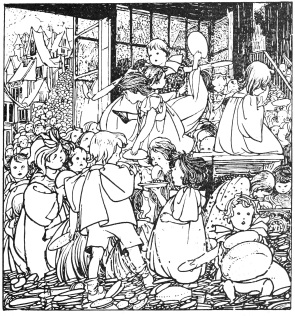
LILLIPUT LEVEE
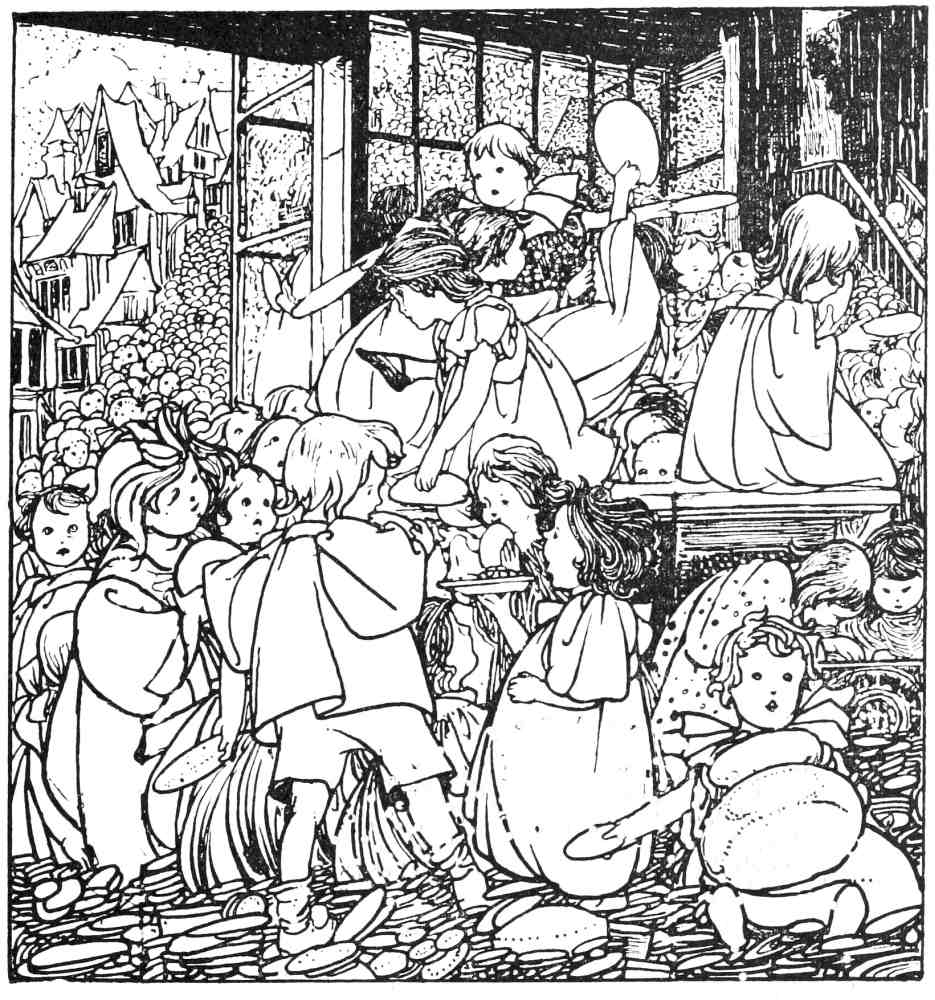
Right in the middle of Lilliput-land!
There the Queen eats bread-and-honey,
There the King counts up his money!{18}
Oh, the Provisional Constitution!
Now that the children, clever bold folks,
Have turned the tables upon the Old Folks!
For the children were more than two to one;
Brave as lions, quick as foxes,
With hoards of wealth in their money-boxes!
They drove the policeman off his beat,
They built barricades, they stationed sentries—
You must give the word, when you come to the entries!
They had pea-shooters, they had arrows and bows,
So as to put resistance down—
Order regions in Lilliput-town!
They made the wharfinger send in coals,
They made the butcher kill the calf,
They cut the telegraph-wires in half.
They kicked the physic all down the street;
They went to the schoolroom and tore the books,
They munched the puffs at the pastrycook’s.{19}
They sent up several fire-balloons,
They let off crackers, they burnt a guy,
They piled a bonfire ever so high.
And one for the most Magnificent toy;
They split or burnt the canes offhand,
They made new laws in Lilliput-land.
Put off till to-morrow, one of them ran;
Late to bed and late to rise
Was another law which they did devise.
Of beautiful things: we shall mention twenty:
A magic lantern for all to see,
Rabbits to keep, and a Christmas-tree,
An organ to grind, and sherry at meals,
Drums and wheelbarrows, Roman candles,
Whips with whistles let into the handles,
A goat to tease, a copper to sky,
A garret of apples, a box of paints,
A saw and a hammer, and no complaints.{20}
Saw off the legs of the parlour chairs—
That was the way in Lilliput-land,
The children having the upper hand.
And in pinafores,—that was the rule,—
Saying, Eener-deener-diner-duss,
Kattler-wheeler-whiler-wuss;
That nobody liked. They had catechisings;
They kept them in, they sent them down
In class, in school, in Lilliput-town.
Thick bread-and-butter, and all that;
Stick-jaw pudding that tires your chin,
With the marmalade spread ever so thin!
They altered the hour or the minute-hand,
They made the day fast, they made the day slow,
Just as they wished the time to go.
They never wiped their shoes on the mat;
Their joy was great; their joy was greater;
They rode in the baby’s perambulator!{21}
At Pinafore Palace. Smith and Brown,
Jones and Robinson had to attend—
All to whom they cards did send.
Every one came in a pinafore;
Lady and gentleman, rat-tat-tat,
Loud knock, proud knock, opera hat!
The place was as full as it ever could hold;
The ladies kissed her Majesty’s hand,
Such was the custom in Lilliput-land.
Perhaps a score, of the gentlemen,
Some of them short and some of them tall—
Arise, Sir What’s-a-name What-do-you-call!
The bill of fare would perhaps fatigue us;
Forty-five fiddlers to play the fiddle;
Right foot, left foot, down the middle.
Riddles and forfeits, singing of songs;
One fat man, too fat by far,
Tried “Twinkle, twinkle, little star.{22}”
His wife said, “Mind, dear, sing it right,”
But he forgot, and said Fa-la-la!
The Queen of Lilliput’s own papa!
He said he was sorry; she shook her head;
His clean shirt-front with his tears was stained—
But discipline had to be maintained.
Order reigns in Lilliput-town!
The Queen is Jill, and the King is John;
I trust the Government will get on.
An advertisement in the Lilliput Times:—
“Pinafore Palace. This is to state
That the Court is in want of a Laureate.
Poets, willing to be hired,
May send in Specimens at once,
Care of the Chamberlain Doubledunce.”
The Lilliput Laureate for to be!
And these are the Specimens I sent in
To Pinafore Palace. Shall I win?{23}
That these are the specimens left at the gate
Of Pinafore Palace, exact to date,
In the hands of the porter, Curlypate,
Who sits in his plush on a chair of state,
By the gentleman who is a candidate
For the office of Lilliput Laureate.
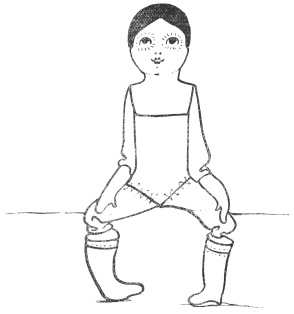
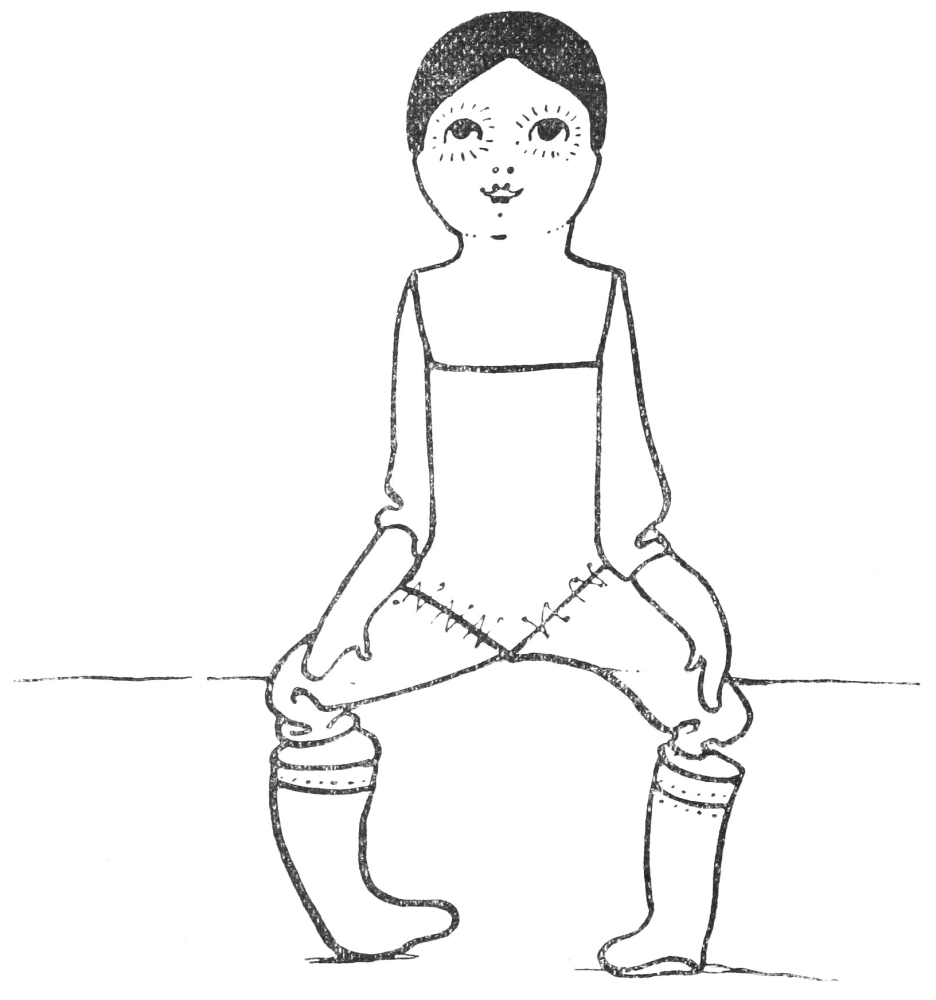
DOLL POEMS
I
THE PICTURE
The beautifullest doll that ever was seen!
Oh, what nosegays! Oh, what sashes!
Oh, what beautiful eyes and lashes!{25}
On each instep a pink rosette;
Little blue shoes for her little blue tots;
Elegant ribbons in bows and knots.
Only feel—she is quite a weight!
Her legs are limp, though;—stand up, miss!—
What a beautiful buttoned-up mouth to kiss!
II
THE LOVE STORY
A story is told that ends in gloom;
For there was a sensitive little sir
Went out of his mind for love of her!
They squeezed the bellows, they made her cry;
But the boy could never be persuaded
That these were really things which they did.
I love her, and she shall be my wife;
Dainty delicate Dolladine,
The prettiest girl that ever was seen!{26}”
They sent the lover to boarding-school.
But absence only made it worse—
He never learnt anything, prose or verse!
His Grammar was in a dreadful state,
With Dolladine all over the edges,
And true-love knots, and vows, and pledges.
Begged of his parents to take him back.
When his condition, poor boy, was seen,
Too late, they sent for Dolladine.
He calls her lily, and rose, and myrrh,
Dolly-o’-diamonds, precious lamb,
Humming-bird, honey-pot, jewel, jam,
Angel-o’-red, angel-o’-white,
Queen of beauty, and suchlike names;
In fact all manner of darts and flames!
His education goes to ruin:
What are his prospects in future life,
With only a doll for his lawful wife?{27}
And there’s one remark I wish to make:
I may be wrong, but it seems a pity
For a movable doll to be made too pretty.
Can never pass for a human creature;
It is in a doll that moves her eyes
That the danger of these misfortunes lies!
For obvious reasons. He lives out west,
And if I call him Pygmalion Pout,
I don’t believe you will find him out!
III
DRESSING HER
You may make her a shepherdess, the Doll,
If you give her a crook with a pastoral hook,
But this is the way we dress the Doll.
But do not crumple and mess the Doll!
This is the way we dress the Doll.{28}
As white as milk, with ruches of silk;
And the little drawers that cover her knees,
As she sits or stands, with golden bands,
And lace in beautiful filagrees.
But do not crumple or mess the Doll!
This is the way we dress the Doll.
One of pink, with ruches of blue,
And sweet white lace; be careful, do!
And one of green, with buttons of sheen,
Buttons and bands of gold, I mean,
With lace on the border in lovely order,
The most expensive we can afford her!
But do not crumple or mess the Doll!
This is the way we dress the Doll.
And this—and this—she will not lack it;
Skirts? Why, there are skirts, of course,
And shoes and stockings we shall enforce,
With a proper bodice, in the proper place
(Stays that lace have had their days
And made their martyrs); likewise garters,
All entire. But our desire{29}
Is to show you her night attire,
At least a part of it. Pray admire
This sweet white thing that she goes to bed in!
It’s not the one that’s made for her wedding;
That is special, a new design,
Made with a charm and a countersign,
Three times three and nine times nine:
These are only her usual clothes:
Look, there’s a wardrobe! gracious knows
It’s pretty enough, as far as it goes!
You might make her a shepherdess, the Doll,
If you gave her a crook with a pastoral hook,
With sheep, and a shed, and a shallow brook,
And all that, out of the poetry-book.
But do not crumple and mess the Doll!
This is the way we dress the Doll;
If you had not seen, could you guess the Doll?
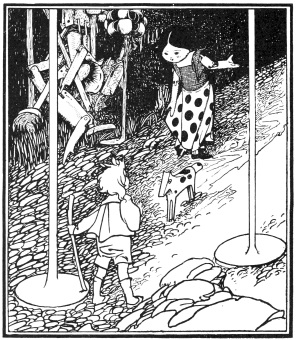
THE LITTLE DOLL’S HOUSE IN ARCADY
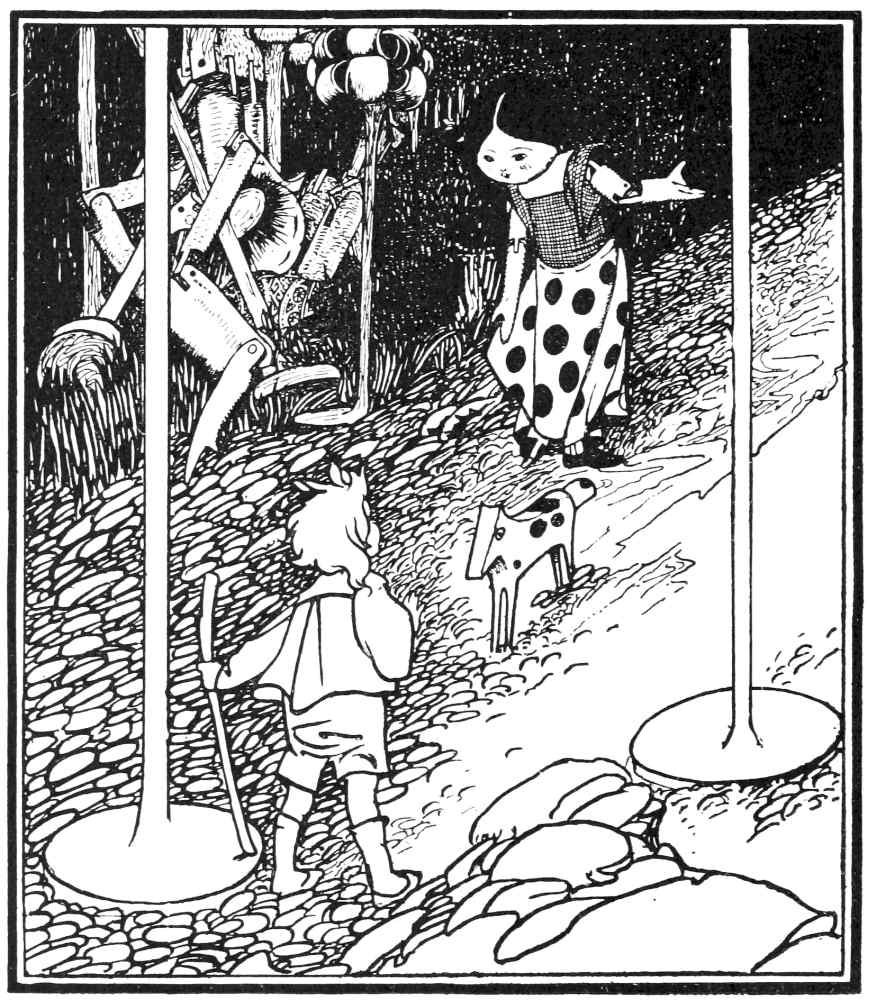
With billycock bonnets and curds and whey,
And I thought that I was in Arcady,
For the fringe of the forest was fair to see.{31}
Did turn to a Doll’s House, fair and true;
I saw with my eyes where the same did sit,
And there was a rainbow over it.
The chairs and tables, and suchlike matters,
And making the beds and getting the tea:
But through a bow-window I saw the sea.
“Will you walk with me by my garden bed?
Will you sit in my parlour by-and-by?”
“I will sit in your parlour, my dear,” said I.
And now I felt sure it was Arcady;
But a starling never could do the rhyming
That very soon in my ears was chiming:—
Twopenny tiptop, sugaricandum,
Snip-snap snorum, hot-cross buns,
Conjugatorum, double-dunce.
Cat in a cockle-boat, wigglum-whale,
Dickory-dolphin, humpty-hoo,
Floppety-fluteykin, tootle-tum-too.{32}”
And a clown I never could yet abide,—
A picker and stealer, a clumsy joker,
Who stirs up his friends with a burning poker.
It may be the Punch-and-Judy man,
Or the other, that keeps the galante show
And the marionettes, for what I know.”
And in with a bounce came a Harlequin,
And very distinctly I heard a band
Strike up the dances of Lilliput Land.
“And where,” said I, “is the Columbine—
Tip-toe twist-about, shimmer and shine,
Where is the beautiful Columbine?”
With a rose-red sash came Columbine,
And Harlequin took her by the hand,
And they stepped it out in Lilliput Land;
Twirl about, whirl about, shimmer and shine,
O a rose-red sash had Columbine!{33}
In Doll’s House fashion, did climb my knee,
And he said, “Would you like, sir, to take a trip
With me? Have you seen my little ship?”
For the dot of a sailor could carry it all:
So both got in, and away went we,
Coasting the sea-board of Arcady.
But they both got mixed before they were done;
And so did we, as the day grew dim,
And the child was myself, and myself was him.
So I stepped into Fleet Street, and went up the Strand,
For I thought I should like to study the trade
They drive in toys at the Lowther Arcade.
But the very same damsel I met before!
“I thought I should see you again,” says she;
“And a few of my friends will be here to tea.”
And Columbine and the Harlequin,
The man that patters in front of the show,
And the children—and how their tongues did go!{34}
As scents of the heather and furze went by,
And with them a whiff of the rolling sea;—
And then I remembered Arcady,
As the party were tittering over the tea.
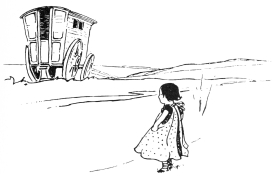
THE PEDLAR’S CARAVAN
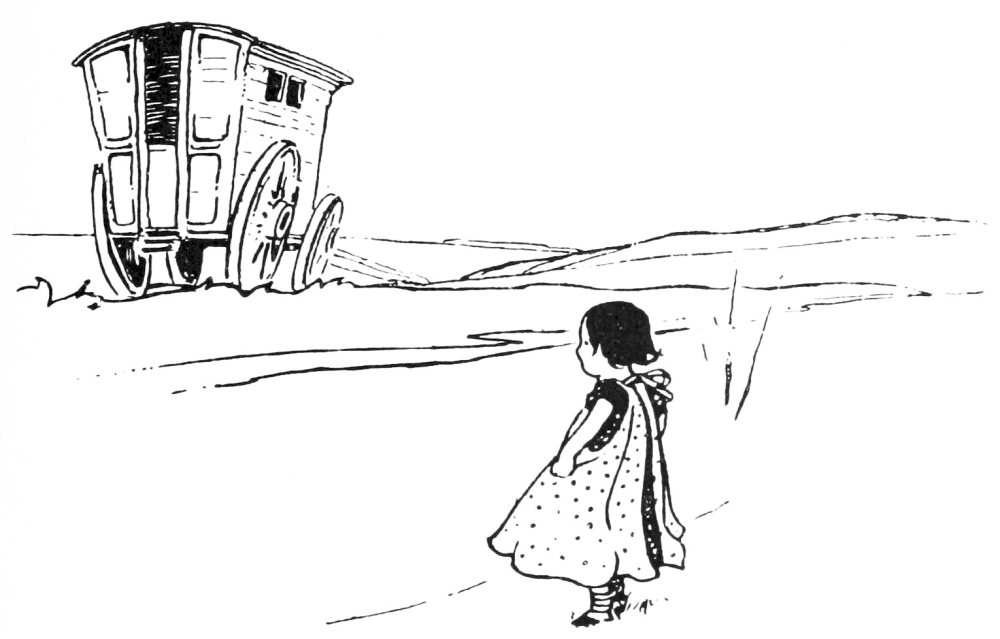
With a horse to drive, like a pedlar-man!
Where he comes from nobody knows,
Or where he goes to, but on he goes!
And a chimney of tin, that the smoke comes through;
He has a wife, with a baby brown,
And they go riding from town to town.{36}
He clashes the basins like a bell;
Tea-trays, baskets ranged in order,
Plates, with alphabets round the border!
But his house is like a bathing-machine;
The world is round, and he can ride,
Rumble and slash, to the other side!
And write a book when I came home;
All the people would read my book,
Just like the Travels of Captain Cook!
THE FIRST TOOTH
So thick that to walk was as much as you could;
But a sunbeam got in, and the trees understood.{38}
And as I was walking I saw a primrose;
Only one! Shall I show you the place where it grows?
As dark, I believe, as the hole of a mouse,
Or a tree in my wood, at the thick of the boughs.
I opened the chambers, and I found a light;
Only one! Shall I show you this little lamp bright?
One day took a gift from an incoming wave;
And I made up my mind to know what the sea gave.
When the water was lowest; and in a recess
In my cave was a jewel. Will nobody guess?
With a pearl in his mouth that was precious to me,
His little dark mouth like my cave of the sea!{39}
He blooms like a primrose! He shines like a light!”
Put your hand in his mouth! Do you feel? He can bite!
PRAISE AND LOVE
“Now of children and their ways.”
Praise, and tell me all you think.
For the clever and the bold.”
Love was glowing heavenly-red,—
Love, and tell me all you think.
Who are those that kiss your feet?
They were stars and they were skies.
Smiling as I looked at them,
Children weeping for a fault;{42}
Those who scarcely dared to raise
Doubtful eyes to smiling Praise.
Brought their glad ones to her side.
And the world with music rang.
TWO PICTURES
I
Who lived across the sea,
His hair was brown and yellow
As any honey-bee.
Sometimes he was the smartest
Of warriors in the van;
He was a Bonapartist,
And a Republican.{44}
Though now and then they slid;
With ammunition filled it,
Or made believe he did;
And when the fort was wrought up,
This little man amain
His big artillery brought up,
And blew it down again!
II
Or, say, Republican,
Would sometimes play the artist,—
The busy little man!
Sometimes he was untidy,
Though often he was smart;
He thought that he was mighty
In many kinds of Art.
He sat like any fixture,
The drawing-board before;
And, oh, to see the mixture
Of colours on the floor!
Such was this little fellow,
Who lived across the sea,
Whose hair was brown and yellow,
Just like a honey-bee.
III
This side of the sea,
Said, “We know some others
Quite as nice as he!”
Seven-and-seventy brothers
Said, “And so do we!”
Seven-and-seventy sisters,
Hearing this acclaim,
Said to those young misters,
“We think just the same.”
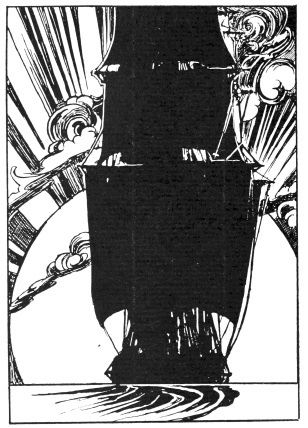
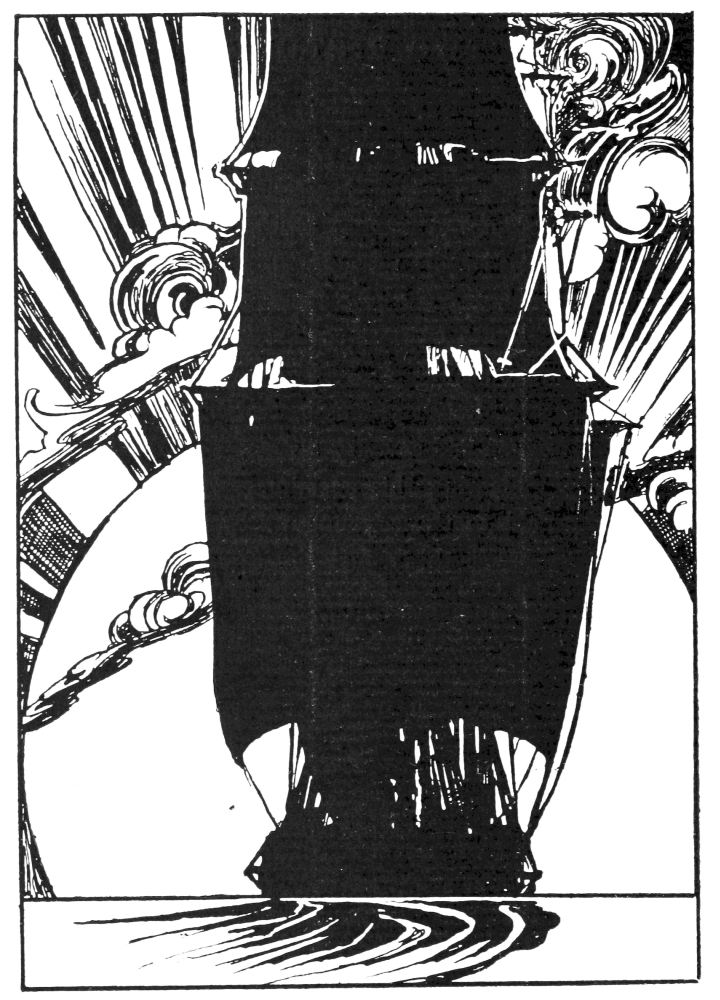
THE SHIP THAT SAILED INTO THE SUN
Down into the sea,{47}
Because a storm came on to drown
The biggest ships that be;
But I saw the ship, when he went away;
I saw it pass, and pass;
The tide was low, I went out to play,
The sea was all like glass;
The ship sailed straight into the sun,
Half of a ball of gold—
Onward it went till it touched the sun—
I saw the ship take hold!
The sun and the ship together,
For the wind began to hoot and to roar,
And there was stormy weather.
Yet every day the golden ball
Rests on the edge of the sky;
The sun it is, with the ship and all,
For the ship sailed into the golden ball
Across the edge of the sky.
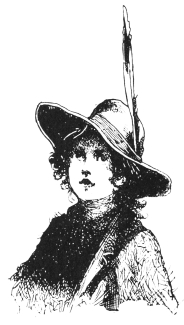
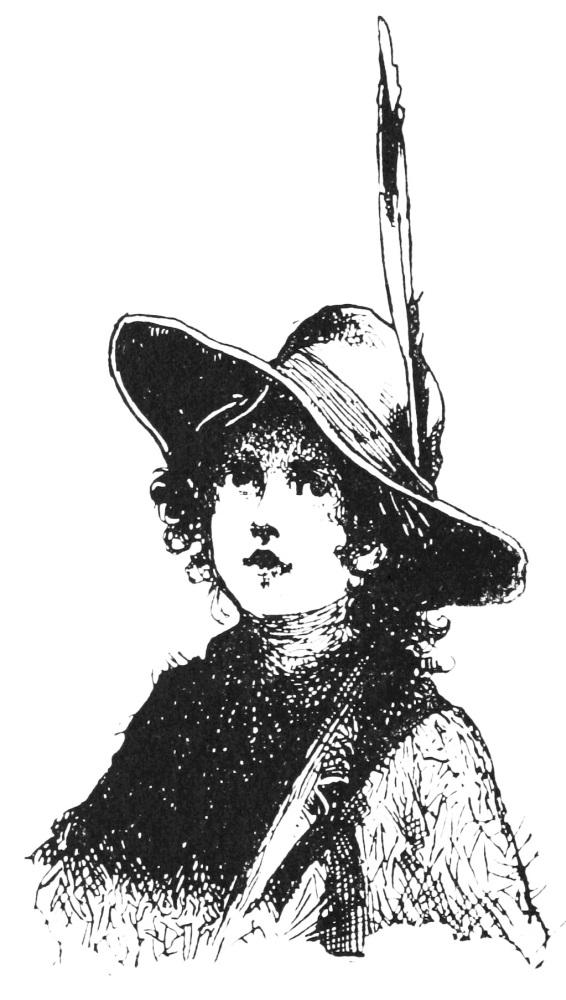
THE YOUNG EXILE
From Savoy,
With the slouch-sandalled feet,
With the pipe in your hand,
To play on, as you stand
In the long, stony, stupid, stumbling street;{49}
I heard a noise just now,
And I got up from my desk,
Saying, “What can be the row?”
For the dogs went bow-wow,
And I-cannot-tell-you-how
Went your music; and the whole thing was grotesque.
Then I saw you, picturesque,
In the weather,
With a feather
In your rough wide-awake,
And a bowl,
Poor young soul!
In your hand for the coppers you might take;
And the handsome face you had,
Little lad,
Olive skin of the South,
Large eyes and well-set mouth,
I admired very much, yes, I did;
And I wished you back again
To your dear native plain
On the loose with a marmot or a kid;
With your father, and a bag full of money,
In a cottage all your own
Pretty much got up of stone,
And with flocks
In the rocks
At your call, and the maids,
Blue-kirtled, in the shades,
And a score of beehives very full of honey!
![[Image unavailable.]](images/i050_lg.jpg)
THE COMING STORM
They hustle, they bustle; and, down in a cave,
The winds are murmuring, ready to rave.
Skimming and swimming, their wings are slow;
They float, they are carried, they scarcely go.
Flurry and scurry; as if they knew
A storm was at hand; the smoke is blue.
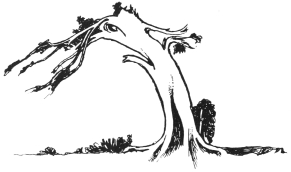
THE DISCONTENTED YEW-TREE
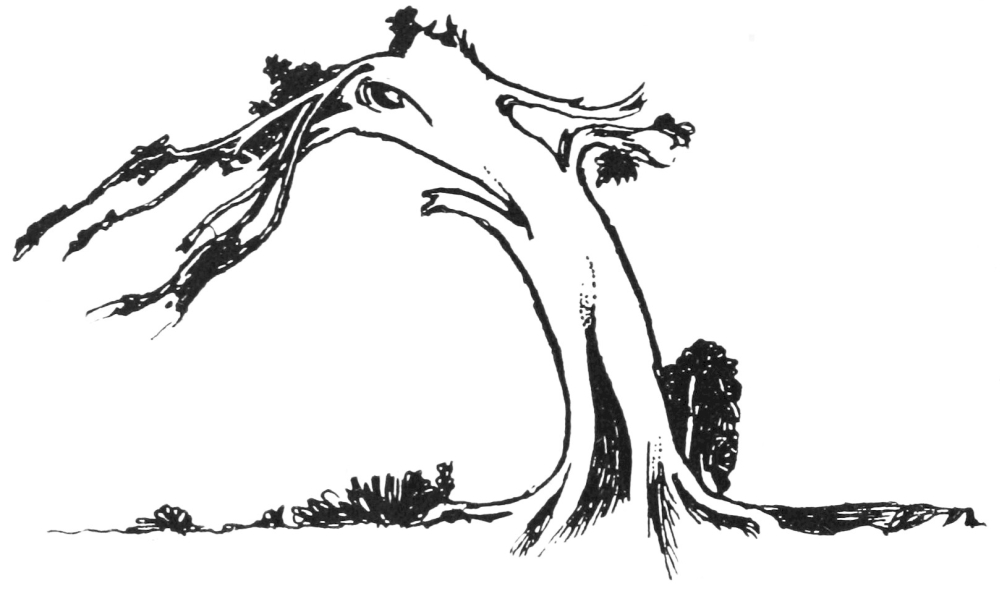
Peeped round on the trees of the forest,
And said, “Their leaves are smooth and bright,
My lot is the worst and poorest:
And lo, when the morning came,
He found his wish had come suddenly true,
For his branches were all aflame.{53}
Who cried, “I’ll be rich to-day!”
He stripped the boughs, and, filling his sack
With the yellow leaves, walked away!
And grieved as a yew-tree grieves,
And sighed, “If Heaven would but pity me,
And grant me crystal leaves!”
Said the yew, “Now am I not gay?”
But a hailstorm hurricane soon arose
And broke every leaf away!
“Of my pride I do now repent;
Give me fresh green leaves, quite smooth and plain,
And I will be content.”
Saying, “This is a sensible plan;
The storm will not bring my beauty to grief,
Or the greediness of man.”
And one came snuffing past,
Which ate of the green leaves a million and ten,
Not having broken his fast.{54}
“What folly was mine, alack!
I was discontented, and I was proud—
O give me my old leaves back!”
And prickly as before!—
The other trees mocked, “Such a sight to be seen!
To be near him makes one sore!”
The south wind whispered his leaves between,
“Be thankful, and change no more!
That you had better be”—
But the north wind said, with a gallant fling,
“The foolish, weak yew-tree!
There’s a turn to the longest lane;
And everything must have its price—
Poor faulterer, try again!”
THE LITTLE BROTHER
Baby, baby!
Shall he have a pleasant lot?
Maybe, maybe!
Baby, baby!
Dreaming—who can understand
Dreams like this, what they be?
Then talk and gay be;
Little cheeks soft and nice,
Baby, baby!
Baby, baby!
Let his life, with sweet and toy,
Pleasure all and play be.
Baby, baby!
Pray be kind to baby dear,
Pray be, pray be!
Baby, baby!
His shall be a pleasant lot—
Must, not may be!
CUCKOO IN THE PEAR-TREE
Cuckoo!
Raining or snowing, nought cared he.
Cuckoo!
Cuckoo, cuckoo, nought cared he.{58}
Cuckoo!
“Dear, are you at home, for here am I?
Cuckoo!
Cuckoo, cuckoo, here am I.”
Cuckoo!
Perhaps you are not the right cuckoo?
Cuckoo!
Cuckoo, cuckoo, the right Cuckoo!”
Cuckoo!
For I am my father’s only son,
Cuckoo!
Cuckoo, cuckoo, his only son.”
Cuckoo!
The bobbin pull tightly,
Come through the door lightly—
Cuckoo!
Cuckoo!
It must be you, the only one—
Cuckoo, cuckoo, my own Cuckoo!
Cuckoo!”
MADCAP
High-fantastical
In feats gymnastical;
Enthusiastical;
Romp; victorious;
Is uproarious
Too censorious?
Elfy, spritey,
Highty-tighty
Ma’mselle Flighty.
![[Image unavailable.]](images/i060_lg.jpg)
Her mood’s extensive;
But full of sense, if
Her mood is pensive.
In execution!
“O mum,” says Susan,
“She is a Rooshian!”
No girl is braver
In her behaviour,
As I’m a shaver!
With sudden tack again,
My Romp is back again,
Madcap, clack again!
Myself for rhyming
Of Jove or Hymen,
That girl is climbing,
In lungs and liver,
To look! However,
Three cheers I give her.
THE BEWITCHED TOYS; OR, QUEEN MAB IN CHILD-WORLD.
I
Look out for mischievous fairy tricks!{64}
Look out, good girls! Look out, brave boys!
I know she comes to bewitch your toys!
Hither she floats, like the down of a thistle!—
So mind the pegtop; and mind the hoop;
Bring down the kite with a sudden swoop;
Hide the popgun; and plug up the whistle;
But don’t say Dolly’s a-bed with the croup:
For, if you tell her a fib, my dear,
She’ll fasten the door-key to your ear!
II
And the Man with the Sticks, who lives up there,
Kick’d it through with his clouted shoon,
And the tail hung dangling down in the air.
Although it nearly broke with the strain;
Said he: “Well, this is a comical thing,
But the kite is mine, and I’ll have it again!”
“And over your shoulder throw your shoe,
And pull once more, and say this spell:
Fustumfunnidostantaraboo!{65}”
Saying, “Fustumfunnidostantaboorack!”
And a dreadful pain went all up his arm,
And he fell down, shouting, right on his back.
And the kite came down, all safe and sound,
And a piece of the moon away did bring,
Which you may have for a silver pound!
III
“My popgun bring to me,
And hey! to shoot the Tabby Cat
Up in the Cherry-tree!
She must be better taught;
And I shall make her caterwaul
‘I’m sorry,’ as she ought.”
At Tabby on the bough,
Hit Tabby’s mistress, an old Dame
Who had a Brindled Cow.{66}
To see her mistress struck.
And after trembling Thomas hied,—
Said he, “It’s just my luck!”
When Tabby at her flew,
Saying, “Tom, your custard was so nice
That I will fight for you.”
And, when Tom picked it up,
He cried, “The pellet has turned, good lack!
To a custard in a cup!”
The Dame, and Tabby Cat
Were much surprised. “It’s strange, I vow,”
Said Tom in the round hat.
He ate the custard clean—
There was a brown mark round the rim
To show where it had been.
IV
Pray, how long do you mean to keep
{67}Humming and droning and spinning away?
Do you mean to keep on all the day?
Ten minutes have passed since your nap was begun;
Pegtop, when will your nap be done?
You never slept so long before;
This is a pretty sleep to take!
Boxer, Boxer, yawn and wake!”
Dolly’s nightcap, Richard dear,
Put on Boxer—perhaps he thinks
He would like forty times forty winks!”
Richard’s pegtop hummed so strong,
Hummed away and would not stop—
Dick had to buy another top!
For though this Boxer was certainly clever,
Who wants a pegtop to hum for ever?
Couldn’t get Boxer to wake again;
They made him a house, and put him in;
The people came to see Boxer spin;
“A penny apiece,” said Dick, “and cheap,
To see my Pegtop’s wonderful sleep!”
V
To Cousin John,
Who, trying to kiss her on the cheek,
With her bonnet on,
Had crumpled her bonnet at the border,
And put the trimming in disorder.
Said John so gay.
“Now. Master John,” said Kate severe,
“Please get away!
And if you don’t, I only hope
You’ll get hit with my skipping-rope!”
Never trip;
Round and round!
“Does it touch the ground?
Don’t I skip well?” said sulky Kate;
But, oh, at last
Her feet stuck fast—
Her pretty feet,
So small and neat,
Were glued by magic to the skipping-cord,
Which turned into a Swing! And then my lord
Johnny said, “This is fine, upon my word!{69}”
To the magic rope, which by nothing hung,
Frightened out of her breath she clung—
An apple for the Queen, and a pear for the King!
Wasn’t that a wonderful swing?
It kept on going like anything!
And the colour of white paint,
“Save me from this dreadful swing!”
Then our Johnny made a spring
Up to Kate, and held her tight,
And kissed her twice, with all his might,
Which stopped the magic swing; and Katy then
Said, “Thank you, Jack!” and kissed him back again.
VI
We must really get Queen Mab away;
She mustn’t bewitch our Toys too much.
Who will speak to her? Does she talk Dutch?
John knows Magic, and Greek, and such;
No one than John can be cleverer—
Perhaps he knows how to get rid of her!”
VII
What do you think of Cousin John,
Who taught them so,
And made them go?—
Six white mice, with harness on!
Made by Cousin John alone,
Bright and gay,—
On a Lord Mayor’s Day
Just such a coach is the Lord Mayor’s own!
Dressed like a queen in pomp and pride:
The six wee mice,
That trot so nice,
Draw Marian’s Doll come out for a ride!
Round its neck, as I’ve heard tell;
Tinkle tink!—
But who would think
Of a harnessed mouse, with a silver bell?{71}
Thought Queen Mab, with her hair on end—
“And silver bells,
And what-not-else—
What can six white mice intend?
It frightens me, as I’m a Queen!”
So she stopped her tricks,
And her coach-and-six
Drove away with the Fairy Queen.
THE NEW WORLD
Where all the folks alike did seem;
There was no Child, there was no Mother,
There was no Change, there was no Other,{73}
There was no praise, there was no blame;
There was neither Need nor Help for it;
There was nothing fitting, or unfit.
None grew weary, and so none slept;
There was nobody born, and nobody wed;
This world was a world of the living-dead.
In the world where the people were all alike;
I hated Same, I hated For-Ever,
I longed to say Neither, or even Never.
I longed to give, I longed to take,
I longed for a change, whatever came after,
I longed for crying, I longed for laughter.
And woke from my dream in my little room;
With a smile on her lips my mother was nigh,
And I heard the Baby crow and cry.
For me to live in a world like this,
Where things can happen, and clocks can strike,
And none of the people are made alike;{74}
And all our hearts want Tit for Tat
In the jumbles we make with our heads and our hands,
In a world that nobody understands,
But with work, and hope, and the right to call
Upon Him who sees it and knows us all.
LINA AND HER LAMB
I
Lina and her lamb together,
In the pleasant, flowery weather.
“What a happy lamb I am!”—
That is what the lamb would say
If the lamb could only speak—
“Lina loves me all the week;
Lina loves me night and day;
Lina loves me all the hours;
Lina goes to gather flowers;
Lina knows them, Lina finds them;
Lina takes the flowers, and binds them
In a necklace for her lamb!”—
Happy Lina, happy lamb!
Lina and her lamb together,
In the pleasant flowery weather.
![[Image unavailable.]](images/i076_lg.jpg)
II
Lina and her lamb together,
In the snowy winter weather;
“What a happy lamb I am!”
That is what the lamb would say
If the lamb could only speak—
“Lina loves me, Lina heeds me,
Lina carries me, and feeds me!”
Happy Lina, happy lamb!
Lina and her lamb together,
In the freezing winter weather.
THE BOY THAT LOVES A BABY
Good morrow, Baby dear!
Good morrow, too, Mrs. Grainger,
And what do you do here?
With your boxes, caps, and cap-strings,
Drowsy, hazard-hap things,
And love of good cheer?
Straight to the point;
You said that my nose, ma’am,
Would soon be out of joint;
But my nose keeps its place, ma’am—
The middle of my face, ma’am;
It is a nose of grace, ma’am—
Aroint thee, aroint!
![[Image unavailable.]](images/i079_lg.jpg)
A girl, or a boy?
Good morrow, Mrs. Grainger—
Where are you, ma’am?—ahoy!
Here’s all things in their proper place,
And people likewise,
The laundry-maid in the copper-place,
The skylark in the skies!
Here’s love for Mamma,
And love for Papa;
Here’s a penny for a scavenger,
And a bag for the blooming lavender,
And a rope for Don’t Care,
And a kiss for the little Baby,
And one for a pretty lady
With a diamond in her hair!
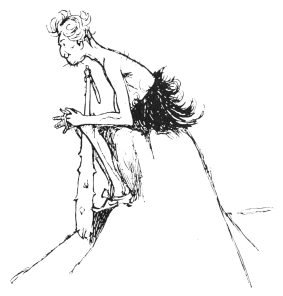
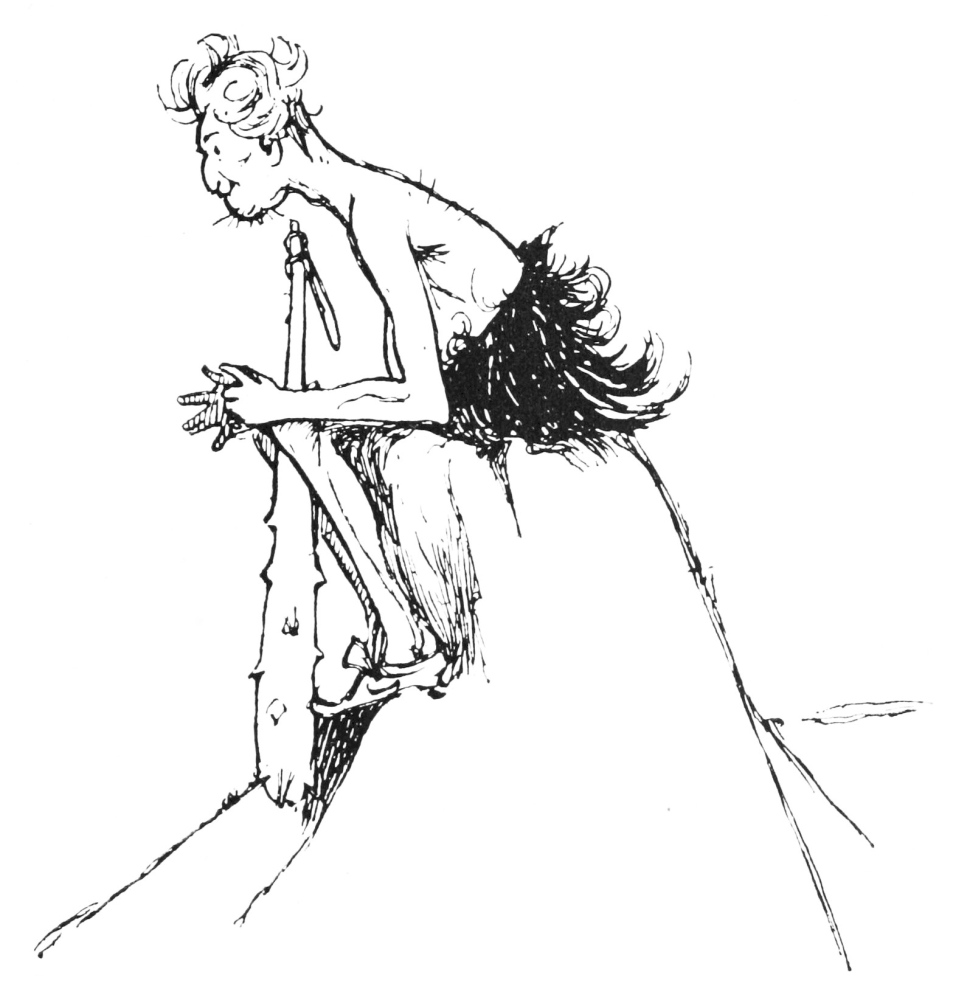
HAROLD AND ALICE;
OR,
THE REFORMED GIANT
I
With the wind in his shaggy hair;
And he said, “I have drained the dairies dry,
And stripped the orchards bare;{82}
(A nasty giant was he,)
“The eggs and the shells, the honey, the wax,
The fowls, and the cock-turkéy;
![[Image unavailable.]](images/i082_lg.jpg)
Of babies so plump and small;
And if, after that, I should want any more,
Their brothers and sisters and all.
Said he, for a sound he heard;
“Was it fluttering owl or pattering rat,
Or bough to the breeze that stirred?”
Giant! nor shaking leaf;
Young Harold has heard your scheme so foul,
And it may come to grief!
Young Harold his guinea-pig dear;
And he has crept up to try and find
His pet, and he shakes with fear;
To listen and look about;
And if to the village to-morrow you go,
You may find the babes gone out!
![[Image unavailable.]](images/i084_lg.jpg)
II
And told his tale so wild,
Then every mother she cried, “Good lack!
My child! preserve my child!”
And sharpened it on a stone;
But little Harold said never a word,
Having a plan of his own.
That led to the village green,
Then on them a little hay did pile,
For the prongs not to be seen.{85}
And thereby did it lay;
For why? Because young Harold knew
The Giant would pass that way.
Not to lie down to sleep;
But at his window up the stairs
A watch all night did keep,
Because the sun was out,
And the sky in the east grew dapple-red,
And the little birds chirped about.
III
And, with short space to pray,
Their preparations they did make,
To bear the babes away.
The little ones looked for a ride,—
When on came the Giant, as ugly as Sin,
With a terrible six-yard stride.{86}
To scream aloud began;
Young Harold up at his watch-tower smiled,
And his sword drew every man;
Came near to the stile by the green,
But when he saw that luscious pig
His lips grew wet between!
He trod on——the harrow spikes!
And how he raged and roared with pain
He may describe who likes.
Loud bellowing on the ground,
The stalwart men of the village, they
With drawn swords danced around.
I will be a Giant good!
O take out those thorns that prick my feet,
Which now are bathed in blood!”
For this Giant so shaggy-haired,
And to their parents they did kneel,
Saying, “Let his life be spared!{87}”
They framed a litter strong
With all the hurdles they could find;
Six horses drew him along;
Up high in the piny rocks,
He promised to be a Giant good—
The cruel, crafty fox!
IV
“Why, daughter? tell me quick!”—
“O mother, to make a syllabub
For the Giant who is so sick.”
From the pain in his wounded feet,
And hoping soon would come the day
When he might the babies eat.
With flowers and pretty gear;
For Mary and Madge, and Jess and Peg,
And all my playmates dear,{88}
To carry him something nice,—
A custard three times as big as the moon,
With sugar and wine and spice.”
Suppose the Giant is well,
And eats you up, what shall we do?”
Then her thought did Alice tell:—
And Heaven for us will care;
If the Giant bad has a heart of stone,
We will soften it with prayer!”
Drest all in white, draw near,
He twitched his monstrous shoulder-blades,
And dropped an honest tear!
Pray let us tuck you in!”
The Giant said, “Sweet innocent thing!
“Oh, I am a lump of sin!
To make the church-door wide,
For I next Sunday will be there,
And kneel, dears, at your side.{89}
Him for the harrow-spikes;
And I will do, please Heaven I live,
What penance the prayer-man likes.
And as I better feel,
I’ll try and eat a fox’s cub
At my next mid-day meal;
From harmful vermin free;
But never more will eat up the sheep,
The honey, or cock-turkéy!”
V
Did kneel the Giant tall;
The priest could not forbear a smile,
The church it looked so small!
He knocked off the roof with his head;
But he quarried stones on the following day,
To build another instead.
![[Image unavailable.]](images/i090_lg.jpg)
And a hundred years it stood,
To tell of the Giant so cruel and strong
That kindness had made good.
A handsome sight was seen;
For the bridegroom was brave, and the bride was fair—
Long live our gracious Queen!
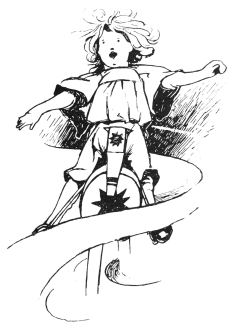
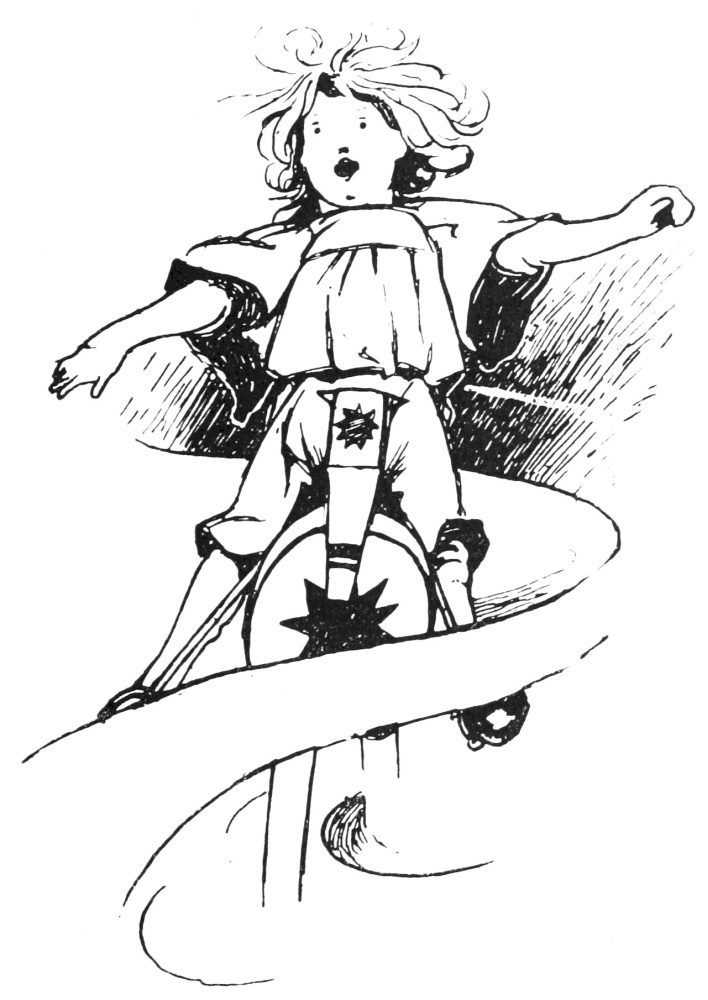
PRINCE PHILIBERT
Who but myself?
His foot’s in the stirrup;
His book’s on the shelf;{92}
His dapple-grey Dobbin
Attends to his whip,
And rocks up and down
On the floor like a ship.
Just like the sea,
To swim his three-decker
That’s named after me;
His cheeks were like roses;
He knew all the rocks;
He looks like a sailor
In grey knickerbocks.
I gave you, my prince?
I keep yours in a drawer
That smells of a quince:
So how can I lose it?
But you, giddy thing!
Keep mine in your pocket,
Mixed up with some string.
You never would strike,
Intending to do it,
The girl that you like!
You call me Miss Prue;
But how do you like me
In crimson and blue?
We go partners in findings,
And money, and that,
You help me in ciphering;
Look at my hat!
Who but myself?
With your foot in the stirrup,
Your book on the shelf!
We call you a prince, John,
But oh, when you crack
The nuts we go halves in,
You’re my Filbert Jack!
GOLD-BOY AND GREEN-GIRL
There was a girl in green;
The lad was very bold;
The maid was more serene.
It had a little steeple;
The jackdaw on his perch
Cawed at the people.
And green damosel
Did make it their employ
Their loves for to tell.
It came into their head
Themselves to be adorning
And go for to be wed.
At saying I take thee;
Gaffer said, and Gammer,
“What a pair they be!”
And spoke up like a king,
As if he had been older—
Hark, the bells ring!{96}
At the belfry-door;
“Caw!” says the jackdaw,
“One peal more!”
AT HARVEST-TIME
Are standing on their feet,
They cuddle together,
They huddle together,
They laugh out bold,
Their tassels of gold
They toss up together;
They gossip together
In the harvest weather;
And what may the thing they are whispering be?{98}
The windmills are prating
And gesticulating—
But what is debating?
What do they wait to hear or to see?
Whew, the wind! just
A soft, rapid gust,
That swirls about the dust
In the serpentine green lane, and the straws upon the lea!
I can see him making signs
To his heavy black brother;
They nod to each other—
“Hail-fellows-well-met with the Wind are we!”
Or her parlour, or her tower,
Says, “In about an hour
We shall have a thunder-shower”——
Shine or storm, pretty lady, keep a kiss for me!
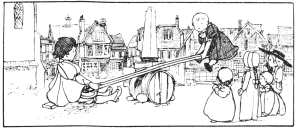
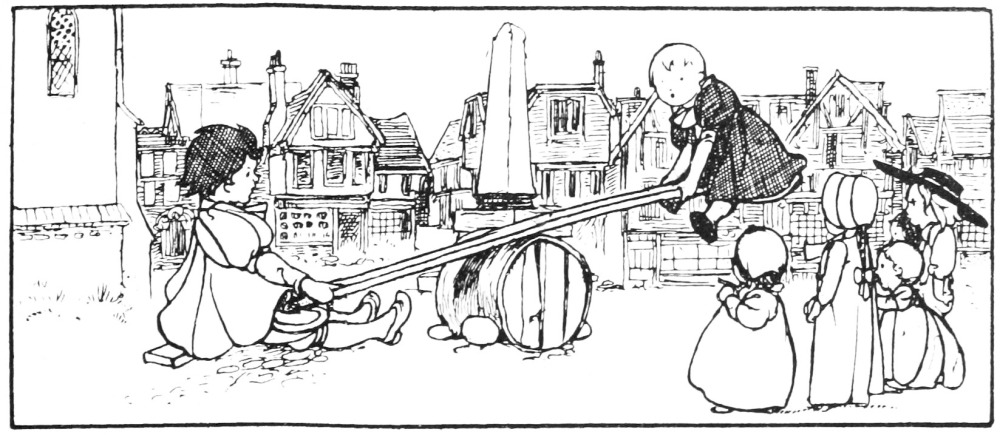
SEE-SAW
As it kicked up its heels, and flung out its hands,
And blew little bubbles, and cried, and crew,
“You innocent dear! But I wouldn’t be you!
You have only to snuggle, and sleep, and drink,
And, in spite of original sin, grow fat.
Yes, really, one might do worse than that!”
I mean, I murmured the thing to myself,
Or he would have laughed—“Get out, sir, do!
I have half a mind to wish I were you!{100}”
As gay as a Clown, as bold as the Cid;
But then I remembered task and taws—
There is always something to make one pause.
I wish you would make me my own mamma!
She is so happy, she is so nice!
And then I would give you my three white mice!”
But really my brain was inclined to whirl;
“There is always something,” I thought; “but why?
Perhaps we shall know of it by-and-bye.”
Of a saint in heaven, all shining white.
“Sweet, fair-eyed seraph!” said I, in sleep;
“I wish I were you, in the rest you keep!”
Of wife, and Walter, and Winifred;
The Christmas bells my slumber broke:
“There is always something!” thought I, and woke.
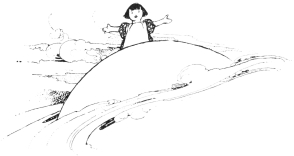
GREAT, WIDE, BEAUTIFUL, WONDERFUL WORLD
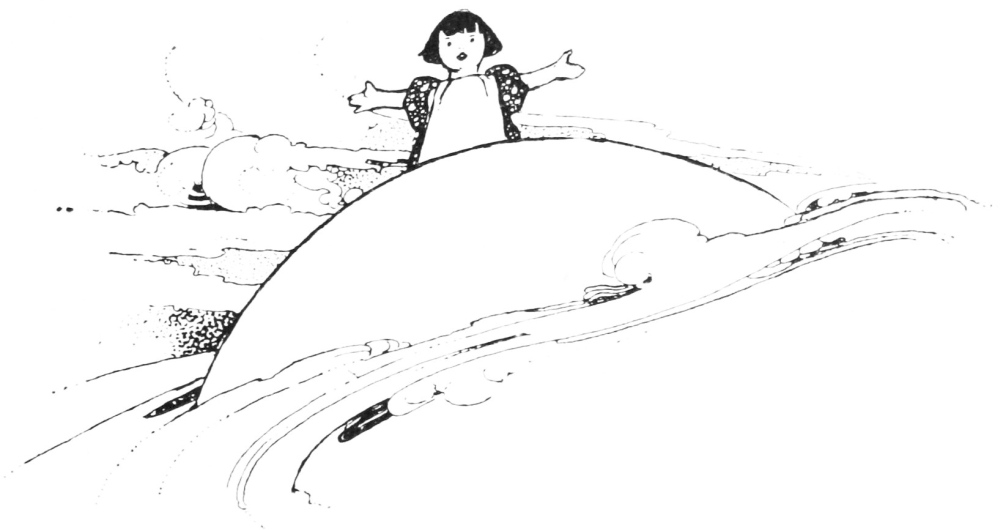
With the wonderful water round you curled,
And the wonderful grass upon your breast—
World, you are beautifully drest.
And the wonderful wind is shaking the tree,
It walks on the water, and whirls the mills,
And talks to itself on the tops of the hills.{102}
With the wheat-fields that nod and the rivers that flow,
With cities and gardens, and cliffs, and isles,
And people upon you for thousands of miles?
I tremble to think of you, World, at all;
And yet, when I said my prayers to-day,
A whisper inside me seemed to say,
“You are more than the Earth, though you are such a dot:
You can love and think, and the Earth cannot!”
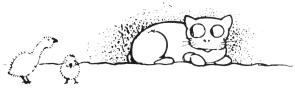
KITTENS AND CHICKENS
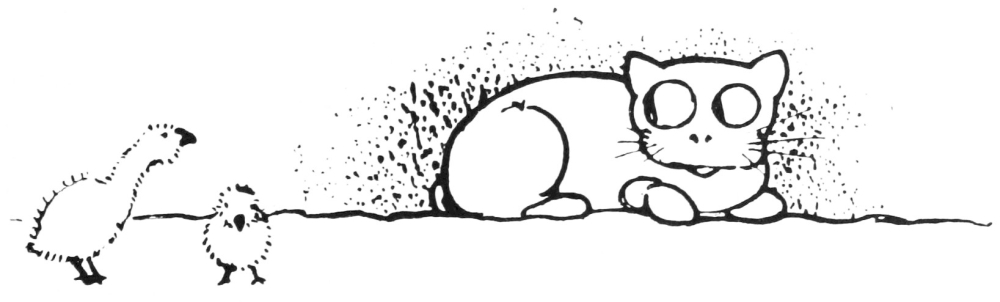
The one in black
That you see at the back,
Whose heart was smitten
(For kittens have hearts
As well as brains
And other parts,
For pleasures and pains)—
Was smitten, I say,
On a sunshiny day,
By a callow chicken,
And made a picking
Of the chicken’s bones
Out there, on the stones,
To the great disgust
Of the mother Hen,
Who came up then,{104}
When the feast was ended,
And the undefended
Fowl just swallowed!
And the Hen was followed
By the Cock well-grown,
Who seemed disgusted
That the Hen had trusted
The chicken alone.
That the Cat did essay
To visit the place
Of this disgrace,
In search of a chicken
Again for picking;
But now the Cock,
As firm as a rock,
Beholding the Kitten,
With rage was smitten,
And stuck out his chest,
And set up his crest,
And crowed defiance,
Like an army of lions,
To the Kitten who there,
With his tail in the air,
Saw that the hens,—
Three in number,—
Were not in slumber,
And so had the sense{105}
To take his departure,
Like the arrow of an archer
Swift from a bow,
And left the Cock,
As firm as a rock,
To ruffle and crow,
All under the door,
As we said before,
With nothing to tire him,
And the hens to admire him.
Another Kitten,
White, not black,
Who heard the clack,
And knowing the story
Of the chicken gory,
And, seeing the Cock
Defying the other
(It was her brother!)
Had trepidations
And meditations
About taking chickens,
And such, for pickings.
But cats will be cats
The whole world long!
THE MAKING OF THE MUSIC
Sweet to think of, and sweet to sing,”
Said the little daughter and the little son;
Their lips were gay, and their eyes were clear—
“And let the song be an easy one,
Sweet to think of, and sweet to sing.”
How shall I make it, children dear?
The night is falling, the winds are rough;
What will you give me to make it of?”
And the sky is blue and clear aloft,
And oh! we can give you things enough
To make the beautiful music of.
![[Image unavailable.]](images/i107_lg.jpg)
We will give you the sun, and a white full moon;
You shall have all our prettiest toys,
And fields and flowers, and girls and boys.
And a golden cloud, and an almond-tree,
A picture gay, a river that runs,
A chime of bells, and hot cross-buns.
And silks and satins beyond compare,
A sceptre and crown, a queen, a king,
And beautiful dreams, and everything!
We will give you all that we think or know—
The song will be sweet if you make it so.”
To make the music, and sweet it ran,
And easy enough, for a strain or two;
And the children said, “Mother, the song will do!”
There came a pause, and a wandering tear,
And a thought that went back many a year;
And the children fancied the music long,
And asked, “What have you put into the song
That we did not tell you, mother dear?”
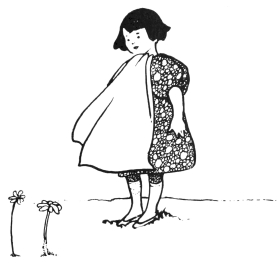
THE RACE OF THE FLOWERS
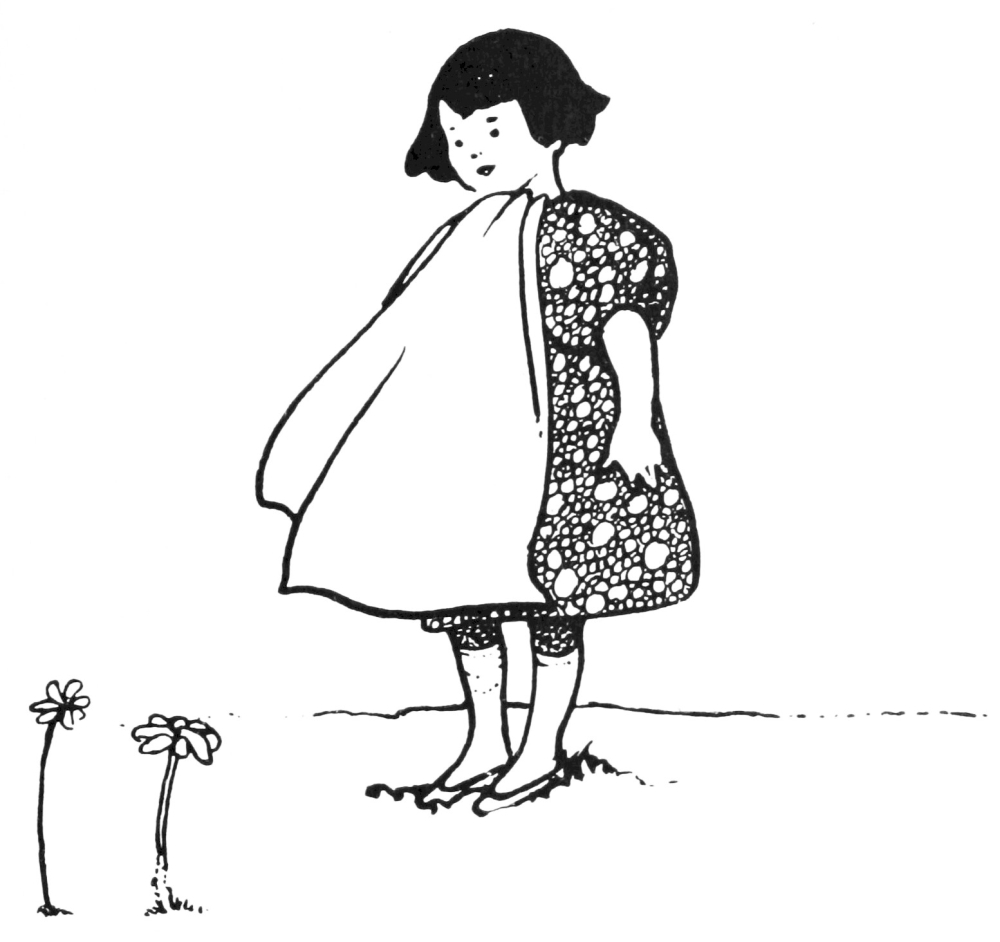
But none treads down the other;
And neither thinks it his disgrace
To be later than his brother.{110}
“Make haste, for the Spring is late!”
And the lilac whispers to the chestnut-tree
(Because he is so great),
“Pray you, great sir, be quick, be quick,
For down below we are blossoming thick!”
White, or pink, to the tip-top boughs—
Oh, why not grow higher, there’s plenty of room,
You beautiful tree, with the sky for your house?
Then like music they seem to burst out together,
The little and the big, with a beautiful burst;
They sweeten the wind, they paint the weather,
And no one remembers which was first:
White rose, red rose,
Bud rose, shed rose,
Larkspur, and lily, and the rest,
North, south, east, west,
June, July, August, September!
Many a red geranium,
And chrysanthemums up to November!
Then the winter has overtaken them all,
The fogs and the rains begin to fall,{111}
And the flowers, after running their races,
Are weary, and shut up their little faces,
And under the ground they go to sleep.
Is it very far down? Yes, ever so deep.
POLLY
Straight nose;
Dirt pies,
Rumpled clothes;
Spoilt toys;
Arch looks,
Unlike a boy’s;
Obvious arts;
(Three her age is,)
Cakes, tarts;
Off chairs;
Breaking crown
Down stairs;
![[Image unavailable.]](images/i113_lg.jpg)
On the pane;
Deep sighs,—
Cause not plain;
With kisses
For a few
Farthing blisses;
As you hear,
“Mercy’s sake,
Quiet, dear!”
New frock;
Vague views
Of what’s o’clock
To go to bed,
And scorn sublime
Of what is said;
Smiles away;
Yet may God
Hear her pray!
Kiss Dolly;
Good-night!—
That’s Polly,
As you see;
Heaven keep
My girl for me!
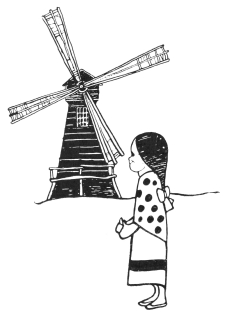
THE WINDMILL
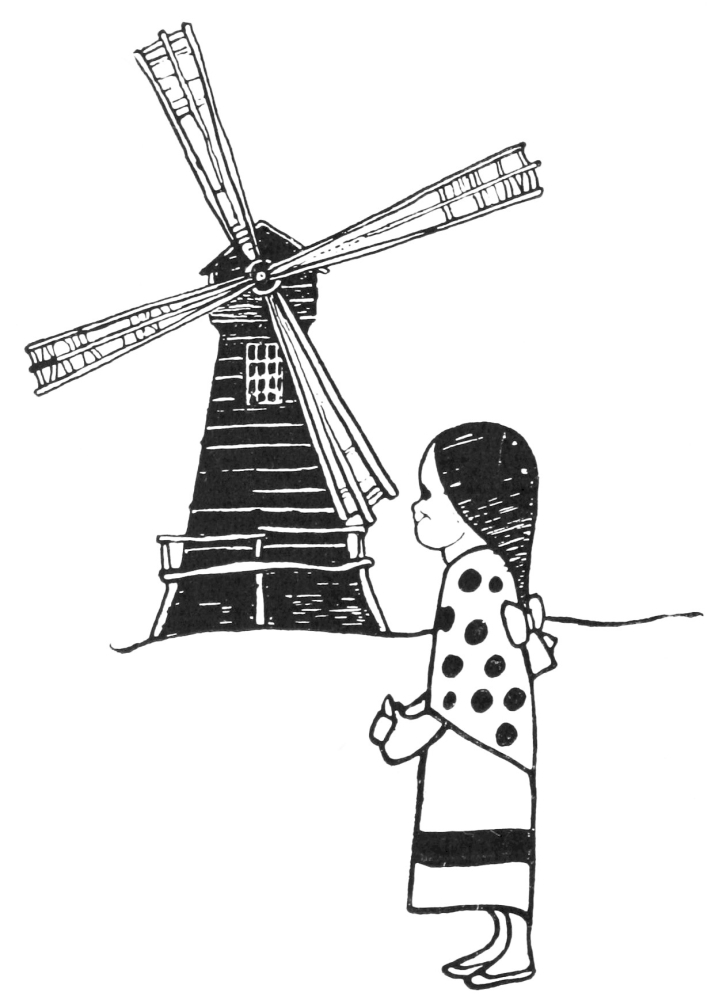
With the powdery miller-man?
The miller is one, but who’ll make two,
To share his loaf and can?{117}
To grind the corn is grand;
The great black sails go up on high,
And come down to the land!”
The miller’s in haste to wed
A girl in her pride, with a sash at her side,
A girl with a curly head!
The dust is all my joy;
To live in a windmill all my life
Would be a sweet employ!”
(You heard, but could not see),
“The wickedest man of the hills and dales,
The miller-man is he!
But died by the miller’s steel;
The whiskered rats lap up their gore,
He grinds their bones to meal!”
You tell such dreadful tales!
O mill, how secret you seem! how mad,
How wicked you look, black sails!
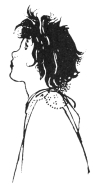
THE GIRL THAT GARIBALDI KISSED
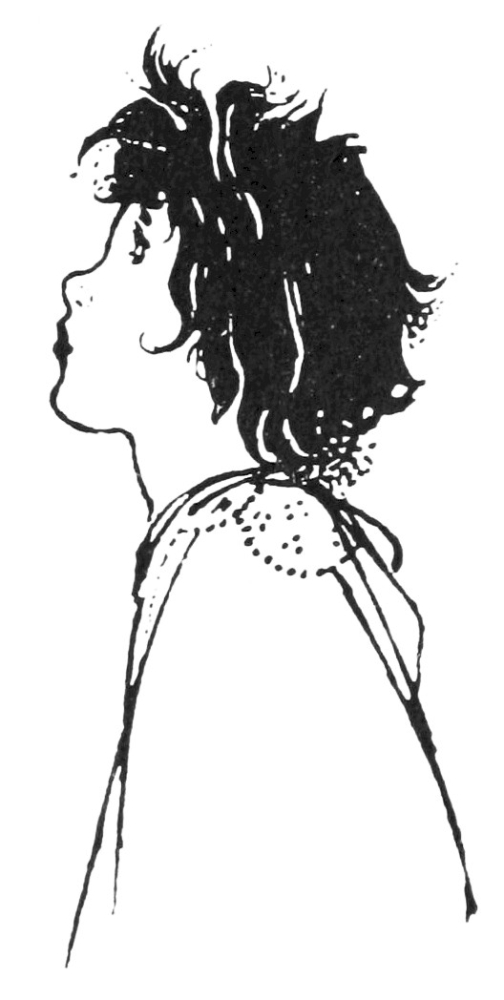
That Garibaldi kissed?
She ought to be displayed,
She shall be, I insist,
Beneath a tent of gold,
In swan’s-down and in ermine,
If Christmas should be cold!{119}
But would give a golden guinea
To see that little witch,
That happy pick-a-ninny!
And Polly is her name;
She wore a shirt of slaughter,
Of Garibaldi flame,—
But the girl he kissed—who knows?—
May be named Selina Charlotte,
And dressed in yellow clothes!
I seek her in the crowd;
Some bellman on a perch
Ought to ask for her out loud!
But I might get cheated then,
And I cannot well afford
To make that guinea ten.
All in her yellow gown,
Or down in Hankypankyshire,
Or here in London town.{120}
Upon the briny sea—
O stewardess! esteem her,
For a glorious girl is she!
Her Télémaque is read—
They would think it very bad of me
To turn her little head!
She may be taking tea;
But I wish some necromancy-work
Would bring that girl to me!
That Garibaldi kissed
In a necklace all of precious pearl,
With a bracelet for her wrist,
And garlands in her hair;
She should sit, for folks to come at her,
All in a silver chair;
To Garibaldi’s pet,—
The sight would do the people good,
They never would forget!{121}
Whom such a man has kissed,
The proudest duke or earl
Stands lower in the list!
For everything that’s human,
If the pet of such a man
Should grow to such a woman!
As he has done in his,—
Turns bad things topsy-turvey,
And sad things into bliss,—
Oh, we shall not need a survey
To find that little miss,
Grown to a woman worthy
Of Garibaldi’s kiss!
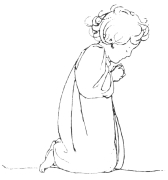
SEEING GOD
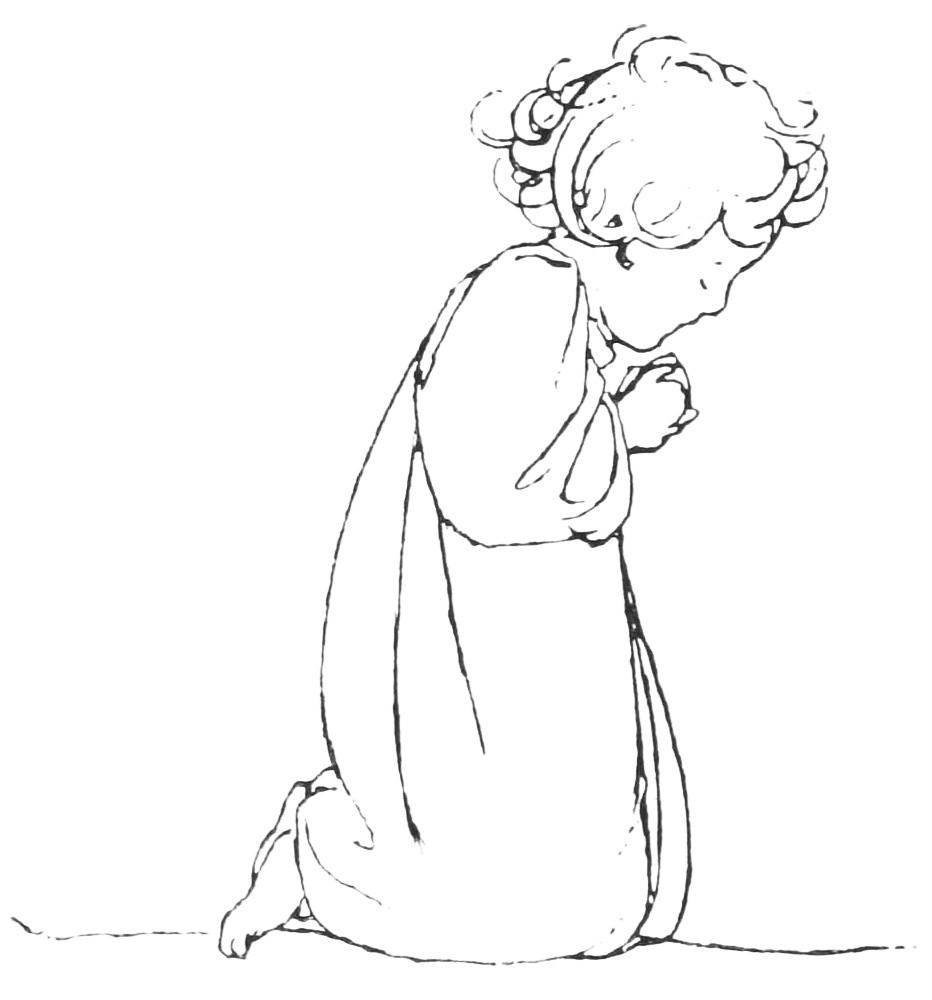
And the world is hushed and dumb;
Sleep, my darling; God is here!—
Shall I see Him, mother dear?
And the world is laid in light;
Wake, my darling, God is here!—
Shall I see Him, mother dear?{123}
Babe, can show thee God aright;
Not the dark, that brings thee sleep,
Him can from my darling keep.
We are His, to do His will;
Do His will, and, never fear,
Thou shalt see Him, baby dear.
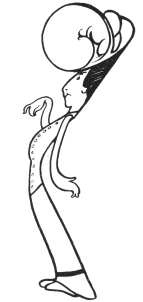
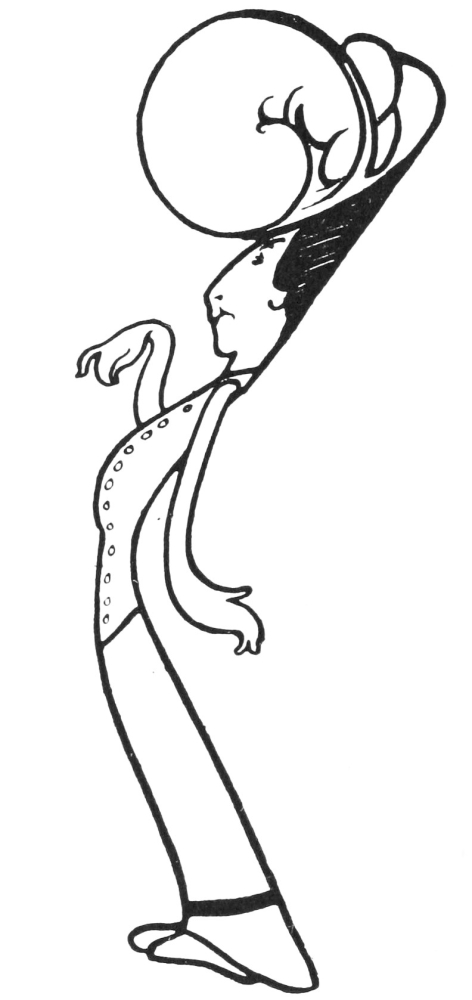
FAIR LADY, RARE LADY
THE ABSENT BOY
To meditate is all his joy;
He seldom does the thing he ought
Because he is so rapt in thought.
He wears his waistcoat outside in;
He cannot add a sum up right;
And often he is not polite.{127}
Because the child makes such mistakes;
He never knows,” she says with sighs,
“Which side his bread the butter lies!”
He roamed into a railway station,
And in a corner of a train
Sat down, with inattentive brain.
They shook the flags, the engine flew;
But all the noise did not induce
This boy to quit his mood abstruse.
He found himself at Somethington;
“What is this place?” he sighed in vain,
For railway men can not speak plain.
To pay his fare, which was too bad;
More than two hundred miles, alas!
The Absent Boy had gone first-class.
Forget his own name and address
Whilst he pursues his meditations,
And so be lost to his relations,{128}
A collar like our Tray? or bear
His name and home in indigo
Pricked on his shoulder, or below?
Is, that his father is a man
Who often moves. If we begin
To prick the Boy’s home on his skin,
With indigo from head to foot:
Perhaps a label on his chest
Would meet the difficulty best.
MORNING
Yesterday is past and gone;
Good-bye Night and Twilight gray,
Earth has put the Morning on:
On the valley’s lap so soft,
On the river running colder,
On the trees with heads aloft.{130}
Sleep took care of Baby dear;
Baby, too, has fine new clothing,
Now the sweet To-day is here.
Come! it is not much to con,—
Tell me what my Babe’s new dress is?
Babe has put the Morning on!
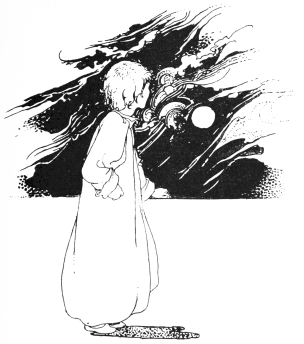
THE RISING, WATCHING MOON
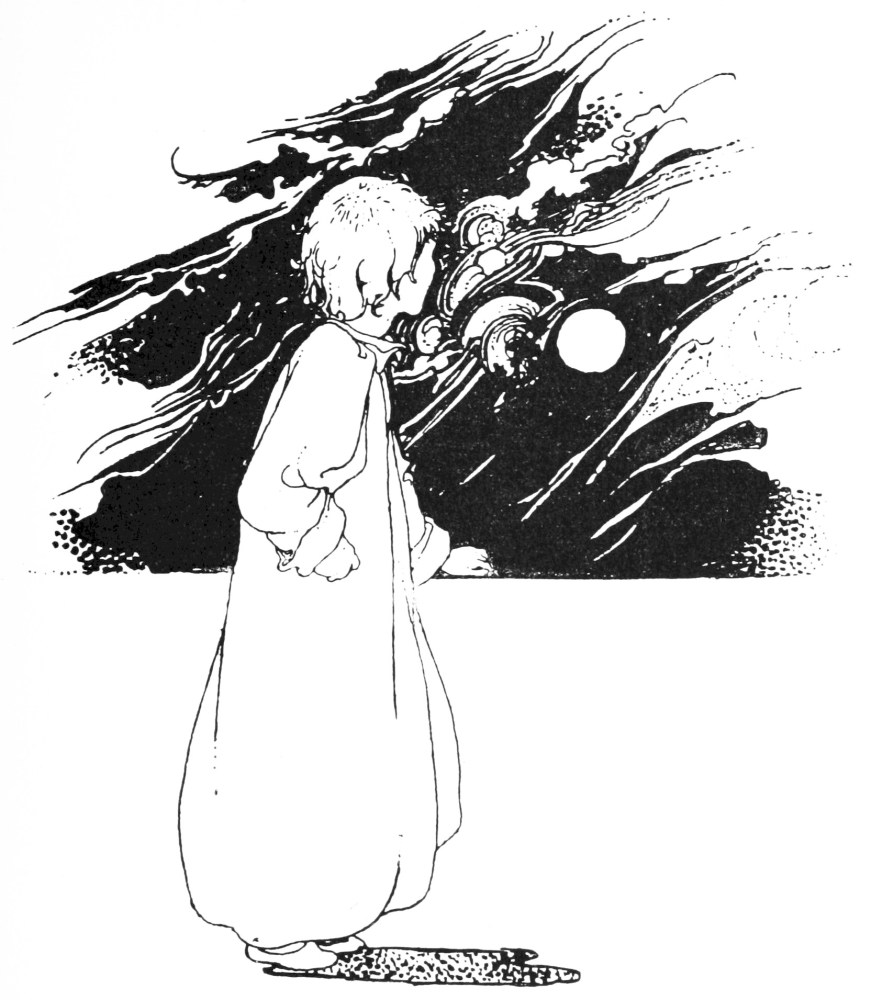
Red, and round as round can be,
Over the house and the top of the tree
Rising slowly. We shall see
Something happen very soon;—
Hide me from the dreadful moon!{132}
Soon she will be as high as the spire!
It seems as if something must happen then
To all the world, and all the men!
Oh, I dare not think, for I am not wise—
I must look away, I must shut my eyes!
THE FLOWERS
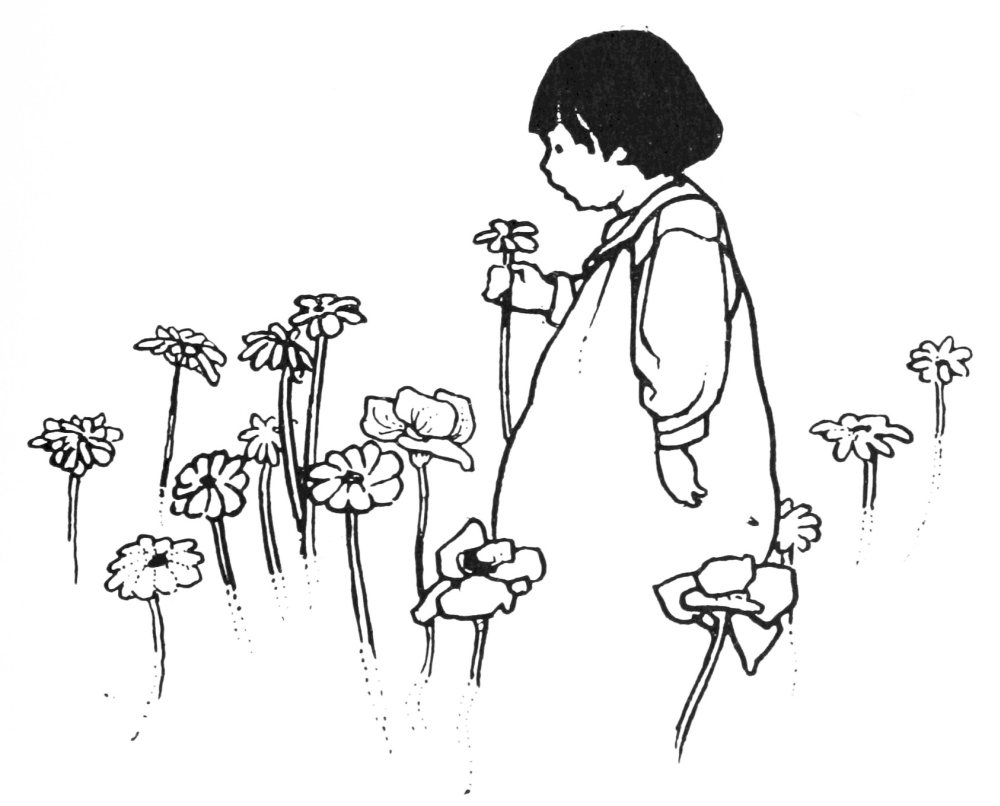
To wake the world to greater joy,
“What can she give me now?” said Greed,
Who thought to win some costly toy.
And soon the flowers, that Love let fall,
In Greed’s hot grasp were frayed and smutched,
And Greed said, “Flowers! can this be all?{134}”
He cared no jot for thyme or rose;
But boys and girls came out to play,
And some took these, and some took those,
And at their touch the dew returned,
And all the bloom a thousand fold,
So red, so ripe, the roses burned.
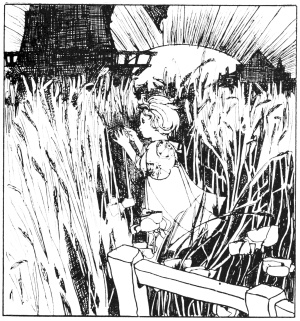
THE PENANCE OF THE LITTLE MAID
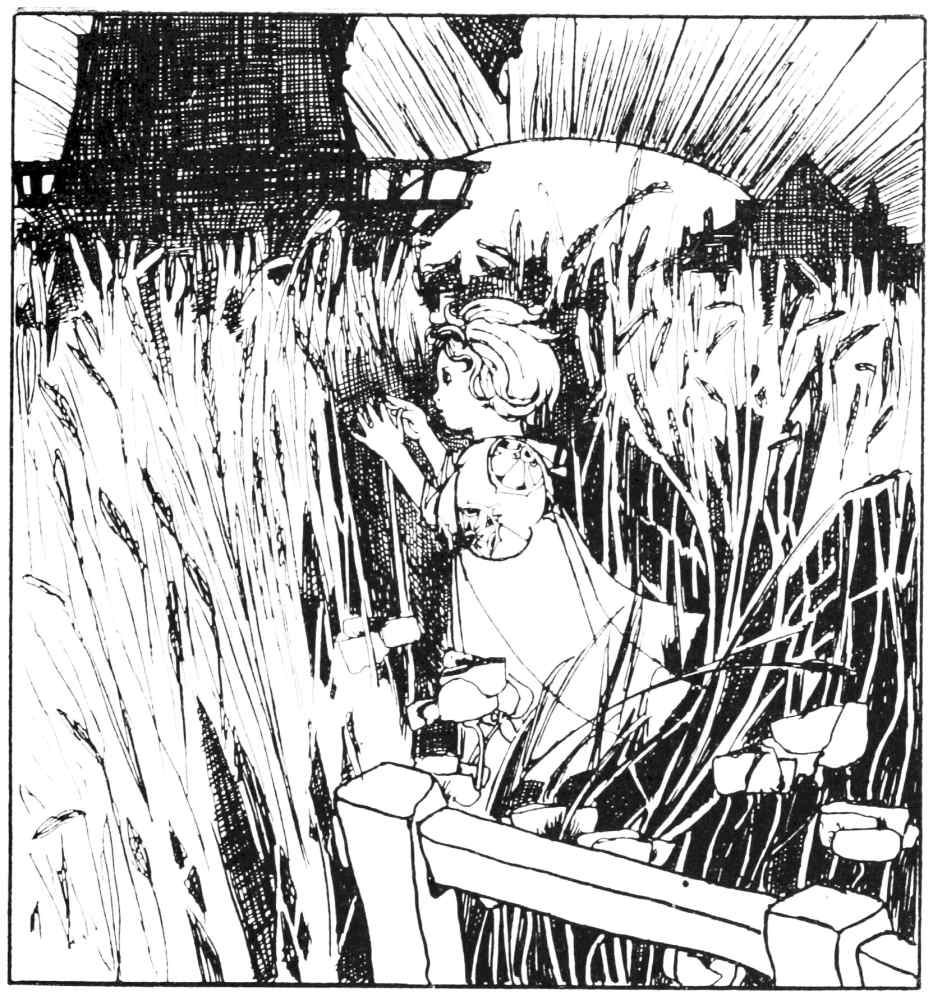
In the five-acre when the corn was mellow,
Counting her fingers again and again,
Her kirtle was green, her hair was yellow,{136}
“Oh, what are you counting, fair maid?” said I,
“Counting, I will be bound, your treasures?”
“Oh no, kind sir,” she made sad reply,
“Counting, for penance, my unshared pleasures.”
If she goes on straight, she must come to the sea!
Creep, little blue-bell, close under the fern!
Will be finished before winter comes with rattle, rain, and ruin?
(She told me in a dream last night, I know it will come true),
“Come and look for me next summer, when the bee is in the clover,
And I will share my pleasures then with you, you, you!”
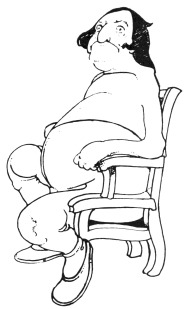
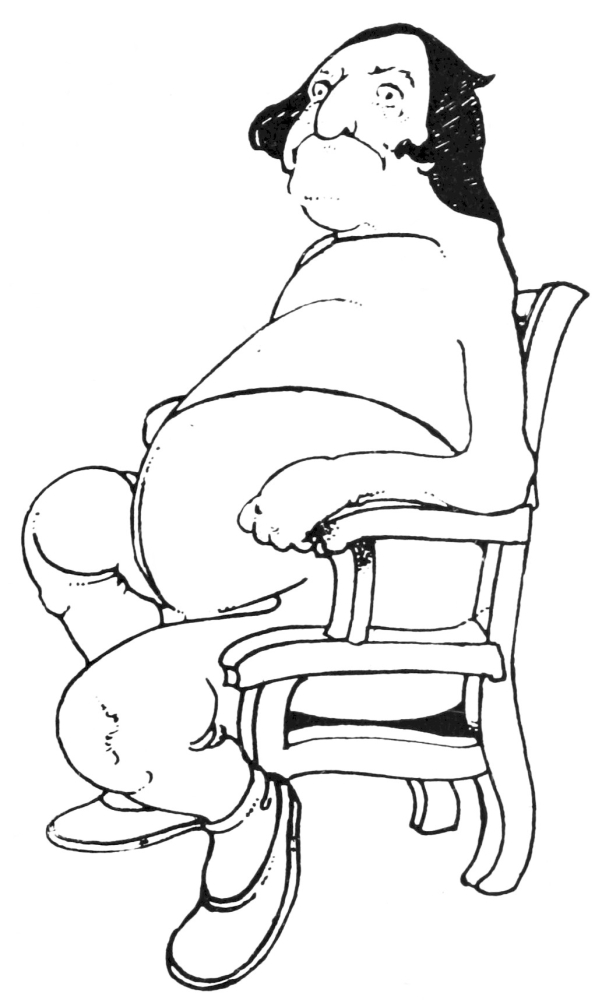
FRODGEDOBBULUM’S FANCY
I
Saying Fa-fe-fi and fo-faw-fum?
As deep as the sea, as far as Hong-kong!
With teeth like the prongs of a garden rake!
II
Sighing, “Heigh-ho! that I were but wed!”
Saying, “Why should a giant be wanting a fair?”
“The first maid I meet I will wed, if she suits!”
“Oh, ho,” says the giant, “you think it’s a joke?”
III
Clatter and clump, into Banbury town—
For plenty of time to walk had he!
“Oh, what is your name?” says the porter Slow.
For a wife out of Banbury town I sigh!”
“Your room we prefer to your company.”
“I will build up your town with silver and
gold!”
“I will not be your wife at all!”
And she wore emeralds in her hair.
She was bold as the north wind, and sweet as a blush.
“But Marjorie shall marry a gentleman,—
So said the people in Banbury town.
To woo her but this Frodgedobbulum,
And very pig-headed in his loves!
IV
They tolled the church-bells to rouse the people.
“Somebody pricked me?” the giant said.
Said F.—“Why should I be wanting a fair?”
And fled; with Banbury in pursuit!
Carry me sixty miles an hour!”
The Banbury people fell, with groans.
Gallopy-gallop, with Marjorie;—
Of the size of mites in an Oxford cheese!
V
Two bleak hills, in a deep ravine.
There were dragons in front, and toads at the back.
Ravens croaked round the chimney-pots.
Seven wild cats did caterwaul!
“My Marjorie, this is a pretty place;
A happier life than in Banbury!
And put me to sleep in my easy chair;
And Marjorie answered, “S’il vous plait!”
To marry a lady of education;
He shook the castle from roof to floor!
“And very much like one!” thought Marjorie.
VI
And opened the window to the air.
Marjorie lifted the giant’s boot!
Marjorie got into the giant’s boot!
Before you waken, you big buffoon!”
“Which is the road to Banbury, pray?”
The road to Banbury town I know.”
VII
Saying, “Ho, little Marjorie, are you there?
Exquisite Marjorie, je vous aime!”
In the Magic Boot she cleared the ground.
The left boot’s gone, and the right is left!—
The chit is off to Banbury town!
One is enough for the pursuit;
As sure as my name’s Frodgedobbulum!”
VIII
But he put the wrong leg in the boot, you see!
For even a giant in love to make—
Frightful to any man’s seven senses!
Frodgedobbulum Castle blew up in the air!
Was carried away to the very North Pole;
Now sits on the peak of the Arctic cliff!
The northern streamers, they make him blink;
He shivers and shakes, and thinks, with a cough,
Marjorie will marry some one else!”
IX
Sits on the North Pole incompliant.
He blinks at the spears of the northern light;
I am the Giant Frodgedobbulum!”
Living in such an inclement spot?
And a kiss from merry Marjorie,
For she wears orange-flowers in her hair!
She is bold as the north wind, and sweet as a blush;
A rose on her bosom as soft as silk,
The bridegroom holds up his head like a king!
Who knows when the wedding began?
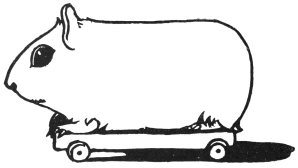
THE GUINEA-PIG
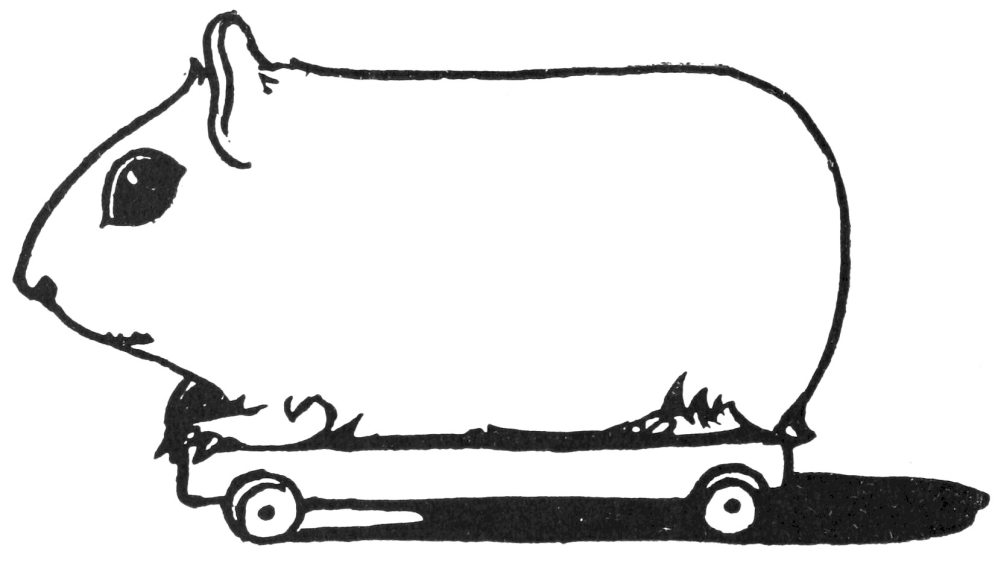
They have so little brains!”—
The guinea-pig sprang, and—wasn’t it clever?—
He hid in the raspberry canes.
To get the guinea-pig out;
They nearly laughed themselves to fits
To see him run about.{149}
Were in that companie;
But the guinea-pig baffled the young and the old,
And merrily scampered he.
You grappled a lump of mould—
The guinea-pig stuck to the raspberry brake
As hath before been told.
And never mind what I said;
For then I can hide in the raspberry brake,
When it’s time to go to bed.”
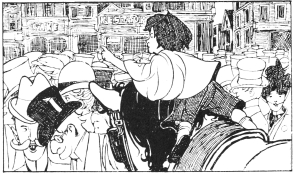
LITTLE BOY BLUE
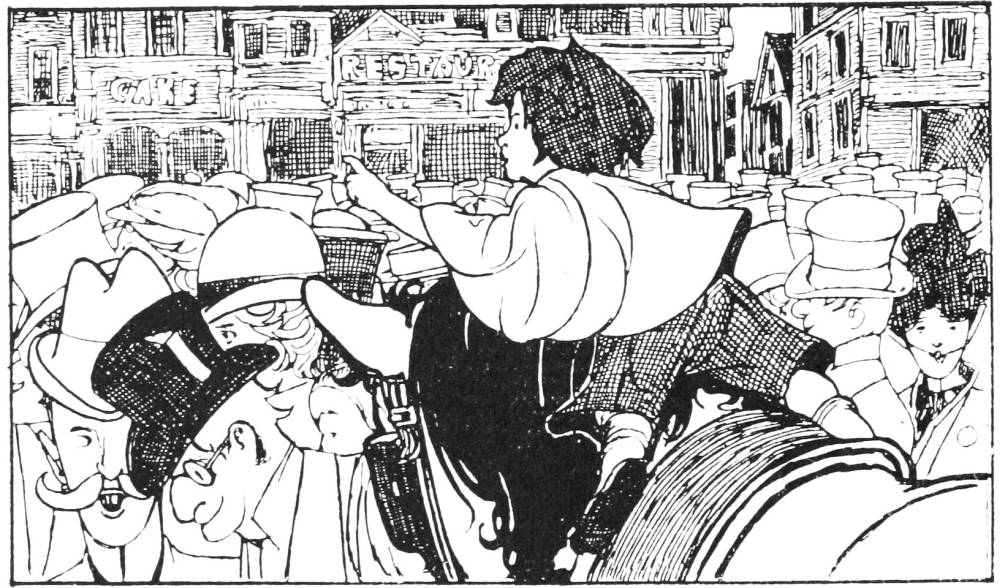
The Little Boy in Blue
(The grass with rain is pearly)
Has thought of something new.
He had but half-a-crown;
And jogging, cantering, bobbing,
He came to London town.{151}
The cows were in the corn;
Beneath the city shadows
At last he stood forlorn.
That is in London town;
And tried to count the people
As they went up and down.
And not a buttercup;
The air was thick and hazy,
The Blue Boy gave it up.
He thought that he would count;
But still the sum was undone,
So great was the amount.
He had but half-a-crown;
And so he mounted Dobbin,
And rode back from the town.
The cows were in the corn;
Amid the evening shadows
He stood where he was born.
MISS HOOPER
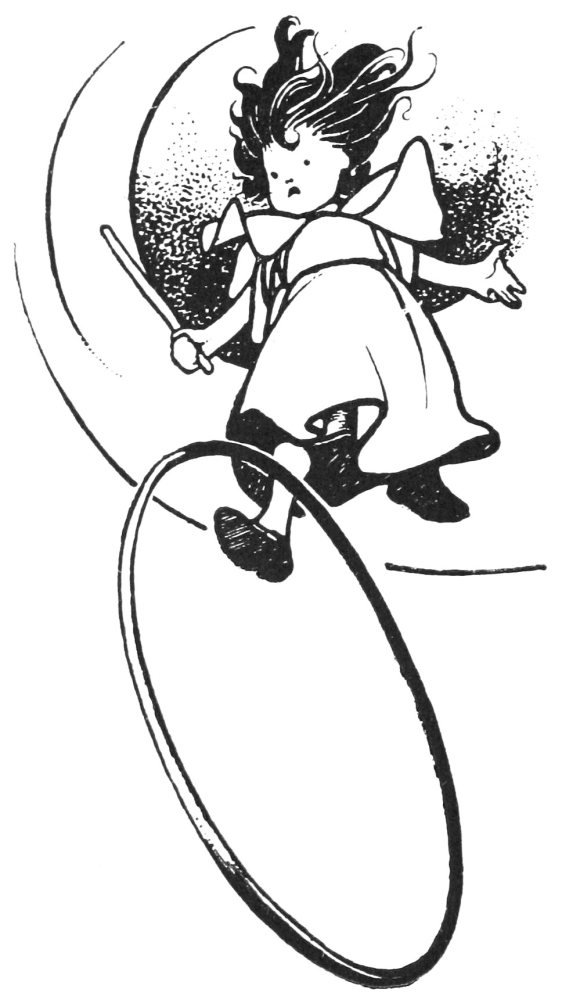
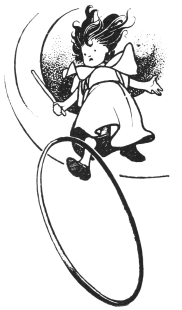
Whose head was always in a whirl;
For she had hoop upon the head—
“My precious, precious hoop!” she said.{153}
From breakfast time to nearly night,
She loved it so! and, truth to tell,
At last she drove her hoop too well.
As if it never meant to stay;
Of course the girl would not give in,
But followed it through thick and thin.
What sort of hoop this hoop might be;
My Lady said, “I think, my Lord,
That hoop goes of its own accord.”
She gave the hoop another blow,
And off it went—oh, just like mad—
She ran with all the strength she had.
And soon she felt her waistband crack,
Her dear long hair flew out behind her,—
Her parents sent forth scouts to find her.
And followed her with all his force;
Her father cried, “A thousand pound
To get my girl back safe and sound!”
![[Image unavailable.]](images/i154_lg.jpg)
To pull her backward by the sash,
But all in vain—she did not stop—
At last she fainted, with a flop.
“I’ll never touch a hoop again!”
Is it not sad, when girls and boys
Go to excess like this with toys?
It kept on going night and day,
Turning the corners, quite correct,—
A thing which you would not expect.{155}
Which no one dared to take in charge;
Of course it thinned, but kept its shape,
A sort of hoop of wooden tape.
To see the ghostly circle pass,
And only stopped—the facts are so—
When there was nothing left to go.
A SHOOTING SONG
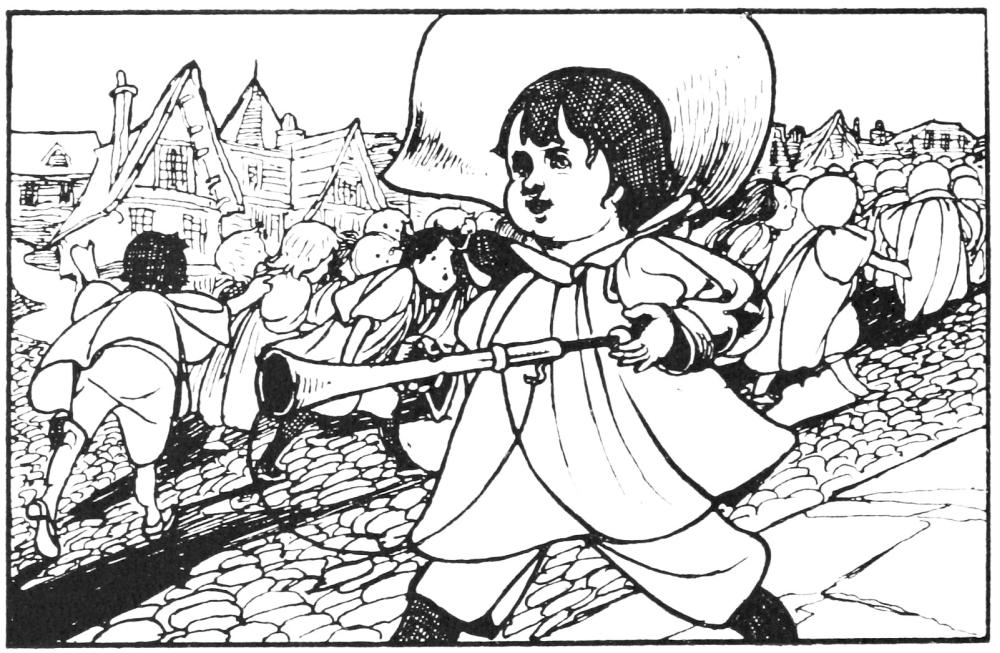
To shoot the cats that howl in the night;
To shoot the lion, the wolf, the bear,
To shoot the mad dogs out in the square.
Made out of a branch of elder-wood;
It was round, and long, full half a yard,
The plug was strong, the pellets were hard.{157}
As the English at Agincourt used to do;
The strings of a thousand bows went twang!
And a thousand arrows whizzed and sang!
With a great horse-pistol at my side:
It is dark—hark! A robber, I know!
Click! crick-crack! and away we go!
Two bullets are better than only one;
I will shoot some rooks to put in a pie;
I will shoot an eagle up in the sky.
In a mountain-pass I heard a scream;
I rescued the lady and set her free,
“Do not fear, madam, lean on me!”
A poison blow-pipe would be the same;
A double-barrelled is my desire,
Get out of the way—one, two, three, fire!
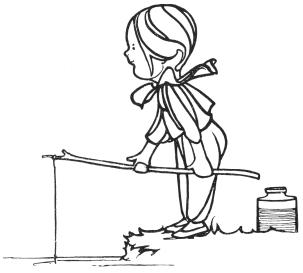
A FISHING SONG
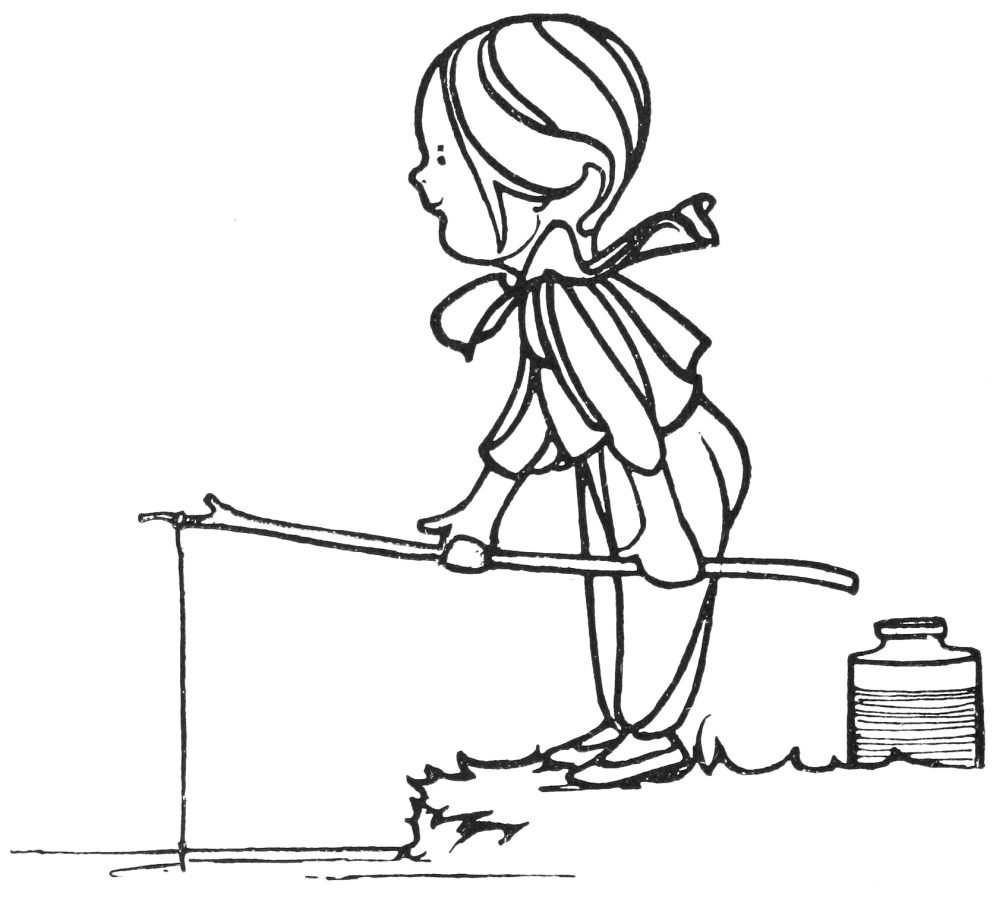
And he was fond of fishing;
His father could not keep him in,
Nor all his mother’s wishing.{159}
A fish of several pound weight;
The chief thing he could understand
Was hooks, or worms for ground-bait.
From every crack and pocket;
He had a worm-box made of tin,
With proper worms to stock it.
![[Image unavailable.]](images/i159_lg.jpg)
As much as he was able;
His sister spoke in angry terms
To see them on the table.
You found one in a bonnet,
Or, in the bed-room, unawares,
You set your foot upon it.{160}
Roach, and dace, and gudgeon!
With rod and line to Twickenham Ait
To-morrow he is trudging!
Such was his sole ambition;
I’m glad to think you are not quite
So very fond of fishing!
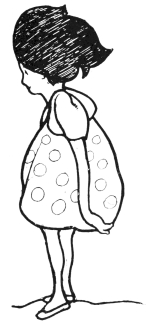
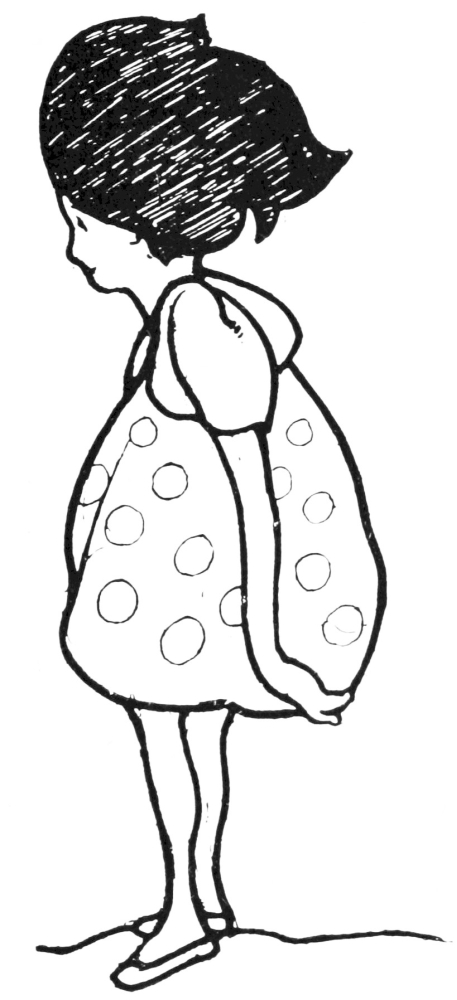
SHOCKHEADED CICELY AND THE TWO BEARS
The bellman’s voice is loud and strong;
So is his bell: “O yes! ding dong!{162}”
See how the people of the place
Come running to hear what the bellman says!
Has just returned from the Holy Land,
And freely offers his heart and hand—
All the women hurry along,
Maids and widows, a chattering throng.
To whom does he offer his heart and hand?
Explain your meaning, we do command!”
O yes! Sir Nicholas Hildebrand
Invites the ladies of this land
This very day at three. Ding dong!
O yes! O yes! O yes! ding dong!”
Mary, Margaret, Bridget, Bess,
Patty, and more than I can guess.{163}
And bought new ribbons—they said they must—
But none of them painted, we will trust.
All the women that could be wives
Are dressed within an inch of their lives.
Had brought with him from the Holy Land
A couple of bears—oh, that was grand!
Whatever he told them they would do—
Hark! ’tis the town clock striking two!
II
The poorest of all was Cicely—
A shabbier girl could hardly be.
But my frock is old, my shoes are pieced,
My hair is rough!”—(it never was greased).{164}
But she heard the band, and to see the show
Crept after the people that went in a row.
The porter exclaimed, “Miss Shaggypate,
The hall is full, and you come too late!”
Flute, and cymbal, and culverin,
And Cicely, with a squeeze, got in!
Of dames that Cicely knew, and more,
Filling the hall from daïs to door!
Green and gold, and blue and red,—
Poor Cicely thought of her tossy head!
Clang of flagon, and clink of platter—
But, oh, the feast was no such matter!
Raised on a daïs just like a shelf,
And fell in love with him—shabby elf!{165}
Under the tapestry she crept,
Touzling her tossy hair, and wept!
“Who makes that noise?” the ladies said;
“Turn out that girl with the shaggy head!”
III
That shook the place, both wall and floor:
Everybody looked to the door.
The ladies set up a little howl,
And flapped and clucked like frightened fowl.
In walk the bears on their hinder legs,
Wise as owls, and merry as grigs!
The fair girls hid underneath the table;
Some fainted; to move they were not able.{166}
Sir Nicholas Hildebrand made a speech—
“Order! ladies, I do beseech!”
Because her hair hung wild and free—
“Related to us, miss, you must be!”
As full of cherries as they could hold,
Walked up to the bears, and spoke out bold:—
Will you take a chair? will you take a chair?”
“This is an honour, we do declare!”
Saying, “Who may this maiden be?
Ladies, this is the wife for me!”
He took up Cicely by the hand,
And danced with her a saraband.
It swung, it swirled all round the room—
Those ladies were vexed, we may presume.{167}
And set her beside him on the daïs,
And made her the lady of the place.
With a silver comb for Cicely’s hair:
There were bands of music everywhere.
Both the bears were seen to go
Upon their hind legs to and fro!
The boys and girls come out to play,
And scramble for cherries as they may,
And a cheer for Sir Nicholas, free and fair,
And a cheer for Cis of the tossy hair—
For every girl with a curly pate
Who keeps her hair in a proper state.
Sing combs and brushes! sing tortoise-shell!
O yes! ding dong! the crier, the bell!
—Isn’t this a pretty tale to tell?
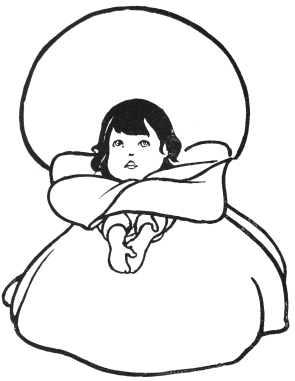
MOTHER’S JOY
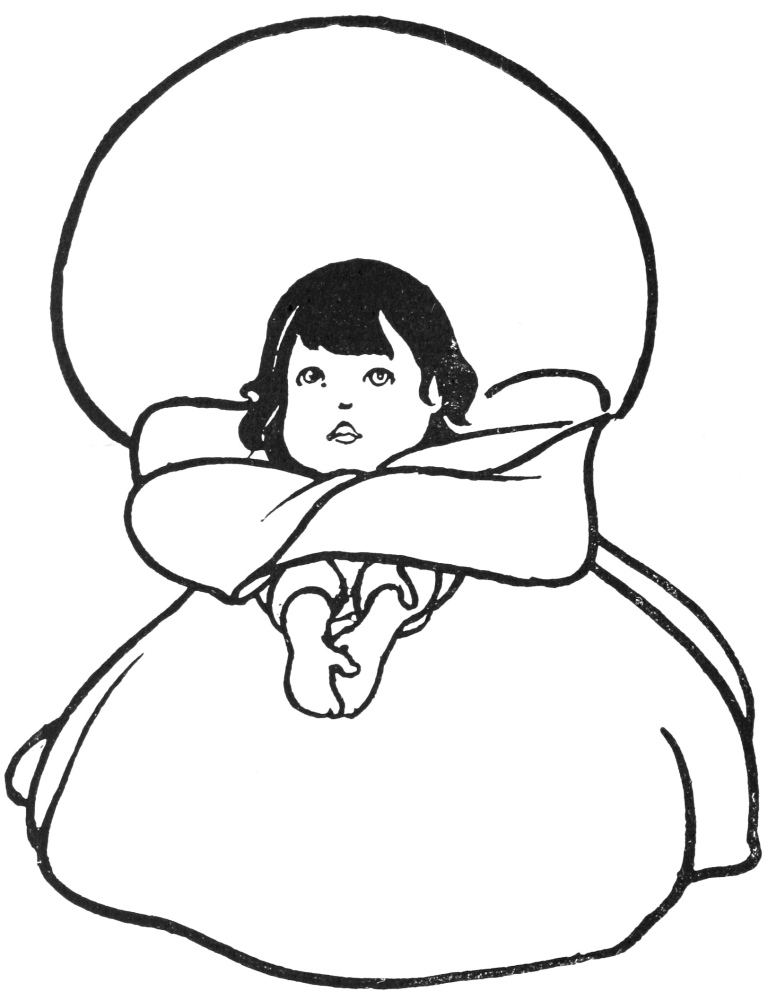
And Mother nursed him sweetly;
Baby’s skin was pink and thin,
And mother dressed him neatly.{169}
But sometimes cried a-plenty;
Mother mild said, “Oh, my child!”
And gave him kisses twenty.
Wide awake or sleeping;
Mother said, “God overhead
Have thee in His keeping!”
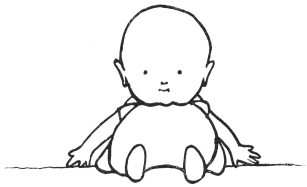
THE BABY
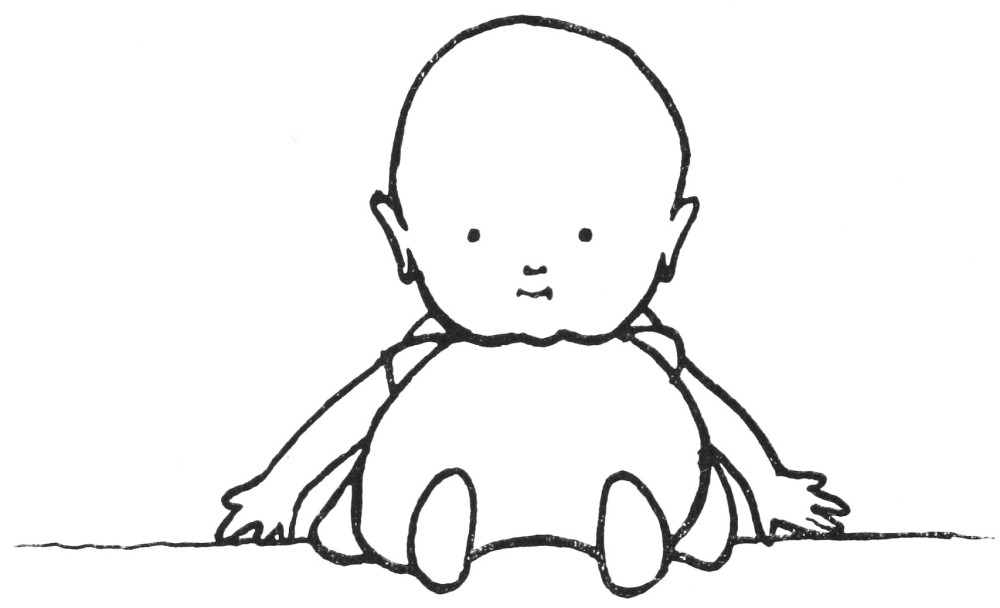
I can, I!
Who knows what she means when she crows or blinks?
I do, I!{171}
She does, she!
She thinks she should love to swallow her feet.
Hah, hah, he!
La, si, do!
That I make the noise, as I do when I sneeze.
Hah, hah, hoh!
Do, re, mi!
She fancies she makes the noise herself.
She, sir, she!
Flame, flame, flame!
She thinks she should like to cuddle the fire.
(Same, same, same!)
I did, did!
Nothing like leather—and riper views.
Kid, kid, kid!
(Post, hoc, hoc!)
One thing I know—she will be nursed.
Rock, rock, rock!{172}
Joy, joy, joy!
She might go farther and fare much worse,
With a boy, boy, boy!
Bye-bye-bye!
I couldn’t take charge of her, nights and days.
Cry, cry, cry!
WHAT WILL AUNTIE SEND?
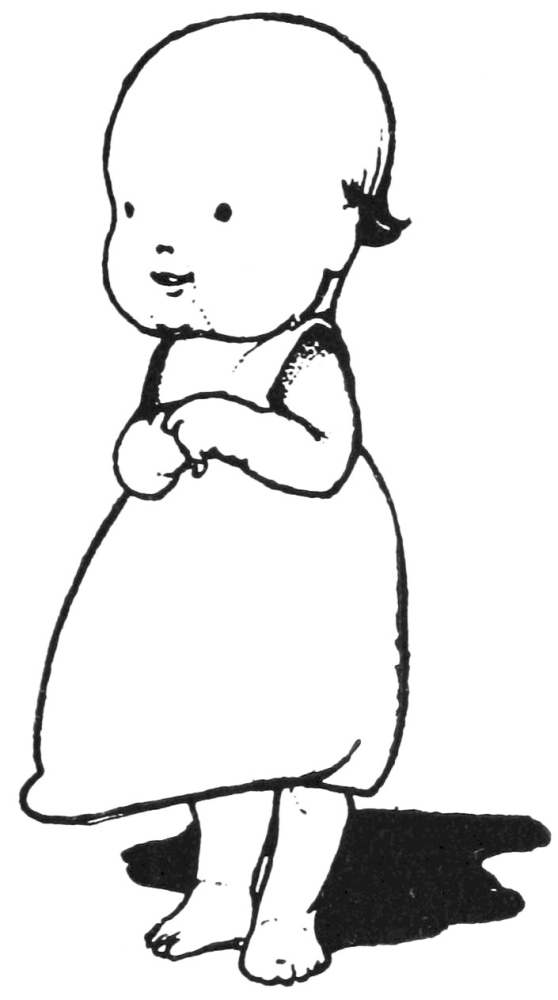
The dearest Aunt since time began,
Aunt Kate, Aunt Jane, Aunt Edith Ellen,
Aunt—oh, but never mind the spelling!{174}
Sweet are the kisses of her mouth;
She lives out East, she lives out West,
Bona puella Auntie est!
When Christmas Day is drawing near,
Auntie goes in for treats and toys,
And things, you know, for girls and boys.
She sits and thinks of tops and tips,
And takes her pen and writes to us,
My sister Fan, and me—that’s ’Gus.
And Paul’s Churchyard, with purse in hand,
She looks at dolls, she looks at drums,
And boxes full of bloomy plums.
And jewellery hung on hooks;
She knows the games we like to play;
She buys things, all to give away!
She goes and gets them all by heart,
And then sits down, with time to think,
And writes to us with pen and ink.{175}
She thinks, “What would be nice for ’Gus?”
She dips in Santa Klaus’s pouch:
“What shall I send that scaramouch?”
She will be here for Christmas Day;
And when I know that Aunt will come,
Quam felix puer ego sum!
LORDS-AND-LADIES
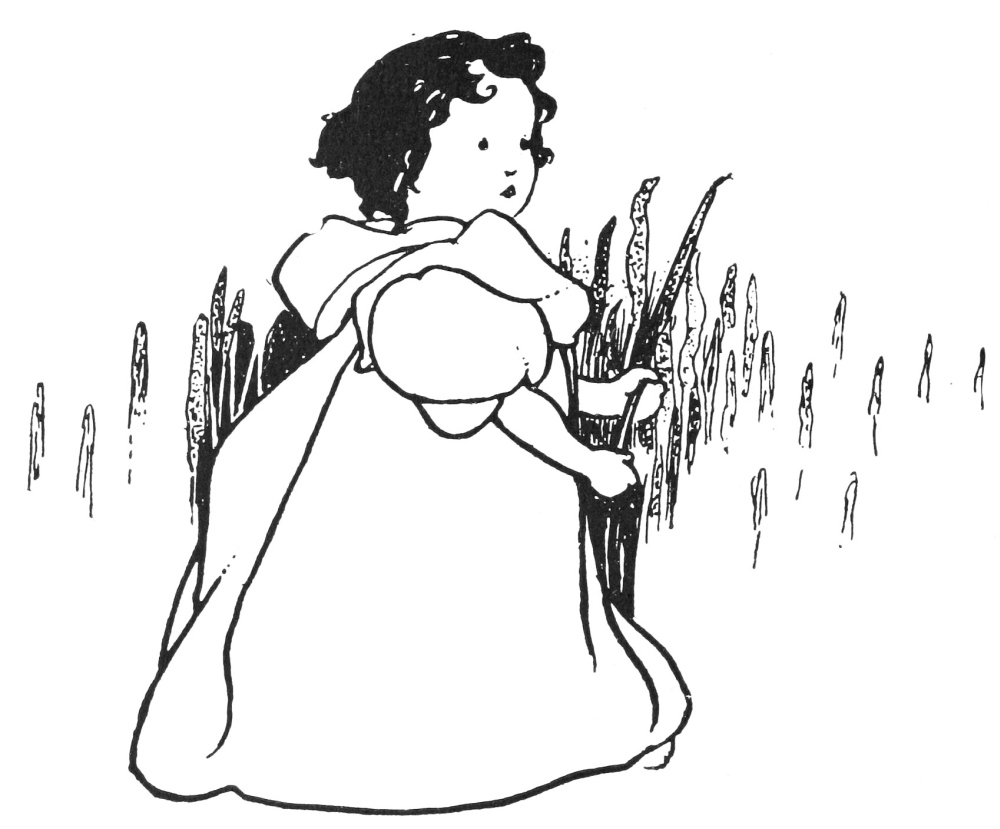
By the river growing,
Red-and-white is my delight,
When the stream is flowing.
(Round the world is going),
Will you be a lady gay?
(Roses, roses blowing).{177}
If you will show duty:”
I will love beyond compare,
You shall be my beauty.
By the river growing;
Red-and-white is my delight,
When the stream is flowing.
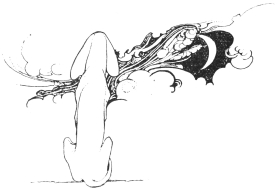
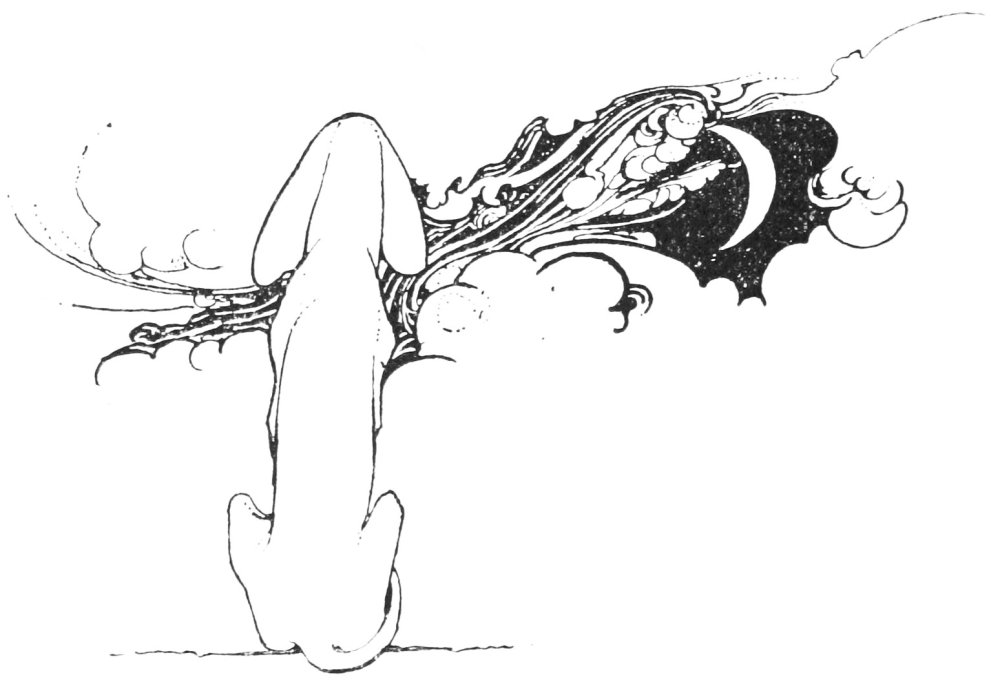
THE DOG AND THE PATCH OF MOONSHINE
A harvest moon so bright?
The crowded ivy, darkly green,
Was touched with primrose white.
And, far as you could see,
The night was like a ghostly day
On road, and field, and tree.{179}
In the light and silence wide?
O lady moon, your other cheek
Why do you always hide?
As I stood at my gate;
Yet I shuddered, and thought, “I will go in,—
The silence is too great!”
Behind the poplars green,
When there came trotting down the road
A dog—the dog was lean;
He had no friend on earth,
Nobody in whose partial eye
He was of any worth.
Was like a worn-out thatch;
This dog came trotting up to where
The moonlight made a patch,
And there the dog turned round,
Round, and round, by slow degrees—
Then crouched upon the ground.{180}
And cried, “Old dog, get up!
That patch of moonlight may be good,
But on it you cannot sup.”
And took what I bestowed;
Then, being refreshed, snuffed all the place,
And up and down the road.
Against a sheltering wall;
I said, “Here is a bed for you,
With half-a-house and all.”
From my bedroom window-pane—
I saw that on that moony patch
He had lain down again!
What charm was it he found
In sleeping where the moonlight shone
In a patch upon the ground?
He might have slept where he had his bone,
Where the moon shone all around!{181}
And it is my delight
To think there was a magic plan,
A meaning, in that night!
He will come back to me,
A fairy princess bright and boon,
Whom I that night set free!
And in the primrose light;
The silence seemed to say, “Prepare!
It shall be done to-night!”
A dog that was not fat?
I saw a glint of elfin green
In the moonshine where he sat—
In distant falls and swells—
I heard a little silver sound,
The clink of elfin bells—
But will my princess be unbound,
If anybody tells?
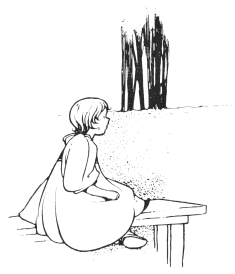
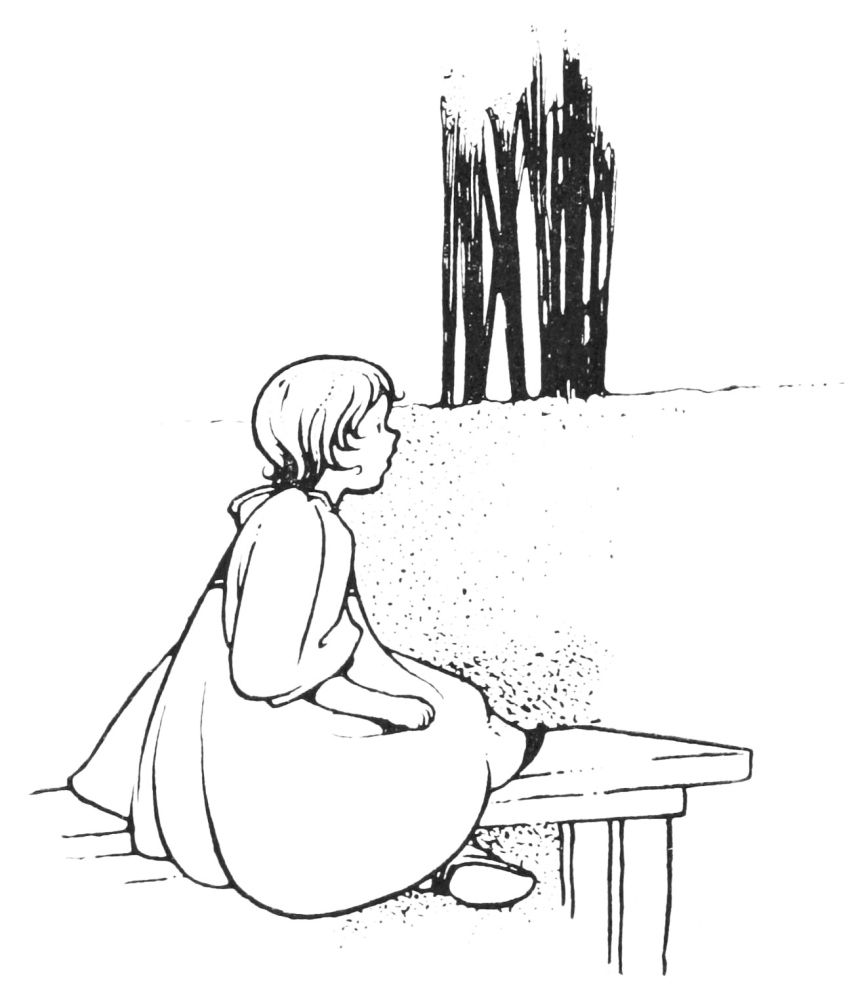
AUTUMN SONG
The leaves of the limes are almost shed;
The passion-flower hangs out her yellow fruit;
The sycamore puts on her brownest suit.{183}
Like a creature longing to burst its chains;
The swallows are gone, I saw them gather,
I heard them murmuring of the weather.
The sun is slanting, the year is going;
O I love to walk where the leaves lie dead,
And hear them rustle beneath my tread!
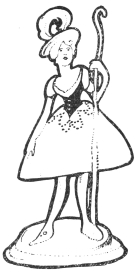
THE DRUMMER-BOY AND THE SHEPHERDESS
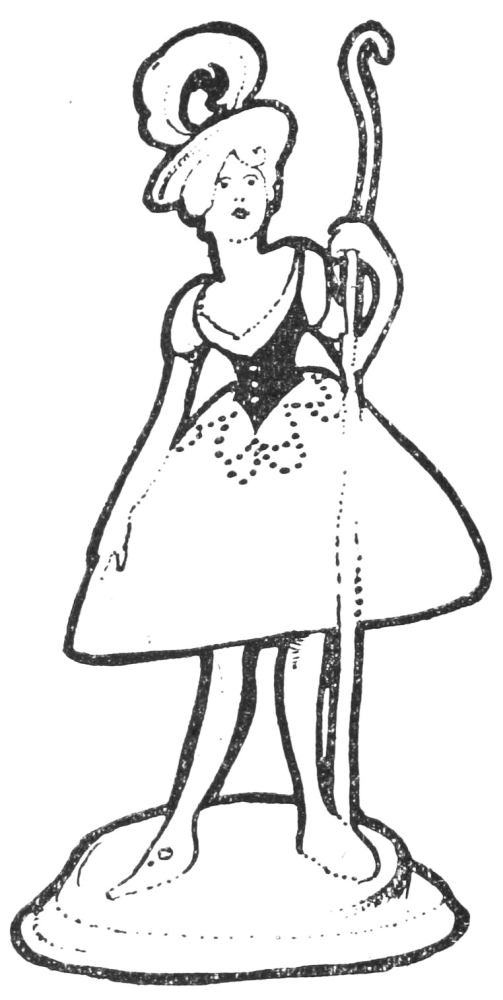
And why do you weep, sitting here on your thumb?
The soldiers are out, and the fifes we can hear;
But where is the drum of the young grenadier?{185}
Whilst I was asleep on a sunshiny day;
It was all through the drone of a big bumble-bee,
And sheep and a shepherdess under a tree.”
And why is your little lamb over the brook?
It bleats for its dam, and dog Tray is not by,
So why do you stand with a tear in your eye?
Whilst I dreamt a dream on a morning in May;
It was all through the drone of a big bumble-bee,
And a drum and a drummer-boy under a tree.”
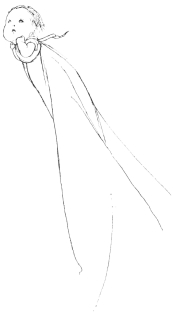
LULLABY
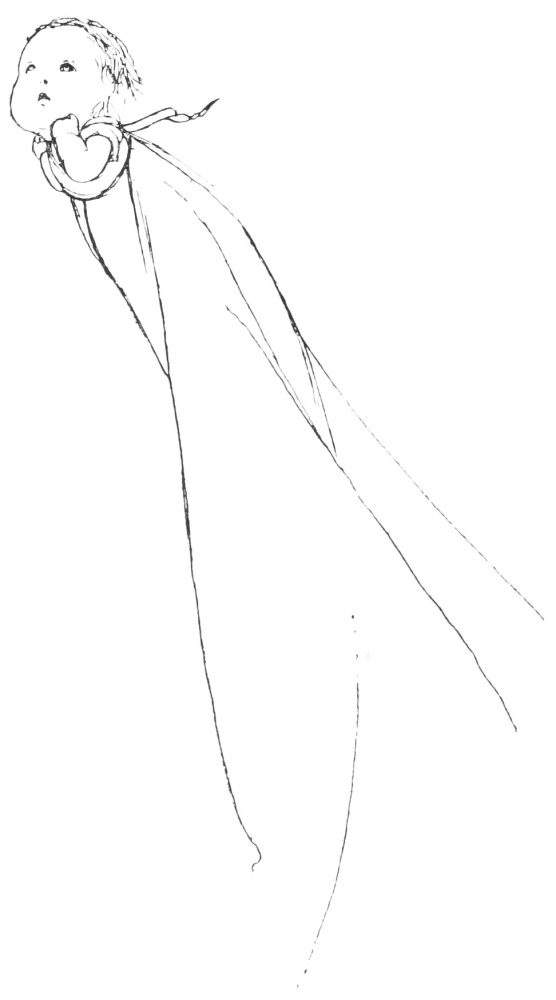
Go away, wind, and let me sleep!
Ruffle the green grass billowy plain,
Ruffle the billowy deep!
“Hush-a-bye, hush! the wind is fled,
The wind cannot ruffle the soft smooth bed,—
Hush thee, darling, sleep!{187}”
Silence, ivy! and let me sleep!
Why do you patter like drops of rain,
And then play creepity-creep?
“Hush-a-bye, hush! the leaves shall lie still,
The moon is walking over the hill,—
Hush thee, darling, sleep!”
Go away, dreams, and let me sleep!
The show may be gay and golden bright,
But I do not care to peep.
“Hush-a-bye, hush! the dream is fled,
A shining angel guards the bed,
Hush thee, darling, sleep!”
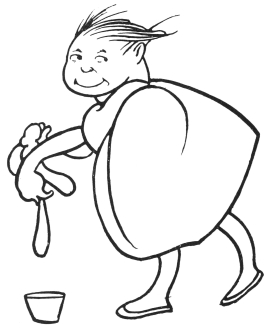
CLEAN CLARA
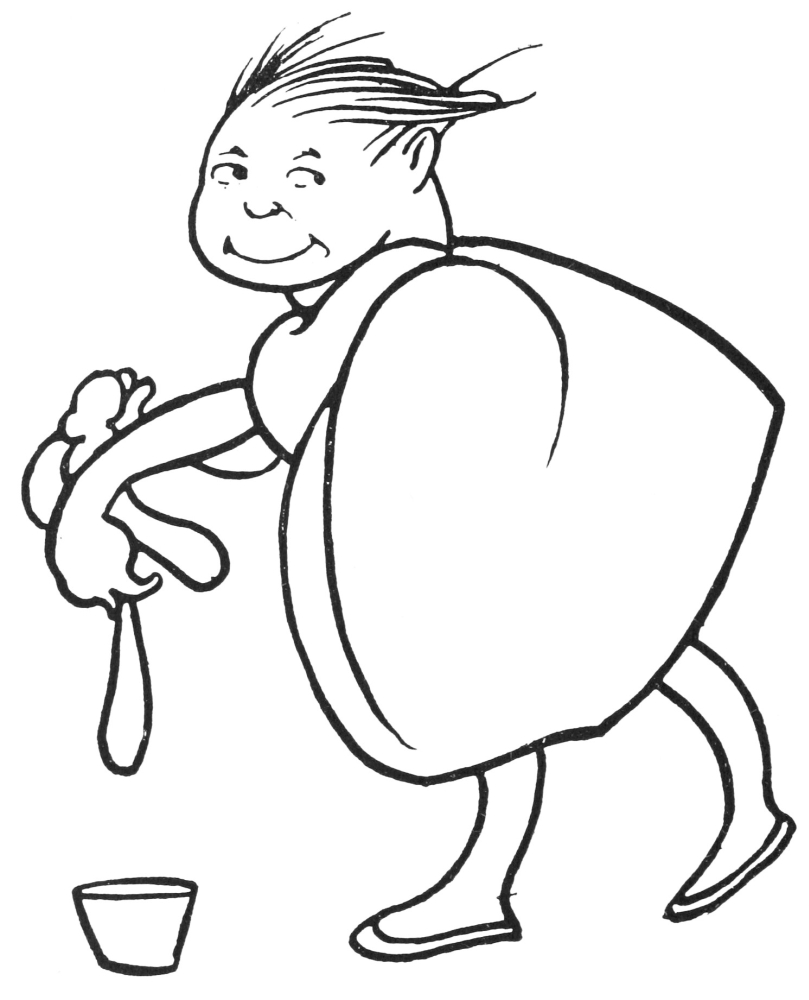
Why, the hot folks in Sahara,
And the cold Esquimaux,
Our little Clara know!
Clean Clara, the Poet sings,
Cleaned a hundred thousand things!{189}
She cleaned the hilt of the family sword,
She cleaned my lady, she cleaned my lord;
All the pictures in their frames,
Knights with daggers, and stomachered dames—
Cecils, Godfreys, Montforts, Græmes,
Winifreds—all those nice old names!
She cleaned the spring of a secret lock,
She cleaned the mirror, she cleaned the cupboard;
All the books she India-rubbered!
She cleaned some very old-fashioned lace;
The Countess of Miniver came to her,
“Pray, my dear, will you clean my fur?”
All her cleanings are admirable;
If you look in the walnut table!
She cleaned the tapestry, which was ampler;
Joseph going down into the pit,
And the Shunammite woman with the boy in a fit;{190}
You saw the reapers, not in the distance,
And Elisha coming to the child’s assistance,
With the house on the wall that was built for the prophet,
The chair, the bed, and the bolster of it;
Just like an eel; to spare invective,
There was plenty of colour, but no perspective.
However, Clara cleaned it all,
With a curious lamp, that hangs in the hall!
She cleaned the drops of the chandeliers,—
Madame in mittens was moved to tears!
The oldest bird that ever grew;
I should say a thousand years old would do—
I’m sure he looked it; but nobody knew;
She cleaned the china, she cleaned the delf,
She cleaned the baby, she cleaned herself!
To clean the cobwebs from the sky;
Some people say the girl will rue it,
But my belief is she will do it.
There’s a beautiful place in the walnut-tree;
The bough is as firm as the solid rock;
She brings out her broom at six o’clock.
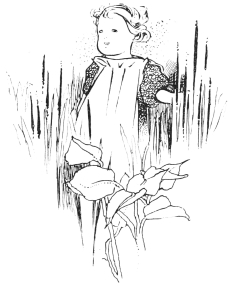
THE LAVENDER BEDS
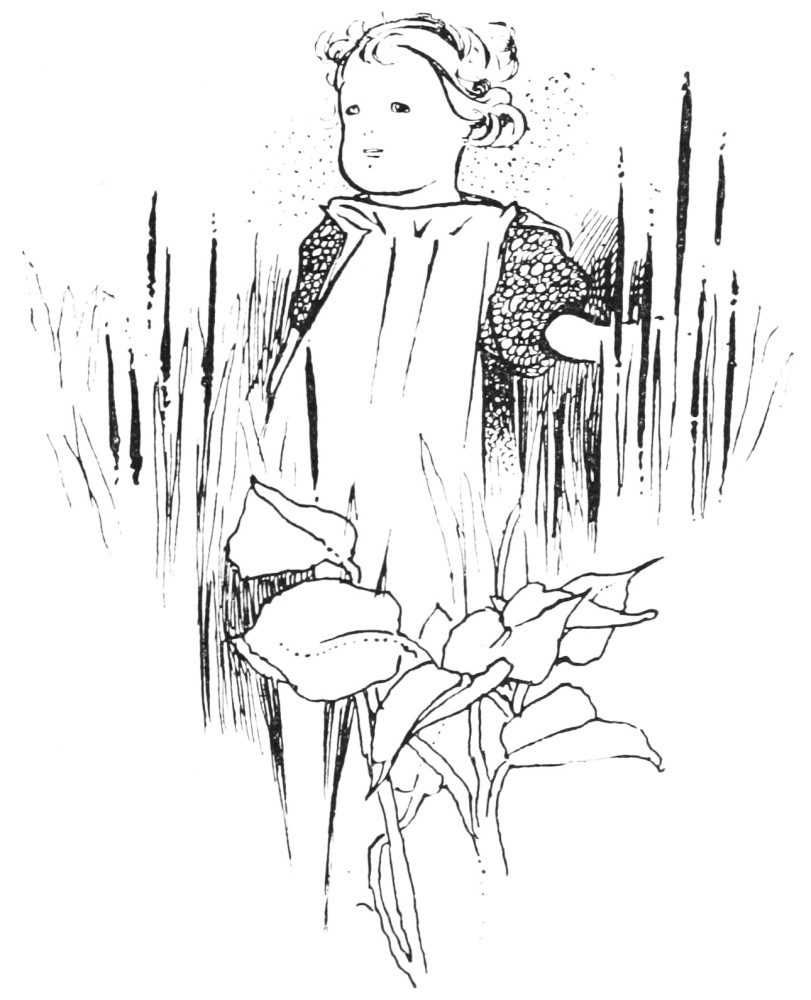
The sunflowers and hollyhocks stood up like towers;
There were dark turncap lilies and jessamine rare,
And sweet thyme and marjoram scented the air.{192}
’Twas too late in the year for the nightingale’s song;
The box-trees were clipped, and the alleys were straight,
Till you came to the shrubbery hard by the gate.
With mob-caps, or wigs, on their quaint little heads;
My lord had a sword and my lady a fan;
The music struck up and the dancing began.
Wherever they footed the dew was not wet;
They bowed and they curtsied, the brave and the fair;
And laughter like chirping of crickets was there.
A flutter, a shiver, was seen in the crowd,
The cock crew, the wind woke, the trees tossed their heads,
And the fairy folk hid in the lavender beds.
LITTLE DITTIES
I
Under a weeping willow;
When she went to bed she cried,
Wetting all the pillow;
Till her friends lost patience;
“What shall we do to stop her, pray?”
So said her relations.
In the zone called torrid:
Send her where it never rains,
Where the heat is horrid!
![[Image unavailable.]](images/i196_lg.jpg)
For her daily feeding;
Let her have a page an hour
Of the driest reading,—
All that kind of knowledge,—
Ancient pedigrees go with ’em,
From the Heralds’ College.
Six months of this drying,
Winifred will come back cured,
Let us hope, of crying.
Make those mournful faces,
And we shall not have to say,
“Wring her pillow-cases.”
![[Image unavailable.]](images/i198_lg.jpg)
II
And he had a little head that was just the proper size,
And two little arms, and two little hands;
On two little legs this Little Boy he stands.
Because that he could only be the very thing he was;
He wanted to be this, and then he wanted to be that;
His head was full of wishes underneath his little hat!{199}
I wish I was a giant to say Fee-fo-fi-faw-fum;
I wish I was a captain to go sailing in a ship;
I wish I was a huntsman to crack a nice whip.
I wish I was the man that lives up in the lighthouse tower;
I wish I was a sea-gull with two long wings;
I wish I was a traveller to see all sorts of things.
I wish I was a soldier, with a pistol and a sword;
I wish I was the man that goes up high in a balloon;
I wish, I wish, I wish I could be something else, and soon!”
That Little Boy this very day he stands in his own shoes;
That Little Boy is still but little Master What-do-you-call,
As much as if that Little Boy had never wished at all!{200}
He grubs about, and bumps his head, and bowls his hoop, and such;
And his father and his mother they say, “Thank the gracious powers,
Those wishes cannot wish away that Little Boy of ours!”
![[Image unavailable.]](images/i201_lg.jpg)
III
No doubt you have heard the name before—
Was a boy who never would shut a door!
And teeth be aching and throats be sore,
But still he never would shut the door.
“Godfrey Gordon Gustavus Gore,
We really do wish you would shut the door!{202}”
But Godfrey Gordon Gustavus Gore
Was deaf as the buoy out at the Nore.
“Godfrey Gordon Gustavus Gore,
Why don’t you think to shut the door?”
And threatened to pack off Gustavus Gore
On a voyage of penance to Singapore.
Pray do not send me to Singapore
On a Shutter, and then I will shut the door!”
But mind you do! For the plague is sore
Of a fellow that never will shut the door,
Godfrey Gordon Gustavus Gore!”
![[Image unavailable.]](images/i203_lg.jpg)
IV
Says he will neither have sup nor bite,
Nor comb to his hair, nor sleep in his bed,
Till he has done what he thinks in his head.{204}
To do before he eats, or drinks,
Or combs, or sleeps? Why, Timothy Tight
Thinks in his head to turn black into white!
He tried again with a great black cat,
He tried again with dyes and inks;
He keeps on trying to do what he thinks!
He tried with jet, and a blackamoor,
He tried with these till he got vext—
He means to try the Black Sea next.
![[Image unavailable.]](images/i205_lg.jpg)
V
How shall mammy dress her?
Is not too proud
To find soft wool to dress her.
Is a merry tree,
And will find the pink to dress her.
Will find the white,
The beautiful white to dress her.
Are sweet and good,
And will find the green to dress her.
With buds for a buckle,
Will make a girdle to dress her.
Both silver and gold
In the stars, and they will dress her.
VI
That when you spoke you had to bawl
Through both your hands, put like a cup,
His head was such a long way up!
His wife had to go up a ladder
Whenever she desired a kiss—
And he, alas, was proud of this!
That ever grew since time began,”
As down on a house-top he sat;
Well, he was tall; but what of that?
![[Image unavailable.]](images/i208_lg.jpg)
Was punished for his vanity:
He grew and grew,—the people placed
A telescope to see his waist!
Without a telescope his knee;
He grew till he was over-grown,
And seen by over-sight alone!
![[Image unavailable.]](images/i210_lg.jpg)
LITTLE DITT
To sea is gone
All in a wicker cradle;
The cradle creaks,
The cradle leaks,
But John has got a ladle.
![[Image unavailable.]](images/i211_lg.jpg)
VIII
Is Lumpy Loggerhead;
His greatest joy is—oh, for shame!—
To spend his time in bed.{212}
That make your blood run chill;
And they encourage crowing cocks
Beneath his window-sill.
In vain the cocks do crow;
Empty on him a water-butt,
And he will say, “Hallo!”
And in a second more
He sleeps—and, oh! to see him smile!
And, oh! to hear him snore!
Sleep in his very shape;
And, though you may be brisk and strong,
You often want to gape
Whose bed is all his joy.
How glad I am he is not here,
That very sleepy boy!
![[Image unavailable.]](images/i213_lg.jpg)
IX
To eat whatever came in his way;
This giant was greedy, this giant was grim,
And the people were all afraid of him.{214}
And a dainty damsel he there did meet;
“What is your name?” says he to her,
And she says, “Lucy Locket, sir.”
And you will just fit my waistcoat-pocket;”
So said the giant, and popped her in,
And the pocket was more than up to her chin.
Your father and mother I mean to eat.”
But Lucy, she thought, “You wicked man!”
And then to tickle him she began.
He scarcely felt it at first at all;
She tickled and tickled, and by degrees
He felt as if he should like to sneeze!
But he never had laughed in his life before,
And now he began to look less grim
As Lucy kept on tickling him.
“He, hee!” says the giant, “ha hah! haw haw!”
Oh, they were puzzled, but Lucy Locket
Made signs to them out of his doublet-pocket.{215}
His mouth is stretched from ear to ear;
Thinks he, “To laugh is a pleasant plan,
So now I will laugh as long as I can.”
As Lucy kept on tickling him;
He laughed till the tears ran down his face,
And he fell down, flop, in the market-place!
And close behind him the people crept;
With twisted cables and iron bands
And things of that sort they tied his hands.
They said, “Pray, what would you like to eat?”
And Lucy got into his pocket again,
And made him laugh like a thousand men!
He laughed when they woke in the morning light,
He laughed that week and the fortnight after,—
Travellers came to hear his laughter!{216}
In a show as high as the Monument;
They gave to Lucy a penny clear
For every person who came to hear,
So now the girl is as rich as a prince,
For he has been laughing ever since.
![[Image unavailable.]](images/i217_lg.jpg)
X
Set the hoop a-rolling;
The hoop will wait
At the turnpike gate,
And the man will take the toll in.
![[Image unavailable.]](images/i218_lg.jpg)
XI
![[Image unavailable.]](images/i220_lg.jpg)
XII
Why, pen and ink,
And a rosewood desk, or better;
The old black hen,
She mended the pen,
And the little pig wrote a letter.
![[Image unavailable.]](images/i221_lg.jpg)
XIII
What he wrote under it I’m ashamed to tell;
All in large capitals Johnny wrote PECTURE,
Stuck it up upon the wall, and said that he would lecture;
What a funny lecture, though, Johnny will deliver;
While, with aches at his mistakes, all the people shiver!
![[Image unavailable.]](images/i222_lg.jpg)
XIV
Find the cat,
Who will be first behind the cat?
The cat’s on the mat
In a billycock hat,
And that’s the way to find the cat.
![[Image unavailable.]](images/i223_lg.jpg)
XV
My doll has had an accident and wants a pair of new eyes;
Strong legs, long legs, one leg and two legs,
My doll has had an accident and wants a pair of new legs;
Dribble dribble, trickle trickle, what a lot of raw dust!
Dolly had an accident, and out came the sawdust!
![[Image unavailable.]](images/i224_lg.jpg)
XVI
Put the cups for tea;
Two, three, one,
Toast a Sally-Lunn.
Fanny sat down
In a new gown;
Emma spilt the milk
Over the satin and silk,
One, two, three,
“Never wear silk at tea,{225}”
So said Dimity Dunn;
Ever so many slices,
Bread and butter, and niceys;
One, two, three,
White sugar for me!
Two, three, one,
Now the tea’s done.
![[Image unavailable.]](images/i226_lg.jpg)
XVII
See, he has emptied the cup!
And now he sits a-reading,
But the book is wrong-side up;{227}
Before it is time to sup?
His fist he doubles;
He blows little bubbles;
He splutters and stutters,
And tells you his troubles,
Reading the book that is wrong-side up!
![[Image unavailable.]](images/i228_lg.jpg)
XVIII
Mind the water!”
She said she never should,
So she went in
Right up to her chin,
And did not find it good;{229}
And made her twitter,
As nobody thought she could!
She cried in haste,
“What a nasty taste!
I wish I had understood!”
A beautiful flavour
Is not to be found in the flood;
And wine or tea
Is the drink for me
At a picnic in the wood!
![[Image unavailable.]](images/i230_lg.jpg)
XIX
And Curly Wurly
Went to the fair together;
It rained in the night
For more delight,
And it was windy weather.{231}
Laughed and in-and-outed;
Hurly Burly ran for miles,
Hurly Burly shouted.
Except just when she pouted!
The Quakeress peeped from under the tiles,
Saying, “If I could smile as thou did!”
Like Singlestick and Latin;
Curly Wurly a sweet tongue had,
And she was soft as satin.
When they had their airing,
Came home betimes, like a poet’s rhymes,
Each of them with a fairing.
That went with a noise like thunder;
And she had a beautiful true-love knot,
That never would come in sunder.
![[Image unavailable.]](images/i232_lg.jpg)
XX
Oh, what a job!
Always walked on his head;
His mother would sob
To his brother Bob,
And his father took to his bed.{233}
His head to suit,
But a horrible thing must be said,—
His hair took root,
And began to shoot,
One day, in the garden bed!
With the help of his hands
And a little support from his nose:
The gardener man,
With the watering-can,
Says, “Gracious, how fast he grows!”
![[Image unavailable.]](images/i234_lg.jpg)
XXI
What does the east wind do?
Shine, shine, sunlight!
And what does the sunshine do?{235}
The sunshine clear
Goes there and here,
And searches in every nook,
And, while it is going,
The wind is blowing
Farther than you can look;
The east wind blows,
It sweeps, it goes
The whole world through;
As the world grows green,
It sweeps it clean,
And the sky is a pale, cold blue:
Blow, blow, east wind,
Finish your blowing, do!
And the west wind, dear, will soon be here,
With skies of deep, warm blue.
BABY’S BELLS
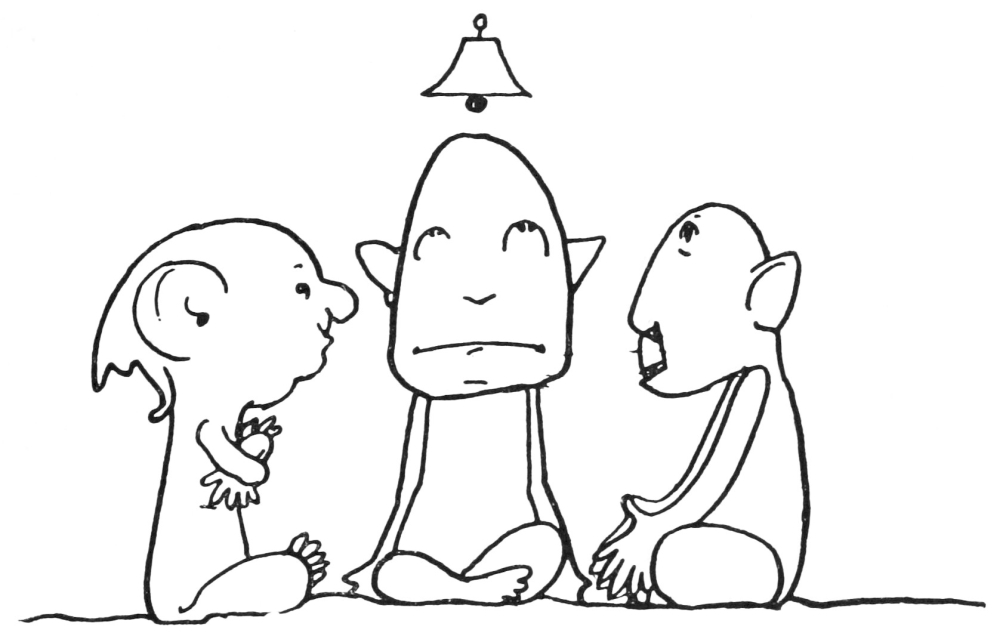
I
Went and sat under the bell,
Saying, “Bell, bell, bell,
What have you got to tell?”
And the clapper rose and fell,
And the bell rang well
Over Ding, Dong, and Dell,
As they sat under the bell.{240}
Walk up, ladies and gentlemen!
Here are their pictures, as you see,
Ding, and Dong, and Dell make three,
There they are, and here are we.
And, not to go wrong, her brother Dong,
A little older and ever so much bolder,
And both of them seem ready to sing,
And Dell will belong and take part in the song.
Dell wears a mask, and hides till you ask,
And peeps at you from over a screen;
But if you must know the truth of it,—well!—
I really am not so sure about Dell.
Went and sat under the bell,
Saying, “Bell, bell, bell,
What have you got to tell?”
And the clapper rose and fell,
And the bell rang well
Over Ding, Dong, and Dell,
As they sat under the bell.
![[Image unavailable.]](images/i241_lg.jpg)
II
Ding and Dong were gaily talking:
“My eyes are strong,
You know,” says Dong,
“And once on a time I saw through a wall.”
“And so did I,” says little Ding,
“I also can do a wonderful thing.”
Poor little Ding began to cry.
“You didn’t,” says Dong; “it isn’t true——”
I did, you didn’t, no more did you,
You didn’t, I did, you didn’t, pooh!{242}
“You both deserve to be put to bed.
When Ding saw through a wall, the wall
Was made of glass, and that is all!
When Dong saw through a wall, it had
A hole in it.” Then both were glad,
Ding and Dong, that they thought to ask
Dell of the screen, who wore the mask;
And Ding and Dong said, “Clever Dell;
Who would have thought that Dell could tell?
![[Image unavailable.]](images/i243_lg.jpg)
III
Dell so very clever.
Say they have made up their mind
To go in masks for ever.
Is there wisdom in a mask?
They are none the wittier yet;
Is there beauty? do not ask!
They are none the prettier yet!
![[Image unavailable.]](images/i244_lg.jpg)
IV
They made such a noise
At play, that they frightened away their toys.
Dolly, she fled,
And went to bed,
Because she had caught such a pain in her head!{245}
The German bricks,
The candlesticks,
The elephant,
And the cormorant,
The ass and the horse,
And the rest in their course,
(But there was no shark,)
Of the Noah’s Ark,
The saucers and the cups,
And the little woolly pups,
(You heard them bark)
Belonging to the Ark,
Were frightened, like all the rest of the toys,
And hid themselves from the dreadful noise:
So, if I were you, next time I played,
I would not be so loud in the noise that I made!
![[Image unavailable.]](images/i246_lg.jpg)
V
Swift as an arrow,
What are you doing there in the sun?
A hunter am I,
And the white butterfly
I am chasing to-day in the summer sun.
![[Image unavailable.]](images/i247_lg.jpg)
VI
Till the day is done,
Reading and working and making fun:
Then look at the moon,
And eat with a spoon
A basin of sop that is made from a bun.
![[Image unavailable.]](images/i248_lg.jpg)
VII
The starling has had a cherry,
A cherry as soft as a baby’s cheek,
I can see the pulp hanging out of his beak.
This is the lass, this is the lad,
That like to see the starling glad!
![[Image unavailable.]](images/i249_lg.jpg)
VIII
That looks very snug;
And here is a cat—
What shall we be at?
You take off your bonnet,
I take off my hat,
And let us sit upon it,
And talk to the cat—
Not upon the hat, you know,
But on the little rug—
The hat would not come pat, you know,
But, oh, the rug is snug!{250}
Ding, Dong, Dell,
Said “Bell, bell, bell!
What have you got to tell?”—
And you hear what the bells say
From Greenwich up to Chelsea;
Ring, ring, ring,
About this, and the other thing,
These, and those, and that,
The cat, and the rug, and the mat,
The Noah’s Ark and the sparrow,
And the sop as soft as marrow!
And whether you live by Bow bells,
Or out in a place with no bells,
And neither at Greenwich nor at Chelsea,
You shall hear what the different bells say
From Ding, Dong, and Dell,
Who like to sit under the bell.
IX
“Listen to the bell!”
Now it was not bell, but bells,
For the bells that rang were many,—
Bells upon bells;
You shall have a silver penny,
Or almost anything else,
If you can count the bells
That are ringing. And what for?—
Ding, Dong, and Dell
Will explain every bell,
That is to say, the bells,
Neither less nor more
Than the meaning of the Bells.
![[Image unavailable.]](images/i252_lg.jpg)
X
Says One to Two;
Says Two to One “I’m plenty;”
“Think again!”
Says little Ten,
And, “Think again!” says Twenty.
![[Image unavailable.]](images/i253_lg.jpg)
XI
Standing in the garden-bed;
Wind from the south, wind from the west,
Can you tell me which is best?
![[Image unavailable.]](images/i254_lg.jpg)
XII
All in good time;
Then in his very resence,
The bells set up a chime;
The bells began to ring,
All round the school-room,
“Johnny is a king!”
![[Image unavailable.]](images/i255_lg.jpg)
XIII
Six travellers in a dale,
Feeling weak about the knees,
Resting under six elm-trees;
Six robbers, after them,
Draw their swords and say, “Ahem!”
Then the travellers, who have not
Any weapons with them got,
Shake and shiver in their boots,
And they play upon their flutes
Then the robbers six remark
To the travellers, “It is dark.{256}”
“No,” say they, “it is not quite.—
Every traveller strikes a light!
Will you see some conjuring tricks?”
“Yes,” say all the robbers six;
Then six tigers and six lions
Came along and roared defiance,
And the thieves and travellers too
Could not tell what next to do:
“This,” said they, “is very sad!”
Then there came an earthquake bad,
And the air was very hot,
And it swallowed up the lot.
XIV
Had finished a song,
One day, they went to Dell,
And to him or her
Said, “We should prefer
That you should do something as well,—
Something amusing
Of your own choosing.”—
“And so I will,” says Dell.
Ding, dong, dell,
A cracked old bell,
A shaky old bell,
A quavering old bell,—
Can anybody tell
What the cracked old bell is saying?{258}
“Without measuring or weighing,
And this is what it is saying;
Ding, dong, dell!
Goes the cracked old bell;
And this is what it is saying:
Lives in an old town in an old-fashioned way;
You cross an old bridge, and go up an old road,
And down an old lane, to find out her abode.
She looks through old goggles as round as the sky;
She keeps an old dog, and a very old cat;
She sits in an arm-chair much older than that.
She only hears half of the tale you relate;
She puts her old ear-trumpet up, and cries ‘What?’
And when you say ‘Freezing!’ she thinks you say ‘Hot!’
![[Image unavailable.]](images/i259_lg.jpg)
As even and slow as a rook on the wing;
It booms in her old ear; she shakes her old head;
That old bell says, Put out the lights and to bed!”
![[Image unavailable.]](images/i261_lg.jpg)
XV
Bell, bell, bell!
What have you got to tell?
What is it the bells say,
From Greenwich up to Chelsea,—
The bells of wandering fancies,
Up and down
By sea and town
Like knights in old romances?
What is it that the bells say?
What is it you hear Dell say?
Explaining what the bells say?{262}
A morning in September;
A lily red; a jasmine white;
What more do you remember?
A partridge on the moorland;
A stack of wheat; an afternoon
In a yacht out by the Foreland.
Apples and pears grown redder;
And the ways of the birds, which, without any words,
Say, “Come let us consider!”
![[Image unavailable.]](images/i263_lg.jpg)
XVI
A sort of heavy drop,
A distant blunt bark,
As if it was made in the dark,
And lived underground like a mole,
And the rope was as black as a coal.
O bell, what a comical voice!
What a stupid sort of noise!
Do you call it ringing or drumming?
And who is it that is coming?
It must be a bogie of some sort,
A blunt, black, stupid, dumb sort!
Hark! what do we hear this bell say?
And what do you hear Dell say?
And very black is he,
So black you cannot see his face,—
Not you! No more can we!
Breast and back;
Teeth and eyes,
Lips likewise;
Just like a blot
Tied in a knot!
The chalk is black, and so are the geese;
The milk, the eggs, the flour, and the cheese;
The sheets and the shirts; for it all agrees!”
And dine off black bread, and flesh of black geese,
Where the grass grows black on the Blackaway leas!
![[Image unavailable.]](images/i266_lg.jpg)
XVII
I said to the bell as it rang, as it rang,
And “Never you mind!” a goblin sang,
One who did dwell
Within the bell!
Wibbling-wobbling
Went the bell,
And what had the goblin
Got to tell?
Why, ill said or well said,
This is what the bell said;
Wisdom bell
Or nonsense bell,
This is what the bell said:
Of her bonnet thought too much;
Strutting up and down she went,
(People wondered what she meant).
Folks said, “Look how Betsy Bounce
Takes her walks around the nation!”
She thought this was admiration.
“Could my lovely bonnet see,{268}
See my bonnet, but without
All this walking round about!”
Though her bonnet was admired,
Of this walking round the nation
After people’s admiration.
One fine day this foolish lass
Found her bonnet growing, growing
On her head like flowers a-blowing!
Grew the bonnet on the child,
Farther back and farther out,
Farther down and round about!
Both the strings appeared to be,
Till the bow beneath her chin
Shut her up and shut her in.
When her bonnet filled the air,
Russian, Turk, and Mexican,
Folks in India and Japan!{269}
All the world can now admire!
Yet perhaps she will not pout
When the bonnet is worn out.
Cannot, for a time, procure
Betsy Bounce another hat,
So she must keep on with that.
![[Image unavailable.]](images/i270_lg.jpg)
XVIII
That are upon the heath,—
The ferns stand tall and stately,
The bells hang underneath;
But I can count the tassels
As big as flowers of clover
That hang on baby’s curtain,
The curtain that hangs over;
And when I rock the cradle
The tassels swing and swing,
And they make fairy music,
And baby hears them ring;
Ding-dong in the morning,
And in the evening too,
Rhime, chime, in fairy time,
Baby, dear, for you!
![[Image unavailable.]](images/i271_lg.jpg)
XIX
Ding was looking through the window-pane,
Dong was counting drops of rain,
And Dell was thinking with might and main;
But all of them listened to the bell again,
A wisdom bell,
Or a nonsense bell?{272}
She knows what the bells say
From Greenwich up to Chelsea,
She will explain what the bells say!”
![[Image unavailable.]](images/i273_lg.jpg)
XX
The little fellow that would stammer?
He talked at such a headlong rate
That at last he got through Stuttering Gate.{274}
They come to Stuttering Gate at last;
Some boys take warning and they pause,—
Not thus with Reuben Rammer ’twas.
He went on stuttering fast and far;
And what was the result? Why, now
He speaks no better than a cow!
For several months to speak a word;
His mouth works open like a door,
His arm goes like a semaphore!
His jaws jolt up like jaws on wires;
But Reuben Rammer could not speak
When last I saw him this day week!
A pencil to express your views,
Try to say, “Hallo, Johnny Brown!”
And yet be forced to write it down!
![[Image unavailable.]](images/i275_lg.jpg)
XXI
Over land and sea,
And the wind, in its rounds,
Blowing fresh and free,
Carries the ringing
Far out of sight,
There where the clinging
Sails are white,
White on the sea;
And over the hills.{276}
Of the sweet bell go?
Over the round
Where the waters flow,
And up to the bound
Where the winds can blow.
Is it lost, is it found,
Is it gone, do you know?
NONSENSE RHYMES
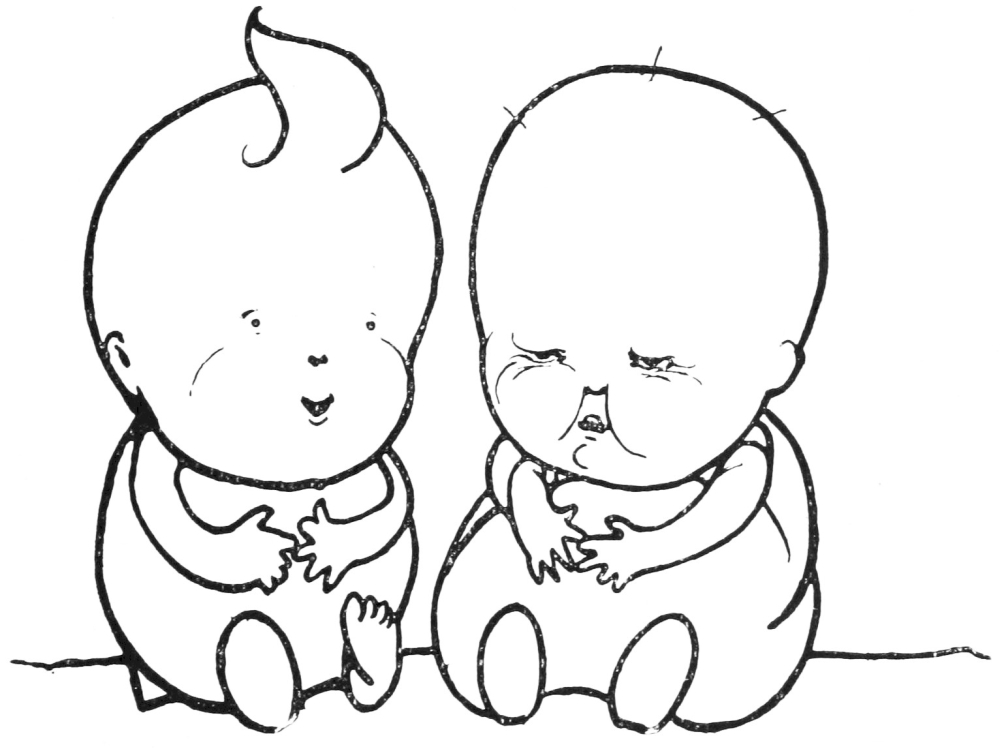
TUESDAY
JOLLY JACK
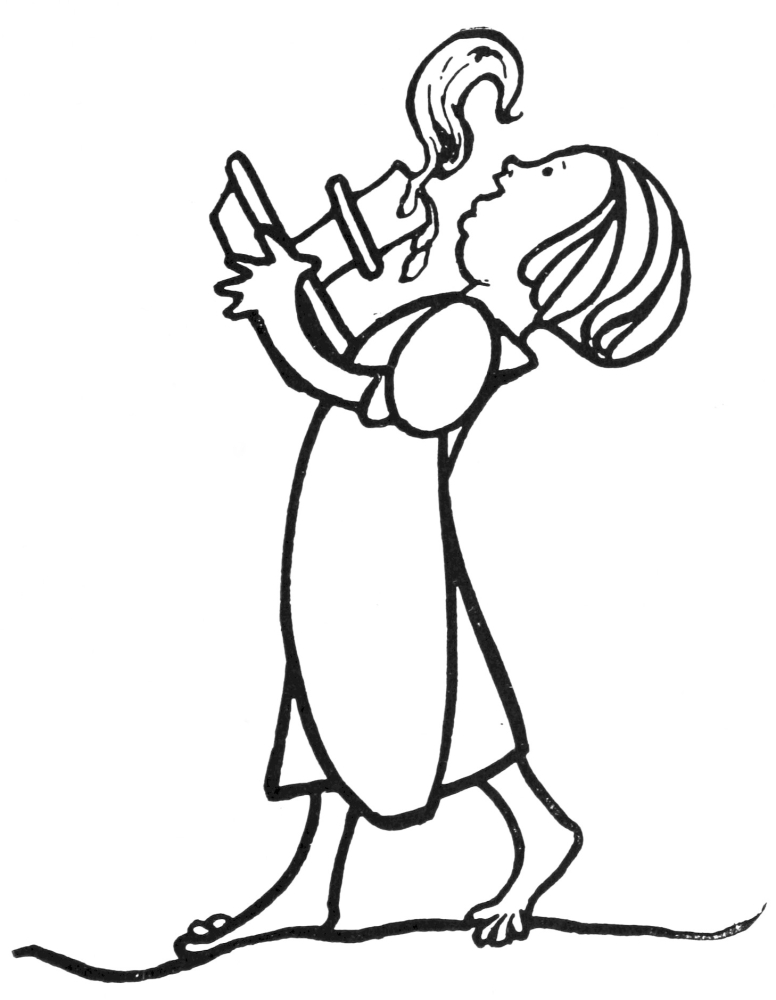
And white was black,
I would swallow a light
And live in a sack,
And swim on a kite,”—
Says jolly Jack.
THE DUCK AND HER DUCKLINGS
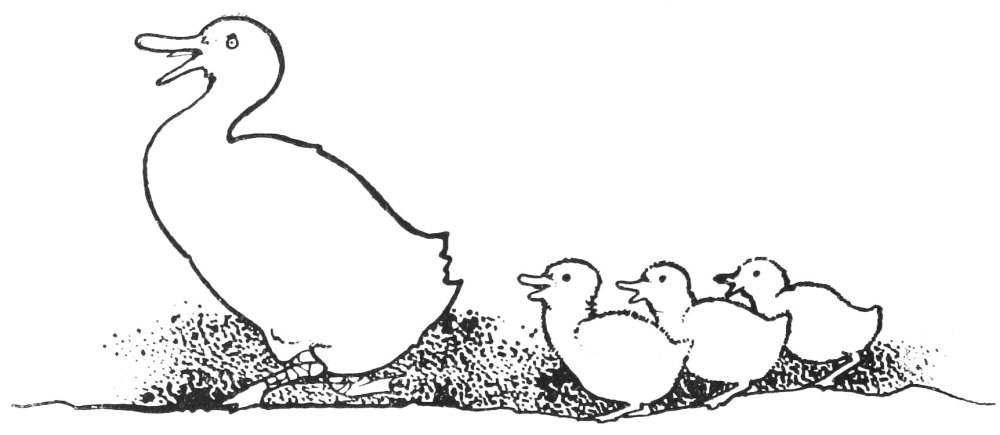
Three little ducklings, chuck, chuck, chucks!
She took them for a walk,
And she march’d them back,
And taught them how to say,
“Quack, quack, quack!”
But a duck is not a duckling, though,
“Quack, quack, quack!”
Then cried, “Now, ducklings, mark my gait,
So much, you see, depends on the style of the back;”
And the ducklings said, “Yes, mamma,
Quack, quack, quack!”
LITTLE BEN BUTE
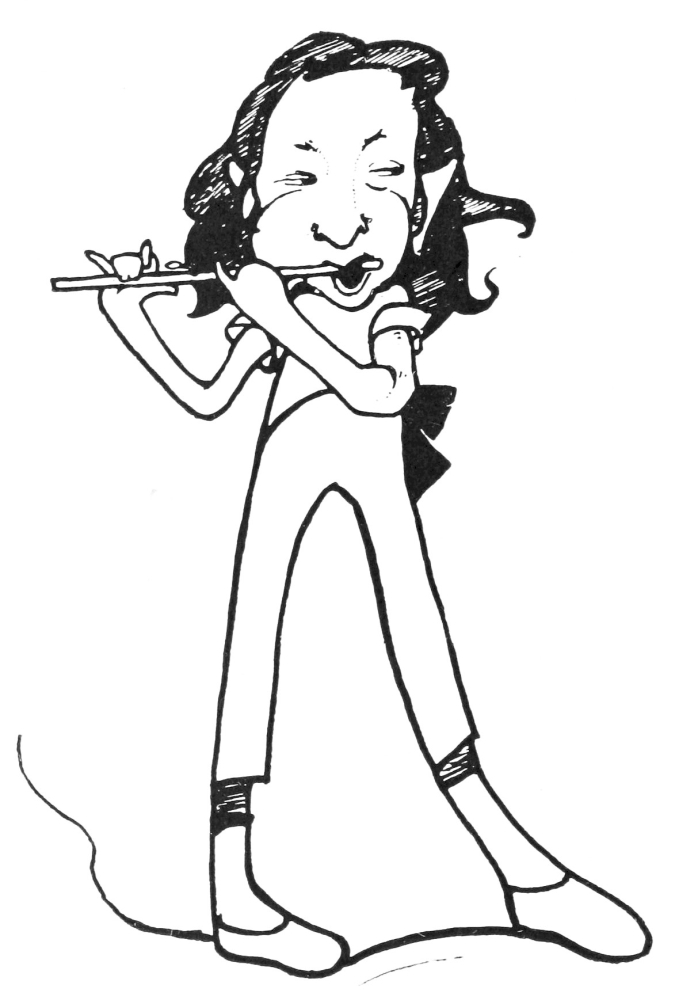
Had a flute, flute, flute,
And went about the world in a knickerbocker suit;
Down, up and down,
And round about the town,
He played and he played tootle-too, toot, toot!
Tootle-too, tootle-too-ey!{285}
So the notes rose and fell,
Tootle, tootle-too, with a twirl and a squeak;
The wind, puff, puff,
Was forty times enough,
That he sent into the flute from his cheek, cheek, cheek,
Tootle-too, tootle-too-ey!
Said, “This is very bad!
Our ears they are splitting, with your toot, toot, toot;
Is there no one within reach—
What, no one!—who will teach
Little Bute how to play upon the flute, flute, flute?”
Tootle-too, tootle-too-ey!
THE DREAM OF A GIRL WHO LIVED AT SEVEN-OAKS
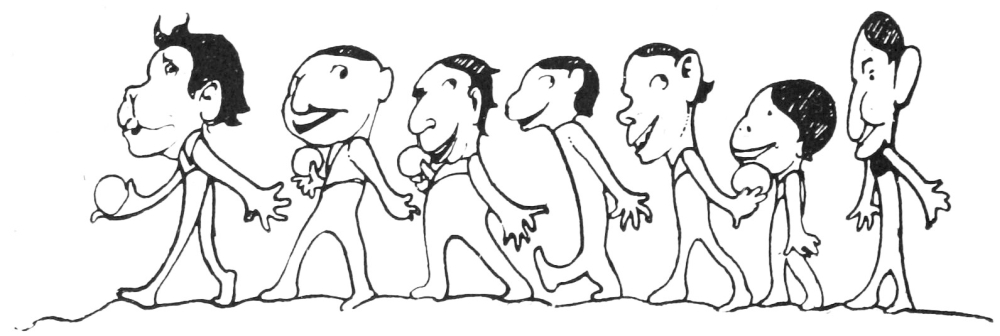
Seven swift sailing-ships white upon the sea;
Seven bright weather-cocks shining in the sun;
Seven slim race-horses ready for a run;
Seven gold butterflies, flitting overhead;
Seven red roses blowing in a garden bed;
Seven white lilies, with honey bees inside them;
Seven round rainbows with clouds to divide them;
Seven pretty little girls with sugar on their lips;
Seven witty little boys, whom everybody tips;
Seven nice fathers, to call little maids joys;
Seven nice mothers, to kiss the little boys;
Seven nights running I dreamt it all plain;
With bread and jam for supper I could dream it all again!
THE DREAM OF A BOY WHO LIVED AT NINE-ELMS
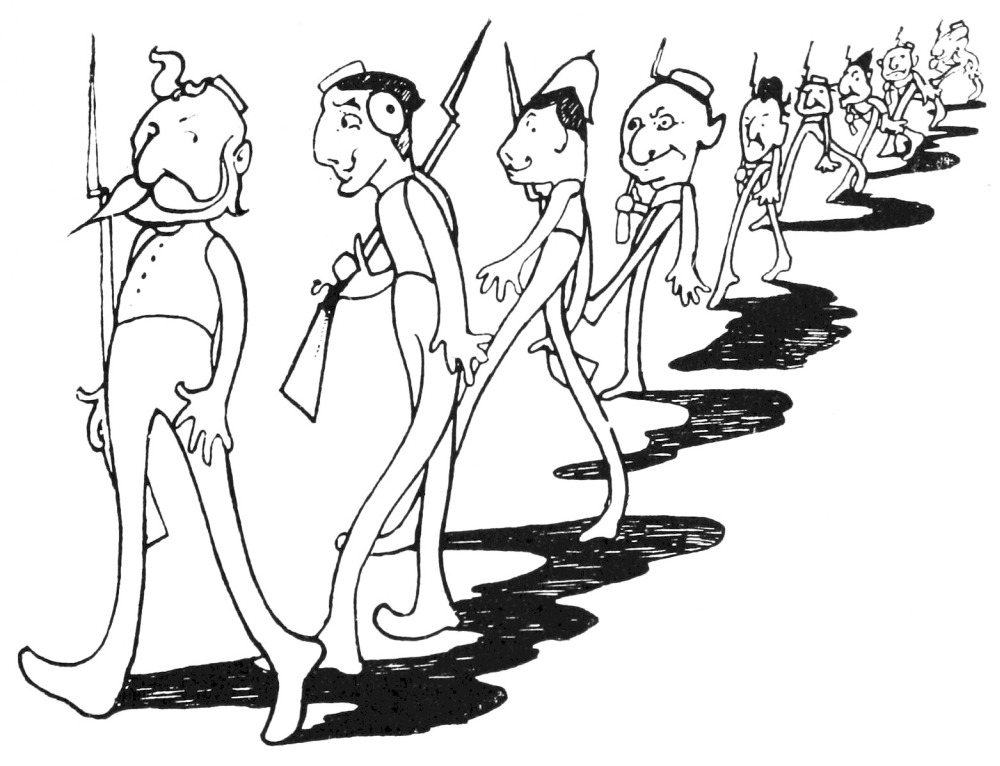
Nine bakers’ baskets, with hot cross-buns;
Nine brown elephants, standing in a row;
Nine new velocipedes, good ones to go;
Nine knickerbocker suits, with buttons all complete;
Nine pair of skates with straps for the feet;{288}
Nine clever conjurors eating hot coals;
Nine sturdy mountaineers leaping on their poles;
Nine little drummer-boys beating on their drums;
Nine fat aldermen sitting on their thumbs;
Nine new knockers to our front door;
Nine new neighbours that I never saw before;
Nine times running I dreamt it all plain;
With bread and cheese for supper I could dream it all again!
FOUR LITTLE HISTORIES
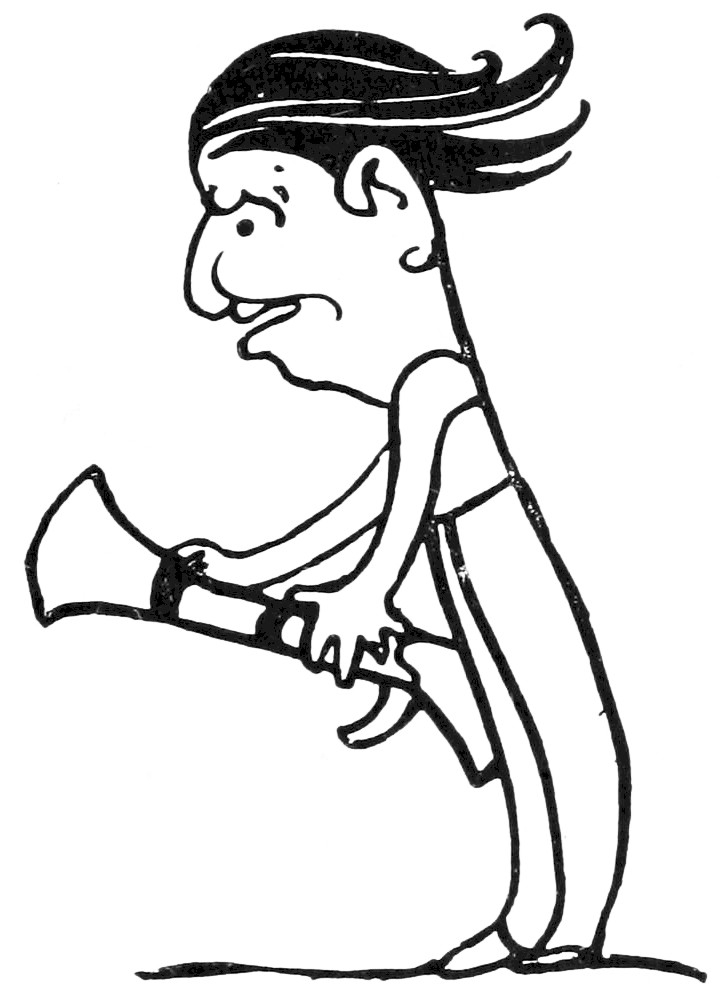
I
And he went to a cake shop, and aimed at a bun;
The bullet it shot the old baker’s old cat,
“Stop thief!” says the baker, “why, what are you at?”
![[Image unavailable.]](images/i290_lg.jpg)
II
And oh, but they were thin men!
Bags of bones,
Or bags of stones,—
I think they couldn’t have been men!
![[Image unavailable.]](images/i291_lg.jpg)
III
![[Image unavailable.]](images/i293_lg.jpg)
IV
“I live in a palace.”
Says Alice to Tim,
“I don’t believe him.”
Says Tim to his cousin,
“I love you three dozen;”
The cousin, she wondered,
And asked for a hundred,
Instead of three dozen:
Says Tim, “You are fussing;
Three dozen I love you,
If that will not move you,
My love I will carry
To Magsie or Mary.”

A BIG NOISE

Lashing their tails;
Twenty guns
Fired at once;
Twenty cats
Howling in flats;
Twenty parrots
Calling carrots;
Twenty apiece,
Besides, of these,—
Lions roaring,
Giants snoring,
Waggons rolling,
Bells tolling;
These together,
In stormy weather,
With a steam hammer,
Would make a clamour.
THE ALARM
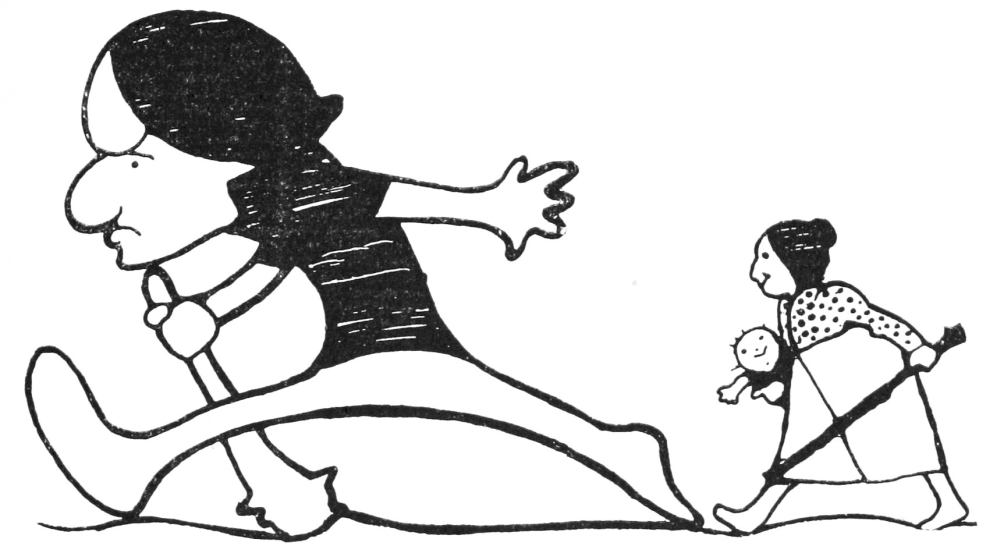
For Baby? Nothing of the kind!
But even if a Giant were to come,
With an eye like an Orleans plum,
And hands like wolf’s paws,
And teeth like horrible saws,
And a voice like a dreadful cough,
And he carried baby off,
And fed her up in a dungeon
(To fatten her for his luncheon),
A dungeon as high as the stars;
And, if the dungeon had bars,{296}
And was guarded by a horrid vulture,
And an eagle of savage culture;
And if from the wall of the castle
A dragon hung like a tassel,
And the castle was built among mountains,
In a lonely situation
At the very end of creation,
With flames spouting round it like fountains—
Why, mother could find her way
To the castle any day,
And make the old dragon wriggle,
And fight the vulture and the eagle,
And blow up the castle—pop!
And bring baby home to her sop,
And the sop should have sugar extra,
Because the Giant had vexed her.
CICERO BRICK
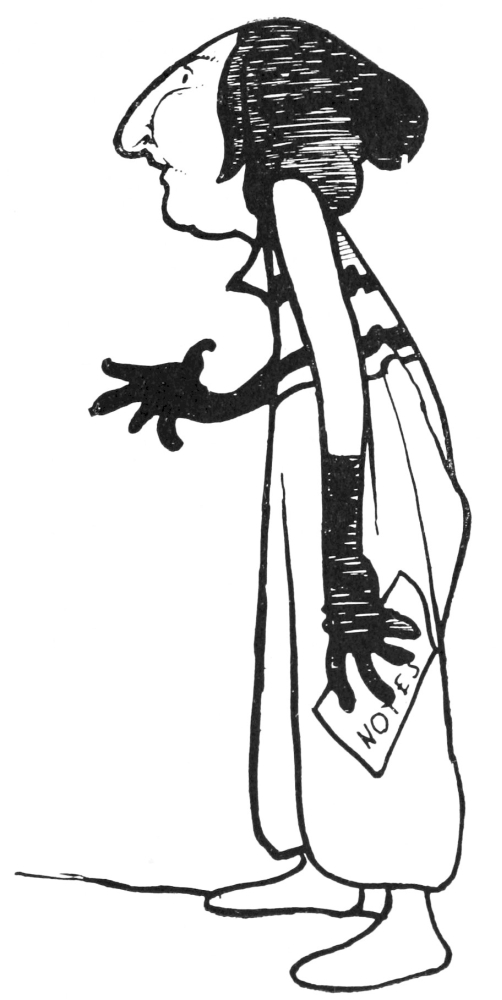
I
Whose name, as it happened, was Cicero Brick;
He fell in love in desperate fashion
With a girl who fully returned his passion.{298}
What! marry a boy named Cicero?
Never, with my consent, my dear!”—
What happened next we soon shall hear.
“Cicero Brick and you may wed
When he has spoken an oration
To an enormous congregation!”
II
When Cicero Brick did advertise
A course of lectures—five or six,—
O, what a notion of Cicero Brick’s!
For these orations he said was meet;
The first oration that he spoke
Two dozen heard it—what a joke!
And then the public came no more;
But Cicero Brick—this who shall blame?—
Spoke the oration all the same.{299}
“And tell me what you in it see
About the oration’s being heard!
It says, ‘delivered.’ I keep my word!”
III
The father well-nigh did relent;
He said, “I never saw before
So persevering an orator!”
For two hours in that empty place!
The servants at the Hall let out
The fact, and it got noised about
That Cicero spoke these orations
In that huge Hall, week after week,
With no one there to hear him speak.
A rush, to see and hear it done;
“We really must hear Cicero Brick!”
All London cried. The crowd was thick.{300}
Hundreds that night were turned away;
And Cicero Brick spoke this oration
To an enormous congregation!
Now kept his promise, as he should;
The wedding feast of Cicero Brick
Came off at once near Hampton Wick;
And all the guests gave three cheers for
The persevering Orator.
THE OBSTINATE COW
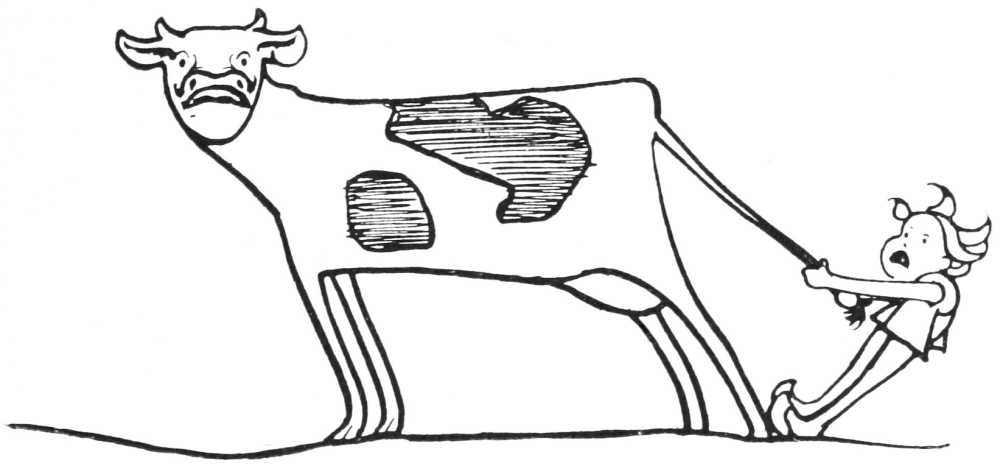
It all befell I will tell you how;
And that, if you please, is the Resolute Boy,—
He tugs at her tail, and he shouts, “Ahoy!”
That the milk of an Obstinate Cow to drink
Must make a fellow grow obstinate—
There they are by the Manor-house gate.{302}
On the milk of the cow that you see here;
Her name is Dapple, his name is Jim;
He pulls the cow, and the cow pulls him.
That trespassers will be prosecuted;
The boy is right, and the cow is wrong,
But the cow, as it happens, is much more strong.
We soon shall see how it all will end:
The Squire had a boy who was weak of bone,
And very much wanting in will of his own.
The Squire comes out, and he says to him,
“How came you so plucky?” and Jim says, “How?
I lived on the milk of this Obstinate Cow!”
“Your father shall sell me this obstinate beast,
And you shall be cowherd.” So said, so done,—
The boy and his father enjoyed the fun.{303}
And very much wanting in will of his own,
Was fed on the milk of the Obstinate Cow,
And, oh, what a change! You should see him now!
’Tis dull as a ditch and as void of wit,
Yet he makes it up, and from day to day,
“Do change your mind!” the people say;
But his will is so strong that the people find
They cannot induce him to change his mind!
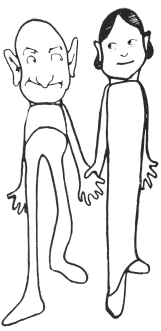
LAVENDER LADY
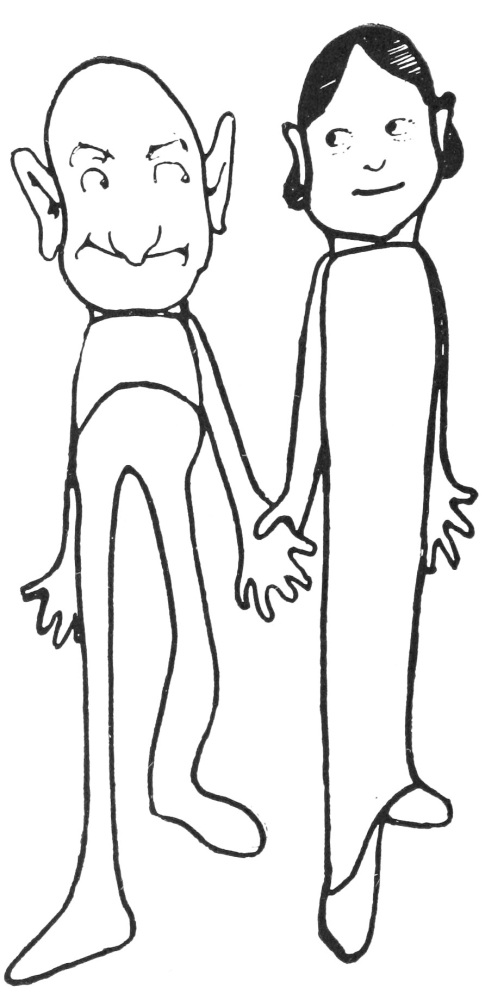
I
![[Image unavailable.]](images/i306_lg.jpg)
II
And lived in a palace in Lavender Lane;
Flowers and provender!
Sweet Lady Lavender
Lived in a palace in Lavender Lane!{307}
Lavender House is not a long way;
Puddings and pies,
And turkeys’ thighs,
And peacocks’ tails, too, all over eyes!
If ever you go to London Town:
In all the nation
There’s no relation
So kind as she is in London town!
![[Image unavailable.]](images/i308_lg.jpg)
III
(Loud laughed the Scavenger),
“Did you look at her through glass,
Proud Madam Lavender?{309}”
Laughed Lady Lavender
To the New Moon all forlorn.
Light Lady Lavender.
Proud Lady Lavender.
O the snow fell fast and thick,
Poor Lady Lavender!
Proud Lady Lavender;”
O but she had dainty feet,
Soft Lady Lavender.
Soft Lady Lavender,
Up the Mall and down the Mall,
Proud Lady Lavender.
Proud Madam Scavenger?
Are your slippers cold and wet?”
Poor Lady Lavender!
Wept Lady Lavender,
But the broom had turned to gold—
Loud laughed the Scavenger.{310}
Laid up in lavender;
Do you see a golden stitch,
And a silver P in provender?”
Rich Lady Lavender;
Then she danced all round the room,
Light Lady Lavender.
Witch-lady Lavender;
Ladle the gold and silver up,
Proud Lady Lavender.
Laughed Lady Lavender;
“Here’s a golden guinea too,”
Kind Lady Lavender!
(China plates and provender),
Now we’re on Tom Tiddler’s Ground,—
Laugh, Lady Lavender!
ODD RHYMES
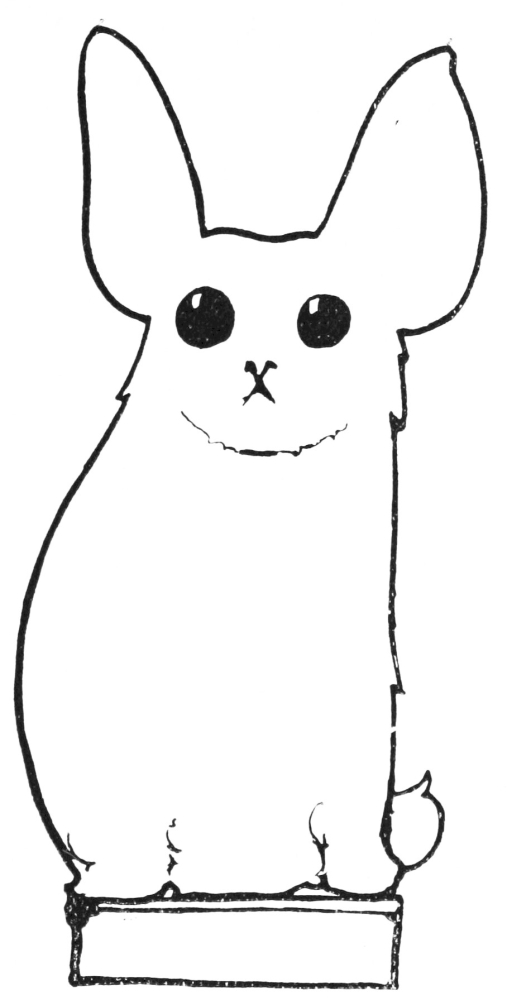
I
![[Image unavailable.]](images/i313_lg.jpg)
II
She pricked her thumb,
But only with holly,
And the blood wouldn’t come.
![[Image unavailable.]](images/i314_lg.jpg)
III
Went a carting;
And why did he travel?
To bring home some gravel.
![[Image unavailable.]](images/i315_lg.jpg)
IV
Rain and wind, and a dog and whistle;
The wind blows, the rain drops,
The seeds are gone from the thistle-tops:
Whistle! find me a flower in the clover,
And you shall have turkey for supper, Rover!
TOPSYTURVEY-WORLD
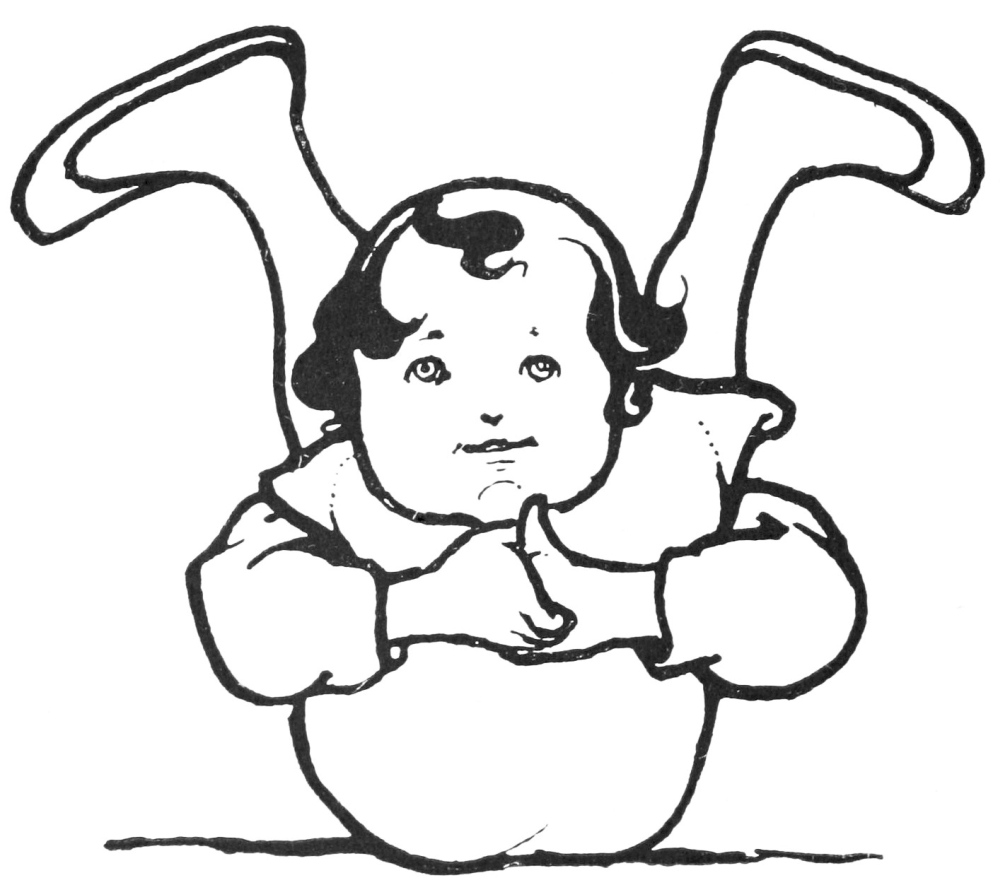
And the owl the porcupine;
If churches were built in the sea,
And three times one was nine;
If the pony rode his master,
If the buttercups ate the cows,
If the cat had the dire disaster
To be worried, sir, by the mouse;{317}
If mamma, sir, sold the baby
To a gipsy for half-a-crown;
If a gentleman, sir, was a lady,—
The world would be Upside-Down!
![[Image unavailable.]](images/i317_lg.jpg)
Should ever come about,
I should not consider them blunders,
For I should be Inside-Out!
Hanging out the pie,
Out jumped the honey-pot,
Guy-Fawkes, Guy!
Cross-latch, cross-latch,
Sit and spin the fire,
When the pie was opened,
The bird was on the brier!
MISS WAVER
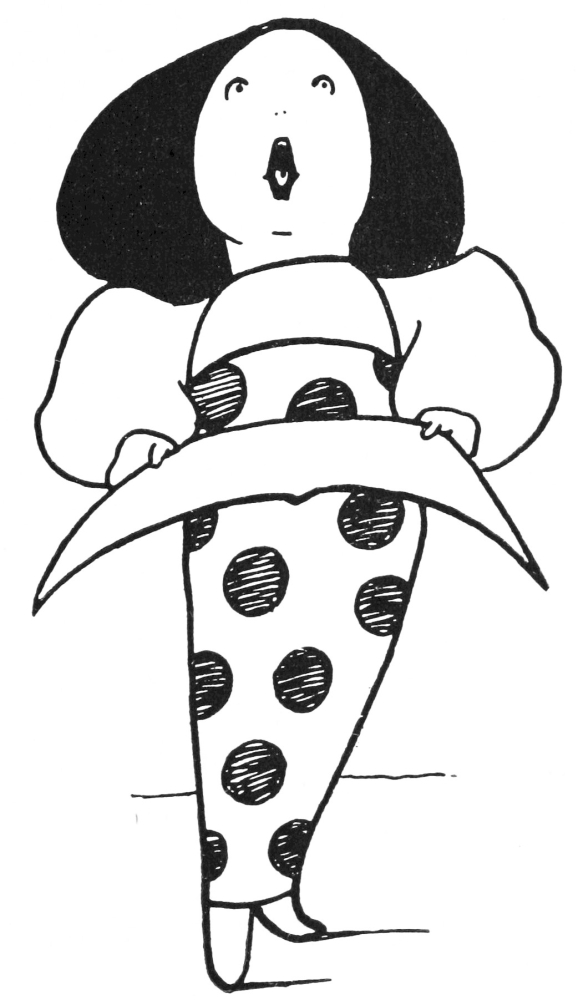
Sings with a quaver,
A musical maid is she;
Her voice is as clear
As any you hear—
Let little Miss Waver be.
JEREMY JANGLE
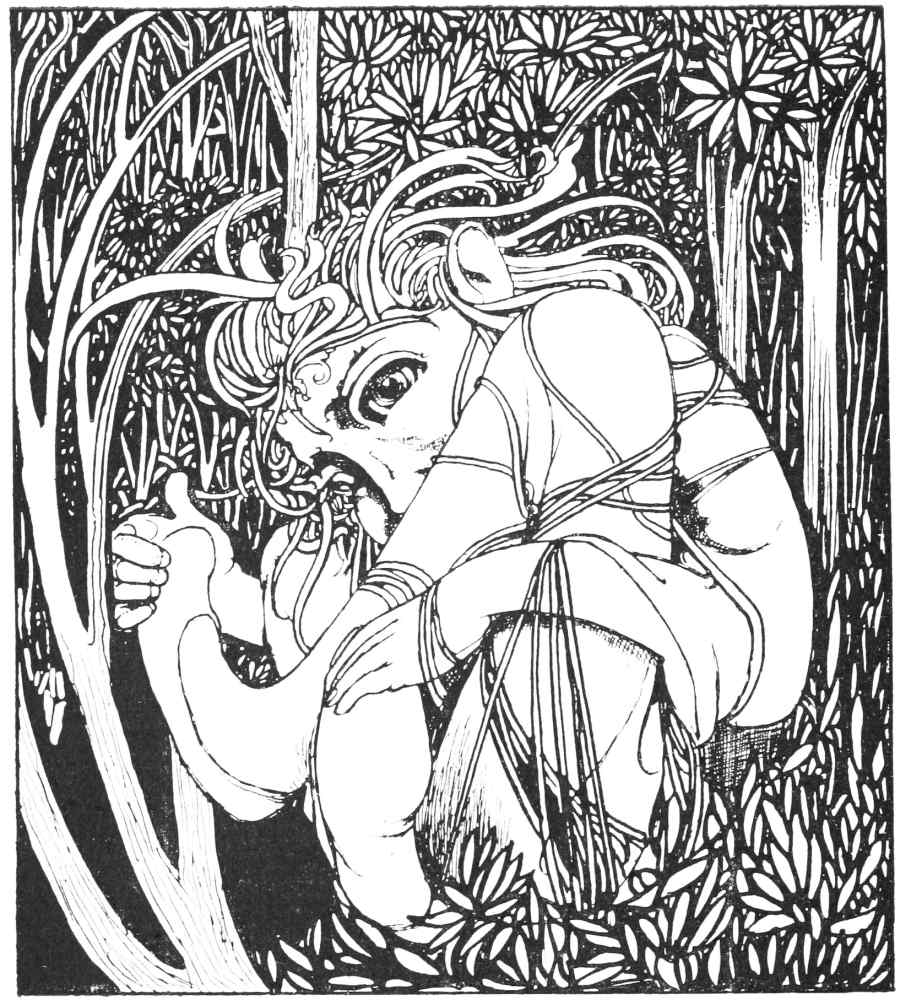
Lives in a tangle;
You never know where to take him:
His head is immense,
And he might talk sense
Perhaps, if you could but make him.{321}
And every sailor is made for sale,
Also that bunting is made of buns!
But everybody can see at once
That this is nonsense. And yet his head
Is large, and he calls himself well read!
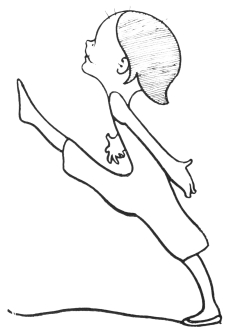
STALKY JACK
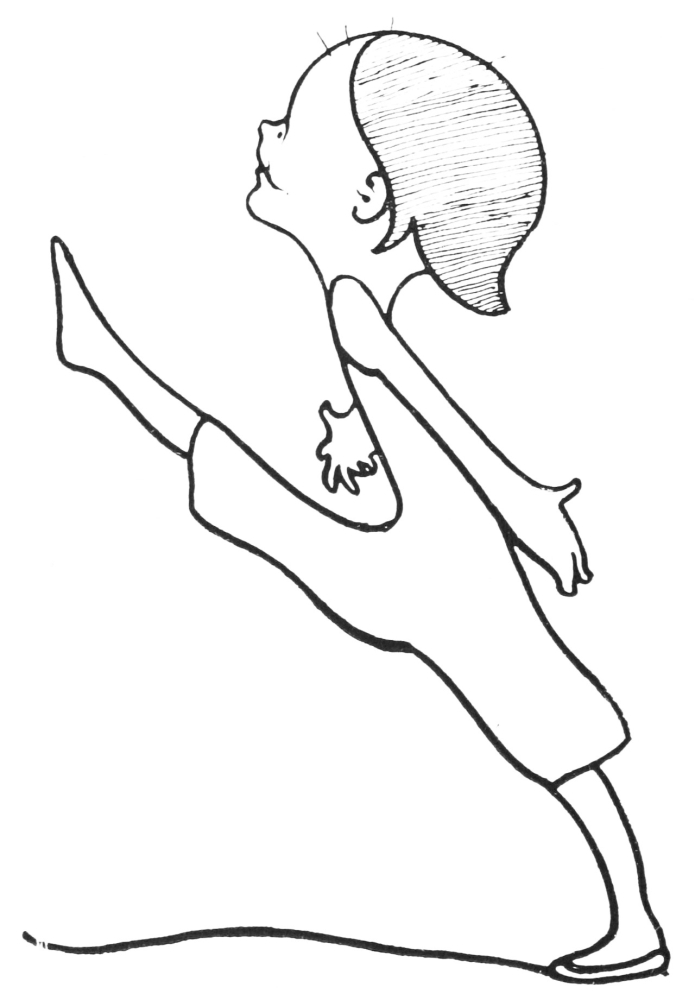
Who lived on beans, and ate the stalks;
To the Giants’ Country he lost his way;
They kept him there for a year and a day.{323}
But he has not been the same boy since;
An alteration he did evince;
For you may suppose that he underwent
A change in his notions of extent!
And tries to walk in at the second floor!
He stares with surprise at a basin of soup,
He fancies a bowl as large as a hoop;
He calls the people minikin mites;
He calls a sirloin a couple of bites!
Things having come to these pretty passes,
They bought him some magnifying glasses.
The world has come to its proper size!”
But all the boys cry, “Stalky John!
There you go with your goggles on!”
What girl would marry him—and quite right—
To be taken for three times her proper height?
So this comes of taking extravagant walks,
And living on beans, and eating the stalks.
THE FIDDLER AND THE CROCODILE
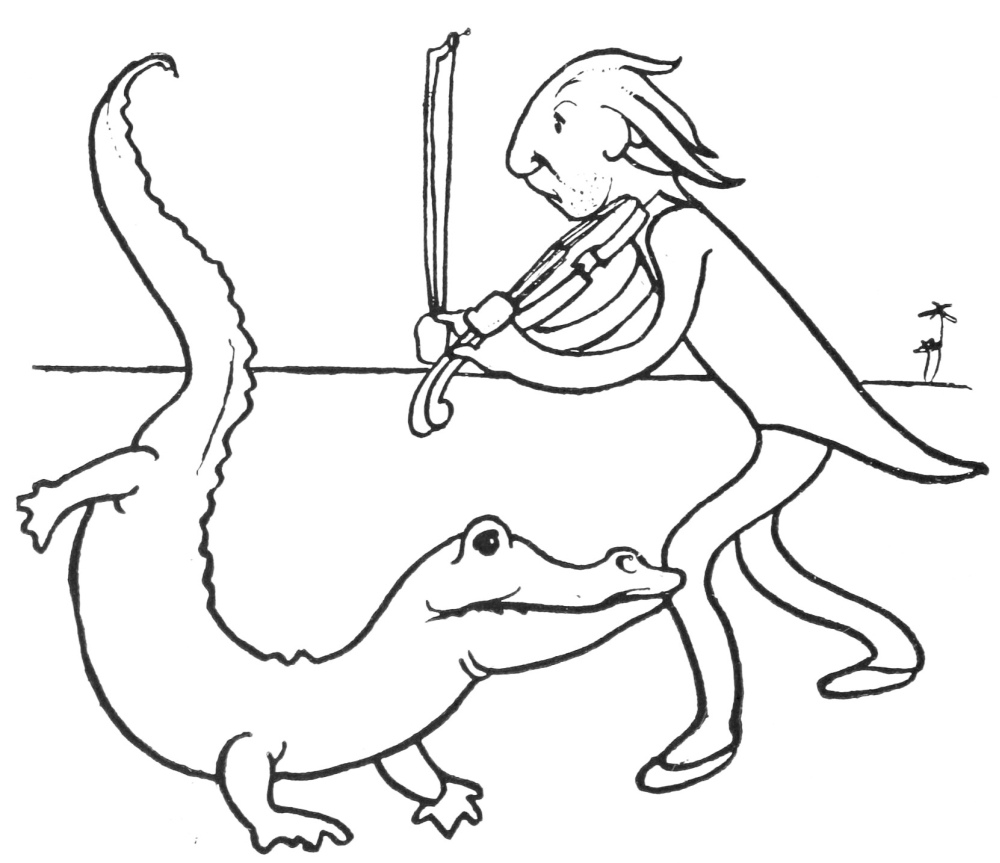
Out Memphis way, went walking forth;
He smoked his pipe and winked his lids,
And said, “Ah, ah! the Pyramids?{325}”
The Pyramids were there indeed;
Sing Amon-Râ, sing Gizeh town,
Cheops, Cephrenes, mummy brown!
When out there crawled a crocodile,
And when he turned, more scared than hurt,
The creature seized him by the skirt.
And twenty mortal feet was long.
The fiddler said, “It has been guessed
That music soothes the savage breast.”
From out the alligator’s jaws;
For, crocodile or alligator,
The beast was something of that nature.
Sing tawny gods with senseless beaks,
Sing scarabæi, if you’ve patience,
Isis, Osiris, inundations!
And to perform did next begin—
Sing lotus-flower, papyrus stiff,
Sarcophagus and hieroglyph!{326}
Had never heard the like of this;
(Oh, to have seen the fiddler man
As up and down the scale he ran!)
And to his eye there came a tear;
He turned it over in his mind;
His tail lay limp and long behind.
Which struck at first that fiddler man;
Allegro next—his soul was stirr’d—
Con molto brio was the word.
Or crocodile, if that will suit—
Rose, much excited, from his seat,
And danced like mad, with heart and heat.
Ichneumons, sand, and serpents’ eggs,
Cheops, Cephrenes, Memnon, Sphinx—
“I knew it!”—so that fiddler thinks.
“That music soothes the savage breast;”
He swept the strings with maddening go,
From presto to prestissimo.{327}
Of eating up at once the man,
It did not seem, his ways were such,
That music yet had soothed him much.
He danced with all the legs he had;
Our friend, with violin to shoulder,
Sat, proudly playing, on a boulder.
And heat-drops gathered on his cheek;
He saw there would be mischief in it
If he but dropped his bow a minute!
He read, as plain as in a book,
“Play on, or I will eat you yet,
With appetite the sharper set!”
(And his emotions who can paint?)
He felt, and saw on looking round,
A curious trembling of the ground.
Is shaking up the land of Nile”—
He looked again, and saw, in places,
The pyramids leap from their bases!{328}
He cried, “Confound it! I am crushed!”
But, happy chance! a moment later
They fell and crushed the alligator.
Sing reeds and hippopotami,
Sing tamarisk-trees by Mœris Lake,
And mud left in the sun to bake!
Says he, “I feel exhausted now!”
Those ruins he no more regards
Than any fallen house of cards.
A bit of temple to his mind,
And, as he sat down in the shade,
There came an Ethiop to his aid.
“Dis way some secret cellarage had;
Yah, massa, yah, de best ob wine;
De Shepherd Kings, dey know’d de Rhine.”
Hocks five and thirty centuries old;
The cellar-man was older still—
Sing Typhon, Ptah, or what you will.{329}
Sing Mycerinus, after them;
Sing Diodorus Siculus,
Who tells untruths, for all his fuss;
Sing Manetho; but keep this clue—
The tale which I have told is true.
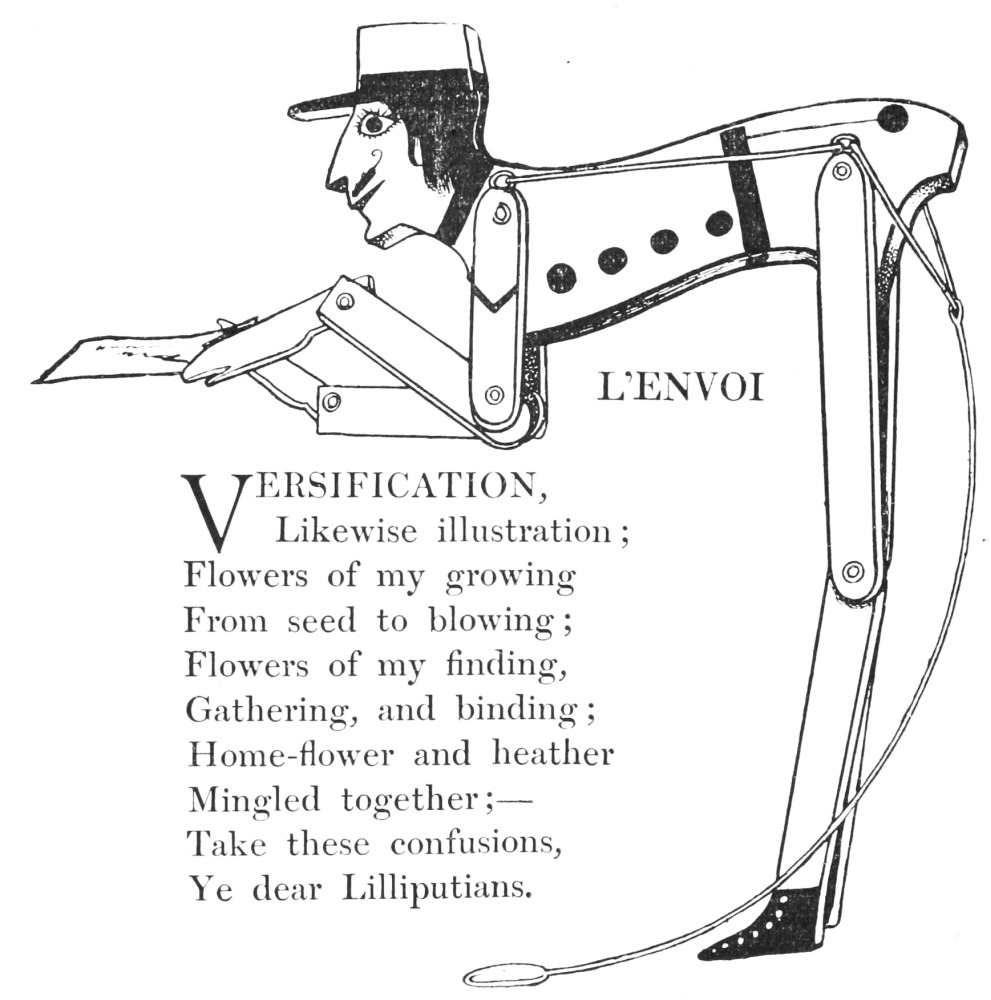
Likewise illustration;
Flowers of my growing
From seed to blowing;
Flowers of my finding,
Gathering, and binding;
Home-flower and heather
Mingled together;—
Take these confusions,
Ye dear Lilliputians.
Printed by Ballantyne, Hanson & Co.
London & Edinburgh
![[Image unavailable.]](images/back.jpg)
| Typographical errors corrected by the etext transcriber: |
|---|
| Pianofore Palace stand=> Pinafore Palace stand {pg 17} |
| Oh, the Giant Frodgedobblum am I=> Oh, the Giant Frodgedobbulum am I {pg 139} |