iii
iv
v
vi
Artful Anticks
 vii
vii
Artful Anticks
By
Oliver Herford
New York
The Century Co.
1901
viii
Copyright, 1888, 1889, 1890, 1891, 1892, 1893, 1894,
By The Century Co.
Copyright, 1894, by Oliver Herford.
The De Vinne Press.
ix
Table of Contents.
The pictures in “The Point of View” are used by permission of Messrs. Harper and Brothers.
xi
xii
xiii
Artful Anticks
1
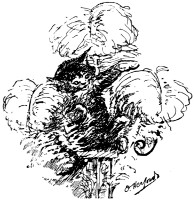
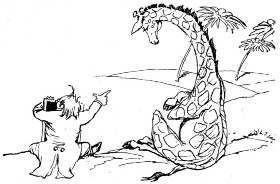
The Audacious Kitten.
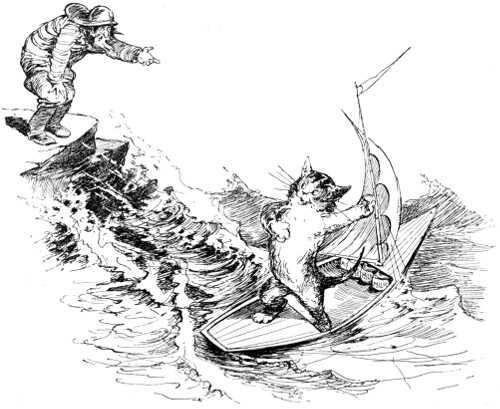
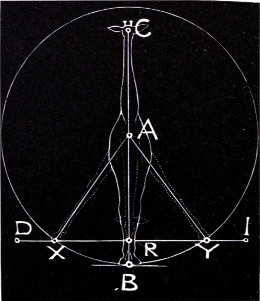
As he merrily set the sails;
“I sail o’er the ocean to-day
To look at the Prince of Wales!”
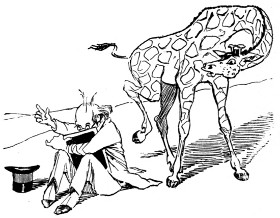
“Why tempt the angry gales?”
“I’m going,” the kitten replied,
“To look at the Prince of Wales!
I’ve tumbled full oft into pails
And nearly been drowned—and yet
I must look at the Prince of Wales!”
2
Is deeper than many pails!”
Said the kitten,“I shall not sleep
Till I’ve looked at the Prince of Wales!”
And think of the sad sea tales.”
“Ah, yes,” said the kitten, “but think,
Oh, think of the Prince of Wales!”
3
“If you live through the angry gales
You know you will be afraid
To look at the Prince of Wales!”
Why should he make me wince?
If ‘a Cat may look at a King,’
A kitten may look at a Prince!”
4
The Artful Ant.
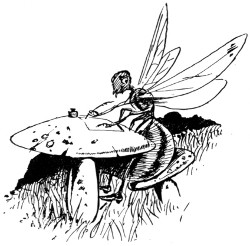
Resolved to give a ball,
For tho’ in stature she was scant,
She was not what you’d call
A shy or bashful little Ant.
(She was not shy at all.)
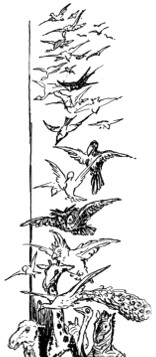
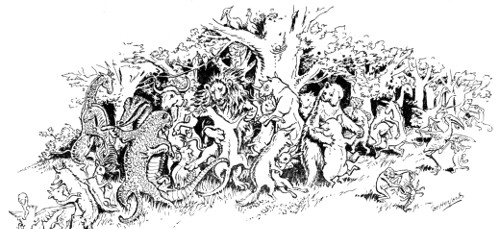
The forest far and wide,
To all the Birds and Beasts she knew,
And many more beside.
(“You never know what you can do,”
Said she, “until you’ve tried.”)
Faster than she could read.
Said she: “Dear me! I’d best begin
To stir myself indeed!”
(A pretty pickle she was in,
With five-score guests to feed!)
5
A-thinking o’er and o’er,
How she could make from nothing, quite
Enough to feed five-score.
(Between ourselves I think she might
Have thought of that before.)
And all the following day,
Till suddenly she struck a bright
Idea, which was—(but stay!
Just what it was I am not quite
At liberty to say.)
6
Came round, the Ant was seen
To smile in a peculiar way,
As if—(but you may glean
From seeing tragic actors play
The kind of smile I mean.)
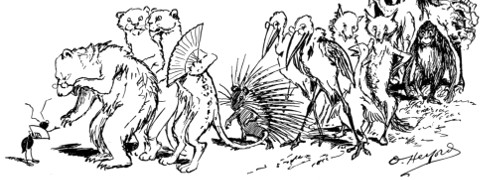
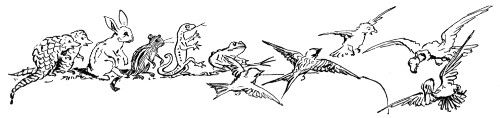
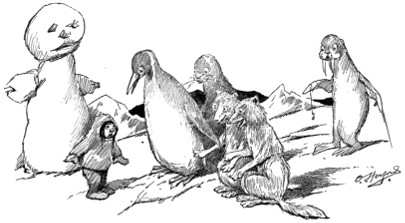
The happy creatures came,
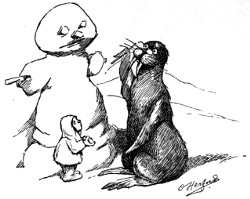
The Fish alone could not be there.
(And they were not to blame.
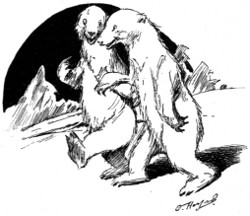
“They really could not stand the air,
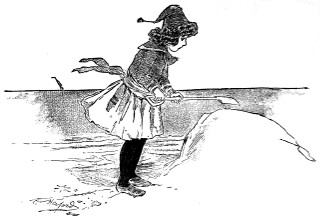
But thanked her just the same.”)
7
Said to the Ant: “I ne’er
Since Noah’s Ark remember so
Delightful an affair.”
(A pretty compliment, although
He really wasn’t there.)
It was a jolly sight!
They pranced, and pranced, and pranced, and pranced,
Till it was nearly light!
And then their thoughts to supper chanced
To turn. (As well they might!)
8
That supper should begin,
And if you will be so polite,
Pray take each other in.”
(The emphasis was very slight,
But rested on “Take in.”)
They took the hint. Oh, yes,
The largest guest “took in” the small,
The small “took in” the less,
The less “took in” the least of all.
(It was a great success!)
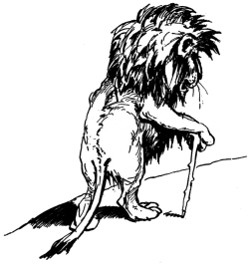
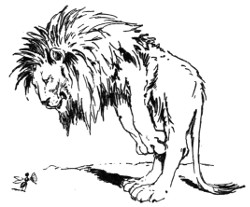
This narrative of woe?—
The Lion took them in about
As fast as they could go.
(And went home looking very stout,
And walking very slow.)
9
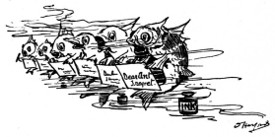
Lost to all sense of shame,
Tried it again, I chance to know
That not one answer came.
(Save from the Fish, who “could not go,
But thanked her all the same.”)
10
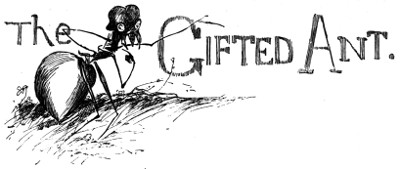
The Gifted Ant.
Than keep starvation from her door,
Once cast about that she might find
An occupation to her mind.
Can, as a rule, make both ends meet.
Unhappily, this was not quite
The case with her of whom I write.
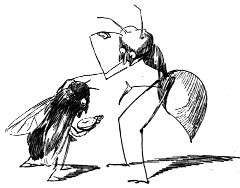
“I ought to exercise my brain.
The only thing for me, it’s clear,
Is a professional career!”
11
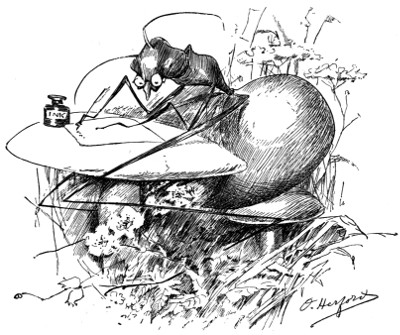
Until one day there crossed her mind
The proverb bidding sluggards gaze
Upon the ant to learn her ways.
I’ll advertise without delay.
Things are come to a pretty pass,
If I can’t teach a sluggard class!”
12
And wrote some cards that very day;
And hung them in the grass—a plan
To catch the sluggard’s eye. They ran
As follows:
An education to acquire
Will find it well to call to-day
Upon Professor Ant, B. A.
Her Sluggard Class, she begs to state,
Reopens at an early date
With several vacancies—a chance
Exceptional—
13
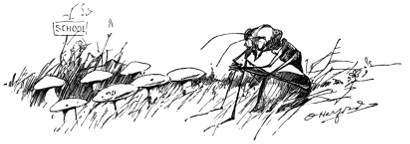
To The Ant
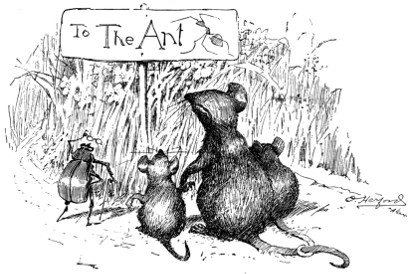
To her abode, a sign which read,
“Go to the Ant,” and hung beside
Her picture, highly magnified.
To bring a Turtle, Sloth, or Snail,
A Dormouse, or a Boy, to learn
Their livelihood (and mine) to earn!
The joyousness of industry;
And they, to grasp my meaning more,
Shall gather in my winter store.
14
I’ll next endeavor to impress
Upon their minds at meals. (N. B.
That is—if they should board with me.)
(My present house is far from dry)—
In short, all Honest Toil I’ll teach
(And they shall practise what I preach).”
15
There’s no delusion anywhere
Quite so delusive as, I fear,
Is a professional career.
She only has one sluggard yet,
Who scantly fills her larder shelf—
It is, I grieve to say, herself!
16
Sir Rat.
A·Comedy·
Persons of the Drama.
Mr. Thomas Cat.
Mrs. Thomas Cat.
Master Tommy Cat.
Miss Fluffy Cat.
Sir Rat.
Scene: The barn. A basket in one corner.
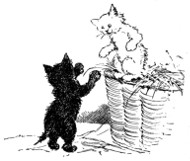
How very big the world is, after all!
Compared to it our basket seems quite small,
We never dreamed, dear Fluffy, till our eyes
Were opened, that the world was such a size.
I’d like at once to see it all. Let’s go
And take a stroll around it.
Mama expressly told us not to stray
Outside the basket while she was away.
Something might happen if we disobeyed.
17
I will protect you with my strong right paw.
The sight of me would fill a Rat with awe.
The Rat who’d dare to trifle once with me,
I do not think he’d live to try it twice!
To see the world—
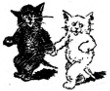
There, take my paw, and jump. So, mind your toes!
(Fluffy jumps.)
If we’re not careful all the world may hear.
Oh, dear, what was that noise? I wish we’d stayed—
Be brave, dear Sister,—see, I’m n’-n’-not a’-afraid.
Whatever happens, do not make a row!
18
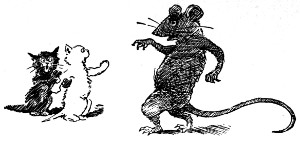
(Enter Sir Rat.)
Enough! enough! I did not come to play!
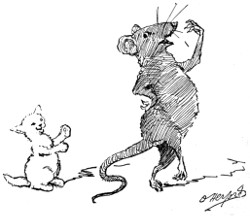
(To Tommy.)
While I remain and flatter Mr. Rat.
(Exit Tommy, in haste.) 19
(To Sir Rat.)
I wish, dear Rat, you’d teach me how to dance.
But since you haven’t very long to live,
And you are so polite, this once I’ll try.
(Polka music. Sir Rat dances and Fluffy applauds.)
Such perfect dancing! Won’t you dance once more?
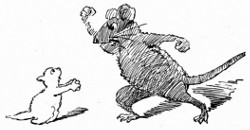
Your time has come. Reflect upon your past!
In sooth, Sir Rat, I’m only nine days old.
20
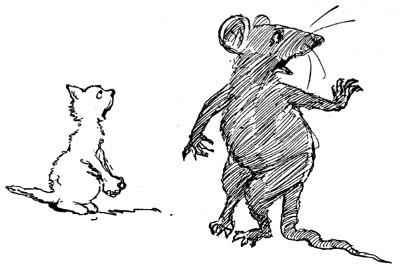
(Enter Mr. and Mrs. Cat and Tommy.)
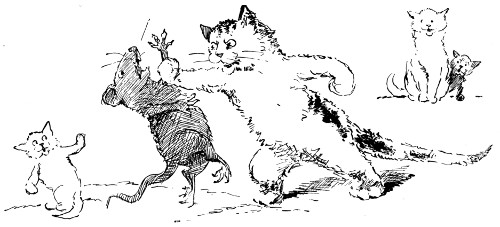
I have thee; and this barn will soon, I trow,
Be rid of such a Ruffian Rat as thou!
(They fight. Sir Rat falls.)
’Tis well I hastened; had I not, I fear
We soon had seen the last of Fluffy dear!
21
Your father caught to-day a fine spring mouse.
And, children, when I tell you not to stray
From home, in future do not disobey!
Curtain.
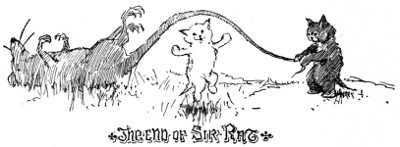
✙The end of Sir Rat✙ 22
The Deceitful Dormice.
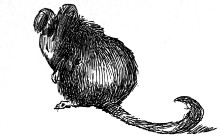
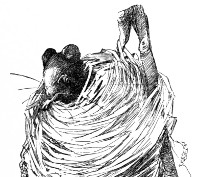
The winter in her nest,
Hearing that spring had come at last,
Got up at once and dressed,
To hail the new spring day,
She ran against another mouse
That lived across the way.
23
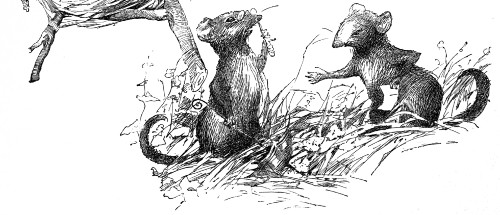
Could scarcely speak for lack
Of breath. Then each cried, “Oh, it’s you!!
Why, when did you get back?”
The sleepy Dormouse said,
“From Florida—the winters here,
You know, affect my head.”
“I’m glad to see you home.
I, too, have just returned—I spend
My winters down in Rome.”
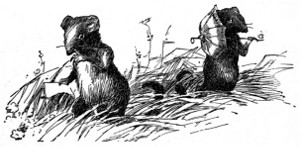
They parted—each to say,
“I wonder where that creature passed
The winter—anyway!”
24
Nature and Art.
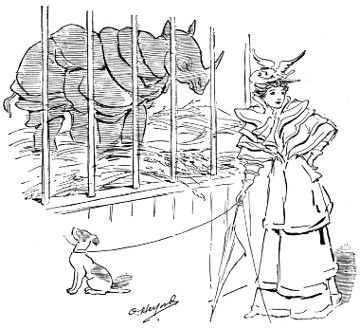
As she viewed a Rhinoceros, agape,
“To think in this age
A Beast in a cage
Is permitted our fashions to ape!”
One would think that these Ladies so fair
Who come to the Zoo
Have nothing to do
But copy the things that I wear!”
25
The Geometrical Giraffe.
While wandering over land and sea,
Once on the plains of Timbuctoo
Met a giraffe.
Exclaimed the amiable Pikestaffe.
“I’m really charmed, my dear Giraffe!
I’ve thought so much of you of late,
Our meeting seems a stroke of Fate
Particularly fortunate.
I long have had upon my mind
Something concerning you; be kind
Enough to seat yourself, and pray
Excuse, if what I have to say
Seems personal!”
26
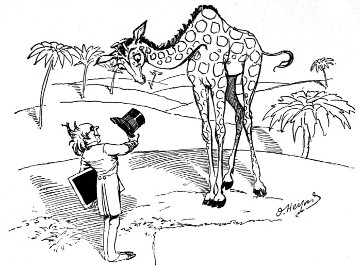
I shall be charmed,” said the Giraffe,
“To hear whatever you may say.
You are too kind; go on, I pray.”
You are aware, sir, I presume,
That though with your long neck at ease
You crop the leaves upon the trees,
Your legs are quite too long, and make
It difficult for you to slake
Your thirst—in other words, you’ve found
Your neck too short to reach the ground.
Indeed, I’ve often wept to think
How hard it is for you to drink.
27
First try to ascertain the source;
And in this case we find the cause
In certain geometric laws,
Which I will quickly demonstrate
(How lucky that I brought my slate!).
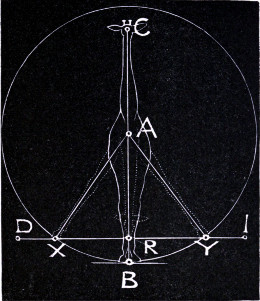
Be your front legs; then line A C
(A shorter line) your neck shall be.
Measured, ’twill only reach so far,
When bent down toward the ground, as R.
28
How far the ground lies from your nose—
Though if the ground lay not at B,
But R, you’d reach it easily.
Suppose it then at R to lie,
And draw for ground line D R I.
Your head then touches ground at R—
But now your feet go down too far!
My compasses then I will lay
On A and B, and make round A
A circle crossing line D I
At two points. Mark them X and Y;
29
Two lines; then it is safe to say
That line A X and line A Y
Equal A B, being radii
Of the same circle, as you see
(According to geometry).
But since at first we did agree
A B your length of leg should be,
These, being equal to A B,
Are just the same as legs, you see.
So now on legs A X, A Y.
You stand upon the ground D I,
And drink your fill; for, as I said,
D I is touched by R, your head.
30 Thus we have proved—”
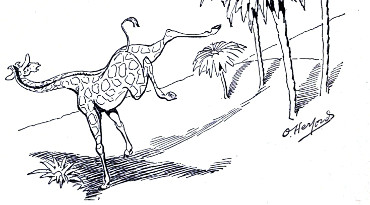
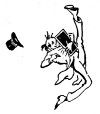
Professor Pikestaffe has no clear
Impression, but the little row
Of stars above will serve to show
What madly reeled before his eyes,
As he went whirling to the skies.
Below he heard a mocking laugh,
That seemed to come from the Giraffe:
“Go up! go up! You’ve proved enough;
You’ve proved geometry is stuff!
You’ve proved, till I am well nigh dead,
And feel a thumping in my head,
That I must spread my feet apart
To take a drink—why, bless your heart!
31 I knew that long ere you were born.
I laugh geometry to scorn.”
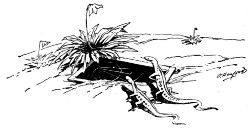
They say, has dropped geometry—
It seems he dropped his slate as well,
Which lies exactly where it fell
(Also the diagram he drew)
Upon the plains of Timbuctoo.
32
The Early Owl
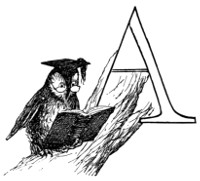
And he was as wise as wise could be.
The branch of Learning he didn’t know
Could scarce on the tree of knowledge grow.
He knew the tree from branch to root,
And an Owl like that can afford to hoot.
He chanced to hear, in a casual way,
An insignificant little bird
Make use of a term he had never heard.
He was flying to bed in the dawning light
When he heard her singing with all her might,
“Hurray! hurray for the early worm!”
33
I would look it up if it weren’t so late;
I must rise at dusk to investigate.
Early to bed and early to rise
Makes an Owl healthy and stealthy and wise!”
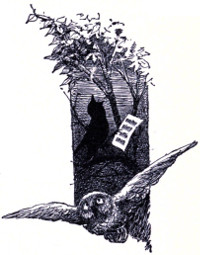
And rose in the early twilight gray,
And went to work in the dusky light
To look for the early worm all night.
But the early worm was not to be found.
So he went to bed in the dawning light,
And looked for the “worm” again next night.
34
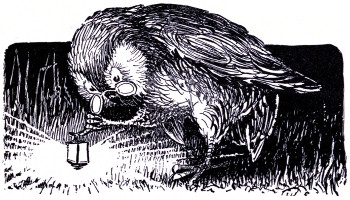
He sought and he sought, but all in vain,
Till he must have looked for a year and a day
For the early worm, in the twilight gray.
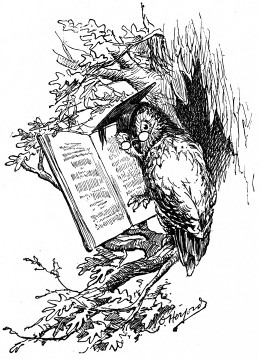
And was heard to remark, as he sat on his perch
By the side of his nest in the hollow tree,
“The thing is as plain as night to me—
Nothing can shake my conviction firm,
There’s no such thing as the early worm.”
35
A Dark Career

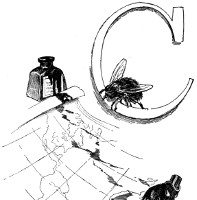
You will—his presence was a blot
Where all was bright and fair—
A blot that told its darksome tale
And left its mark a blighting trail
Behind him everywhere.
* * *
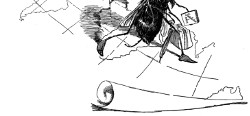
And crossed the azure main,
And even the sea, so blue before,
About his wake grew dark and bore
The semblance of a stain.
36
Than paused his breath to gain;
But on that fair historic shore
There seemed to gather, as before,
A darkness in his train.
To Germany, and up the Rhine
To Switzerland he came;
Then o’er the snowy Alpine height,
To leave a stain as black as night
On Italy’s fair name.
And hurried on as if he knew
His journey’s end he neared.
On Darkest Africa he threw
A shade of even darker hue,
Till in the sands of Timbuctoo
His record disappeared.
* * *
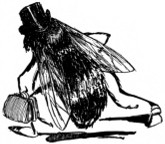
O Bumblebee! remains to show
The source of your mishap;
But though you’ve flown my ken beyond,
The foot-notes of your tour du monde
Still decorate my map.
37
A Packet of Letters
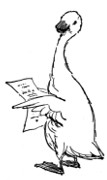
I.
FROM MR. RUFUS FOX TO MISS BLANCHE GOOSE.
The Fernwoods, Friday.
Accept apologies profuse,
For the abrupt and hasty way,
In which I left you yesterday.
I don’t know how I came to be
So very rude, but then you see,
I was just offering my arm,
38 When stupid Rover from the farm,
Appeared so suddenly, and so—
Well, two is company, you know,
While three—! Besides, ’twas getting late,
So I decided not to wait.
Yet, after all, another day
Will do as well. What do you say?
Can you contrive to dine with me
To-morrow afternoon at three?
Pray do, and by the hollyhocks
Meet yours, sincerely,
II.
FROM MISS BLANCHE GOOSE TO MR. FOX.
The Farmyard, Friday afternoon.
You almost take my breath away!
To-morrow? Three?—what shall I say?
Nothing could charm me more—but, no—
Alas! I fear I cannot go.
Don’t think that I resent, I pray,
Your hastiness of yesterday.
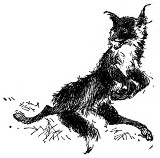
39
Without my dear Mama’s consent,
And she should somehow chance to hear,
She would be dreadfully severe;
And so, oh, dear! it is no use!
Believe me,
Sadly yours,
Blanche Goose.
I’ll meet you by the hollyhocks,
For if Mama but knew how kind
You are, I’m sure she would not mind,
To-morrow, then—we’ll meet at three;
Don’t fail to be there. Yours,
III.
FROM MR. RUFUS FOX TO HIS COUSIN REYNARD.
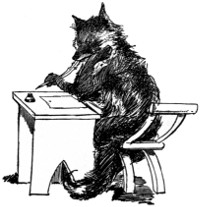
Friday.
To ask if you will come to dine
(Informally, you know) with me
To-morrow afternoon at three.
Now don’t refuse, whate’er you do,
I have a treat in store for you:
A charming goose (and geese, you know,
Do not on all the bushes grow!)
40 A dream of tenderness in white,
A case of “hunger at first sight.”
I know, old boy, you’ll not be deaf
To this inducement.
Beside the hollyhocks at three!
IV.
I quite renewed my youth to-day!
How lucky that I chanced to go,
Just when I did, beside that row
Of hollyhocks beyond the gate!
Lucky for her at any rate;
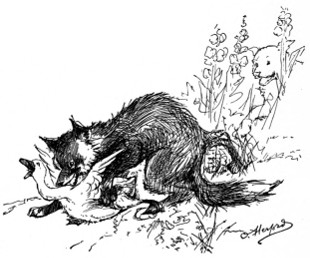
For suddenly I heard Miss Goose
Struggling and crying, “Let me loose!”
And, from behind the hollyhocks,
Who should jump out but Mr. Fox!
(The very same one, by the way,
I almost caught the other day.)
Soon as I nabbed him, in his fright,
He dropped Miss Goose and took to flight.
41 Then after him like mad I flew,
But—what could poor old Rover do?
I am not what I used to be,
So I let go, and ran to see
At once how poor Miss Goose had fared,
And found her much less hurt than scared
From having come so near the noose:—
A sadder and a wiser goose.
V.
NOTE FROM MR. RUFUS FOX TO HIS COUSIN REYNARD.
Dear Cousin:
Why dinner was postponed to-day,—
The goose had failed us, that was all;
Excuse, I beg, this hurried scrawl.
Will write to-morrow to explain—
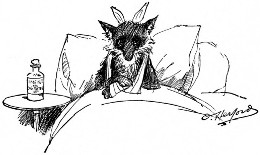
42 Just now my paw is in such pain
That when I try to write it shocks
My nerves.
A bottle of that liniment
You spoke of several days ago—
The kind for “dog-bites,” don’t you know.
43
The Naughty Fay
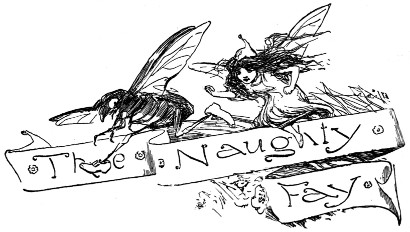
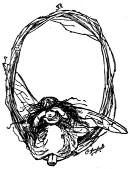
Chanced to sprain her wing;
“At her tricks,” they say—
“Naughty little thing!”
As she lay in pain,
“No more tricks I’ll play
When I’m well again.”
44
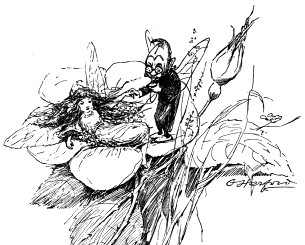
Can this be our fay,
She who sprained her wing
Just the other day?
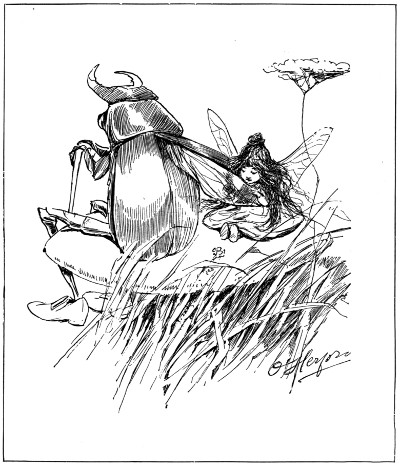
Thrifty little thing,
Sewing up a tear
In a beetle’s wing?
Not a thrifty elf;
Of course she has to sew
What she tore herself!
45
46
The Miller’s Quest
(A Floury Tale.)
And her cheek is lily-pale;
But none may look in her eyes, I ween
And live to tell the tale.
And from the east and west,
Full many a gallant knight rides forth
Upon the fatal quest.
No mortal can undo
Till one shall look into her eyes
And tell their color true.
47
And some that they are black,
And many a knight rides forth, I ween,
But never a one rides back.
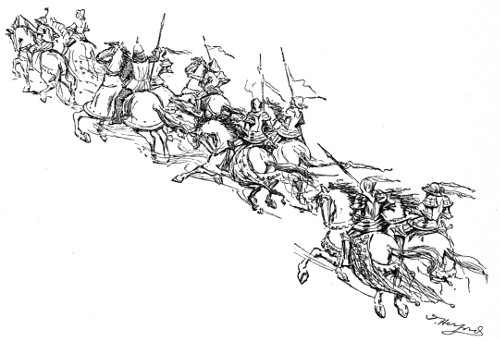
And whoso will may try
His fate, and look into her eyes;
But whoso quails must die.
* * *
The miller’s son is a dusty youth,
And dusty curls hath he.
Quoth he, “I’ll go myself, forsooth,
And set this Princess free.”
48
Nor sword nor coat-of-mail,
But an honest heart that knows not fear—
Heaven grant he may not fail!
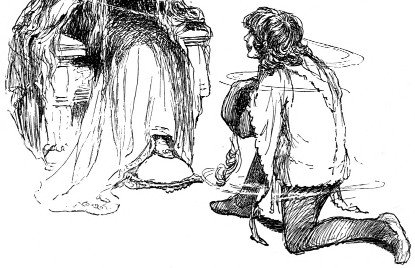
At the Princess’ feet he bends,
And he tosses aside his floury locks
And a floury cloud ascends.
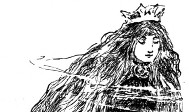
Is veiled as with a veil,
Her eyes are dimmed of their deadly light,
And the miller doth not quail.
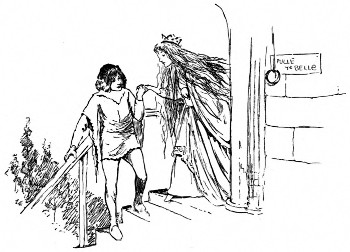
49
Her cheek is red, red rose,
And her eyes?
* * *
Go ask the Prince—
I mean
The miller’s son—he knows.
50
Nell’s Fairy-tale.
The Prince had saved the Princess and cut off the monster’s head;
The people all were joyful, and the Princess and the Prince
Were married and—so ran the tale—“lived happy ever since.”
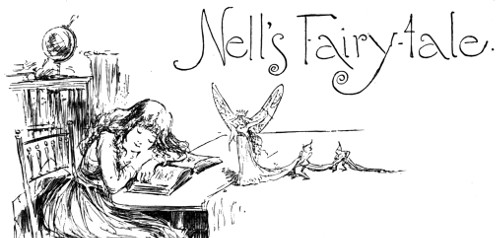
Nell closed the book of fairy tales and mused: “I wonder why
There are no fairies nowadays? I only wish that I
51 Could be a fairy princess like the Princess Goldenhair.”
Here Nell dropped off to sleep, and then she started in her chair,
When, of its own accord, the book popped open, and behold!
Out crept a wee elf-princess all arrayed in cloth of gold;
She sighed a little tired sigh and then Nell heard her say,
In a tiny tired little voice, that sounded far away:
“Oh, dear! how very nice it is for once to get outside.
You’ve no idea how flat it is, my dear, until you’ve tried,
To be shut up in a story-book with Dragons, Queens, and Kings,
And always have to do and say the same old, senseless things;
You think it would be very fine, but really it’s no joke!
I’d rather be a girl, like you!—”
Then little Nell awoke,
“Poor Princess Goldenhair,” said she,—“unhappy little elf,
I’m rather glad, upon the whole, that I am just myself!”
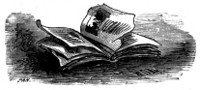
52
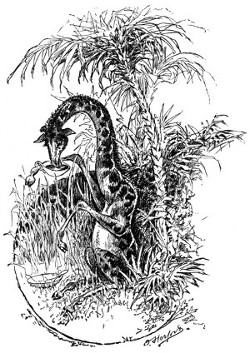
The Unfortunate Giraffe.
Do I want with my tea strong or hot?
For my throat’s such a length,
The tea loses its strength,
And is cold ere it reaches the spot.”
53
Stockings or Scales.
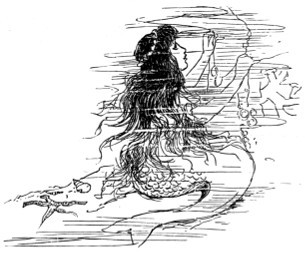
I’d choose to be a mermaid and live below the sea.
How nice, instead of walking, to swim around like little whales,
And to wear, instead of stockings, many shiny pairs of scales,
Which don’t need changing every time that nurse says they are wet.
And then to have no shoes that always come untied!—and yet—
To attend a school of porpoises and play at tag with whales,
To be on friendly speaking terms with jellyfish and eels,
And never to be sent to bed or told I’m late for meals;
Still, when I think of Christmas Eve my resolution fails,
How could I hang my stockings up if I had only scales?
54
A Riddle.
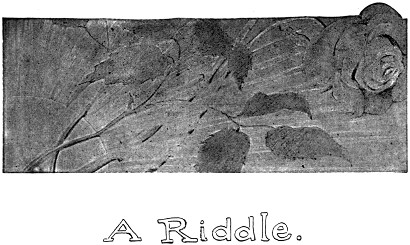
And they robbed a red, red rose;
And they came from out the sky,
And they went where no man knows.
And rent the curtain gray
Of mist that round her hung,
And he stole her pearls away;
And a sable coat he wore,
And a belt of dusty gold,
And he robbed her treasure-store.
55
And no man saw him pass;
And he caught her petals red
And threw them upon the grass.
And they robbed a red, red rose;
And they came and went away,
And whither—
no man knows.
56
Good·bye.
A Woodland Episode.
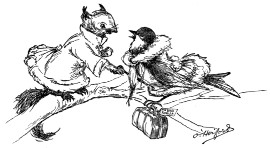
PERSONS OF THE DRAMA: Miss Bird, and Mrs. Chipmunk.
Scene: The woods. Time: Last November.
So my doctor has ordered a southern tour.
Couldn’t you manage to come along?
It would do you good—
And it’s just what I’d most like to do
If I’d only a pair of wings—
There are trains for people who cannot fly.
So really I mustn’t think of that—
Besides, I’ve rented a hole in a tree,
57 On the first-floor branch just four trees west
Of the oak where you built your last year’s nest.
For a winter home—
When you’re here again, you will try to call.
Then, a pleasant journey!
58
The Professor and the White Violet
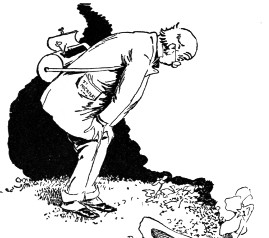
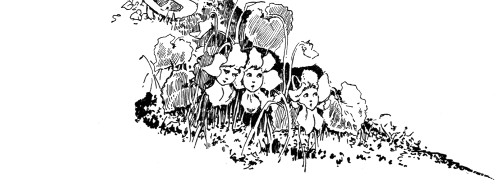
Tell me, little violet white,
If you will be so polite,
Tell me how it came that you
Lost your pretty purple hue?
Were you blanched with sudden fears?
Were you bleached with fairies’ tears?
Or was Dame Nature out of blue,
Violet, when she came to you?
59
Tell me, silly mortal, first,
Ere I satisfy your thirst
For the truth concerning me—
Why you are not like a tree?
Tell me why you move around,
Trying different kinds of ground,
With your funny legs and boots
In the place of proper roots?
Where green branches ought to spread,
Is as shiny smooth as glass,
With just a fringe of frosty grass?
Tell me—Why, he’s gone away!
Wonder why he wouldn’t stay?
Can he be—well, I declare!—
Sensitive about his hair?
60
·The·First·Rose·of·Summer·
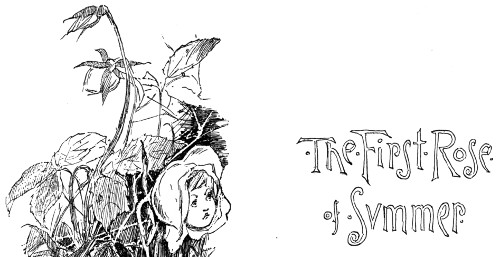
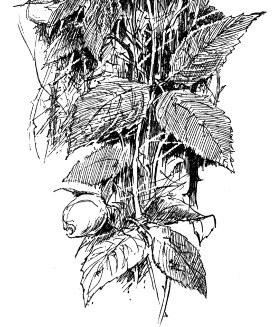
I heard a rosebud moan,
When first her eyes she opened,
And found she was alone.
Little me, belated?
Where are the other roses?
I think they might have waited!”
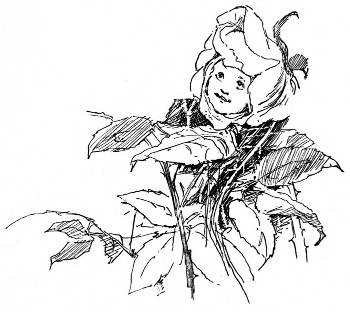
Saw to her surprise
Other roses opening,
So she dried her eyes.
61
Gaily in the sun,
“I thought the summer over;
Why, it’s only just begun!”
62
The Elf & the Dormouse
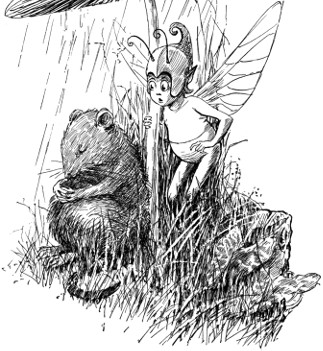
Crept a wee Elf,
Out of the rain
To shelter himself.
Sound asleep,
Sat a big Dormouse
All in a heap.
Frightened, and yet
Fearing to fly away
Lest he get wet.
Maybe a mile!
Sudden the wee Elf
Smiled a wee smile,
63
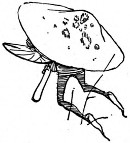
Toppled in two.
Holding it over him
Gaily he flew.
Dry as could be.
Soon woke the Dormouse—
“Good gracious me!
Loud he lamented.
—And that’s how umbrellas,
First were invented.
64
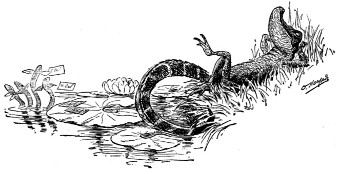
The Crocodile
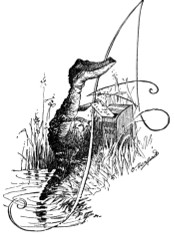
To a Fox to invite him to dine;
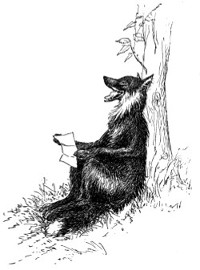
But the Fox wrote to say
He was dining, that day,
With a Bird friend, and begged to decline.
65
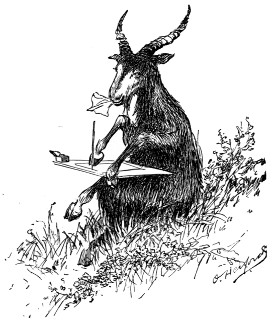
“Pray don’t disappoint me,” she wrote;
But he answered too late,
He’d forgotten the date,
Having thoughtlessly eaten her note.
66
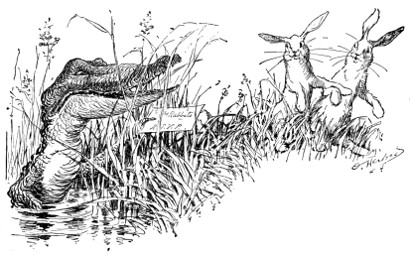
And invited two Rabbits instead;
But the Rabbits replied,
They were hopelessly tied
By a previous engagement, and fled.
67
And begged them to “drop in” to meals;
But the Eels left their cards
With their coldest regards,
And took to what went for their heels.
68
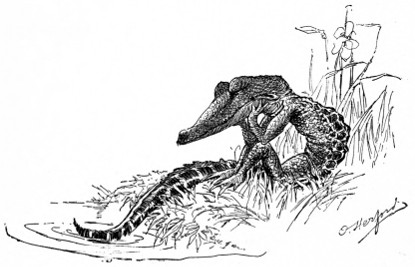
“My motives they seem to mistrust.
Their suspicions are base,
Since they don’t know their place,—
I suppose if I must starve, I must!”
69
The Forgetful Forgetmenot.
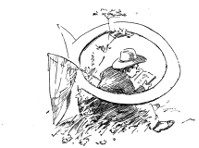
The Professor.
Oh, kindly tell me where you got
Your curious name?
I’m most desirous to be told
The legend or romance of old
From whence it came.
Forget-me-not.
If you have books on Botany
Upon your shelf,
You’d better far consult those books—
He learns a thing the best who looks
It up himself.
70
The Professor.
But though I’ve searched them through and through,
Never a word
Can I discover in the same
About your interesting name.
Forget-me-not.
The Professor.
I shall be most obliged if you
Will make it plain.
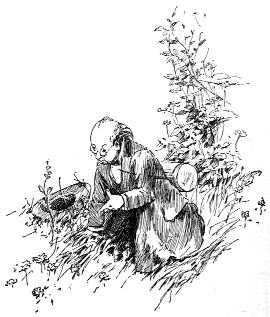
Forget-me-not.
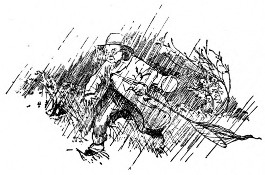
And you’ll be drenched!
It’s going to pour:
I felt just now no less than four
Big drops of rain.
71
Forget-me-not.
But it would never, never do
If I explained
That, long ago, I quite forgot
Why I was called Forget-me-not
(It’s well it rained)!
72
The Birds’ Farewell.
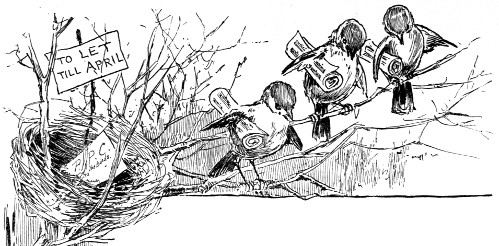
My Dear Little Maid:
For November is here, and it’s time we should fly
To the South, where we have an engagement to sing,
But, remember this, dear, we’ll return in the spring.
And if, while abroad, we hear anything new,
We’ll learn it, and sing it next summer to you
In the same little tree on the lawn, if you’ll let us.
So, good-by, little maiden! Please do not forget us.
We’re sorry to leave you—too sorry for words,
And we’ll always remain,
Yours sincerely, “The Birds.”
P. S.—Please don’t mind if this letter sounds flat,
And present our respectful regards to your cat.
73
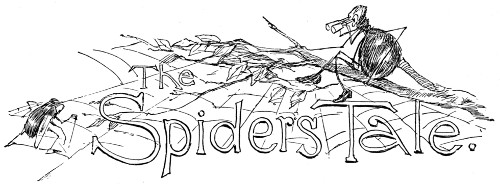
The Spider’s Tale.
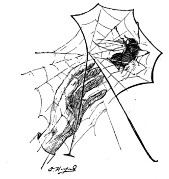
Better, surely, than to go
Into Mr. Spider’s net.
Luckily I’m here to set
You free”; but ere I could have stirred,
Mr. Spider’s voice I heard
Crying in an angry tone:
“Better let my lunch alone!
Spiders could subsist on air.
Listen to this tale and see
If you don’t agree with me!”
* * *
I sat down without a word,
Following is the tale I heard:
74
THE TALE.
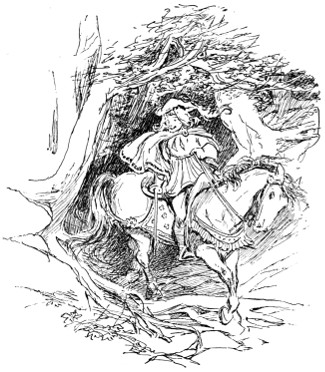
His lost Bride, caught
In the toils of a witch,—woe betide her!—
When riding one night
Through a forest, caught sight
Of a Spi in the web of a Flyder.
75
I have tried to disguise,
The names, with the best of intention:
For I make it my plan,
Whenever I can,
To avoid any personal mention.)
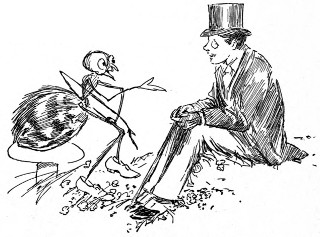
“Supposing that I
Should deliver you out of this hatefulness,
Will you pay me in kind,
And help me to find
My Bride?—Can I count on your gratefulness?”
If you will let me out
From the web of the terrible Flyder,
By all means—oh, yes!
You shall find your Princess,
For I will myself be your guider!”
76
And his buzzing and glee
Drove the Prince to the verge of distraction.
The Flyder, meanwhile,
Wore a cynical smile,
And a look of—well—not satisfaction.
But mounted his steed,
And started the Princess to find.
The Spi led the way,
But little dreamed they
That the Flyder had mounted behind!
And the wicked witch, too,
Who fled when he up and defied her;
But while being wed,
Hanging over her head,
The Princess caught sight of the Flyder!
Her reason took flight,
Till she was completely bereft of it,
When she drained a tureen
Full of cold Paris green,
And the Prince swallowed all that was left of it!
77
Quite forgot poor Mr. Fly
And his pitiable plight
Till the tale was finished quite,
Then, alas! too late I knew,
Mr. Fly was finished, too.
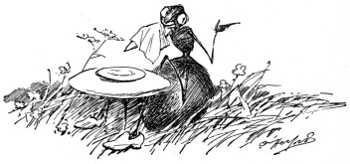
78
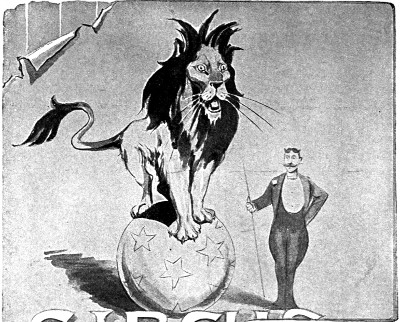
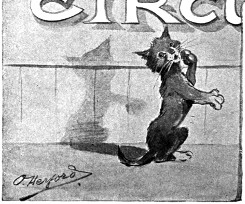
Highly Connected.
I know, and thin at that;
But cast your eye upon this poster fine—
The big chap on that ball,
He’s just a King, that’s all—
And, by the way, a relative of mine!”
79
The Miser Elf.
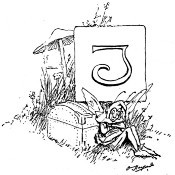
Of silver motes from moonbeams and priceless grains of ore,
And shiny dust of marigold, and glittering jeweled eyes
Of burnished stars and spangles from the wings of butterflies,
And bales of wondrous gossamer and green-gold beetles’ wings,
And many other marvelous and rare and costly things.
But, alas! with all his golden dust and jewels rich and rare,
This little elf was never free from misery and care.
80
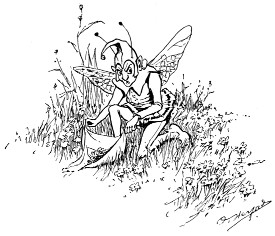
Was just a golden millstone that hung around his neck.
He never had one moment’s peace, his treasure out of sight,
Though he buried it for safety in a different place each night;
Each night the thought of robbers made him close his eyes in vain,
And just as soon as it was light he’d dig it up again.
As usual he sought a place in which his gold to hide.
He had not long been seeking before he chanced to see
A thing he’d never seen before—a curious kind of tree:
81
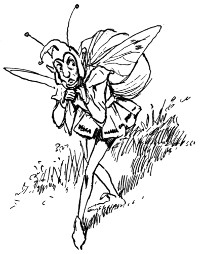
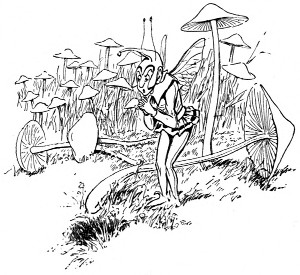
Of dome or hat—let’s call it an umbrella-tree, for short.
“The very place!” exclaimed the elf. “So strange a tree, ’tis clear,
Is just the thing to mark the spot. I’ll hide my treasure here.”
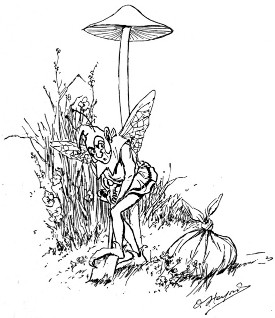
Upon a bed of moss near by he laid him down to sleep.
For once the elf enjoyed a night from dreams and terrors free;
And, waking, sought with bounding step his tall umbrella-tree.
82
It stood. “But what is this?” Another like it to the right!
“Which can it be?” He rubbed his chin. “What underneath the sun
Has happened? Why, I could have sworn last night there was but one.
Which can it be that marks the spot in which my treasure lies?”
And looking round, another tree of the same shape and size,
Another and another still met his astonished eyes.
In a forest of umbrella-trees all grown up in a night.
83
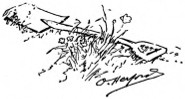
A toadstool lying on its side among the leaves and grass,
Think of the little miser elf, for ’tis a sign that he
Still digs for his lost treasure underneath the umbrella-tree.
84
The Point of View.
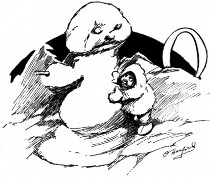
As all the geographies say,
A small Eskimo, just to make the time go,
Was building a Snow Man one day.
Came strolling along that way:
“Perhaps it is none of our affairs,
But what are you making?” said they.
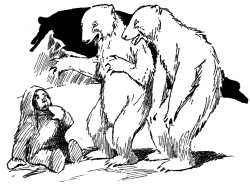
The Bears gave a comical stare;
85 Said they, “If you must make a person of snow,
Why on earth don’t you make a Snow Bear?”
Of some suitable sort of reply,
When a Penguin, two Foxes, a Seal, and a Mink,
And a Walrus came wandering by.
86
A casual word to say,
And each had a trifling suggestion to make
In a patronizing way.
And shows lots of promise, you know;
Yet I think, for my part, though perhaps it’s a fad,
A Snow Walrus were more apropos.”
They knew little of art, so they said,
But they thought he would show better taste if he made
A Fox, Seal, or Mink in its stead.
87
They’d finished, he ventured to say,
“It doesn’t look much like a Penguin, but then
Perhaps when completed, it may.”
Alas! he was seen no more;
The heat of his anger and shame and chagrin
Had melted the snow where the crust was thin,
And he’d sunk, so to speak, through the floor.
88
Heroes.
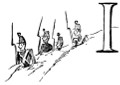
And left to guard it three or four
Lead soldiers of the bravest sort,
And ordered them to hold the fort
Till I should come once more.
I found the sea had washed away
My castle built upon the sand.
Alas! the gallant little band
Of soldiers, where were they?
They held the fort with martial air;
And when I’d said a little speech,
I dug them out and made them each
A general then and there.
89
A Belated Violet
Dark the clouds that hurried by;
Very rough the autumn breeze
Shouting rudely to the trees.
Through the withered leaves and mold
Peer’d a violet all in dread—
“Where, oh, where is spring?” she said.
She may call in vain for spring.”
And the grasses whispered low,
“We must never let her know.”
90
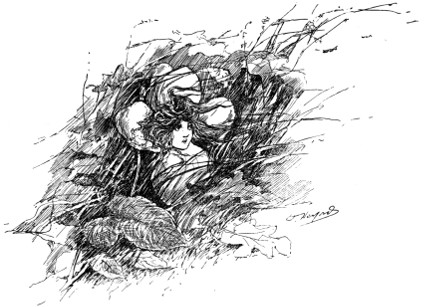
“Hush! a violet!” sobbed the trees,
“Thinks it’s spring—poor child, we fear
She will die if she should hear!”
Tenderly he murmured, “Stay!”
To a late thrush on the wing,
“Stay with her one day and sing!”
That the sun came out to hear,
And, in answer to her song,
Beamed on violet all day long.
91
Fluttered with a spring-like air,
Then the violet raised her head—
“Spring has come at last!” she said.
All that night—but happier yet,
When the dawn came dark with snow,
Violet never woke to know.
92
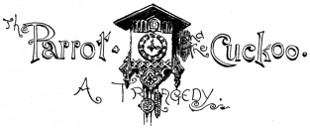
The Parrot and the Cuckoo.
A Tragedy.
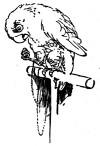
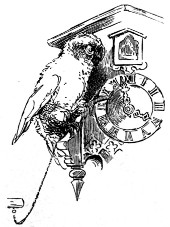
Scene: The vicinity of the Cuckoo Clock. Cuckoo discovered in the act of telling three o’clock. Parrot watching from a perch near by.
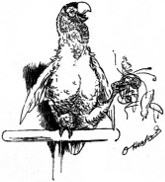
To hear her any parrot would suppose
She owned the earth, conceited little thing,
She really seems to fancy she can sing,
Yet, though you’ll scarce believe, that little bird
Rules the whole blessed household with a word.
She only has to call “Cuckoo!” and lo!
93 The family at once to luncheon go.
When she screams “Cuckoo!” twice it is the rule
For all the kids to hurry back to school—
And when six times they know it is a sign
 That Cuckoo thinks it’s time for them to dine.
And so it goes through all the livelong day,
She tells them what to do and they obey.
But as for me, they treat me like a doll
And mimic me and call me “Pretty Poll,”
And ask me several million times a day,
“Does Polly want a cracker?”—by the way,
I’ve yet to see that cracker—oh, sometimes
I gnash my beak, or mutter nursery rhymes
Or anything! for fear I should let slip
The wicked words they taught me on the ship,
Those naughty sailors, when long, long ago
They brought me from the land where spices grow
 And palm-trees wave, and Cuckoos do not rule
And tell folks when to bed and when to school
And when to go to dinner.
Never mind!
My time will come. As that vain bird will find
Unto her sorrow. Yes, the die is cast!
Next time the Cuckoo squawks will be her last.
94
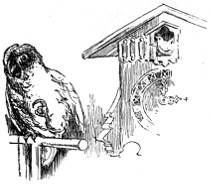
Prepare to die! your little reign is o’er,
Over this house you’ll tyrannize no more!
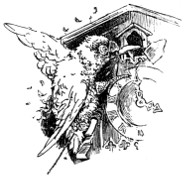
What! won’t you come? then I’ll soon show you how!
There! stop that racket; heavens, what a row!
95
(Smashes the Cuckoo to bits, causing the machinery to run down.)
(It stops.)
You’re tough for such a very little bird,
I thought you’d never die! and now, my dear,
The family will very soon be here,
And when they see how little’s left of you
They’ll be so glad they won’t know what to do—
To think the Cuckoo’s killed and they are free
To work or play or sleep or take their tea
Just when they please—and, best of all, how jolly
To feel they owe it all to “Pretty Polly”!
(Curtain.)
96
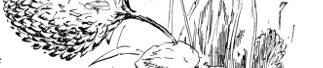
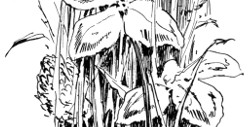
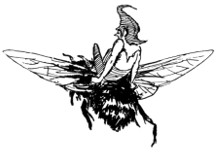
The Elf and the Bee.
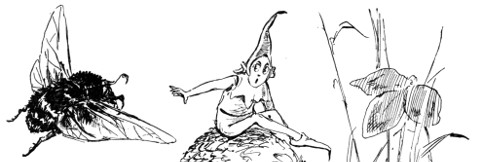
Don’t fly so near!
Or you will tumble me
Over, I fear!”
Don’t be alarmed!
I’m looking for honey, Elf.
You sha’n’t be harmed.”
Oh, tarry, Bee!
Fill up your sack;
And carry, oh, carry me
Home on your back!”
A Fable.
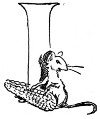
Upon Thanksgiving morn,
And she watched a thankful little mouse
That ate an ear of corn.
How thankful he should be,
When he has made a meal himself,
To make a meal for me!
And his thanks for feeding me—
With all his thankfulness inside—
How thankful I shall be!”
Upon Thanksgiving Day.
But the little mouse had overheard,
And declined (with thanks) to stay.
98
The Fairies’ Concert.
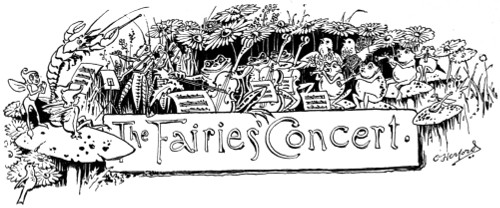

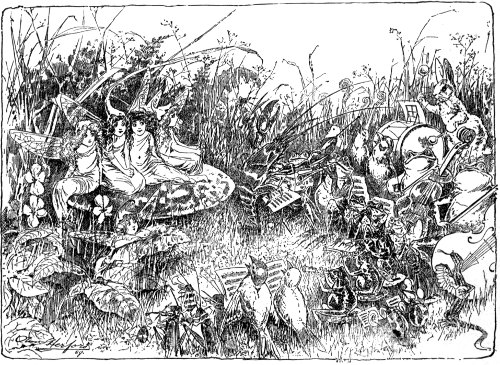
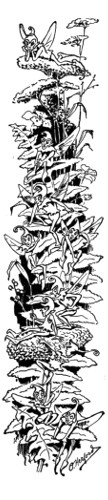
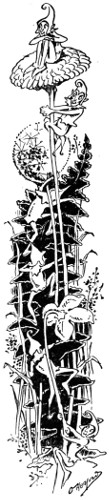
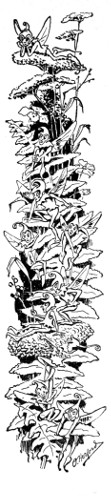
To the fairy-folk alone,
Where the grasses meet and spread
Like a green roof overhead,
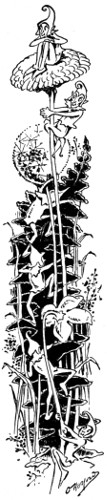
Where the dandelion-tree
Towers tall as tall can be,
And the ferns lift up their high
Fairy ladders to the sky,
For the elves to climb upon—
Here are merry goings-on.
All the fairy-folk are here,
For to-day there is to be
Music ’neath the daisy-tree.
99
One and all, have been so good
And obliging as to say,
They will gladly come and play
For the elves a serenade,
In the fairy forest glade.
All the little birds have come;
And the bumblebees that hum;
And the gnats that twang the lute;
And the frogs that play the flute;
And the kind of frog whose toots
Seem to come from out his boots;
And the great big green and yellow
Frog that plays upon the ’cello;
And the katydid, in green,
Who is oftener heard than seen;
With the little ladybird
Who is oftener seen than heard;
And the cricket, never still
With his lively legs and trill.
And, in short, each forest thing
That can hum, or buzz, or sing,
Each and all have come to play
For the little elves to-day.
To conduct the fairy band.
First there is a moment’s pause,
Then the leader lifts his claws,
Waves his wand, and—one, two, three!
All at once, from gnat and bee,
Frog, and katydid, and bird
100
That the elves and fairies wee,
Clapping little hands with glee,
Make their mushroom seat to sway
In a very risky way.
And the creatures in delight
Play away with all their might,
Feeling very justly proud
That the elves applaud so loud.
And the elves to bed must go
Ere the sleepy flowers close
In whose petals they repose;
For if they were late they might
Have to stay outside all night.
So the last good-byes are said;
Every one goes home to bed;
And the creatures as they fly
Play a fairy lullaby,
Growing faint and fainter still,
Fainter and more faint, until
All is silent—and the shade
Creeps upon the fairy glade.
Transcriber’s Note:
Obvious printer errors corrected silently.
Inconsistent spelling and hyphenation are as in the original.