THE MINSTREL:
A COLLECTION OF POEMS
BY
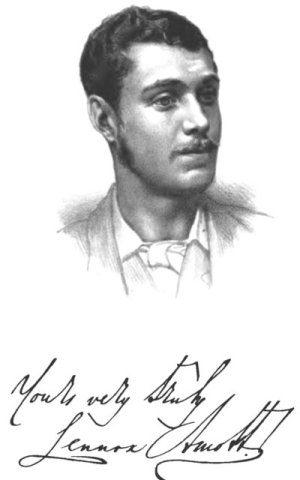
LENNOX AMOTT.
Rura mihi et rigui placeant in vallibus amnes
Fulmina amem silvasque inglorius....
... O, qui me gelidis in vallibus Haemi
Sistat, et ingenti ramorum protegat umbra!
—Virgil.
LEWES: FARNCOMBE & CO.
1883.
LEWES:
FARNCOMBE AND CO.,
PRINTERS.
TO ONE, WHO AT ONCE COMBINES
TRUE SENSE WITH TRUE HONOUR,
UNSELFISH PRINCIPLES WITH UNSELFISH FRIENDSHIP,
WHOSE SPECIAL PROVINCE IS
TO SYMPATHIZE AND TRUST,
WHOSE ONLY FAULT IS HIS READY CONFIDENCE
IN NATURES
TOO UNLIKE HIS OWN,
TO
Harold Matthews
THIS WORK IS INSCRIBED, AS A JUST TRIBUTE
OF THAT ESTEEM, WHICH ALONE IS THE REAL SOURCE
OF ALL FRIENDSHIP,
BY HIM WHO HAS VALUED HIS SOCIETY IN THE PAST,
AND HOPES HE MAY LONG ENJOY
IT IN THE FUTURE.
PREFACE.
I am fully aware of the fact that the present volume is but an intrusion at the best; however, I trust my readers will be pleased to overlook the many faults of a bagatelle as insignificant and pitiable as its author.
In the following pages I have introduced the first
canto of Midsummer Idylls in a revised form, and it
has been my especial care to correct, as far as it was
consistent with the meaning of the passage, any hitch
in the Iambic Measure which might offend the ear. An
author has himself to please as well as his public, and
it has been to me a matter of much study that the
Iambics should be as pure, or at least as tolerable, as
circumstances would allow, though, while I can ill permit
an irregular or inharmonious line, I hope I may not be
found guilty of sacrificing sense to sound. I beg to
tender those my most cordial thanks who have dealt
indulgently with my rhymes hitherto, and to acknowledge,
with profound gratitude, the kind encouragement
of those great men of letters who have condescended to
notice so small a bard. The opinions of the Metropolitan,
Provincial, and Foreign Press could not have
been other than gratifying to me, and it is with a humble
hope of favour that I submit the following pages to a
discerning public.
LENNOX AMOTT.
CONTENTS.
| PAGE | |
| Midsummer Idylls —Canto I. | 1 |
| " " —Canto II. | 38 |
| "" —Canto III. | 79 |
| Bright Scenes must all Depart | 97 |
| My Beauty's Home | 98 |
| Ah, Hast Thou Gone? | 99 |
| Stanzas to a Lady Coming of Age | 100 |
| Good Night | 101 |
| The Friends | 102 |
| On Plucking a Hedgerow Rose | 103 |
| The Shadow of a Life | 104 |
| Alone | 105 |
| Drink | 106 |
| The Musician's Grave | 109 |
| The Summer Shower | 110 |
| When the Twilight Shadows Deepen | 111 |

MIDSUMMER IDYLLS.[1]
CANTO I.
I.
From town to country, and from there to town.
I am not sure, but think it was July;
I would not swear it was, nor bet a crown,
When, as I told you, cockneys hurry down
In two hours' railway journey far away,
And rush to places of immense renown,
Bright with the thoughts of coming holiday,
Full well determined to enjoy it while they may.[2]
II.
O'er the rude mountain or the fertile plain,
Must snatch the chance, and rush here, there and yonder,
And pack their baggage off by early train,
To rest the busy over-anxious brain,
And take to interests altogether new.
Some tear to Italy, and some to Spain,
For beneficial air and change of view;
What everybody does that I must also do.
III.
Suburban roadways generally are,—
And everything seemed disagreeably “fusty,”
Merely because there was no watering car.
It was the weather when we feel at war
With all around and everyone we meet;
Old dames complained of aches unknown before,
Unused to battle with such dreadful heat,
Such truly fearful spasms, and such blistered feet.
IV.
Th' exalted driver, usually so deft,
Resented, in his doze, the interference
Of any one poor fellow-suff'rer left;
Of all his strength and energy bereft,
The weary horse dragged listlessly along,
And there appeared to be no effort left
In the sleepy trilling of the songster's song,
Which to the small suburban gardens did belong.[3]
V.
Smites the ear feebly at the noon of day,
He doffs his hat, as if for a reminder,
To those who wish him far enough away;
And noisy babes at variance and play
Join in the jangle of the grocery vendor,
And butcher boys have lots and lots to say
To fair domestics, who their hearts surrender
To, if not a butcher boy, a kettle mender.
VI.
Your kind attention, reader, to a square
In that locality, tho' more select,
So thither now together we'll repair.
A bold and lofty tenement stands there
With flight of steps and massive portico,
Where dwelt three daughters infinitely fair;
Their age of course I'm not supposed to know,
'Twas very rude I own to raise the question so.
VII.
Their years, their fortune, and the gods know what;
To hear if each or all had found a lover,
If one engaged or if they all were not,
How many aunts and uncles they had got,
Their nic-nacs of domestic life beside,
Your indignation would be somewhat hot
If th' information were to be denied,
And since you'll have it so, the truth I will not hide.[4]
VIII.
Some strange objection which they always raise,
And arm themselves as if for the protection
Of the sweet sanctum of their earlier days,
Toward those who flatteringly speak their praise
And ask in special confidence their years,
Who pass the time in fifty pleasant ways
And designate them “charms” and “pretty dears,”
Beset with all those unimaginable fears!
IX.
The eldest—fancy—only twenty-two!
At least so all the neighbours' gossip said,
And they, of course, were all who really knew;
Of medium height, and lovely spinsters too,
Charmingly gentle as they well could be,
With accomplishments and graces not a few,
As generous as one could wish to see,
The very pictures of sweet joviality.
X.
Were the idols of their precious little eyes;
And it was whispered that there was a chance
With Fate auspicious, of a great surprise
At some approaching day; 'tis never wise
To form conjectures or to fret and worry,
To count your gains before Aunt Some-one dies,
E'en though possessed of half the land in Surrey,
Or draw your own conclusions in too great a hurry.[5]
XI.
Is second hand; I write as folks dictate;
A Mrs. B. tells Mr. So-and-So
Th' extent of some-one's personal estate;
He in his turn the same again will prate;
A Mr. C. has struck his little wife
Is the last movement worthy to relate,
'Tis now affirmed he took away her life,
In the next terrace where th' appalling tale is rife.
XII.
Wise men and women oft forsake their own,
Which may perhaps account for their remissness,
A tittle-tattle's never seen alone;
And by the time the idle tale has flown
From mouth to mouth, the truth in some disguise,
A trifling circumstance we find has grown
A crime of most unpardonable size,
And thunder-struck believers stare in mute surprise.
XIII.
Our female friends, at least, I mean to say,
We will not try to penetrate the veil
Which hides domestic mystery away;
It was not often that they looked that way.
Perhaps the atmosphere of such a place
As the metropolis on such a day
Had made them faint, as often is the case:
The cause in feminines is often hard to trace.[6]
XIV.
That blanched the buxom beauty of their cheeks,
The want of some secluded, pleasant grange
Away from town, for twelve or thirteen weeks,
The hilarity of right down country freaks
And rambles in the meadows bright and green,
Such as the “pater” usually seeks,
With charming walks and panoramic scene
And velvet-like ascents with verdant vales between.
XV.
As they suggested to their fond mamma
A short peregrination, something new,
A rush to country and to town ta-ta,
For benefits obtained but from afar;
So 'twas arranged, when they could choose the hour,
To make a fourfold pounce upon papa,
And use the utmost of persuasive “flour,”
For all such daughters have this undefinéd power.
XVI.
A fact you all no doubt are sure to know,
'Tis necessary oftentimes to steer
Clear of surrounding difficulties, so
When an especial object lies below
The precision of your kindness and attention,
Snatch the right time (a glance may serve to show
If in a mood for jesting or dissension,
Domestic trials are too numerous to mention).[7]
XVII.
Papa may worry o'er his own affairs,
Or it, perchance, may be a downright “fumer,”
And judging from the countenance he wears
He may be vexed with sundry business cares,
A something he would not communicate,
In which the happy household never shares,
It is not wise it should, at any rate;
At least till matters have regained their even state.
XVIII.
Was just such as our damsels did desire,
Now all the world was out for its vacation,
In truth no opportunity was nigher;
All seemed to rise with spirits somewhat higher
Which were at most times jocular and gay,
And all agreed that they should seize their sire
A time befitting on that self-same day,
To coax him gently round to let them have their way.
XIX.
And wool-knit slippers, comfortable and pretty,
To the radiant breakfast table trotted down,
Inclined to have some frolic and be witty
(As frolicsome as any in the City)
And chaff his daughters in his usual style;
Minutiæ omitted in this ditty,
For to relate 'twould not be worth the while,
I therefore must, my reader, meet you with denial.[8]
XX.
If such in France are often to be seen,
Not quite a window, but more like a door,
'Twould do for both, whichever one they mean,—
Opened upon a lawn of smiling green,
Which, with a modest rockery behind,
Displayed, in fact, a most enchanting scene
To those who were at all that way inclined,
With such artistic taste was it indeed designed.
XXI.
And nimble Cupid with his bow close by,
The various colours melting in the distance
Lent quite a pleasing aspect to the eye,
And perhaps produced the very faintest sigh
For such-like beauties on a larger scale,
Where sweeping meadows meet the azure sky,
And florid milk-maids bear their bounteous pail,
And breezes waft the sound of winnow and of flail.
XXII.
First in the shade, now in the pleasant sun,
And peep at this and that, and hurry yonder,
To see some potting properly begun;
He strolled to-day, a regular Big Gun,
Around the precincts of his bright domain,
His egg and toast dispatched. (Forgive the pun,
I promise I won't do the same again;
Frivolities like these oft run across the grain.)[9]
XXIII.
Like three white butterflies upon the breeze
With evidently some design, came skipping
Round by the arbour in amongst the trees,
And if the truth were really known, to seize
Their innocent papa just thereabout;
'Tis wonderful how daughters coax and tease
At such auspicious times; I have no doubt
They stroked his handsome whiskers with a pretty pout.
XXIV.
So thoroughly enjoyable you say,
I really think it's something quite excessive,
Much worse, in fact, than it was yesterday;
It quite upsets me;—no, I'm not in play,
Indeed I've been quite indisposed of late,
And vexed with ailments many and many a day,
With troublesome ennui and mal-à-tête,
The Doctor thinks my nerves are in a wretched state!”
XXV.
We one and all seem quite to be upset,
'Tis hotter than last summer was by far,
At least so everybody says, but yet
Much hotter than last June it could not be,
And that's what I think, what do you think, pet?
To sit indoors 'tis like a nunnery,
With nought to do but tamely sit and knit,
In fact I never liked such quietness a bit![10]”
XXVI.
Away from home, as other people do,
The Doctor recommends a change and so
Just think how very nice 'twould be for you;
I'm sure you must be wanting something new,
Away from dusty ledgers, old and brown,
You seem quite tired out sometimes—'tis true,
You really ought to go away from town,
To Hastings or to Deal, and we could all come down.
XXVII.
Such bright enjoyment you can ne'er forbid:
Now say so darling, is it not so? for
You would be very wicked if you did:
'Twould do you good besides in getting rid
Of horrid London and incessant noise.”
Here to her father's side his daughter glid,
And kissed his cheek (what girls like from the boys)
Just as a baby loves to fondle all its toys.
XXVIII.
Or put it off until another year,
But simply said he saw not why they shouldn't,
Then seemed a little pleased at the idea;
And to his fav'rite girl said, “Well, my dear,
We will discuss this subject at our leisure,
I'll see if any hindrances appear,
I have at present an unusual pressure
Of business to attend to: duty first, then pleasure.[11]”
XXIX.
Straightway indoors to talk the matter o'er,
They all were anxious Ma should know it too,
And met that worthy matron at the door
Who liked the thought of merriment in store,
And reveled in it just as much as they,
For things a very pleasant aspect bore
While all were thinking of the happy day,
Talking of all their wants e'er they should start away.
XXX.
Concerning what to take and where to go,
To see if this arrangement suited that,
Or that arrangement suited so and so;
'Twas well to balance matters thus you know
And settle all before the time arrived,
To milliners and hairdressers to go,
To purchase and have ostrich-plumes revived,
Of ornaments like these they could not be deprived.
XXXI.
In such a case as this, a long debate;
One said that Yarmouth was the place, she knew;
Another said it was by far too late;
And someone else suggested Harrogate;
Another sneered at such a daft suggestion,
For that above all places she did hate
And Torquay was the best there was no question:
But listeners evidently wanted good digestion.[12]
XXXII.
“Why,” quoth another, “have you got no sense?”
Mamma, requesting that they shouldn't bawl so,
Pronounced this far too utterly intense.
The eldest charm continued in defence,
Bespoke the Gulf Stream and the balmy air;
Whereon the mater, taking great offence,
Declared she wouldn't think of going there—
She'd sooner go to Seven Dials, or anywhere.
XXXIII.
A flood of tears gushed freely from her eyes,
And, stretched upon the canapé, she swore
That she was far too indisposed to rise,
Though afterwards she did, with many sighs—
A smelling-bottle and some small assistance;
Grieved that her daughter to her very eyes
Should offer her such resolute resistance.
From then she essayed to keep the subject at a distance.
XXXIV.
With their disputes and matters of vexation,
They came to something definite at last
Without much further tedious altercation;
When each one deemed it her own commendation
That set the point so thoroughly at rest,
And each had come to the determination
The course she had adopted was the best;
A course, perhaps, my reader never would have guessed.[13]
XXXV.
They had arranged to take a country seat;
Perhaps the choice was happy—very well,
They chose a pretty house and farm complete,
Such as where solitude and pleasure meet,
With everything that comfort could devise,
A smiling garden, sweetly gay and neat,
Old-fashioned, though of most convenient size;
For such as this precisely did they advertise.
XXXVI.
In bustling centres of incessant trade,
And leafless acres, though perhaps a few
Pet dandelions blossom in the shade
Where other vegetation will all fade,
And parch to yellow in the smoky court,
Where a solitary sunbeam might have strayed,
And all the gloomy atmosphere is fraught
With all that's dank and filthy of the human sort.
XXXVII.
Retreats suburban please the public eye;
But occupants their villa homes disguise
And strive to imitate the great and high
By striking names and such-like mimicry;
They choose them mainly for a good address,
We see it as we pass the villa by,
And with a smile we mark its rottenness.
This evil's very prevalent you must confess.[14]
XXXVIII.
No matter what their quality may be,
And many would much rather have it so
Preferring to all else the quantity;
But everyone most certainly is free
To do as he or she considers best,
Of course it never has affected me,
Yet hollow show I really do detest;
But 'tis a theme of no immediate interest.
XXXIX.
To give one's dwelling some fantastic name
To recommend it to the stranger's gaze,
Or afford it an imaginary claim
To more gentility than others; 'tis the same
In the metropolis, for folks arrange
(Flighty mammas, perhaps, are more to blame)
To call their homes “The Beeches” or “The Grange,”
For probably they think 'twill be a little change.
XL.
Of princely piles of luxury and ease,
Where the powdered footman silently awaits
My lord's commands and wishes, till he sees
What he can do to magnify or please;
Who sternly checks the smile that he would hide,
And reverently bows with straightened knees
When perhaps his lord is pleased to coincide,
And waits for the dismissal from his master's side.[15]
XLI.
The pillared pomp of birth and fortune, whence
Reel peals of laughter, where the gasp for might
Palls on the throne of vast magnificence;
Where halls superbly mirrored, every sense,
And every wish, all hope, each separate sigh,
With endless epicurean intents,
Are planned to please, are reared to gratify,
While balmy perfumes float o'er th' marble masonry.
XLII.
Merely to mention what is but too true.
I really hope I may not have offended
Any, in short—particularly you,
Submissive reader, to whom thanks are due
For having borne with my caprice so long,
And your forbearance, I hope, you will renew
Until the utmost limit of my song;
I'll do my best to entertain you all along.
XLIII.
Was Elleston Farm, nursed in a lovely vale,
Within the music of the shingly shore,
And close above full many a snowy sail,
On the blue wave, the wand'rer's eye would hail,
And the cool breeze from off the glist'ring sea,
Would bring soft reminiscence in its trail
Of scenes long past, of childhood's jollity,
And many a soaking ramble on a holiday.[16]
XLIV.
Across its walls each black yet mossy beam
Gave it the look of years and years untold;
In style it did Elizabethan seem,
And, with its jutting windows, we should deem
It to have been a comf'table repose,
Such as, with th' ruddy sunlight's western gleam
Upon the small-paned casement, and the rose
Above the portal, would dispel all worldly woes.
XLV.
Of ducklings discontented with their lot,
The grunt of pigs itin'rant, and the stack—
All lent a happy charm to such a spot;
There might be seen upon the labourer's cot
The blooming jess'mine loading all the air
With fragrant perfume; and the garden plot
Of many colours, grateful for the care
Bestowed upon it, of delight gave its full share.
XLVI.
Of ev'ry shade, before the pleasèd eye
Rolled their ripe richness, and the sweeping views,
Such as in Eastern England sweetly lie,
Smiled far away in vast variety,
Tinged with the orange of the sinking sun,
Until the distance melted into sky.
Such scenes are sweet when even has begun,
And rooks are idly cawing, and the day is done.[17]
XLVII.
How dear these pleasures momently renewed!
Teach us to humbly fall upon our knees
In speechless praise, in silent gratitude;
These are the hours, O Lord of Solitude,
When hearts in love must upward turn to Thee,
With every comfort, every charm imbued,
And all that's peaceful; when tranquillity
Steals softly o'er the bosom and lulls its rolling sea.
XLVIII.
Fears of the fearful, troubles of the tried,
To smooth each anxious pain, all griefs, away,
That ceaseless in the human heart abide,
Have power to soothe, to cast cold care aside;
Bid cords of Hope inanimate vibrate,
Th' insatiate longings of the soul subside,
And curb the stormy passions of the great,
Make earth a heaven, and holiness preponderate.
XLIX.
That boils the blood and parches all the frame;
That stirs the breast to ecstasies? What bliss,
What bursts of glory in a mighty Name!
But what of these! to me 'tis all the same
Whether a humble cottage or a throne.
What, what to me is Glory? what is Fame?
Give me the woods and let me be alone;
I want no marble bust, I ask no graven stone![18]
L.
Like some few others that I used to know;
The truth is, I was taught to be at school,
So Precept and Example tend to show.
But never mind, I deem it quite below
The faintest notice of a rusty pen;
'Twill tell my readers what respect I owe,
How very much I thought of people then,
Who should have been exhibited in a cattle-pen.
LI.
The cook was really to be left behind,
Which doubtless she thought very nice indeed.
She was a cook so jolly, yet refined,
Wore bright kid gloves (the colour undefined),
And finery of every sort and hue
(I couldn't tell you if I had a mind),
Like wealthy folks, as servants always do;
And terrible mistakes sometimes embarrass you.
LII.
And all were in the very liveliest mood,
Although, of course, there was no time for fun,
And jokes were too untimely to be good.
The first cabdriver must have been endued
With strength, for this occasion, from above
He was so mighty, and his attitude
Betokened he was instantly in love
With cooky, smiling on her, charming little dove![19]
LIII.
With love for cook, what he'd to sup'rintend;
They had two cabs, that's all I know about it,
And, Gracious knows, their luggage had no end.
And everybody thought they did intend
To find th' remotest corner of the earth,
Wherever that was. I can't comprehend
Who in the dickens gave such stories birth,
Still of frivolities like these there is no dearth.
LIV.
All drove in madcap hurry to the station,
In fact, they might have tittered “Seven are we”
Had they remembered the superb quotation;
But Julia (housemaid) made some lamentation
About some best back hair she'd left behind,
But all was done to soothe her perturbation
Till she became more quietly inclined;
This nat'rally destroyed her usual peace of mind.
* * * * * * * * * * * * * * *
LV.
Superlatively pleasant to behold;
The views themselves were highly int'resting,
As well as all the creatures of the fold
With which they all were pleased, so I am told,
Which was a comfort for their cherished pater,
Who was just then quite worth his weight in gold,
His bed-room full of bank notes; from these data
I must defer the calculations until later.[20]
LVI.
With its dark oaken gallery, and flight
Of massy polished stairs, and saw a mouse,
P'raps three or four appalled their wond'ring sight;
But each new comfort gave them fresh delight,
And as they peeped through each dark-curtained door
All seemed so perfectly compact and bright,
Indeed they seemed to like it more and more,
For they had never entered such a house before.
LVII.
And all the drap'ry was of sombre shade,
Evidently in days long past designed,
And diamond casements, I before have said,
Looked on a lawn, in richest green arrayed,
And lands beyond unto the distance blue
Where king-cups blossom'd in the silent glade,
And all the flow'rets of the forest grew,
And pearly streams were tinged with their reflected hue.
LVIII.
(So like the good old farm-house of past days),
Which gave them a variety of tints,
And pleased at once the weary stranger's gaze;
The doors themselves were covered with green baize
Hidden with crimson curtains, and each bed
Was draped in style that claimed the greatest praise
In charming sky-blue intermixed with red,
With pockets of unique design above the head.[21]
LIX.
Were soon quite reconciled to their new friends,
And the great shepherd-dog's uncivil growls
Had quite subsided and, instead, he sends
His kind regards for various means and ends;
And I expect, if th' real truth were known,
He had an appetite, which always tends
To make uncouth pups civil for a bone;
To use civility in this way some are prone.
LX.
With a recherché little chaise and pair,
And they enjoyed a pic-nic oft no doubt
In pretty spots now here and sometimes there;
And we all know the fingers of the fair
Arrange these matters sweetly, for they suit
Matters requiring delicacy and care,
The choice of flowers, the arrangement of the fruit,
And digging ferns up without injuring the root.
LXI.
Adventurously rove a league away,
Or bend their steps upon the summer morn
(A mile it was, I fancy), to the bay,
Taking a biscuit-luncheon on the way.
To wander o'er the shining, yellow sands,
Quiet and lone, and watch the snowy spray;
And take the curious seaweeds in their hands,
Then homeward turn obedient to Papa's commands.[22]
LXII.
With happy haymakers were scattered o'er,
And Papa went to know their different yields
Through quite a hundred acres, if not more,
Not less, at any rate, I am quite sure;
And all his daughters had some first-rate fun
(They always had some merriment in store)
For haymaking to learn they had begun,
And often had a romp beneath the baking sun.
LXIII.
Moreover 'twas a fav'rite occupation,
And that chanced very fortunately too;
Meanwhile they liked some light confabulation,
Making arrangements for their bright vacation,
And plans far too entangled, I'm afraid,
To enumerate in this uncouth narration,
For if upon such topics here I strayed,
'Twould take from now till doomsday, so it's best unsaid.
LXIV.
Whose company was jovial as could be;
So their Mamma first started the idea
That they should ask three gentlemen to tea
Out in the hayfield, where they would be free,
To help in tossing o'er the scented hay;
Then all assemble underneath the tree,
And chatter anything they'd like to say,
While Julia handed round refreshment on a tray.[23]
LXV.
Penned with Mamma's gold pen and sealed with care,
And Julia brought a note to the intent
That they would be most happy to be there;
And whereon everybody did declare
They were the nicest folks beneath the sun,
And Julia did most naturally stare
To hear the happy thing that they had done,
And longed to see arrangements instantly begun.
LXVI.
How to do all things and go everywhere:
Concerning all their musical selections
And all about the “skirts” they had to wear,
How they should dress and e'en adorn their hair,
What rings to show, whether diamond or not;
Injunctions to observe the greatest care
In choice of stockings, and I don't know what.
(They were to be like fairies in Calypso's grot.)
LXVII.
I honestly believe. Mamma impressed
The fact upon them that a certain Lord
Was of her family, tho' dispossessed
Of all he had: of course you know the rest,
He had been acting very ill, you see.
But they should make acquaintance with the best,
For think what claims they had of pedigree!
(Misfortune always lends a grace to dignity.)[24]
LXVIII.
They were to give the gentlemen their dues,
They were to be distinguées to the nines,
They were, in short, to mind their p's and q's.
Their darling mother never would excuse
A breach of etiquette, however small,
'Twere better far, if e'en they fail'd t' amuse,
To do the honours well or not at all,
No matter when or where, at any festival.
LXIX.
For one high-born like her all must be right;
For she was of the aristocracy
And therefore quite expected to her sight
None would present himself, unless the height
Of spotless honour and of gentle birth,
In fewer words—and everything polite.
She was of more than ordinary worth,
One of the noblest from Thanet's Isle to Solway Firth.
LXX.
So her young days for ever had swept by,
And back to days e'er she became a wife
She looked and for them breathed a lingering sigh,
(As women often do upon the sly.)
To tell the truth, my reader, I don't blame 'em
For thinking hardly of the marriage tie,
Most men's delight is not to love but tame 'em,
I know a score but 'twouldn't do to name 'em.[25]
LXXI.
And revelled in the pomp of this vain earth,
Enjoyed that mimic farce—Society,
Entitled by significance of birth,
But what of this! Society's not mirth,
It has its fairer and its darker side,
The one is worth, the other—want of worth,
What are the hollow luxuries of Pride?
Oh gaze not on the gloom its dazzling tinsels hide!
LXXII.
With prancing steeds thro' all the whirling west
Of mighty London, under Fashion's smile,
(Tho' redundant pleasures even can molest)
And feel one's happy self supremely blest,
And bowed to by a “humble flunkey flat,”
With endless formal courtesies oppressed;
To flirt with Baron this or Lady that,
And mix with all the great, the honoured of the state.
LXXIII.
Gaze on the actor—paralyzed and dumb,
Till, like one man, ten thousand hands applaud,
From the palpitating auditorium.
See from the boxes all the purses come!
How riveted admirers pause aghast!
Hear the excitement in the stifled hum!
And see the tears of each enthusiast!
Look! ere the actor has before the curtain passed.[26]
LXXIV.
Shriek as the music swells, now high, now low
For all to-morrow slumber in their shrouds
Who drained excitement's cup an hour ago!
Watch flitting beauty, nymph-like, come and go,
Fan the scorched cheek and quaff the bright champagne,
Around the circles see the diamond-glow,
Revel in laughter, think no more of pain!
See! see! the blind ascends and all begins again!
LXXV.
On crimson piles luxuriantly recline,
And see the premature decay of age
Transformed to youth, a lovely columbine!
While th' gorgeous tapestries of rare design
In rich profusion hang in heavy fold;
See every pantomimic splendour shine
Like glist'ring starlight, opal, pearl, and gold,
Mirrors reflecting mirrors, countless and untold!
LXXVI.
Or very nearly so, at any rate,
And other vices hardly worth the naming
(But we, of course, are not immaculate),
Then think of rising very, very late
After a night's debauch and dissipation
And rolling homewards with unsteady gait
(Perhaps 'twas after the red-hot gyration
Of the previous evening). Ours is a sad nation![27]
LXXVII.
Is not the nectar-like concoction (such
As accompanies the dice and play-room) we
Are very fond of (for we take too much),
And therefore home supplies we cannot touch;
In all and everything we are undone,
Lips parch, head whirls, was never such
A wretched plight; indeed we're not A 1.
We think we have remaining money but have none.
LXXVIII.
And deviated sadly from my tale;
I'm sorry that it should have thus occurred,
I know, and you know too, that I am frail
And everything I've said is very stale,
At least it is to me, I daresay too
To some of you on p'raps a different scale,
Much more familiar, if one only knew.
It is quite marvellous what some can bustle through!
LXXIX.
As it was necessary that it should,
The rooms were swept and all that was unsightly
They hid away as quickly as they could;
And then the edibles, both many and good,
Julia and Hannah carried to the spot
(The nearest way was through the primrose-wood)
And then turned homeward with a merry trot,
And waited for the time t' arrive; and who would not?[28]
LXXX.
A vase of clotted cream, two pigeon pies,
Some cakes of every sort, a breast of lamb,
Eggs, bread and butter, as you would surmise,
A calf's head, too, of an enormous size,
Ripe strawberries and currants red they laid
On fresh green leaves (so nice to hungry eyes),
Oporto iced, some “pop” and lemonade;
Besides some other delicacies they had made.
LXXXI.
For the lab'ring men, and half-a-crown apiece
For them to have some downright merry cheer;
The question was—where did their bounty cease?
So fast their acts of kindness did increase,
So welcome were they to the neighb'ring poor
To whom their homely smile was joy and peace,
And to whose cottages they often bore
Some small addition to their little cupboard store.
LXXXII.
The dwelling clustered o'er with roses white,
The parlour with its ruby bricks so clean,
And all within so happy and so bright.
I would exchange my being, if I might,
With him whose life-long day is so serene,
Whose eve knows no lament, whose morn no blight,
Whose every hour is tranquil in between,
Whose hopes are ever fair, whose joys are ever green.[29]
LXXXIII.
Of such as these; each condescending Muse
Shall teach her fondling how t' awake each string,
And tinge each mouthful with ambrosial hues,
And keep him very well in boots and shoes.
Here some dwarfed harmless poetaster rhymes
Whose very name gives list'ning fools the “blues,”
Not only here, alas in other climes,
Which must not be, of course, in these prolific times.
LXXXIV.
Trill on, ye two, the song of future years,
Move, Palgrave, move, with bosom rent anew,
An audience multitudinous to tears;
Scratch on with quill unwearied and no fears,
The world shall fling thee thy resplendent bays,
For Popular Opinion safely steers
His barque upon the river of thy praise.
The stars themselves shall pause to listen to thy lays.
LXXXV.
Up to the gate, and Julia showed them in,
Dressed in her best (a sickly-looking mauve);
She also wore a most audacious grin,
Which Mistress too was far from favouring,
And it was clear a “lecture” was in store,
Most of us know what that means; for some sin
Many have I myself received before;
I'm never naughty now; that was in days of yore.[30]
LXXXVI.
Before the salutation part was done,
And they, poor chaps, were doubtless very tired,
Quite tired enough, before it had begun.
(Just think of all that distance in the sun!)
As usual, everlasting “hows” and “whens,”
And kind inquiries mixed with pretty fun
Were passed from mouth to mouth, which always tends
To show how much our joy on others' joy depends (?).
LXXXVII.
One of our friends, the tallest of the three
I think it was, but cannot quite decide,
Was handsome as a man could hope to be,
I only wish that he'd exchanged with me;
Such depth of eye and such a princely frown!
I wish, my friends, that you'd been there to see
His small white hands and his moustache of brown,
Indeed 'twas worth a journey all the way from town.
LXXXVIII.
What style of face is sweetest to behold,
Whether Malay or Greek or Abyssinian,
Italian I have oftentimes been told:
Malay I think expressionless and cold,
Tho' some admire its sweet simplicity,
But I'll observe, if I may be so bold,
It must be far-fetched eccentricity;
At least I can't discover such felicity.[31]
LXXXIX.
The ladies took the lighter ones to use,
And all were jovial to a great extent;
The gentlemen related all the news
And cheerfully did everything t' amuse,
When a mischance occurred, picked up the forks,
(What gentleman I wonder could refuse)
And helped t' unload and pull out all the corks
And arranged some ladies' nosegays, cutting off superfluous stalks.
XC.
And the repast looked wonderfully nice,
Spread, as I said it would be, in the shade,
With every summer dainty to entice,
Especially the lemonade and ice
(Coffee for those who coffee did prefer),
And Julia, too, was charmingly precise,
(To which it is but justice to refer)
Than her sweet smile nought could have been much prettier.
XCI.
The water-vessel sent they did suspend
As people mostly do, with twisted wire;
Much care and labour too they did expend,
Determined that their visitors should spend
A very merry evening, which they had,
For there was merry-making without end,
And all the company made very glad;
Considering all things, its success was not so bad.[32]
XCII.
“Now do try this” he pressingly would say,
Until it was a positive delight
To pass your plate and let him have his way;
Indeed he scorned the very thought of “Nay;”
The ladies, though they chatted gaily, thought
Of lots and lots of things they'd like to say,
But couldn't then, you know, for they'd been taught
At such a time to smother feelings of the sort.
XCIII.
And put their handkerchiefs before their face,
Then stuffed their ears so full they couldn't hear
And each one made a terrible grimace,
Begging that to some farther distant place
The bottles should be pointed; then, alas!
All ran away as though they ran a race,
When each had managed to upset her glass
On the corks banging, like a timid little (l)ass.
XCIV.
The gentlemen to be too good by half,
That angels with them could not be compared;
Then everybody had a hearty laugh;
The “charms” indulged in various little chaff
And gave the gentlemen some dreadful “whacks,”
I do not mean with their Papa's old staff
But with their little hands, across their backs,
Observing they deserved quite twice as many smacks.[33]
XCV.
Of all he ever liked to be the best;
Lionel, too, bespoke the strawberries,
And Gilbert loved the currants, he confessed;
In short, the gathering was the loveliest
Of all the gatherings they had ever known,
And each, of course, was proud to be a guest;
The ladies sighed how fast the time had flown;
That they were sorry everybody there did own.
XCVI.
The labourers came to take some little cheer;
They doffed their hats and shouted thrice “Hurrah!”
When they had polished off a little beer;
But took the treasure while a burning tear,
Unchecked and gentle, trembled on the cheek
And damped the furrows of full many a year,
And fettered up the lips; thankful and meek,
Each rustic bent his toil-worn brow, but could not speak.
XCVII.
Up to his face, across his briny eye;
What human breast that tears may not relieve?
What cheek that tears can never beautify?
They moved away and sauntered leisurely
Back to their toil, back to their daily bread,
Then homewards. In the evening's streaky sky
The crescent moon gleamed faintly overhead
And whispered that their little ones were hushed in bed.[34]
XCVIII.
Now they had tossed the hay and had their fill,
And it was proper time they should, beside—
The fields were getting positively chill;
The gentlemen sat down and rested till
The trap was ready, and the lamps were lighted,
And pleased they were to chat awhile, but still
It made the journey tedious if benighted;
Of course they mentioned they'd been thoroughly delighted.
XCIX.
And music took the place of tossing hay,
With various small etcetera, and so
It came about they should not go away
Before they'd promised for another day.
Of course what could they say? they said they would,
And highly pleased they all were I daresay;
And so between them all 'twas understood
They had arranged a pic-nic near some distant wood.
C.
Impatient quite to trot his homeward road;
Of course our friends must have a glass of whisky,
The frisky horse, the trap, and all be blowed:
As long as they arrived at their abode
It didn't matter and they didn't care,
And all these circumstances only showed
They were in no great hurry to be there,
Perhaps preferring to remain just where they were.[35]
CI.
They lasted just as long, I do believe,
As all the “Hows” and “Whens” and “How d'ye dos”
On their arrival,—no, I don't deceive;
They all took “quite excruciating” leave,
And Julia hurried up and held the gate,
For which a florin-piece she did receive,
Then hurried back in quite a frantic state,
Indeed her eyes with very pleasure did dilate.
CII.
The blinds were down and all the shutters closed,
Julia was sent to bolt the garden door,
And all did whatsoe'er they felt disposed;
Mamma, with covered face, lay down and dozed,
Papa and his three daughters played at loo,
It was a pleasant pastime they supposed,
I almost think it must have been, don't you?
But everybody wished the day would dawn anew.
CIII.
Earlier than usual, after having played
Three lovely games at loo, and then discussed
The nice refreshment in the pleasant shade;
And I am sure they must have been repaid
Quite amply for their trouble in the pleasure
Of hearing all the gentlemen had said,
For Dora seemed amused beyond all measure—
(She was the eldest one, you know, and such a treasure!)[36]
CIV.
They were, at least they seemed to be, worn out;
And 'tis the same, I think, with tiny bards,
For they, too, must leave off sometimes, no doubt,
Most folks, I know, would rather be without
Such nuisances as we are at the most,
And I myself am but a lazy lout,
For dallying all my time amongst the host
Of scribbling dolts; but writing verse is not my boast.
CV.
'Tis time to pause for I have croaked so long,
To lay aside my paper, pen and ink,
And hush the grating measure of my song,
Your kind applause may not to me belong,
It might have been much better I'll agree,
But if you'll just decide to come along—
With a forgiving heart—along with me,
We'll both shake hands upon the subject merrily.
CVI.
Such pigmy rhymesters as sincerely yours,
Who flabbergast their nursery-maids and dribble
All down their literary pinafores.
All men form two divisions—first, the Bores,
Next, those who must incessantly be bored;
To those who can explain I leave the cause,
Or him who said so ('twas a certain Lord)
His name it is not necessary to record.[37]
CVII.
And laurel wreaths and pens both great and small,
But weirdly mixed with inkpots, cups and saucers,
Floating in air like things ethereal;
How dare such stupid things intrude at all!
There, let me sleep for Goodness' Gracious' sake,
I really shall not answer if you call,
I'll finish up my story when I wake;
Hush, hush, my darling, hush, else rest I cannot take.
CANTO II.[38]
I.
I must have dozed upon my easy chair;
I feel refreshed and recommence my labours,
And urge my soaring Pegasus through air,
Nor ask his destination or his fare,
It matters not to me, and I resume;
But not to dose you more than you can bear,
To take my flight with others, I presume,
And why not so, my friends, since there's no lack of room?[39]
II.
On whom no living being spends a wink,
So stand aside and let me have my bellow,
You surely will not grudge me pen and ink!
I've little doubt that if you stop to think
You'll recollect I've met you once before,
I'm not the humbug who would wish to shrink
From friends of old, and so let's have your paw;
Of course 'twere better we were friendly to be sure.
III.
Or “lump it” p'raps (to use a common phrase),
Yet, as with most objections, you'll outlive it
Before the lapse of very many days;
The fact is this, I never look for praise
And never want it, for I quite intend
To abandon rhyming and amend my ways,
And utilise the moments that I spend
In such-like nonsense, towards a more befitting end.
IV.
'Twere well did I just one or two rehearse;
I hate to see a fool his ways renew,
I hate to see a youngster scribbling verse;
And now, my friends, just think, what can be worse
Than wasting time when we've so little of it?
But waywardness will surely prove a curse,
They tell me that I ought to be above it,
That is to say, my kinsfolk and belovëd.[40]
V.
And here am I complaining while I write
Of human nature. Of myself I ask—
Now am I doing wrong or doing right?
'Tis hard indeed (I find it so) to fight
(However perseveringly I try,
And more particularly so to-night)
Against this most uncouth propensity:
Most likely tho' I shall grow wiser by and bye.
VI.
Of giving up a task when once begun,
Besides it's nonsense urging an excuse,
Just let me end my tale and I am done.
Why, there's the breakfast bell, and, ten to one,
Those girls are fast asleep, and what d'ye bet?
And Julia's just been waking them, what fun!
Ah, very well, you've lost, and don't forget
That you are now, let's see, a florin in my debt.
VII.
Unutterably tired I should say,
But Julia said they all were wide awake,
And so 'twas useless making more delay.
Mamma proceeded in her usual way
To order in the breakfast then and there,
Concluding 'twas the excitement yesterday,
For waiting long was more than she could bear;
So after having kissed papa she took her chair.[41]
VIII.
To gain some knowledge of the coming weather,
Then stared and took out his chronometer,
Remarking it was funny altogether;
He rang the bell in order to know whether
His daughters really had begun to dress,
And Julia, quite as light as any feather,
Swept in and pertly answered, “Yes, Sir, yes,”
Much to his satisfaction, doubtless, you may guess.
IX.
And there was then and there a great “to-do,”
Mamma felt very much disposed to scold,
And answered their excuses with “pooh-pooh:”
I think 'twas rather too bad tho', don't you,
Since they had done the very best they could
To entertain their visitors all through?
But there! she only scolded for their good,
And 'twas not well for them o'er such-like things to brood.
X.
To judge from all appearances at least;
Their youthful levity had taken wing,
And all excursions for the present ceased;
And momently their restlessness increased,
The sketch was left unheeded: incomplete
The slippers they were knitting ere the feast,
And faded garlands strewed the arbour seat,
Now silent and neglected was that cool retreat.[42]
XI.
Shortlived, I find it so, at any rate,
Altho' not always easy to repress,
We very soon reclaim our normal state:
'Twas so in this case, happy to relate,
For soon they all were lark-like as before,
With all their usual buoyancy innate,
Indeed they took to frolic more and more;
They were the liveliest feminines one ever saw.
XII.
They did not even doze, but wakeful lay;
Oblivion's mists their senses did not steep;
Whatever was the cause I cannot say;
So they commenced to chat the time away,
Their rooms were quite convenient for it too,
Then on to various topics did they stray,
And long forgotten converse did renew:
No doubt 'twas quite enjoyable, they thought so too.
XIII.
Preferring to prolong the conversation;
And still suggestions one by one arose
Which only met with their disapprobation;
And jokes were cracked in lively alternation:
From sundry rappings “peal on peal afar”
Occasioning surprise and consternation
I'm half afraid that they awoke Mama,
And, dozing sweetly too, most likely their papa.[43]
XIV.
They brought their voices down to somewhat low.
T' arouse the slumb'ring folks they never meant,
Whom they'd disturbed so much a while ago;
So they arranged at once that both should go
To Dora's bedroom if they wished to speak,
And “trip it on the light fantastic toe,”
But, oh dear, how those stupid boards did creak
As both of them their darling sister's room did seek!
XV.
For making coffee speedily prepared,
The cups were steaming with an odor gratus,
They thought not of the hour and little cared
How far advanced the night, and gaily fared
On Spanish rusks and coffee, whilst the cry
Of cockerel answered cockerel, and they shared
The bountiful repast delightedly,
And chatted over several matters merrily.
XVI.
To be exactly in her element,
While from each dimpled cheek a beauty beamed,
A rosy flush, of blossoms redolent;
Moreover each one's deshabille had lent
A careless grace which numbers can't convey,
As tho' fair Venus all her arts had spent
In rendering them beautiful as day,
Or had transformed each fondling to a fairy-fay.[44]
XVII.
More beautiful than words can ever tell,
In fact a tiny sprig of mistletoe
I should have deemed quite indispensable,
So greatly did their excellence excel
All evanescent beauty in man's eyes,
The loveliest primrose in the greenest dell,
The lithest form man e'er did idolize:
Fairer than fleece-like cloudlets of the southern skies.
XVIII.
The realm of silent Night. The breezes soft
Swept o'er her brow and cooled each burning thought,
And calmly bore each tranquil prayer aloft;
She sniffed the balmy air and lightly quaffed
The faint and mellow perfumes as they came,
And gazed abstractedly, as she so oft
Had done before. Who would not do the same,
And fondly praise his Maker's most belovëd name?
XIX.
Of maiden's love, was whispering to the night,
While on its breast the star-lit canopy,
Reflected clear, the bosom did invite
To share its holy peace, its still delight,
And join the drowsy nocturnes that arose,
Hushing all nature to a slumber light,
And soothing down on pillows of repose
All weary mortals' earthly turmoils, cares and woes.[45]
XX.
The moon-rays shimmered o'er the spangled lea,
And taught the soul the eloquence of God,
Tinging the far horizon o'er the sea
With silver film and sheeny filigree,
While o'er the gray expanse with trembling wing
The ling'ring zephyr hovered sleepily,
And faintly breathed o'er every dormant thing
Its soft, sad benediction. This did Flora sing:—
XXI.
Their chirp-like chatter did grow somewhat less,
Now one would rouse herself from forty winks,
Another doze in sweet unconsciousness;
Indeed it was high time, as you may guess,
They should disperse—they wisely thought so too,
Then kissed and smiled and each one did confess
Such pranks as these would never, never do;
Of course they'd have to meet the scolding, that they knew.
XXII.
That nightmare with its horrors can conceive,
Egyptian sphynxes down to Barb'ry apes:
Entangled in all nets that dreams can weave
They struggled to get liberty and leave
The meshy maze, yet struggled all in vain,
Such horribles you never could believe
I wonder if they all transgressed again
As then; thus pleasure's always found preceding pain.
XXIII.
Personified in dreams, while on her chest,
In slow descent, an Eastern Pyramid
Came down to crush her flat, she did her best,
Like dreaming people do when so distressed,
To move from underneath the cruel thing,
When up came Ju to know if she were dressed
And if she heard the bell for breakfast ring,
Surprised indeed so late to find her slumbering.[47]
XXIV.
Just as the pile above her did descend;
She heard the funeral knell, she saw the bier,
Which was to seal her most unpleasant end;
But fortunately then Mama did send
The housemaid to inform the time of day,
The Spinx etcetera did their ways amend,
Politely bowed, took wing, and flew away;
Rose wished them all good morning with no more delay.
XXV.
Which spoke guilt, shame and terror all in one,
Each sigh was language and each glance a book
Narrating all the mischief they had done;
And cowering conscience cautioned them to shun
The searching lectures of parental eyes,
But still the dark ordeal had begin,
For Mama swelled to a terrific size,
And Pater looked around the room in mute surprise.
XXVI.
Such freaks as these again must never be,
Their Ma demanded how they even dared,
Since they'd been naughty to the last degree,
Ejaculating faintly “Goodness me!”
With various interjections of alarm,
Stamping with anger at the guilty three,
But 'twas not long e'er she again was calm,
And all her daughters knew of course she meant no harm.[48]
XXVII.
Like such unpleasantnesses were—forgotten,
All things were tolerably straight by noon,
(For family disputes are hell-begotten);
So they betook them to their knitting-cotton,
And felt themselves forgiven, as they were,
They said that lesson should be unforgotten,
Such nonsense never should again occur,
So they had asked their parents' pardon I infer.
XXVIII.
As they expressed it, e'er they could “turn round;”
Before they were aware, the month had gone,
The first of August, too, had come they found,
(A fact which seemed the household to astound)
On which date, I imagine, they designed
A short excursion, by the pleasant sound
Of tossing waters wild and unconfined:
In following this suggestion they were not behind.
XXIX.
A day that's most unlucky I believe,
As I, for one, have always found it so,
Then ask Astrologers who can't deceive;
For I myself was surely doomed to grieve,
Selected by some most ill-omened star,
'Twas then (but why, I really can't conceive)
That I was introduced to my Mama,
From then she always wished me over at Malabar.[49]
XXX.
My mother never danced me up and down,
I never once was designated “ducky,”
Nor rolled within the doubles of her gown,
Nor dandled as when fondlings “go to town,”
Nor kissed and snuggled when I went to bed,
Or rather when conveyed there with a frown,
A downright shaking and a smarting head;
To me no coaxing sweet appeal was made when fed.
XXXI.
Is quite to be relied upon or spurned,
I'm half afraid this must remain a query
As far as my enquiries are concerned;
For theories are by theories overturned,
And what a wise man says a coon disputes,
For my part I must leave it with the learned,
And those who play the fool with such pursuits,
I take the first that comes, or anyone which suits.
XXXII.
I must have suffered for my previous sin,
Some former life of follies, what think you?
Some other mischief I've been joining in;
But what's the use of idle pondering
On things so troublesome and as abstruse,
It were prepost'rous even to begin,
What was there that could possibly induce
Pythagoras to turn his pen to such a use?[50]
XXXIII.
Is somewhat pleasant, therefore let it be;
It seems delightful to my contemplation
But what of that, it's all the same to me!
In fact, to tell the truth, I cannot see
Wherefore Pythagoras did puzzle o'er
This tiresome philosophy when he
Must truly have considered it a bore,
I think it so, and, doubtless, so do many more.
XXXIV.
And he was quite as bad as any Plato,
There was some slight resemblance I suppose,
As Alcibiades resembled Cato;
But I must hurry on and not delay so
On themes unnecessary to my tale,
I'm sure you will agree with me and say so,
I'm prone to 'light on topics that are stale,
As I have said before, I know that I am frail.
XXXV.
Our heroines were starting on their way,
With ham and tongue, and wine an infant puncheon,
With spirits buoyant, and a jolly day;
The sun upon them shot his summer ray,
Above, the pendent lark was on the wing,
The fair ones, each and all, had lots to say,
And absolutely laughed like anything;
The very air with their blithe merriment did ring.[51]
XXXVI.
On some poor widow they'd arranged to call,
To give her heart the comfort she was needing,
Whose open bible was her hope, her all;
And Dora in her basket bore a shawl,
A gift from Ma to the disabled dame,
Together with some stockings and a ball
Of worsted. To the cottage gate they came,
And, doubtless, reader, you have often done the same.
XXXVII.
Her grandchild sat; oh, she was sweet to see!
Her cheek was bright, and fairer than the fair,
Each tress the sungleam shimmering o'er the sea;
An open bible lay upon her knee,
She had been reading from the volume old
In meek and innocent simplicity,
And tinging all things earthly with the gold
The calmer, holier radiance of that other fold.
XXXVIII.
“Come unto Me and I will give you rest.”
“I, even I, am He that comforteth.”
What words are these! how beautiful, how blest!
And Granny, as she listened, fondly pressed
Her darling's little hand, did she not bring
Sweet consolation to her agéd breast
When th' sun of life was low—towards evening,
And life's fast fleeting pleasures, all had taken wing?[52]
XXXIX.
While listening to that voice so soft, so low,
Oh! what upon this weary earth so dear?
Oh! what so cherished as that smile below?
The depth of human fondness who can know?
She dried her tears, imprinting a slow kiss
Upon her beauty's cheek, she loved her so,
Oh! what more tender, more sublime than this?
Beside that hearth there reigned such still, such sacred bliss.
XL.
Right down delighted that they should have come,
For from her eyes a nameless pleasure beamed,
Which seemed of all delights to be the sum;
She tried to make them cosy interdum,
And to their kind enquiries she replied,
“I'm bonny in my way, I thank you, Mum,
And how's yourselves and those at home beside?”
Then to them several little matters did confide.
XLI.
Each room was on the ground. Above the door
Clung vines and roses, and the wall was patched,
And all an aspect of contentment bore,
The prettiest little scene you ever saw,
Within, above the mantel, hung the gun
Which there had hung for fifteen years or more,
Memento of that dear departed one,
Telling of how much service it before had done.[53]
XLII.
Which had recounted time for years and years,
And even then was going “tick-a-tock,”
Tho' it had seen so many smiles and tears;
There is a something which, I fancy, cheers
In the slow ditty which those songsters sing,
Some sweet responsion which the bosom hears,
Whose echo is so soft and comforting,
Winding a stilly peace round each familiar thing.
XLIII.
And ancient china made the parlour gay;
The picture of a little mountain stream
Called Rose's admiration into play;
And, basking in the sun's delightful ray,
A favourite kitten purred with sleepy air,
The polished flags were spotless as the day,
And groups of flowering plants stood here and there,
And industry was most apparent everywhere.
XLIV.
Had likewise done the good they had to do,
Moreover had admired and stroked the cat,
And then they thought 'twas time that they withdrew;
The widow was more thankful than they knew,
And twenty times expressed her firm conviction
They were disguised archangels (what think you?)
Then twenty times pronounced her benediction,
Hoping they'd never live to suffer her affliction.[54]
XLV.
Showed them the way and courtesied once again,
They sauntered on at just their former rate
And chattered in their usual lively strain;
Passing along an elevated plain
They paused to look around them for the scene
Delighted them enormously and fain
Would they have been to rest mid-way between,
But forward gaily pressed o'er silent tracts of green.
XLVI.
Those gentle hills that border on the sea,
Ah! as I write a thought my bosom stills,
That thought, Oh Berwick, is the thought of thee!
How kind, how tranquil were thine hours to me,
Those hours amongst thy silent valleys cast,
O moments gone, come back and let me be
Enfolded in the visions of the Past,
While other hours and days and years are fleeting fast!
XLVII.
Above the vast expanse the eye is bent,
Where Beauty's finger wanders unrestrained
With its fantastical embellishment;
The mind is riveted, the gaze is spent
Where lavish Nature pours her richest spoil,
The tongue is voiceless with bewilderment,
Far, far below the ocean's ceaseless toil
Makes bosoms inly shudder and all eyes recoil.[55]
XLVIII.
That splendour so unspeakably intense,
And dazzled by its brilliancy of sheen,
The senses reel with its magnificence;
Below the surgy yeast was boiling, whence
Rose on the summer air its restless roar,
It smote the broken cliff's bold battlements,
Unmoted like the warriors of yore,
And plunged upon the moss-clad boulders of the shore.
XLIX.
The coast-line melted into tender blue,
The storm-bleared headland stood defiantly
The boldest feature of that boundless view;
In contrast with its chalky front, the hue
Of the green sea swept freely far and wide,
And o'er the promontory's base there grew,
As though its time-torn nakedness to hide,
Some shaggy weeds that floated on the swelling tide.
L.
So Rose suggested that they should proceed
In the direction of the headland's end,
There straightway squat them on the grass and read
The books they'd brought; to this they all agreed,
Then hastened onward though the sun was hot,
And there beneath their sunshades with much speed
And very much more chatter did they squat;
In those parts foliage umbrageous there was not.[56]
LI.
Exactly simultaneously that they
Were really hungry, so they all uncovered
Their baskets of refreshment for the day,
And laughed to see the paper fly away;
They must, I think, have quite enjoyed their fare
So close above the music of the bay,
No doubt it was delightful to be there
Fanned by the soothing breath of the ozonic air.
LII.
And time had flitted as it always will,
Flo recommended change of situation,
Not pleased that they were tarrying there still;
So all arose and forward urged until
They saw afar some narrow steps and rude,
Beginning some short distance up the hill,
And which of course no sooner had they viewed
Than thither they repaired as quickly as they could.
LIII.
Had much subsided since they saw it last,
Then down they hopped with more than usual glee
To note the waters thus receding fast;
Upon the narrow strip of sand were cast
Weeds, star-fish, and all sorts of shells around,
And, as along the level stretch they passed,
Most interesting articles they found
Which lay all washed and wet upon the solid ground.[57]
LIV.
All sorts of hieroglyphics on the sand,
And rhymes that I'm unable now to quote;
All found amusement there on every hand;
They thought a life at sea was truly grand
As very many ladies often do,
Perhaps it is when strolling on the strand,
At least I find it passable, don't you?
In fact, I think, much more so than in transitu.
LV.
Rose wished she'd been a boy and gone abroad,
Flo wished she'd been a sailor lad with curls
By all the fair of Christendom adored;
Then Dora too her present state deplored
And also would have been a tar (because
She loved to listen when the waters roared)
Or any blessed thing but what she was;
All these ideas were most enjoyable of course.
LVI.
A dismal wreck, upon the rockbound shoal,
Around its hulk th' encircling billows curled,
Now thro' its splintered deck the wavelet stole,
Then, issuing forth, it gurgled through a hole
Staved by the tempest's fury in its side,
Afar off did its shattered timbers roll,
Its treasures all were scattered in the tide.
The headland gained, the swaying wreck they soon espied.[58]
LVII.
Across the smooth white rocks, they to it went;
The raging brine had torn off half the bow,
Its starboard shivered and its cordage rent;
The warring waters had their anger spent
And flung its fragments to the cruel blast,
Its iron bands were burst apart and bent,
And all around in dire disorder cast;
There, shattered, at some little distance, lay the mast.
LVIII.
Its wide destruction, its unspoken might,
There is a something which doth overwhelm,
As day is overshadowed by the night;
This was, forsooth, an interesting sight
To them, yet no less dreadful, for the scene
Was one such as could never yield delight,
And so delighted they could not have been,
Before they never such a spectacle had seen.
LIX.
And placed them in their baskets to take home,
The wreck and its surroundings did explore,
Upon the slimy reefs, too, did they roam,
While backward and still backward rolled the foam,
While faster flew each hour, one after one,
And they discovered evening had come,
'Twas time they put an end to all their fun,
And so to think of their return they had begun.[59]
LX.
But how it had gone—that they could not say,
And nor could I, my reader, if you asked,
They tell me that for no man Time will stay:
Oh! not for womankind—for such as they?
I'm half afraid old Chronos doth forget
As he goes tearing on from day to day
The right and just demands of etiquette
Which is, as you'll agree, a matter of regret.
LXI.
Upon a spar (just what they all required),
Which seemed as if put for them—so precisely
Was it the very thing that they desired;
They were (or should have been) intensely tired,
But luckily they had not far to go,
A lot of pleasant matters had transpired,
And all had cracked their lively joke or so;
But now the day was o'er, the sun was getting low.
LXII.
And therefore with that object did they wait,
There was no need to hurry home at all,
And they could walk it well by half-past eight,
And surely that was not so very late.
They each detached a portion of the wood,
For Dora took much pains to demonstrate,
It was most necessary that they should
(For a memento be it clearly understood).[60]
LXIII.
(When thus I speak of course I mean—to me)
Than wand'ring slowly when the tide is low,
Alone and silent by the gentle sea;
Each winding cranny of the rock may be
Enjoyment's wealth. There, is a world of thought,
Of joys unbounded for a heart as free,
A universe of life if only sought;
Each breath, each dreaming ripple is with music fraught.
LXIV.
For ever let me wander by its side,
There is a voice that murmurs to the soul,
A strength which thunders in its mighty tide:
There let me but my lonely footsteps guide,
Or hasten to some far neglected glen,
Wherein myself for ever I can hide,
And rest a stranger to the ways of men,
And find a refuge dear beyond all human ken.
LXV.
For earthly friends and kinsmen—what are they?
There let me unbefriended drop a tear
And spend in solitude life's little day,
Where strange, strange voices all—all pass away
And mingle with the voices that have been,
There in those stilly valleys let me stray,
Where all is soundless, all is fair and green,
And peace, that holy peace, surrounds each smiling scene.[61]
LXVI.
A lingering longing, dark and ill-defined,
A something wanting, but I know it not,
A missing link it is not mine to find,
A flaming fire that scorches up the mind
And goads me ever onward—onward where?
I pray—I gasp for light—for I am blind,
The light that never, never will be there;
What can that something be my spirit may not share?
LXVII.
I leave the world for those it doth invite,
For those who are untaught in Nature's ways,
Who seek their pleasures in the boast of might;
Give me the wood, the ocean, and the night,
I ask no more, these, these shall be my all,
And wield my cornucopia of delight;
The crested helmet and the kingly hall
Are not for me, for them I neither care nor call.
LXVIII.
Where Splendour gilds the trophies of the brave,
Of purse-proud pomp, of pageantry and power
Whose flaunting grandeur can but deck the grave;
To me 'tis hollow—all is nothing save
The pine-capped mountain and the heathery plain,
The rolling forest and the leaping wave,
Oh give me back their sweetnesses again,
Those dear, those silent pleasures which can never wane![62]
LXIX.
The bosom with sweet sadnesses and sighs,
When life was like the mellow on far hills
Bathed in the sunset of the summer skies
And tinged with purple—when the spirit cries
And gasps for very language but in vain,
When wavelets whisper and the heart replies,
When the soul sobs and all is hushed again
Save Tritons chanting to this pathless world of pain.
LXX.
How calm the weary elements, how still—
For Nature too herself forgets to be,
While holy thoughts and prayers the bosom fill,
And dim the daylight quivers o'er the hill,
The creatures of the air to home and rest
Have winged their lonely journey at their will,
And no alarms alarm the human breast
And all, yea all, with heavenly quietude is blest.
LXXI.
Rich, in succession, come, then fade away,
Regretting that such splendour they should lose
With the departure of the solar ray;
Do we not note this every dawning day—
That beauty is short-lived and soon must pass?
More beautiful, more wasted by decay,
We see it and we cry “Alas! Alas!
Our days are as a tale that is told—we are but grass![63]”
LXXII.
Which, like most rules, admits of some exception,
But I was no philosopher at school,
I'll tell you that much so there's no deception,
In fact, a perfect dunce, you've no conception—
But that you'll say is foreign to my tail,
I thank you for your generous correction,
I copied all my masters to a nail,
Yet no one ever asked me if I was for sale.
LXXIII.
Or Beauty was Variety?—no matter,
To recollect his name is not my duty,
It may have been Theocritus's hatter,
For aught I know, my brains are in a batter,
I'm older than I used to be by far,
Yet, joking all aside, myself I flatter
My faculties are lively as they are,
And yet—let's see—who was that Philosophic Star?
LXXIV.
That Beauty is Variety (and I
Emphatically say the same again)
Just now it doesn't matter how or why:
If anybody wishes to deny
That this is true—then—let him come and prove it,
If anyone has doubt of it, I'll try—
I'll do my very utmost to remove it.
If 'twere a lie most certainly I should reprove it.[64]
LXXV.
And tips the woods with flaming hues, that I
Delight to pause and gaze and gaze again
Where varied tints the landscape beautify;
It is the smirking maiden's nut-brown eye,
Fair skin all traversed by the tender blue,
Her cherry cheeks and lips that make me sigh,
Besides her snowy teeth—now don't they you?
That's right, I knew that you'd agree, of course they do.
LXXVI.
It is each varying tinge that stains the air,
While ever-changing colours still appear,
And fairy-flecks float forward calm and fair.
But still our weary ladies lingered there,
For Flo their fav'rite trio did propose,
And Dora, as was usual, sang the air;
The eve was still, the day began to close
As on the gentle breeze the following words arose:
LXXVII.
Still 'twas but half an hour's walk at the most,
Altho' they were not quite in walking trim,
Fatigued by all their rambles on the coast;
In clambering o'er the rocks no time they lost,
Altho' their small bottines got somewhat wet,
And their incautiousness some duckings cost,
But over soaking hose they didn't fret,
For, jumping slippery rocks, what could they hope to get?
LXXVIII.
Across a little channel full of water,
A channel which was more than ankle-deep,
She slipped and fell ere either could have caught her;
Her sisters shrieked and, bending, they besought her,
To say if any hurt she had sustained,
And Flora, much alarmed, at once bethought her
“What if she has?”—for Dora there remained,
And most distressingly she moaned but nought explained.
LXXIX.
While with red blood bedabbled was her cheek?
She fell back helpless when she tried to rise,
And seemed unable, tho' she strove, to speak:
Upon her forehead gaped a crimson streak,
And stretched upon th' unyielding rock she lay,
To soothe her pain both sisterlike did seek,
They washed the bloody finger-prints away;
Alas that such as this should end so bright a day![66]
LXXX.
With night fast closing over all around?
Where could they go, bewildered and afraid,
With not the comfort of a single sound?
They looked aghast with lips all horror-bound,
With none to help and not a cottage near
Where they could take her, prostrate on the ground,
Where they might bind her brow who was so dear;
And stirred they had not with embarrassment and fear.
LXXXI.
From the sad nature of the wound received,
To all around she lay insensible,
And Rose and Flora were most sorely grieved;
Their inward terror could not be conceived,
They tried to raise her but they tried in vain,
And many sighs of disappointment heaved
As down she sank upon the rock again;
Each asked what should be done, they must not there remain.
LXXXII.
She was too heavy for their strength to bear,
But Rose to fly for succour did resolve,
Rushed up the cliff and left her sisters there;
Within her heart there lurked a trembling prayer
For her dear Dora's safety as she sped
Along the soundless road, she knew not where,
While darkness quickly gathered overhead,
On, on she ran, half overcome, and pale with dread.[67]
LXXXIII.
He was a neighbouring cottager who bore
A right good heart which others' woes could feel,
To whom, too, she was not unknown before;
At the sad news he hastened to his door,
Brought forth a lighted lantern and a phial,
And both strode quickly forward to the shore,
He tried to soothe poor Rose's grief the while,
Whose agitation told how terrible the trial.
LXXXIV.
They indistinctly saw a group of three,
In Rose's breast alarm and joy did blend
While wondering who the welcome third might be;
Impatiently she hurried on to see,
'Twas Rowland kneeling at her sister's side
To whom he ministered relief for he
The waving kerchief from the cliff had spied,
Had heard the call for help and to the beach had hied.
LXXXV.
Had accompanied his brother on his way,
Both saw what was the matter at a glance
As Dora on the ground unconscious lay;
Flora with tears besought them both to stay
But they'd arranged that Gilbert home should fly
(They lived three-quarters of a mile away)
And bring restoratives immediately,
And chaise, of course, which was a great necessity.[68]
LXXXVI.
Much better than she was a time ago,
With a damp handkerchief her head was bound,
And now and then she took a draught or so
The cottager supplied, as you all know,
Till on the road above the chaise arrived;
Gilbert his brother called from down below,
Gave him the flask and asked if she'd revived
And how her safe removal was to be contrived.
LXXXVII.
To offer his support to Dora who
Seemed nothing else but sweet bewilderment,
And, at this juncture, so did Rowland too.
Since Gilbert brought one, they had lanterns two
Which much assisted them their way to see,
As well as what they were about to do
In this unfortunate emergency;
For 'twas a matter of the utmost urgency.
LXXXVIII.
The cottager was stationed on the right,
One of the lights did they entrust to Flora,
And one to Rose who was exhausted quite;
Then on they passed beneath the sultry night,
Safe o'er the rocks, upon the hardened sand—
Tho' Dora was in most unhappy plight—
With all the haste they could just then command,
Befitted to the circumstance you understand.[69]
LXXXIX.
For wanderers' protection was placed there,
Yet it was at the best so very frail
That it was necessary to beware;
With narrow limits they did not despair,
But managed somehow to go three abreast
And at the summit safely lodge their care;
To render her relief all did their best,
They knew their parents would be very much distressed.
XC.
Was then not as we know it to have been,
That concentration of all ugliness—
That awful bustle and the crinoline—
It would have been unfortunate, I mean,
For their ascent, and with me you'll agree,
It would have proved a hopeless case, I ween,
And ended in a dire catastrophe,
Which simply would have been embarrassing you see.
XCI.
And proffered trifles thankfully declined;
Ah! happy they who think not of their gains,
Who for the kindness only would be kind;
But there are very few of such a mind,
That is as far as my experience goes,
For love of self more often lurks behind
A worthy action, and one seldom knows
The true and real source from which a kindness flows.[70]
XCII.
Then all and everyone exchanged “good night,”
And when that ceremony was completed
The cottager bent homeward with his light
And so did Gilbert. 'Twas a blessing quite
That matters were all settled as they were
In their most awkward and distressing plight,—
As Dora thought especially for her
It was indeed unfortunate it should occur.
XCIII.
Such dire dismay as ne'er before was seen,
Papa dispatching to the places round
Some messengers to know where they had been,
It really was a most excited scene,
With Julia, Ma, and Hannah at the gate
To see if information they could glean
In much alarm since it was now so late,
For Dora told them that they should return by eight.
XCIV.
And Julia (bless her!) tried to do so too,
Most naturally so, for truth to say
It was a dreary spectacle to view;
Soon to the house they hurriedly withdrew,
All those who kept their footing and were able;
With Ma and Julia there was much ado
Since they between them made a little Babel,
While Hannah screamed and staggered back upon the table[71].
XCV.
Yes, very so; he also did his best
For th' others, using every preventive
Against a second swoon one could suggest;
His efforts I am glad to say were blest,
Tho' Dora was quite helpless from the fall,
But Hannah went on just like one possessed,
While Julia did the lackadaisical
And wagged her head most drearily against the wall.
XCVI.
And everyone came back to common sense,
Then all the household joined in the conclusion
It was a fearful blow, at all events
Poor Dora's sufferings were most intense,
And prudently she was despatched to bed,
Permitted to remain on no pretence,
And there the household bandaged up her head,
For all lent their assistance as I should have said.
XCVII.
There was a lot to say as you'd suppose,
(Which I will not repeat to you in rhyme)
Concerning their enjoyments and their woes,
And all such trivialities as those,
Or thanks to him to whom such thanks were due,
And query after query then arose,
And pleasant incidents by no means few,
As under the like circumstances always do.[72]
XCVIII.
Loaded with thanks and all that words could speak,
The stars were overcast, the night was black,
The wind arose as from some sudden freak;
At intervals was seen a livid streak,
And distant rumblings fell upon the ear;
'Twas true a storm had threatened all the week
And lurked about the sultry atmosphere,
Then was the time they were to have it, it was clear.
XCIX.
Such trifles then he little cared about,
As he upon his journey did proceed
He was disturbed within more than without
And dead to all around I've not a doubt,
Absorbed in thoughts that words can ne'er define,
Yet you can guess, my reader, what about,
Most likely such as those have once been thine,
I really fail to count how often they've been mine.
C.
That melancholy music in whose tone,
Though full of sadness, something sweet doth reign,
And Rowland for the first time felt alone;
How often hath this feeling been our own
When all is—what? compared to something dear,
When former pleasures all, yea, all have flown,
And life is centred in another sphere,
And all the world is nothing if one be not near.[73]
CI.
That corresponded with his state of mind;
We all know what it is to be in love,
When all Earth's sweetest pleasures seem combined,
When Life and Love both, both are intertwined,
And the young blood is as the desert's thirst,
A scorching wilderness, a torrid wind,
A torrent with its flood-gates open burst;
When Youth's most cherished hopes within the breast are nursed.
CII.
Give me the kiss that youth doth first impress,
O let me feel love's ling'ring melancholy,
And smile on lips all youthful loveliness!
Give me the bosom I can fondly press
While Youth's hot blood is burning in the veins,
O what but this is earthly happiness?
This world no sweeter thing than this contains;
When days of youth are o'er, life's foremost pleasure wanes.
CIII.
To know in some fond heart our words abide;
Oh life's not life but death without a love,
All ceaseless darkness where she is denied!
We know not our existence till we hide
Our soul within another's there to be
Its very being: like a river wide
Love rolls its endless volumes to the sea,
Losing itself within its own immensity.[74]
CIV.
That most delightful of the heart's delights,
A sort of cruelty which somehow blends
With passion in its most distracted flights;
And absence from a bosom that requites
An all-absorbing love is as a flame
Fed ten-fold, yet insatiate; it excites
Those maddened cravings which the breast inflame,
Those fiery, longing gasps within the fevered frame.
CV.
When it's so necessary to proceed,
And on to worthless topics wandering
To which my friends will pay but little heed,
All those I mean who take my book and read
Those matters that they studied long ago,
Who of such information have no need
And want to hear of something they don't know;
I know what's due to them and they shall have it so.
CVI.
Who was the burden of poor Rowland's thought,
He was not merely by her face impressed
But loved her to distraction as he ought,
It is you know the popular report
That the best love is love at the first sight;
If such is true or not it matters nought,
I'd rather not discuss the point to-night,
It won't affect our story whether wrong or right.[75]
CVII.
This was a first-sight love, but who can say
For certain if it was so? Goodness knows
If he conceived it in amongst the hay:
If I hear rightly ever since that day
He had been somewhat quieter than before
And had been known to take himself away
To wander long alone upon the shore:
Such oddities betoken love you may be sure.
CVIII.
Where boiled the tumult of Love's surging sea,
That strength this world itself could not enclose,
Nor Space with infinite immensity!
But there no matter why, love is to be
While men and women both are what they are,
While eyes can wander unrestrainedly,
And light on dimpled cheeks unknown to Ma,
Or eyes that glisten like a polished scimitar.
CIX.
And do the dickens in the way of slaughter,
And slash the heart to mincemeat through and through,
And make ten thousand lives some few years shorter;
Those eyes that make beholding lips quite water,
Full many a Don Giovani die o' grief,
Which yield the love-sick populace no quarter
And—(isn't it cruel?) give them no relief,
And work no end of miracles in my belief![76]
CX.
And work a trifle in their little way;
Just tip the solar-system downside up,
What is there that they can't do, who shall say?
While for one glance a thousand pine away,
Which certainly is most disastrous when
Our span is not too long as you will say,
And what of their short three score years and ten?
But this may not apply to woman-jilted men.
CXI.
That women were men's guardian-angels—stay,
I scarcely think it can be always so
Tho' very often certainly it may;
At any rate you know I mean to say
They very seldom put men at their ease,
Once wedded in a week can turn 'em grey,
So deuced disagreeable if they please,
And I myself have known some two or three of these.
CXII.
(The subject 'tis a pity I began)
I never knew that fancied state of bliss,
I'm not, my friends, in short, a married man,
So cannot judge as well as others can
Who are more fortunate and have a wife,
I would much rather live contented than
Engaged in all the wars of married life,
And what's more troublesome than matrimonial strife?[77]
CXIII.
I'd fly and fly and fly to—Heaven knows where,
And, if such happy chance to me occurred,
I'd visit all the windows of the fair,
To see if they had kisses I could bear,
And be the General Post Office above,
And do all sorts of things I do declare;
'Twere better, too, I think to be a dove,
That gentle bird so suited to affairs of love.
CXIV.
Has something most particular to say!
My mother calls—there must be some mishap,
So I must leave it for another day;
I should be whacked severely did I stay,
And that would be a pity you must own,
And so 'twere better for me to obey
With much regret at leaving you alone,
But 'tis a great necessity as I have shewn.
CXV.
As other folks accustomed are to do;
I'm not of those who fatten on their rhymes,
My reader kind, between myself and you;
So this abruptly-ended interview
With circumstances such you will forgive,
The thread of my narration I'll renew
To-morrow or the next day if I live,
That is of course if your attention you will give.[78]
CXVI.
The good forbearing friend I knew you once,
And may you yet proceed indulgently,
Permit my story and forgive the dunce,
In spite of these most troublesome affronts;
Let's see how long since last I flew my kite,
Yes, certainly it must be some few months,
And here I am again at it to-night,
It's enough to tax the patience of a Bedlamite.
CXVII.
He weeps or smiles as here he doth rehearse,
Oh, critic, stay, and drop but Pity's tear,
If not for him, the author—for his verse:
Full many have done better but few worse,
And surely he's the very first to know it,
Of course there's much to talk of when converse,
Like friend and friend, the critic and his poet,
But now I cannot stay, I'm in a hurry, blow it!

CANTO III.[79]
I.
I'll have a pleasurable time to-night,
A little change without the perturbation
Of nitro-glycerine and dynamite:
Just now I'm somewhat weary of the sight
Of dark disclosures in the morning news
Which tell of crimes now daily brought to light,
Of troublesome investigated clues
And horrifying details of the murderer's noose.[80]
II.
Unfolds a tale which can but make it sell
(More usually the latest Irish caper)
And vendors should indeed be doing well;
When columns upon columns as they tell
Of blood-red things of horror and of shame
Resemble much a penny horrible,
And which, in fact, they are, except in name,
Altho' of course proprietors are not to blame.
III.
Who would not have the majesty of kings
When tremble thrones and courts and nations cower,
And strange alarms await all royal things—
When armëd horsemen guard their wanderings
And palaces are silenced with affright,
When morn discovers with her gleaming wings
The dark and direful mysteries of the night,
And men alternate weep and shudder at the sight?
IV.
Such themes I leave to those who such-like choose,
Some people's prospects must be somewhat dreary,
I shouldn't care to step within their shoes:
However, time I can't afford to lose,
I merely say I'm wanting something new,
At least my little self I must amuse,
If I, my reader, can't enliven you,
So take my pen and ink determined what to do.[81]
V.
And tell what came of Dora and her lover,
And let me ask you now I think of it
To pardon faults if such you should discover,
I mean not that I'm anxious you should cover
The follies incidental to my case,
We must essay to understand each other,
And look each other boldly in the face
If in each other's sympathy we seek a place.
VI.
(This is the favourite simile with us)
And taking all together it would seem
The dream had not implied an incubus;
For my part I am somewhat dubious
If days like those before they all had known,
Tho' Dora's state had been precarious
For some three weeks or more I that must own,
But she'd recovered now. Oh how those days had flown!
VII.
The harvest in—yet still they seemed to tarry,
They'd quaffed the measure of their sparkling cup,
They'd done their tithe of mischief like Old Harry,
And so the days went on with dilly-dally,
The Pater seemed unable to decide,
At which their expectations seemed to rally,
They hoped he'd stay another month beside,
While in this doubtful state the days did onward glide.[82]
VIII.
Beside his cherished Dora day by day,
For regularly as a new machine
Across to Elleston Farm he bent his way:
There as the daylight softly stole away
Would they together sing some little air,
She in the gloaming hour would sit and play
Some little movement that he liked to hear,
Which circumstances made it doubly, trebly dear.
IX.
O'erturned her music as her bosom rose
With words of fondness, ah, so low and brief,
That tender softness only woman knows:
While even o'er them wound that still repose,
That hush of spirit and that soul of prayer,
That something which is only known to those
Who love and are beloved, who inly share
That sacred bliss with which no other can compare.
X.
Beamed that rich fulness of the throbbing breast,
While on their lips there hung the deep-drawn sigh
Which told the form it deemed the loveliest:
Ah, in those evening moments both were blest,
They read each other's bosom, oh, how well!
And each to each their paradise confessed—
That paradise that lovers love to tell,
Which round and round each bosom twined its fairy-spell.[83]
XI.
And tinged her brow with an angelic light,
As tho' a heaven-born being lingered there,
And Beauty, shamed, were weeping at the sight;
Then out they strolled to meet the starlit night,
He breathed Love's message on to rosy lips,
While each partook that holy calm delight,
Those sweetnesses alone a lover sips,
And which all other earthly sweetnesses eclipse.
XII.
Man's ruling planet o'er this tossing sea,
Who are the sculptors of his lot condign,
Who form the page of each man's destiny?
Oh, Love, the greatest of the great of thee
Have said, thou sacrificest all to bless,
That in thee is a gloom, and are not we
Designed for thee, and born but to caress?
And those—they know thee not—who can thy joys express.
XIII.
We'll shake hands over that at any rate,
Let me refer to our friend Rochefoucauld,
He knows a lot concerning Love and Hate.
But still we wont these paths perambulate,
What others say I merely here repeat
So as my story I can illustrate,
And hand you my authority complete;
To give my own experience would be indiscreet[84].
XIV.
That is to say I'm only just of age,
And I, as you will say, should leave it till
I'm past my “salad days” and can look sage;
Till o'er Life's road I've passed another stage,
And learned to smoke the pipe of common sense,
Which, you will gather from the present page,
I havn't learnt to yet at all events,
Of which the present folly is a consequence.
XV.
But cannot recollect precisely what—
Ah yes!—I now remember—her adorer—
And all about his most delightful lot,
That he had popped the question on the spot
(As I'd have done myself had I been he,
Yes, no mistake about it, like a shot)
While chatting in the arbor vis-a-vis
Enjoying love-like sweet nonsensicality.
XVI.
And somehow music's fuel to the fire,
The thirsty flame of Love, and to it cling,
Those sadnesses which speak the heart's desire;
There's in it that which doth the soul inspire.
You'll recollect the words of Mirabeau,
The very last he spoke,—“Let me expire
To the delicious sounds of music”—so
He gave a last long sigh and left this world of woe.[85]
XVII.
Were wrought beneath Euterpe's mystic spell.
When War's deep thunders boom and nations groan
And rolling thunders tales of terror tell,
Then—then the heart rebounds within its cell,
As th' charger halts to sniff the gory fray
And, with the fiery mettle nought can quell,
Bounds o'er the dead and dying on his way
To plunge amid the foe and meet the dreadful day.
XVIII.
Ten times ten thousand close in clash of war,
And, dashing o'er the red and mangled pile,
Each man determines “Now or nevermore!”
While unsheathed sabres flash and cannons roar,
And Fury, blindfold, hisses in its hate,
While Valour's shouts resound from shore to shore
And nations strive their sons to vindicate
And sovereigns bow the knee to t' inexorable Fate.
XIX.
That pride of will in all its strength awake,
Inflamed the hearts that for it sank and died,
Those British hearts that burned for Glory's sake;
That song which bids insurgent nations shake
Unto their deep foundations, and the world
From orient to occident to quake,
While battle's blood-red banner is unfurled,
And haughty thrones are to their own destruction hurled.[86]
XX.
That urge the horseman and his charger on,
Make foes disarm and fall upon their knees,
And garlands fade where Victory once had shone,
And vigorous Youth to glitter as the sun,
And frenzied Prowess with her tossing plume
From off the gore-drenched field that she has won
To bear the trophies of a nation's doom,
While millions weep above an ignominious tomb.
XXI.
There rest the foamy lip, the bloodshot eye,
The noble brow o'er which some heart doth weep,
Whose only elegy—the buried sigh.
There kneels the friend and comrade who would die
Beside the form he loved, alas, so well,
Now in his last expiring agony,
When every breath is as a funeral knell,
And the soul bleeds with thoughts that Friendship cannot tell.
XXII.
The mother weeping at her beauty's side,
And Death's last look and stiffening clutch—is this,
Is this the outcome of a nation's pride?
There lie the clammy corpses far and wide,
And locks bedabbled and the princely cheek,
Son, father, brother, husband, side by side—
Oh, such a tale of horror who can speak!
Together heaped the dead and dying, strong and weak.[87]
XXIII.
This is soliloquy, I quite neglect
My tale, from which I've wandered far away,
But what, from such as I, can you expect?
I wished your kind attention to direct
Some stanzas back—I think 'twas eight or nine—
To Music's wondrous power you'll recollect,
But somehow left my subject line by line,
To which no doubt you'll say I should myself confine.
XXIV.
Altho' that is the title of these pages,
Nor do I yet pretend to be a poet,
Those things that should be kept in wire cages,
That move to Colney Hatch by easy stages,
And keep good company upon the road,
Consisting of some dozen or two sages,
Who, like our tins of dynamite, explode,
And really are most dangerous things to be abroad.
XXV.
Beyond his time he stayed so many days,
Of this his daughters evidently knew
And all their expectations were ablaze;
But their excitement soon became a craze
Since he had made a grand resolve—in short
He had—and be it spoken to his praise—
The villa, furnished, with its meadows bought;
With much rejoicing this intelligence was fraught.[88]
XXVI.
He took to town to settle matters there,
Intending shortly to return again
If all his town arrangements turned out fair.
He'd travelled up on three occasions ere
His wife's idea had met with his consent,
No doubt about some business affair
O'er which in town a day or two he'd spent,
Now for the self-same reason there he pitched his tent.
XXVII.
His daughters went to meet him at the station,
And at the news they were in spirits high
As was apparent by their conversation;
He was, of course, the very consummation
Of all that was “delicious” and “divine,”
A home at Elleston pleased their contemplation,
And as the sun each countenance did shine,
The very cocks and hens beamed with a look benign.
XXVIII.
The furniture that was not sold was sent,
As it had been arranged it should before,
To Elleston, and much labour too they spent
In fixing all things to their hearts' content,
And cook, of course, was busy down there too,
While Pater often up to London went,
He had, as you may guess, a lot to do,
And had his City business also to pursue.[89]
XXIX.
The time the City and his home between,
For farm indeed he could, and well—for wide
His earlier experience had been.
The farm, tho' small, was large enough I ween,
In fact it was a nice convenient size,
A prettier little spot was never seen
Than Elleston Farm, I'm sure, by human eyes,
And all seemed very happy in the enterprise.
XXX.
The shorter days were slowly coming round,
And all things told the year was getting late,
And evening mists fell heavy to the ground.
The distant woods were getting seared and browned,
And Autumn seemed abandoning her reign,
While leaf by leaf fell with a rustling sound,
That elegy of all the spreading plain,
And Winter, with his glistering crown, was near again.
XXXI.
Like a sad smile which comes then fades away,
Swept faintly o'er the amber of the trees,
And Nature's wheels moved slow and Life was gray:
Sadly and surely, like the darkening day,
Came dreary tokens of th' impending gloom;
Fainter and fainter waned the solar ray
And all was heavy as the slumbering tomb,
Far thro' the hazy air did th' distant woodlands loom.[90]
XXXII.
With hanging head aggrieving for its mate,
It wept above the ground on which it grew,
With smiles all past and life disconsolate:
There was the flower that clambered o'er the gate
Shrunk like the furrows of an old man's tear,
Each leaf had fallen at the touch of fate
And sunk to die upon its autumn bier,
And every breeze was sighing for the death-dealt year.
XXXIII.
Hist to the dirges o'er the sleeping sea!
Dim funeral trains pass melancholy by
And monotone their mournful minstrelsy.
It is the grave that opes by Heav'n's decree,
And steeps each thing in its sepulchral breath,
The self-same grave that soon must yawn for thee,
The grave wherein all darkness slumbereth,
While all around is fastened in the fangs of Death.
XXXIV.
The arbour was deserted and the lawn
Knew no repast of eve, no song of mirth,
No noonday lounge, for summer days were gone.
The villa of its mantle all was shorn,
No blinking puppy stretched upon the grass
Enjoying sleepily the sunny morn,
No sportive kitten frolicked there—alas!
No gaudy-tinted butterfly that way did pass.[91]
XXXV.
We pause, and, thoughtful, gaze upon the scene,
Within there speaks a something as of pain—
Some sort of still lament for what hath been.
A few short days ago and festoons green
Clustered upon the bank in deepened shade
With graceful negligence, while close between
The thorny twigs the autumn flowers played,
And the broad leaves swung lazily beside the glade.
XXXVI.
Or hush of a deserted banquet-hall
Where wine so lately like a fountain gushed
And Grandeur stalked with mein imperial;
Where death-like stillness doth the breast appal,
Where revelry is changed to slumber sound
And echoes only answer to the call,
Save when along the corridors resound
Departing footfalls, while in mystery all is bound.
XXXVII.
Where but an hour ago did Splendour tread,
Where royal feet swept on and Beauty passed,
Where now the chaplet lies—forsaken—dead;
Where Pleasure's palsied and the music fled,
Where peers the painted figure from the frame,
With dusky mantle and with hanging head,
As tho' it felt the pang of inward shame
For an imperial ancient line and tarnished name.[92]
XXXVIII.
Its ruddy rich delights, and winds blew high,
And shriveled Winter, limping, came at last,
And leaden clouds flew o'er the dreary sky;
Yet still our cheerful heroines did defy,
As all of them accustomed were to do,
The weather's threatening inclemency,
And long their old enjoyments did pursue,
They walked as they had done the happy summer through.
XXXIX.
Across the fields, it was a farmhouse too,
No parents had they and from year to year
They'd given their bailiff orders what to do.
There side by side in harmony they grew,
Their days were pleasant and their income kind,
And each his occupation did pursue
With happy smiles and a contented mind,
And hitherto to home their joys had been confined.
XL.
And of him little did his brothers see,
He knew no pleasure in the gates of home,
But pensive strolled beside the surging sea,
Delighting in its vast sublimity,
And in the thunders of its mighty roll,
While all his love flowed forth in poesy,
That love that fed the fountain of the soul:
In her his youthful hopes were folded like a scroll.
* * * * * * * * * * * * * * *
XLI.[93]
Dora and Rowland had been long since one;
She'd wept above her parents lying dead,
She—whose sole murmur was “Thy will be done.”
Yet life was happy as it had begun,
For tears but sweetened what was all so fair,
Their days were golden as the sinking sun;
The calm pervading all the soundless air,
And heavenly smiles descended on that happy pair.
XLII.
Were single still, nor on the way to marriage,
Deeming a wife's responsibility
Perhaps a trifle more than they could manage;
By no means am I tending to disparage
By my last line those who would wear the ring,
Repeat each phrase and step within their carriage,
By all means let them do the happy thing,
Yet such a matter's worthy of considering.
XLIII.
(And little folks will always have their say)
That Rose was once engaged to Lionel
Who swore to love for ever and a day;
But matters (and they often chance that way)
Abruptly turned and took a fitful start,
'Twas whispered too, but be that as it may.
That Rose with pestle and mortar broke his heart;
So now it's up for auction in an auction-mart.[94]
XLIV.
To Flora Gilbert fell upon his knees,
But somehow matters seemed extremely brief,
He rose, I fancy, somewhat ill at ease,
Then cursed his stars and hers for their decrees
(I wouldn't swear I'm telling you the truth),
And so the clerk and parson lost their fees,
Decidedly their stars were most uncouth,
For Flora was as gunpowder to Gilbert's youth.
XLV.
As youngsters do with circumstances thus—
They left behind them all that they adored,
And said “Good morning” with no further fuss;
Their resignation was miraculous,
Indeed what could they be but be resigned
Beyond a tear upon their exodus,
A muttered oath or two when so inclined,
Which served in some degree to soothe their state of mind.
XLVI.
Located were three furlongs from the sand,
Three furlongs 'twas exactly from the head
Where sweeping views stretched wide on every hand,
Far, far the eye could reach, o'er sea and land,
And in the glories of a summer's day
Their children, by the ocean breezes fanned,
Would gambol long beneath the noontide ray,
And with bright laughter wile the long, long hours away.[95]
XLVII.
That young delight that knows no thought of pain,
Where all is now the ceaseless gloom of night,
O give me but my childhood back again;
O let me wander o'er that flowery plain
And once more pluck the sweets of other days,
Few, few of childhood's joys for me remain,
And life is bent o'er sterner, stonier ways
Whose solitary solace is a backward gaze.
XLVIII.
And now the old house rings with boyhood's glee,
For truly both are getting on in life,
Their sturdy youngsters number two or three;
So they are quite a happy family
With Rose and Flora and their blithesome fun,
With circumstances thus they ought to be,
Their lot is good enough for anyone.
And now, my indulgent readers all, my tale is done.
XLIX.
That very few have borne with me till now,
For laurels are exorbitantly dear,
And so I can't expect a laureled brow;
Permit me then to make my humble bow,
My title-page must bid me blush for shame;
O reader, stay, ere you my Muse allow,
And add thy pity to the meagre name,
Forsooth no solitary laurel can it claim.[96]
L.
I'm certain that I can't excuse my rhyme,
But now 'tis simply useless to deplore,
I may do better though another time;
My tedious numbers are, I know, a crime,
An outrage on the world of common sense,
'Tis certain I've not yet contrived to climb
The literary pole, at all events,
Or scale Olympus where the Muses pitch their tents.
LI.
I lay aside my paper and my pen,
I've half a mind to drown myself to-morrow
And will myself to Hell, like other men,
For writing such a thing of rhyme—but then,
As someone wrote, “There's good in everything,”
So we must both have faith, you see, and when
We meet again I hope that I may sing
A song that's much more worthy of the publishing.
BRIGHT SCENES MUST ALL DEPART.[97]
Unshadowed years will fly as they have flown,
And fairer visions leave us silent-hearted,
Keen, lashing blasts must blow as they have blown.
Across the world's wide wastes the sun shall set,
Thou shalt press forward on thy toil-trod way,
Nor leave me one, just one, one sad regret.
When years have rolled their glory at thy feet,
When friends and kindred all, yea, all have changed
And others come their chosen one to greet.
Could crave for all it would, for words have fled?
May Heaven preserve thee as thou wast before,
And multiply all blessings on thy head.
Move on to Honour's portal and, below,
All human reverence shall not be denied,
And Earth shall give thee all it can bestow.
Thy sun shall rise, before it Night shall flee,
And Heaven with all prosperity endow,
And lift a smiling countenance on thee.
MY BEAUTY'S HOME.[98]
A cottage grey by the lone sea-shore away in the sunny south,
Her eye's as fair, oh fairer, than the moonlight o'er the sea,
And I love to look in my darling's face as she sits and sings to me.
As we watch the far horizon of the ever-tossing tide,
While the cool refreshing zephyr bears her tresses in its train,
Now starting into motion and now slumbering again.
While holy vespers steal across the ocean and the land,
And the sea bears the reflection of the worlds that roll above
And every breath of even seems to whisper but of love.
I care not for this bauble with my loved one at my side.
I want no other beauty than the beauty of her face,
What brighter vision is there than her comeliness and grace!
AH, HAST THOU GONE?[99]
Bleeds with the thought we are apart,
Whose tears fall vainly and unblest,
Whose all—a crushed—a broken heart!
Where torrid suns the mountains burn,
Where parch the thirsty plains—yet say,
Oh, say thou wilt to me return.
O'er which I waft a sigh to thee,
Beyond the lurid sunset now
Ablaze upon the western sea.
That thought which Friendship cannot tell,
While flows the burning tear unsought,
He loved, alas, he loved too well.
No brighter vision e'er can lend,
Go, he will be to thee, my boy,
A brother—more than that—a friend.
STANZAS ADDRESSED TO A LADY COMING OF AGE.[100]
As the fleeting days that numbered them are dwindling to their last,
Like the roses in the autumn that are severed from their stem,
Like the dew-bespangled petals when we sit and sigh for them.
Yet fairy hopes are budding in the sunset glow of youth,
When like the cloudlets o'er the far horizon of the sea,
Each fringed with sheeny splendour, are the days of infancy.
Tho' the golden skies of youth shall never smile upon us more,
When the brow of early womanhood looks forth to pleasures new,
And sweeter, lovelier visions are unfolding to the view.
A token of the wishes, of the hopes I have for thee,
A silent language which can speak when Friendship's voice is dumb,
A small yet dear remembrancer in years that are to come.
GOOD NIGHT.[101]
The weight of care and sorrow's blight.
Here have I often loved to steal
And o'er thee breathe a soft “good night.”
Be all the visions of thy dreams,
Thy years be joyous as to-day,
And life be always what it seems.
The sleepless eye, the tossing head;
May He above ordain it so,
And guardian angels shield thy bed.
Some sweetness in thy dreaming eye,
Alas that thou must wake and gaze
On things that cause thy breast a sigh!
'Tis sweet, indeed, to know thy peace,
To smoothe thy locks and drop a tear,
To clasp a hand I must release.
While summer tints thy childhood's light,
I leave thee with an aching heart
While angels sing “Good night, Good night.”
THE FRIENDS.[102]
Each glance was a language that broke from the heart,
No cloudlet swept over the realm of the sky,
And beneath it we swore that we never would part.
Each bosom rebounded with youthful delight,
We were foremost to honour and strong to defend,
And Heaven, beholding, was charmed at the sight.
The sward in the vale was as down to the feet,
The far-rolling woodlands were pathless and wild,
And Nature was garbed in a grandeur complete.
Let us thus in the shade for a little remain,
For we may not return here ere boyhood is flown,
It may be we never shall meet so again.
Thy name by my own, they shall stand side by side”
And I hastened to do so with glee as he spoke,
And I gazed on the names with a feeling of pride.
What traced by the finger of Friendship is not?
Together they smiled on the trunk of the tree
And as brothers we stood on that sanctified spot.
For the sound was a sound as of something sad,
Like a wail that awakes in a breast ill at ease,
'Twas strange it should be so when all was so glad.
My way have I bent to my favourite tree,
But its branches resound with the self-same wail
Which seems to repeat “Where is he, where is he?”
And fashion the storm-beaten letters anew,
While lingering there as in summers of old,
That spot—it is sweet, it is dear to me too!
Like the leaves of the autumn have drifted apart,
And the voices that moan in that overgrown glen
Now melt into weeping the sorrowful heart.
ON PLUCKING A HEDGEROW ROSE.[103]
A rose that was stirred by the breath of the morn,
So smiling and fragrant it looked there, that I
Was tempted to seize it, forgetting the thorn.
'Twas scentless and in it an insect was curled,
So I flung it away to the hedgerow again
And I thought of the joys of this troublesome world.
THE SHADOW OF A LIFE.[104]
There's a form that glides before me which my eyes can never leave,
When I pore above the hearth and heavy thoughts my bosom fill,
I start like a sleeper from dreaming, for it's standing beside me still.
With its strange and measured footfall, like the shadow of something past,
All through my summer wandering does it darken the light of the sun,
And it sits like a phantom to mock me when the work of the day is done.
Thro' the heaviness of morning and the wakefulness of night,
When I bend within my chamber in the attitude of prayer—
With a look of wrapt devotion is it kneeling—kneeling there.
There's a sadness in its visage like the tremour of a sigh,
And as silently as ever it precedes me thro' the day
While I long for the hush of midnight ere its hours have passed away.
Like the ever deepening twilight in the valley o'er the hill?
And its wild and ill forebodings—must they—can they never cease?
When its shadow rests above me, is there none to whisper peace?
No, that figure still must haunt me and shall haunt me to my grave,
From my cradle to my coffin is that vision doomed to be
A scare of Hell and darkness—a thing of terror unto me!
ALONE.[105]
My spirit's enveloped in shadows of night,
Is there no one to give me a smile or a thought?
Is there none to restore to me faded delight?
And the joy-laden songsters flit over the lea—
Yet the hours of the spring as they hurry along
Bring nothing but sadness and sighing to me!
And alone must the tear-drop disconsolate start,
All the beauty of Life, all its sweetness is fled,
Oh, who shall unburden this weight at my heart!
DRINK.[106]
I.
A homely cottage, a garden green,
An opening vista, a cloudless sky,
A bee that hums as it passes by;
A babe that chuckles among the flowers,
A smile that enlivens the mid-day hours,
A wife that is fair as the sunny day,
A peace that the world cannot take away,
A hope that is humble and daily bread,
A thankful soul that is comforted,
A cosy cot and a slumbering child,
A life and a love that are undefiled,
A thought that is silent, an earnest prayer,
The noiseless step of a phantom there!
II.
Oh, a weary way is the way of life!
A heartless threat and a cruel blow
And grief that the world can never know;
A tongue obscene and a will perverse,
A horrid oath and a muttered curse,
A winter drear and a scanty meal,
A heart so hard, oh, a heart of steel!
A wizened look and an infant's cry,
The cold, cold clutch of Poverty,[107]
A withered hand and a blanchëd cheek,
Alone, and, ah, no friend to seek!
A chilly hearth and a ragged dress,
A home that is all heaviness!
III.
A frantic fear of eternal doom,
A wretch besotted and depraved
And cries that cursed the curse they craved,
Pollution all, no light! no light!
“Oh, where shall be my drink, to-night!”
A wretched garret, a straw-strewn bed,
A husband stretched in a corner—dead.
A shriek of anguish, a choking sigh,
“Oh let me perish, let me die!”
An agony of dire despair,
A picture of torn and dishevelled hair,
And none to succour, none to save,
A pauper's hearse and an early grave.
A voiceless widow, a wringing of hands,
A long, long wish for some far off sands,
A staring eye and a vacant mood,
“Oh Father, teach me to be good”
A strengthless effort, a feverish start,
A prostrate form and—a broken heart.
IV.
A ghostly silence, a river fog,
A byway deserted, a dingy street,
A glimmer to light life's feeble feet.[108]
A trembling step and a beaded brow,
“Oh where, oh where, shall I hasten now?”
No eye hath seen nor ever shall,
On, on in the gloom, to the still canal;
Hush, hush, a murmur—a fearful pause—
A footfall—oh horror; a slam of doors—
A sinking down to former repose,
“Oh darkness come and end my woes.”
Away like a phantom, down far to the East,
“Oh when shall the weary and sad be released?”
An alley, a prayer, a soundless wharf,
A biting wind and a graveyard cough,
A heap of rags and a starving child,
Alas, alas for the undefiled!
A heavy tide and a moon obscured,
A shapeless mass of barges moored,
Nor light, nor sound and a flood that gapes,
A frowning pile of horrid shapes.
All darkness, blackness, deep despair,
“My burden is greater than I can bear!”
A rolling river, the dead of night,
A form all palsied with affright,
Alone, yes, alone, yet so afraid,
A hurried stride from that inky shade;
On over the barges away from the shore,
One breathless clasp, one long clasp more—
A heavy plunge and a gurgling groan,
Two clammy corpses cold as stone,
A brow distorted, a clenchëd fist,
A babe the Lord Himself has kissed.
THE MUSICIAN'S[1] GRAVE.[109]
And the spot thou hast smiled upon knows thee no more,
Is there no one that heaves o'er thy ashes a sigh?
Is there none to regret? Is there none to deplore?
No more shall thy music entrance or enthral,
The music that like the blue rivulet gushed,
A finger of terror has silenced it all.
Thy heart was ablaze with a heavenly ray—
When thy organ was softly and tenderly pealing,
Or the bass of thy bourdon was rolling away.
Swelled gently and hung on the tremulous air,
And, light as the prayer before infancy's slumbers,
Ascended on high—thou hast followed them there.
When loftily o'er thee, while musing alone,
Within the cathedral thine echoes arose
And melted to feeling the passionless stone.
And far-stretching arches were bathed in the flood
Of the lingering sunset, whose beauties were thine,
And the motionless figures were blazoned in blood.
'Twas thy elegy mourning thee deep in the sound,
Soon, soon did that something of sadness prevail,
And the minors commingled and fell to the ground.
That passion is still that once swelled in thy lay,
Thy notes are departed, thy fame is thy grave,
For the angels descended and bore thee away.
[1] The late John Amott, for over thirty years Organist of Gloucester Cathedral, wings of a dove, for then would I flee away and be at rest.”
THE SUMMER SHOWER.[110]
The passing clouds are driving gentle showers of summer rain,
And the scent of hay-strewn meadows and the fresh-besprinkled ground
Is mingling with the perfume of the flowers that bloom around.
And, delighted with each other, do we ramble far and wide,
While a ditty is the tribute to the joy that gives it birth,
And the leaves, refreshed, are pouring their cool nectar to the earth.
Let me see the rolling masses, let me hear the plover's cry,
While enveloping the distant mountain-summits like a shroud,
Like a head bent down and hoary, hangs a heavy wreath of cloud.
As it bathes the stony mountains that the clouds have lately kissed,
As it tips the dripping leaflet with a scintillating gem,
Like the far-resplendent treasure in a monarch's diadem.
Let me quaff the luscious perfume of the smiling, glistering scene,
While beautified and golden stands the ripe and waving grain,
And all Nature sings for gladness now that sunshine follows rain.
WHEN THE TWILIGHT SHADOWS DEEPEN.[111]
And the vesper dirge is stealing like the chant of cherubim,
There's a prayer within my bosom that's responsive to the sound,
There's a thought that springs within me—but 'tis sad and silence-bound.[112]
For the joy of life has vanished and its sweetness—all is gone,
And the purple mists of even as they hover o'er the glade
Seem to hush in voiceless gloom the deep recesses of the shade.
Which, as they meet the eastern sky, receive its azure hue,
Ah, must I lonely linger here, where nought but griefs await,
Where life is but one long, long sigh, and all disconsolate?
With the blossoms of the summer-time all withering and brown,
Thou can'st not know that rending pain, those sobs thou can'st not hear,
Thou can'st not feel those burning throbs whence wells the sparkling tear.
Thou would'st not spurn this aching breast, nor crush this breaking heart,
Without thee, what is Life?—a name—in which no life can be,
Oh give me back thy smile, thy tear—'tis all the world to me.
Farncombe & Co., Printers, Lewes.