Transcriberâs Note:
The cover image was created by the transcriber and is placed in the public domain.
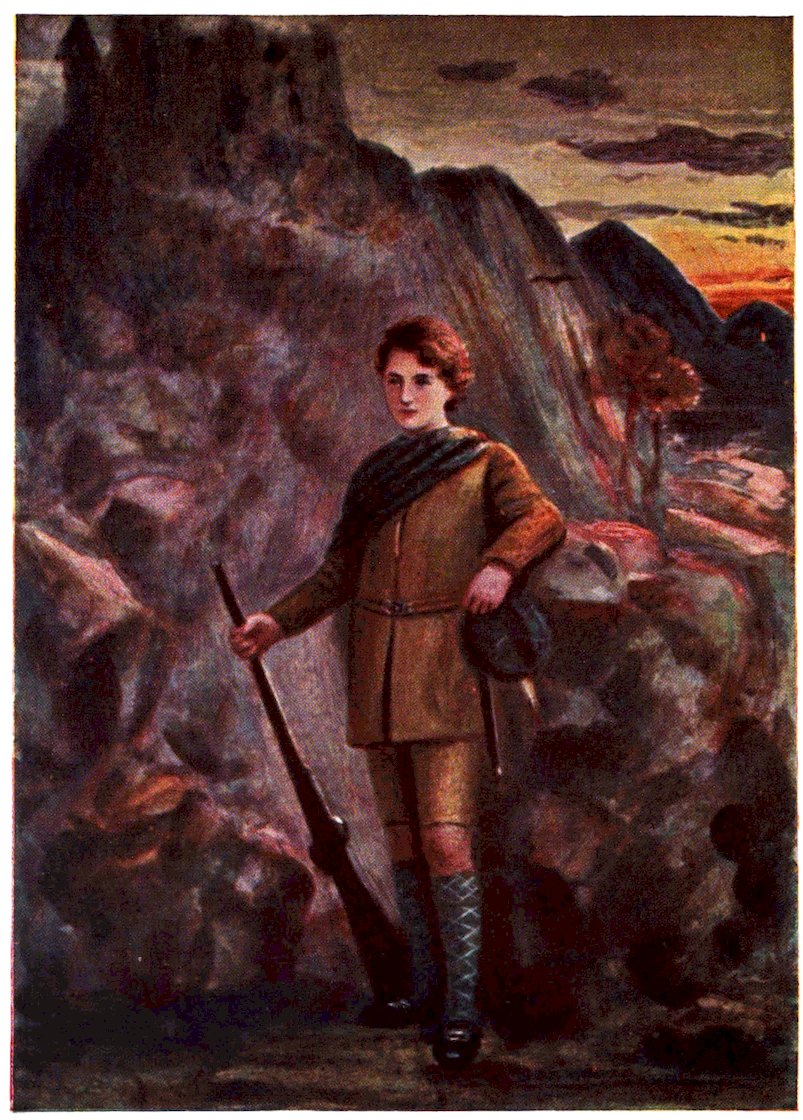
FORTUNATUS ON THE HEIGHTS OF AVENAMORE
ISOLA;
or,
THE DISINHERITED.
Â
A
Revolt for Woman and all the disinherited.

FIRST PREFACE.

Isola demands the practice of the true laws of the only true God.
The drama demands Justice for all living things, from Ruler to Subject, of either sex, and for the brute Creation.
It advocates the Reign of Truth and the destruction of Humbug.
Look at the World and what the latter has produced!
Let Truth take the place of The Lie.
Let rational laws in Church and State prevail, fashioned in accordance with the laws of the Universe.
Shall Progress be deterred by antiquated ideas and opinions founded on imperfect Knowledge?
No. The antiquated ideas and opinions must be swept away. The result will be Freedom.
SECOND PREFACE.

Isola first appeared in Young Oxford in September, 1902, and ran in serial form for six months through that publication. The drama itself was written many years ago. It is not for me to deal with its merits or demerits. These are handled generously by the true-hearted and honest gentleman to whom I have the honour to dedicate the piece. At nineteen or twenty the heart is more concerned with ideals, than the brain with thoughts of literary excellence. The soul, longing to uphold Truth and destroy Falsehood, forgets the pâs and qâs of literary etiquette, and I fear influences the pen to give premier consideration to the former.
The drama, Isola, opposes many established customs, but if these rest their claim to existence on antiquated and erroneous ideas, they must be remorsely uprooted. Man cannot make lasting laws. That is in Natureâs viiipower alone, for Progress, Research and enlarged Thought Force will not be bound by the cramped and immature ideas of gloomy ages gone. Superstition has persecuted many, but the time has come to repudiate it, for in its wake follows Misery, and to it is due the sorrows of Mankind.
In my preface to Young Oxford occurs the following paragraph:
âLet us in imagination soar above our Earth and look down on it revolving in space, and then look round on that infinite space, in which myriads of other worlds are also revolving. As we look down on our Earth, shall we not see upon its surface the glories of Natureâs beauty, and the hideous scars inflicted thereon by Man? As we look down on these unsavory sights, and realise how contemptible they are, shall we not resolve to eradicate them and make the picture one of peace, contentment and joy? Instead of looking down on blood, carnage, cruelty, torture, suffering and injustice, let us look down on the reverse, and in order to do so, let us realise the simple, rational and natural ideas of âIsola.â Advanced, are they? Not a bit of it. Unusual? Maybe. But because they are unusual ixdoes not make them wrong. Nothing Natural can be aught but right, for it is the offspring of Nature, the only true God. âIsolaâ demands the practice of the true laws of the only true God.â
I shall always stand by this assertion.
In conclusion, I desire to make the following statement. My publishers have pointed out to me that in some of the names of places and countries I have chosen, there might arise cause for the belief that my characters in Isola are drawn from life. I am glad to here state frankly that, in so far as royal personages are concerned, they are purely fictitious and concern no living human being whatever. Customs and etiquettes I certainly openly attack. Who would not who desires, as I do, to see justice done, not only to the poor disinherited human and suffering non-human, but also to our disinherited and manacled rulers? The unjust laws in regard to woman I also vigorously attack, and for Superstitious Falsehood I have no reverence whatever. Nevertheless, judge me as they may, let no one accuse me of Mockery or Infidelity, for I innately xworship the Inscrutable and believe in Nature, both of which are God alone. Let us have âTruth at any price,â no matter what idols we have to cast down to attain it. In the attainment of Truth, Justice, Love and Kindness shall rule in the place of Selfishness, Cruelty and Greed, and Fair Play be meted out to all.

Characteristics of the Drama.

Though I cannot but be gratified by the Dedication of this Drama to me, it does not, and was not intended to influence my judgment. Its noble and unusual aims of âdemanding Justice for every living thing, from Ruler to Subject, of either sex, and for the brute creation and advocating the reign of Truth and destruction of Impostureââcould not fail to command my sympathy and admiration. Written when the authoress was a girl, the drama is a marvel of thought and power. I know of no one, save Shelley, who, at so early an age was troubled about the questions she discusses with such generous passionateness. Apart from immaturities of expression, natural to immaturity of years, the Drama is a wonderful piece of writing. But the occasional youthfulness of style creates the greater surprise at the maturity of conception and often original expression.
xiiThe Drama opens with what George Henry Lewes entitled the great problem of âLife and Mind.â The first words Isola speaks are:
âVast attribute of the Eternal mind. Thought, and thy clinging twin, fair Memory. Art thou and she imperishable parts Of Life and Matter?â
Here is a perfect philosophic theory excellently put. Surely never Queen before was set to answer such questions.
Isola is a Lady Macbeth of a nobler kind, but has the same undaunted spirit. She is bold but tenderâand only inflexible for the Right. Her conception of womanly independence is original in literature. The legal and ecclesiastical restrictions woven about her, which limit her freedom and frustrate her equality, are discerned with great acumen and described with great power. Such indignation at wrong; such energy and eloquence in its denunciation, such devotion, sacrifice and unbewailing courageâconstitute the Rebel Queen a new inspiration. Rugged expressions which occur here and there, seem congenial to the rugged and impetuous times in which the scenes are laid. Even there there is gold in the quartz. Keats tells us that Columbus when he first saw new lands from xiiithe peak of Darien, viewed them with âglad surprise.â In like manner the reader comes upon fresh unexpected sentences. The moral interest of the Drama has great charm. Every speech, however impassioned, has a certain quality of restraint; amid fiery denunciation of regal and legal wrong, there is no insurgency against law, but against unjust law Isola abdicates her throne in generosity to her rival. Her love of justice and right brings her to the scaffold, which she contemplates with quiet heroism, in which there is no fear, or flutter of fearâneither bravado nor shrinking. No hysterical word escapes her. No word of reproach, such as Madame Roland uttered, is spoken by Isola. Her sole desire is to save others and to serve the cause of right. As the tragic death of a woman, capable both of heroism and reflection, the last hours of Fortunatus are memorable.
The reader will not need to be told of the felicity in the invention of names; nor of the spirited scenes in the public Hall, where the orators of the People speak; nor of the intrigues of courts, nor the conspiracy of priestsâwhich make these pages alive with interest. The speech of Merani on the consciousness of her approaching death, has queenly dignity, as well xivas flashes of true poetry. The reader will see in the âLast Watchâ of Fortunatus on the heights of Avenamore, the beauty, the dignity, the determination without defiance, of Isola. Intellectual intrepidity in defence of the Right, is the soul of the Drama of the Disinherited.
DRAMATIS PERSONÃ.

- Hector.
- King of Saxa, Scota and Bernia (and the Saxscober people[1]) forming the kingdom of Saxscoberland in the planet Erth.
- Isola.
- Queen Consort.
- Bernis.
- Prince of Scota, their son.
- Merani.
- The so-called Mistress of the King, but claiming to be his wife, having married him by the civil law of Scota (long previous to his union with Isola) while refusing to go through the religious ceremony, which the law of Saxscoberland adjudges necessary to constitute a legal marriage.[2]
- Vergli.
- Their son, claiming to be Prince of Scota.
- Maxim.
- Vergliâs school and college friend.
- Larar.
- King Hectorâs equerry.
- Shafto.
- Prince of Bernia. Brother of Isola.
- Vulnar.
- A noble of Bernia.
- Sanctimonious.
- Ardrigh of Saxscoberland.
- Conception.
- Chief of âPeerers.â
- Judath.
- A spy and informer.
- Scrutus.
- A leader of the âEvolutionary Partyâ under Vergli.
- Verita.
- A leader also of the same party.
- Azalea.
- One of Meraniâs attendants.
- Volio. Arflec.
- Conspirators.
&c., &c., &c.
1. No suggestion whatever is intended in the selection of these names. (1877)
2. The situation is created to enable the Author to deal with the degrading position assigned to woman in the Religious Marriage Service, which position that service forces her to agree to accept and enjoins her to obey. (1877)
PROLOGUE.
Isola, Princess of Bernia, loves Escanior, one of her fatherâs youthful bodyguard. The Prince of Bernia has, however, promised her in marriage to his liege lord and sovereign, Hector, paramount King of the Saxens, Scotas and Ernas, inhabitants of the three islands Saxa, Scota and Bernia, situated in the Emerald Ocean, in the Planet Erthris, or Erth, and together forming the Kingdom of Saxscoberland. Isola and Escanior attempt flight, but are pursued by the Prince of Bernia, and captured in their boat, whereupon the Prince condemns Escanior to instant death, and he is stabbed and flung into the sea, his unhappy 2love, Isola, being borne away to become the wife of Hector, King of the Saxscober people, and shortly afterwards the nuptials are celebrated.
Isola, Queen of the Saxscobers, sitting alone soliloquises: âVast attribute of the Eternal mind, Thought, and thy clinging twin, fair Memory, Art thou and she imperishable parts Of Life and Matter, or but sudden sparks Born to expire and never live again? What art thou Thought and what is Memory If not the factors of undying Life, Which draws from Death fresh force to recreate And fashion new existence from Decay? Oh! Thought; oh! Memory, Ye cannot die, Ye can but sink to sleep in Deathâs cold arms To wake again, a recreated force, Part of a universe which cannot end, Because its function is to recreate, Evolving Life from Natureâs boundless store, Nature the all Eternal, only God, Creator of all things known and unknown, The Great Inscrutable, which mind alone Shall understand when it is perfected. Escanior; Oh! Escanior, where art thou? Fair Memory recalls thee to thy love, Isola, who will never yield her heart 3 To mortal man, for it is thine alone. My golden haired, my blue-eyed Escanior! They murdered thee before these starting eyes, They forced me to become anotherâs bride, They forced that horror on my shrinking soul And left me to endure its fearful pain. One thing they could not do. They could not take My heart away, or force it to vibrate For any other but thy own dear self, My murdered love, my vanished Escanior. Thought! speak to me. Ah! tell me where his is, What part of Nature is his woven with? When will my body, mingling with the Earth Quit this curst slavery and twine once more Its arms around the Love that cannot die? Oh! Thought so penetrating, so divine, Fathom for me the Knowledge that I seek. Shew me where I can find Escanior, Tell me and I will burst my prison bars, And seek with him the liberty I crave.â
Hector, King of the Saxscobers, joins her exclaiming: âDreaming again Isola. Truth, thou art A sorry bride for a great King to own, A King whom many virgins yearned to win, And whom thou shrinkest from with mute appeal In thy sad eyes that I should let thee be. Hast thou no sense of honour? Where the vows Which Holy Church commanded thee to make To love me, and obey and reverence me, 4 Yes, me thy Lord and Master, thou my slave? Hast thou then no respect for pledges given, And priestly exhortation? How is it Thou shunâst me as thou dost, breaking the vows Thou madâst to God to be my loving mate?â
Isola. âHector, I made no vow, my lips were mute, I did not utter the accursed lie, Which would have fallen from them, had I vowed To love, and honour, and obey a man I could not love or honour. Nor would I Lose self respect by swearing to obey One who should be my equal and co-mate, But not my Lord and Master, I his slave. What care I for your Holy Church, or for The priestly exhortations of its Men? Why should these Mockers of the laws of God, Make laws for Women, whom they treat as naught? Tell me not Hector, that their words are Godâs, Godâs laws are not immoral as theirs are, For God is Nature, God is not that fiend Which priestly doctrine has set up on high And bidden us remember and adore. Remember what has never been, nor is? Adore a myth ladened with cruel crimes, The base conception of ignoble minds? Never! Isola worships one true God, The vast, inscrutable, unfathomed force, Which nothing but a perfect mind shall solve, Which nothing but Perfection shall attain. 5 Hector, you call yourself a mighty King, A ruler wise and just, guided by laws Called by their framers Righteous. Go to, King! I tell you they are rotten to the core, Fruits of a tree planted by priests and men Without the aid of Womanâs guiding hand. Small wonder they are false and trample down The heads of Justice, Mercy and Great Truth. As well might Man attempt alone the task Of making Life without the Womanâs aid, As seek to frame those human laws, which bind Communities together and enforce Their will upon the disinherited. For all around, these outlaws of our Erth Wander and prowl in seething discontent. Men, women, children, all are victims of Unnatural laws, Natureâs base antichrists. Am I not a poor disinherited? Is not that lonely woman far away, That woman dwelling in fair Scotaâs isle, Whom, ere you tied with me ignoble ties, You treated as a wife, who bore you seed, And loved you Hector as I love you not, Is she not too a Disinherited, One of the outlaws fashioned by your laws? Is not the son she bore you, Vergli called, Your rightful heir? Is not the child you force On me, by Nature illegitimate, Although the priests declare it blest by God? Why did you leave her to dishonour me? 6 I did not seek to be your crownèd slave, I loved but one, my dear Escanior, They murdered him and tore me from his side To be your lawful, sacred prostitute! Out on the creed that dares to order thus, Out on it, and its superstitious cant, Out on the monstrous God it has set up And made the Sponsor of its ranting lies. No, Hector, such a creed will never stand, Or be professed by thinking, honest hearts. âTwas only made to gull the ignorant, And sway the superstitious multitude. All round you cry the disinherited, Go lift the loads from off the poor oppressed, Strike down all civil and religious laws Which mock at Nature and withhold from Man Those rights which Nature gives to everyone.â
Hector. âIsola, prate no longer blasphemy, Cease thy revilings of the Orthodox, Merani was not wed by Holy Church, Who judges her unwedded, and her son, Vergli, my first born, illegitimate. I bow to Holy Church, the fount of God And its behests I cannot disobey. Vergli is not my heir, the child from thee Will be The Prince of Scota, if a son, And dost thou dare to question his true right, Thou his own mother and King Hectorâs wife, Thou the crowned Queen of mighty Saxscober? 7 Cease woman, nor defame Godâs holy name, That God who fashioned Woman out of Man. Who are the Disinherited of Erth? Wouldâst have men equal, and to women give Those sacred rights which Holy Church declares Are manâs alone, given him by his God? Cease thy revolt against the Orthodox, Bow to revealed religion and become A lover of Conventionality. Isola, I command it, I, thy King, And, as thy husband, lord and master too.â
Isola. âNo, Hector, I will never bow the knee To Humbug or to the black fiend Untruth. I say the Prince of Scota is Vergli And not the son that I, alas! may bear. Poor innocent! Born to commit a wrong. What am I, the crowned Queen of Saxscober? A creature, a dependent on your life, Who bears the empty title of a Queen Without the powers which should accompany it, And who at your demise is ousted by The very child who prattles at her knee, Who thus is early taught to scorn that part Of his own being, given him by her, Far more a parent than his father even, Whom he calls mother. No, no, Hector, King, Your slave I am, but most unwillingly, Give me my freedom, give to everyone The equal right to strive for and attain 8 The opportunities, which Life affords To those who have the chance to grasp their hands. Unto the Orthodox I will not bow And only one religion can command The homage of Isola. That which Truth Proves unmistakably by Natureâs laws, To be revealed, I will obey, but Cant And rant, and superstition, out on them! Isola shuns them as she would a plague.â
Hector, solus. âHow now! Revolt is in the son and air! Vergli protesting, and Isolaâs ire Roused and evolving disobedience. I must assert my sole prerogative, And call unto my aid most Holy Church, Which will not brook of disobedience. Vergli, the disinherited indeed! Isola too a disinherited! The poor, the disinherited of Erth! âTis Revolution, âtis Revolt indeed, Which must be checked at once and instantly. Vergli, Isola shall not mock at me.â
ACT FIRST.

SCENE I.
The Palace of Dreaming, in the Metropolis of Infantlonia, capital of the Island of Saxa, which with Scotia and Bernia, forms the Saxscober Sovereignty.
Vergli. Solus, looking through them: âHome of my fathers, where I claim the right To live, and by the law Fair Play, to be The Prince of Scota. By that law I am My fathers heir, and the young fledgling boy, Who steals from me the title I should hold, Mocks at me, I, the Disinherited! Ay, disinherited; for he and I Are both the offspring of a common sire, Who called me son, long prior to the day When my young brother first beheld the light, And took the title which is mine alone. Does not this base injustice cast a slur Upon my most beloved motherâs name? Did she not wed my sire by Scotaâs law? 10 Am I not part of her as well as him? By what unnatural law is she denied The right to bear the title of The Queen? Does not the very act, which weds the two, And by the law of Nature makes them one, Proclaim a union most legitimate? Yet ye, Oh! Prelates, hold aloft a book, Concocted in the gloomy ages gone, By men as selfish and unjust as ye, Who flaunt the Act of Nature, and declare It wicked and unbinding, unless blest By superstitious Mummery, conceived By the immoral Prophets of the Past. They dare to call my pure-souled mother bad. Dub her a wanton, robe her name in shame! Curses upon them and the ranting Cant Which voices such a foul and hideous lie. Away with it! Perdition to its name, I will for ever be its fiercest foe; I, who love Nature, the true, only God, I, Vergli, the poor bastard son of him Who lives in legalized Adultery With the unhappy and degraded slave, Which his priest-ridden Creed has called The Queen, I swear to fight it to its very death. I vow it! I, the Disinherited.ââ
Enter Maxim, who has overheard the last words. âWhat, Vergli here? âThe Disinherited!â 11 Sighing oâer wrongs. Planning Revolution. Dost know King Hector is abroad to-night, And will return this way without a doubt? What will he say if he should find thee here? Put thee in prison, man, most probably. Oh! thou art rash to venture thus, as âtwere Into the precincts of The Lionâs den, The person of The Disinherited.â
Vergli. âMaxim, thatâs why I came; I fain would speak With my liege lord and King, and Father too, I would plead just once more for my own rights And crave respect for my dear Motherâs name. She lies sore sick, sick unto very death, That Mother, dearer to me than my life, She, who should be our fair Saxscoberâs Queen, Not as is poor Isola, a mere slave, But reigning all conjointly with my sire, I, the presumptive heir to him and her And not the forced usurper of her rights.â
Maxim. âOh! these are dreams, Vergli; thou dreamâst strange dreams; Woman is but the appanage of man, At least our priestly tutors tell us so. âTis they who have assigned that place to her. Wouldâst thou make her Manâs equal? Have a care, Freedom to Woman would doom Privilege, And that we have secured from ages old 12 By help of Superstition and false gods, Who bade the Woman bow the knee to Man. Mindâst thou how in the days that have gone by Thou hadâst a sister, little Merani? She was thy elder by a year or more, Did she live now, wouldâst put her in thy place And as the eldest born declare her heir, Princess of Scota and prospective Queen Of fair Saxscober, leaving out thyself As a nonentity and younger born?â
Vergli. âAye, that I would. Fervently I say it, So long as Primogeniture is law, Consistency declares the eldest born, And not the male first-born alone, the heir. Saxscoberâs laws do not deny the right To Woman to inherit, when no boy Stands in the way depriving her of such. Why should a Woman therefore lose this right Because a younger brother sees the light? No Maxim, if Merani were alive, Iâd dub her Scotaâs Princess and declare That she was the true heiress of this realm.â
Maxim. âAh! well Vergli; I see thy point, âtis just, But Justice is not loved by many men. He who would see it reign, is seldom found; âTis but a selfish creature, average man! And yet methinks he is not all to blame, 13 Why do not Women teach him in his youth The principle of Justice to their sex?â
Vergli. âBecause they know no better. They are slaves Drilled to believe the priestly fashioned laws Part of Divine instruction and command. In the dark ages gone, the prophets knew That Woman, to be held in check, must bend Prostrate before the superstitious spell Which has enveloped her with obscure mist And hidden from her sight The Promised Land. And so, poor thing, she hugs her chains and drills Her very children to believe them just, And if amidst these children, a girl child Dares to dispute this creed, the world aghast Gapes at her shouting, âHow so miscreant! What! You say; You are disinherited? Presume you thus to question Godâs decree And the most holy spouter of His Will, The Great Saint Saul, so chivalrous, so just, Who bade the Woman sanctify herself By humbly subjecting herself to man.â âBut,â cries the child, and Maxim you will know I quote Isolaâs words, which she has dared To fling broadcast upon a gaping world, âBut I deny that such a God exists, And that he ever lived to say such things. He is the fabrication of those men Progenitors of Chivalrous Saint Saul! As chivalrous and just as that Good Man, 14 Who, I declare, at every turn of speech Insults the woman and proclaims her slave.â Thus speaks Isola, poor Isola, who Bore the young boy who holds the name I claim Of âPrince of Scota,â unto my own sire; And thus assisted, though unwillingly, In rivetting upon my motherâs neck, And on that of her sex the cruel chains, Cast round them by a man-made, man-shaped God, And rivetted upon them by Saint Saul! Small wonder that Isolaâs loud protest Has roused some of the disinherited, As it has spurred me also to revolt; Aye, here I stand, âThe Disinherited,â In spirit speaking to that lonely soul, Dwelling within that Palaceâs cold Prison, And join with her my cry against foul Wrong. But hark! Voices! Maxim retire. The King.â
King Hector, catching sight of Vergli; âThou Vergli? Thou art rash and most presuming To test my patience thus. What wantest thou?â
Vergli. âTo speak with thee, my father and my King.â
King Hector. âOf what avail? I know before thou speakestâââ
15Vergli (interposing). âMy Motherâs dying, sire. I bear to thee Her farewell message and some words of love.â
King Hector (starting). âDying! What sayâst thou, Vergli? Here Larar, Precede me, I will follow on anon.â
Larar. âYes Sire.â [Retires.
Vergli (turning to King Hector): âFather! For thus I learnt to call thee, eâre Thou taughtâst me that my mother had no rights And that I was a Disinherited. I come to bear to thee her dying words. âTell him,â she whispered, âthat I love him still, Hector, my rightful husband before God. Tell him Meraniâs dying thoughts forgive, Forgive him for the Wrong he has upheld By wedding Isola and scorning me. But tell him also, Vergli, that no creed Can sanctify a Sin, nor any law, No matter how âtis worded, alter God, God, who is Nature indestructible. I am his wife by the true law of God, He is my husband by that self-same law, And by that law thou art the rightful heir, So long as Primogeniture is law, For Merani thy sister is no more. Were she alive, however, I declare Her right to be the heir, a prior one 16 To thine, my son. In this we are agreed. Go tell thy father Meraniâs last words, And pray him to do justice to Vergli.â Father, I pray thee harken to those words, Be just, be brave; Oh! Father, be a King In deed as well as name, be that, and more, Be a true Man, dear Natureâs genuine son, And not the creature of unnatural laws, The offspring of a superstitious creed.â
King Hector (aside). âMy son is eloquent, his words convince, And yet I dare not flout the Church or State, Which bids me worship and obey them both.â
To Vergli. âHow now, mad youth, I bid thee once for all Cease this revolt against established law, And yield obedience to our Mother Church. My views are dreams; all Revolution is The outcome of fantastic, rebel thought. Thou and Isola, both are dreaming fools, Doubtless Iâll find her in a mood like thine, Which I intend to crush relentlessly. Beware, rash lad, try me no more. Be wise. I warn thee, Vergli, but for the last time.â

SCENE II.
A large room on an upper floor in a housed, situate in a side street, leading off the populous thoroughfare and district of Stairway. The room is full of men and women, of poor but respectable class. They are listening to a somewhat eccentric looking man, who is addressing them; Scrutus by name.
Scrutus (pleadingly). âBe honest, comrades, show that which men lack, The Courage of their own convictions. Hark! Truthâs silver voice is pleading for you now. âTis Vergli, Hectorâs son, who has flung down The gauntlet of defiance against Wrong. Vergli, himself, a disinherited; âTis he who has proclaimed our sacred rights, The rights which human beings claim by right, Right, moral and divine, and by divine I mean, as you all know, by Natureâs law. What are these rights? They are to live and be, To have access to Opportunity, To eat a wholesome meal once in the day, To be afforded work and honest toil, To be assured the idle shall not loaf, To know the infirm shall have free succour, 18 The aged live in comfortable homes, To be assured likewise that every sex Shall have a voice in governing our land, That Privilege shall never be usurped, And that in Merit only, rank shall find Its resting place, which is its rightful due. We have the Human Right likewise to rule Our lives by laws divine. Vergli has said, And Vergli speaks with reason, âthat no law Should bind Humanity but Human law, Which law is Nature, therefore Perfection.â A natural religion is our right, Religion founded by the laws of God, Not Superstitionâs God, as made by priests, But God as Nature represents this force, Whose laws no man-made creed can controvert. Rest certain, Nature orders all things best, And when we seek to flout her, sorrow comes. Look round ye, comrades. Nature is oppressed, On every side the disinherited Roam speechless, mutely wondâring whence their pain, Begging as Charity what is their right; Right filched from them by those who mock and scout As wicked and immoral, Natureâs laws.â
Verita (interposing, speaks): âScrutus is right, he voices Vergliâs words, Words which are gold and silver in our ears. 19 If we would win the common rights detailed We must combine, and practice what we preach. What do we seek to win? Just human rights, And to be governed by diviner laws Than now prevail. Our revolution is The evolution of both Thought and Mind, Which working upwards yearns to find the Truth. Wander in Stairwayâs slums. Is Truth found there? No, nothing but a huge and monster lie, The offspring of a Superstitious creed, That creed which Sanctimonious bids us hug, And which is bolstered up by Church and State. What has it done for us, that boasted creed? Why made us the poor disinherited, The outcasts of a sham Society, In which Shamâs influence is paramount; And when we cry âReform,â retorts âRevolt,â And dubs our movement âSocial Revolution.â Our noble Vergli calls it âMoral Force,â Seeking a level where it can abide, And influence entire Society. And thus it is, dear comrades, without doubt, And therefore to attain it we must work, Using all forces which we can command. We seek not Anarchy, thatâs not our creed, We ask for Human rights and Human laws, For true religion, and not Superstition.â
A Voice. âI hear a step. Surely it is Vergliâs.â
Vergli. âThe top of the morning! to you, kind friends, Our burrow then is not evacuated?â
A Voice. âNo, noble Vergli! but the ferrets prowl And sniff around its entrance, seeking prey, The secret âpeerersâ of our sharp Ardrigh Are searching for that which they may devour. Vergliâs âfree lances,â who are just the nuts Which Sanctimonious loves to gobble up, Having first pulverised to dust their shells. But every dog enjoys its day. We will Open his graceâs eyes, and make them stare When Vergli is returned to Parliament, And his most graciousnessâs abject slave Is given the âgood-byeâ by Stairwayâs votes.â
Vergli. âHow goes it, Scrutus? How now, Verita, Are you and he making good headway still? Shall we succeed this time? How go the funds? Low, Iâm afraid? What no? Why do you smile And shake your head and laugh so pleasantly?â
Verita. âBecause the silver lining of our cloud Is shining brightly. Stairway is aroused, And Isola has filled our purse with gold. She sent it secretly âfor Vergliâs cause,â 21 But we know well it is Isolaâs gift. That poor Isola, pining, as the lark Pines in its gilded cage, with eyes intent Upon the Heavân its cagèd spirit craves.â
Vergli. âIsola, ah! yes, she is Vergliâs friend, The heart of that poor captive beats with love For all the disinherited of Erth, Be they of human or of brute creation, Knowing that All Creation has its rights, The dumb brute and the voluble human. From both of which the sanctimonious laws, Which rule Society, have filched their dues. Isola is in heart and deed a Queen, Not that gay puppet which man dresses up In tawdry garments trimmed with tinsel daubs, Pulling the strings which make the puppet dance The weird, fantastic jig his fancy loves, But what a monarch should be, a kind friend, The peopleâs Maypole, round which Joy is rife And laughter is not drowned in Suffâringâs tears. Yet our false laws deny her human rights, Class her with the poor idiot whose dulled brain, Diseased by causes physical, is mute, And cannot use the right, which nature gives To all the human family of this erth, No matter of which sex its items are, That right to think, and speak, and fashion laws Demanded by Necessity. Progress Demands new laws, and busy evolution 22 Will not be bound by antiquated thought, Whose crude ideas no longer satisfy The ever moving forces of Mankind. Yet Isola, proud Sanctimonious says, Has not the right to vote or represent, Or be that, which she is, a human being! Is she notâleastwise Sanctimonious says,â An offcast of the man, piece of his bone, That piece, a rib, filched by God from his side, Which he can pet, mal-use, treat as a thing Dependent on him, not of much account, Unless it be to pander to his wants Physical or Political, a slave. Bone of his bone? Ha! Ha! a splintered bone? Or stay! Perhaps the long sought missing link, The bone of that lost tail! I have it now; Oh! happy thought! Oh! Sanctimonious, What will you pay me for this missing link? No wonder we have searched for it in vain, Seeing your Deity made use of it To fashion her, to whom no doubt He said, âWoman, thou art indeed the tail of Man.â[3] A vast idea, is it not, Verita? Are you not fascinated by the thought? Just ponder it. Bone of his bone. Sublime! The missing link between the ape and man.â
23Verita (laughing). âOh! thought divine! Who dares to question now The wondrous evolutionary power Which fashions thought, and from an Embryo Will turn it into a discerning God. Haste Vergli! Haste! Give Scientists the clue, Oh! Physiologists, examine quick The rib made woman. Surely a mistake! A slip of pen, a literary âmot.â If only you can reconcile that tale And get the rib to waive its ancient claims, And find in Womanâs bones a trace of that Most noble Relic of primeval man, Then you and Sanctimonious can embrace And stitch up all your little differences, Hold a most amicable, state Pow Wow, Issue a new and Authorised edition Of a revised and up-to-date religion, Smoking together fragrant Pipes of Peace. But Vergli, apart from joking, good news! Ay excellent the news I have received. Isola has assured your cause success By sending us the sinews that we lacked. I have no fear. Vergli, youâll be returned, The Sanctimonious nominee oâerturned, Next Parliament will hail you an M.P.â
Vergli. âVerita, Scrutus, kindly comrades, thanks, For your brave work on my behalf. I swear To labour in your service to the last, 24 Whether I represent you as M.P. Or lead you forward to fair Freedomâs goal, As King in deed and not alone in name. Take Vergliâs gratitude. He neâer forgets. His aim will be to reign within your hearts, And reap his peopleâs love, faithful and true. And now, good morning to you, see the sun Is clasping in its rays those shamefaced clouds Which Night is beckoning, as off she flies, To leave to Day an equal spell of rule As she has held. We must not linger here, A sadder scene demands my presence now, So let us leave our burrow solitary, And go our diffârent ways as silently As we came here. We disinheriteds Will bear in mind our motto and watchwords, âForwardâ to fight for âLiberty and Truth.ââ
3. The doctrine of the formation of woman out of a manâs rib is one degrading to her, and calculated to foster the belief held by many men, that the wife is the husbandâs property. Since my esteemed ancestress âThe Ribâ was made an institution she has been treated as a chattel.âAuthor.
SCENE III.
A cottage overlooking the Firth, in the island of Scota. The cottage is covered with climbing roses and creepers, and flowers abound in rich profusion. The cottage nestles amidst stately trees, and grassy 25glades surround it, and in these glades rabbits and pheasants feed in perfect peace and security. In this woodland retreat every kind of bird finds a home, and their song gives glory to their joy and happiness. Here, too, the roe deer dwells amidst the bracken and the squirrel is permitted to revel in Life amongst the dark pines which rear aloft their spreading branches. A rippling burn runs through the whole Glen, making its way towards the sea, and its waters shelter the shy brown trout, who leads, as far as man is concerned, an undisturbed existence. Life is sacred in Glen Glory by order of its Mistress, Merani.
Merani (stretched on a couch in her bedroom, close to an open window. She is alone. Time: Evening): âSo this is Death? How quietly it comes, Creeping like Eveningâs shadows slowly on. I feel its presence drawing very nigh, Its cold breath hovering around my face, Like the chill wind which heralds in a storm. God of my heart! I do not fear its touch; It is from Thee it comes, so must be right, The Powâr that rules all things, that put me here And takes me hence, will clasp me in its arms And make me still a part of endless Life, Part of the Mighty Universe divine, Part of that matter indestructible, Whose very death creates and recreates, Fashioning Life from out of all decay. 26 Oh! Life, thou art a strange enigma here. Marred by the vices and the sins of Man, Distorted by his weird, fantastic creed Which shapes a most impossible, dread God And makes him parent of unnatural laws. This is the God who judges me outcast, A prostitute, a disinherited, Because I would not utter shameful vows, And call myself the slave of eâen a King. And yet by the true laws, of the true God, Nature, the one and only God I own, I am the wife of Hector, as he is The husband, whom I loved, and loving still Claim as my wedded co-mate, though he has Proclaimed me outcast and forced to his side That poor Isola, loved of Escanior, Fair Escanior to whom her heart was wed, Who died before her eyes unwillingly, For life was sweet to him when she was nigh, And bright to her so long as he was near. Ah! well, we suffer when we cast defiance At Nature, so must willing hands strike down The superstitions and the lies of Men, And fight to win fair Justice and bright Truth. Vergli, my son, dear Scotaâs rightful prince, Have I not given thee these thoughts of mine? Yes, and have bidden thee spread them afar And labour to achieve Success for them. Vergli, it seems to me thou drawest nigh Often we think of those who think of us, 27 What binds together sudden intercourse, Community of thought? Spirits blending? What hidden force of interchanging thought Brings this about? Oh! Science thou art dense, Thou hast a vast immensity to learn. Clear out the Charnel House of thy dull brain And flood it with that penetrating thought Which some have sneered at as Imagination. Where would all Truth have been but for its aid? Sometimes its shapes are vague and most obscure, As all conception is, eâen Life itself, Which from a speck becomes a thinking brain, Fruit of the tiny atom first conceived. Thus shall Thought be the ovule of a Life At present far beyond our comprehension. A life whose thought, in Evolutionâs arms Shall far transcend the ovule of to-day, Bringing us knowledge that shall pierce the veil That veil which hides the secret of Creation.â
Enter an Attendant, exclaiming: âLady Merani, your son is here, just come.â
Merani. âSee dear Azalea to his needs, and then Bid him come to his motherâs side. The lights are growing dim and darkness steals Across the vision of these once bright eyes. Ah! âtis his voice, âtis Vergliâs, dearest boy, So without tarrying thou seekest me? 28 Azalea you may leave us quite alone, It is my last âaloneâ with my dear son.â
Vergli (kissing her): âMother, I bore thy message to my sire. If I mistake not, it struck home a shaft Which made him wince although he held high head And bade me bow to the inevitable. But fear not mother, Truth and Right shall win, Iâll work for it unto my latest breath. Iâll plant the seed thou gavâst me. It may be I shall not reap the harvest it shall bring. But other hands can reap where I have sown And in the reaping thou shalt win the day.â
Merani. âIt matters little who will reap the grain, So it is reaped. Our work is Evolution, In which all Nature, that is God, directs The ceaseless ever active spinning wheels Which weave the vast materials of space Into forms known to us, and all unknown. Here I, advancing into that unknown, Upon whose threshold I shall shortly stand, Counsel thee Vergli to work endlessly To find the Truth of all things by research And by developing the Thought of Man. But Thought will never soar to heights sublime, Those heights where dwell the knowledge that we seek, Save in the brain of recreated Man, 29 By which I mean the Human perfected. It is not perfect to be full of lust, It is not perfect to have cruel hearts, It is not perfect to oppress the weak, Or to deny to all and everything The rights which Nature gives them as their own. The perfect man will not delight in war, Nor crave to make his food of bleeding flesh, The Vivisection Hell and Slaughter House, The pastime known as âSportâ and other crimes, Which Superstition and imperfect Man Have hitherto upheld and countenanced, Will cease to be and our fair Erth become That which Perfection shall attain for Man, An Eden Garden, one in fact, not myth, A world where love and kindness shall hold sway. Thus shalt thou toil towards that far off goal. Vergli, my son, be just, be merciful, Treat every living thing that breathes and feels As kith and kin, nor seek to disinherit That living life of Lifeâs fair heritage, Nor filch from Life its dearest privilege, The right to live and to enjoy its own. Work to make Man divine in heart and form, Teach him that beauty is assured to all Who shall be born of well selected mates. Teach him that âtis a crime to the unborn To breed unhealthy offspring or oppress Woman with childbirthâs oft-recurring strain. Quality, not Quantity, should be the aim, 30 And every child should be the fruit of love, And not of lust, incontinence or greed, Which latter is ungoverned Passionâs child. Vergli, my son, these are thy Motherâs words, The mother who has lived and nurtured thee. Thou wilt be true, I feel it, for I know Thou art in truth born of my very bone. See Evening fades. Upon horizonâs face Soft lights are dying, slowly, as I die; Dying, but only to be born again As all is born anew in Natureâs arms. Behind the fading evening, darksome Night Looms like a ghost, and yet a fair-faced wraith. Around whom brilliant worlds irradiate And glorify the endless Universe. Behind dark Night I see the face of Dawn, Dawn, dimpled-cheeked and rosy like a child, Dawn that proclaims the birth of a new day, The offspring of Eternal Evolution. There is no end, Vergli, there is no end, Who dares to say the infinite can die? Science? Ah: Science, quit your A. B. C. And learn to read until you find the Truth. Vergli, dear Son, thy Mother sinks to sleep Good night, but some day it will be good morning. Kiss me, Meraniâs eyes are courting sleep, The Sleep which Death awards to everyone. The Sleep which must awake, as certainly As cycle wheel goes ever turning round. Bury me, Vergli, where the wild flowârs bloom. 31 Kill not a single bud to deck my grave; No faded wreaths let any man lay there. Let Nature only whisper with soft voice When Merani rests in the lap of Erth. Hold my hand, Vergli; see, I have no fear. Oh! Death, where is thy terror or thy sting?â
Vergli (kneeling down beside his Motherâs couch): âNo, Mother. Fear of Death is not for thee, Or for those others who, like thee, believe That Natureâs laws are part of the divine, And the divine, the great Inscrutable, And the Inscrutable, the only God, Which Human minds cannot distort or mar, Because they cannot formulate the thought Which shall conceive thee as thou art indeed. I bow before thee, vast creating force, And will not dare to mock thy Majesty By sculpturing thee in any kind of form. Yes, Mother, I will plough and sow the grain Which thou hast counselled me to cultivate. And it shall root, and grow, and multiply Until the world shall shine with golden corn, And Man shall reap and feast upon this grain, And wax beneath its potent nourishment, A Hercules in Thought and Perfect Love, Parents of Knowledge that we hunger for. Oh! future Thought! Oh! Perfect Love! true mates, 32 Creators of that Truth we yearn to find. I see ye, yes I see ye, though afar, The time will come when we shall clasp your hands And revel in the Knowledge yet unknown.â
ACT SECOND.

SCENE I.
A large Meeting Hall in Stairway, densely filled with people. The election of a member, for that district, to the House of Privilege, is over, the votes have been counted, and Vergli, to the intense surprise of the party, influenced by Sanctimonious, the Ardrigh of Saxscober, and which has hitherto been the paramount power in Stairway, has been declared to be the returned candidate. The crowded meeting is awaiting his arrival, to hear an address from him.
[Enter Vergli, Scrutus, Verita, Maxim and Members of Vergliâs Election Committee. He receives an immense ovation. The chair is taken by Verita, who, on silence being obtained, rises and introduces the new Member of Privilege for Stairway in the following speech:
Verita. âFriends; Right has triumphed. Vergli is returned. The Cause of Progress, Human love and Truth 34 Has made another bound, and left behind The prison ground wherein it was confined. For what does Vergliâs advent here portend? Why, that the voice of Reason shall be heard, Not trembling in the slums, or whispering In muffled accents its convincing words; But ringing through the House of Privilege, Echoing in the Chamber of the Bores, Re-echoing in the press and through our land, Filling the brains of Men with new-born thought, Thought, recreated from a vanished past, Whose sombre clouds are hastening away, And with them the dark ages which they clothed. Now have the people won their voice a place, And soon that voice, falling from Vergliâs lips, Will cry aloud the human rights of Man, Which term, of course, includes the Woman too. Vergli is Womanâs friend, undoubtedly. His creed does not coerce her with its weight, No Saulite dictum soils his honest lips, To him the human rights are not controlled By that inhuman thief, Sex Privilege. His mission here is to assist the weak, To lift the suffering from out the mire, To give to all a chance of Happiness. To see appalling Contrasts shall not live, To order Labour to protect itself, And Capital to share with Labourâs toil The golden grain accruing from the two, Instead of fabricating Millionaires.â
35A Voice. âFat-stomached monsters! Greedy Cormorants!â
Verita. âYou wrong the Cormorant! He fills his pouch, To satiate hunger legitimate. âFat-stomached Misshapes!â That, I grant they are, Sinners, beside which all the lordly Bores, Are saints immaculate and preferable. Toil is ennobling, ease contemptible, âAway with such!â That is our Vergliâs cry. But let him speak. Weâll listen to his voice, Hearken to accents that we love so well. I yield to our new representative, One who is such in deed, as well as name.â
Vergli (rising). âComrades, my thanks to you of either sex, My cordial gratitude for all your toil, Which has resulted in a victory. Nor can I pass from Gratitudeâs fond side, Till I have bidden her seek that of one, Whose heart is with us, though it beats behind The gilded barrier of Palace walls. Ye know that dauntless spirit, nameless here, Nameless, because its mention would entail Suffering on one, whose name our hearts revere. [Murmurs of assent. 36 And yet one other I would speak of, too. One, who since last ye fondly greeted me, Has sunk to sleep in Natureâs kind embrace; My Mother, Merani, who taught Vergli To make the Cause of all who suffer woe, His own. To save the disinherited, And preach the Gospel of Fair Play and Truth. [Murmurs of assent. The Gospel of Fair Play means equal laws, And equal opportunities to all, Women and Men, to live an honoured life, To toil, but reap the fruits of honest toil. Fair Play demands that men who sow shall reap, Not toil to bolster up a selfish Log! For instance, let us take as an example Two men of Property. One owns a mill, The other owns a coal mine. Both pay well. How should these owners work their properties? Is not the wages system a mistake? Would not Co-operation simplify And bind together owner, workman, all? Let him who owns and those who work, receive Their fair division of the profits reaped. The owner gives the land and the machines To work the raw material, yielding gain. Let this be calculated as his toil, And grain, proportionate to such, bestowed, While those, whose labour has produced the grain, Receive their fair share of the profits too. Thus all would have an interest in the work, 37 And feel they laboured not, nor toiled in vain. Strikes and disputes would fade like restless dreams, And Brotherhood would knit the hearts of men. Fair Play demands that money for the State Shall be collected, so that all shall pay, And pay in due proportion to their means, Allowance given for the right to live. He who earns just sufficient for his needs Should not be asked to give his daily bread, But all who profit by their toil should yield Unto the State their equitable share; Commodities required in daily life, And necessary to the weal of Man, Should not be taxable, but free as air, And luxuries alone be charged upon. Fair Play demands that Squalor shall not be, That bread and wholesome food shall be Manâs due, That able-bodied persons shall not loaf, That none shall be denied the right to work, That habitations must be fit abodes, Not dens of Misery and Pestilence, That cruelty to man or to the brute Shall be a most severely punished Crime, For Cruelty to anything that feels Is Crime undoubtedly. We have no right, No right, I say, and say it solemnly, To mete out pain to any sentient thing. The Gospel of Fair Play demands this. Hark! Comrades, its far-famed tenets sound aloud âThou shalt not kill,â âBe merciful, be just,â 38 âDo unto others what ye would have done Unto yourselves.â These are Fair Playâs commands. He who would reap the grain of Happiness Must sow as he would reap. He must be just. And now I would point out that Truth derides, Derides with scorn all priestly superstition. If priests would be, they must adhere to Truth, They must not seek to bolster up a lie. Truth only dwells in Nature. She abides With her sole God, the endless Universe. Go, seek her there, and not in fairy tales, Proclaim her as she is, not cloaked in sham. Truth is a meteor leading on to more, Leading to where abounding knowledge reigns. Where Truth is not, Falsehood alone can be. Comrades, I pray ye, give your hearts to Truth And let your reasoning be drilled by her. Laws or Religions founded on a lie Cannot be good, nay more, they are pernicious. Laws born of Truth must be what men should frame. I go to struggle to attain this end. Now, let me map a programme and a creed, Both of which shall be our unerring guide, And which shall ultimately Freedom win And give to all the disinherited That which is theirs, their own, their simple right, The right of all things living to enjoy And to preserve their lives in Comfortâs arms. But first take in the fact that Human Life, And much of brute creation can exist, 39 And is intended to exist on grain, On fruit, on vegetables, likewise herbs, And not upon the bleeding, tortured flesh Of animals, bred for immoral use, As such flesh-eating is, when Natureâs laws Proclaim Man and a part of brute Creation Intended to be non-carnivorous. I urge this point upon you. All around Land bids you live upon her wholesome fruit. Throughout the world the natural food of Man Teems in unbounded wealth awaiting him. Let him put forth his hand, and pluck, and eat. Remembâring always also Moderation. Kill not for food, and where Necessity Demands the sacrifice of sentient life, Kill with all kindness and with due regard To Physicalâand Mentalâfeelings. Pain Is a nerve-racking, dread experience, Especially unto the dumb Creation, Who cannot question, yet are forced to bear That dread experience, all unwillingly. Our programme then must be to fashion laws Akin to Nature for the peopleâs good, To overturn the thief, Sex Privilege, To make all property, when worked by toil Co-operative in the profits shared, And land, the birthright of the Human race. Wealth must remember what its duties are, And never hoard its substance greedily. Taxation must be regulated by 40 Far juster and more equitable laws Than now prevail. Justice must reign, and though Equality can never be until All men are perfect, we must have a care That ghastly contrasts are impossible. To Woman give all reverence. Hark! ye, Men, The crime of Prostitution, is a crime In Vergliâs eyes worse than foul murderâs act. Woman and Man were born to be together, But Natureâs tie should bind the two as one. It is the marriage service, which no creed Should dare to trample on or overturn. See here I stand a disinherited, I am the Prince of Scota, yet denied By that false creed of Sanctimonious, The right to call myself legitimate. By that same creed my mother was condemned And called a Prostitute, while Isola, Who did not wish to wed my father, holds The empty title of a Consort Queen And stands by him his legal prostitute. Oh! hideous travesty of Natureâs law, Oh! hateful doctrine of a priestly creed. Call it not Godâs, for Nature cries it Shame! And Nature is alone the real, true God. So now I leave ye bent on Evolution. Men have declared us Revolutionists, Not so, we are but Evolutionists, Evolving Order out of Chaos, and Creating where Creation is required. 41 Let us be true unto our principles, Come weal, come woe, stick to them everyone, And if we work and practise what we preach, Assuredly shall Victory be ours.â
[Amidst a scene of intense enthusiasm, Vergli declares the meeting at an end and leaves the hall with his supporters.
SCENE II.
The Palace of Dreaming, in the city of Infantlonia. King Hector and Sanctimonious, Ardrigh of Saxscober, are seated alone in the Kingâs Audience Chamber. It is the afternoon of a June day.
Sanctimonious (earnestly). âSire, he is dangerous to Church and State, He seeks to fling defiance at us both; He would oâerturn our laws and ancient faith, And he possesses much the rabbleâs love. This last concoction, called Humanity, Dares to exalt and glorify his name, And cast opprobrium on my saintly self, Because I represent the ancient creedâ The creed I learnt upon my motherâs knee, From nurse and tutor, pastor and divine, 42 Until at length I grew to think it true. Of course between us, Sire, and these four walls, I do not now believe it honestly, Nor more than you do, Sire, or anyone, Who thinks the matter out. Neâerless âtis best To steadfastly proclaim its sanctity, And force its worship on our youth and men, Especially our women folk, for these Are Churchâs most devoted friends. Its foes Are more amongst the men, and yet methinks Queen Isola has opened Womanâs eyes To a degree disastrous, dangerous. Sire, I would pray your august Majesty To lay your strict commands upon the Queen That she abstain and instantly from this. Her precepts are the Evolutionistsâ. My chief of Peerers secretly reports, That Isola devotes her privy purse To bolster up these revolutionaries. I warn you, Sire, their principles will sap The privileges of the Church and State, And tumble them about our startled forms. Though Vergli is your son, he bastard is, But strenuously resists this law of ours. And now he has a powerful ally, Who will support him in the House of Bores, Isolaâs brother, Prince of Bernia.â
King Hector (starting). âWhat Bernia dead? What Sanctimonious?â
43Sanctimonious. âSo says the Chief of Peerers, Sire, to-day, He bore me secret news. Fear not, ere long It will be quite officially confirmed. Shafto is now the Prince of Bernia, An evolutionist in heart and soul, Spit of Isola and of self-same mood, Indomitable and outspoken too.â
King Hector (smiling sadly). âAnd honest I suppose, but as you say This is not part of your concocted creed, Whose tenets we must own, though in our hearts We scorn them and the lie they bolster up. My part is one most difficult to play, I would be honest, yet may not be so. The influence of poor, dead Merani Surrounds my soul and whispers in my heart. Merani dead? If so, her spirit lives, For day and night I hear it whispering, It tells me to be fair and to be just, To clear her name of that unjust reproach, Which falsely termed religious laws ordain Shall be hurled at the Woman who declines To take the marriage vows ordained by them. And in my heart, Ardrigh, I must confess I look on Merani as my true wife, And Vergli as the rightful, royal heir. Isola did not love me. All her heart Was given to the noble Escanior. 44 Yet Arco, Prince of Bernia, her stern sire, Slew him and forced her to become my Queen. But in my heart, and in your own you know That she is nothing but a prostitute, A slave, leased to me by unnatural laws Whom I dishonour, calling her my wife! And now I must coerce her to obey! You call on me to bid this toy of mine, This royalized and legalized machine, This Queen in name, but not in deed, this slave! To bend her neck and bow to bearing rein, That cruel goad and foe of Natureâs form, Nature, so fair when undeformed by man. âTis a hard part to play, Ardrigh, indeed. My humblest subject need not envy me, Iâd rather far be honest yokel man Than a false Monarch of Saxscober land.â
Sanctimonious. âSentiment, Sire; nothing but sentiment. Monarchs must not allow so soft a thing To take possession of their hearts. You reign. You are a King, and being such, must rule And shape your conduct by Saxscoberâs laws.â
King Hector. âA sorry fate to have been born a King, Or rather, I should say, âthe shade of one!â My dullest Bores may vote, but I am mute, The gilded Puppet of a huge machine! Isola is my slave, but I am worse, 45 I am the slave of an Automaton. But lo! I hear Isolaâs voice outside, She comes to tell me of fierce Arcoâs death, And of her brother Shaftoâs accession, Whatâââ
Sanctimonious (rising hurriedly). âExcuse the interruption, Sire, the Queen Loves not the presence of the Chief Ardrigh; Her tongue is cutting, though âtis courteous, And I would fain escape its moral sting. With your permission, Sire, I will retire Through the aperture or the secret door, Which leads from here into the private room, Where you conduct your personal affairs, And correspondence intimate. But, Sire, Remember to admonish Isola, Bear in your mind that you are still The King, And sink all individuality; Be true to Church and State, uphold their laws, And force the Queen to humbly bow to them.â
Enter Isola, saying: âHector, I thought old Sanctimonious Filled up the Audience Chamberâs narrow space; Is he not here? Whither has he vanished? Into that Heaven, where I am denied The right of entry, being Infidel? 46 Or has he gone to Purgatory, where Repentant souls are burning off their sins? Orâdare I say it, Hector? To that Hell, Which God, the God of Sanctimonious, Has made to torture wicked infidels, And all such carrion, though of his Creation?â
Hector (sternly): âIsola, thou art over bold. Conform, And yield respect to our religious faith. What matters it if thou art infidel, And worship Natureâs God? Thou art my Queen, My Consort, my annointed property, My Co-mate on the throne of Saxscober. Now, understand that thou art this indeed, And must, as Queen, obey the laws of Church, As well as those of State. Defy me not. By those same laws I am thy master, girl, And will enforce submission. Yield it now. Goad me not to Coercion. I would fain Reign with thee peacefully and happily.â
Isola (passionately). âHector, by an opponent law of Truth, I am your queen and slave, a consort queen, A gilded, dressed-up slave, not reigning, Sire, But just a sort of bauble, like a crown, A State-kept mother of your progeny, Each one of whom is given right to reign According to succession, while I am 47 Declared to be a cast off âDowagerâ! Is this right, Hector? No, âtis infamy. A consortâs fate is pitiable indeed, Whatever be the sex of the Misshape, But of the two, the female one is most, Because Maternal rights are not her own. Mind you not, Hector, of that male consort, Of Queen Magenta, Prince of Citron called? He would not be her gilded bauble sire, But shared with her the right to reign as King, As I should share that right with you indeed, Were I your lawful Queen and wedded wife, And you my lawful mate, which I deny, Because by Natureâs law, poor Merani, Before you stole me from my Escanior, Was your true Queen, and Vergli your true heir, She having lived with you as wife, although She would not take those church-made marriage vows, Born of the creed preached by the great Saint Saul! Nor did you ask her to, because by law Eâen had she wedded you by Saint Saulâs creed, A rotten civil law denies to her The right to take the title of the Queen. Because she was not a princess before She mated with you! Out on all such laws! Fruits of a creed the child of Selfishness, Mated with ill-omened Superstition. No, Hector; Isola will not conform, She treats with scorn such laws of Church and State, 48 Natureâs true laws alone will she obey, She will not own a creed which is a lie, She will not practise laws which are unjust; Your slave she is, but most unwillingly. She casts defiance on unnatural law, Isola is an âEvolutionistâââ
Hector (aside). âAnd I, too, in a way; for although reared And dosed with selfish and ignoble tenets, Deep in my heart I feel Isola right, And that her dauntless spirit pleads for this. She is not Manâs opponent, but his friend, His true Co-mate, loving Companion, Who only asks of him Justice and Truth. Oh! sorry fate, that I must strive with her, And force submission where âtis now withheld. Yet must I do so. âTis my Kingly fate To be a tyrant and to act the Sham.â
To Isola. âIsola, cease thy sentimental moans, Our age demands not feeling, but a Show; Give it a pageant, be it royal Pomp, Or a procession of dressed-up divines, And it will cheer them lustily and long. I am a ruling Puppet, thou my Queen, Our business is to play our sepârate roles, I as the Publicâs slave, and thou as mine. It is the Law and Custom of our land; We are bound by them. Them we must obey.â
49(Pauses and then continues): âUnderstand this. Thou must obey our laws, Both civil and ecclesiastical. Thou must not be an Evolutionist, Thou must be what thou art, my Consort Queen. And play thy part upon the royal stage. Defy me not, Isola, bear in mind I am thy King, thy Master by the law.â
Isola (defiantly). âNo need to tell me, for I know it well. But I defy you, Hector, and your law. A fig for all such false authority. I never sought to be your slave, nor asked To dangle at your side a bauble toy. Do as you will, but I will not conform, Nor bow to sham conventionality. Arco is dead, Shafto is Berniaâs prince, Let me return to Berniaâs hills and dales, Give me my freedom once again, I prayâ If not, Iâll take it, Hector. Ponder well. Do as I ask; if not, I warn you, King. I will not act the part of decked out slave.â
SCENE III.
A rambling Castle, situated high up on the hillside of Rostraveen Mountain, overlooking the Lakes of Killareen. It is the Castle of Killareen, the Highland home of the Princes of Bernia. Shafto, Prince of that name, is at this time occupying it, and from his eyrie stronghold has defied the orders of his liege lord and King, to yield up to the latter, Isola, who has fled from Saxa Isle and claimed the protection of her brother, in consequence of having refused to act the part of a Consort Queen to King Hector, or to acknowledge her child by him as the Prince of Scota, averring that Vergli is the rightful heir. She has refused to act the part of Queen Consort on the principle that no reigning rights are attached to the dignity making of her a mere nonentity, such a principle being contrary to the Evolutionary principles of the Evolutionist Party, of which Vergli, Member of Privilege for Stairway, is the leader, Isola being a member thereof. Divorce proceedings have, in consequence, been commenced against her.
Isola (leaning on the stone parapet of the Castle ramparts, overlooking the lakes below, sings to herself): âIs there a fate on evâry life Which weaves oâer each its darksome thread? Is there a bosom free from strife? 51 Is there a heart that has not bled? There are in life some gleams of joy, But Sorrowâs darker shadows fall, And thoâ sweet moments we enjoy, Pain lays its cruel grasp on all.â
Enter Vulnar. âA sad song, Lady Isola, methinks! Come, let me cheer your heart with lighter lay. Laughter and joy should shine in eyes so clear, And smiles oblige the pearly teeth to show; It is not good to mourn, and Life is young, Laugh while you can, and cast aside despair, A sorry imp to irritate your heart; Oh! Lady Isola, chase it away. [Sings
Love the enchanter Hovers all near, Longing to cheer thee But full of fear, Fear of offending What it loves best, Pining to give thee Joyâs perfect rest. âWilt thou not love me?â Love whispers low, âLet my caresses, On thee bestow Dreams of allurement, Visions of bliss, May not my fond lips Give thine one kiss?â 52 Hearts were not made sure, To pine alone? Drive away sorrow, Mourning begone! Call up love once more, He will respond, Lady tie once more Heavenâs sweet bond.â
Isola. âVulnar, your voice is beautiful and rare, Where is the heart to whom you sing these words? Oh! yes, the bond of love is Heavenâs tie, Yet, when âtis snapped, Hellâs chasms yawn below. âTis a fair world, and all might be so gay, Laughter and song, playing with gentle love, Were it not for bad laws and customs vile, And evil teaching meted out to youth. How happy had my lot been but for these. Nature gave me a birthright passing fair, First Life, then health, the power to love and feel, The opportunity to taste of each. Had Nature had her way, my path all strewn With fragrant flowârs, would have been smooth indeed! But human selfishness makes mock of Truth, And rules life with one endless, searing lie. Thus it swooped down upon Isolaâs path And makes the way, indeed, all stones and crags. Your song is sweet, Vulnar, but mine more true, I simply sang of stern reality.â
53Vulnar. âLady Isola, Hector claims divorce, And, doubtless, will obtain it speedily. Thus will the laws which bind you as his wife, Release you from the union you abhor. Freedom will then be yours. Ah! may I hope That you will love Vulnar as he loves you? Lady Isola, I have loved you long, Loved you all secretly, more than my life, Loved you since I was but a boy in years, Loved you in silence when Escanior Found favour in your eyes and won your heart. He was my friend, and your joy my whole life. I would not try to steal your love from him. But he is gone, passed to the Great Unknown, Passed oâer the boundless Ocean of Lifeâs space. Whither? Who knows? Beyond our mortal ken. Will you not try to give Vulnar your love? He would not force it on you, Isola, But be content to wait and hope for it. At any rate, his whole love would be yours, His heart no other Womanâs property.â
Isola. âKind Vulnar, Natureâs Nobleman indeed. Ah! if such as you ask for were but there, It would go forth from my poor heart to you. But, Vulnar, what you seek no longer hides Its coy head in Lifeâs throbbing mechanism. Isolaâs heart held love for one alone, That love went roving with Escanior, When the cold dagger drove him from the side 54 Of Isola beneath the Ocean wave. I cannot give you what is mine no more, Vulnar, âtis gone. It is with Escanior, Wedded with his, all indissoluble, Part of his being, as his was of mine. His love lives with me, âtis imperishable; âTwill guide me to the Great Unknown some day, There to unite with my own love again. Vulnar, your heart so noble and so kind Will understand and feel with Isola.â
Vulnar. âLady Isola, if the love I seek Has passed away to rove with Escanior, Will you not give Vulnar the right he craves, The right to love you and to live for you? He will not ask for that which cannot be, Nor would he steal such love from Escanior, But give him just the right to care for you, To be with you through Lifeâs lone Pilgrimage. Ah! do not drive me from your side, I pray, I only ask to be with you. No more.â
Isola. âNo, Vulnar, âtis impossible, I say; To mate where love is not is Hell enough, But then at least, indifference can dull And make one callous and like frigid stone. But no true Woman could treat thus, a man So noble and so kind as you, Vulnar. Men such as you are not so numerous, Hearts such as yours are jewels scarce and rare. 55 Isola would not wrong you as you ask; No, Vulnar, seek a fitter mate than me. And yet, if you will give her Friendshipâs aid, Sheâll cherish it as the most precious gift Which Vulnarâs Generosity can give, The dearest treasure left to her on earth.â
Vulnar. ââTis yours, Isola, given heart and soul, Nothing you asked of me could I refuse; At least I ask but one return for it, It is that, though you cannot love Vulnar, He may be licensed to love Isola, All silently as in the past heâs loved, Loved with a love he feels can never die, A love which, unobtrusive, yet shall stand The test of time, faithful unto the end.â
Isola. âBrave heart, so tender and so true, pure soul, If gratitude for love so infinite Will give you solace, then indeed âtis yours, Isolaâs heart is grateful to Vulnar.â
Enter the Prince of Bernia, exclaiming: âWhat, Vulnar here? Vulnar, news just to hand apprises me That Vergli is arrested, charged with Crime, The Crime, conspiring against Church and State. âTwas in the House of Privilege he cast Defiance at their laws and pleaded hard For a reform of both, which he declared 56 Must be both sweeping and far-reaching too. The overturning of his Labour Billâ Wherein Co-operation is enforced Upon employers who amass large hoards, By taking all the profits of menâs toil, Giving but wages in return, instead Of that which is the toilerâs rightful due, A share of Toilâs returnsâaroused his ire. Because, Iâm told when this same Bill was lost, Defeated by a large majority, The sneers and jeers, and cheers which hailed the fall Of his much-cherished infant, maddened him. He rose, and in impassioned accents, hurled The vials of his wrath on Church and State, So that men shouted âTreason!â Wonder reigned, And all agape, demanded his arrest. This has been done, and Vergli is in gaol, A bad look-out for Evolutionism.â
Vulnar. ââTis that, indeed, a cause has oft been lost By shutting up the brains that nurtured it, And closing lips that told it how to act. Vergli had power, his words were all inspired, They rose upon his lips like Heavenâs dew, And fell from them in showârs of sparkling rain. He said they were Meraniâs whisperings, A Womanâs voice, of which his was the echo; I doubt it not, believing, as I do That Woman, disinherited by laws As false as they are wrong and execrable, 57 Has Mission, greater than to be a slave, That Mission to be Manâs true comforter By guiding him along the path of Truth, Not grovelling and fawning at his feet. Let her rise up and speak aloud that Truth, Let her assault base Superstitionâs lie; âTis Superstition which has made her slave, The hideous lie of teachings orthodox. âTis they who have brought sorrow upon Man, Degrading Womanhood, in whose downfall Is swaddled up Humanityâs drear woes. [Sings.
âBehold! thy handiwork, Oh! man, The outcome of thy cursed laws, He who that wreck unmoved can scan, No friend of Woman is. Her cause Shivers and writhes within thy grasp, Thou death-importing, human asp; Thou who wouldâst seal her fate, I charge thee with her bitter woe, âTis thou who thus hast dragged her low, Hast doomed her to this state.
âLook at her in her form divine, A triumph of fair Natureâs art; Look at her in those clothes of thine Condemned to play the monkeyâs part. Alas! from girlhoodâs wasted days Base Superstitionâs cruel ways Hold her in slavery! 58 One aim in life consumes her soul, It is her one and only role, To grovel at thy knee.
âWhere are her rights? She boasts of none, She is thy slave, by priests controlled; And as the Sculptor moulds his stone, So mouldest thou her soul. Look at that soul, caged and confined, Bound helpless where it long has pined, A dreary sight forlorn. With future empty, cramped and void, No hope to keep her spirit buoyâd, A toy which men adorn!
âOh! Woman, wake. Behold the dawn Rising from out that bank of clouds. No longer grovel, cringe or fawn To Superstition, which enshrouds Thy liberty. Awake! Awake! I bid thee for thine own dear sake Cast off these cruel chains. Rise from thy many thousand years Of degradation. Wipe thy tears, Truthâs golden Dawn remains.â
Isola. âVulnar, your invocation is not vain, Have I not half fulfilled it hitherto? See, I will act as you invoke, indeed. Vergli in prison! I will take his place, 59 And carry on the War for Right and Truth. Shafto, go prove your title to be Prince, Speak out the truth unto your fellow Bores, Arouse the gilded chamber where it sleeps, And shake those dressed-up tyrants called divines. Make Sanctimonious tremble in his shoes, Shiver the awful Serpent they have raised And bid them practise Sacrilege no more. Brave Vulnar, you will stand by me, I know. Vergli in prison! Echoes of Merani! Your whisperings shall play upon my lips, Iâll shout them loudly into deafened ears, And make them ring throughout our wide wide Erth. Dear Erth, so beautiful, and yet how wronged By Superstitionâs monster-featured creed.â
Shafto and Vulnar. âAgreed, agreed! Both of us are agreed!â
ACT THIRD.

SCENE I.
A small room, sparsely furnished, in the Prison of Grillaway. The room is the cell of a first class misdemeanant. The windows are barred and look out on to exercising ground, which is surrounded by high walls. The cell in question is that of Vergli, who is confined therein.
Vergli, Solus: âSaxscober a free country? No, indeed! A slave of mummified and ancient laws, Created by the undeveloped brains Of men emerging from the feudal state. Must Evolutionism be controlled By relics of a past barbaric age, When human beings had no right to think And fashioned rules to suit their daily needs? What right have dead men to control us now? Must we be governed by their narrow vision? Shall rotten laws be solely the support 61 Of an increasing substance, whose new needs Require the nourishment of true reform? Oh! prison bars, ye gaolers mute and dumb, Guess ye the torture which consumes my soul, Longing for freedom, longing for the powâr To strike to earth Injustice and Untruth, And raise upon their ruins fairer scenes? Alas! for Evolutionism, who Will keep our party solid? Who will lead, Now I am a caged prisâner in this hole? Scrutus and Verita will do their best, Good faithful hearts, yet lacking influence, And minus that great powâr which can enthuse And weld together diffârent characters. Well, I must seek to use the powâr of Thought, And draw towards me that which my heart loves, Isola, can I make thee think of me? Can I enthuse thee to take Vergliâs place? The people love thee, thou canâst lead them well, If thou wilt take the lead, I have no fear. Isola, thou whom this lone heart adores, Although thou canâst not love me in return, Thy heart being wedded to Escanior, Wilt thou not fill the place I cannot fill? See, I will waft to thee intense desire, And by the force of thought fill up thy soul With the ambitions influencing me.â
He seats himself as he speaks, and leaning his head in his hand, seeks to attract Isola to think of him and62 take up his cause by stepping into the breach which he has been forced to abandon. Suddenly he looks up, and intense relief is in his face as he exclaims: âA great calm fills my soul. I seem to hear The whisper of an inward voice, which says: âVergli, fear not, Isola fills the breach And will uphold your cause till you are free.â Is it a dream or glad reality? I feel it is the latter. As my thought Has sped into the mind of Isola, So has hers come to mine and brought me cheer, And filled my spirit with intense relief. Oh! Thought so wonderful, which has evolved A mind from matter and, endowed with life By this same matter, can magnetic-like Attract to us flashes of hidden things, As thou increasest in us, wilt thou not Vibrate into us knowledge now unknown, Knowledge of space and of infinity, Of what has been, and of what is to be, By some attractive force whose law is vague And still quite undeveloped in our minds, Yet, all the same, a law as positive As that great law which rules the Universe? If this attractive law can magnetise Mind unto mind, will it not magnetise Those hidden facts which, still unknown, neâerless Are facts which Thought will some day penetrate And draw into our minds, thus fashioning 63 A knowledge now unrealised, unknown. Yes, mighty, energetic, living Forceâ Give it what name you will, it matters notâ Thy powâr will wax so great within our brains As to attract to us that which we seek. As Thought meets Thought, or draws it from afar, As I have drawn the thought of Isola, So shall this unseen, veiled, but true reality Conquer the secrets of the Universe And give Materialists the light they need. Develop it, all scientific men! It is as much a substance, though unseen, As any of the unseen substances Which influence Creationâs mighty laws. Have you not studied much those things we see, And drawn conclusions from the truths unveiled? Go, study now the Unseen, cultivate That undeveloped faculty, whose sight Will penetrate the mysteries of Life And open up the mists enshrouding death. Oh! learned men, how unlearned yet ye are. âWhat! Thought a substance?â sneeringly you ask. âI think it is,â all humbly I reply, âIt is a thing which, though unseen, vibrates With delicate pulsation all its own. Thought is the substance which shall solve the past And open wide the future to our eyes.â Yes, Isola, my soul no longer fears, I feel that thou, attracted by this force, Wilt do as I desire and do it well. 64 A woman who has buried Superstition And scorned to make herself the slave of Man, Albeit she is his loving friend and mate, Can lead and will lead on Humanity To win its freedom, and to recreate Noble conditions, elevating all By evolutionary principles. I feel thy answer to my mute appeal Circling around me like a soft, soft wind, Caressing with kind kiss my anxious brain And soothing it as sleep lulls tired thought. For thought being real and not imaginary, A substance not a shadow, form unseen Of ethereal property, can tire and hang Limp and all unemotional at times, Or dulled by over-use of its great powâr Which sleep and rest restore unfailingly. My thanks Isola. From afar thy thoughts Have come to cheer me in my prison cell, My soulâs at peace. I hear thy whispered words âI come, Vergli, fear not, All shall be well.ââ
Enter a Warder. âYour pardon, Sir, your lawyerâs clerk is here, He bears an order of admittance, tooâ Is it your pleasure I should show him in? He bade me say his mission was of note, Requiring your immediate attention.â
Vergli. âPray show him in, my friend; Iâll see him now, 65 âTis not so lively here that I should shun Or shirk communion with a fellow man, Even although it be a lawyerâs clerk, Whose visits mean a bill of long proportions, When that which he may do, or may not do, Is done or left undone. Oftâner the last! Methinks if we paid by results, the Clique Known as solicitors and barristers Would find their present lucrative profession, Somewhat the contrary! âNo fish; no pay,â Would make these gentlemen a bit more keen And less inclined to pile up the expenses! Poor Vergli! But for thee, kind Isola, He could not have engaged the services Of one of these noteworthy gentlemen, To pick his pocket so to line his own! However, here he comes. I will attend And learn the purport of his mission here. Good evening, Sir. Vergli you wish to see? He am I, and the Prince of Scota, too.â
Warder. âIâll leave you to yourselves. A Trinity Is rarely company, and often breeds That most ungainly infant, Controversy. Ring, when you have adjusted your affairs.â
Maxim. âHist! Vergli; I am Maxim. Have a care. Ears are awake and eyes wide open, too. Secrets are not well kept in prison walls, 66 There are too many listeners about. In a few days your trial will take place, Counsel is offered by the Government; Your grave Solicitor refused, howeâer, And said that âVergli would defend himself.â I just think that he will, and rightly, too; For one speech from his lips is worth ten score Of speeches from the windbags of the bar, Who set much store upon their oratoryâ Pricing it highly, changing briefs to gold And turning inside out their clientsâ pockets.â
Vergli (laughing): ââTis true, young clerk. Societyâs odd ways Are manifold; but, all drift down the tide Whereon the bark of Might oâer-rides poor Right Seated in her frail skiff, and runs her down. âOut of my Way!â cries Might. âAm I not large? Are you not frail and of no consequence? The weak should die, the strong alone prevail And Might rule over Right.â This is the law, Or rather as it is administered. And how can it be ever otherwise, Until to Earth we strike the selfish creed, Which prating loud a few great Moral Truths, Forthwith defies them, and sets up a reign Of Superstition and of Mummery? Then, when men like myself would strike it down And change those civil laws which owe their birth To priestcraft and religious tyranny, 67 Who in the past were Sires of many sins, They are cast into prison instantly And doomed therein to waste Lifeâs precious days. Oh! when will Man learn to be kind to Man And practise brotherhood throughout the world?â
Maxim. âNot yet awhile; but some day it will come, As sure as Night comes after Day, and Day Follows on Night, ever unerringly. But, Vergli, youâll prepare your own defence, Although I fear nothing will clear your crime; The Ardrigh knows acquittal means his doom, And evâry influence which he commands Will be exerted to oâerthrow your cause And bolster up his own. Alas! I fear That nothing will avert your punishment. Think, Vergli, of the Powârs that you oppose, Think of the forces all arrayed in line Ready to crush you to the earth, to kill. âTis an unequal fight. Oh! Vergli, pause! Think of the future, think of liberty, Think of the horrid doom which will be yours. Be wise and claim King Hectorâs clemency, Humble yourself to say the word âForgiveâ; Plead guilty, crave his Mercy, quit the Cause Of which you have so rashly made adoption.â
Vergli. âHush! Maxim. Hush! âNever!â is my reply, I mean to fight the Ogre Superstition, I mean to cry aloud the Woes of Man 68 Born of that ancient and insensate lie, I mean to ask for Justice. If I fall Others will rise to fill the breach I quit. I war not against law and order, or Against the King and Government. I fight Against oppressive customs and beliefs, And social tyrannies which weigh men down, Making both men and women common slavesâ Especially the latter. What I seek Is to give all Lifeâs opportunity. I prate not of the word Equality I know, that until Man attains Perfection, Equality is quite impossible; But give to all that pressing human right, The right to live, to work and to enjoy The recompense which is the due of toil, And opportunity to claim it, too. No, Maxim, tempt me not; my mindâs made up, I fight for all the disinherited.â [Rings.
Enter Warder: âYou rang, Sir. Have you finished with your clerk?â
Vergli. âYes, thank you, warder. Business is arranged, To-morrow follows my Solicitor.â (To Maxim) âRemember to enjoin on him to come.â
Maxim. âI will not fail. Heâll come assuredly.â
SCENE II.
A small villa standing in a pretty garden, surrounded by a high wall, in a quiet part of the suburbs of Elsington, and not far from the public gardens and the Kingâs Palace of that name. In a sitting room in the villa, seated at an escritoire, is Isola. She is no longer Queen of the Saxscober people, King Hector having obtained a divorce; and she is secretly engaged in carrying on the evolutionary agitation of which Vergli, before his arrest, was the leader. It is the day of his trial on a charge of conspiring against the Church and State laws of the Kingdom of Saxscober. Isola is dressed in male attire; her long hair has been cut off and now curls about her head in short tresses. Her disguise is complete and her appearance that of a slight youth.
Enter Verita (similarly disguised). She closes the door and says: âThe trial is proceeding. Vergliâs speech Was something too magnificent for words, It held the Court enthralled, spellbound and mute; A dropping pin might have been heard, indeed, So still sat silence on the listâning crowd. Truly he rose unto the great occasion And looked the Prince of Scota evâry inch. Majestic wrath fell from his scornful lips And bitter and sarcastic were his words. 70 He seemed inspired. Thought flowed like running stream, Sparkling his wit, full of convulsing humour; Then pathos and hard-headed Fact spoke out And touched and forced conviction each in turn. If eloquence and truth could save Vergli, âTwould not be long before our chief was free; And yet, Oh! Lady Isola, I feel That he is doomed. The verdict will be âGuilty.ââ
Isola. âHush, Verita, you must not name me thus; Remember I am âFortunatusâ now. Yes Fortunatus, evolutionist, Deputed by Vergli to lead his cause. What matter if the wise men find him Guilty? Weâll save him eâer he reaches Grillaway. All is arranged, Vulnar is on the spot; The prison van goes down a quiet street Ere entering the crowded thoroughfare; A carriage and fleet-footed horses wait, And Vergli will be many miles away When they are searching for him in the town, Making conjecture as to where he is! Hasten now, Verita, back to the Court, Tell Scrutus that I go to join Vulnar, Bid him apprize us of the verdict quick, He knows where we will be. Ready, Waiting; He knows full well the part he has to play, Now go. Heavân grant the Verdict will be fair.â
SCENE III.
In the High Court of Justice. The Judge has completed his summing up. The jury, after a brief delay, have found the prisoner guilty of conspiring against the Church and State, a crime in Saxscober punishable with death. The usual question has been put âSay, prisoner at the bar, have you any reason to give why sentence should not be passed upon you?â and Vergli, who has been standing with folded arms, unfolds them and bows his head slightly in assent. The hum of voices in the Court, which had broken out when the foreman of the jury had uttered the word âGuilty,â at once subsides and a great silence falls as Vergli begins to speak.
Vergli. âReason to give against my murder? Yes. For Murder it will be assuredly. What right have you to take from me Godâs breath, Because I seek to see His laws prevail? What is my crime? To have demanded Truth? Truth in religion in the place of Sham? Yes, I have asked for that and pleaded, too, For a vast Revolution in the laws. I claim to be King Hectorâs eldest son, The heir apparent to the Monarchy; I am the Prince of Scota, Prince Bernis By Natural law is not the Kingâs wifeâs son. I claim that my dear Mother was that wife, I claim that she with Hector should have reigned, 72 Reigned as a reigning not a Consort Queen; I claim the parentsâ right, of either sex, To reign before their children. Out on laws Which make a child usurp its Motherâs place, Or, if a female be an elder child, Ousts her from heirship on account of sex! Imbecile law! Worthy of priestly craft, Worthy of Superstition and Saint Saul, Of men bedridden with such mistresses As are these soulless and unnatural laws. All law is bad which Nature has not framed, Be it of Civil or Religious sex, And all Religion is a cursèd lie Whose God is otherwise than Natureâs form. Away with your man-shaped and cruel God, In whose own image you declare youâre made, Faith! He must be an ugly Barbary Ape, If the majority of men reflect His Godlike features in their ill-formed masks. But here I fling to Earth the Monster creed With which you mystify our early years, Distort our reason, warp our faculties; And make that fatal transformation scene In Human character, which would be kind And sensible and brotherly in love, Were it not for the Orthodox tirade That moulds it with false teachings and precepts Throughput the whole of Lifeâs sad Pilgrimage. What right have you to make of Life a hell? To disinherit men of their just rights? 73 Follow out Nature. To the fittest give The right to lead, to rule, to fashion law. The fittest should survive, the unfit pass Into the force that can evolve anew A better Life from Mediocrity. Men should not starve while others feast and laugh. By what Almighty Law of Natureâs God Do men step into Life outcasts and slaves? Why? Yes, why? I ask; for Opportunity Is Manâs inherent right. Sex should not be The disability youâve made of it. Give all an equal opportunity, The fittest will arise and lead and rule, And make this world a heaven where now âtis hell. Let all men work from Monarch to workman, Let all reap benefit from honest toil. Let Life be made Co-operative and See to it that Injustice shall be slain. Build up a new religion based on Love, Away with Cruelty to Man or Beast; Beasts have their rights just every much as Man, Are they not our own kin, our mute, dumb friends? We have no right to torture them for sport, For Scientific purposes or food. Blood was not made for Manâs consumption. Grain And fruit, and vegetables, and nuts and herbs Are what God Nature gives him for his food; And Health demands he should adopt as such. Give us a kind religion. Let the Truth Be the magnetic influence of our lives. 74 Let Sham and Superstition be condemned As false and hideous idols of the past. Down with all law in Church and State which kills The holy rights of Nature, our true God. Oh! Woman, wake! Crush the black snake Untruth. Wake! Woman, wake! And you shall wake the World. Are these the sentiments which merit death?â [Cries of âNo! No!â and âYes! Yes!â âShould they not rather live eternally? Are they not true? Is not all Truth divine? What! Treason is it to condemn a lie? What made the lie? God? No. Just little Man. Man, still in an imperfect, undrilled state. Shall lies or laws based on them be immortal? Not so, I say. They must be executed. Vergli will be their executioner. Is he a Revolutionist? No, no. He is an Evolutionist. Thatâs all. Kill him? You cannot! Thought will never die, It is a part of Immortality. Silence this body? That which gives it life You cannot kill, because it is of God. It is that which is speaking to you now. Silence it? Never! âTis eternal Life. For Thought is Life and Life which cannot die, It is the Soul and deathless part of Man.â
[He ceases speaking. Loud applause breaks out which is with difficulty suppressed. The judge assumes 75the Black Cap and pronounces the death sentence. It is received in contemptuous silence by Vergli and gloomy silence in the Court.
As the prisoner is led away, Verita manages to pass near him and whispers: âHist! Vergli! Isola is all prepared. Fear not! Ere long thou shalt be free as air.â
SCENE IV.
A quiet side street in the City of Infantlonia, leading from the crowded thoroughfare of Rolling Motion to that of Drifting Tide. Off this side street runs a mews, the stables lining one side thereof, and a long wall facing them the other. This wall encloses a garden, lying at the back of an unpretentious house looking into the quiet street. It has been purchased by Vulnar, Lord of Avenamore, in the principality of Bernia; and is occupied by one Fortunatus, the youthful leader of the Evolutionist Party.
76Fortunatus (entering the garden from a room on the ground floor): âTimeâs dragging slowly. Scrutus should be here To tell us what the verdict is. Methinks âTwill be one quite in keeping with the faith Which cries aloud âJudge not,â and yet condemns Unceasingly all those who mock at it. Vergli will be condemned. Of course he will, Or I have much misjudged the character Of the fierce opposition of that clique Called âChurch and State,â which rules our destinies. Vergli will be condemned. A gibbet tree Will be the offering of barbarismâ That ugly child, offspring of Superstition, Who crushes thought and dulls the intellect, Degrades the Woman and deforms the Man. Man who might be so noble, but for it. Let them condemn you, Vergli. Have no fear, Weâll save you, Prince of Scota. Escanior Loved you, Vergli; Isola loves you too, Because Escanior loved you, and because You will not trample Woman to the ground And bid her hearken to the great Saint Saul. You know her degradation is Manâs shame. You scout the orders of Most Holy Church. You advocate Fair Play to all Mankind, Mercy and tenderness unto the brute. You are a Man, as every Man should beâ Brave, without fear, yet tender, loving, kind. Vergli, eâen if I feared the hand of Death, 77 Iâd grasp it eagerly to set you free. Let them condemn you. Freedom shall be yours, Eâen though I lose thereby Sweet Liberty.â
A shrill whistle sounds in the street. Isola quickly draws one of these from her breast pocket and blows a clear note upon it, then passes rapidly through a door leading from the garden into the mews. The movement of many menâs feet can be heard therein. From afar a rumbling sound is heard, and the rapid trot of horses sends its echoes ahead. In the mews stand Vulnar and Fortunatus. Past them rushes a wild, eccentric looking man, singing:
âThe Canyons are coming, They are not afar, The pigeons are homing, Go forth to the war, Strike hard for the freedom Of Godâs noble son; Theyâd give him a cold tomb, Weâll give him Lifeâs Sun.â
Vulnar (in a low voice): âReady, men! Ready! Hold yourselves alert! Hark! âtis the rumble of the prison wheels. Make ready to rush forth at the first sign From Fortunatus. Watch his every move, You know the signal. Steady! Vergliâs life Hangs in the balance. All depends on you. 78 Hark! It comes nearer, that revolving sound, That rumbling and that rapid, ringing trot, Hush now; all eyes on Fortunatus! Hush-sh-sh.â
Fortunatus, standing near the entrance to the mews, looks round suddenly, and drops a handkerchief. Instantly a score or more of men rush out into the street. A prison van, surrounded by mounted police, comes by at a rapid trot. The head of every horse is seized, and revolvers held pointed at their riders, others emptying the holsters of their captives. Vulnar, Scrutus, and Fortunatus make straight for the door of the van and demand, from the policeman inside, admittance. He refuses.
Vulnar. âThen, stand back, man, care for your life, have care! Weâll fire and smash the lock. Here, Volio, boy, Fire through the keyhole; quick, no time to lose, So ho! well done, youâve shivered it in two. Open the door. Be quick. Vergli, art there? God bless thee, Vergli; weâd all die for thee.â
Vergli is hurried into the mews by Vulnar, Fortunatus and Scrutus, and disappears from sight. At the same time the reins are taken off the van horses, and bridles slipped off those of the mounted men. All is confusion, during which the conspirators, all of whom are masked, slip away unobserved. Some time elapses before the rescue becomes known. 79Policemen hurry to the spot. The van is entered and the policeman inside is found to be dead. He had not taken Vulnarâs warning, and the bullet which smashed the lock had entered his heart. (This rescue scene is taken from a notable one some ten years ago.)[4]
4. Bears reference to the Fenian rescue of Colonel Kelly and Deasy, in 1867.
ACT FOURTH.

SCENE I.
In the gilded Chamber of the House of Bores. That usually empty Chamber is full, and the galleries around, crowded. The centre of attraction is Berniaâs Prince, Shafto, who has entered the lists in defence of his feudatory subject, Vulnar, lord of Avenamore, who has been attained of high treason, for aiding and abetting the rescue of Vergli.âVulnar and Vergli are at large, as also Fortunatus. Against all three a warrant for arrest is out.
The Prince of Bernia: âIs it a crime to speak the truth? Methinks We live amidst a sea of seething lies, Wallowing therein like the proverbial whale, Who with a guzzle, down which eâen a prawn Is passed with difficulty, swallowed up, Miraculously, of course, a tough old seer, Who proved, however, indigestible, So that the whale emitted him again, Unchewed, whole and unmasticated. Oh! What lies we wallow in and teach our Youth, 81 The whole time crying like a hypocrite, âSpeak not a lie, âtis an abomination.â Just so my Bores, thatâs how I class it too, And so Iâll speak the Truth just for a change. âTis rather foreign to these gilded walls, But try and give it courteous reception. I see His Graciousness the Arch Ardrigh, Looking a bit ungracious and severe, I pray him don a less depressing mien, Religion should incarnate scenes of peace, Not war, resentment, animosity! Now to my subject. You condemn Vulnar, Lord of the boreship of fair Avenamore, Attaint him traitor to our lord the King, Because he rescued from a cruel death The Kingâs own son, bone of his very bone. You dub him and young Fortunatus, too, Murdârers, assassins. How so? Did they plan Murder or assassination either? Not so. But while engaged in rescuing The prisoner from the van, unluckily, A bullet, fired by some conspiritor, Into the key lock, having done its work, Passed on and most unfortunately lodged Within the heart of the policeman Grett, Killing him as a natural consequence. For this you call these men foul murderers, If they be such then soldiers are assassins. Malice aforethought surely is alone The only sculptor of the murderer? 82 You bid me bar my principality Against Vulnar, and Fortunatus too, And war against them as state enemies. But I assert they are not such, but friends, Faithful to Hector, our liege lord and King. My bores, I know Vergli; his soul is high He simply works for Justice and for Truth, He advocates fair play to every man, To every living, moving, sentient thing. His creed is, âFollow Nature, It is God, Inscrutable, but not impossible.â The God to whom you offer sacrifice And before whom you kneel like hypocrites, Is an impossible, a defamed God, A brazen serpent reared aloft by Man, Dyspeptic Man, who dreamed a nightmare dream, And forthwith called it the Almighty God! Almighty lie! I call it, yes, my bores, Lie of Nightmare and of Indigestion. Vergli would purge our stomachs of this lie, And heal the wounds its foul disease has wrought. Bring peace on earth and goodwill to the world. Why should we live to kill, and to oppress? Why should a small majority laugh loud, Wrapped in the lap of luxury and ease, While the majority lives in trouble And writhes within the arms of poverty? Why should I wear fine clothes and eat good food, My brother in the street wear rags and starve? Vergli would end this, and moreover give 83 To Woman the inherent rights she claims, Which your dyspeptic creed has filched from her, Making of her the puppet that she is. Vergli claims to be Prince of Scota too, He says that Merani was Hectorâs wife. Nature, the One, true God, declares this too. Is Vergli wrong for clinging to the Right? My bores, I, Shafto, Prince of Bernia, cry, He is not wrong. He is the soul of truth, The soul of honour and of equity, The enemy of Selfish Privilege. He does not ask for the impossible, He does not prate of Manâs equality, He is not of the Anarchist brigade Whose muddle puddle laws would chaos breed. He simply asks that all men born should live, And have the opportunity to thrive, And not be born the disinherited. Just pause a moment. Let us think. Suppose, Just for the sake of argument I pray, That when we die, our Soul, which I believe Is out of matter forming Mind and Thought, Should peradventure take possession of A life in an embryo state, and step Either into this sphere, or say, elsewhere. Would you not like to think that soul of yours Will not become the tenant of a slave, A Disinherited, a Misery, But rather a free mortal born to live And make the most of Natureâs Gift of Life? 84 Remember, âevery mongrel has its day,â If Life is as I say, you may become One of the disinherited of Erth. Or of that distant planet we call âLight,â And who, perhaps, calls us âThe Moon.â Just now, A whisper in my ear says its real name Is Earth, and that our Erth is called âThe Moonâ By this same Earth whom we have christened âLight.â That whisper is a thought, a solid touch, Which woos my mind, making its presence felt. Eâen as a soft wind plays upon my cheek, Telling me that it is a thing of Life, Although invisible to that thick mass, That shape Material or Body called, Which is the Tabernacle of the Mind, And of that ethereal substance known as thought, That loadstone which shall draw truths Unknown, Once we develop perfect tenements, Worthy of Thought increased a millionfold, With power to read the past, the future, All, And fathom what to our embryo minds Is now a veiled and hidden mystery. My bores, Vergli and Vulnar you condemn, And youthful Fortunatus likewise stands, Marked as an object for the hangmanâs rope. Would you commit so terrible a crime As to deprive those three of Natureâs breath, For acts which are not crimes? Pause, think, my bores, 85 Are they deserving of a death so drear? I pray you, join your signatures to mine, Ay, every member of The House of Bores, Entreating the Kingâs Gracious Majesty To pardon and accord fair Liberty To Vergli, Fortunatus, and Vulnar. They are not felons; two are noble men, One, a brave youth, full of enthusiasm. Treat them no more as disinheriteds, But as three loyal subjects of our King. My bores, I, Prince of Bernia, sue for them: Most earnestly I pray you grant my prayer.â
Sanctimonious (who has risen): âAnd I as earnestly beseech you all To turn a deaf ear to Prince Shaftoâs prayer. Vergli is an attainted criminal, Condemned to death for treason to the State, And treason likewise to Most Holy Church, Vulnar and Fortunatus are condemned By that great voice, Public Opinion, called; My bores, away with Sentiment, face Fact. What are the facts justly condemning them? Vergli has sought to overturn the State, And sweep our Church away. Absolutely! âTis treason to our Sovereign lord, the King. He is the head of both our Church and State. Treason demands the penalty of Death, And Vergli stood condemned of this foul crime, 86 And sentenced to the punishment it merits. When Vulnar, Fortunatus, and some more Defied the law and rescued him from death, Dealing death to another in the act. The blood of Grett is on their hands and heads, He died a brave man in the cause of duty. These rebels shot him down. They murdered him. They took his life that Vergliâs might be saved. Yet Berniaâs prince would see them pardoned! Faith! âTwould be foul sacrilege to pardon such. Our constitution rests on Church and State, My bores, protect it most tenaciously.â
Prime Minister (Sirocco, lord of Darbytire) rising: âMy bores; the Ardrighâs words are golden grail, Dropping from Heaven like the Manna food. Eat up his words and treasure them as truth, Truth, the protector of your native land. The awful fiend of Revolution lives, Scotched, but not killed. Vergli would overturn Not only Church and State, but revered law, Make free of other peopleâs property, Turn Woman into Man, and make men Slaves, Abolish wages, crown Co-operation. Think what his wild schemes would impose on us. Think how the Millionaire would suffer, too? Co-operation! Why, âtwould give all men The right to claim employment, and to share 87 The profits of these human Storage Ants! What call you this, my bores, but Spoilation, That spoilation spelling Thievery? To pardon Vergli, Vulnar, and the Youth Would mean surrender to dishonesty. And that the least. Behold! our noble Church, A relic of the ancient days of old, Part of a great tradition threatened now. It is the fabric of Morality, And all the notions that we love and cherish. True, it has not opposed the fiend of War, And it has dabbled over much in blood; But these are peccadilloes. Wink at them! We must not show up Godly indiscretions. So, too, it is a most important fact That men must toil, that other men may reap, That animals must moan, that we may laugh. To seek to overthrow these saintly laws, Laws nestling in our Churchâs tender arms, Would mean destruction of the principle, âMight is our Right,â which we laboriously Have made an Axiom of, and must uphold. No, no, my bores, Stand to your guns. Be firm. You have the press and nation at your back. Capital must not be robbed by Sentiment. The Brotherhood of Man is dreadful fudge, The God of Nature far too practical. Donât let the people get the wind of them, Theyâd start full cry upon the scent. Oh! dear, The notion even, is too terrible; 88 Banish it as a thing impossible. The House of Common persons has declined To sign this base petition to the King, Why should the House of Bores act otherwise? It is its bounden duty to the State, As also to the Holy Church of Erth, To give a stern denial to the prayer Which Berniaâs prince addresses here to-day. I call on you, my bores, to now uphold The great traditions of Saxscoberland.â
The prayer of The Prince of Bernia is rejected.
SCENE II.
A rugged glen in the Highlands of Scota. The glen forms portion of a pass, lying between two high hills, respectively called Cairnghlu and Dhugla, which dominates this pass, known by the name of âThe Pass Ghlugla.â A rapid torrent threads its way through the valley below, passage through which is only possible by the pass above. In a large cave in this pass, attended by a few faithful followers, Vergli, Isola, and Vulnar, together with Scrutus and Verita, have concealed themselves, 89their adherents guarding both entrances to the pass. News has been brought that two large forces of militia have been sent to apprehend them, one advancing from either side.
Vergli (solus, standing at the Caveâs entrance): ââTis a strange life! We cross its threshold first, With little understanding in our brains. Then suddenly, into that empty Cave Steps an immortal soul, which we call Thought, Turning the empty cave into a Mind. From that mind, Thought is ever issuing, In ripples, like a calm, pellucid sea, Or in tumultuous waves of reasoning, Diffusing all around its magic spell. Some brains receive but little of this thought, While others are oâer-charged with its great force, And magnetise the weaker brains of men, Who yield obedience to the stronger powâr. Is it this powâr which gives me followers, Willing to risk their fortunes for my sake? Or are my principles the motive force Which causes them to fight for Vergliâs cause? A bit of both, I fancy. Still, I think It is the thought powâr that attracts them most, A glance from me, accompanied by a thought Silently wished within my active brain, Will often gain for me that which I seek, Without recourse to viva voce speech. Ah! well; If Thought can concentrate itself 90 In force sufficient to attract success, Iâll send wave after wave abroad, in quest Of kindred and reciprocating thought, Which shall respond to my far-reaching call, Seemingly soundless and invisible. Is my call soundless? Yet âtwill penetrate And ring my message in the brains of men. Therefore it must have something kin to sound, Something in Nature like a zephyr sprite, Whose wings float round us, yet we hear them not, Whose lips caress us, though we see them not, Spirits we feel, but cannot hear or see, Life living, yet in form invisible.â
He pauses, then continues: âOh! come to me, Success, ye whom I woo, Not that success for which Men strive so much. Not empty adulation and renown. I care as little for the worldâs false praise As I care for its paltry condemnation. The true Success I ask to come to me, Is that the Truth, whose flag I hold aloft, And Justice and kind Love shall triumph oâer The reign of Falsehood, Cruelty, and Hate. For this I send forth thought waves far and wide, May their returning tide bring back to me My bride, Success, whom I court from afar. Yes, she will come. I feel it. She will come, Although across an angry, tossing sea.â [Looking up at the summit of Dhugla he apostrophises it. 91 âSummit of Dhugla, Peak of misty clouds, Around whose brow the golden eagles soar, Upon whose breast the sentient form of Life, Called animal Creation, finds support; Like unto me thou soarest heavenwards, With glance fixed on the guide Excelsior, Whose hand points ever upwards, bidding us Pierce Space unending, and Immortal Truth. Summit of Dhugla, as thou wooest Heavân, So woo I Truth, which my fair bride, Success, Shall bring me as her peerless wedding gift.â
Vulnar. âVergli, the enemy are closing in, Our scouts apprise me of their near approach. To try and hold this pass against such odds Would be a folly; tactical mistake, And blunder irretrievable indeed. We must disperse, and that without delay; The hillmen love you. Whisper of your name Assures the wandârer hospitality. Let us, while it is possible, disperse, The winter soon will be upon us now, These passes quite impassable. Hark! Sir, A distant bugle call! Its winding note From out Kilsonanâs valley, steals aloft. We can, of course, stay here and fight it out, Leaving our bodies for the Corbiesâ sport; Yet killing is not noble Vergliâs aim, But Life around which Freedom twines her arms, 92 Rather his object. Thus I counsel flight, Not craven flight, but politic retreat, And a reunion midst securer scenes. Let us disperse and make for Avenamore, There, through the winter, though I am outlawed, Iâll guarantee you full security. The Men of Avenamore will stand by me. Take Scrutus and Arflec, both are experts In Scotaâs hills and Berniaâs rugged paths, And I will steer, with all my craftiest skill, A safe course thither both for Verita And Fortunatus. They may trust in me, And for the rest, our followers can disperse.â
Vergli. âSo be it, Vulnar. Pass the word around, Brother-in-arms, so faithful, trusty, true. Fair-well! until we meet again, brave heart. Noble Vulnar, Natureâs true nobleman. Take Vergliâs thanks. âTis all he has to give, Take them, they are the echoes of his heart, Where Gratitude is not a foreigner. Now go. Pass the word quickly round. Farewell!â
Vergli (to Fortunatus): âAnd you, too, I must part from, Isola. You, who have made my wanderings so fair, You, who have braved imprisonment and death To save Vergli and hold aloft his cause. Hard is the utterance of the word farewell, 93 When those to whom we say it are beloved, As you, Oh! Lady Isola, are loved By Vergli with respectful, reverent love. He knows your love is with Escanior, And not for him, but tender friendship givân, As you have given yours to me, is sweet, And plays a soft light on Lifeâs rugged path. Farewell, Isola; soon to meet again, Amidst the crags of far-famed Avenamore. Farewell! may all the blessings of our God Fall on your shoulders, dearest Isola.â
Fortunatus. âFarewell, Vergli. I thank you for your love, Manâs love is rarely generous and pure, Capable of Unselfishness, and true; âTis not my fault I cannot make return Of love so tender and so chivalrous. But mine is with Escanior, bound to his. Wedded with him for all eternity. Yes, we will meet again at Avenamore, Vulnar, and I, and Verita will come. Have hope, have confidence, though skies are dark, Behind the clouds shines the resplendent sun, Our cause shall triumph yet. In Sunburstâs glow Weâll see it someday clasping Victory.â
Enter Verita: âHear you the bugle of the men of war? Vergli, Scrutus awaits you, and Arflec. Lady Isola, Vulnar bids you haste, 94 Ere long escape will be impossible. He waits you by the Passâs eastern side, Scrutus and Arflec will be by the western; Hasten to join them, Vergli. Hark! âtis near, King Hectorâs men of war are very nigh.â
SCENE III.
The Palace of Magnificence, situated in the town of Rowanberry, and the residence of the Ardrigh of Saxscoberland. In the private sanctum of the Ardrigh two men are seated. One is His Graciousness himself, the other the head of his âsecret service peerers,â these being a body of men kept by Sanctimonious for the purpose of keeping vigilant watch over the interests of the State Religion of the country. The two men are engaged in earnest conversation.
Sanctimonious. âAnd so, Conception, from your fertile brain You have evolved a plan to lay them low?â [He draws nearer to Conception. âWhile Vergli, Fortunatus, or Vulnar Remain at large, destruction threatens us. Destroy this trinity and dangerous force 95 Of Will, and thought, and optimistic hope, And all will flow serenely once again. The torpid languour of the working men Will soon return to lull them all to sleep, As in the good old days gone by, when I Ruled oâer the roost in undisputed sway. Now tell me of the plan you have evolved, And who the Genius is whoâll take the helm And steer its course into the bay Success. Tell me, Conception, I am all attention.â
Chief Peerer Conception. âYour Graciousness, âtis nothing new indeed; An old, old plan, in origin quite human, Just the old story, treachery, ha, ha, The counterpart of the malignant Lie, That lie which bolsters up the most of Life And bids uncanny Truth to hide her head. The Genius who will pilot in this case, Is one called Judath. In his black lined soul, The love of gold is the abiding lust, Which rules him to exclusion of aught else. I have informed him that the price I set On Vergliâs head is twenty thousand crowns, On that of Fortunatus, half that sum, On Vulnarâs head the half of that again, And if the three together he can bag, The sum of forty thousand shall be his. Your Graciousness, his eyes gleamed like a coal, A wolfish, hungry glare arose in them, 96 The cunning of the fox leapt from their depths And ogled me with side look, amorous glance. His yellow teeth grinned at me as he said, âSir, I will claim the forty thousand crowns, Yea, âere the winter snows have clothed the earth, Theyâll hang before grey cloaked Novemberâs gone, And Judath shall have forty thousand crowns.â Your Graciousness, had you but heard his voice, And seen his face, and looked into his eyes, You would have felt, as I felt, âAll is well.â Have I done well? The jobâs a bit high priced, But worth the coin, I think, your Graciousness.â
Sanctimonious. âWorth it, Conception? Rather! Double! More! The peril threatened is of magnitude, And forty thousand is the minimum Which I would pay to see it rooted up. Just think what Disestablishment would mean, A mine of wealth let loose amongst the mob; Vergli would have that wealth distributed And sunk in his Co-operative scheme For giving every toiler a part share, According to his toil, of the State funds. His heathen propaganda would destroy Not only emoluments, but instal Amongst the public free-lance teaching, and Abolish that most necessary vice Called prostitution, which is the result Of both our civil and religious laws, 97 The first safeguarding it as politic, The latter in accordance with the faith Held by our creed that Woman is that thing Which Iâve heard termed the âAfter-Birth of Man,â But which Iâd rather call Godâs âAfter Thought,â Or âSecond Thought,â creation from a rib! Man being fashioned in the shape of God, Is naturally the Superior Life, And Woman, but a bauble After Thought, Made for Manâs Comfort, and his Pleasure too, Is of no consequence, except as slave, As wife obedient, or as prostitute. And Vergli dares to say we preach a lie, And strives to waken Woman to the truth, Proclaiming her Manâs equal, shouting out She is not part of Manâs Almighty rib! Conception, just conceive the blasphemy! Conception, realize the rolling wave Of unbelief, which will oâerspread the land, Once Woman takes to heart that this is true. Great Scot! Sheâll sweep us off our noble legs, Sheâll cast the Saintly Rib into the fire, Cremate it on the instant without Shame, And dare to ask for Equal Rights with Man. What should we do? Alack! What should we do? Manâs infidelity we can despise, So long as Woman grovels in Belief, But if she cease the Stomach Crawling farce, We are undone! Alas! we are undone! And so, Conception, forty thousand crowns, 98 Is not too much to pay to kill this snake, This awful offspring of the Satan myth, Which we invented to uphold the slur Cast on the Woman by our Holy Creed. No, at all costs, keep sight from Womanâs eyes, Once she obtains it, like a cataract Will fall on us her wild and angry wrath, Sweeping away the Fable of the past, Which we have held aloft six thousand years, Moulding from it our creed, our faith, our laws, And forcing Man to hail it as Divine.â
Conception. âTrue. Woman sleeps. She knows not of her powâr, That powâr which would make her a âWoman Free.â And those who would awake her must be slain, For they are deadly enemies to us. Vergli is dangerous, and Isola As dangerous as he is, of a certain.â
Sanctimonious (contemptuously): âOh! Isola, her teeth have all been drawn, Sheâs pining far away in Killareen. The outcast of our King, divorced from him, Denied access eâen to her little child, Prince Bernis, Prince of Scota, Hectorâs heir. She is of no account, her name is dead, Berniaâs dishonoured Princess! in good sooth. She scorned me, bit at me, questioned my right 99 To sit upon the freedom of her sex. I think Iâve taught her just a little lesson!â
Conception. âYour Graciousness is over-confident. Listen, but keep it secret from our King. The youth, upon whose head a price is set, Young Fortunatus, is this Isola. Ha! Ha! You start, turn pale, and look distressed, Small wonder, for you know Isolaâs heart, You know it is undaunted, brave, and warm, A combination irresistible. She has concealed identity from all, Successfully hoodwinked the populace, And leads as Fortunatus the Unknown. It is my business to assist this blind, King Hector would not hang his Isola! He loves her, though she was so coy to him, Mourning for that Adonis, Escanior, Friend of her childhood and her budding years, And then her lover, love which she returned. King Hector would not harm her. As you know, In spite of long sojourn with Merani, Isolaâs presence fascinated him, Double her age. He might have been her sire, She held him an admirer, neâer-the-less, Although his love repelled her. Escanior Being the only idol she adored. So âMumâsâ the word, your Graciousness. Keep dark That Fortunatus is fair Isola. 100 The former is the hangmanâs property, The latter still the Kingâs heartâs property, Heâd rather cast his crown into the sea Than sign a Warrant sanctioning her death.â
Sanctimonious. âFear not, Conception, I will not betray, The secret you so wisely would conserve. So you defy me still, young Isola, You still make sport of Sanctimonious? Well, well, I bide my time. âTis drawing near. Dulcet will be the gift it brings. Revenge!â
Conception. âYour Graciousness. Judath awaits outside, Would just a word with him enamour you? May be that you would like to see this pearl, Offer him counsel, or give silent hint By eye glance, that success is your desire. Judath hath keen perception, he can read The outward and the inner face of man. Convey to him occultly the desire, Irradiating this veiled feature. He, Judath, the prince of traitors, Peerer true, Schemer, Informer, Genius masterful, Will paint your wish upon his inner face, And keep that face ever before his eyes. Is it your pleasure that I call him in?â
Sanctimonious. âIt is indeed. Call him, Conception, pray.â
101Enter Judath. (He bows low): âHumble obeisence! Your Graciousness.â
Conception. âJudath, you are commended. The Ardrigh Knows of your mission. He bids you succeed. You know the saying well, that âgold makes gold,â Now take in the suggestion. Look at him. His glance alone will satisfy your soul.â
Sanctimonious (aside): âGod! What a hunger lurks within his eyes, It has the aspect of the famished wolf, âTis a dread Tyrant, this consuming thirst, This human lust for Gold; Entrancing Gold! The need of it makes criminals. Its powâr Commands the Adoration of the World, Its influence is paramount. Its sway Absolute and undisputed even.â (To Judath, suggestively): âYes, âGold makes gold,â assuredly my man. The Man who earns some forty thousand crowns, Is surely likely to make one fourth more. A grandee such as forty thousand is, Will certainly not lack attendant kin.â (Looking at him meaningly) âTen thousand is A comely bride for forty thousand crowns.â
102Judath (earnestly): âHeâll marry her! Fear not, your Graciousness. A vision is before me. There it is! A scaffold! See, and on it five men stand; A hangman and a holy comforter, Vergli, and Fortunatus, and Vulnar, These last three, all are pinioned, and await The doom theyâve earned, and which Iâve brought on them. Yes, I, Judath, Conceptionâs arch informer, I, who shall win the forty thousand crowns,â (Looking at the Ardrigh cunningly) âAnd claim for this brave sum a winsome bride, I can assure your Graciousness, that I, Yes, I will bring the culprits to their doom.â
Sanctimonious. âOur blessing shall be on you, Judath. Gold! Yes, Gold shall line your pockets for the deed. Bring but these men into the hangmanâs hands, Give me the power to breathe in peace once more, And for that gift, gold shall be yours indeed.â (Aside) âThe gold you cannot take away with you.â
Conception. âEnough. Judath, you are dismissed. Work well, And bring his Graciousness the trinity.â [Exit Judath. 103(To Sanctimonious) âObeisence, your Graciousness. I go.â
Sanctimonious. âBlessings on you, inimitable gem.â
(Solus) âYes, Vergli, Fortunatus, and Vulnar, Iâll teach you not to meddle with the State, Iâll teach you not to meddle with the Church, The Rights of Man! A pure Religion! Faugh! You dreaming dreamers of Idealism. Shall brotherhood and love usurp the reign Of selfishness, and cruelty, and blood? Never! while our Almighty Creed prevails.â
ACT FIFTH.

SCENE I.
The royal Castle of Belmadhu in Scota. King Hector is seated in a garden tent facing some high heathery hills. Close to him his little son Bernis, Prince of Scota, is playing. The King is reading a letter from Isola.
Prince Bernis. âPapa, where is Mamma? Bernis wants her, Papa, Nurse says Mamma has gone away. Where is she gone to? Bernis wants Mamma. Papa! send for Mamma. Tell her to come. Tell her, Papa, that âBernis is so dull.â He wants Mamma to come and play with him. Papa! (wistfully). Will you please tell Mamma to come? Papa, Mamma loves Bernis very much; Papa, Bernis loves Mamma so so much. Papa, please give him his Mamma again.â
King Hector (wearily and aside): âPoor child, what can I say? What have I done? Brought thee, unasked, into a world of pain; 105 To act the puppet of a gaping crowd, Who nurture thee to be their gaudy toy. Born to the slavery of a royal crown, Thou must indeed learn to forego thy will.â (To the child) âMammaâs away. Gone to see Uncle Shafto. Bernis must be a big boy. Play alone. He should not want Mamma to play with him. Bernis must learn to be a Prince indeed, And just forget he is a human being.â
Prince Bernis. âWhat is a Prince, Papa? Is it a thing? And whatâs a Hooman Being? Please tell me.â
King Hector. âA Prince is just a man turned inside out, Heâs just a man but made to look unlike one; A human being feels, and speaks, and acts; A Prince is merely an Automaton.â
Prince Bernis (earnestly): âI donât want to become a Prince, Papa; I wonât let them pull Bernis inside out. I want to be a hooman being please. Bernis shanât be a nasty Tumaton.â
King Hector. âFie, Bernis, you are not a Prince at all; A little gutter snipe, thatâs what you are.â (Aside) âSpit of Isola, every inch of him, A most unorthodox, unroyal slave; 106 Wants to be human! Not a Peopleâs toy. Oh! Isola, why have you bred this thing?â
Prince Bernis (clapping his hands): âA gutter snipe, Papa? What fun! what fun! Am I a gutter snipe, really, Papa? Then I may make mud pies and play leap frog, And pull these stiff clothes off and wear nice rags. Oh! yes, I know the gutter snipes do that, Because Iâve seen them. Yes, I have, Papa. Iâm going to look for Nurse and tell her so. Nursie, dear Nursie, Iâm a gutter snipe!â
King Hector. âLaugh on poor little âwould-be gutter snipe,â Laugh and love Nature whilst thou canst, my boy; âTwill soon be torn from thee to fabricate That Human being docked of Liberty. Now to Isolaâs letter. What says she! This offcast woman, whom I once called wife.â (Reads aloud) âLet me speak to you, Hector. I will speak. You must and shall do justice to Vergli, You must and shall acknowledge him as heir, You must and shall honour Meraniâs name, You must and shall teach Bernis to be true, Each day Iâll send this message to you, King, Until it takes possession of your heart, 107 And though I am no longer nigh to speak, Iâll cry it to you daily from afar. And this, too, will I cry each day be sureâ You shall not always be a puppet King, But lead your people and your Government To do away with antiquated law, And cast aside a false and senseless creed, Which bolsters up innumerable wrongs And rushes in the face of Evolution. Hector, you must give freedom to Vulnar, He has a noble soul a kindly heart. What is his crime? He freed your son from death. He is an outlaw for that reason, King, You shall not punish him who saved your son. You shall cast off your shackles and be just, You shall not teach our child to be a thief, Or act a lie, or filch his brotherâs name. Bernis, of course, by law is yours, Hector; A man-made law gives him to you not me, But Natureâs law declares that he is mine Far beyond yours. Yes, Bernis is my child. I did not want him. He was forced on me. I did not marry you of my free will. They killed Escanior and you purchased me To be your law wife, Church-blessed chattel slave. But all this cannot alter the great fact That Bernis is our child and, though by law You take him and deny my right to him, I am his Mother. Yes, he is my child By an inexorable sacred law, 108 Which man-made laws may flout but cannot kill; And so I tell you, Hector, guard the child, Make him what Isola would have made him. I do not plead with you I say you shall, You shall bring up my child as I desire. Yes, you may smile and scoff at Isola, Think you she cannot read your inmost heart? Deep down therein there is a fount of love Which royal schooling has both checked and plugged, But which is bubbling at its source neâerless. It shall oâercome your royal slavery And make you a just Ruler, not a tool. Thus, Hector, shall I speak to you each day, Youâll hear my voice whispâring around your brain And fear not they shall find an entrance there.â
Hector (laying the letter down): âIsola, thy words are ever whispering, They haunt my mind at all and every hour. Undoubtedly I loved you, Merani, And by Godâs law you were my wife, indeed; And Vergli is the Prince of Scota, too. But I was reared not to think in this way, And so I did not know the crime I did, When I bought Isola, yes, bought that girl, And raised her up my puppet, Consort Queen. Poor Merani forgive me. Dead days rise And come again from out that vanished past When we were lovers, and for love of me, You braved the worldâs cold scorn and stood by me 109 My Nature-wedded wife, faithful and true, Loving and helpful, yet too proud to swear The senseless formula prescribed by law, Which ordered you to swear to be my slave. Yet were we man and wife by register, Which took our promise to be man and wife, And married us before the God of Heavân. Then State expediency tore me away And gave me a girl wife, unwilling bride, Who loved another and denied me loveâ Yet whom the law gave me as lawful Queen. I loved Isola, Merani forgive; I could not help it. Yet she wronged you not. She always spoke of you with true respect And said you were my wife, she but a slave. Then you went forward. After that she bowed To Natural law and called herself my wife. But her proud spirit would not brook restraint, Nor act the puppet part of Consort Queen. When I and Sanctimonious sought to force This part undignified upon her, she Left me and sought the refuge of her home. I claimed her back, but Berniaâs Prince refused To yield his sister up; and so our Church And State divorced her, made her an outcast And left, of course, the child to be my care. Merani, you so kind, with heart so large, Will understand and will forgive the King. Oh! sorry fate. How long must I sham on? How long must I approve what I detest, 110 And be a slave? What! sign my sonâs death warrant? Never! I will not murder my own child. Thank goodness he escaped, and yet, alas! If they should catch young Fortunatus and Arrest Vulnar, the law will hang these men As murderers of the policeman Grett; And I shall sign approving warrant, I, The father of Vergli whose life they saved. Was ever man more sorely tried than I? Oh! sorry, sorry fate to be a King.â
Enter Larrar: âSire, there is most important news arrived.â (Reads) ââThree masterly arrests have just been madeâ Of Vulnar, Scrutus and young Fortunatus. One of their followers turned traitor and Betrayed the hiding place where Vergli lurked. Young Fortunatus, though entrapped himself, Managed to send a warning to Vergli; He and Vulnar and Scrutus stood their ground And held the entrance to their chiefâs retreat. Fearing that Vergli would refuse to fly And leave the others to their fate, the youth Resorted to a subterfuge, saying Vergli must meet them on the Bawn co Pagh, Whither they were retiring. He knew well That once on Bawn co Pagh, the citadel And fortress of Vulnar, Vergli was safe 111 And midst a band of men true to his cause; But for this cunning message here detailed, Vergli would have returned to aid his friends And been entrapped and made a prisoner. Eâen as it was the others might have fled, But had they done so would have doomed Vergli; And so they fought it out and thus gained time, But were at length oâercome and captive made.â The name of him who worked this clever ruse By which this mountain hiding place was found, Is Judath, who feigned fealty to their cause But turned informer and betrayed them all.â
King Hector (aside): âCurses upon him. Black-souled son of Hell, Monster of foul and base iniquity.â (To Larrar) âSo, so, theyâve caught the three who murdered Grett; Now will the law avenge itself, the mob Wreak its all-fathomless resentment on The men whom Judath has so deftly nailed. And I, yes I, must bow with smothered love Crying within my bosom to my soul, And sign the rights of these men to fair life Away into the black abyss of wrong. Larrar, what piteous fate eâer made me King?â
Larrar. âNot fate, Sire. You can cast the title off And just become an ordinary man. 112 Children like dolls, the grown-up child likewise Makes you its doll and pays you for your trouble. What are you, Sire, but the paid servant of A government of nondescript creation? You do its work and call yourself a King. I am your servant, but you in your turn Are mine, because I am part of that state Which pays the piper to pipe forth its tune. Vergli would have the King part of the State, The chairman, so to say, one with real powâr. Paid, but a real King, not a mere cypher To whom men bow, although but to a slave. Were you a real King you could speak your mind And guide your peers and people to be fair, Or influence them to espouse the right. I say not Kings should be all absolute, But they should be Chairmen of the State. At least this is the creed preached by Vergli And long ago his words converted me, I am at heart an Evolutionist.â
King Hector (aside): âAnd I, too. Who would be the farce I am?â (To Larrar) âLarrar, you are presuming. Have a care, Kingsâ waiting-men are servants, too, you know; A waiting groom and waiting lord are paid. If Iâm a puppet, all who wait on me Are puppets, too! What shall we call the thing Which this queer puppet-mixture has evolved? 113 Merry-go-round or Humbug spinning round? I think the latter, âtis more suitable; For Humbug is in the ascendant now And Sham the Idol of Society, And over all King Hector spreads his wings; Shall they be free wings or their pinioned stumps?â
SCENE II.
On the ramparts of Bawn co Pagh Castle. Vergli and Verita, the latter in male attire, are pacing up and down conversing earnestly.
Vergli (passionately): âAnd they are captives, while I stand here free! Alas! âtis terrible. What can I do? Isola, you a captive and condemned, Vulnar likewise and faithful Scrutus, too? Condemned to die for giving me my life! Shades of Iniquity! Horrible fact! Isola, whom I love, condemned to death, Vulnar, whose home protects this wanderer, Scrutus, who was the first to stand by me, All doomed to die, all doomed to die for me.â
Verita. âNot so, Vergli. Fret not. They fight for Truth, Of which you are the representative; 114 They die that you may live to win that prize And give it, from them, to posterity. Vergli, live to reward their sacrifice, Live to see triumphâthat for which theyâll die I know I echo dear Isolaâs thoughts, Do you not feel them hovâring round you now?â
Vergli. âYes, they steal round me, gently kissing me, Bidding me be a hero not a cur. Dearest Isola, I shall work for you And win the Right we both desire so much. To go to you, to die by your dear side, That is the wish of Vergliâs yearning heart; To live for you, to win the Truth you love, Shall be the duty done for you and Right.â
Verita. âSpoken as heroes speak, noble Vergli, Your answâring words will cheer Isolaâs heart; Theyâll flood with light her prisonâs lonely cell And bring her happiness and restful peace. Now will I start for Infantlonia. There! The sun is sinking, all is red and gold, The colours flood the far off western sky. Red is Bloodâs sign, but Goldâs the sign of Truth, And Martyrâs blood shall win Truthâs victory.â
Vergli (solus): âMine be the task to wake a sleeping world And force it to espouse the cause of Truth. Merani, Mother! Dost thou hear thy son? 115 Thy dear lips taught him Truth. Thy noble words Live all unfading in his Memory. Thou art not dead. Thy life is with me now. I am thyself, I am thy property. What I do that thou doest, Mother mine, My voice is but the echo of thy own. And you, Isola, your thought hovers near Mixing with ours, making mine doubly strong. Oh! Thought amalgamate with subtle force, Flood me with powâr to think and to express And to enforce it on Humanity. Thought, mighty Thought, essence of God Divine, Wax great and multiply. Attain the Truth.â
SCENE III.
In the exercising ground of the Prison of Holdfast. Vulnar, Fortunatus and Scrutus are at exercise. The first two have halted and are engaged in conversation. It is the day before their trial.
Vulnar. âThis I assume is the last chance Iâll have To speak to you, Isola. Without doubt The verdict will be Guilty, sentence Death. My lawyer tells me that the angry wave Of that most fickle Judge, Public Opinion, 116 Is rabid for our instant execution! We are, in fact, condemned before being tried; A wave of anger has possessed the land, Fostered, encouraged by the powers that be. Ah! well, tâwill soon be oâer. I fear not death, To die beside you is enough for me. Vulnar asks not a better fate, indeed, But to be faithful to the very endâ To Love, to Justice and to mighty Truth, All three the seraphs of a perfect Life. Forgive me, Isola, for breathing love, But I have loved you faithfully and well. To feel you feel this and forgive Vulnar, Would make his last days peaceful and content. He could not help his love, it came on him Long long ago when he was yet a boy; He loved this love and hugged it very tight, And nurtured it, until it grew so strong He knew no mortal powâr could sever it; The sapling had become, in fact, an oakâ An oak impervious to evâry storm. Kind Isola, I know that you forgive And do not blame Vulnar for loving you.â
Isola. âWhy do men love me thus? What is the spell Which makes them love with such unselfish love? Oh! Vulnar, could I blame you for such love? Rather, I thank you for your brave devotion. Kind Vulnar, loving friend of Escanior, 117 âTis good, indeed, to have so true a friend; If it to you is joy to have loved me, Believe me, âtis a joy to me, Vulnar. I would not sell your love for all the world; I would not barter it for Life itself. Such love in man is so uncommon, rare, To own a gem so rare is wealth, indeed. Yes, Death is nigh, that death men fear so much. Why do they fear it, if their God is good? Why fear to go to what is loving, kind? If God is as a father, they should laugh And clap with joy their hands at sight of Death. This they do not, but fear it fearfully. Why? Because they have made an untrue heavân; A cruel hell, a hydra-headed God Whom they call Good and yet fear to approach, Whom they adore and yet seek to evade! Small wonder seeing they are human and This God is most inhuman. Oh! fair Truth Prevail, prevail, come quickly and prevail. Well, Vulnar, Life is fair and Life is Lifeâ To us who know that Thought can never die And is the soul of Life, we fear not Death; Because we feel âtis but an open door Where Life rejoins the Thought which cannot die, And starts afresh upon Lifeâs pilgrimage. I will not say farewell, weâll meet again, You and my fair-haired, blue-eyed Escanior; Weâll meet, our forceful thought attracting us To be together. Yes, to be, to be.â
118Warder (approaching): âTimeâs up for exercise. Back to your cells. Silence. No further speaking is allowed.â
SCENE IV.
In the Palace of Sham, the Infantlonian residence of the Ardrigh. Sanctimonious and Conception sit together in the study of His Graciousness.
Conception. âYour Graciousness, Iâve thought of everything. None but the Prince of Bernia and that jade Whom they call Verita, possess the fact That Isola is Fortunatus, too. Charged with conspiracy, both are in gaol; There they shall stop till Isola is dead. His Majesty has no suspicion, has he?â
Sanctimonious. âNo, none, Conception. Weâll take care of that, I and Sirocco, the Prime Minister. Now that Vulnar and his accomplicesâ Scrutus and Fortunatusâare condemned, The danger of detection is quite nil. I trust to you, of course, to keep the truth Barred in the prison till they are no more. âTis fortunate they led their own defence, 119 And that Isola scorned to plead her sex And so secure a respite for herself. Yes, Fortunatus, you shall hang, indeed, And Iâm revenged on Lady Isola!â
Conception (starting): âYour Graciousness, the Prince of Scotaâs there Staring at you with all his might and main, Where did he spring from? Isât a shadow wraith? God! how his features mirror Isolaâs.â
Sanctimonious (testily): ââTis but a child. He often stays with me, Comes for instruction. Plays in the Garden. Nothing to fear from him. A mere, mere child. How now, my son, what stops you in your play?â
Prince Bernis. âA voice called me. I thought it was Mammaâs. âBernis,â it said, âCome, darling, come here quick!â I ran so fast. I thought it was Mamma.â
Nurse. âFie, Bernis! Fie! Iâve called you sevâral times.â
Prince Bernis. âI thought it was Mamma and ran in here.â
Nurse. âHush! Do not speak of Lady Isola. Make salutation to His Graciousness, Then come with me, we must be going home.â
120Sanctimonious. âMy blessing on you, Prince. Be a good boy. Come again soon and have a game of play.â [Exit Prince Bernis and Nurse. (To Conception) ââTis fortunate he is a little child And would not understand what I was saying.â
Conception (uneasily): âI hope he did not, but his eyes were wide, They seemed to me to be Isolaâs eyes.â
Sanctimonious. âTut! tut! you are a fool, Conception. The Prince of Scota is a baby still.â
Conception. âSome babies are too sharp, your Graciousness. However, you know best. I am a fool.â
Sanctimonious. âTo-morrow they will die, I wish âtwas oâer. I shall not freely breathe till their breathâs gone.â
Conception (rising): âSharp on the stroke of eight theyâll die to-morrow. Your Graciousness may eat in peace at nine.â
Sanctimonious. âWell spoken, man. Unparalleled Conception.â
SCENE V.
In a condemned cell in the Prison of Holdfast. Fortunatus is seated at a small wooden table writing. Close to him a warder sits reading.
Fortunatus (writes): âWhen these words reach you, Hector, oâer the tide Which leads from Death to Life I shall be moving. This Thought, which now inhabiting my brain Sends forth to you this message, will have sped Forward to mingle with Escaniorâs. Yet eâer it leaves its human canopy, It wafts you the last words of Isola. These are they âBe you just and merciful, Become a king in deed rather than name, Work with your people and for them, Hector; Let King mean brother, treat all men as such. Sweep from the statute book all useless law, All law which harrows progress, or degrades. See to it that the young shall learn the Truth, Learn to be useful, moral, just and kindâ To give to every living thing that breathes The right which Nature gives it, Happiness. Train up the youth to say âThou shalt not kill,â To say it and to practise it as well. Abolish War and raise up Arbitration. See that each child is taught a trade, or shewn 122 How to use hands given for work and use. See that all men have opportunity To work and win the fruits of honest toil. Let all work be Co-operative and Give unto woman what you give to man. Let principles of Fair Play animate All laws and regulations of the State; Let Reason guide their framing, not the lust Of gold, or greed, or selfishness. Be fair. Let it be ordered âPrivilege shall die, Just laws alone rule oâer the Destinies Of Man and beast.â Crush Cruelty to earth. See to it that the base, ignoble crime Cursed Vivisection, be swept clean awayâ Totally abolished, treated as a crime, And stains no more the fame of our dear land.â One last word, Hector. Watch oâer our Bernis, Make him a hero not a bauble prince; Let him be what Isola bore him for, To be an honest and an upright man. And with this last word let me bid you rise And call unto your side your first-born son, Give him the right to be that which he isâ The Prince of Scota and your rightful heir. Farewell, Hector! For Right and Truth I die, See to it that I do not die in vain.â
Warder. âWill you not take some rest? The hour grows late. I counsel you, young Fortunatus, sleep.â
123Fortunatus, rising, lies down on his bed. Then he turns on his back, puts his hands behind his head and looks up at the ceiling, mentally saying: âBernis, my darling, be Isolaâs child. Good-bye, my little man. Be kind. Be true. Use thought to think right things, be just, be brave; Be motherâs child, reflection of Isola.â
SCENE VI.
The Palace of Dreaming in Infantlonia. King Hector tosses restlessly in his bed and mutters to himself: âGrey dawn is coming, bringing in its hand Death for the three who saved my son from death, And I have signed the warrant for their deathsâ I, the lone King of poor Saxscoberland. Oh! Isola, had you been by my side, Had you been reigning jointly with me now As you declared you had the right to reign, Such foul injustice never had been done. Isola, noble Isola, divorced, Driven from Hectorâs side by unjust law, Come to me, drive away the imp Remorse Which grinning sits before me, mocking me.â
124Enter Prince Bernis (in his nightdress, peeping in): âPapa, mamma is calling. I heard her. Who is Isola? Is it mamma, papa?â
Hector (springing up): âWhat brings you here, my child? Bernis, what isât? By all the Gods! What is it, Bernis boy?â
Prince Bernis. âMamma called me to come here. I have come. Where is mamma? Is mamma Isola? Nurse calls her Lady Isola, papa; But, yesterday, I heard His Gaysiousness Say âIsola was Fortunatus.â Who? Papa say, who is Fortunatus, and How can he be my dear mamma, Isola?â
Hector (seizing the boy and staring at him): âHe said that Fortunatus was Isola? Speak, Bernis, did His Graciousness say that?â
Prince Bernis. âOh! yes, papa. Conception said it, too. I heard the Ardrigh and Conception say it. Tell me, papa, where is mamma and why Is she called Fortunatus by them both, And nurse calls her the Lady Isola?â
King Hector (dressing hastily): âOh! God Almighty, I shall be too late. âTis twenty-nine miles to the prison gates. They die at eight. âTis now far after six. 125 Almighty God! How reach Holdfast in time? Oh! for the powâr to flash the word âReprievedâ Into the hands of Holdfastâs Governor. Surely the Universe holds property Able to send forth silent messages.â (To the child) âRun back to bed, my darling, run, Bernis; Papa is going to try to save Mamma. No. I canât take you, run to bed, Bernis. Almighty God! can I get there in time?â

ACT SIXTH.

SCENE I.
Early morning in the condemned cell where Isola lies sleeping. In one corner of it a warder sits, with his head sunk on his chest, asleep. The first sign of day dawn is stealing through the barred window.
Isola (gradually awaking, says dreamily): ââTis somewhat hard my rugged, earthy couch, Yet the brown heather nurtures Liberty. Iâd rather nestle in its arms, than lie Cushioned and canopied on regal couch.â [Wakes more fully, and starts up into a sitting posture, as consciousness and remembrance return. ââTis neither, though. Memory has returned. Morning is breaking on my last one here. In a few hours my deathless Counterpart Will meet once more my loved Escanior. Escanior! I am coming, Escanior! They sought to part us. We shall meet again.â (She looks at the dim light in the cell, and says): ââTis a lone scene. A dreary aspect. Cold.â [Shivers. 127 âBare walls, grey dawn, a flickâring light at play A drowsy gaoler, with his sleeping head, Nodding upon his almost soulless breast. What is he but a thing mechanical, The tool of icy and unfeeling law? Law, sacred law! No matter how unjust. An idol to be viewed with veneration! Yes, Death is nigh, nigh unto Isola. It has no terror for her, still she fain Would turn aside its grip from dear Vulnar, And faithful Scrutus, too, if possible. Why should they die for saving Hectorâs son? Hector, awake! Save them, preserve their lives. What is their crime? Did they not save Vergli, Half-brother of our little Bernis? Hark! Far off I hear a clock tower tolling six. Just two hours more. Bernis, awake? My child. Bernis, arouse your father, bid him save, Bid him give Scrutus and Vulnar their lives. It matters not for me, but for these two, Bernis awake him, bid him think of them. My little boy, make haste. Time glides along; It waits for no one, peasant, peer, or king.â
Gaoler. âThe pastorâs here. Would you converse with him? And let him shrift your soul from coal black sin? What will you have to eat? Name your desire, And I will see it is attended to. 128 You must be hungry, aye, and thirsty too, For two whole days food has not passed your lips, Nor water either. Are you not famishing?â
Fortunatus. âAsk the wild bird, deprived of Liberty, And caged inside a narrow prison cell, Either to eat of seed or drink of water! I am not hungry friend, I need no food, Nor do I need the pastorâs aid to shrive My soul of some imaginary sins. Let me be left in peace. âTis all I ask, And when the hour arrives for me to die, Iâll leave this cage ever so joyfully.â
Gaoler. âYouâre a queer lot, you evolutionists. I would not like to die, at all, at all, And without eating, or a steadying dram To keep the nerves together. Think of it! It is to me incomprehensible. Queer fish indeed these evolutionists.â
Isola (musingly to herself): âHector might wake. My voice may have reached him, Those thoughts of mine might possibly strike home! Somehow I feel heâll wake and send reprieve. Send it, yes, but will it arrive in time? Iâll claim the privilege of dying first. Each moment saved is precious. Dear Vulnar, Your staunch fidelity to me and Truth, 129 Merits not death, but Honour, Liberty. And you, too, Scrutus, you so faithful. No, You do not merit such a punishment. Hector! Art coming? Give these men their lives.â
SCENE II.
On the scaffold. An immense crowd is assembled outside the prison of Holdfast. The three prisoners have been pinioned, and have reached the spot of execution.
Fortunatus (to the hangman): âI claim the privilege of dying first, Being the youngest of us three condemned, So man, make me your first experiment, And take your time, donât hurry, be composed. Tut man, donât tremble! What is there to fear? Learn from young Fortunatus how to die. Adjust the rope. There! Steady. Hark! I hear. [Listens. âTis the far echo of a horseâs feet, Surely, yes surely, both will now be saved, I feel it, bless thee Hector, Vicâââ
130A tremendous roar is heard outside. The words âReprieve, Reprieve, the King himself! The King!â suddenly penetrate to the scaffold. A minute later and the King hurries thereon.
King Hector. âReprieved! Governor hear! They are reprieved!â [Staring at the group. âTwo only here? Where is young Fortunatus?â
The Hangman. âDead, Sire! The word âreprieveâ reached me too late, The sound arrived just as I pulled the bolt. His last words were âBless thee Hector, Victory!â I heard them uttered as he fell below, His death was speedy, instantaneous.â
Hector, laying both hands on Vulnarâs shoulder and bowing his head on them, sobs out: âIsola! Isola! too late! too late! Oh! Isola forgive. I rode my best. I rode not as a King, but as a man Whose heart was bursting to reach you in time. I rode the horse you used to love so well. The chestnut Saladin. He cleft the air, He seemed to fly like arrow from the bow. He did his utmost. I did mine. Alas! Fate was against us. Fate inexorable.â
131The Governor of Holdfast prison exclaiming to himself: âIsola! Fortunatus, Isola? By all the gods! This is a pretty pass. [To a Warder. Haste man! Cut down young Fortunatus. See. Quick! bear the body to my private rooms. Explain the situation to my wife. Tell her to lay Isola on the bed. Apprise her that the King is here. The King! A pretty pass! A tragedy indeed!â
Vulnar (to the hangman): âUnpinion me and Scrutus. Do it sharp, man.â [A pause. Turning to the King and taking his hand: âOh! sire, grieve not, you did your very best. Would I had died first, and saved Isola. I never dreamed of a reprieve. Brave heart! She died to give me life. She died for Truth. Sire, see to it she did not die in vain. Her last words, âBless thee Hector. Victory!â Shall ring into your soul and make you just, Oh! yes, they shall. Her name will gain the day, Isola dead, shall win bright Victory.â
King Hector (still sobbing): âTake me to Isola. Isola! I tried to save thee, but I came too late. I strove with human might to be in time, The human heart was beating in my breast. All royal mummery had left my side, 132 It was the man and not the King that strove, Though Kings can feel, they are just human beings, Albeit barbaric customs make them dolls. And I, I loved thee Isola. I did. Who could help loving one so kind, so true?â (To Vulnar) âVulnar, where is she? Take me to her side, I tried to save her, but I came too late.â
Vulnar (linking the Kingâs arm in his and signing to the Governor, standing close by, to lead forward): âCome, sire, Iâll take your Majesty to her. Take comfort thinking how she blest you, sire; Mourn not for her, she died as she had lived, With valiant heart beating for othersâ woes. Death had no terrors for her, sire, indeed, It cannot claim the soul of Isola, Her deathless Thought, that which made her a powâr, Lives on and will live on eternally. Doubtless âtis roving with Escaniorâs, She loved him, loved no other all her life, I, his old Comrade, testify to this, I who eâer worshipped where her feet have trod. And yet sheâll hover round you sire again, And influence your heart to make the Cause, For which she died, triumphant everywhere. She claimed to reign with you, see to it Sire That her loved voice shall wake this world again.â
133They follow the Governor to his private apartments, and this latter and Vulnar silently stand aside as the King enters the one in which Isola has been laid.
King Hector (solus): âYes, she is dead. Isola, thou art gone, That which oâertakes all men has come to thee. Vulnar spoke rightly, when he said that thou, Dead should neâerless obtain the Victory. Yes, thou hast won it. Here, I swear to thee, All thou didâst die for shall be realised, Right shall prevail, and Men shall own their own, There shall be no more disinherited. Saxscoberâs Constitution shall become The constitution of a people free, And I will be their real, not dummy King, Their brother worker, their companion. While Life is left to me to work, Iâll work, Iâll make Saxscoberland a dreamland scene, It shall reflect thy dream dear Isola, Its face shall be the mirror of thy soul. Vergli shall aid me. My first act shall be To do him justice and proclaim him heir; Our little Bernis shall not act the thief, He shall be what thou soughtâst to keep the child, A human being, not a puppet slave. He shall be his brave motherâs substitute, In him already shines thy deathless soul. Isola, thou hast won, I swear it, Love. Thy death has won Saxscoberâs Liberty,â
134He bends over and kisses her forehead. Then leaves the room. Meeting Vulnar outside, he says: âVulnar, I leave her body in your care. Treat her as you would treat a reigning Queen. She shall reign over fair Saxscoberland In deed, in fact, in true reality. Unto the other nations of our Erth Her message shall be borne and shall prevail, The bright example of Saxscoberland Shall move the smaller fry to imitate, A bright example has its magnetism, And draws men to solicit its embrace. Hector is clasping Isolaâs. No force Shall ever tear it from his grasp. No fear! I leave you, Vulnar. Do your part. I go. My share in Evolution has begun. With Vergli I will lead its sacred cause, With him will realize Isolaâs dream.â
Vulnar. âIs it a dream or Truthâs reality? Can it be fact or is it only fancy? Isola dead, I living, Scrutus free, Vergli no longer outlawed, but our Prince? It seems a dream, and yet âtis not a dream, âTis true, and Isola has triumphed. Sure! My love! my love! Who died to save Vulnar, Who died for noble Truth, which he upheld, And dying, won Saxscoberâs liberty. 135 Yes, it is won. Though Opposition strong Will struggle to retain the law of Might, Right shall prevail, and noble Truth prevail, That Right and Truth for which Isola died.â
[He beckons Scrutus, who is standing near, to follow him, and goes out. In the streets around the prison loud cheers can be heard. They are given to King Hector, who is driving away in the Governorâs carriage. So far, the death of Fortunatus and the fact that Fortunatus is Isola, has not transpired. Vulnar interviews the Governor, and makes every preparation for the removal of Isolaâs body to the residence of her brother, The Prince of Bernia.
SCENE III.
The fortress Castle of Bawn co Pagh. A voice sings: âWhere Liberty with Love entwines its arms, Its Life possesses vast, magnetic charms; Cold, lifeless Licence is not liberty, To be a King means not that you are free. Laws docked of Nature are not Freedomâs joys, But just mechanical and puppet toys, Laughed at by men, who scorn their puny sway, And treat them as just made to disobey. âTis Love whose occult Powâr alone conceives 136 What properties makes freedom. She receives Into her gentle bosom Truthâs mandate And guided by it learns how to create Those laws which fashion Liberty divine, And which alone from Loveâs soft eyes can shine. Oh! Love, thou child of the Almighty Powâr, Seductive as the sweetest scented flowâr, Thy influence is paramount to save, Teaching men to be just, be fair, be brave, To be the sons of Liberty and thee, True mates who can alone produce the free, Those free, whose eyes are fixed on Loveâs bright Star, Speaking to them in flashes from afar. Be thou my guide all through my mortal Life, Holding thy hand let me destroy the strife Which Cruelty creates and scatters round, Sowing its poisoned grain in fertile ground. I will, by aid of thee, uproot this grain, Upon it Fireâs consuming powers rain, Burn it to ashes, sow instead thy seed Which shall Loveâs golden luscious harvest breed, Whose sustenance shall nourish and inspire Kindness to triumph over Selfish ire.â
Vergli (coming to the ramparts and looking over them): âDo my ears mock me? Sure, âtis Vulnarâs voice, None other owns such subtle melody. Is it your Spirit serenading me, 137 Comrade in arms, friend of my boyhood, too? Vulnar, sure voice like yours is quite unique, You have no rival, so it must be you. You have no equal, whose melodious touch Sends through the being thrills of ecstacy. Vulnar, where are you? Is your presence nigh, In body or in spirit calling me? It seems to me as though Isolaâs voice Whispers unto me, âVergli, Victory,â And now I hear song rippling from your lips, Song such as Vulnarâs lips alone can frame, Song in whose melody, immortal Truth Mingles with mortal utterance in tune.â
Enter Vulnar: âHail, Prince of Scota. Welcome to my home. Welcome, Prince Vergli, to our Bawn co Pagh.â
Vergli (seizing his hand): âVulnar alive! Vulnar not dead? Not gone? Are my eyes clear, or am I dreaming dreams? Vulnar saluting me as Hectorâs heir, Calling me Prince of Scota? Hark! I hear. Whispers are whispering within my brain, I hear Isolaâs voice addressing me. It comes from Vulnar, yet it is her voice. âVergli,â it says, âHail Victâry? You are free.ââ
Vulnar. âYes, Vergli, it is Victory indeed. From Isola, whom both of us adore, I bear you the last word her dear lips framed, She died while uttâring it. âTwas âVictory.ââ
138Vergli. âIsola dead! And you alive, Vulnar? Can it be possible? Speak man. Explain.â
Vulnar recounts events to Vergli. The latter listens in silence, then exclaims: âIsola dead. Happy Escanior. You revel in a being we have lost. Lost, yet not lost, for Isola is nigh. Around me is her presence. Evârywhere! Her Thought permeates my soul, entrancing it, The breath of Memory is on my brow, Within my brain her voice is speaking Love, Love, velvet Love, to Vergli and Vulnar. Yes, Vulnar, love to you, and love to me, For Isola is Love itself. Her Life Was one long act of love. Cold Cruelty Was the sole thing she hated on our Erth.â
Vulnar. âSir, Diamond Truth falls from inspired lips, Your words are echoes of that attribute. There was no hate or fear in Isola, Save of the awful demon Cruelty, And him she feared and hated cordially. Her words through Hector, my dear lord, The King, I bear you now. âCome, take your own, Vergli, You are The Prince of Scota, true born son Of Noble Merani. Saxscoberâs heir.â Hail Sir, as such, no courtly homage mine. But just acknowledgment of brotherhood, There is but one nobility, one claim, 139 Which I acknowledge as nobility, And that is Merit, child of Perfect Thought, That perfect thought which love alone can frame. Lo! sinks the sun behind the Bawn co Pagh. Amidst a perfect sea of yellow gold, Whence shoots aloft a fan of brilliant rays, Blue, opal, green and purple in their hues. Mark the ascending stream. Is it not fair, This portrait of the fireworks of Heaven? Is not the scene symbolic of that Thought Which sinks in Death only to rise again?â
Vergli. ââTis so, for Thought is Life, Eternal Life, Soul of the Body, Master of the mind, Its eyes look through the eyes of human sight And speak their eloquence, fervid though mute, There is more meaning in one soulful glance, Than reams of words from mere material lips. But come, Vulnar. Gladden your peopleâs hearts, They mourn you as amid the gallant dead. Rejoicing will awake the Bawn co Pagh And ring its echoes over hill and dale. I love them well, these hillmen. They are true. Theyâve treated me as though I were a King, And yielded me a kindness exquisite. I might have been the lord of Bawn co Pagh, Instead of what I was, a hunted thing.â
Vulnar. âSir, you were to them what you are to me, The Prince of Scota, though a hunted thing. 140 They honoured you as such. The brotherhood You preach for practice, they gave unto you, You were their brother, they your brothers, too, And thus fraternal love they meted out, My people and myself are one in all Upon the heather slopes, amidst the dales, And all around the fortress Bawn co Pagh, We preach and practise Brotherhood in Men, Love is our guiding Star, our motive Powâr, The Love for which our dear Isola died.â
SCENE IV.
In the Hall of Magnitude. This, the most magnificent public building in Infantlonia, is packed from floor to ceiling with an immense crowd, all assembled to hear the proclamation of King Hector, proposing a new Constitution to his people, the repeal of old and effete laws, and the substitution in their place of laws suited to the immediate requirements of the times. It has been announced that Vergli, Prince of Scota, will be its mouthpiece, and the excitement and expectation of the vast throng is intense. Enter Vergli, attended by the Prince of Bernia and Vulnar, Lord of Avenamore, various high functionaries and friends, amongst whom are Maxim, Scrutus 141and Verita. A scene of wild enthusiasm greets him, and the welcome accorded him is unprecedented in the annals of Saxscoberland, as ever having been accorded to any other public favourite or prince of the Saxscober dynasty.
Vergli (raising his hand to command silence) exclaims: âTo some men, moments come into their lives, Which toiling for, they little dreamt to see. Though I have toiled for Right, I never thought That I should see its triumph and behold Dawn breaking in upon the brains of men. I thought to sow good seed and see it root, But dared not hope to reap the golden grain. Yet lo! we stand with sickles in our hands, Ready to reap the produce of our toil. It seems quite wonderful, it seems a dream, Yet âtis not so, my friends. See you this scroll, It is the message of my lord, the King, A message to his people far and wide, Wherever floats Saxscoberâs crimson flag, There will these words be wafted to our kin, And indirectly through them to the world. It is my proud and honoured task to-day To be the mouthpiece of Saxscoberâs King. Yet ere I read his words I fain would say They are an echo of anotherâs voice, Who pleaded hard to have them realized, And died to win the Cause of Right and Truth. Hector shall reign, but by his side shall reign 142 The deathless voice which pleaded thus for them, While memory remains let none forget The glorious victory of Isola.â
Tumultuous cheering greets this assertion. When silence is restored, Vergli proceeds to read King Hectorâs message to his people. It reads as follows:
âTO MY PEOPLE.
âWe stand upon the meeting of two ways. One leads to Peace and Comfort, Right and Truth, The other to the very opposite. Which shall we take, my people, which pursue? I counsel that the first shall be our choice. Counselling this, I now propose to you, An altered and a higher constitution, A Magna Charter giving Human Rights, Not to a few, but unto evâryone, The fact of birth into this life, the sole, The only proof of right to such a claim, Shall be required, and opportunity To every human being shall be given To live, and thrive, and never be in want. The Slums of Infantlonia and elsewhere Must by the law become prohibited. All men must dwell in decent tenements, In towns there must be gardens for the people, Each child, no matter what its birth, shall learn To be a useful member of the state, By being taught a trade, of which it can 143 Make choice itself approved of by its parents. When work is scarce, the State must give employment, Not the nigh penal work of the Poor House, But work where work shall be Co-operative, Men reaping as they sow, their proper share. Co-operative law must be the law, Wherever groups of human beings work, It is not right that one should benefit And on menâs toil become a millionaire, Reaping where others have not had a share Except in paltry doles, which we call wage. Vast ownership in land or property Should bear its duty of âwealth in excess,â And be a taxable commodity. Wealth must contribute to the public good. A millionaire is an unjust creation, The base result of wasted human toil, The offspring of a living Man Machine, Made to produce this creatureâs holiday. Co-operative law disgorges wealth And makes it useful and distributable, Men who grow rich upon excessive toil, And give not to that toil its proper share, Are Master Murderer millionaires, unfit To be the holders of this hoarded wealth, Which, miser-like, they neither spend nor share. Only one remedy can heal this sore, It is that which we call Co-operation. So long as angry Nations stand like dogs, Facing each other with their grinders showing, 144 Saxscoberland must be prepared for war, And spend thereon, alas! much of its wealth, But, be it my Lifeâs task to advocate The institution of Appealing Courts, Where Arbitration shall decide disputes And deftly patch up human differences. If our Erthâs Governments would all agree To melt their armies and wage bloodless war In all things International; then war Could never raise its grinning head again, Starved by the disappearance of its foodâ The human flocks and herds we breed and raise, Fatten and decorate expensively, In order to provide this Monsterâs feast. Be it my task to plead that he shall die, My people, help me to exterminate him. We are the greatest Nation on our Erth, Surely, if we are earnest in endeavour, We can accomplish this desired end? Co-operate with me and let us strive, And we shall be successful in the end. Now to the matter of our Government, Saxscober calls its ruler a Monarch. Whatâs in a word? A mere form of letters. Hereditary is this Monarchy, Yet we unjustly give the male first call And make the eldest male born our Monarch. This is unjust. While Primogeniture Is the acknowledged law of Saxscober, The heir shall be the eldest born, and sex 145 Should not be made a Disinherited. Let this injustice be removed at once. And give each Sex equality of rights, Let law applying to all Succession Be altered to deny sex privilegeâ Which we so arrogantly arrogate. Another point connected with this matter Earnestly demands an alteration, Children should not usurp a parentâs power; Children should not stand in a parentâs place. The parents both should be the ruling powâr, And so remain until Death takes them hence. âTis monstrous that a child should occupy The place that parent has a right to fill. Out on such partial, inconsiderate law, Born of immatured brains and puny thought. The King and Queen should both be reigning powers And the survivor hold the reins till death. This law, applying as it did of yore When William, Prince of Citron, was consortâ And this law should apply to all Succession. Perish the unjust law which gives the child The right to occupy its parentâs place. This being so, let Monarchs have fair playâ Let them be human beings not mere dolls, Let them have powâr to vote and speak with you, Let them be otherwise than dressed-up shapes To be the objects of barbaric shows. Let the cheers greeting Monarchs be sincere, Given as to a fellow-worker, pray; 146 Not to mute flesh and blood nonentities But part of an acting Constitution. Monarchs should not be absolute, but free, Co-operation be the principle. I counsel, too, the House of Bores should be Elective like the House of Commonpersons, And that no Righ or Ardrigh have a seat Claiming such as our Spiritual peers. This brings me to the matter of the Church And the religion which now reigns supreme. There should be no State Church, but liberty To every man to feel that his own creed Was not an outcast one and unendowed. Let conscience have its freedom and all creeds Be self-supporting, not ignored by State, While one alone is bolstered up as right. I counsel, therefore, Disestablishment; First giving compensation to the Clergy. Let all men pray in secret and display Fade, as should fade barbaric practices. Force not upon your Sovereigns the disgrace Of swearing false allegiance to a lie, What greater Moral crime than to exclaim âI do believe that which I donât believeâ? Is not such utterance a sacrilege? Away, my people, with the reign of Lie, Let Truth prevail, let Honest Truth be law. Another urgent law requires attention, The Marriage law I mean. Marriage should be The Act which makes the Man and Woman one, 147 Accompanied by the solemn declaration âI am thy husband and thou art my wife,â âI am thy wife and thou art my husband,â Uttered in presence of two witnesses. This is the law of Scota and is fair, But Saxen law insists on marriage ties Being tied by its religious ceremony; Which makes the Woman utter slavish words, Which self-respecting women hate and loathe And some have absolutely scorned to say. My Merani refused to utter them And was, in consequence, adjudgâd unwed By the exacting laws of Saxenland. I say that she was wed by law of God, And, being wed, was lawfully my wife; The son she bore is Prince of Scota now, Made so by a late Act of Parliament, Specially drafted and passed into law At my most earnest prayer and intercession. It is my hope that our new Parliament Will sweep away every impediment To civil marriage, and destroy the law Which forces royalty to wed with such, Ordaining that the heir shall royal be. âTis an unnatural law and maketh sad The wedded life of many Sovereigns. In all we do let us be natural, Laws born of selfishness or ignorance Flout Nature and create unhappiness. Laws, to be fair, must recognise the fact 148 That all men must have Opportunity, And none shall be a Disinherited. Parliament is dissolved and I appeal, With all my heart, unto my countrymen To give me unmistakable response That my desire for justice shall prevail. By law, my women subjects cannot vote, More shame to such a law is all I say; Next Parliament shall sweep that law away And give us one with equal rights for all. Capacity and Merit are the tests Of human fitness which should eâer prevail; Nature and circumstances will select The fittest to perform Lifeâs many functions, Seek not to force on women Motherhoodâ A vast mistake which breeds the puny Man. Some women are not fit to bear a child, Some men are unfit to be Sires at all; To breed unhealthy offspring is a Crime Which our religion has concealed from men. To bring disease into the world is bad, To force this on a child is a foul shame. It is a sacred trust which Nature gives, That trust of giving Life, and should command The reverence of those to whom âtis givân; Let this be plainly taught to either sex, Bring up the sexes to respect each other. Give lessons in the schools how Health is made And how âtis kept, and how it bringeth joy. When Men believe that sickness need not be, 149 That human beings can be well and strong By living lives in keeping with good sense, A Nation of fair beings will arise With senses purified and thought increasedâ And knowledge drawing nearer day by day To those veiled secrets of the Universe Which we believe so foolishly are closed, And hidden mysteries for aye and aye; Hidden from feeble sight and clouded brain, From Thought as yet in an imperfect state, But when the Mind becomes a mighty powâr Its eyes will penetrate the misty veil And clearly read what now it cannot do. Let education, therefore, elevate; Let it accomplish a vast revolution By giving children Natureâs noble truths, And focussing them on their pliant brains. Teach Kindness in the schools. Before all things Teach its vast virtue to the youthful mind. Let the religion taught, be just this thing Mingled with Justice, Fair Play and Sweet Love; Love to all things that feel and, like ourselves, Are sentient and possess the gift of Life. Perish, Cold Cruelty! the hugest bar To Progress and Perfection on this Erth. Thus, have I spoken to my countrymen, And ask them to return a Parliament Which shall not fear to work for Evolution; Strike down oppressive laws, creating those Which shall inaugurate The Golden Age 150 Of Peace, Good Health and Happiness to allâ That living Life for which Isola died.â
Vergli. âThis is King Hectorâs message, countrymen, In which the Spirit of Isola breathesâ A Spirit whose chief element was love, Love the Creator of true happiness. Let this appeal go forth throughout the world And pierce into the brains and hearts of men. It shall prevail, because it is The Truth. It shall bear fruit, because it is pure seed. It shall establish its real Sovereignty, Because it is Reality not Sham. If all true hearts declare it shall prevail And work to bring about the Victory, That Victory will come with leaps and bounds, And bring rejoicing into evâry heart. Ah! yes, it will come. It was prophesied By lips whose last word echoed Victory, It was Isolaâs message to the world Wherever moan The Disinherited. Arouse, ye Children of Saxscoberland, Hark to her Spirit speaking out aloud. The sound is Hectorâs but his words are hers, His Message but the Echo of Isolaâs.â
[As Vergli ceases speaking, the immense audience rises and cheers him again and again with intense enthusiasm. Acquiescence in the Kingâs wishes is carried unanimously, and the meeting comes to an end.
151 âRESULTANT.â
Once, long ago, Death came and took my soul And bore it far away through boundless space, And left Earth turning round within that space Moving along its path of Evolution. âWhere takest thou me, Death?â my soul enquired. âTo look on Life where perfect laws prevail,â Made answer he whom my Earth fears so much. And so I sped with Death on to a world Where everywhere Love and Delight prevailed. Death called it Erth. It was like my own Earth, And yet how different in every way. Everywhere Peace prevailed and Love enthralled, The Men were handsome and the Women fair. Bright fields of waving grain and fruits and flowârs Made beautiful the human dwelling-places. There was no blood apparent anywhereâ The moans of vivisected animals, The groans of millions slaughtered to make food, The awful cruelties of War and Strife, Had no existence on this planet Erth. Women and Men did not disgrace each other, But revelled in a sweet companionship, Sharing in all things as the sexes should. The childrenâs schools did not divide each sex But taught to both a pure and natural law, So that the very thought, in after-life, Of Prostitution had no place or part Within the brains of Natureâs true nurselings. 152Health was apparent in the multitude; Vast kitchens, groaning stomachs were unknown; Hunger alone proclaimed the feeding hour And pure and bloodless food gave sustenance, Partaken of in moderation and Never indulged in after hunger ceased. On Erth the secret of Real Health was known, To eat as Nature bade and not to gorge. And everywhere pure air prevailed and dwelt By night and day within a peopleâs lungs, And dwelling-places overlooked fair scenes, The people living on their own loved land And drawing from its nurture health and strength. There lived on this bright Erth a King and Queen Whose names were Escanior and Isola, Who loved each other, whom the people loved And who in turn truly loved their people. Said Death unto my Soul: âIn ages past Thought woke the mind of Isola the first, She whom the Erthians call their deathless Queen, Because the Spirit which lit up her mind Lives on and permeates the whole of Erth. This Isola lived when this Erth was gross, Cruel and Sensual, and fed on lies. She, too, loved a fair youthâEscanior calledâ Whom uncouth men murdered before her eyes, Giving her to a King to be his slave, And hold degrading post as Consort Queen. But Isolaâs spirit would not be a slave, And so with others she opposed foul Wrong 153And, dying for the Right, won the Kingâs heart To raise aloft the flag of Evolution. Rest here awhile and I will tell the tale Of how Isola lived, and ruled, and died; But lives again in the resultant thought Which found its birth in her evolving powâr.â I sat and listened while Death told the tale, And learned how Erth had answered Hectorâs prayer, And given him and Vergli, and Vulnar The powâr to build on Erth a perfect State Which it has been my joy to look upon, And which here, or elsewhere, Iâll see again. For Thought is Life, it cannot die, it lives, And, in my Memory, I see that scene, Not in a dream but in Reality, When Vision wakes to Life my Thoughtful Soul. As Erth is, so shall this Earth be in time When Men believe the words of Isola.
The Leamington Spa Courier and Warwickshire Standard of Jan. 31st, 1902, concluding a long review, writes:ââLack of space prevents us giving one tithe of its fine passages. In the âDeath of Robespierreâ we have a lurid scene from the Reign of Terror that might have come from the pen of a Macaulay or an Aytoun. Another vivid historical picture is to be found in the story of Nigel Bruce, brother of the heroic King Robert Bruce. The death-song of Wallace has the true heroic ring. For romance, tragic yet delightful, we must turn to the âLure Witch of the Alpine Glenââa very fine poem. Pantheists will appreciate âA Childâs Search for God.â... Perhaps the most delightful and refreshing of the longer poems is an exquisitely told narrative of the Bavarian Highlands (âThe Wandering Waif and the Kingâ).... And âI Wandered in the Marketâ is a powerful plea for the dumb-stricken animal. For an original and pleasingly put advocacy of the sacred rights of bird and beast, âThe Judgment of Airielleâ stands prominent.... This book is really a real, living, human production, and one which must ever be a joy to the man or woman whom the cares of this world have not robbed of all that is natural and unaffected.â
The Literary World of Dec. 30th remarks:âââEsterelle; or, The Lure Witch of the Alpine Glen,â fills fifty-six pages, and contains passages that would do no discredit to poets of riper age and more mature mind. Pathetic and beautiful thoughts are expressed on every page.â
The Yorkshire Herald, Jan. 2nd, 1902, concludes an appreciative review:ââHer longer pieces are written with power and poetic fervour, and had the gifted authoress devoted her talents solely to the composition of poetry, the world of literature would have been all the richer for it.â
The Banff Journal, Feb. 1st, 1902, concluding a long review, says:ââThe book possesses elements which will ensure for the name of the gifted authoress a permanent place among the poets of the nineteenth and twentieth centuries.â
In a lengthy review The Dumfries Standard says:ââThe whole volume is richer in the promise of poetic greatness than most great poets can show at so early an age; better than any extract the book itself will be, and for the nobility of its sentiment, for the vein of genuine poetry that is in it we have no word too cordial to recommend it.ââDec. 4th, 1901.
âOuidaâ writes:ââI am much moved by the pathos and beauty of many of your poems. Thanks from my heart for the âPrayer for the Dogs,â and âJanet Leesâ is lovely. It should be reprinted everywhere, and âAverille.âââDec. 3rd, 1901.
Marie Corelli says:ââYour charming book of poems which I find very fascinating.ââDec. 6th, 1901.
The Herald of the Golden Age for December says:ââThis volume of poems contains many gems of thought. There is a freshness and versatility about the book that is quite unique. There can be no doubt that the author possesses the poetic gift in a most marked degree.â
The Northern Scot of Feb. 15th, 1902, says:ââThe whole volume is rich in poetic greatness, and the yearnings of the childâs soul are beautifully and pathetically expressed in every page. It is a fascinating book.â
A Sailor writes from one of H. M. ironclads, Feb. 2nd, 1902:ââWe know many of the âSongs of a Childâ by heart. I can say every word of âLove Knotsâ and âWhy I Kissed the Soldier Boyâ and âTowards Sadowa.â I have never touched a drop of drink since I read âDrinkâs Curse.â God bless the child who wrote these songs.â
A soldier writes from one of tho blockhouses in South Africa:ââWill you let another âsoldier boyâ thank you for that grand poem âWhy I Kissed the Soldier Boyâ? It goes to every soldierâs heart straight as a die. I simply love it. It is human to the backbone. What a splendid poem âThe Lure Witch of the Alpine Glenâ is; and I have read âThe Wandering Waif and the Kingâ over and over again. How I and my mates have laughed over âThe Raid of Ruby Rosesâ from Sandringham. We all hope Part II. will soon find its way here.â
Under date June 15th, 1902, Mr. George Jacob Holyoake writes:ââDear Lady Florence, âAbel Avengedâ is a splendid heresy, splendidly set forth. It supplies what Milton omits, and what only a free spirit could conceive, only an intrepid mind could express. The wealth of thought in that epic and in the âScepticâs Defenceâ is wonderful.â
The Herald of the Golden Age for June says:ââThis additional volume of poems, written by Lady Florence Dixie between the ages of twelve and seventeen years, is a phenomenal production for one so young, and it will, apart from the additional poems which are still awaiting publication, establish her reputation as a poet. The dramatic tragedy, entitled âAbel Avenged,â evidences the doubts which orthodox religious teaching produces in the minds of many children. It reminds one so strongly of Miltonâs style and depth of thought as to make one wonder how a girl of fourteen could have been the author. Some of the poems which are written in lighter vein are very charming and idyllic; two of the best of these are âBefore the lights come in,â and âKing Taija.â A strong humanitarian note is sounded in the poem entitled âA Ramble in Hell,â which is an impassioned protest against the iniquities of Vivisection, and demonstrates how early in life the gifted authoress became a champion on the rights of animals.â
In a long review of an advance copy of the book in The Agnostic Journal of May 10, âSaladinâ remarks in his âAt Randomâ sketch:ââThe lyric [of the poem âSaladinâ] is deft and musical, but it is the little schoolgirlâs chivalrous treatment of him who was Christendomâs most formidable foe that entitles the lines to distinction. To try a person or a cause by his or its intrinsic merits, and not in the light of the extrinsic prejudices with which it has come to be encrusted, is, in addition to the function of a poet, the deed of a heroine.... The childâs precocious rejection of religious orthodox is recorded in the ambitious dramatic effusion, âAbel Revenged,â an earnest and gifted childâs succedaneum for Byronâs âCain.â The assault upon Orthodoxy is, of course, delivered not from the critical or historical, but from the moral side. The teaching of the Church is impugned on the ground of its incompatibility with truth and justice, andânobly characteristic of the writerâfor its disregard of the sufferings of sentient creatures.... Any really educated lady of rank and fortune can secretly hold unpopular tenets, but it takes a Douglas to avow them. The volume here is of gold.â
The Dumfries Standard, under date June 28, says:ââThese poems exhibit a degree of intellectual daring and a maturity of speculative thought in the realms of religion and morals that are amazing, and a literary talent hardly less so. In âAbel Avengedâ one reads with a feeling of astonishment the inexorable directness of the childâs logic and the skill with which she discharges her function of critic in the action of a drama.â
The Northern Weekly of July 19 remarks:âââSongs of a Childâ shows a passionate love of Nature, high ideals and a noble longing for truth, and sympathy with all living things.... âA Ramble in Hellâ you cannot forget once you have read it. Lady Florence has fronted the riddle of the Universe in many poems and asked questions that are daring and heterodox. âThe Scepticâs Defenceâ is full of questions prompted by the mystery and the misery of the world. âAbel Avengedâ is amazing as the production of one so young.â
Young Oxford for July says:ââIn these songs the golden thread of genius runs alike through tender lyric and daring drama. That a girl of fourteen should have written âAbel Avengedâ is one of the marvels of literature. Orthodoxy has created more than one epic, but let us hope that never again will it have opportunity to fashion one from the brain and nerve tissue of a child, for in the vigorous, sympathetic sketch of âCainâ we see a free, truthful spirit beating in defiant despair against the bars of a narrow theology ... the old belief in a vengeful deity were not dead, surely it would be killed by the remorseless logic of the child whose ponderings resulted thus.â
In a letter dated May 1, the Editor of The Golden Age writes:ââPlease accept my warmest thanks for the pleasure you have given me, and let me offer you my sincerest congratulations. The world has certainly been the poorer in consequence of the delay in the publication of the poems, for they are both beautiful and remarkable in many ways, to say nothing of the helpful thought and sentiment contained in them. If âAbel Avengedâ had been issued as a lost manuscript (re-discovered) by Milton, no one would have doubted the authenticity. Are you Milton re-incarnated? I wonder! The manner in which you have thought out the deepest problems of life and handled them in this poem and in âThe Scepticâs Defenseâ is remarkable.â
Reviewing an advance copy of this book, The Literary Guide for May says:ââThe perusal of the Second Part of Lady Florence Dixieâs poems increases our astonishment at the extraordinary development of her mental powers in early life. The present volume possesses special interest.... Her poetic drama, âAbel Avengedâ was written at the age of fourteen, and one knows not whether to be most astounded at the boldness of the language or the fact that at so early a period of life the doubts and obstinate questionings which the work reveals should have arisen at all. The chief personage is Cain, whose character is conceived with striking power and sympathy.... Lady Florence Dixie is a writer who dares to think for herselfâone who can, moreover, express her ideas with refreshing vigour and in most cases in unmistakable clearness. The Poetry of Revolt and the Poetry of Sympathy for animal life are distinctly enriched by the publication of this volume. To have performed such a service is an achievement of which any author might be proud. That it should have been done by a child is one of the most remarkable facts in present-day literature.â
The Review of Reviews for July says:ââThere is great pathetic interest attaching to these poems and to the opening chapters of âIjain,â ... and there is something touching in the longing desire so manifest in every page of Lady Florenceâs writings to save other children from the misery through which she has emerged.... The story of Lady Florenceâs pilgrimage from the first plank in her atheistic platform to her present position is told in âThe Story of Ijain,â which promises to be of considerable interest. It is a kind of demonstration in vivisectional anatomy of the living soul, from which most people would shrink ... and those who read it cannot fail to sympathise even if they do not agree.â
An American Appreciation.âThe Boston Press Writer, the organ of the American Press Writersâ Association, Nov. 1902, says:ââWe always like to think of the great Iconoclasts as a Roman Gladiator, striding into the arena armed with sword and shield hurling defiance at Cæsar and the world; but what picture can imagination conjure up when a child steps upon the scene and throws down the gauntlet which defies Cæsar and all the world. Kindness steals up from every page like perfume from a flower.... After reading the rubbish called poetry published to-day in newspaper and magazine; oceans of words nicely joined together, but a desert of ideas; it is refreshing to reach this oasis called âSongs of a Child.â Sweet mingling of sentiment and philosophy.... You will find that which rings as true as âA MANâS A MAN, FOR Aâ THAT.â... Why should Humanity wait till its best friends have departed for ever, before paying them a fitting tribute. Let us while they are still with us, gather from the fields of thought the fairest flowers they have sown, and weave them in a chapletââLet us wreath the living brow.â All thinkers, liberal, progressive people, friends of âThe New Thought,â and those who love Humanity and worship truth, should purchase this book and place it in their libraries where it belongs, beside Burns, Byron and Shelley.â
The Rev. J. P. Hopps, in The Coming Day, writes:ââA truly astonishing book is âSongs of a Child and other Poems,â by âDarling,â (Lady Florence Dixie), published by The Leadenhall Press, London, in two parts, now issued in one volume. The writings of this wonderful child, the story of whose childhood is promised, suggest the presence and inspiration of a master spirit, fierce for freedom, daring in criticism, and splendid in spiritual adventure. The poems are full of dash and fire, whether treating of Nature and her wild delights or the mind-world with all its possibilities of rapture and depression, joy and anguish, trust and horror. But the wonder of it! The strenuous âDramatic Tragedyâ of âAbel Avengedâ was written at fourteen and a half, and the militant âScepticâs Defenceâ at sixteenâboth crammed with the rankest imaginable heresies. Throughout the whole book there is hardly a lineâperhaps not a lineâwhich is mere composition. It is all powder and shot, and morning and evening stars.â
The Daily Chronicle, Quebec, says:ââThe poems represent the lyrical activity of Lady Florence from the age of ten years to seventeen, and they are presented to the public in the form in which they first appeared, untouched and unrevised. Many of them are really so good, so musical, so original in choice of topic, so vigorous in execution, so rich in allusion, and often, so spirited, that one may well wonder how so youthful a poet could turn out such work, and such creations. In the compass of six hundred pages we have here the product of her pen for seven years,âonly a selection from a mass of manuscripts.â
In an Epilogue on Ijain âSaladinâ (W. Stewart Ross) writes:â
âThe breezy freshness of Ijainâs character is replete with simple but insinuating charm. Her spirit, genial and generous, was never meant for a cage. Hardly emerged from her cradle, her unsophisticated commonsense, on its own initiative, anticipated the propositions of âthe Higher Criticism.â She looked upon the dogmas of the popular faith, not through conventionally-coloured spectacles, but with the vision of her own clear, honest, fearless eyes; and the Father of Mercy have mercy upon Dogma when it is thus surveyed!
âWhen Ijain first threw down her play-things and began to regard the world on her own account, with her new, not second-hand, type of mind, she found, to her distress, that, before she had come into the world at all, everything had been cut and dried for her. The thinking had all been done for her by heads in the grave; and, to question the findings of those heads in the grave meant obloquy here, and hell elsewhere.
âIjain laid down these play-things that she might, without undue distraction, think this finality overâand it did not meet with her endorsement. There was nothing in her of the rebel for rebellionâs sake; but there was much in her of the mettle of the martyr for Truthâs sake. She adopted the more than Golden Rule, âTo thine own self be true.â She took it for granted that it is with our own individual faculties we must work out our own salvation, and that not with fear and trembling, but with modest self-reliance and simple sincerity. She precociously grasped the principle of Human Brotherhood, involving a repudiation of all racial and credal prejudice. In the whole composition of the little heroine there is no vestige of the braggart. There is the mortification of finding herself in an environment in which all the vital questions of existence had been finally settled thousands of years before she had been born, and that by credulous hierophants thousands of years behind the highest tide-mark of the intelligence of the present hour.
âThe record of Ijain, with inimitable directness and simplicity, exemplifies what everyone who really knows and sympathizes with children knows, that the mind of the child is, naturally, in revolt against our popular dogmas, ay, and in revolt against theism itself as held by the orthodox. The affirmation that it was not Jesus, but Nigel, that, in a certain crisis, saved Ijain from drowning, is an argument as forceful as it is simple; and the mind, till, by the Nans and Miss OâLearies, it has been warped and sophisticated, does not in an anthropomorphic deity find the Ådipus to read the riddle of the cosmos. The child instinctively knows what the philosopher, after his mind has been subjected to theologic distortion, requires all his mental faculties to rediscover, and all his moral courage to avow. Ijain, susceptibly intuitive child though she was, did not find the god-idea instinctive. She anticipated Darwin, which at the time, she had not read.
âThe belief in God has often been advanced as not only the greatest, but the most complete of all the distinctions between men and the lower animals. It is, however, impossible, as we have seen, to maintain that this belief is innate or instinctive to man. On the other hand, a belief in all pervading spiritual agencies seems to be universal; and apparently follows from a considerable advance in manâs reason, and from a still greater advance in his faculties of imagination, curiosity and wondre. I am aware that the assumed instinctive belief in God has been used by many persons as an argument for his existence. But this is a rash argument, as we should thus be compelled to believe in the existence of many cruel and malignant spirits, only a little more powerful than man; for the belief in them is far more general than in a beneficent deity.â
âMoreover, in the immaculate simplicity of her soul, Ijain anticipated an admission in one of the sermons of John Wesley which probably she has not read even up to the present hour.
âAfter all that has been so plausibly written concerning âthe innate idea of Godâ; after all that has been said of its being common to all men, in all ages and nations, it does not appear that man has naturally any more idea of God than any of the beasts of the field; he has no knowledge of God at all; no fear of God at all; neither is God in all his thoughts. Whatever change may afterwards be wrought (whether by grace of God, or his own reflections, or by education), he is by nature a mere Atheist.â
âAnd, even were the orthodox deity taken for granted, with her girlish heart and tender sympathy with every living creature, Ijainâs whole nature rose in revolt against the savage truculence of the deity of the churches. She, instinctively, endorsed the sentiments of the philosopher of Ferney:â
âWhoever dares to say âGod has spoken to me,â is criminal before God and men; for would God, the common father of all men, have communicated himself to an individual? God to walk! God to talk! God to write upon a little mountain! God to become man! God-man to die upon the cross! Ideas worthy of a Punch! To invent all these things is the last degree of rascality; to believe them, the extreme of brutal stupidity!â
âYes, Ijain, if, in the reading of the Riddle of the Universe, we must postulate deity, let us have God expressive of the ripest knowledge, the loftiest aspirations, the most transcendental spiritual vision of modern humanity, not the coarse and barbaric eidolon of credulous and unlettered savages. In respect of our intelligence, in mercy upon our feelings, give us God up to date.
âThe lesson the âstoryâ teaches is that
that the world, in its noblest aspect, is an arena for generous and unselfish endeavour; that, in service to your brother man, you are offering the very service to God that any god born of a noble and spiritual ideal would most readily accept. Ijainâs lesson is, Help Man, and, if it so please you, call it worshiping God. The most divine of all the sayings attributed to the Nazarine is, in regard to a kindly, helpful deed, âInasmuch as ye have done it unto one of the least of these my brethren, ye have done it unto me.ââ

 Dedicated to
THE CHILDRENâS LONDON. By Charlotte Thorpe. Illustrated by Wm. Luker, Jr. LONDON: The Leadenhall Press, Ltd: 50, Leadenhall Street, E.C. [Half-a-Guinea, net.
 late Majesty Queen Victoria.
LONDON CITY SUBURBS, dealing with the great residential belt of London. By Percy Fitzgerald. Three Hundred Picturesque Views from Original Drawings by W. Luker, Jr. LONDON: The Leadenhall Press, Ltd: 50, Leadenhall-street, E.C. [Two Guineas.
 late Majesty the Queen-Empress.
KENSINGTON: PICTURESQUE AND HISTORICAL. By W. J. Loftie, B.A., F.S.A., Author of a âHistory of London,â &c., &c. Illustrated by W. Luker, Jun., from Original Drawings carefully finished on the spot and engraved in Paris. LONDON: The Leadenhall Press, Ltd: 50, Leadenhall-street, E.C. [Three Guineas.
THE SIGNS OF OLD LOMBARD STREET. By F. G. Hilton Price, Dir., S.A. Illustrations by James West and others. New and Revised Edition. LONDON: The Leadenhall Press, Ltd: 50, Leadenhall Street, E.C. [Six Shillings.
SONGS OF A CHILD AND OTHER POEMS. By âDarlingâ (Lady Florence Douglas, now Lady Florence Dixie), with introductory Poem by the first Lord Lytton, the famous novelist. Popular Edition, with coloured portrait of the Author when a child. LONDON: The Leadenhall Press, Ltd: 50, Leadenhall Street, E.C. Out of print. [Two-and-Sixpence.
SONGS OF A CHILD AND OTHER POEMS. By âDarlingâ (Lady Florence Douglas, now Lady Florence Dixie). Parts I and II together, in one volume, with three portraits beautifully printed in colours. LONDON: The Leadenhall Press, Ltd: 50, Leadenhall Street, E.C. [Five Shillings.
THE STORY OF IJAIN, OR THE EVOLUTION OF A MIND. By Lady Florence Dixie. With Epilogue by âSaladin.â (W. Stewart Ross) and four illustrations beautifully printed in colours. LONDON: The Leadenhall Press, Ltd: 50, Leadenhall Street, E.C. [Five Shillings.
ISOLA; OR THE DISINHERITED. A Drama in Six Acts. By Lady Florence Dixie. With Foreword by George Jacob Holyoake. Coloured Frontispiece. LONDON: The Leadenhall Press, Ltd: 50, Leadenhall-street, E.C. [Half-a-Crown.
A GENERAL HISTORY OF THE KEMP AND KEMPE FAMILIES OF GREAT BRITAIN AND HER COLONIES, with Arms, Pedigrees, Portraits, Illustrations of Seats, &c. By Fred. Hitchin-Kemp. LONDON: The Leadenhall Press, Ltd: 50, Leadenhall Street, E.C. [Two Guineas net.
STREAMLETS FROM THE FOUNT OF POESY. By N. B. Gazder, B.A., Barrister-at-Law. LONDON: The Leadenhall Press, Ltd: 50, Leadenhall-street, E.C. [Three-and-Sixpence.
SONGS OF THE MORNING: LYRICS FOR MUSIC. By Edward Teschemacher. LONDON: The Leadenhall Press, Ltd: 50, Leadenhall Street, E.C. [Two-and-Sixpence.
LOVE, SPORT, AND A DOUBLE EVENT. By W. B. Gilpin, Author of âRanchland,â &c. LONDON: The Leadenhall Press, Ltd: 50, Leadenhall-street, E.C. [Three-and-Sixpence.
ECHOES: A MUSICAL BIRTHDAY BOOK. By the Hon. Mrs. Brett. Frontispiece by Everard Hopkins. LONDON: The Leadenhall Press, Ltd: 50, Leadenhall-street, E.C. [Twelve-and-Sixpence.
BRIDGE CONDENSED. By Colin Smith. LONDON: The Leadenhall Press, Ltd: 50, Leadenhall-street, E.C. [One Shilling
NOVEL NOTES. By Jerome K. Jerome, author of âThe Idle Thoughts of an Idle Fellow,â âOn the Stageâand Off,â &c. LONDON: The Leadenhall Press, Ltd: 50, Leadenhall-street, E.C. [Three-and-Sixpence.
THE IDLE THOUGHTS OF AN IDLE FELLOW: A BOOK FOR AN IDLE HOLIDAY. One-hundred-and-forty-third Edition. By Jerome K. Jerome, Author of âOn the Stageâand Off.â LONDON: The Leadenhall Press, Ltd: 50, Leadenhall-street, E.C. [Half-a-Crown.
âThe Idle Thoughts by Jerome, with his special private views, Is a book all busy people should undoubtedly peruse.ââPunch.
ON THE STAGEâAND OFF. The brief career of a would-be actor. Sixteenth Edition. By Jerome K. Jerome. LONDON: The Leadenhall Press, Ltd: 50, Leadenhall-street, E.C. [One Shilling.
ON THE STAGEâAND OFF. The brief career of a would-be actor. By Jerome K. Jerome. With One Hundred Illustrations by Kenneth M. Skeaping. LONDON: The Leadenhall Press, Ltd: 50, Leadenhall-street, E.C. [Half-a-Crown.
MADAME MARIE, SINGER. By Ester Dale. LONDON: The Leadenhall Press, Ltd: 50, Leadenhall Street, E.C. [Three-and-Sixpence.
THE FITZDOODLE MEMOIRS. By Lord Adolphus Fitzdoodle. LONDON: The Leadenhall Press, Ltd: 50, Leadenhall Street, E.C. [One Shilling.
THE BOOK OF DELIGHTFUL AND STRANGE DESIGNS being One Hundred facsimile Illustrations of the Art of the Japanese Stencil-Cutter to which the Gentle Reader is introduced by one Andrew W. Tuer, F.S.A. LONDON: The Leadenhall Press, Ltd: 50, Leadenhall-street, E.C. [Six Shillings.

The little books printed about a hundred years ago âfor the amusement of little masters and missesâ must now be looked for in the cabinets of the curious. The type is quaint, the illustrations quainter and the grayish tinted paper abounds in obtrusive specks of embedded dirt. For the covers, gaudy Dutch gilt paper was used, or paper with patchy blobs of startlingly contrasted colours laid on with a brush by young people. The text, always amusing, is of course redolent of earlier days.
1. THE DAISY; or, Cautionary Stories in Verse, adapted to Ideas of Children from Four to Eight Years Old. 1807.
Reprints of this laughter-laden little book, written by Mrs. Elizabeth Turner, followed each other right up to about 1850: in the reprint of the illustrated first (1807) edition before the reader, nothing is omitted and nothing is added.
2. THE COWSLIP; or More Cautionary Stories in Verse. By the author of that much-admired little work, entitled The Daisy. 1811.
3. NEW RIDDLE-BOOK. By John-the-Giant-Killer, Esquire. 1778.
GUIDE FOR LITERARY BEGINNERS. By John Oldcastle. LONDON: The Leadenhall Press, Ltd: 50, Leadenhall Street, E.C. [One Shilling.
âWe can remember nothing of the kind so capable from first to last.ââNotes and Queries.
STORIES FROM OLD-FASHIONED CHILDRENâS BOOKS. Brought together and introduced to the Reader by Andrew W. Tuer, F.S.A. Adorned with 250 amusing cuts. Nearly 500 pages: handsomely and attractively bound. LONDON: The Leadenhall Press, Ltd: 50, Leadenhall-street, E.C. [Six Shillings.
âA compendium of delightful stories.ââSaturday Review.
THE PROUD BOY.

SIX STORIES related by Max v. Pochhammer. With an appreciation by Evelyn Everett-Green. Illustrated by Ambrose Dudley. I. The Ministerâs Marriage. II. The Soldierâs Stratagem. III. A Perplexing Patient. IV. The Professorâs Peril. V. The Sailorâs Sacrifice. VI. âNo!â LONDON: The Leadenhall Press, Ltd: 50, Leadenhall-street, E.C. [Three-and-Sixpence.
PAGES AND PICTURES FROM FORGOTTEN CHILDRENâS BOOKS. Brought together and introduced to the Reader by Andrew W. Tuer, F.S.A. Four hundred illustrations; five hundred pages, handsomely bound, top edge gilt, silk book-marker. LONDON: The Leadenhall Press, Ltd: 50, Leadenhall Street, E.C. [Six Shillings.
Two Belles, one of the Past and the other of the Present Age.
THE SOCIALISM OF TO-DAY. By Ãmile de Laveleye, Member of the Royal Academy of Belgium, &c., &c. Translated into English by Goddard H. Orpen, Barrister-at-Law. Together with an account of Socialism in England by the translator. LONDON: The Leadenhall Press, Ltd: 50, Leadenhall Street. E.C. [Six Shillings.
FULHAM OLD AND NEW: being an Exhaustive History of the Ancient Parish of Fulham. Profusely illustrated. By Chas. Jas. Fèret, F.R.G.S., F.R. Hist: Soc. LONDON: The Leadenhall Press, Ltd: 50, Leadenhall-street, E.C. [Three Guineas.
THE PRINCIPLES OF WARFARE. By H. O. Blaker. LONDON: The Leadenhall Press, Ltd: 50, Leadenhall Street, E.C. [One Shilling.
âThe author of these essays, feeling that a proper understanding of the great principles which govern warfare is absolutely necessary to anyone who would study the progress of the war in South Africa from any other than a mere âwin or loseâ standpoint, has ventured to place before the public, in as small a compass as possible, an outline of those main truths, the thorough knowledge of which is essential to the successful conduct of a campaign. He hopes thatâdrawn as they are from experience and from the recognised and standard works on the subject, by great military writersâthey may be found of some service in explaining the intricacies of strategy, tactics and field fortification.â
ENGLISH AS SHE IS SPOKE: or a Jest in Sober Earnest: Ninth Edition. LONDON: The Leadenhall Press. Ltd: 50, Leadenhall-street, E.C. [One Shilling.
A manual by means of which the Portuguese author, who has struggled with the difficulties of the English language by aid of dictionary and phrase-book, proposes to teach its complexities to his fellow countrymen. The solemn good faith of the writer crowns the unapproachable grotesqueness of his composition.
âExcruciatingly funny.ââThe World.
ENGLISH AS SHE IS SPOKE: or a Jest in Sober Earnest. âHer Seconds Part.â (new matter.) LONDON: The Leadenhall Press, Ltd: 50, Leadenhall-street, E.C. [One Shilling.
An unlimited mine of salt for diners-out.
âDeliciously humorous.ââDetroit Free Press.
ENGLISH COUNTY SONGS. (Words and Music.) Collected and Edited by Lucy E. Broadwood and J. A. Fuller Maitland, M.A., F.S.A. LONDON: The Leadenhall Press, Ltd: 50, Leadenhall-street, E.C. [Six Shillings.
FIFTY HITHERTO UNPUBLISHED PEN-AND-INK SKETCHES by Phil May. LONDON: The Leadenhall Press, Ltd: 50, Leadenhall-street, E.C. [One Shilling.
1,000 QUAINT CUTS FROM BOOKS OF OTHER DAYS. Including amusing illustrations from Childrenâs Story Books, Fables, Chap-books, &c., &c., a Selection of Pictorial Initial Letters and Curious Designs and Ornaments from Original Wooden Blocks belonging to The Leadenhall Press. LONDON: The Leadenhall Press, Ltd: 50, Leadenhall-street, E.C. [One-and-Fourpence.
THE BUSINESSES OF A BUSY MAN. By R. S. Warren Bell. LONDON: The Leadenhall Press, Ltd: 50, Leadenhall-street, E.C. [Three-and-Sixpence.
JOHN BULL AND HIS ISLAND. (Cheap Edition.) Translated from the French by the Author, Max OâRell. LONDON: The Leadenhall Press, Ltd: 50, Leadenhall-street, E.C. [One Shilling.
JOHN BULL JUNIOR: or French as She is Traduced. Enlarged from âDrat the Boys!â By Max OâRell, author of âJohn Bull and his Island,â &c. LONDON: The Leadenhall Press, Ltd: 50, Leadenhall-street, E.C. [One Shilling.

BABYâS RECORD: With Spaces for Motherâs Notes about her Baby. As used by the Royal Mother of the future King of England. Compiled by the Rev. R. I. Woodhouse, M.A. LONDON: The Leadenhall Press, Ltd: 50, Leadenhall Street, E.C. [One Shilling.
THE DAINTIEST OF DAINTY BOOKS.
âBabyâs Record will in many cases prove an invaluable aid to the family doctor in the treatment of ailments in later life.â
A limited number of Large Paper Copies, in an extremely choice and novel white vellum and green morocco binding, with silk ties, at One Guinea nett.
Each copy contains a couple of genuine Bartolozzi engravings, printed direct from the original copperplates, one of which (the frontispiece) is delicately hand-coloured.
HORN-BOOK JINGLES. By Mrs. Arthur Gaskin. LONDON: The Leadenhall Press, Ltd: 50, Leadenhall-street, E.C. [Three-and-Sixpence.
A delightful book (which will be loved by the little ones) based on the old-fashioned and now extinct A B C horn-book. Every page is beautifully illustrated, and both illustrations and jingles are by that clever artist, Mrs. Arthur Gaskin (Georgie Cave France).
DRAT THE BOYS! or, Recollections of an ex-French Master in England. By Max OâRell, author of âJohn Bull and his Island,â &c., &c. LONDON: The Leadenhall Press, Ltd: 50, Leadenhall-street, E.C. [Two Shillings.
A BOOKE OF SVNDRY DRAVGHTES, Principaly serving for Glasiers: And not Impertinent for Plasterers, and Gardiners: be sides sundry other professions: whereunto is annexed the manner how to anniel in Glas: And also the true forme of the Fornace, and the secretes thereof. By Walter Gidde. London, 1615. [Quarto.] LONDON: The Leadenhall Press, Ltd: 50, Leadenhall-street, E.C.
An original copy of this book (published in 1615) is worth its weight in gold, and is now almost impossible to procure. The specimen cuts shewn below are portions of pages reduced.

A NEW SHILLING BOOK OF ALPHABETS, Plain and Ornamental, Ancient and Modern. For the use of Architects, Clergymen, Decorators, Designers, Draughtsmen, Teachers, &c. With a curiously interesting Alphabet (capitals and small letters) in facsimile from an original MS. written by Charles I., together with his writing-masterâs âcopy.â LONDON: The Leadenhall Press, Ltd: 50, Leadenhall-street, E.C. [One Shilling.
]
âIt is a noticeable feature of this collection of alphabets and ornaments that it has been selected entirely and solely from the material in everyday use at the Leadenhall Press.ââThe Art Printer.
OLD LONDON STREET CRIES AND THE CRIES OF TO-DAY. With heaps of quaint cuts, including hand-coloured frontispiece. By Andrew W. Tuer, F.S.A., author of âBartolozzi and his Works,â &c., &c. LONDON: The Leadenhall Press, Ltd: 50, Leadenhall-street. E.C. [One Shilling.
THAT HEADSTRONG BOY: A Freak of His and What Came of It. By Edward Kent. LONDON: The Leadenhall Press, Ltd: 50, Leadenhall-street, E.C. [Six Shillings.
A LAWFUL CRIME: A Story of To-Day. By Edward Kent, Author of âThat Headstrong Boy.â LONDON: The Leadenhall Press, Ltd: 50, Leadenhall-street, E.C. [Six Shillings.

| Quarto size, 7 à 8½ | 6d. | each. | 5/- | per doz. |
| Half size (for pocket) | 3d. | â | 3/- | â |
If to be forwarded by post, send 2d. extra for postage of single Pad, and 9d. for postage of one dozen Pads: on pocket size Pads, postage of single Pad, 1d., and of one dozen Pads, 6d. The postage on one Pad-Holder is 2d., and on Pad-Holder and one Pad together, 8d.
The sheets may be secured after removal by passing a string or tape through the eyelet hole.
CONTAINS, in block form, fifty sheets of strong hairless paper, over whichâbeing of unusual but not painful smoothnessâthe pen slips with perfect freedom. Easily detachable, the size of the sheets is about 7 à 8½, and the price is only that charged for common scribbling paper.
THE AUTHORâS HAIRLESS PAPER-PAD may be comfortably used, whether at the desk, held in the hand, or resting on the knee. As being most convenient for both author and compositor, the paper is ruled the narrow way, and of course on one side only.
âWith paper and ink and well directed brains at one end, and a printing press at the other, we may look for the achievement of the greatest good to the greatest number.â
âThe Pads are MOST USEFUL.ââF. C. BURNAND, of âPunch.â
The Rev. W. Gordon Baillie writes âWith the AUTHORâS PAD and a fountain pen I can work ten times more easily.â
(for the larger size, of wood, for resting on the knee, 1/- each)âsuggested by Punchâis equally useful to the busy few who write when travelling, and to stay-at-homes who dislike the restraint of desk or table. It is intended that the wooden rim at the side of the Authorâs Hairless Paper-Pad Holder should be grasped by the left hand, the right being free to travel over the whole surface of the paper from top to bottom. The height of Pad and Holder will be kept uniform if each written sheet is placed as torn off underneath the Pad, the base of which is now thick blotting paper instead of the old and useless cardboard. The ordinary sloped position when in use keeps Pad and Holder together.
With a curiously interesting and complete Alphabet (capitals and small letters) in facsimile from an original MS. written by Charles I., together with his writing-masterâs âcopy.â

- Silently corrected obvious typographical errors and variations in spelling.
- Retained archaic, non-standard, and uncertain spellings as printed.