|
(In certain versions of this etext [in certain browsers] clicking on the image will bring up a larger version.) (etext transcriber's note) |
![[Image unavailable.]](images/cover_lg.jpg)
![[Image unavailable.]](images/i_001_lg.jpg)
![[Image unavailable.]](images/i_004_lg.jpg)
COPYRIGHT, 1892 AND 1897, BY JULIA SUTHERLAND
FIELD. 1892, BY MARY
FRENCH FIELD.
1893 AND 1894, BY EUGENE FIELD.
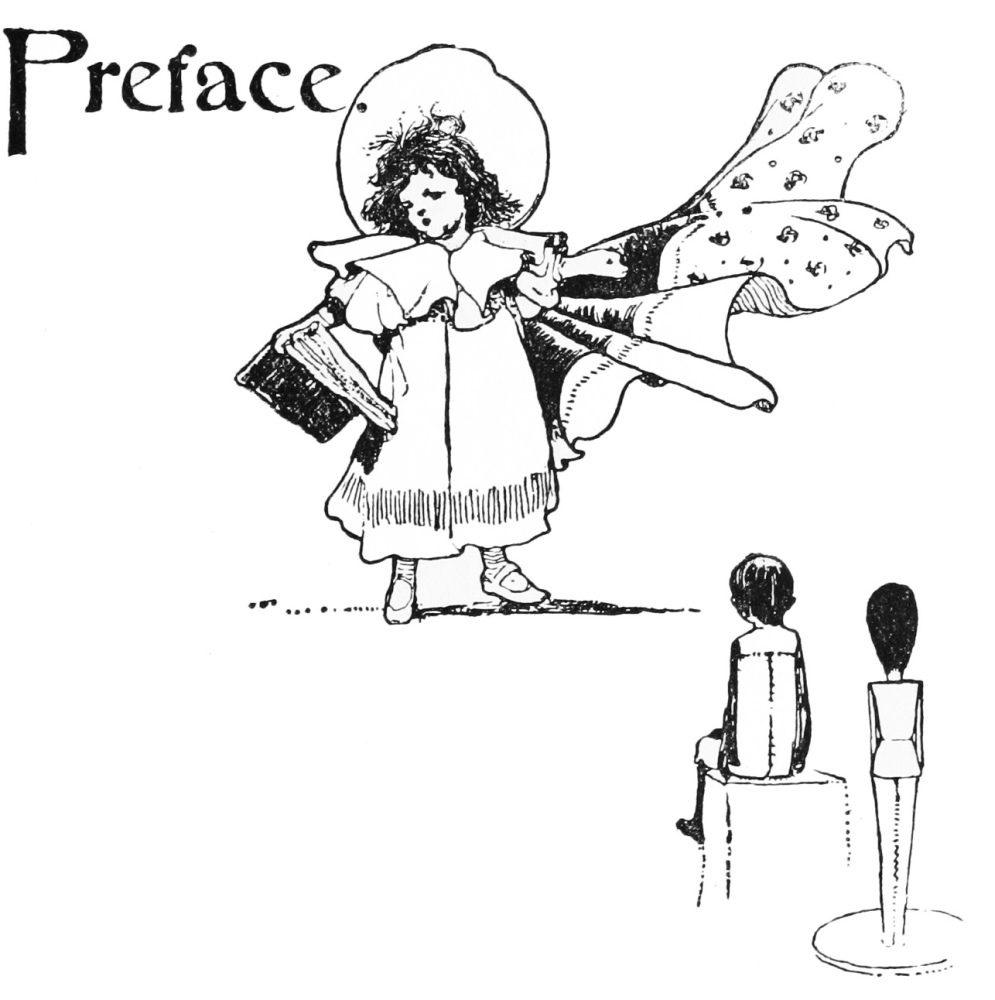
There is a sort of a garden—or rather an estate, of park and fallow and waste—nay, perhaps we may call it a kingdom, albeit a noman’s-land and an everyman’s land—which lies so close to the frontier of our work-a-day world that a step will take us therein. Indeed,{8} some will have it that we are there all the time, that it is the real fourth dimension, and that at any moment—if we did but know the trick—we might find ourselves trotting along its pleasant alleys, without once quitting our arm-chair. Nonsense-Land is one of the names painted up on the board at the frontier-station; and there the custom-house officers are very strict. You may take as much tobacco as you please, any quantity of spirits, and fripperies of every sort, new and old; but all common-sense, all logic, all serious argument, must strictly be declared, and is promptly confiscated. Once safely across the border, it is with no surprise at all that you greet the Lead Soldier strutting somewhat stiffly to meet you, the Dog with eyes as big as mill-wheels following affably at his heel; on the banks of the streams little Johnny-head-in-air is perpetually being hauled out of the water; while the plaintive voice of the Gryphon is borne inland from the margin of the sea.
Most people, at one time or another, have travelled in this delectable country, if only in young and irresponsible days. Certain unfortunates, unequipped by nature for a voyage{9} in such latitudes, have never visited it at all, and assuredly never will. A happy few never quit it entirely at any time. Domiciled in that pleasant atmosphere, they peep into the world of facts but fitfully, at moments; and decline to sacrifice their high privilege of citizenship at any summons to a low conformity.
Of this fortunate band was Eugene Field. He knew the country thoroughly, its highways and its byways alike. Its language was the one he was fondest of talking; and he always refused to emigrate and to settle down anywhere else. As soon as he set himself to narrate the goings-on there, those of us who had been tourists in bygone days, but had lost our return-tickets, pricked up our ears, and listened, and remembered, and knew. The Dinkey-Bird, we recollected at once, had been singing, the day we left, in the amfalula-tree; and there, of course, he must have been singing ever since, only we had forgotten the way to listen. Eugene Field gently reminded us, and the Dinkey-Bird was vocal once more, to be silent never again. Shut-Eye Train had been starting every night with the utmost punctuality; it was{10} we who had long ago lost our way to the booking-office (I really do not know the American for booking-office). Now we can hurry up the platform whenever we please, and hear the doors slam and the whistle toot as we sink back on those first-class cushions! And the Chocolate Cat,—why, of course the cats were all chocolate then! And how pleasantly brittle their tails were, and how swiftly, though culled and sucked each day, they sprouted afresh!
It is an engaging theory, that we are all of us just as well informed as the great philosophers, poets, wits, who are getting all the glory; only unfortunately our memories are not equally good—we forget, we forget so terribly! Those belauded gentlemen, termed by our fathers “makers”—creators, to wit—they are only reminders after all: flappers, Gulliver would have called them. The parched peas in their gaily-painted bladders rattle with reminiscences as they flap us on the ears; and at once we recall what we are rightly abashed beyond measure to have for one instant forgotten. At any rate, it is only when the writer comes along who strikes a new clear note, who does a{11} thing both true and fresh, that we say to ourselves, not only “How I wish I had done that myself!”—but also “And I would have done it, too—if only I had remembered it in time!” Perhaps this is one of the tests of originality.
Of course I am touching upon but one side of Eugene Field the writer. An American of Americans, much of his verse was devoted to the celebration of what we may call the minor joys which go to make social happiness in the life he lived with so frank and rounded a completion—a celebration which appealed to his countrymen no less keenly, that the joys were of a sort which, perhaps from some false sense of what makes fitness in subject, had hitherto lacked their poet—on that side at least. This, of course, was the fault of the poets. And though I spoke just now of minor joys, there are really no such things as minor joys—or minor thrushes and blackbirds. Fortunately this other aspect does not need to be considered here. I say fortunately, because it is not given to a writer to know more than one Land—to know it intimately, that is to say, so as to dare to write about it. This is the Law{12} and the Prophets. Even that most native utterance, which sings of “the clink of the ice in the pitcher that the boy brings up the hall,” appeals to us but faintly, at second-hand. That pitcher does not clink in England.
In this spheral existence all straight lines, sufficiently prolonged, prove to be circles: and a line of thought is no exception. We are back at the point we started from—the consideration of Eugene Field as a citizen; of a sort of a cloud-country, to start with; and later, of a land more elemental. In either capacity we find the same note, of the joy of life. We find the same honest resolve, to accept the rules and to play out the game accordingly; the same conviction, that the game is in itself a good one, well worth the playing. And so, with no misgiving, he takes his America with just the same heartiness as his Nonsense-land.
The little boy who should by rights have been lost in the forest, by the white pebbles he had warily dropped found his way back safely to sunlight and to home; and to keep in touch with earth is at least to ensure progression in{13} temperate and sweet-breathed atmosphere, as well as in a certain zone, and that no narrow one, of appreciation; the appreciation of our fellows, the world over; those who, whatever their hemisphere, daily find themselves pricked by a common sun, with the same stimulus for every cuticle, towards pleasures surprisingly similar.
KENNETH GRAHAME.
![[Image unavailable.]](images/i_013_lg.jpg)
![[Image unavailable.]](images/i_014_lg.jpg)


![[Image unavailable.]](images/i_018_lg.jpg)
![[Image unavailable.]](images/i_020_lg.jpg)
![[Image unavailable.]](images/i_021a_lg.jpg)
![[Image unavailable.]](images/i_022_lg.jpg)
![[Image unavailable.]](images/i_024a_lg.jpg)
![[Image unavailable.]](images/i_024b_lg.jpg)
“Rub-a-dub!” it goeth;
There is one little dream of a big sugar-plum,
OF A BEAUTIFUL DRUM”—
Of popguns that bang, and tin tops that hum,
And a trumpet that bloweth!
With laughter and singing;
And boats go a-floating on silvery streams,
And the stars peek-a-boo with their own misty gleams,
![[Image unavailable.]](images/i_026_lg.jpg)
The fairies go winging!
They’ll come to you sleeping;
So shut the two eyes that are weary, my sweet,
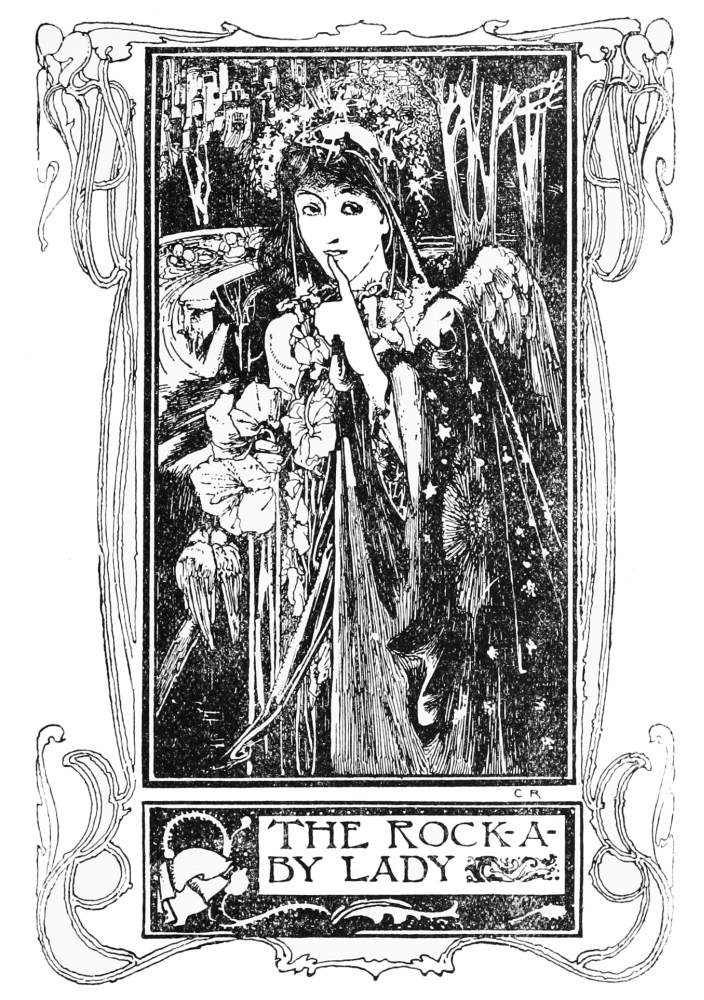
For the Rock-a-By Lady from Hushaby street,
With poppies that hang from her head to her feet,
Comes stealing; comes creeping.
![[Image unavailable.]](images/i_027_lg.jpg)
![[Image unavailable.]](images/i_028_lg.jpg)
![[Image unavailable.]](images/i_030_lg.jpg)
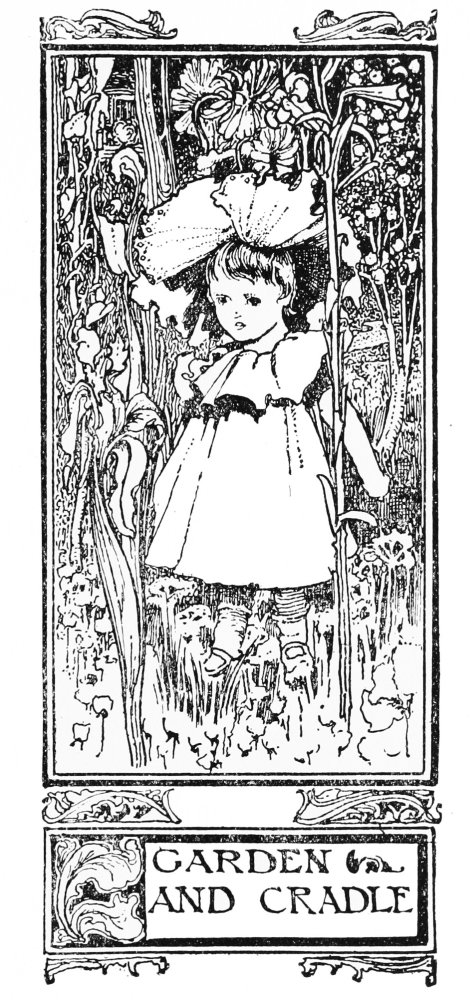
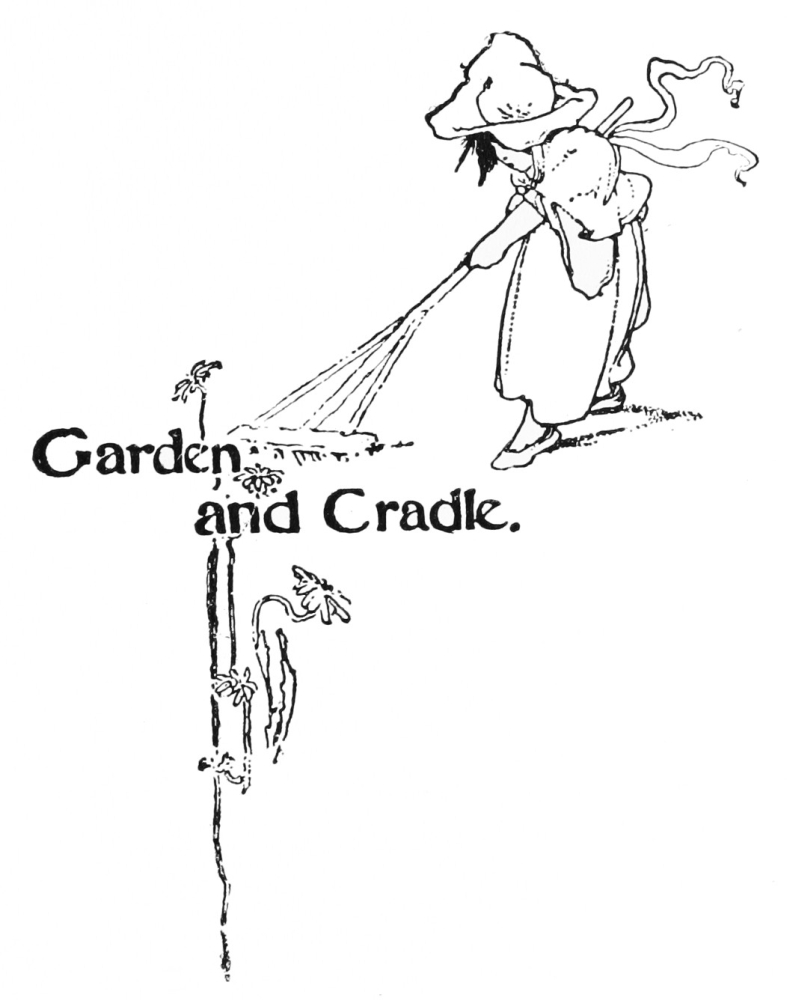
Around his tinkling feet the sunbeams play;{32}
The posies they are good to him,
And bow them as they should to him,
As fareth he upon his kingly way;
And birdlings of the wood to him
Make music, gentle music, all the day,
When our babe he goeth walking in his garden.
Then the night it looketh ever sweetly down;
The little stars are kind to him,
The moon she hath a mind to him
And layeth on his head a golden crown;
And singeth then the wind to him
A song, the gentle song of Bethlem-town,
When our babe he goeth swinging in his cradle.
![[Image unavailable.]](images/i_033_lg.jpg)
![[Image unavailable.]](images/i_034_lg.jpg)
![[Image unavailable.]](images/i_036_lg.jpg)
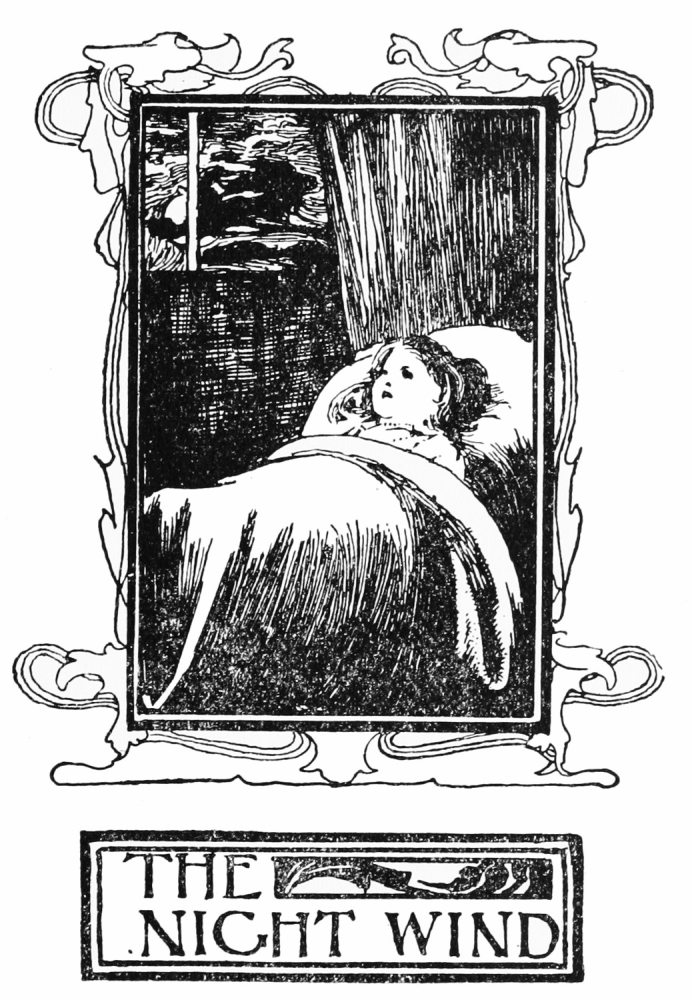
’Tis a pitiful sound to hear!
It seems to chill you through and through
With a strange and speechless fear.
’Tis the voice of the night that broods outside
When folks should be asleep,{38}
And many and many’s the time I’ve cried
To the darkness brooding far and wide
Over the land and the deep:
“Whom do you want, O lonely night,
That you wail the long hours through?”
And the night would say in its ghostly way:
“Yoooooooo!
Yoooooooo!
Yoooooooo!”
(When I was a little tad)
That when the night went wailing so,
Somebody had been bad;
And then, when I was snug in bed,
Whither I had been sent,
With the blankets pulled up round my head.
I’d think of what my mother’d said,
And wonder what boy she meant!
And “Who’s been bad to-day?” I’d ask
Of the wind that hoarsely blew,
And the voice would say in its meaningful way:
“Yoooooooo!
Yoooooooo!
Yoooooooo!”
![[Image unavailable.]](images/i_039_lg.jpg)
You’ll not believe it, though!
Yes, though I’m quite a model now,
I was not always so.
And if you doubt what things I say,
Suppose you make the test;
Suppose, when you’ve been bad some day
And up to bed are sent away
From mother and the rest—
Suppose you ask, “Who has been bad?”
And then you’ll hear what’s true;
For the wind will moan in its ruefulest tone:
“Yoooooooo!
Yoooooooo!
Yoooooooo!”
![[Image unavailable.]](images/i_040_lg.jpg)
![[Image unavailable.]](images/i_042_lg.jpg)
![[Image unavailable.]](images/i_044_lg.jpg)
And taffy’s thick as peas—
Caramels you pick like berries
When, and where, and how you please;
Big red sugar-plums are clinging
To the cliffs beside that sea
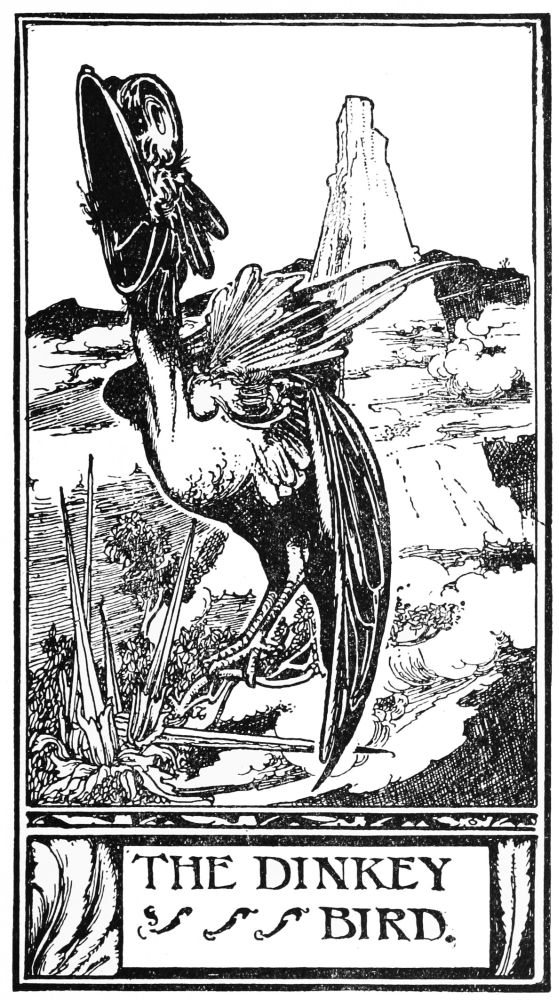
Where the Dinkey-Bird is singing
In the amfalula tree.{45}
And make merry all the day,
When there’s naught to put a damper
To the ardor of their play;
When I hear their laughter ringing,
Then I’m sure as sure can be
That the Dinkey-Bird is singing
In the amfalula tree.
And staccatos are so sweet—
His roulades, appoggiaturas,
And robustos so complete,
That the youth of every nation—
Be they near or far away—
Have especial delectation
In that gladsome roundelay.
Their lungs begin to crow,
Their hearts get light and lighter,
And their cheeks are all aglow;
For an echo cometh bringing
The news to all and me,
That the Dinkey-Bird is singing
In the amfalula tree.{46}
To see your feathered friend—
And so many goodies grow there
You would like to comprehend!
Speed, little dreams, your winging
To that land across the sea
Where the Dinkey-Bird is singing
In the amfalula tree!
![[Image unavailable.]](images/i_046_lg.jpg)
![[Image unavailable.]](images/i_048_lg.jpg)
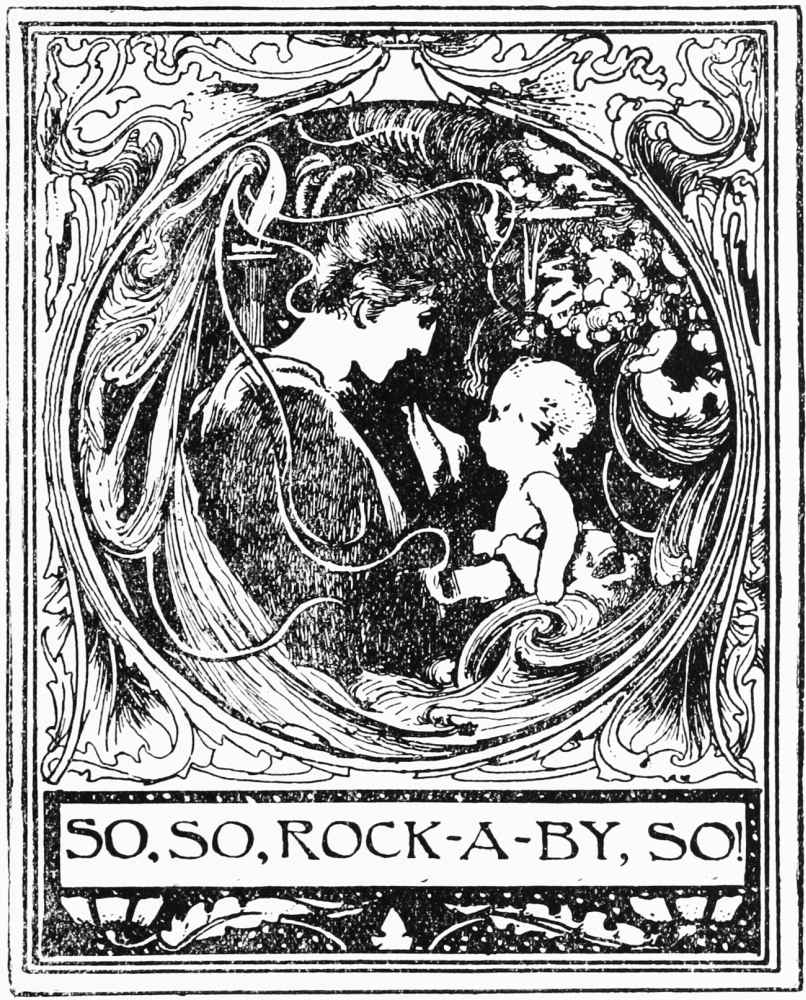
Off to the garden where dreamikins grow;
And here is a kiss on your winkyblink eyes,
And here is a kiss on your dimpledown cheek{50}
And here is a kiss for the treasure that lies
In the beautiful garden way up in the skies
Which you seek.
Now mind these three kisses wherever you go—
So, so, rock-a-by so!
For he dances all night where the dreamikins grow;
I send him this kiss on your droopydrop eyes,
I send him this kiss on your rosy-red cheek.
And here is a kiss for the dream that shall rise
When the fumfay shall dance in those far-away skies
Which you seek.
Be sure that you pay those three kisses you owe—
So, so, rock-a-by so!
Don’t forget mother who loveth you so!
And here is her kiss on your weepydeep eyes,
And here is her kiss on your peachypink cheek,
![[Image unavailable.]](images/i_051_lg.jpg)
Like a babe on the breast of those far-away skies
Which you seek—
The blinkywink garden where dreamikins grow—
So, so, rock-a-by so!
![[Image unavailable.]](images/i_052_lg.jpg)
![[Image unavailable.]](images/i_054_lg.jpg)
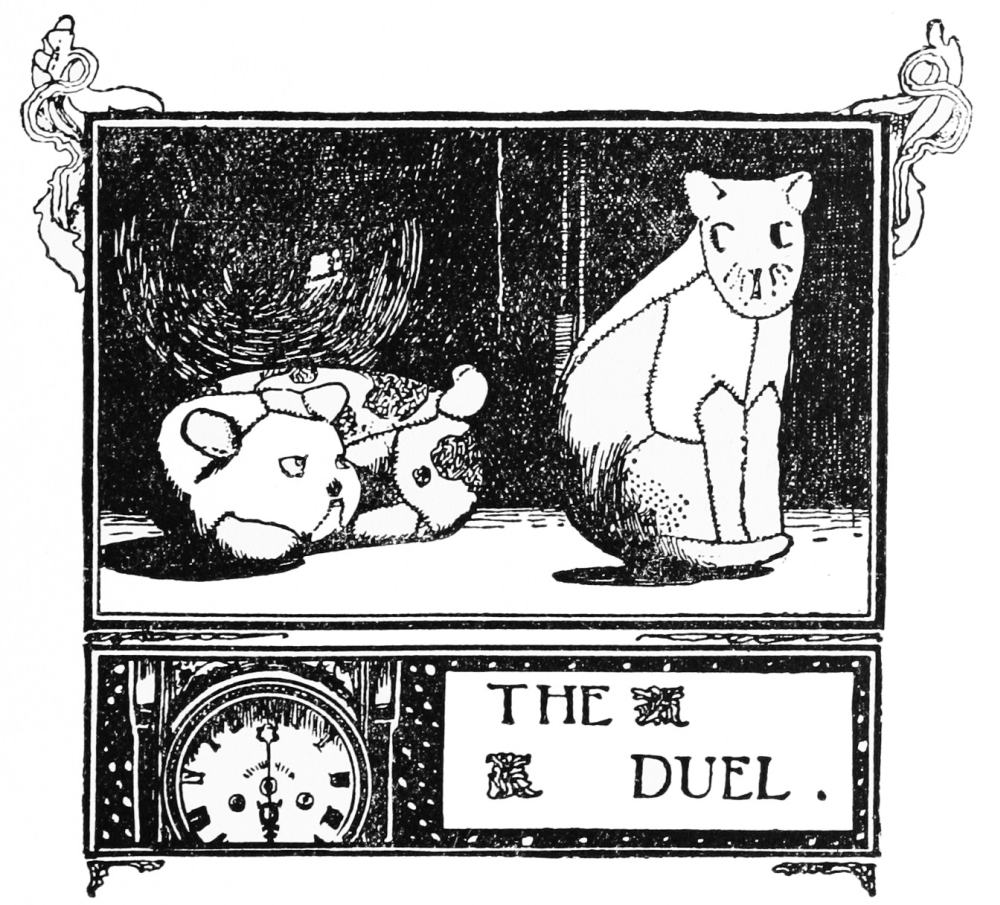
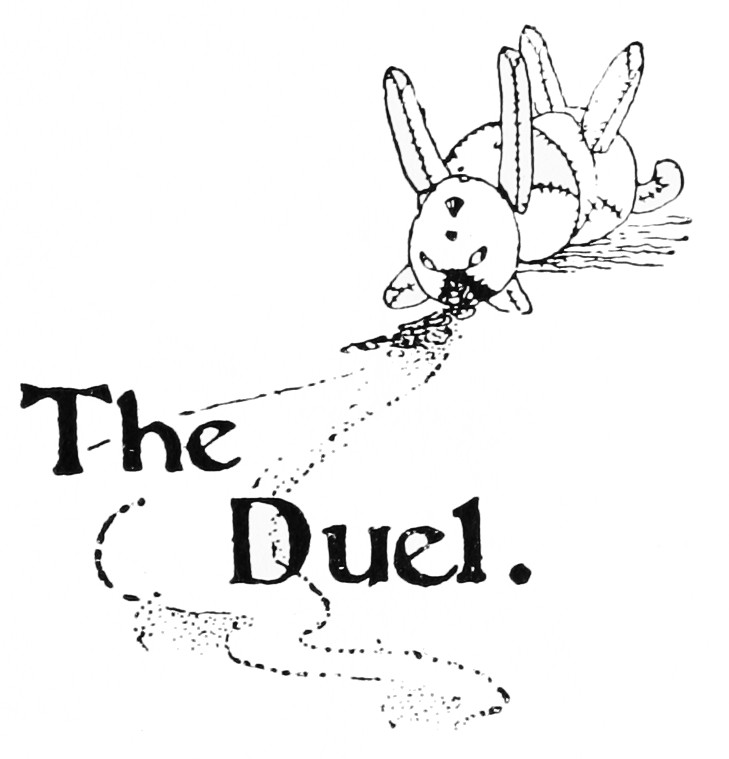
Side by side on the table sat;
’Twas half-past twelve, and (what do you think!)
Nor one nor t’other had slept a wink!{56}
The old Dutch clock and the Chinese plate
Appeared to know as sure as fate
There was going to be a terrible spat.
(I wasn’t there; I simply state
What was told me by the Chinese plate!)
And the calico cat replied “mee-ow!”
The air was littered, an hour or so,
With bits of gingham and calico,
While the old Dutch clock in the chimney place
Up with its hands before its face,
For it always dreaded a family row!
(Now mind: I’m only telling you
What the old Dutch clock declares is true!)
And wailed, “Oh, dear! what shall we do?”
But the gingham dog and the calico cat
Wallowed this way and tumbled that,
Employing every tooth and claw
In the awfullest way you ever saw—
And, oh! how the gingham and calico flew!
(Don’t fancy I exaggerate!
I got my news from the Chinese plate!)
![[Image unavailable.]](images/i_057_lg.jpg)
They found no trace of dog or cat;
And some folks think unto this day
That burglars stole that pair away!
But the truth about the cat and pup
Is this: they ate each other up!
Now what do you really think of that!
(The old Dutch clock it told me so,
And that is how I came to know.)
![[Image unavailable.]](images/i_058_lg.jpg)
![[Image unavailable.]](images/i_060_lg.jpg)
![[Image unavailable.]](images/i_061b_lg.jpg)
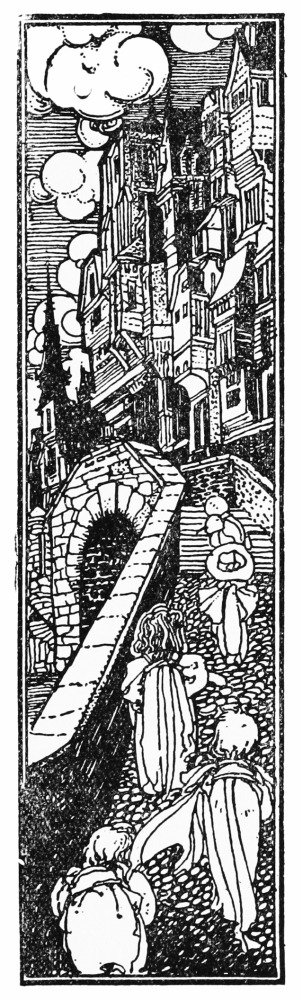
My heart turneth fondly to-day
Where tinkle of tongues and patter of feet
Make sweetest of music at play;
Where the sunshine of love illumines each face
And warms every heart in that old-fashioned place.{62}
With dollies and tin tops and drums,
And, my! how they frolic and scamper and shout
Till bedtime too speedily comes!
![[Image unavailable]](images/i_062_lg.jpg) {63}
{63}
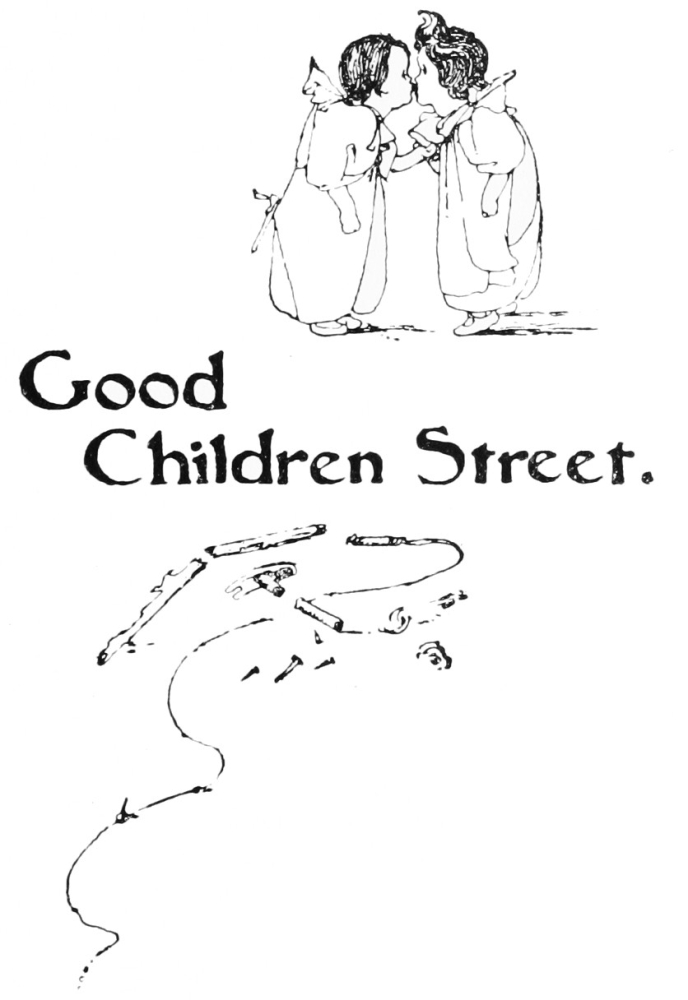
With little folk living in Good-Children street.
And swords, caps, and plumes of all sorts;
The captain rides gaily and proudly ahead
On a stick-horse that prances and snorts!
Oh, legions of soldiers you’re certain to meet—
Nice make-believe soldiers—in Good-Children street.
Poor dolly! I’m sure she is ill,
For one of her blue china eyes has dropped out
And her voice is asthmatic’ly shrill.
Then, too, I observe she is minus her feet,
Which causes much sorrow in Good-Children street.
![[Image unavailable.]](images/i_064_lg.jpg)
![[Image unavailable.]](images/i_065_lg.jpg)
![[Image unavailable.]](images/i_066_lg.jpg)
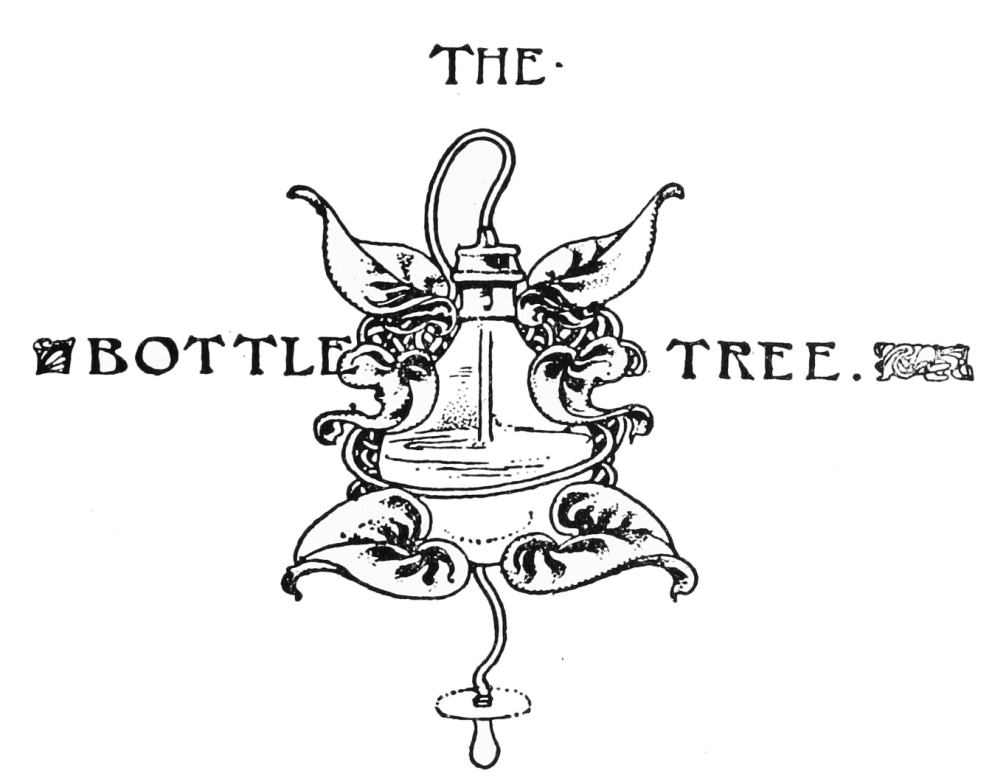
Heigh-ho for a bottle, I say!
A snug little berth in that ship I demand
That rocketh the Bottle-Tree babies away
Where the Bottle Tree bloometh by night and by day
And reacheth its fruit to each wee, dimpled hand;{68}
You take of that fruit as much as you list,
For colic’s a nuisance that doesn’t exist!
![[Image unavailable.]](images/i_068_lg.jpg)
And cuddle me snug in my cradle away,{69}
For I hunger and thirst for that precious repast—
Heigh-ho for a bottle, I say!
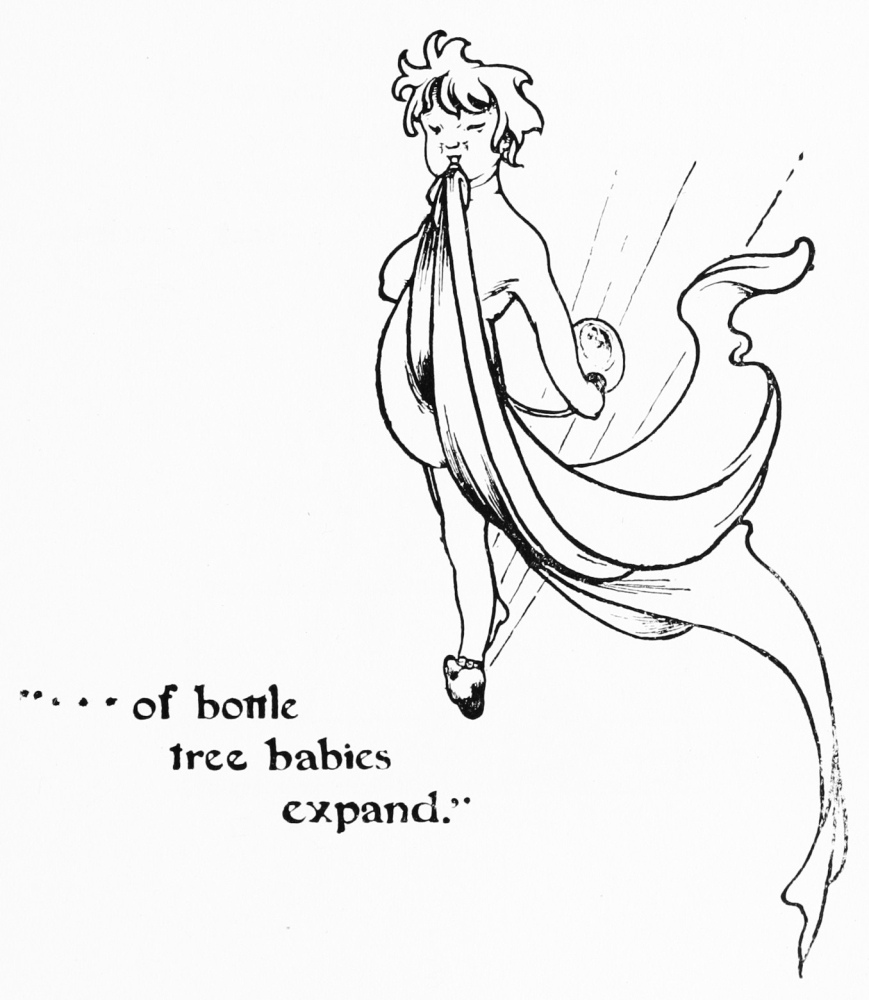
Heigh-ho for Winkyway land!{70}
And Bottle-Tree fruit (as I’ve heard people say)
Makes bellies of Bottle-Tree babies expand—
And that is a trick I would fain understand!
Heigh-ho for a bottle to-day!
And heigh-ho for a bottle to-night—
A bottle of milk that is creamy and white!
So cuddle me close, and cuddle me fast,
And cuddle me snug in my cradle away,
For I hunger and thirst for that precious repast—
Heigh-ho for a bottle, I say!
![[Image unavailable.]](images/i_070_lg.jpg)
![[Image unavailable.]](images/i_072_lg.jpg)
And my weary little one{74}
Rocketh gently to and fro;
When the night winds softly blow,
And the crickets in the glen
Chirp and chirp and chirp again;
When upon the haunted green
Fairies dance around their queen—
Then from yonder misty skies
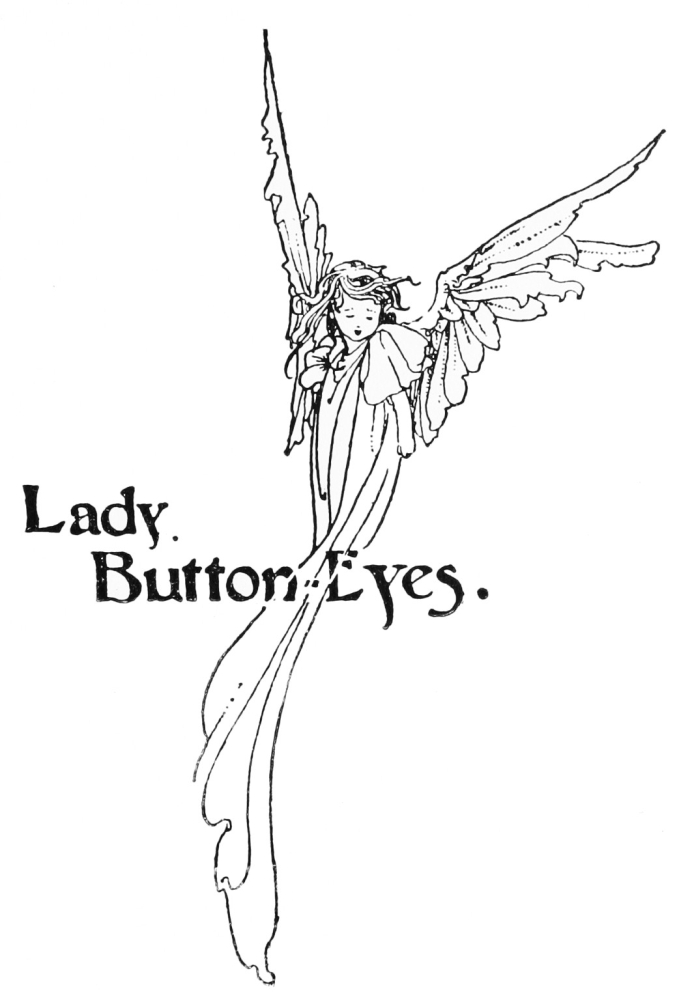
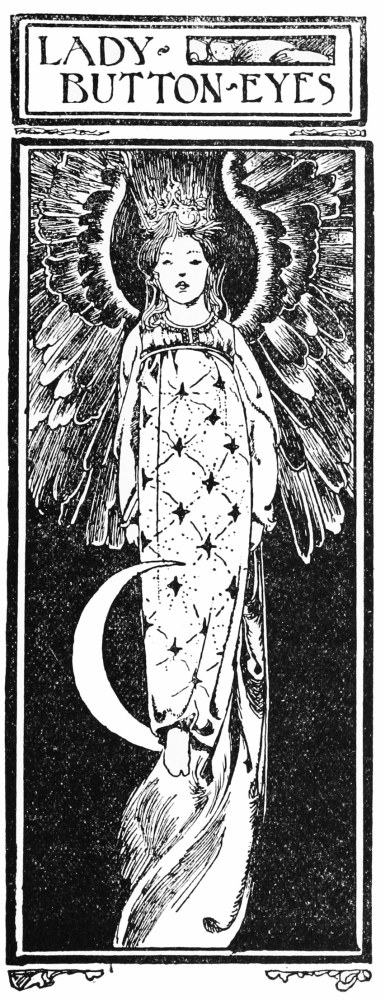
Cometh Lady Button-Eyes
To our quiet, cozy home,
Where to singing, sweet and low,
Rocks a cradle to and fro;
Where the clock’s dull monotone
Telleth of the day that’s done;
Where the moonbeams hover o’er
Playthings sleeping on the floor—
Where my weary wee one lies
Cometh Lady Button-Eyes.
From some distant eerie coast;
Never footfall can you hear
As that spirit fareth near—
From that shadow-queen is heard.
In ethereal raiment dight,
From the realm of fay and sprite
In the depth of yonder skies
Cometh Lady Button-Eyes.
My dear weary little one,
And those white hands overspread
Like a veil the curly head,
Seem to fondle and caress
Every little silken tress;
Then she smooths the eyelids down
Over those two eyes of brown—
In such soothing, tender wise
Cometh Lady Button-Eyes.
That caressing magic now;
For the crickets in the glen
Chirp and chirp and chirp again,
While upon the haunted green
Fairies dance around their queen,{77}
And the moonbeams hover o’er
Playthings sleeping on the floor—
Hush, my sweet! from yonder skies
Cometh Lady Button-Eyes!
![[Image unavailable.]](images/i_077_lg.jpg)
![[Image unavailable.]](images/i_078_lg.jpg)
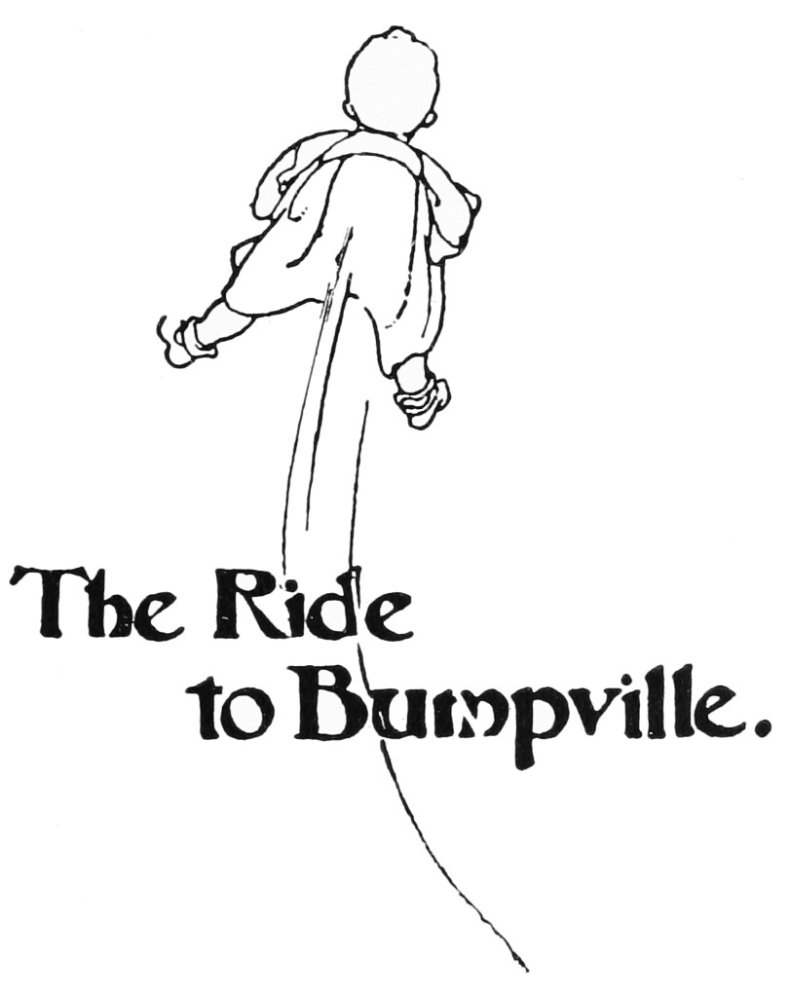
![[Image unavailable.]](images/i_080_lg.jpg)
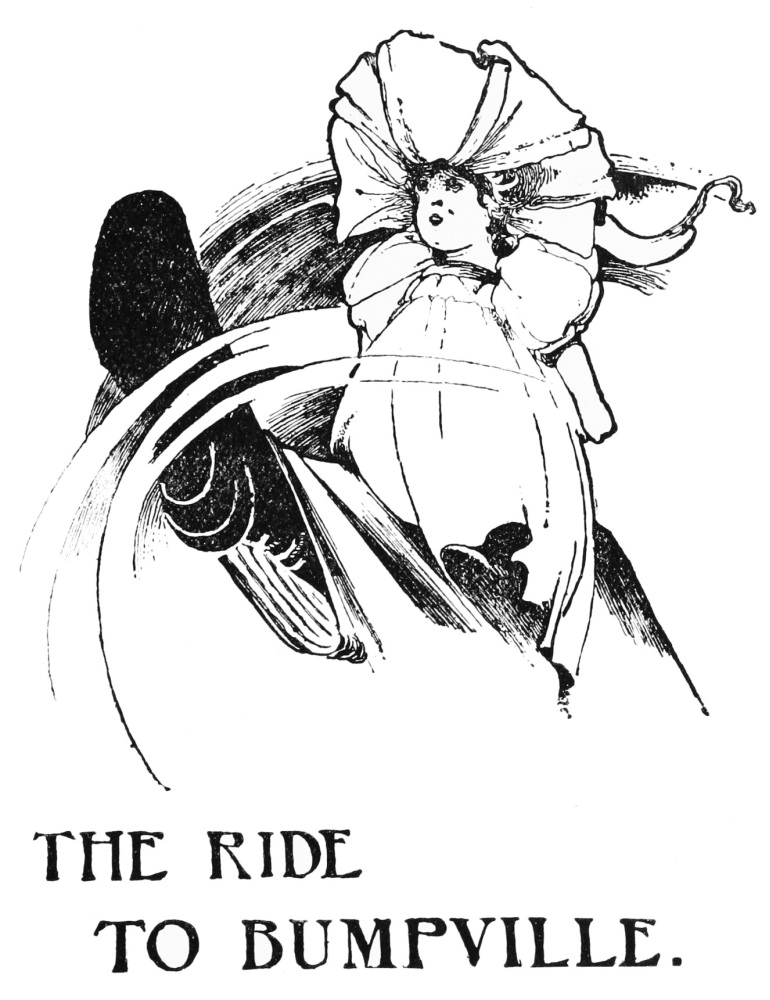
Saddled and bridled for Bumpville;
Leap to the back of this steed if you dare,
And gallop away to Bumpville!{82}
I hope you’ll be sure to sit fast in your seat,
For this calico mare is prodigiously fleet,
And many adventures you’re likely to meet
As you journey along to Bumpville.
![[Image unavailable.]](images/i_082_lg.jpg)
While whisking you off to Bumpville;
She paces, she shies, and she stumbles, in spots,
In the tortuous road to Bumpville;
And sometimes this strangely mercurial steed
Will suddenly stop and refuse to proceed,
Which, all will admit, is vexatious indeed,
When one is en route to Bumpville!{83}
Down by the crossing at Bumpville;
You’d better look out for that treacherous brute
Bearing you off to Bumpville!
With a snort she rears up on her hindermost heels,
And executes jigs and Virginia reels—
Words fail to explain how embarrassed one feels
Dancing so wildly to Bumpville!
Journeying on to Bumpville;
It’s over the hilltop and down through the bog
You ride on your way to Bumpville;
It’s rattletybang over boulder and stump,
There are rivers to ford, there are fences to jump,
And the corduroy road it goes bumpytybump,
Mile after mile to Bumpville!
Making the journey to Bumpville,
So I think, on the whole, it were prudent to bring
An end to this ride to Bumpville;{84}
For, though she has uttered no protest or plaint,
The calico mare must be blowing and faint—
What’s more to the point, I’m blowed if I ain’t!
So play we have got to Bumpville!
![[Image unavailable.]](images/i_084_lg.jpg)
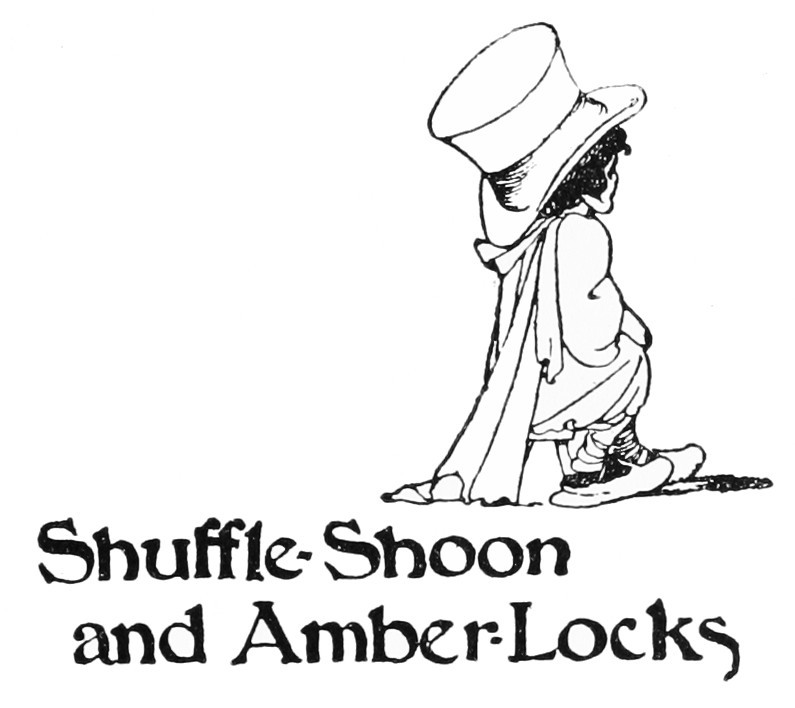
![[Image unavailable.]](images/i_086_lg.jpg)
Sit together, building blocks;
Shuffle-Shoon is old and grey,
Amber-Locks a little child,
But together at their play
Age and Youth are reconciled,
And with sympathetic glee
Build their castles fair to see.{88}
(So the wee one’s prattle ran),
“I shall build a castle so—
With a gateway broad and grand;
Here a pretty vine shall grow,
There a soldier guard shall stand;
And the tower shall be so high,
Folks will wonder, by-and-by!”
![[Image unavailable.]](images/i_088_lg.jpg)
Thus I builded long ago!
Here a gate and there a wall,
Here a window, there a door;
Here a steeple wondrous tall
Riseth ever more and more!
But the years have levelled low
What I builded long ago!”
![[Image unavailable.]](images/i_089_lg.jpg)
Heedless of the fleeting day;
One speaks of the Long Ago
Where his dead hopes buried lie;
One with chubby cheeks aglow
Prattleth of the By-and-By;
Side by side, they build their blocks—
Shuffle-Shoon and Amber-Locks.
![[Image unavailable.]](images/i_090_lg.jpg)
![[Image unavailable.]](images/i_092_lg.jpg)
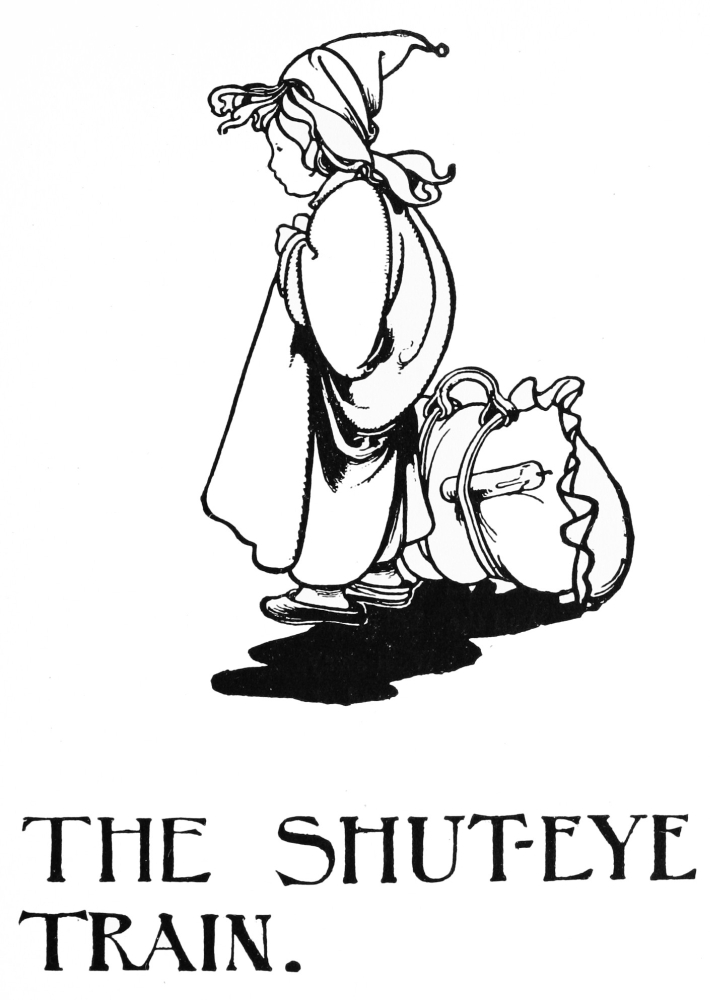
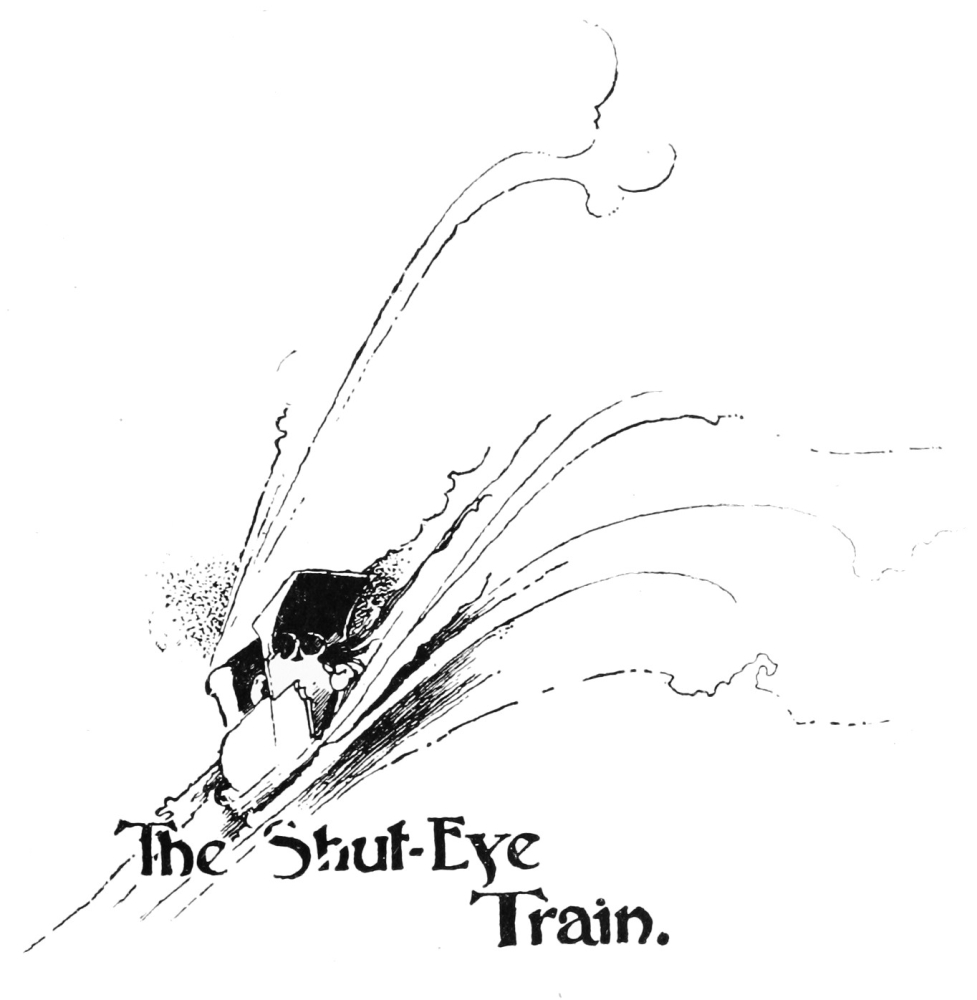
There are wondrous sights to see{94}
As the evening shadows fall;
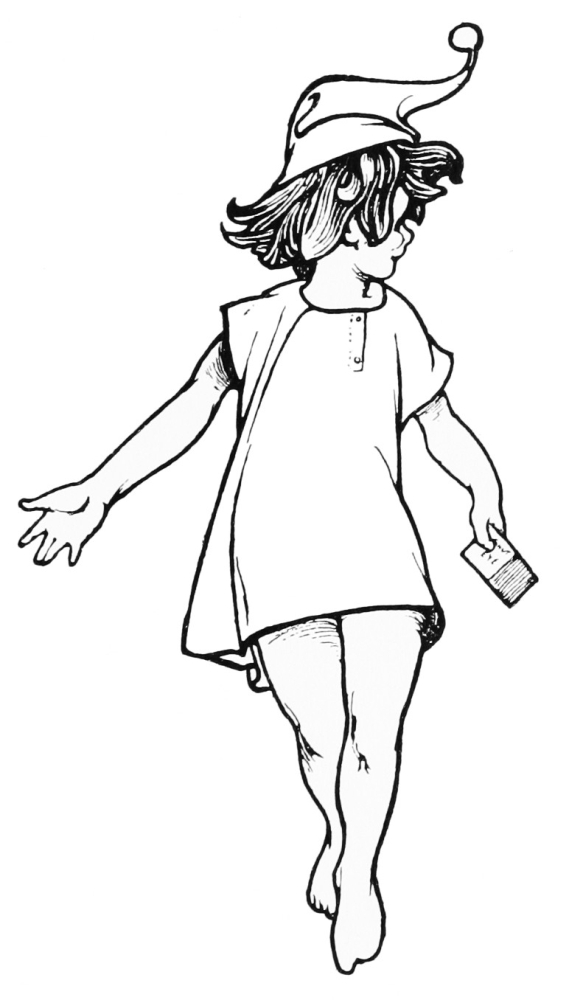
In your pretty cap and gown,
Don’t detain
The Shut-Eye train—
“Ting-a-ling!” the bell it goeth,
“Toot-toot!” the whistle bloweth,
And we hear the warning call:
“All aboard for Shut-Eye Town!”
Soon will speed the Shut-Eye train!
Through the blue where bloom the stars
And the Mother Moon looks down
We’ll away
To land of Fay—
Oh, the sights that we shall see there!
Come, my little one, with me there—
’Tis a goodly train of cars—
All aboard for Shut-Eye Town!
“TO THE BALOW-FOLK WHO LOVE US”
Golden dreams await us there;
We shall dream those dreams, my dear,
Till the Mother Moon goes down—
See unfold
Delights untold!
And in those mysterious places
We shall see beloved faces{97}
![[Image unavailable.]](images/i_096_lg.jpg) And beloved voices hear
And beloved voices hearIn the grace of Shut-Eye Town.
Weary are your little feet—
Nestle closer up to me
In your pretty cap and gown;
Don’t detain
The Shut-Eye train!
“Ting-a-ling!” the bell it goeth,
“Toot-toot!” the whistle bloweth;
Oh, the sights that we shall see!
All aboard for Shut-Eye Town!
![[Image unavailable.]](images/i_097_lg.jpg)
![[Image unavailable.]](images/i_098_lg.jpg)
![[Image unavailable.]](images/i_100_lg.jpg)
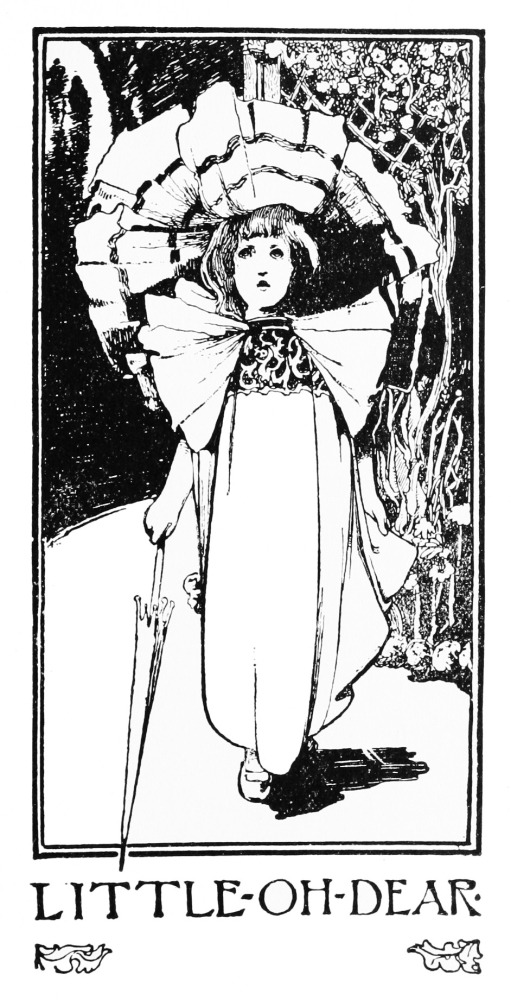
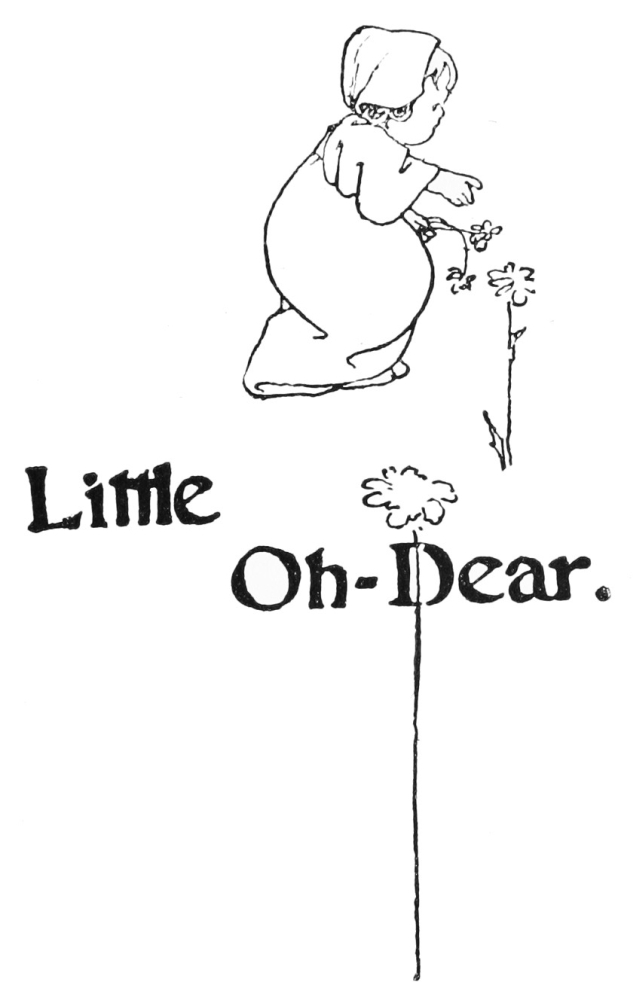
Planted and trimmed for my Little-Oh-Dear!{102}
Posies so gaudy and grass of such brown—
Search ye the country and hunt ye the town
And never ye’ll meet with a garden so queer
As this one I’ve made for my Little-Oh-Dear!
Lilies all dabbled with honey and dew,
The cactus that trails over trellis and wall,
Roses and pansies and violets—all
Make proper obeisance and reverent cheer
When into her garden steps Little-Oh-Dear!
A silver-bird singeth as only can she;
For, ever and only, she singeth the song
“I love you—I love you!” the happy day long;—
Then the echo—the echo that smiteth me here!
“I love you, I love you,” my Little-Oh-Dear!
But what careth my little precious, or I?
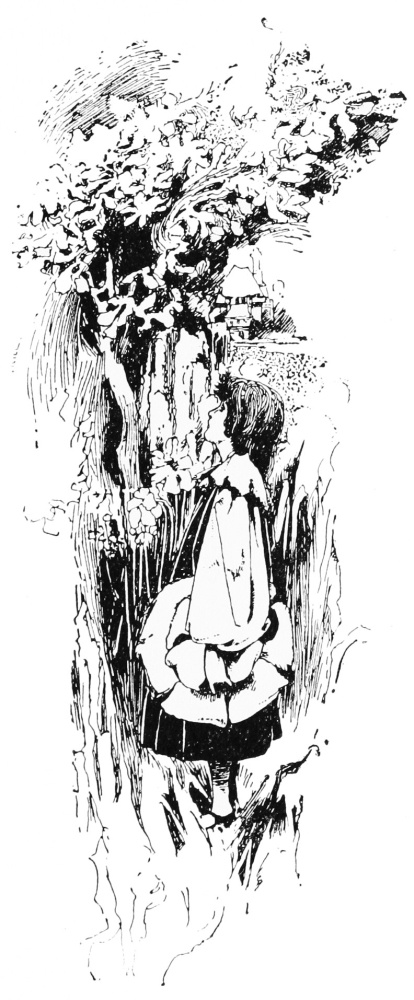
AS ONLY CAN SHE”
She walketh the tenderer way in my heart;
And, oh, it is always the summer-time here
With that song of “I love you,” my Little-Oh-Dear!
![[Image unavailable.]](images/i_104_lg.jpg)
![[Image unavailable.]](images/i_106_lg.jpg)
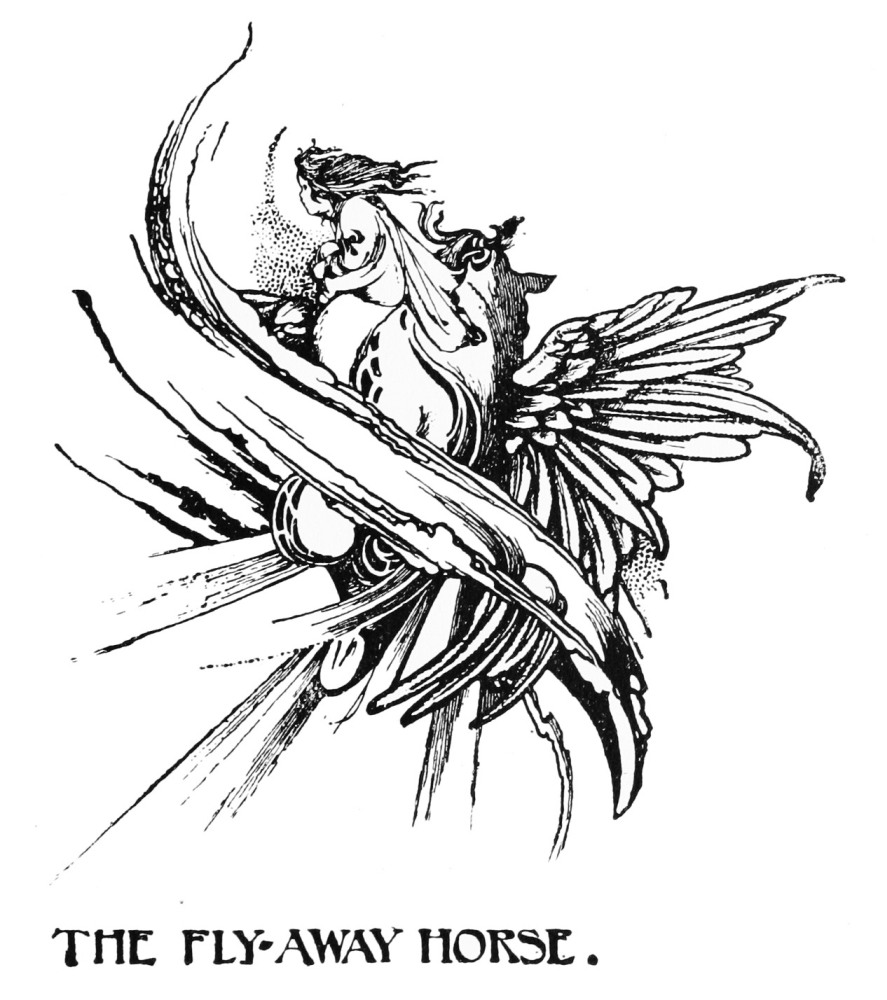
Perhaps you have seen him before;
Perhaps, while you slept, his shadow has swept
Through the moonlight that floats on the floor.{108}
That the Fly-Away Horse, with a neigh
And a pull at his rein and a toss of his mane,
Is up on his heels and away!
The Moon in the sky,
As he gallopeth by,
Cries: “Oh! what a marvellous sight!”
And the Stars in dismay
Hide their faces away
In the lap of old Grandmother Night.
Speedeth ever and ever away—
Over meadows and lanes, over mountains and plains,
Over streamlets that sing at their play;
And over the sea like a ghost sweepeth he,
While the ships they go sailing below,
And he speedeth so fast that the men at the mast
Adjudge him some portent of woe.
“What ho there!” they cry,
As he flourishes by
![[Image unavailable.]](images/i_109_lg.jpg)
AS HE GALLOPETH BY,
CRIES: ‘OH! WHAT A MARVELLOUS SIGHT!’”
And the fish in the sea
Are as scared as can be,
From the nautilus up to the whale!
![[Image unavailable.]](images/i_110_lg.jpg)
You little folk dream of at night—
Where candy-trees grow, and honey-brooks flow,
And corn-fields with popcorn are white;
And the beasts in the wood are ever so good
To children who visit them there—
What glory astride of a lion to ride,
Or to wrestle around with a bear!
The monkeys, they say:
“Come on, let us play,”{111}
And they frisk in the cocoa-nut trees:
While the parrots, that cling
To the peanut-vines, sing
Or converse with comparative ease!
![[Image unavailable.]](images/i_111_lg.jpg)
For, as soon as you’ve fallen asleep,
With a jubilant neigh he shall bear you away
Over forest and hillside and deep!
But tell us, my dear, all you see and you hear
In those beautiful lands over there,
Where the Fly-Away Horse wings his far-away course
With the wee one consigned to his care.
Then grandma will cry
In amazement: “Oh, my!”{112}
And she’ll think it could never be so;
And only we two
Shall know it is true—
You and I, little precious! shall know!
![[Image unavailable.]](images/i_112_lg.jpg)
![[Image unavailable.]](images/i_114_lg.jpg)
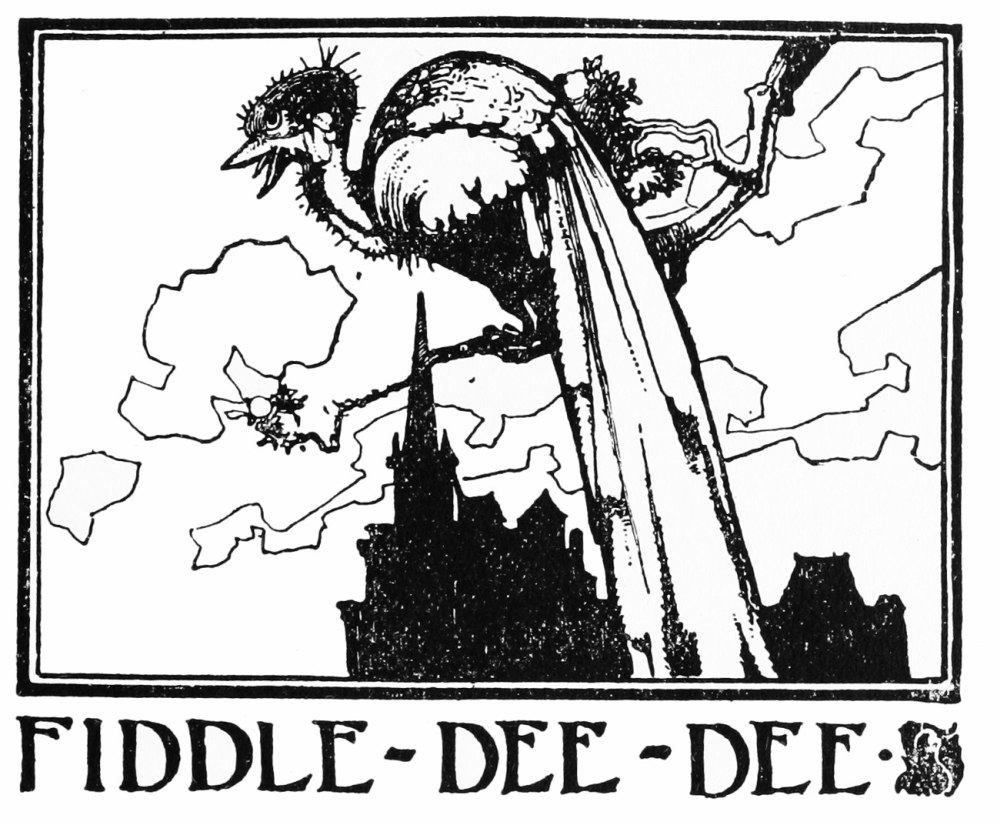
And all he could whistle was “Fiddle-dee-dee”—
A very provoking, unmusical song
For one to be whistling the summer day long!
Yet always contented and busy was he
With that vocal recurrence of “Fiddle-dee-dee.”
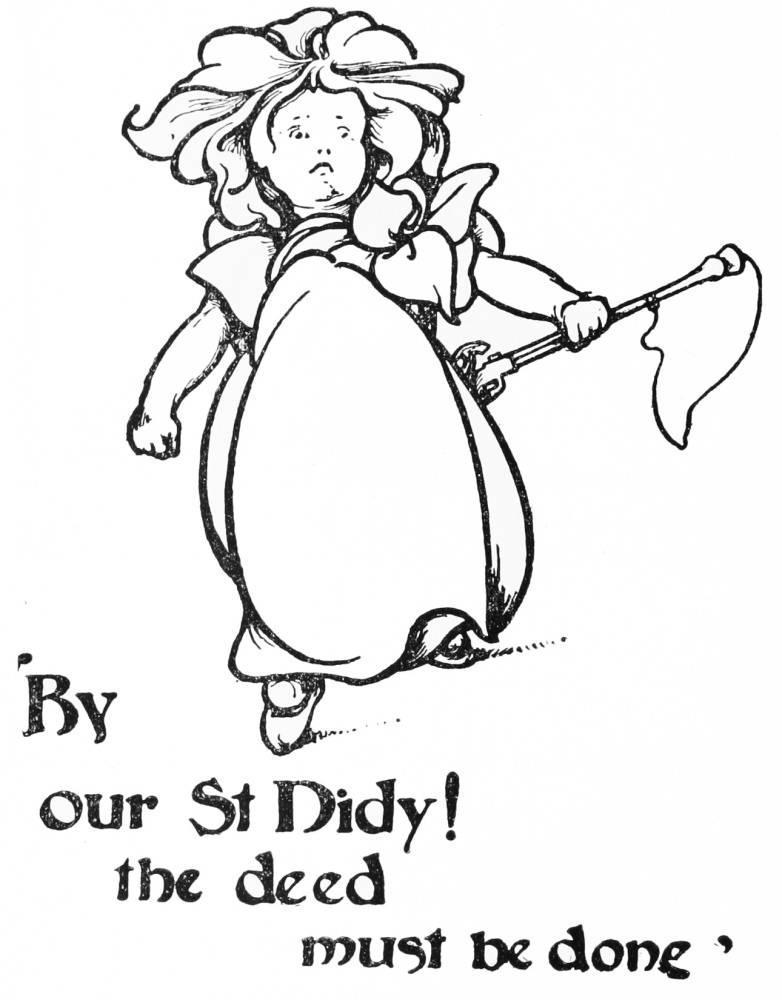
That weird iteration repented him sore;{117}
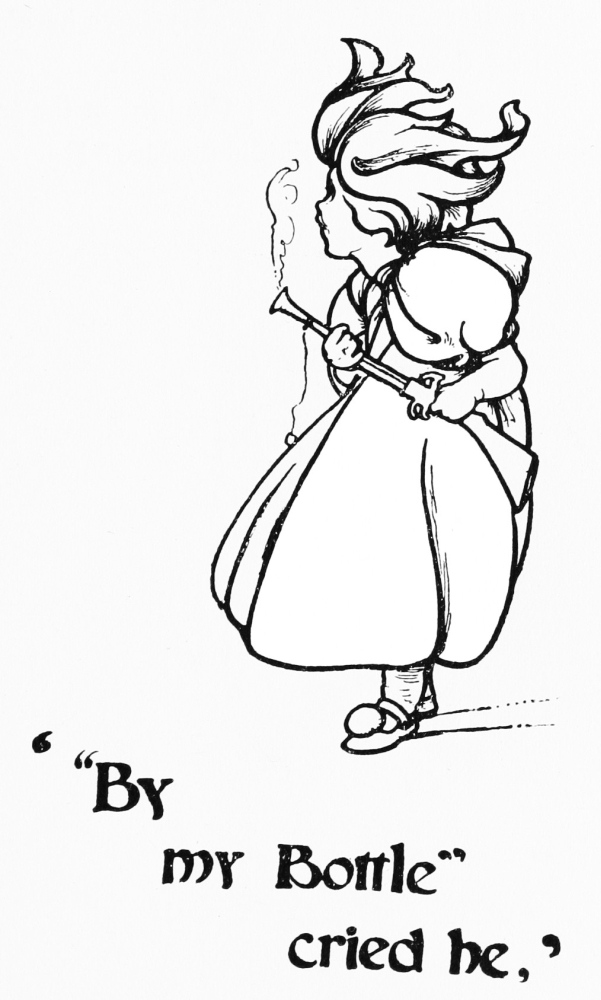
“I prithee, Dear-Mother-Mine! fetch me my gun,
For, by our St. Didy! the deed must be done
That shall presently rid all creation and me
Of that ominous bird and his ‘Fiddle-dee-dee’!”
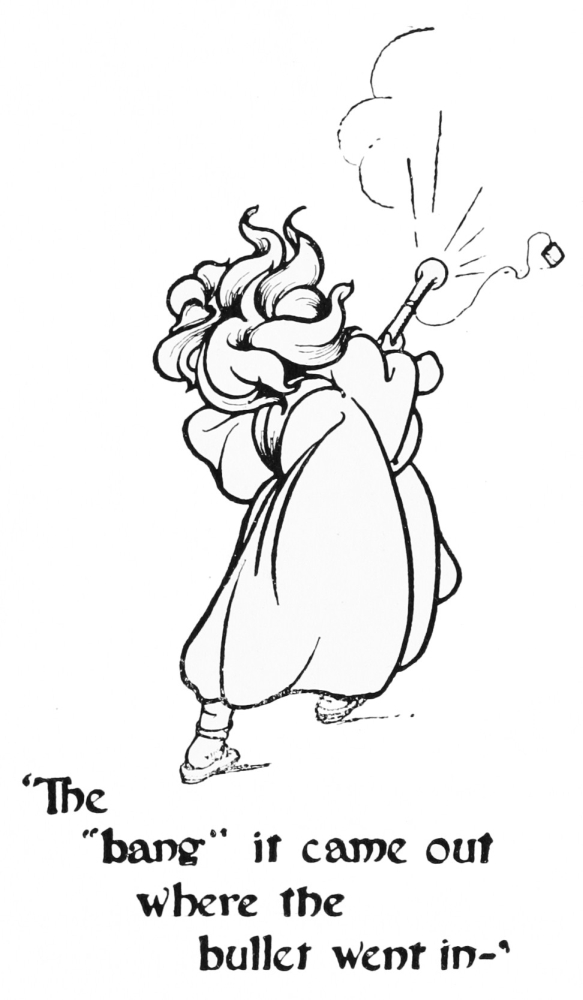
His awfully truculent little red gun;
The stock was of pine and the barrel of tin,
The “bang” it came out where the bullet went in—
The right kind of weapon I think you’ll agree
For slaying all fowl that go “Fiddle-dee-dee”!
![[Image unavailable.]](images/i_120_lg.jpg)
![[Image unavailable.]](images/i_122_lg.jpg)
![[Image unavailable.]](images/i_124_lg.jpg)
’Tis a marvel of great renown!
![[Image unavailable.]](images/i_127_lg.jpg)
(As those who have tasted it say)
Of that fruit to be happy next day.
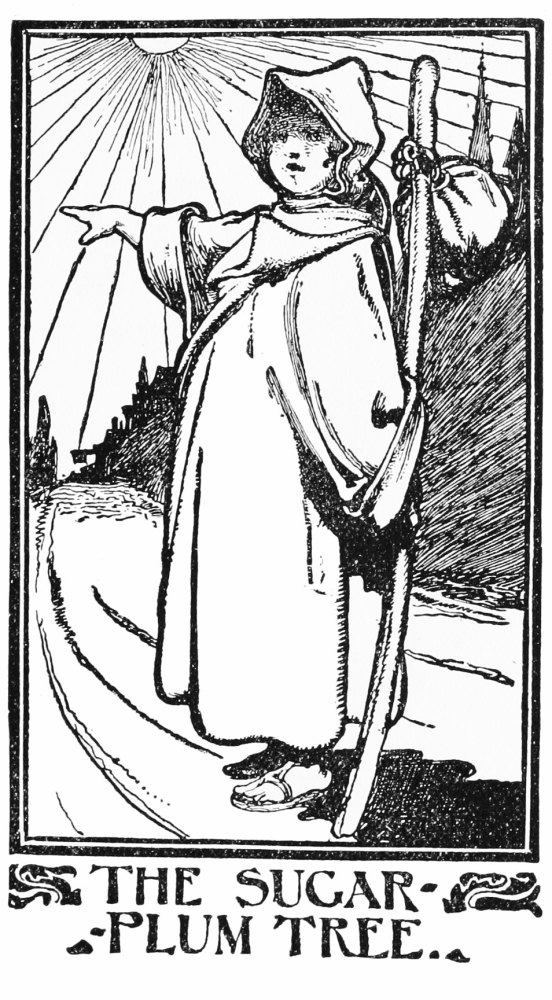
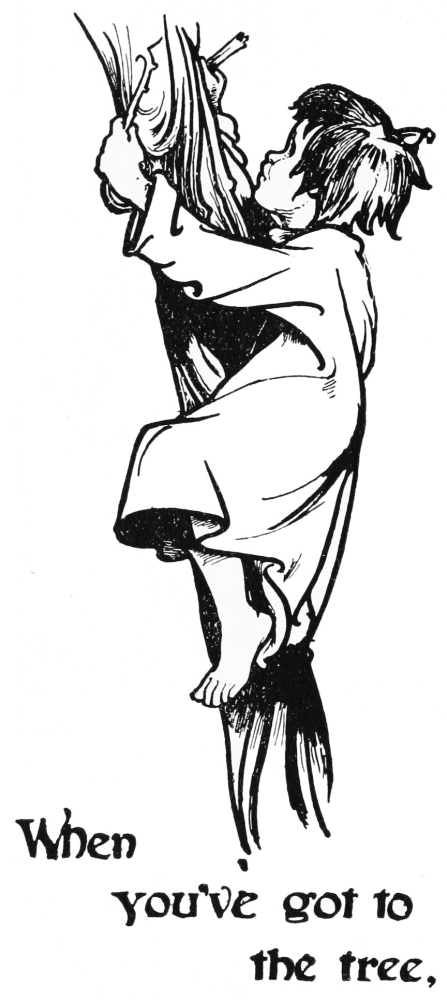
{128} When you’ve got to the tree, you would have a hard time
To capture the fruit which I sing;
The tree is so tall that no person could climb
To the boughs where the sugar-plums swing!
But up in that tree sits a chocolate cat,
And a gingerbread dog prowls below—
And this is the way you contrive to get at
Those sugar-plums tempting you so:
And he barks with such terrible zest
That the chocolate cat is at once all agog,
As her swelling proportions attest.
And the chocolate cat goes cavorting around
From this leafy limb unto that,
And the sugar-plums tumble, of course, to the ground—
Hurrah for that chocolate cat!
With stripings of scarlet or gold,
And you carry away of the treasure that rains
As much as your apron can hold!
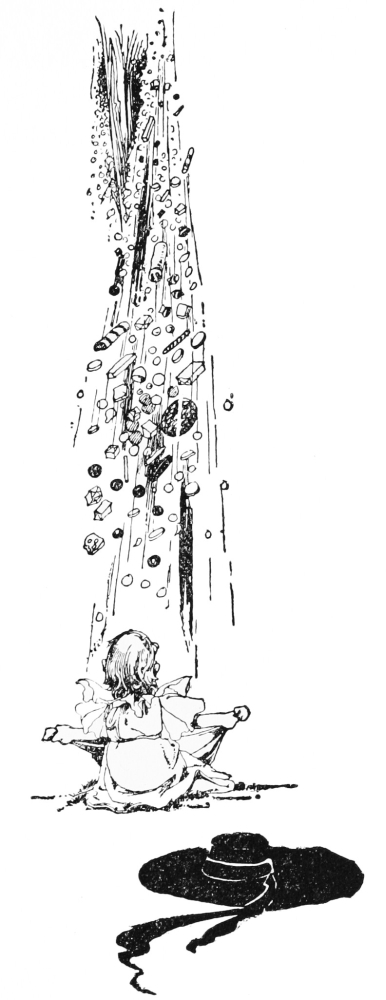
“AS MUCH AS YOUR APRON CAN HOLD!”
In your dainty white nightcap and gown,
And I’ll rock you away to that Sugar-Plum Tree
In the garden of Shut-Eye Town.
![[Image unavailable.]](images/i_130_lg.jpg)
![[Image unavailable.]](images/i_132_lg.jpg)
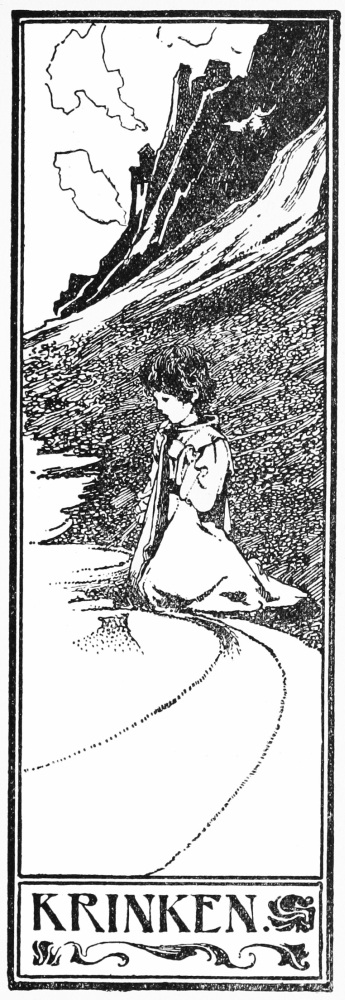
It was summer when he smiled,{134}
Oft the hoary sea and grim
Stretched its white arms out to him;
Calling, “Sun-child, come to me;
Let me warm my heart with thee!”
But the child heard not the sea.
Saw a maiden Nis at play;
Fair, and very fair, was she,
Just a little child was he.
“Krinken,” said the maiden Nis,
“Let me have a little kiss,—
Just a kiss, and go with me
To the summer-lands that be
Down within the silver sea.”
By the maiden Nis beguiled;
Down into the calling sea
With the maiden Nis went he.
It is winter on the shore,—{135}
Winter where that little child
Made sweet summer when he smiled;
Though ’tis summer on the sea
Where with maiden Nis went he,—
Summer, summer evermore,—
It is winter on the shore,
Winter, winter evermore.
Come sweet visions in my sleep;
His fair face lifts from the sea,
His dear voice calls out to me,—
These my dreams of summer be.
By the maiden Nis beguiled;
Oft the hoary sea and grim
Reached its longing arms to him,
Crying, “Sun-child, come to me;
Let me warm my heart with thee!”
But the sea calls out no more;
It is winter on the shore,—
Winter, cold and dark and wild;
Krinken was a little child,—{136}
It was summer when he smiled;
Down he went into the sea,
And the winter bides with me.
Just a little child was he.
![[Image unavailable.]](images/i_136_lg.jpg)
![[Image unavailable.]](images/i_138_lg.jpg)
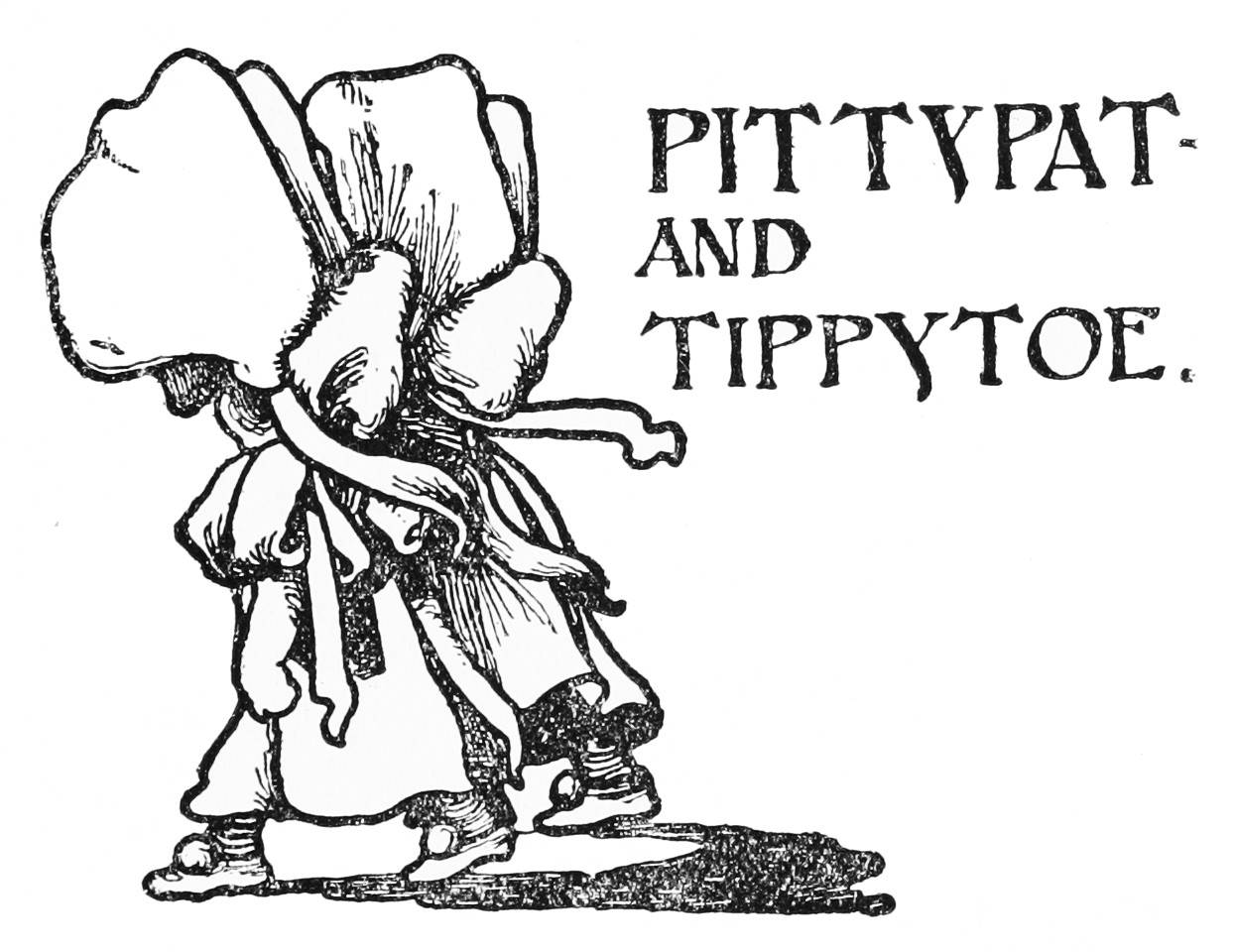
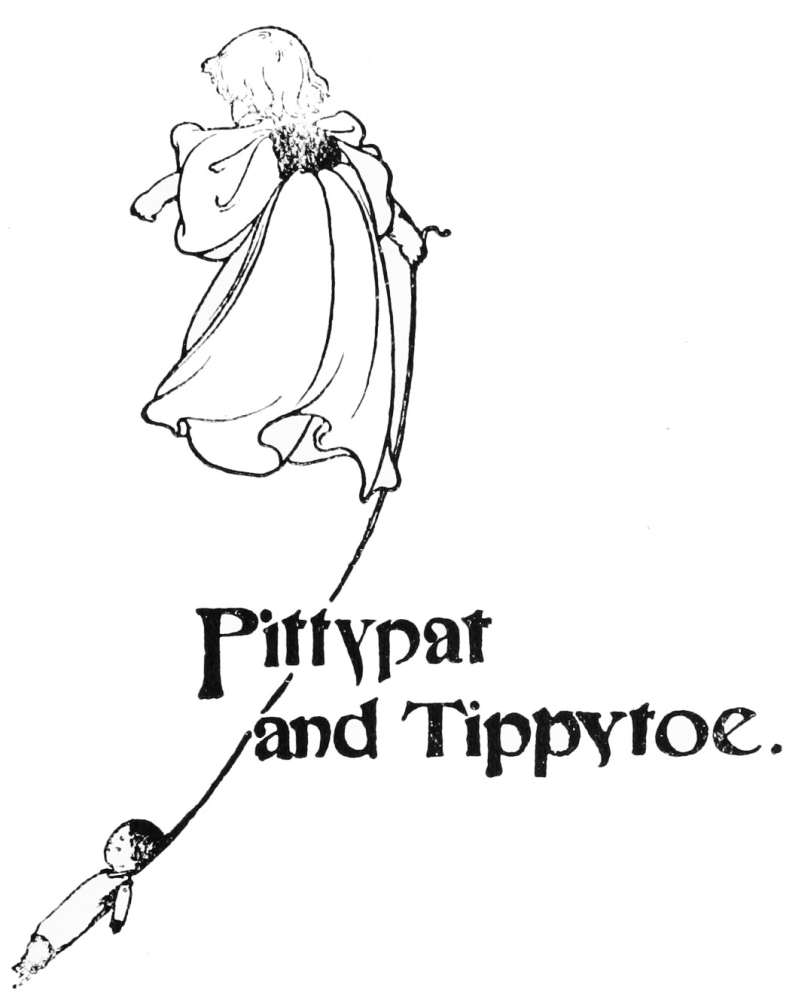
Pittypat and Tippytoe;
Footprints up and down the hall,
Playthings scattered on the floor,
Tell-tale smudges on the door—
By these presents you shall know
Pittypat and Tippytoe.
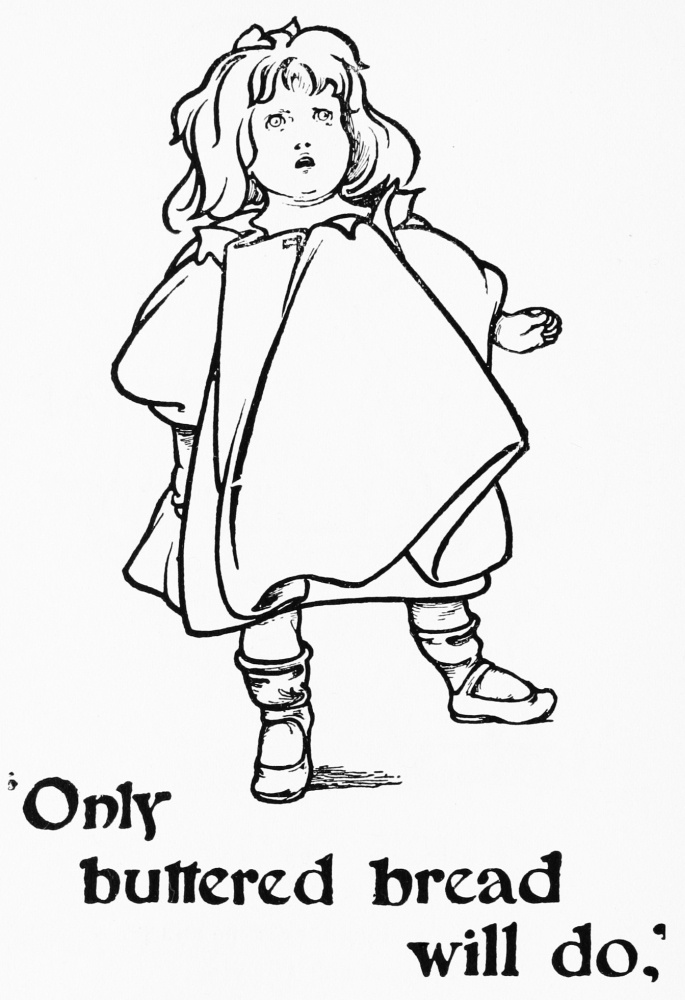
And a dozen times a day
In they troop, demanding bread—
Only buttered bread will do,
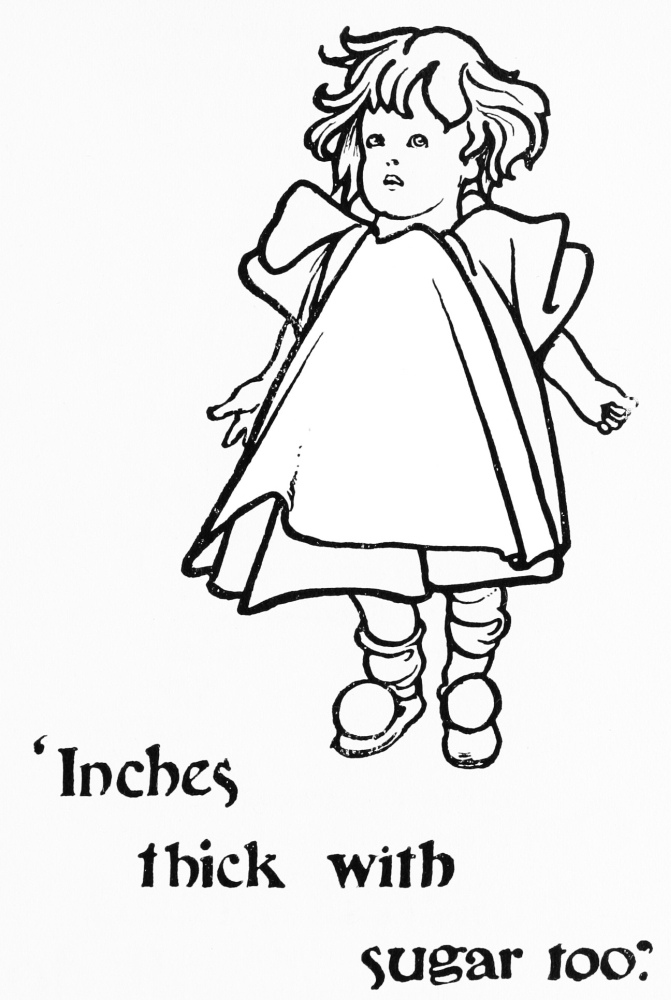
And the butter must be spread
Inches thick with sugar too!
And I never can say “No,
Pittypat and Tippytoe!”
Sometimes ruffled brows to smooth;
For (I much regret to say)
Tippytoe and Pittypat
Sometimes interrupt their play
With an internecine spat;
Fie, for shame! to quarrel so—
Pittypat and Tippytoe!{143}
Every day recurrent brings!
Hands to scrub and hair to brush,
Search for playthings gone amiss,
Many a wee complaint to hush,
Many a little bump to kiss;
Life seems one vain, fleeting show
To Pittypat and Tippytoe!
There are little duds to mend:
Little frocks are strangely torn,
Little shoes great holes reveal,
Little hose, but one day worn,
Rudely yawn at toe and heel!
Who but you could work such woe,
Pittypat and Tippytoe!
![[Image unavailable.]](images/i_144_lg.jpg)
![[Image unavailable.]](images/i_146_lg.jpg)
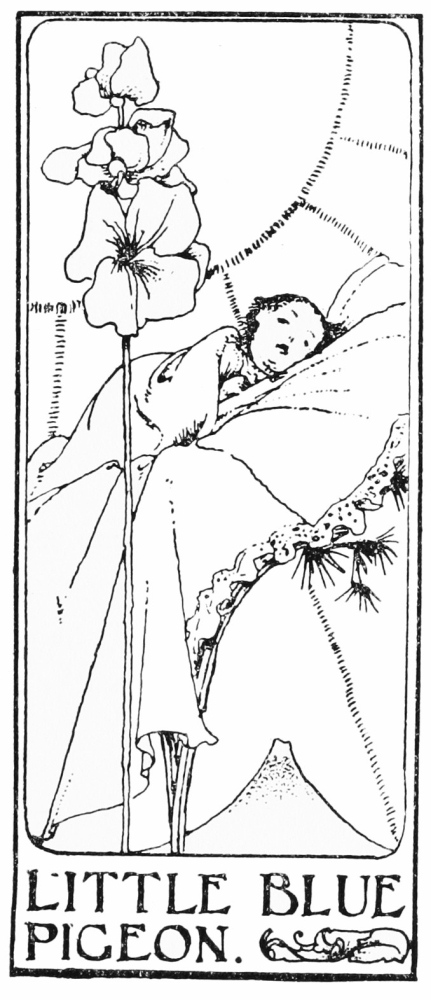
Little blue pigeon with velvet eyes;{148}
Sleep to the singing of mother-bird swinging—
Swinging the nest where her little one lies.
Silvery star with a tinkling song;
To the soft dew falling I hear it calling—
Calling and tinkling the night along.
Little gold moonbeam with misty wings;
All silently creeping, it asks: “Is he sleeping—
Sleeping and dreaming while mother sings?”
Of the waves that are breaking upon the shore,
As though they were groaning in anguish, and moaning—
Bemoaning the ship that shall come no more.{149}
Little blue pigeon with mournful eyes;
Am I not singing?—see, I am swinging—
Swinging the nest where my darling lies.
![[Image unavailable.]](images/i_149_lg.jpg)
![[Image unavailable.]](images/i_150_lg.jpg)
![[Image unavailable.]](images/i_152_lg.jpg)
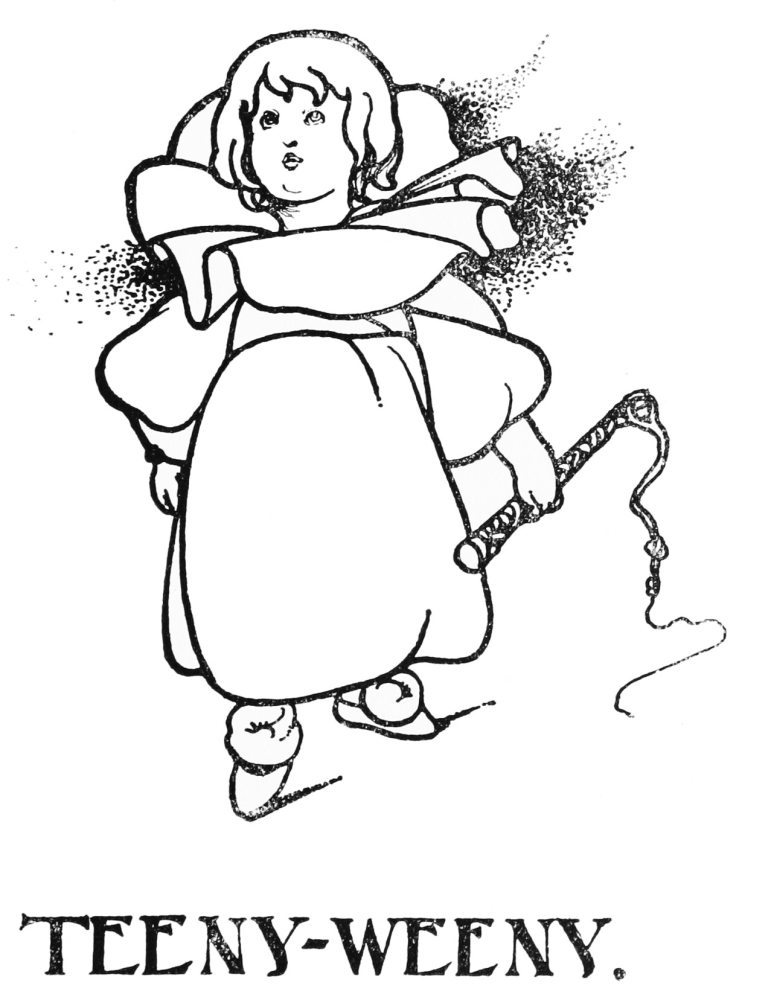
Teeny-Weeny comes to me.{154}
And, astride my willing knee,
Plies his lash and rides away;
Though that palfrey, all too spare,
Finds his burden hard to bear,
Teeny-Weeny doesn’t care;
He commands, and I obey!
Now it’s back to trot again;
Teeny-Weeny likes it when
He is riding fierce and fast.
Then his dark eyes brighter grow
And his cheeks are all aglow:
“More!” he cries, and never “Whoa!”
Till the horse breaks down at last.
![[Image unavailable.]](images/i_155_lg.jpg)
Hard at ring-a-rosie play,
And he hears those fairies say:
“Come, let’s chase him to and fro!”
But, with a defiant shout,
Teeny puts that host to rout;
Of this tale I make no doubt,
Every night he tells it so.
![[Image unavailable.]](images/i_156_lg.jpg)
Just a little while to stay,
And I’m not ashamed to say
I was very lonely then;
Life without him was so sad,
You can fancy I was glad{157}
And made merry when I had
Teeny-Weeny back again!
When he toddles up to me
And goes tugging at my knee,
You should hear his palfrey neigh!
You should see him prance and shy,
When, with an exulting cry,
Teeny-Weeny, vaulting high,
Plies his lash and rides away!
![[Image unavailable.]](images/i_157_lg.jpg)
![[Image unavailable.]](images/i_158_lg.jpg)
![[Image unavailable.]](images/i_160_lg.jpg)
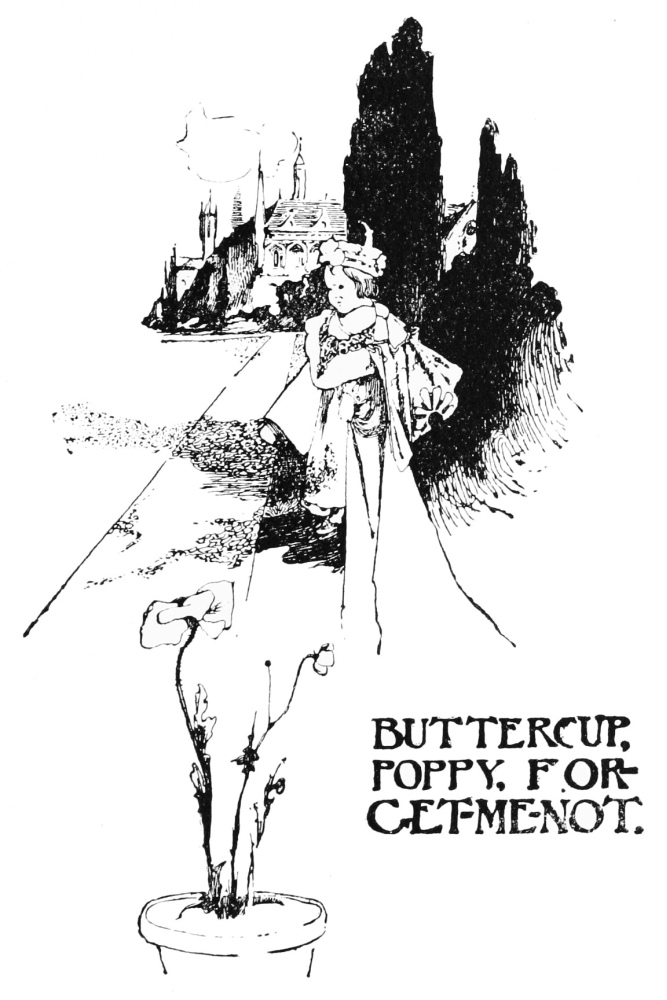
These three bloomed in a garden spot;{162}
And once, all merry with song and play,
A little one heard three voices say:
“Shine and shadow, summer and spring,
O thou child with the tangled hair
And laughing eyes! we three shall bring
Each an offering passing fair.”
The little one did not understand,
But they bent and kissed the dimpled hand.
Sharing the little one’s mirth and song;
Then, stealing along on misty gleams,
Poppy came bearing the sweetest dreams.
Playing and dreaming—and that was all
Till once a sleeper would not awake;
Kissing the little face under the pall,
We thought of the words the third flower spake;
And we found betimes in a hallowed spot
The solace and peace of Forget-me-not.
Glinting with gold the hours of play;
Bringeth the poppy sweet repose,
When the hands would fold and the eyes would close;{163}
And after it all—the play and the sleep
Of a little life—what cometh then?
To the hearts that ache and the eyes that weep
A new flower bringeth God’s peace again.
Each one serveth its tender lot—
Buttercup, Poppy, Forget-me-not.
![[Image unavailable.]](images/i_163_lg.jpg)
![[Image unavailable.]](images/i_164_lg.jpg)
![[Image unavailable.]](images/i_166_lg.jpg)
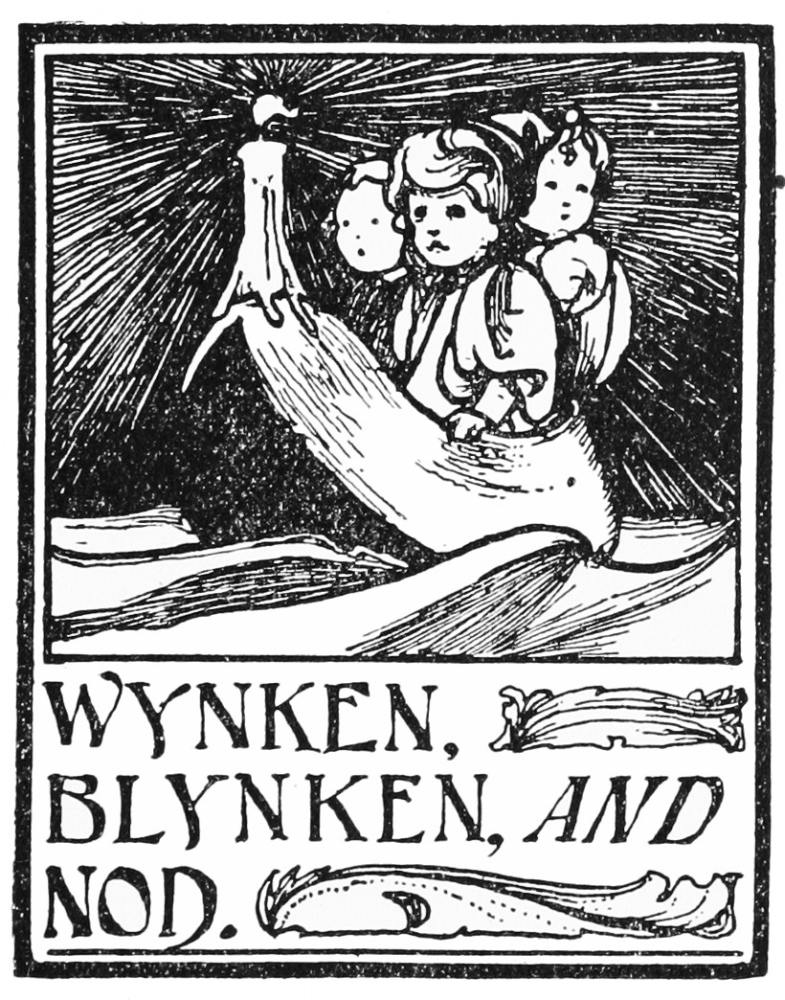
Sailed off in a wooden shoe—
Sailed on a river of crystal light,
Into a sea of dew.{168}
The old moon asked the three.
“We have come to fish for the herring fish
That live in this beautiful sea;
Nets of silver and gold have we!”
Said Wynken,
Blynken,
And Nod.
As they rocked in the wooden shoe,
And the wind that sped them all night long
Ruffled the waves of dew.
The little stars were the herring fish
That lived in that beautiful sea—
“Now cast your nets wherever you wish—
Never afeard are we”;
So cried the stars to the fishermen three:
Wynken,
Blynken,
And Nod.
![[Image unavailable.]](images/i_169_lg.jpg)
To the stars in the twinkling foam—
Then down from the skies came the wooden shoe,
Bringing the fishermen home;
’Twas all so pretty a sail it seemed
As if it could not be,
And some folks thought ’twas a dream they’d dreamed
Of sailing that beautiful sea—
But I shall name you the fishermen three:
Wynken,
Blynken,
And Nod.
And Nod is a little head,
And the wooden shoe that sailed the skies
Is a wee one’s trundle-bed.
So shut your eyes while mother sings
Of wonderful sights that be,
And you shall see the beautiful things
![[Image unavailable.]](images/i_171_lg.jpg)
Where the old shoe rocked the fishermen three:
Wynken,
Blynken,
And Nod.
![[Image unavailable.]](images/i_172_lg.jpg)
![[Image unavailable.]](images/i_174_lg.jpg)
![[Image unavailable.]](images/i_176_lg.jpg)
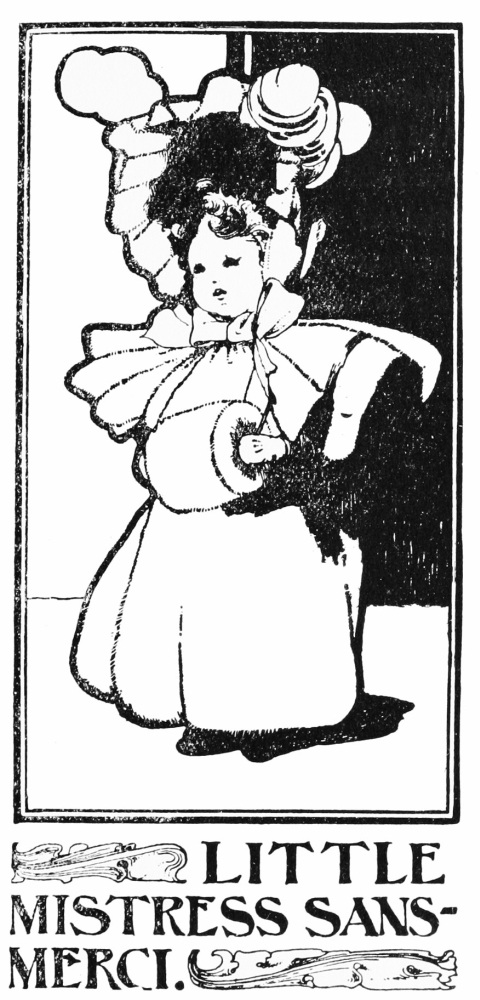
She hath made a slave of me!
“Go,” she biddeth, and I go—
“Come,” and I am fain to come—{177}
Never mercy doth she show,
Be she wroth or frolicsome,
Yet am I content to be
Slave to Mistress Sans-Merci!
Hath become so dear to me
That I count as passing sweet
All the pain her moods impart,
And I bless the little feet
That go trampling on my heart:
Ah, how lonely life would be
But for little Sans-Merci!
![[Image unavailable.]](images/i_178_lg.jpg)
![[Image unavailable.]](images/i_180_lg.jpg)
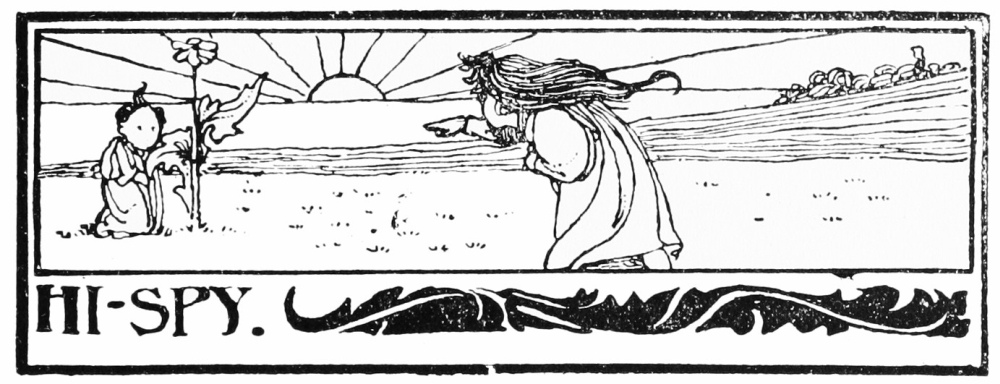
Noisy and bustling all the day,
Should with the night renounce its care
And lend itself to children’s play!
And have been so since Abel’s birth,
And shall be so till dolls and toys
Are with the children swept from earth.{182}
Of many a Syrian shepherd’s son,
Beguiles the little lads at play
By night in stately Babylon.
Yet ’tis so different now from then!
Come, brother! from your winding-sheet,
And let us two be boys again!
![[Image unavailable.]](images/i_182_lg.jpg)
![[Image unavailable.]](images/i_184_lg.jpg)
But sturdy and stanch he stands;
And the little toy soldier is red with rust,
And the musket moulds in his hands.{186}
Time was when the little toy dog was new,
And the soldier was passing fair;
And that was the time when our Little Boy Blue
Kissed them and put them there.
“And don’t you make any noise!”
So, toddling off to his trundle-bed,
He dreamt of the pretty toys;
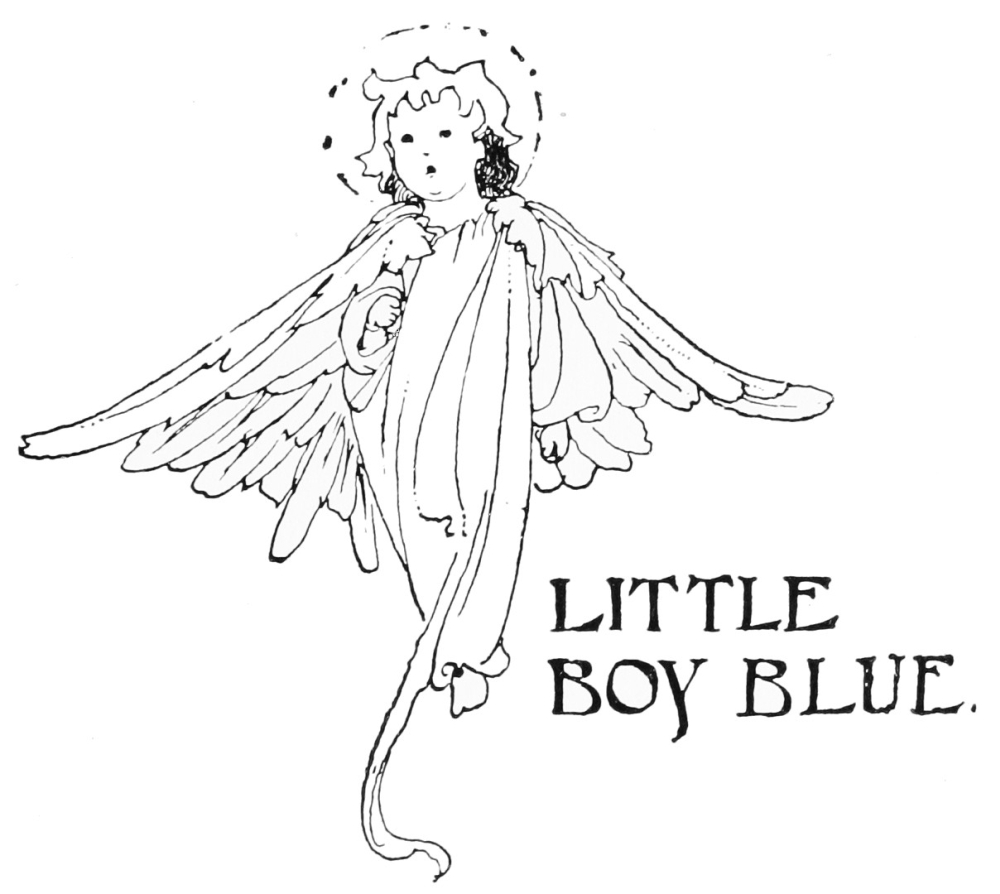
And, as he was dreaming, an angel song
Awakened our Little Boy Blue—
Oh! the years are many, the years are long,
But the little toy friends are true!
Each in the same old place—
Awaiting the touch of a little hand,
The smile of a little face;
![[Image unavailable.]](images/i_187_lg.jpg)
In the dust of that little chair,
What has become of our Little Boy Blue,
Since he kissed them and put them there.
![[Image unavailable.]](images/i_188_lg.jpg)
![[Image unavailable.]](images/i_190_lg.jpg)
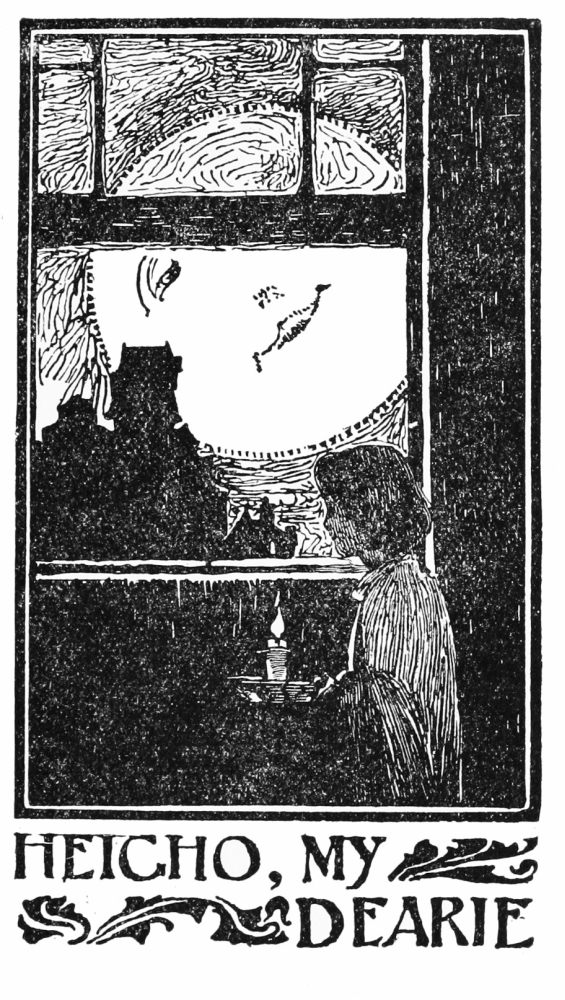
Whispering: “Heigho, my dearie;{192}
I would spin a web before your eyes—
A beautiful web of silver light
Wherein is many a wondrous sight
Of a radiant garden leagues away,
Where the softly tinkling lilies sway
And the snow-white lambkins are at play—
Heigho, my dearie!”
Singing: “Heigho, my dearie;
And will you hear this song of mine—
A song of the land of murk and mist
Where bideth the bud the dew hath kist?
Then let the moonbeam’s web of light
Be spun before thee silvery white,
And I shall sing the livelong night—
Heigho, my dearie!”
Murmuring: “Heigho, my dearie;
I bring a mariner’s prayer for thee;
So let the moonbeam veil thine eyes,
And the brownie sing thee lullabies—{193}
But I shall rock thee to and fro,
Kissing the brow he loveth so.
And the prayer shall guard thy bed, I trow—
Heigho, my dearie!”
![[Image unavailable.]](images/i_193_lg.jpg)
![[Image unavailable.]](images/i_194_lg.jpg)
![[Image unavailable.]](images/i_196_lg.jpg)
To the fairy voices calling,{198}
For the moon is high in the misty sky
And the honey dew is falling;
To the midnight feast in the clover bloom
The bluebells are a-ringing,
And it’s “Come away to the land of fay”
That the katydid is singing.
And hand in hand we’ll wander—
Hand in hand to the beautiful land
Of Balow, away off yonder;
Or we’ll sail along in a lily leaf
Into the white moon’s halo—
Over a stream of mist and dream
Into the land of Balow.
Two gossamer wings and airy,
And all the while shall the old moon smile
And think you a little fairy;
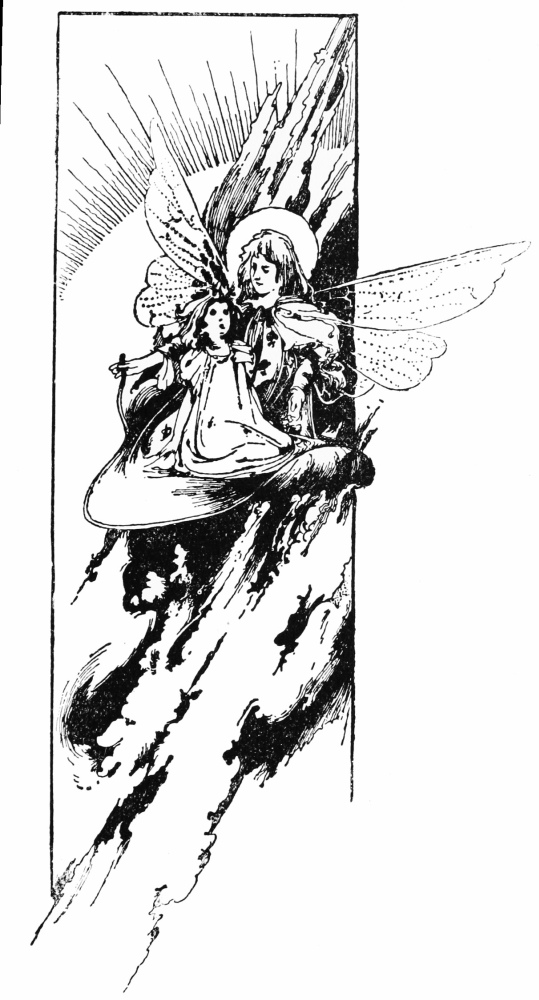
“INTO THE WHITE MOON’S HALO”
And the silvery stars shall twinkle
And dream sweet dreams as over their beams
Your footfalls softly tinkle.
![[Image unavailable.]](images/i_200_lg.jpg)
![[Image unavailable.]](images/i_202_lg.jpg)
And go where I ask you to wander,{204}
I will lead you away to a beautiful land—
The Dreamland that’s waiting out yonder.
We’ll walk in a sweet-posie garden out there,
Where moonlight and starlight are streaming,
And the flowers and the birds are filling the air
With the fragrance and music of dreaming.
No questions or cares to perplex you;
There’ll be no little bruises or bumps to caress,
Nor patching of stockings to vex you.
For I’ll rock you away on a silver-dew stream,
And sing you asleep when you’re weary,
And no one shall know of our beautiful dream,
But you and your own little dearie.
In the bosom that’s soothed me so often,
And the wide-awake stars shall sing in my stead
A song which our dreaming shall soften.{205}
So, Mother-My-Love, let me take your dear hand,
And away through the starlight we’ll wander—
Away through the mist to the beautiful land—
The Dreamland that’s waiting out yonder.
![[Image unavailable.]](images/i_205_lg.jpg)
![[Image unavailable.]](images/i_206_lg.jpg)
![[Image unavailable.]](images/i_208_lg.jpg)
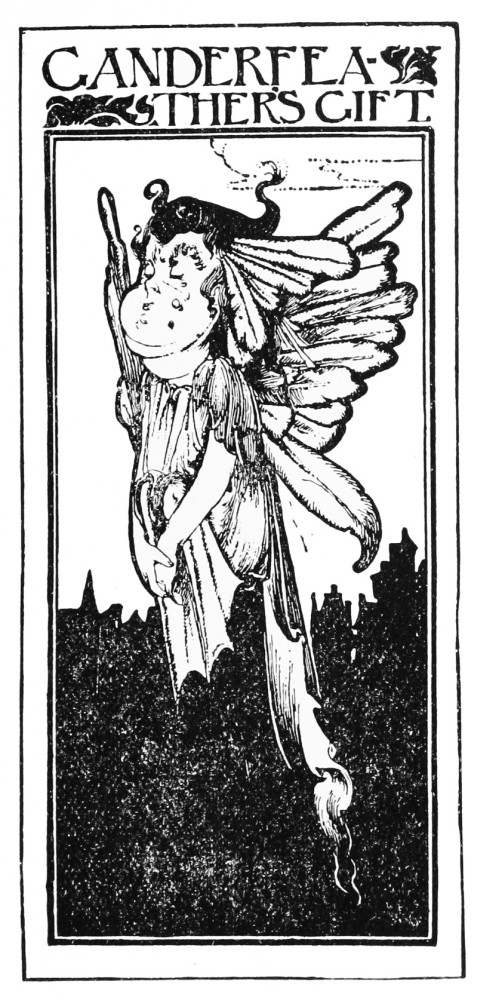
When a fairy came and kissed me;{210}
Floating in upon the light
Of a haunted summer night,
Lo, the fairies came to sing
Pretty slumber songs and bring
Certain boons that else had missed me.
From a dream I turned to see
What those strangers brought for me,
When that fairy up and kissed me—
Here, upon this cheek, he kissed me!
Did not like me altogether;
Daisybright and Turtledove,
Pilfercurds and Honeylove,
Thistleblow and Amberglee
On that gleaming, ghostly sea
Floated from the misty heather,
And around my trundle-bed
Frisked, and looked, and whispering said—
Solemnlike and all together:
“You shall kiss him, Ganderfeather!”
Ganderfeather, quaint and merry!
![[Image unavailable.]](images/i_211_lg.jpg)
—But as buxom as could be;—
Kissed me twice, and once again,
And the others shouted when
On my cheek uprose a berry
Somewhat like a mole, mayhap,
But the kiss-mark of that chap
Ganderfeather, passing merry—
Humorsome, but kindly, very!
![[Image unavailable.]](images/i_212_lg.jpg)
When the prankish Ganderfeather{213}
Brought this curious gift to me
With his fairy kisses three;
Yet with honest pride I sing
That same gift he chose to bring
Out of yonder haunted heather.
Other charms and friendships fly—
Constant friends this mole and I,
Who have been so long together.
Thank you, little Ganderfeather!
![[Image unavailable.]](images/i_213_lg.jpg)
![[Image unavailable.]](images/i_214_lg.jpg)
![[Image unavailable.]](images/i_216_lg.jpg)
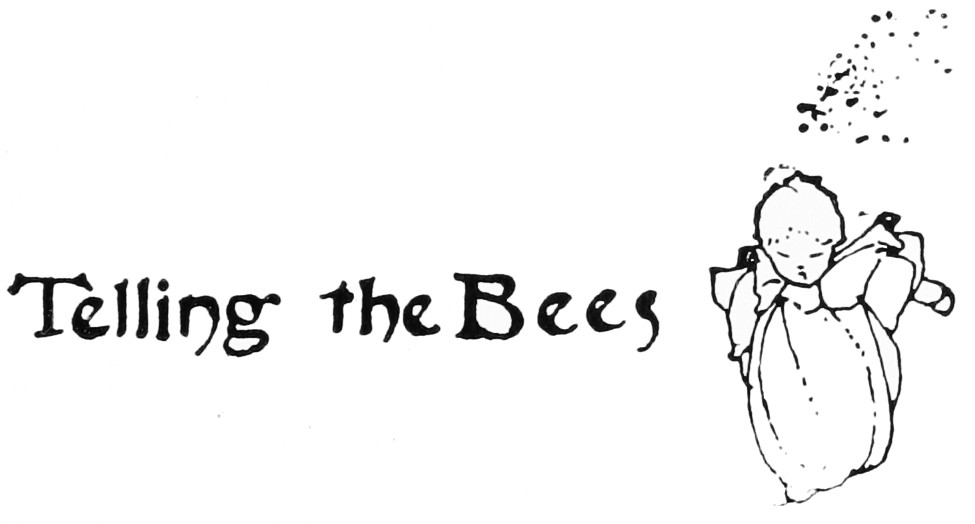
![[Image unavailable.]](images/i_218_lg.jpg)
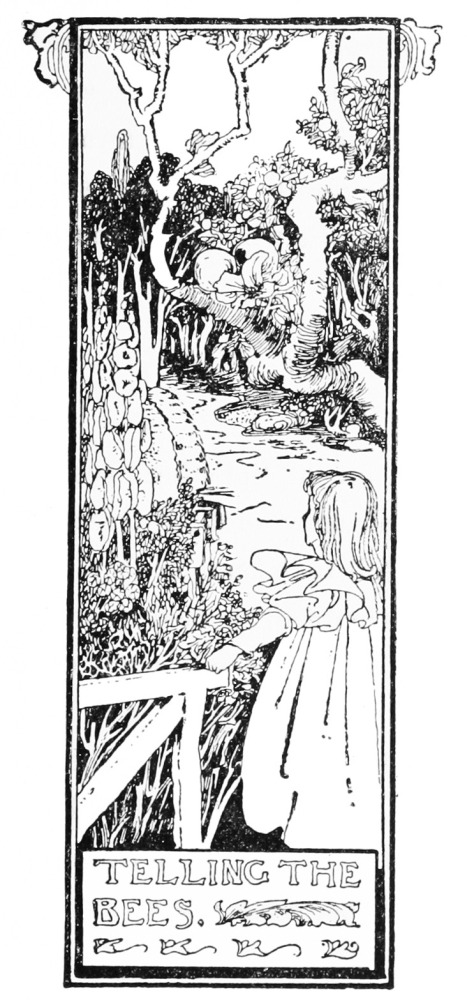
Grandfather came one summer day,{220}
And under the pleasant orchard trees
He spake this wise to the murmuring bees:
“The clover-bloom that kissed her feet
And the posie-bed where she used to play,
Have honey store, but none so sweet
As ere our little one went away.
O bees, sing soft, and, bees, sing low;
For she is gone who loved you so.”
Under those pleasant orchard trees,
And in their toil that summer day
Ever their murmuring seemed to say:
“Child, O child, the grass is cool,
And the posies are waking to hear the song
Of the bird that swings by the shaded pool,
Waiting for one that tarrieth long.”
’Twas so they called to the little one then,
As if to call her back again.
That grandfather fell asleep to-day,{221}
And we know by the smile on grandfather’s face
He has found his dear one’s biding-place.
So, bees, sing soft, and, bees, sing low,
As over the honey-fields you sweep—
To the trees abloom and the flowers ablow
Sing of grandfather fast asleep;
And ever beneath these orchard trees
Find cheer and shelter, gentle bees.
![[Image unavailable.]](images/i_221_lg.jpg)
![[Image unavailable.]](images/i_222_lg.jpg)
![[Image unavailable.]](images/i_224_lg.jpg)
![[Image unavailable.]](images/i_226_lg.jpg)
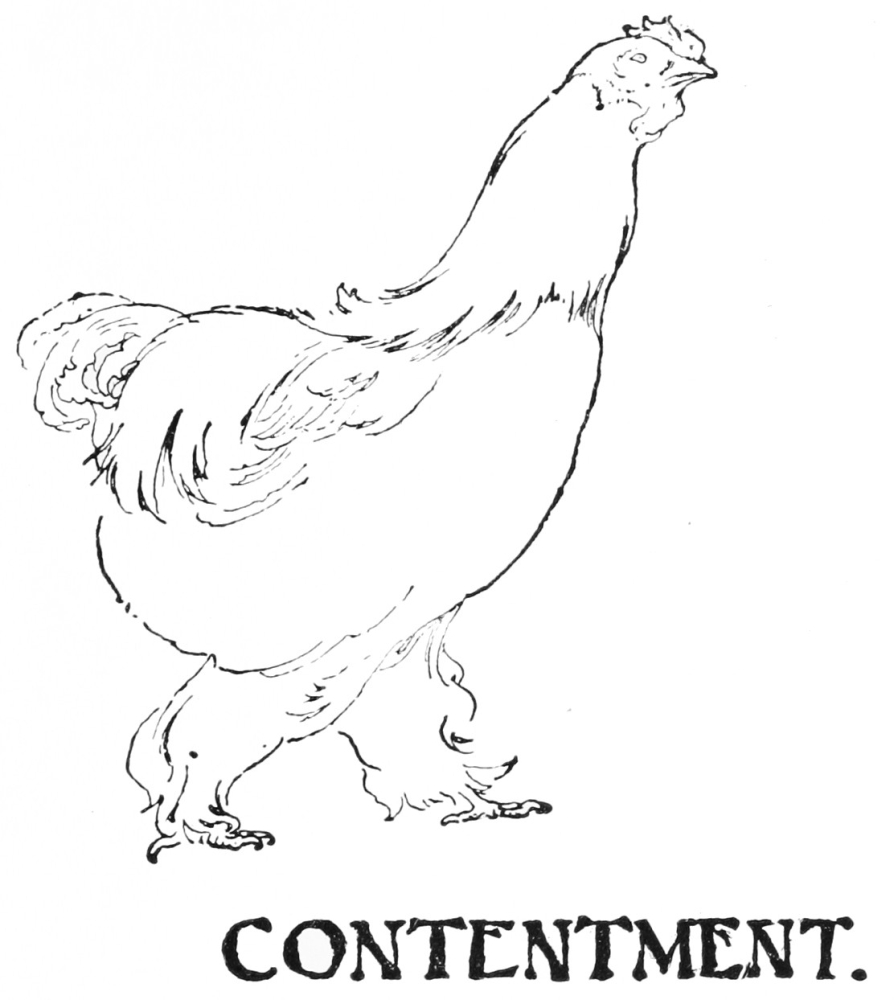
Went strutting round with pompous clucks,
For she had little babies ten,
A part of which were tiny ducks.
“’Tis very rare that hens,” said she,
“Have baby ducks as well as chicks—
But I possess, as you can see,
Of chickens four and ducklings six!”{228}
Appeared, still cackling of her luck,
For, though she boasted babies ten,
Not one among them was a duck!
“’Tis well,” she murmured, brooding o’er
The little chicks of fleecy down,
“My babies now will stay ashore,
And, consequently, cannot drown!”
![[Image unavailable.]](images/i_228_lg.jpg)
Clucked just as proudly as of yore.—
But lo! her babes were ducklings ten,
Instead of chickens as before!
“’Tis better,” said the old red hen,
As she surveyed her waddling brood;
“A little water now and then
Will surely do my darlings good!”{229}
When gentle spring rolled round again,
The eggs eventuated bad,
And childless was the old red hen!
Yet patiently she bore her woe,
And still she wore a cheerful air,
And said: “’Tis best these things are so
For babies are a dreadful care!”
And many, many women, too,
Could learn a lesson from the hen
With foliage of vermilion hue.
She ne’er presumed to take offence
At any fate that might befall,
But meekly bowed to Providence.—
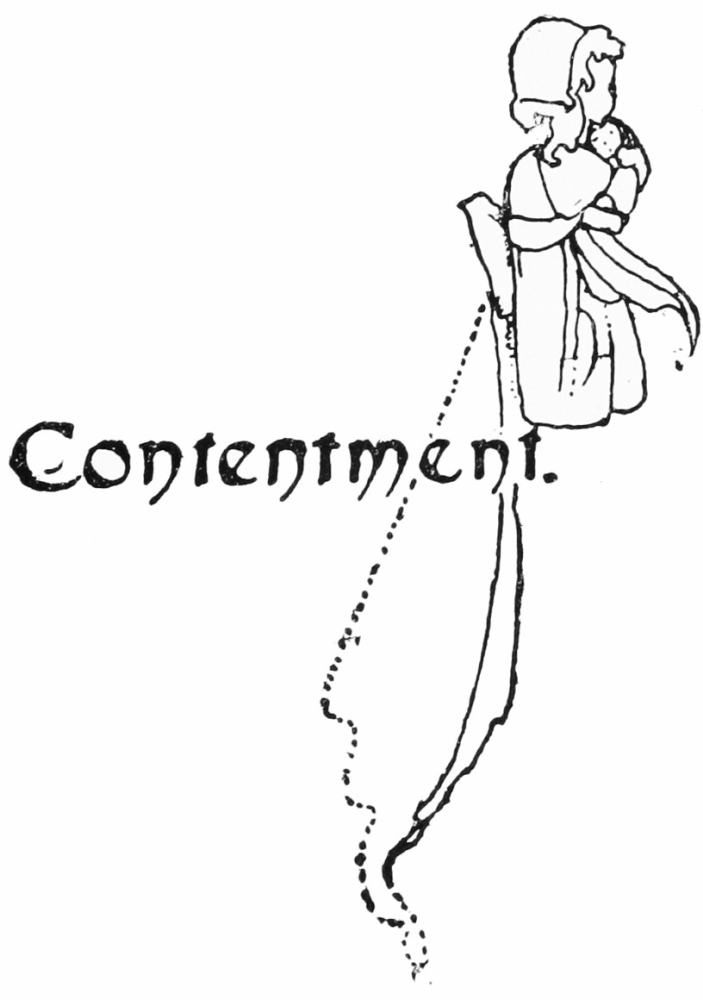
She was contented—that was all!
![[Image unavailable.]](images/i_230_lg.jpg)
![[Image unavailable.]](images/i_231_lg.jpg)