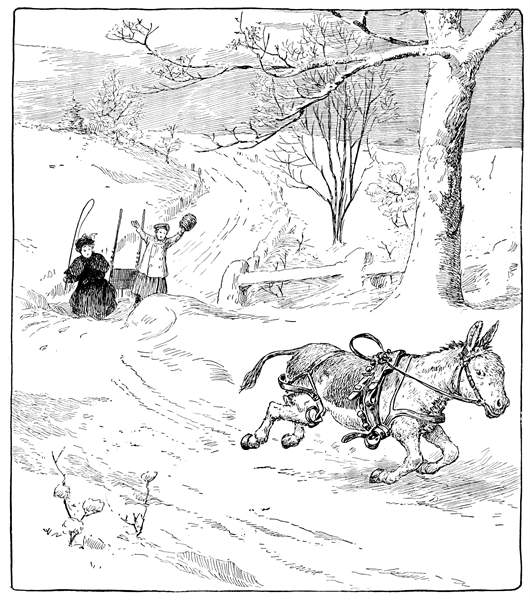
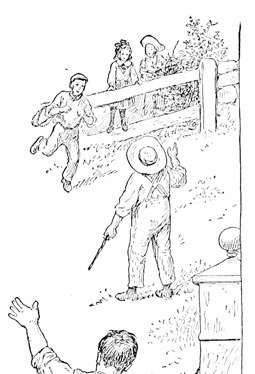
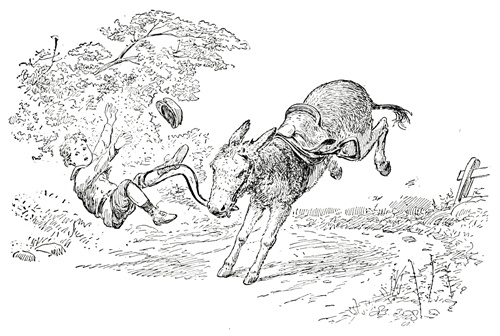
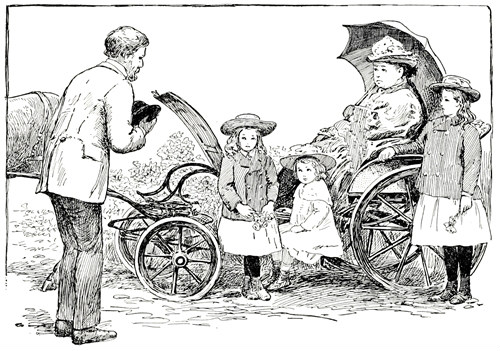
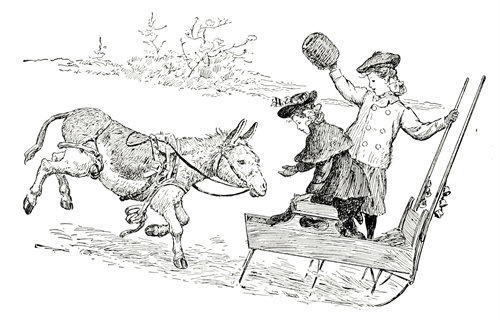
"Whoa, Barney!" shouted Helen,
When off he dashed, "Whoa, whoa!"
And both the girls chased after him
As fast as they could go. (Page 81.)
THE
RUNAWAY DONKEY
AND OTHER
RHYMES FOR CHILDREN
BY
EMILIE POULSSON
AUTHOR OF "FINGER PLAYS FOR NURSERY AND KINDERGARTEN,"
"THROUGH THE FARMYARD GATE," "CHILD
STORIES AND RHYMES"
ILLUSTRATED BY L. J. BRIDGMAN
BOSTON
LOTHROP, LEE & SHEPARD COMPANY
Published, August, 1905.
Copyright, 1905, by Lothrop, Lee & Shepard Company.
All Rights Reserved.
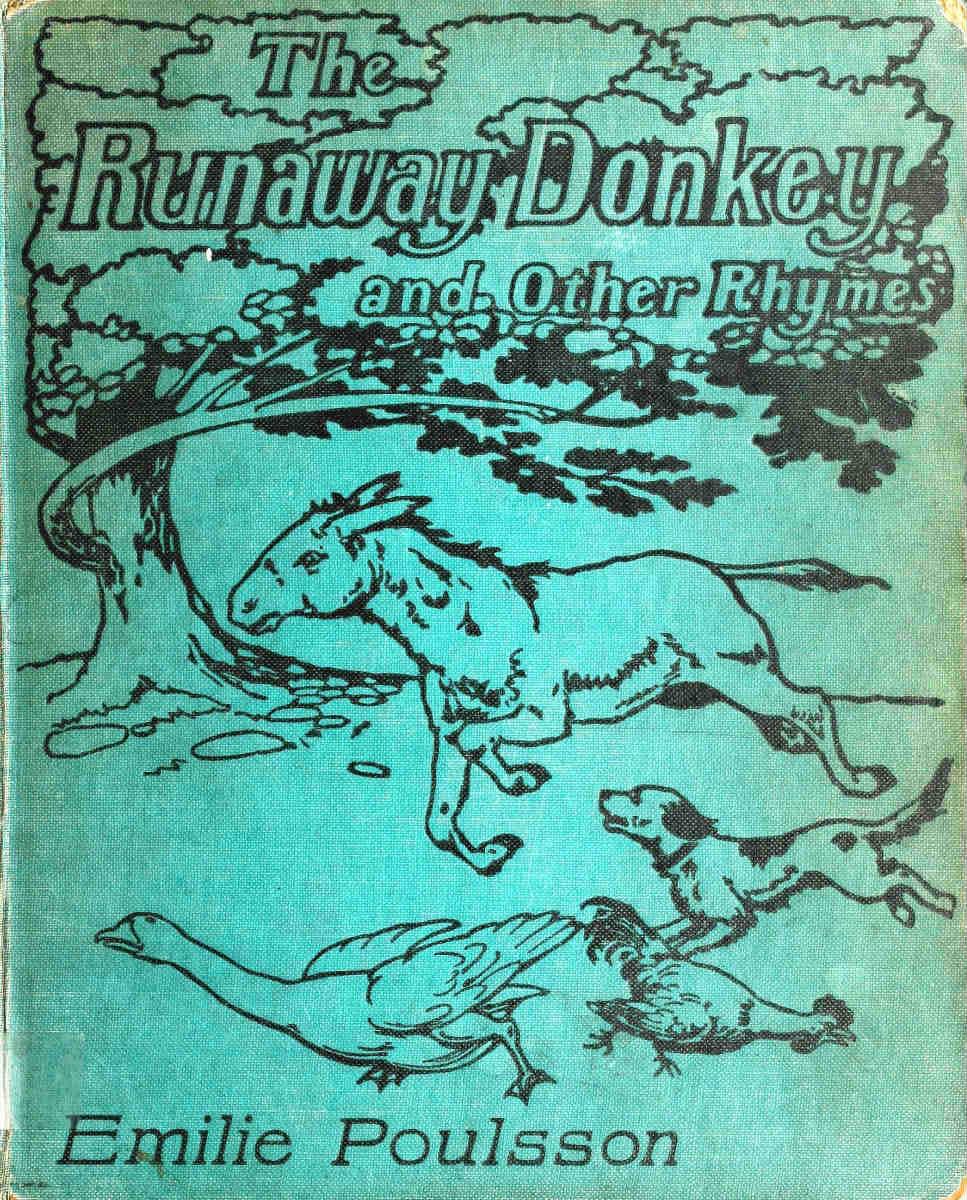
The Runaway Donkey.
PREFACE
Several of the rhymed stories in this book are true stories, and children may enjoy them the more for knowing that Barney, a real donkey, did run away and play pranks as the rhymes say; that Midget did ride horseback; that the deer did toss the hay to the hungry pony; and that Queen Victoria did restore the birds' nesting-place in the old round tower at Windsor. Pony Rollo, too, is a real character, clever and lovable, although some liberties have been taken in the portrayal of him and his doings. Barney Gray is still living, petted by his now grown-up owners and enjoyed by all children who visit the farm to which the donkey came about twenty years ago, and a drive with Barney is quite as likely now as in former days to have unexpected features.
The pictures of Barney and some of the other pets have been drawn by Mr. Bridgman from photographs taken expressly for this book.
In the belief that such rhymes as are herein offered gratify and increase in children both the love of animals and the sense of humor, this new volume is sent forth not only to give pleasure, but to contribute what it may to the fostering of these desirable traits.
Kindergartners will find here, as in Through the Farmyard Gate, suitable material for kindergarten use; for example, the cumulative rhyme, The Pigeons, and the tracing-back rhyme, Who Gives us Our Thanksgiving Dinner?
For courteous permission to use such of these rhymes as have already appeared
in print, acknowledgments are made to publishers and periodicals as follows: The
Century Company, New York (St. Nicholas); S. E. Cassino, Salem, Massachusetts
(Little Folks); and Milton Bradley Co., Springfield, Massachusetts (Kindergarten
Review).
EMILIE POULSSON.
Boston, Mass., 1905.
CONTENTS
| PAGE | |
|---|---|
| The Runaway Donkey | 1 |
| The Pony Rollo Rhymes:— | |
| I. The Pony Needed | 11 |
| II. The Pony's Arrival | 14 |
| III. The Pony's Tricks | 18 |
| IV. The Pony Named | 22 |
| V. The Pony and Teddy | 24 |
| VI. The Pony as Cowboy | 28 |
| VII. The Check-rein Story | 33 |
| VIII. Pony Rollo and Little Dog Midget | 37 |
| The Kindly Deer | 42 |
| Farm Voices | 46 |
| By Favor of the Queen | 48 |
| The Pigeons | 52 |
| The Child and the Pigeons | 56 |
| Who gives us our Thanksgiving Dinner? | 57 |
| Clothes | 60 |
| At the Pond | 63 |
| The Ballad of the Bumptious Boy | 67 |
| The Noisy Rhyme | 70 |
| The Donkey's Ears | 72 |
| Old Barney's Latest Prank | 74 |
THE RUNAWAY DONKEY
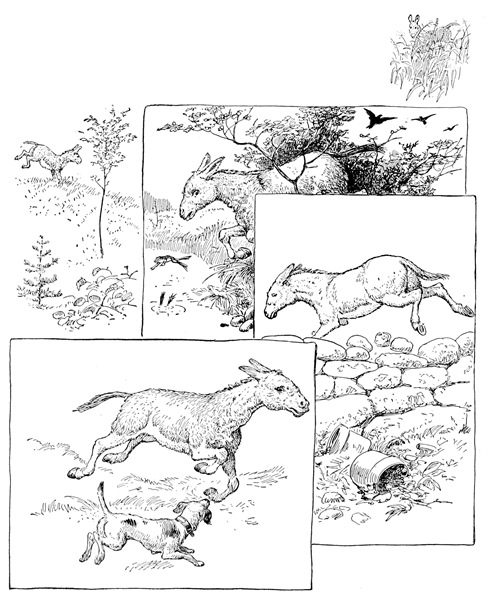
All dressed in sober gray,
Once took it in his long-eared head
That he would run away.
He saw the stable door,
He ran as if he never would
Come back there any more.
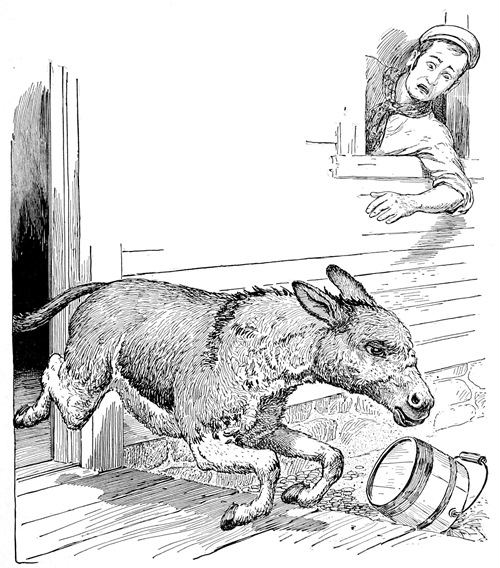
And ran and ran and ran
And ran and ran and ran and ran
And RAN and RAN and RAN!
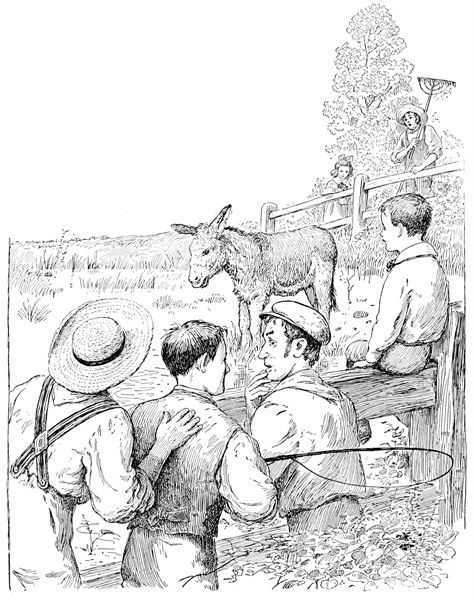
The groom and coachman, too;
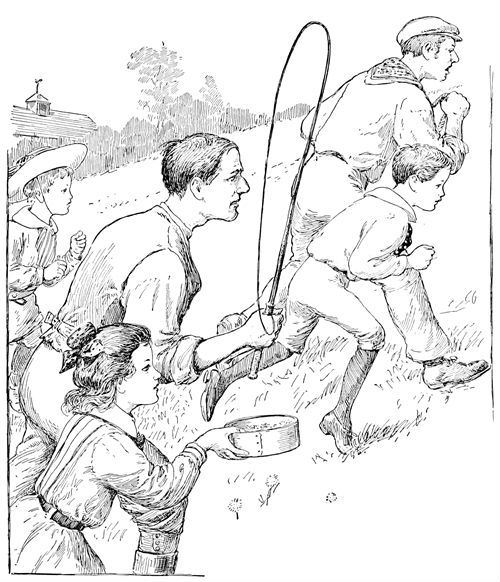
To see what they could do.
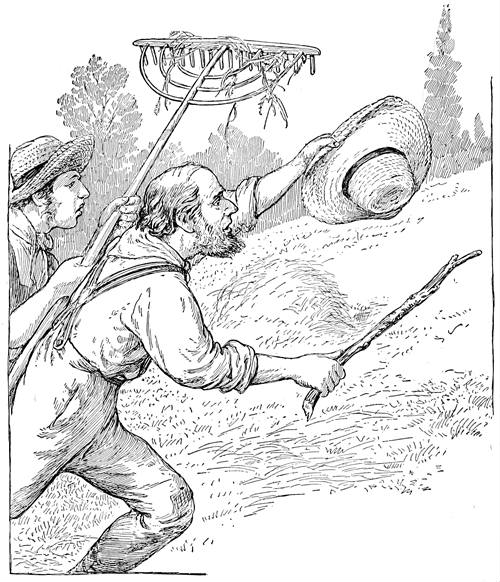
Some, oats to coax him near;
Some called, "Come here, you foolish beast!"
And some, "Come, Barney, dear."
For cross or coaxing word;
And clatter, clatter, clatter still,
His little hoofs were heard.
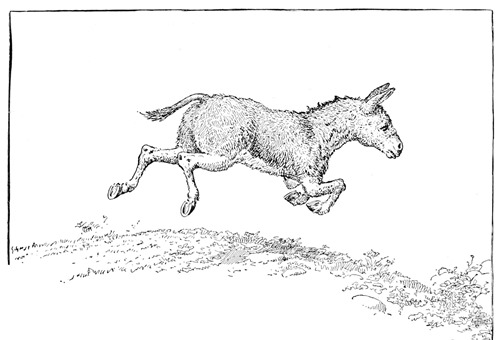
And up and o'er the hill,
And through the woods and down the dale
He galloped with a will.
[Pg 6]
And through the swamp and mire
Still Barney ran and ran and ran
As if he'd never tire!
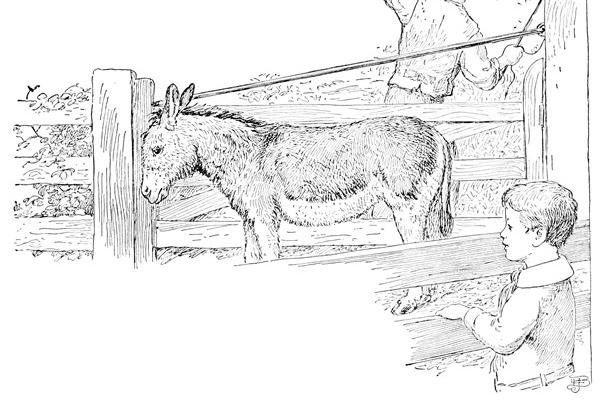
Then meek as any lamb
Did Barney stand, as if to say,
"Come catch me! Here I am."
Then Barney started too;
As if the chase had just begun,
Away he swiftly flew.
And so, the stupid elf,
When no one else could capture him
This donkey caught himself.
He did not calculate
What consequences would befall,
And hit the swinging gate.
Down dropped the iron latch.
Oh, Barney Gray, to think that you
The runaway should catch!
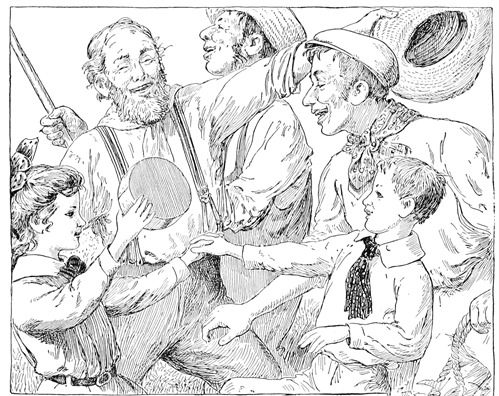
The groom roared with delight,
The others smiled their broadest smiles
Or laughed with all their might.
Had mischief in him still;
For when the laughing coachman tried
To lead him up the hill,
That he would yet have fun,
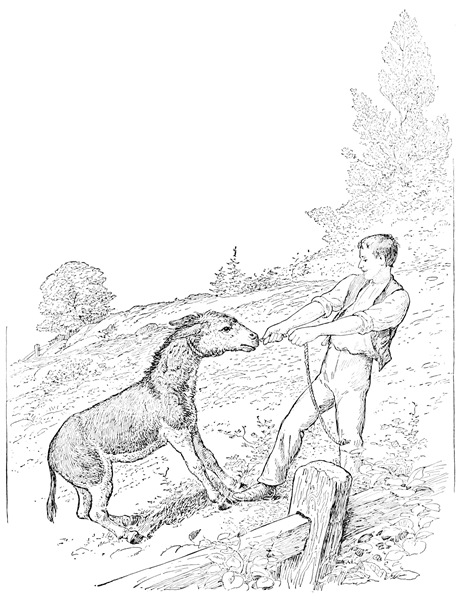
So braced himself and stood stock still
As if he weighed a ton!
And pulled with such a will
That Barney soon was being dragged
Full roughly up the hill.
"The coachman is so strong,
I might as well be good just now,"
And so he walked along.
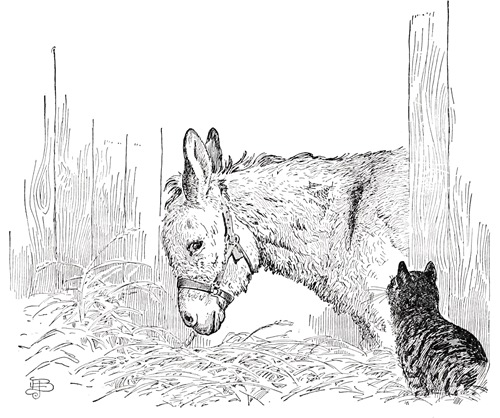
And stood within his stall
You'd scarce believe so meek a beast
Could run away at all!
Of this meek Barney Gray
Are only of some future time
When he may run away.
PONY ROLLO RHYMES
I. THE PONY NEEDED
Full of tricks was he,
But no beast of sober merits
More beloved could be.
They were loyal yet,
All the children coaxed and pleaded
For another pet.
One which they could ride.
"Ride on Barney?" that suggestion
Shows you never tried.
Barney's mind is set
That he never will be ridden.
(Never has been yet!)
[Pg 12]
Simple, clear, and bold;
And the fate of would-be riders
Can be well foretold.
Rounds his body out
Till the strap will scarcely fasten,
He has grown so stout!
By the coachman's might,
Lo! how freely slips the saddle,
Which was thought so tight.
Loose and insecure,
Barney's face is meek and placid,
Of success he's sure.
Mounts the donkey's back,
Barney seems resigned: and starting,
Trots along till—Whack!
With a guileless stare.
[Pg 13] In the dust or mud, the rider!
How did he get there?
Many times have tried;
No one ever mastered Barney,—
Ever had a ride.
Firm, at any rate,
Till a pony comes, the children
Must for riding wait.
II. THE PONY'S ARRIVAL
Fast the tidings flew
As the longed-for pony trotted
Up the avenue.
Quickly gathered near;
Saw and loved the pretty creature,
Voted him "a dear."
"Auntie, do come! do!"
"Hurry, nurse, and let the baby
See the pony, too."
Cried the children all.
"Every one must come to see him,
Call the people! call!"
From each household nook,
Men and maids with pleasure hastened
At the pet to look.
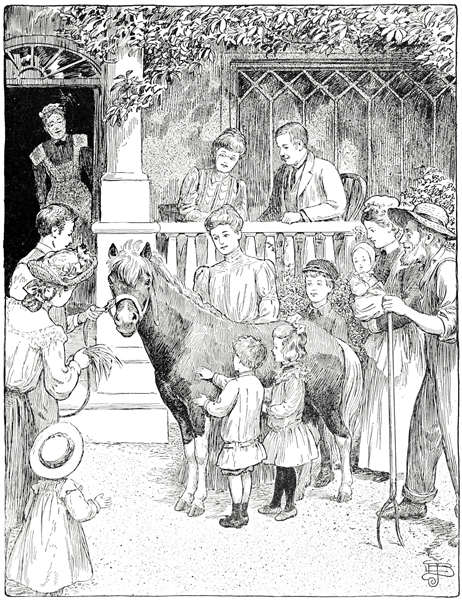
Did the children crowd,
Patting, stroking, gazing, praising,
Eager, fond, and proud.
With admiring eyes.
For 'twas plain the pretty pony
Was a wondrous prize.
Such a mane and tail!
Legs so slender, hoofs so dainty,
Words to picture fail.
Did he merit praise,
But for all his tricks so clever,
And his gentle ways.
III. THE PONY'S TRICKS
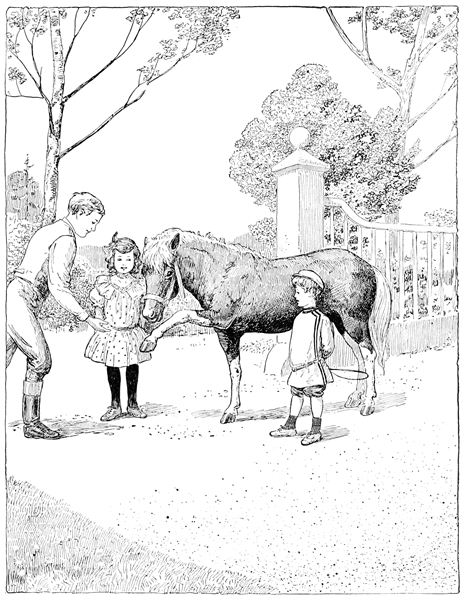
Quickly, at command,
Pony placed his forefoot gently
In the coachman's hand.
"I have heard it said
That you're fond of oats for supper;"
Pony bowed his head.
"Pony, show them now
How you like to roll and frolic;
Roll, sir! You know how!"
Rolled from side to side.
And the children watched his capers
With delight and pride.
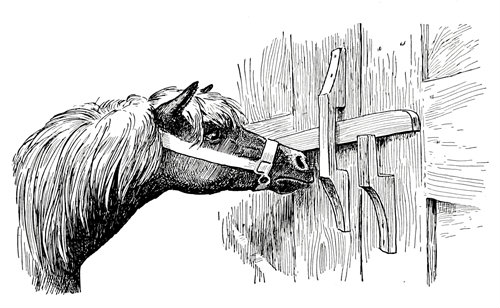
He knew one trick more.
With his nose the latch he lifted
Of the stable door.
"I'll look out for you!
Stable doors by ponies opened?
That would never do!"
How much he does know!"
Laughed the children, "He's as funny
As a circus show!"
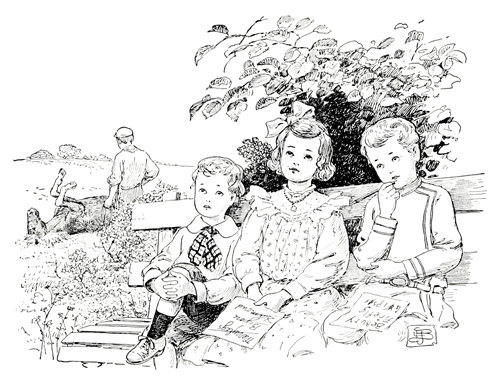
IV. THE PONY NAMED.
Was the theme for days;
Parents, children, groom, and coachman
Joined in words of praise.
What his name should be,
And the children long debated
Ere they could agree.
[Pg 23]
"Merrylegs." "Too long!"
Gipsy, Bijou, Firefly, Diamond,
Names in plenty throng.
One and all discard.
If the pony were less precious,
Choice would be less hard!
Saying, "For you know
One of his best tricks is rolling,
And he loves it so."
To the children came
From the stall or from the pasture
When they called his name.
V. THE PONY AND TEDDY
As you've heard before,
But his beautiful behavior
Made him loved the more.
Children large or small,
With what care went Pony Rollo
Lest the child should fall.
Did so well his part
That the children very quickly
Gained the rider's art.
Could a fall prevent,
And the reckless little Teddy
From the saddle went.
All in quaking dread.
Oh! those heavy hoofs would surely
On him quickly tread!
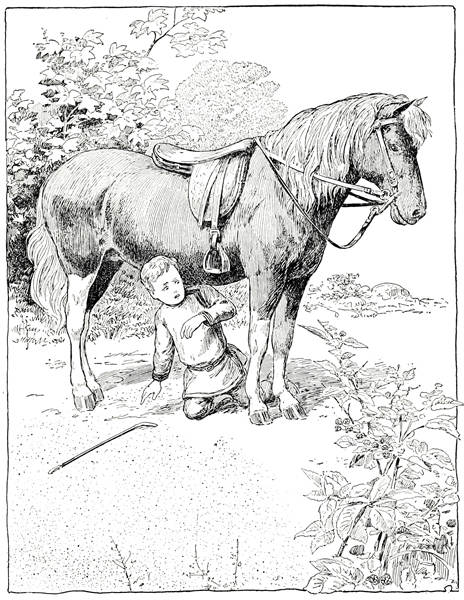
Wise as he is good,
Lifting not a hoof, nor moving,
Like a statue stood.
Still as marble kept,
Till the frightened, grateful Teddy
From beneath had crept.
Feasted and caressed,
And pronounced of all good ponies
Wisest, dearest, best.
VI. THE PONY AS COWBOY
Weeks of seashore joys
Were in store for all the children.
"Ready, girls and boys!"
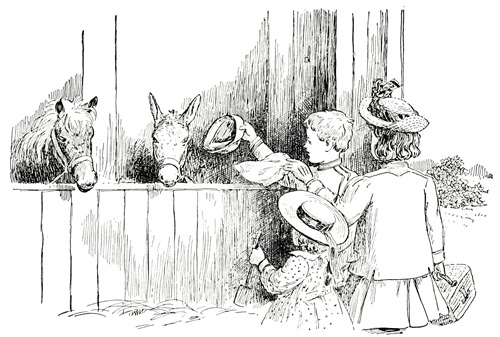
At the stable door;
"Good-by, Barney," "Good-by, Rollo,"
Saying yet once more.
We'll come back again!
And more fun we'll have together,
[Pg 29] Riding, driving then."
Soon there came a change.
With the absence of the children
Life seemed new and strange.
With the lambs and sheep,
There to run and roll in freedom,
Kick and prance and leap.
But he, too, found joy,
For the care of him was given
To the farmer's boy.
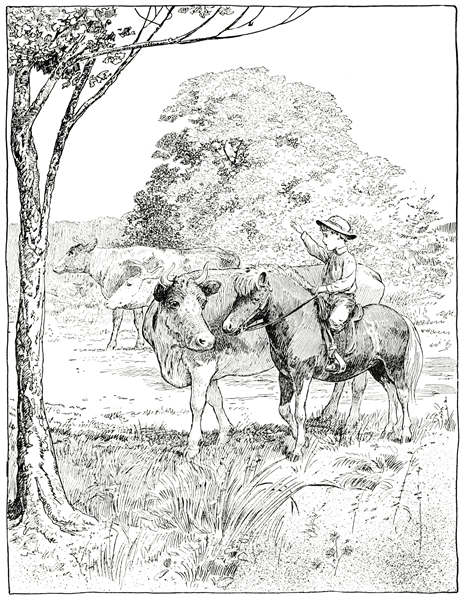
Happy little Jack
Drove the cows, from pasture daily,
On the pony's back.
If they turned aside,
Then would Jack with much halloaing
Toward them quickly ride.
[Pg 30]
Now for Lady Bess!
There! Good pony! We can keep them
In the road, I guess!"
Learned so well the knack,
That to drive the cows he scarcely
Needed help from Jack.
From the road to stray,
In an instant Rollo joined her,
And, as if in play.
With his velvet nose,
Till she yielded to his guiding,
And the right way chose.
Back to Rollo came,
As a cowboy had their pony
Won some extra fame.
VII. THE CHECK-REIN STORY
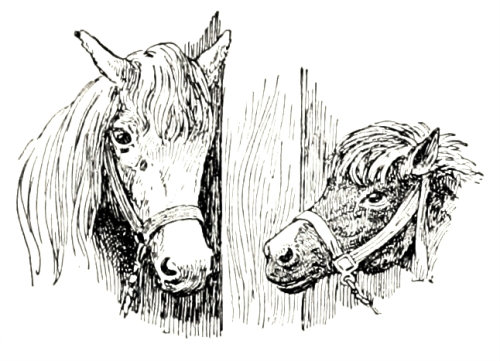
Through the farmyard gate,
Oh! such news! such news for Dobbin!
Scarcely could he wait.
And they were alone,
Pony Rollo told his story
In most joyful tone.
I could plainly hear
What they said,—my little lady
And her mother dear.
And at last they said:
'Pony Rollo need not wear it!'
Then I tossed my head,
'Why, he understands!'
Said my little lady, laughing.
Then with her own hands
Chatting fast the while.
'There! you darling Pony Rollo,
[Pg 34] We won't care for style.
Little pony mine;
And we'll both be just as happy
If we're not so fine.'
As I tried to show
All my joy in this new freedom
You will surely know.
Say the time was near
When all check-reins should be banished;
And,—now you shall hear!—
No more would they use!
There!" said joyful Pony Rollo,
"Isn't that good news?"
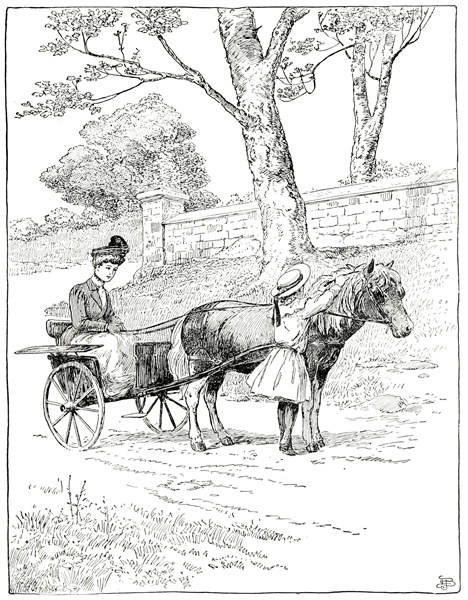
Which you love full well,
Has he any check-rein story
Glad as this to tell?
VIII. PONY ROLLO AND LITTLE DOG MIDGET
Was the household pet,
And his pretty cunning ways
Ne'er can we forget.
Liveliest of tails,
Such a bark for yelps of joy,
Or for saddest wails!
When he quiet lay
Seemed a bunch of shaded floss,
Silky, soft, and gray.
Or the merest sound,
And the mop of silken hair
Life and voice soon found.
Was so bright and quick
That he learned without delay
Many a cunning trick.
[Pg 38]
Fetching back a ball;
Playing dead, but roused to life
At his master's call.
On his pert black nose;
From the farmer's field of corn
Driving off the crows.
Jumping high in air,
Mother's basket carrying
With a pompous air.
Tricks of doggish skill,
Midget would at any time
Do with eager will.
And his greatest pride,
Was to mount the pony's back,
There to sit and ride.
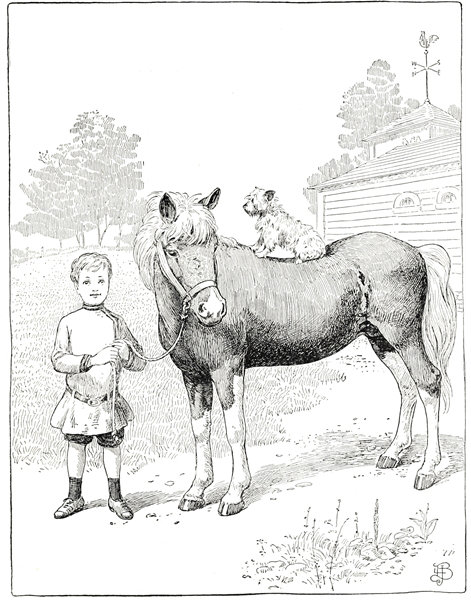
Thank the pony now!"
Down the little dog would jump
With a sharp "Bow-wow!"
Just of Midget's kind,
Lively, clever, full of tricks,
You will often find.
You can surely tell
By this horseback-riding trick
That he does so well.
The End
OF
PONY ROLLO RHYMES
THE KINDLY DEER
And gayly their little hoofs sound!
For they caper and frisk as they trot along,
Away to the tethering ground.
Or else they will scamper away;
For it's "Oh! for a gallop and good free run!"
These frolicsome ponies would say.
Sweet hay he is bringing to each.
But there's one hungry pony whose share all goes
Far out of the poor fellow's reach.
He stretches and tugs, might and main.
But the hay, every wisp, so far away lies
That all Pony's tugging is vain.
Comes bounding a tall stately deer;
Not a wild deer is he, but the master's pet,
The ponies' friend, many a year.
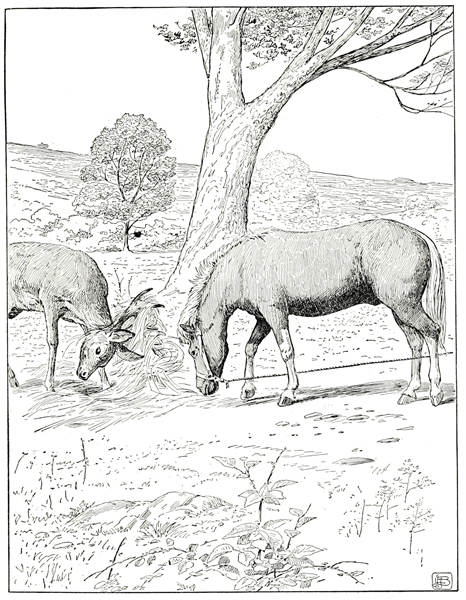
And stares with his gentle brown eyes,
As the poor hungry pony tries, all in vain,
To reach where the fragrant hay lies.
The deer begins working away;
And he tosses and lifts till at Pony's feet
Is lying the long-wished-for hay!
And Pony is happy once more;
And the beautiful deer for his wise, kind deed,
Is loved more than ever before.
FARM VOICES
I
Clear the way, oh! clear the way!
Oh! the noisy, noisy creatures,
Listen now to what they say.
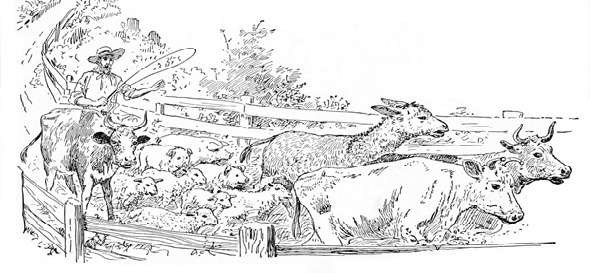
The cows are lowing "Moo, moo, moo!"
The sheep are bleating "Baa, baa, baa!"
The pigs are grunting "Ugh, ugh, ugh!"
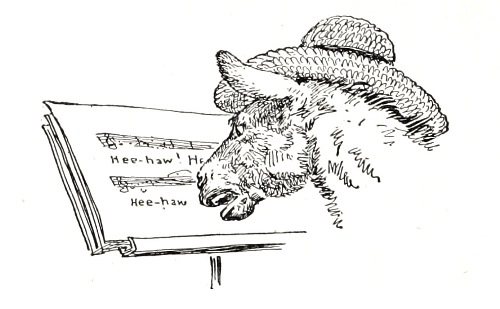
And the donkey, with the long, long ears,
Says "Hee-haw, hee-haw, hee-haw!"
II
Clear the way, oh! clear the way!
Oh! the noisy, noisy creatures,
Listen now to what they say.
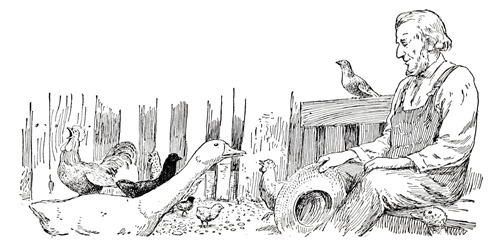
The geese are hissing "Sss,—sss,—sss!"
The hens are calling "Cluck, cluck, cluck!"
The chickens answer "Peep, peep, peep!"
And the rooster, with the gay red comb,
Says "Cock-a-doodle-doo!"
III
Blithe and gay, oh! blithe and gay.
Merrily their notes are ringing,
Listen now to what they say.
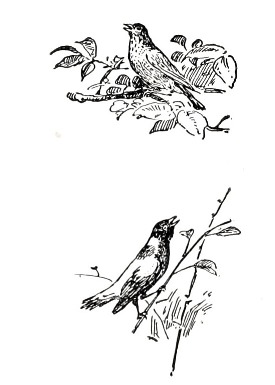
The robins warble "Chirrup, chirrup, chirrup!"
The sparrows twitter "Tweet, tweet, tweet!"
The pigeons murmur "Coo, coo, coo!"
And the bobolink, so full of joy,
Sings "Bob-o'-link, bob-o'-link, bob-o'-link!"
"BY FAVOR OF THE QUEEN"
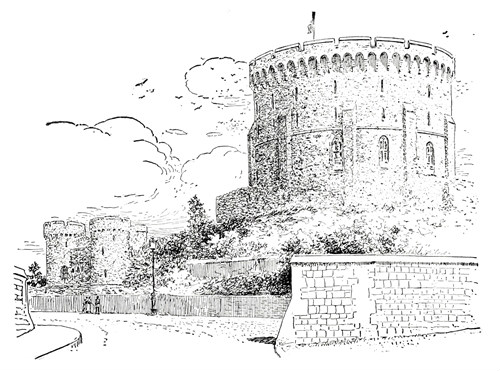
Of Windsor, old and gray,
The castle where the noble Queen
Of England loved to stay,
The birds flit gayly through the air
In happy freedom everywhere.
Without a thought of fear,
In bush or tree, or castle wall,
[Pg 49] All innocently near
To palace pomp and royalty;
For birds know naught of high degree.
Left in the tower wall
Where loosened stones had fallen out,
The birds loved best of all;
And, joyful, in each vacant space
Their little straw-built nests would place.
The royal gardener saw
The holes that marred the tower wall,
The hanging bits of straw,
And ordered all made right in haste—
The nests destroyed, the stones replaced.
In orderly array;
Its crannies snug, its cosey nooks,
Had vanished quite away;
And homeless roved the twittering throng
Once nesting there with happy song.
To Windsor came again,
And viewed with fond affection all
[Pg 50] This fair and dear domain,
The tower's silent, smooth expanse
Won from her eyes a troubled glance.
Their nesting-places filled?
No more those crannies in the wall
Where birds had loved to build?
Such were the questions quick to start
And stir that tender, queenly heart.
[Pg 51]
For all the little birds
Thus routed, homeless, and forlorn,
Came her commanding words,
"The stones must be removed, and then
Nor birds nor nests disturbed again."
Of Windsor, old and gray,
The palace where the noble Queen
Of England loved to stay,
Those nooks and crannies still are seen—
Bird homes "by favor of the Queen."
This good Queen won renown;
Her deeds of love and mercy shone
Far brighter than her crown.
The whole world mourns that good life's end,
And even the birds have lost a friend.
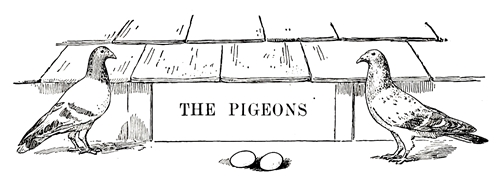
THE PIGEONS
That held the wonderful secret.
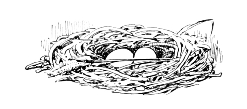
The pretty white eggs so smooth and round
That held the wonderful secret.
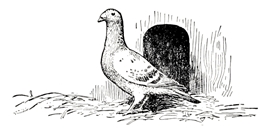
Who patiently sat on the loose straw nest,
The nest where the pretty white eggs were found,
Her own little eggs so smooth and round
That held the wonderful secret.
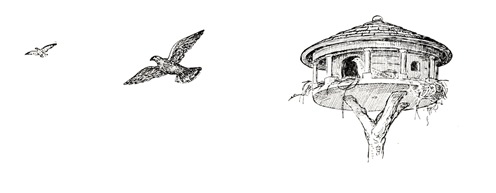
(Where never a prowling cat could pry)
Where lived the pigeon with soft gray breast
Who patiently sat on the loose straw nest,
The nest where the pretty white eggs were found,
Her own little eggs so smooth and round
That held the wonderful secret.
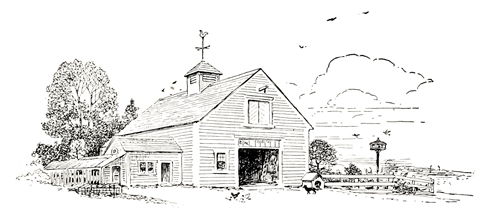
With hay and grain from the fields he had tilled:
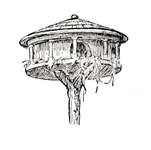
The barn near which stood the pigeon-house high
(Where never a prowling cat could pry)
Where lived the pigeon with soft gray breast
Who patiently sat on the loose straw nest,
[Pg 54] The nest where the pretty white eggs were found,
Her own little eggs so smooth and round
That held the wonderful secret.
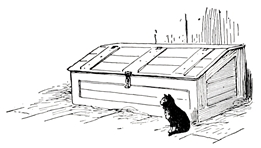
(The little gray pigeon's favorite food).
That was in the barn which the farmer had filled
With hay and grain from the fields he had tilled;
The barn near which stood the pigeon-house high
(Where never a prowling cat could pry)
Where lived the pigeon with soft gray breast
Who patiently sat on the loose straw nest,
The nest where the pretty white eggs were found,
Her own little eggs so smooth and round
That held the wonderful secret.
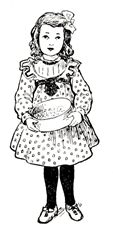
Who went to the bin the corn to find;
The bin, full of corn so yellow and good
(The little gray pigeon's favorite food).
That was in the barn which the farmer had filled
With hay and grain from the fields he had tilled;
The barn near which was the pigeon-house high
[Pg 55] (Where never a prowling cat could pry)
Where lived the pigeon with soft gray breast
Who patiently sat on the loose straw nest,
The nest where the pretty white eggs were found,
Her own little eggs so smooth and round
That held the wonderful secret.
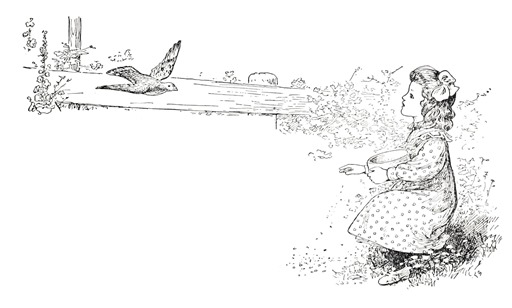
The little gray pigeon came fluttering out
From the door of the pigeon-house safe and high,
And the child heard a faint little cooing cry,—
A sweet little, wee little murmuring sound;
For, instead of the eggs so smooth and round,
(Perhaps the wonderful secret you've guessed)
Two baby pigeons were in the nest!
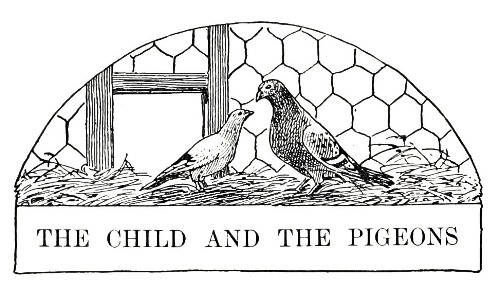
THE CHILD AND THE PIGEONS
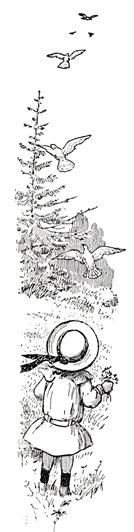
How gladly you fly
O'er hilltop and meadow
And forest trees high,
Far, far away roaming;
—And that too, would I!
When night shades the sky
And home you are coming,
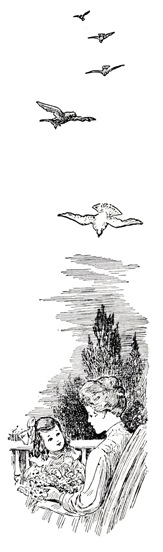
As gladly you fly
To meet with your loved ones;
—And that, too, would I!
So fondly, you try
To tell in what pleasures
The day has passed by,
Your every joy sharing;
—And that, too, would I!
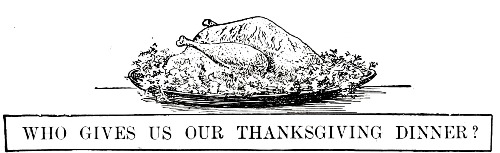
WHO GIVES US OUR THANKSGIVING DINNER?
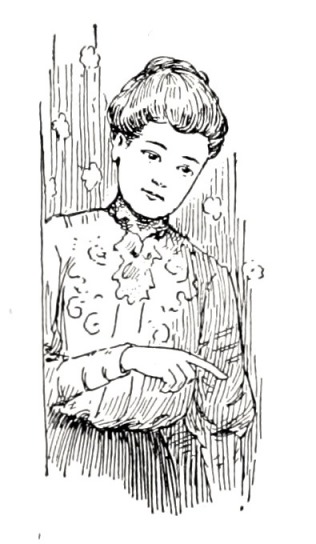
With many a nod of her wise, curly head,
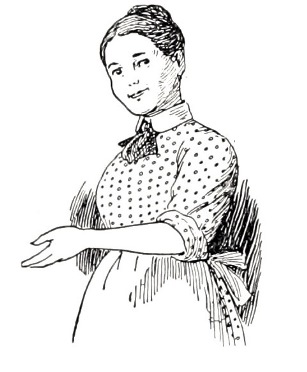
"The cook is as busy as busy can be,
And very good, too, for 'tis easy to see
She gives us our Thanksgiving Dinner."
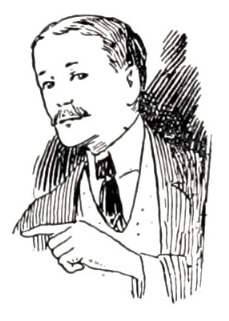
"Just think of the trouble your dear mother took
In planning the dinner and getting for me
The things that I cook; so, 'tis Mother, you see,
Who gives us our Thanksgiving Dinner."
Said Dorothy then, in a satisfied tone.
But Mother said, smiling, "You are not right yet;
'Tis Father who gives me the money to get
The things for our Thanksgiving Dinner."
[Pg 58]
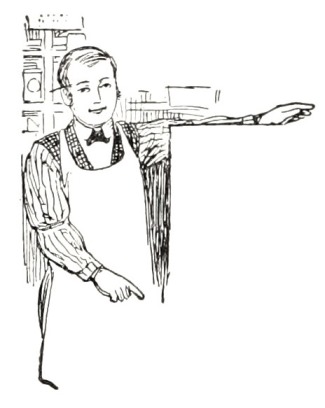
But money alone not a great deal can do.
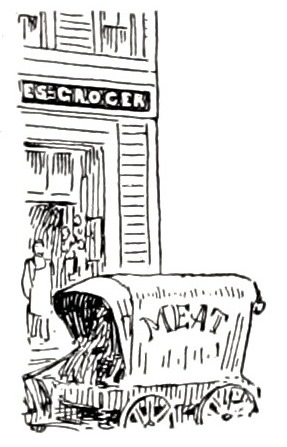
The butcher, the grocer, whose things we must buy,
Should not be forgotten, for they more than I
Will give us our Thanksgiving Dinner."
"And now, I suppose, if I asked these two men,
The grocer, the butcher, about it, they'd say
It surely is somebody else and not they
Who gives us our Thanksgiving Dinner."
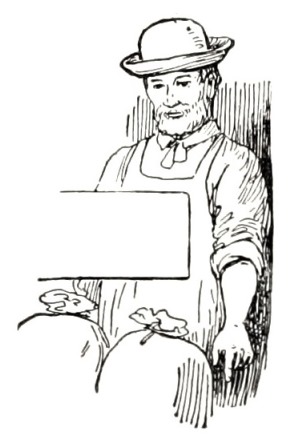
That her guess about grocer and butcher was right.
The grocer said he only kept in his store
What miller and farmer had brought in before
To help for the Thanksgiving Dinner.
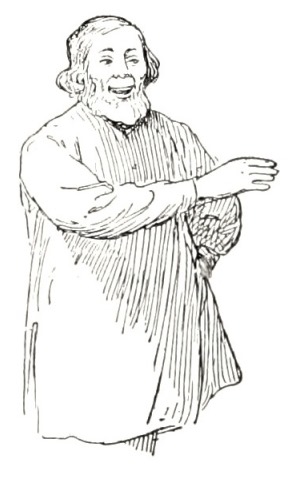
"My Thanksgiving turkeys do make me feel proud,
And one's for your dinner; but then you must know
The turkeys are raised by the farmer, and so
He gives you your Thanksgiving Dinner."
[Pg 59]
Said Dorothy, then, with a glad little shout.
"The miller must go to the farmer for wheat,
The butcher from him gets the turkeys we eat;
Yes!—he gives our Thanksgiving Dinner."
The miller and butcher and grocer helped, too.
And then there was Father and Mother and cook.
I never before knew how many it took
To give us our Thanksgiving Dinner."
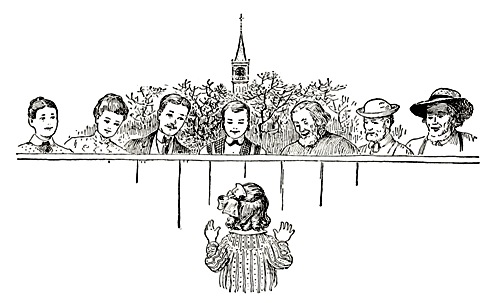
And feeling that now she had grown very wise.
But what do you think? Had she found it all out?
Or was there still more she might learn about
Who gives us our Thanksgiving Dinner?
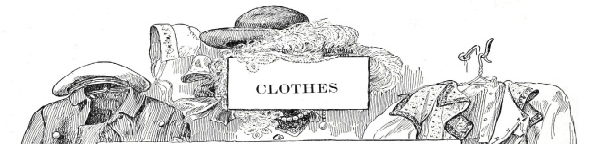
CLOTHES
 |
||
 |
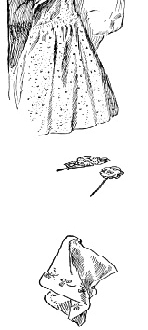
We people wear so many things, Almost the whole creation It takes our clothing to supply, For use or decoration.
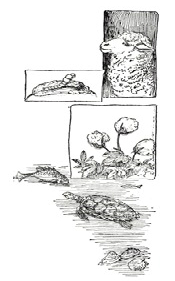
The fishes dress in shining scales Of every gorgeous color; The birds wear pretty feather suits, Some gayer and some duller.
The cat, the dog, the cow, the horse, The squirrel and the rabbit, Wear coats of fur; from small to great, All have the selfsame habit.
But people wear so many things! Almost the whole creation It takes our clothing to supply For use or decoration. [Pg 61]
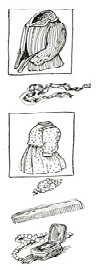
A flannel jacket from the sheep Who spared the wool with pleasure: And from the silkworm ribbons gay. And every silken treasure. |
 |
Spun, woven, colored, printed:
A breastpin made of fishes' scales.
All delicately tinted.
And many another notion;
Her jewels from the mines are brought.
Her pearls from depths of ocean.
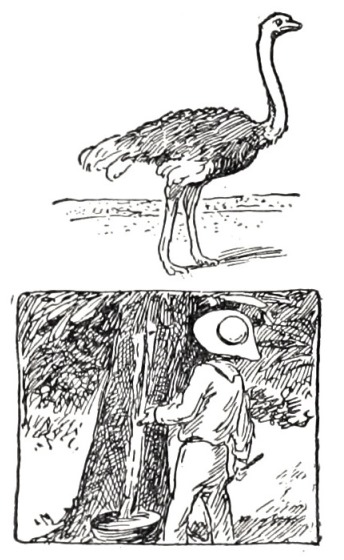
Are plaited for a bonnet,
The feather-coated ostrich gives
The plumes we place upon it.
Men constantly are getting,
And making into rubber shoes
To save our feet a wetting:
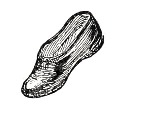
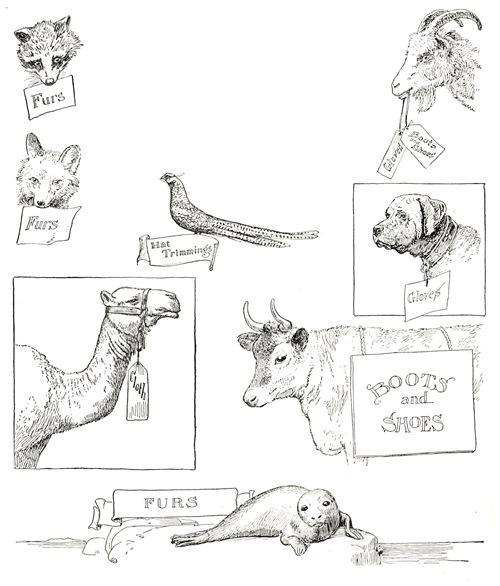
Of thick or thinnest leather,
Are made from skins of animals,
Tanned, cut, and sewed together.
Almost the whole creation
It takes our clothing to supply,
For use or decoration.
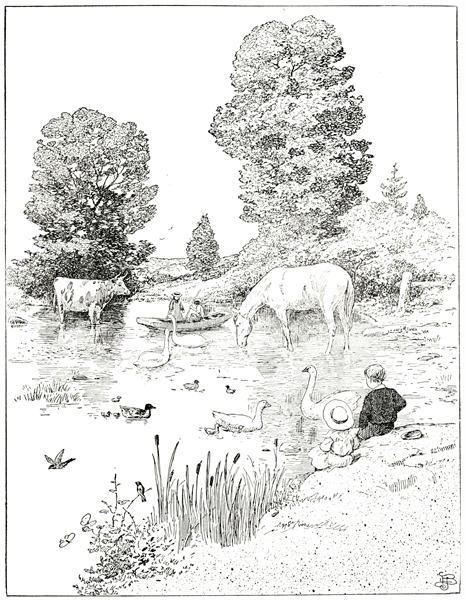
AT THE POND
With trees and flowers gay,
Where many happy creatures live
And many come to play.
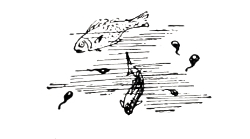
Within its waters cool,
And funny little polliwogs
Live in the shining pool.
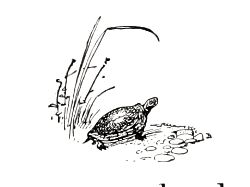
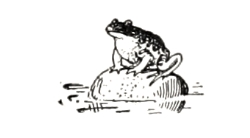
And turtles slowly creep;
The frogs go splashing in and out
With many a sudden leap.
Its shining surface skim;
And thirsty cows and horses drink
Along its rippling brim.
Upon the wavelets lie,
And near them float the stately swans,
With proud necks curving high.
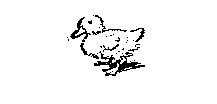
With all her yellow brood;
And here are all the goslings, too,
Behind their mother good.
And in the water go.
They dive and splash, and with delight
Go swimming to and fro.
And throw them bits of bread,
Geese, ducks, and swans all fearless come
And crowd near to be fed.
So busy and so gay,
Where many happy creatures live
And many come to play.
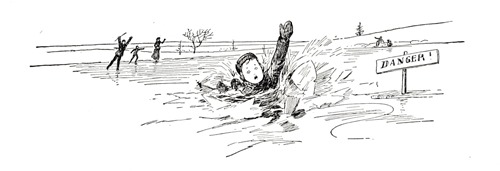
THE BALLAD OF THE BUMPTIOUS BOY
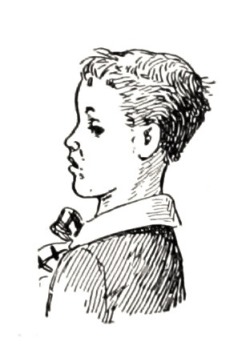
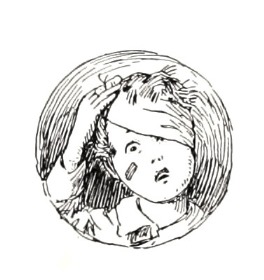
They're going off—don't stand so near!"
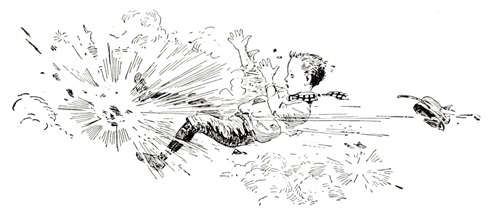
But the Bumptious Boy heeded no warning,
And this is what happened. O dear!
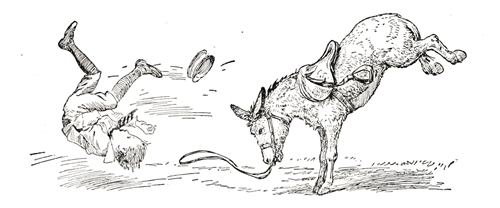
"I advise you, my lad, not to go."
But the Bumptious Boy thought he knew better,
And skated off proudly. And so—
He's sure to give you a spill!"
But the Bumptious Boy only pooh-poohed them,
And would not believe them until—
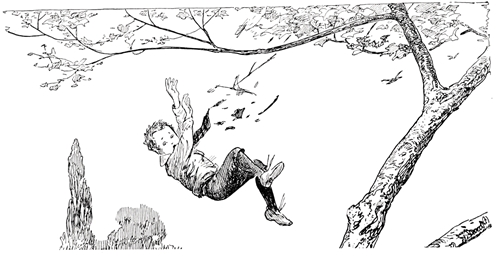
Don't try any higher to climb!"
But the Bumptious Boy laughed and climbed higher:
That laugh was his last for some time.
The Bumptious Boy thoughtfully thought
Of the painful misfortunes and troubles
That he on himself oft had brought.
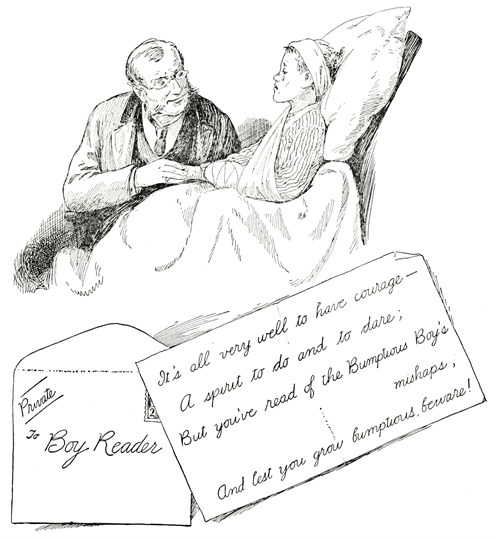
THE NOISY RHYME
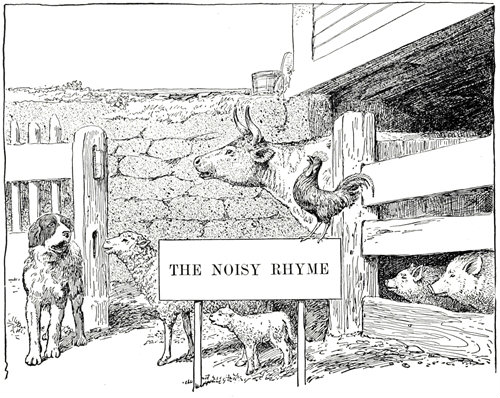
And his wings he flapped: "Cock a doodle doo!"
Then the big dog barked with a "Bow-wow-wow!"
And "Moo-oo! Moo-oo!" bellowed out the cow.
With their "Umph, umph, umph!" and their "Wee, wee, wee!"
While the lambkins bleated "Ma-a! Ma-a!"
And the sheep replied with a "Ba-a-a!"
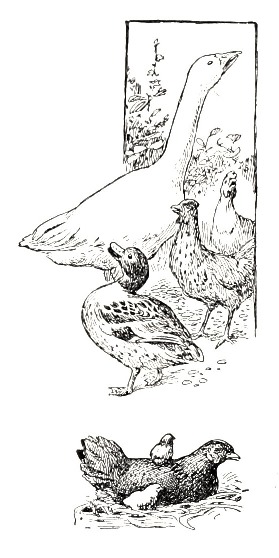
And their "S-s-s!" joined the noisy throng.
And the sleek old ducks, dressed in green and black,
Added more noise still as they called "Quack! Quack!"
All the hens as they looked at their eggs with pride.
But "Cluck-cluck! Cluck-cluck!" called the old black hen
Till she heard "Peep, peep!" from her chicks again.
From the dog, the cow, and the piggies, too,
From the lambs and sheep, from the geese and ducks,
From the chicks and hens with their peeps and clucks!
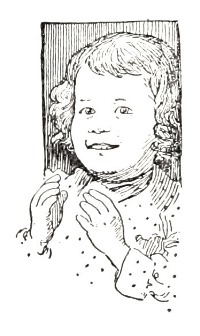
The more loud the noise, why! the more pleased he;
And he clapped and shouted and laughed aloud
As he heard the noise of the farmyard crowd.
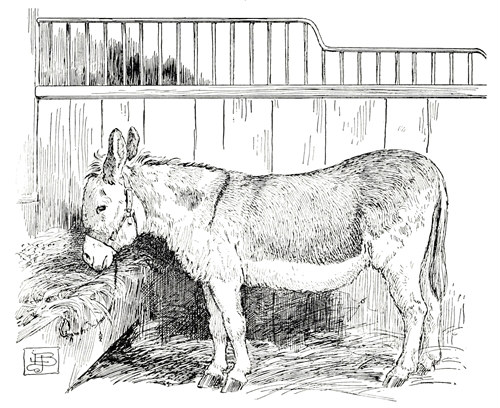
THE DONKEY'S EARS
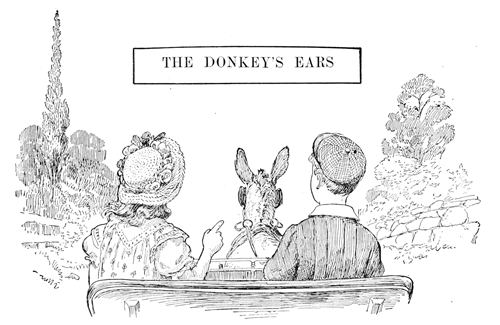
I see the big V that his slanting ears make,
And words that begin with a V come to mind,
Describing his conduct, no matter what kind.
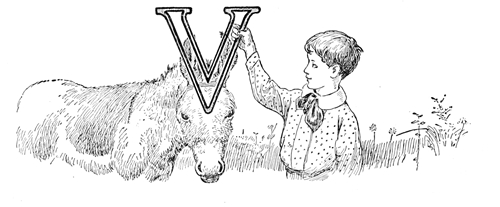
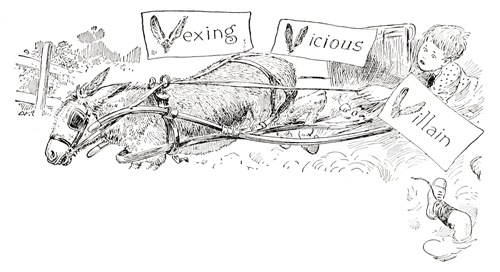
Goes poking along or refuses to go,
Or if he is frisky and capers and kicks,
Or upsets the cart, or does other bad tricks,
I say 'tis no wonder he wears a big V,
So Vexing and Vicious a Villain is he!
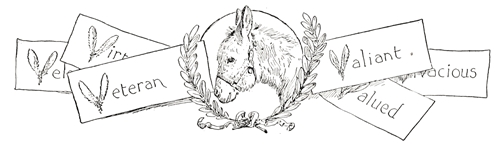
In meek or gay humor trots nimbly along,
The V seems to stand for the Virtues he shows,
The Vim and Velocity with which he goes—
Our Veteran donkey, more Valued each year,
The Vigorous, Valiant, Vivacious old dear!
OLD BARNEY'S LATEST PRANK
The air was crisp and still,
And snow on snow lay drifted deep
On every road and hill.
Stood Barney, groomed and fed:
But wistful thoughts of out-of-doors
Were in his long-eared head.
[Pg 75]
Is elegant, no doubt,"
Thought Barney, "but it's very dull."
Just then he heard a shout,
Then doors were opened wide,
And madcap Helen and her chum
Rushed noisily inside.
And where's the Barney sleigh?
See, Minna, here's our donkey dear,
We'll have some fun to-day."
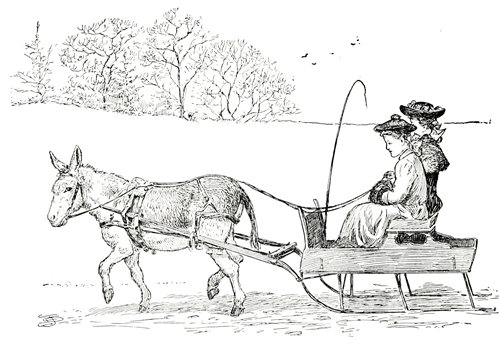
And loud their laughter rang,
As up into the outgrown sleigh
The jolly comrades sprang.
And many a compliment
Did Barney get as o'er the snow
At steady pace he went.
Said Minna, "Barney is!
I never thought he'd settle down,
[Pg 76] To be as staid as this!"
"It's very strange to think
That he's too old for playing jokes."
(Here Barney gave a wink.)
And isn't this a climb?
Just think how we'll spin down the hill—
We'll have the gayest time."
[Pg 77]
The long, steep, slipp'ry road;
The sleigh with those substantial girls
Was not an easy load.
He reached the very top,
And Barney to his great delight
Was here allowed to stop.
As if to have a rest;
What work the girls had planned for him
Old Barney never guessed.
"He loves to follow so.
He'll chase right on behind the sleigh,
As coasting down we go.
No more did Barney hear.
They'd let him follow as he liked,
Enough that this was clear.
Adown the coasting place.
"Come, Barney! Good old fellow! Come!
[Pg 78] Come on! You like to chase."
Behind the coasters ran.
Thought he, "For girls and donkey too.
This is a jolly plan."
They're kind, I do declare.
Some children would have coasted down
And left me tied up there."
[Pg 79]
The girls and Barney too;
And Barney learned to his dismay,
What now he had to do.
Into the sleigh, and then
"Aha! old Barney," shouted they,
"Now drag us up again."
Submitted to their will.
Perhaps this time the girls would drive
Right on beyond the hill.
Once more he reached the top,
But scarcely long enough to breathe
Was he allowed to stop.
Unhitched him from the sleigh;
"Come, Barney! Follow us again,"
He heard his mistress say.
So, when they made a start,
He scampered after, gay and free,
[Pg 80] With mischief in his heart.
So staid he looked and meek,
That naught seemed farther from his mind
Than joke or prank or freak.
"I'll always coast this way;
I hate to trudge back up the hill,
And drag the sled or sleigh."
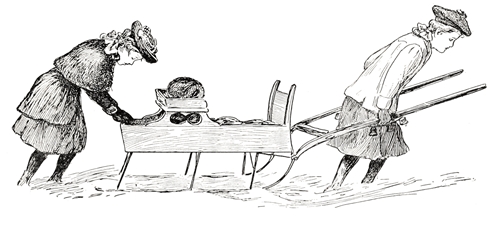
That tedious uphill climb;
But Barney saves us all that tug,
Let's coast a long, long time."
And start at once uphill;
But Barney thought the time had come
His own plan to fulfil.
The flying rein could seize,
Old Barney gave a sudden leap,
Escaping her with ease.
[Pg 81]
When off he clashed, "Whoa, whoa!"
And both the girls chased after him
As fast as they could go.
With feet as swift and light,
As if he had grown young again;
Soon he was out of sight.
He thought with gleeful mind
Of how he'd turned the joke on them,
The girls he'd left behind.
The End