E-text prepared by Chuck Greif and Pat Saumell
POEMS OF PASSION
BY
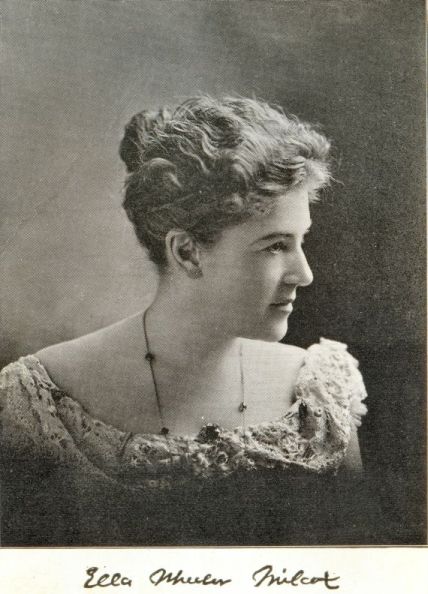
ELLA WHEELER WILCOX
Illustrated

OTHER BOOKS
by
Ella Wheeler Wilcox
THREE WOMEN
POEMS OF POWER
MAURINE
POEMS OF PASSION
POEMS OF PLEASURE
KINGDOM OF LOVE AND OTHER POEMS
AN ERRING WOMAN'S LOVE
EVERY-DAY THOUGHTS
MEN WOMEN AND EMOTIONS
AN AMBITIOUS MAN
THE BEAUTIFUL LAND OF NOD
AROUND THE YEAR WITH ELLA
WHEELER WILCOX A Birthday Book
W.B. CONKEY COMPANY
Publishers—CHICAGO

1883
What know you of the soul from whence it sprung?
His secret thought unto the listening crowd?
You have its shape, its color and no more.
That lie beneath the surface of the seas.
Here, take them at your pleasure; but think not
Where lie our shipwrecks and our coral caves.
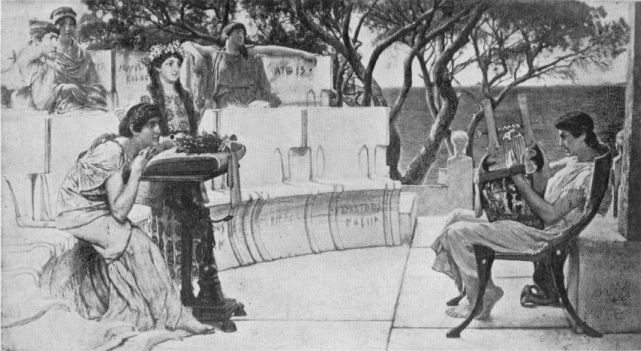
THE POET'S SONG
PREFACE
Among the twelve hundred poems which have emanated from my too prolific pen there are some forty or fifty which treat entirely of that emotion which has been denominated "the grand passion"—love. A few of those are of an extremely fiery character.
When I issued my collection known as "Maurine, and Other Poems," I purposely omitted all save two or three of these. I had been frequently accused of writing only sentimental verses; and I took pleasure and pride in presenting to the public a volume which contained more than one hundred poems upon other than sentimental topics. But no sooner was the book published than letters of regret came to me from friends and strangers, and from all quarters of the globe, asking why this or that love poem had been omitted. These regrets were repeated to me by so many people that I decided to collect and issue these poems in a small volume to be called "Poems of Passion." By the word "Passion" I meant the "grand passion" of love. To those who take exception to the title of the book I would suggest an early reference to Webster's definitions of the word.
Since this volume has caused so much agitation throughout the entire country, and even sent a tremor across the Atlantic into the Old World, I beg leave to make a few statements concerning some of the poems.
The excitement of mingled horror and amaze seems to center upon four poems, namely: "Delilah," "Ad Finem," "Conversion," and "Communism."
"Delilah" was written and first published in 1877. I had been reading history, and became stirred by the power of such women as Aspasia and Cleopatra over such grand men as Antony, Socrates, and Pericles. Under the influence of this feeling I dashed off "Delilah," which I meant to be an expression of the powerful fascination of such a woman upon the memory of a man, even as he neared the hour of death. If the poem is immoral, then the history which inspired it is immoral. I consider it my finest effort.
"Ad Finem" was written in 1878. I think there are few women of strong character and affections who cannot, from either experience or observation, understand the violent intensity of regret and despair which sometimes takes possession of the human heart after the loss by death, fate, or the force of circumstances, of some one very dear.
In "Ad Finem" I intended to give voice to this very common experience of almost every heart. Many noble women have since told me that the poem was true to life. It is not, as many people have wilfully or stupidly construed it, a bit of poetical advice to womankind to "barter the joys of Paradise" for "just one kiss." It is simply an illustration of a moment of turbulent anguish and vehement despair, such moments of unreasoning and overwhelming sorrow as the most moral people may experience during a lifetime.
In "Communism" I endeavored to use a new simile in illustrating that somewhat hackneyed theme of the supremacy of Love over Reason; and simply to carry out my idea I represented the violent uprising of the Communist emotions against King Reason.
"Conversion" was suggested to me by the remark of a gentleman friend. In speaking to me of the woman he loved, he said: "I have always been a skeptic regarding the existence of heaven, but I am so much happier in my love for this woman than I ever supposed it possible for me to be on earth that I begin to believe that the tales of heavenly raptures may be true."
I embodied his idea in the poem which has brought, with a few others, so much censure and criticism upon this volume, although it contains nearly seventy-five other selections quite irreproachable in character, however faulty they may be in construction.
It is impossible to pursue a successful literary career and follow the advice of all one's "best friends." I have received severe censure from my orthodox friends for writing liberal verses. My liberal friends condemn my devout and religious poems as "aiding superstition." My early temperance verses were pronounced "fanatical trash" by others.
With all due thanks and appreciation for the kind motives which interest so many dear friends in my career, I yet feel compelled to follow the light which my own intellect and judgment cast upon my way, rather than any one of the many conflicting rays which other minds would lend me.
ELLA WHEELER.
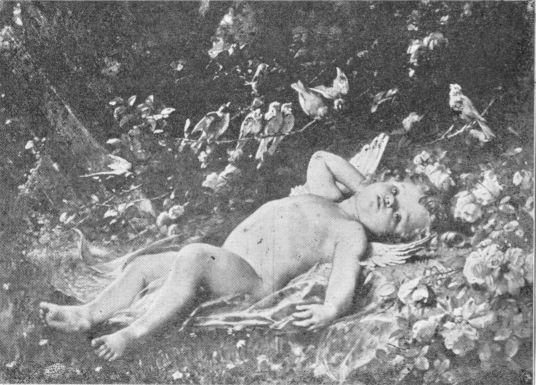
CONTENTS
POEMS OF PASSION
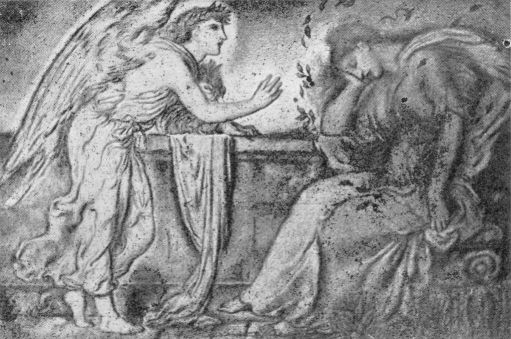
"REJOICE, AND MEN WILL SEEK YOU"
LOVE'S LANGUAGE.
In the faint flush upon the tell-tale cheek,
And in the pallor that succeeds it; by
The quivering lid of an averted eye—
The smile that proves the patent to a sigh—
Thus doth Love speak.
By the uneven heart-throbs, and the freak
Of bounding pulses that stand still and ache,
While new emotions, like strange barges, make
Along vein-channels their disturbing course;
Still as the dawn, and with the dawn's swift force—
Thus doth Love speak.
In the avoidance of that which we seek—
The sudden silence and reserve when near—
The eye that glistens with an unshed tear—
The joy that seems the counterpart of fear,
As the alarmed heart leaps in the breast,
And knows and names and greets its godlike guest—
Thus doth Love speak.
In the proud spirit suddenly grown meek—
The haughty heart grown humble; in the tender
And unnamed light that floods the world with splendor;
In the resemblance which the fond eyes trace
In all fair things to one beloved face;
In the shy touch of hands that thrill and tremble;
In looks and lips that can no more dissemble—
Thus doth Love speak.
In the wild words that uttered seem so weak
They shrink ashamed to silence; in the fire
Glance strikes with glance, swift flashing high and higher
Like lightnings that precede the mighty storm;
In the deep, soulful stillness; in the warm,
Impassioned tide that sweeps through throbbing veins
Between the shores of keen delight and pains;
In the embrace where madness melts in bliss,
And in the convulsive rapture of a kiss—
Thus doth Love speak.
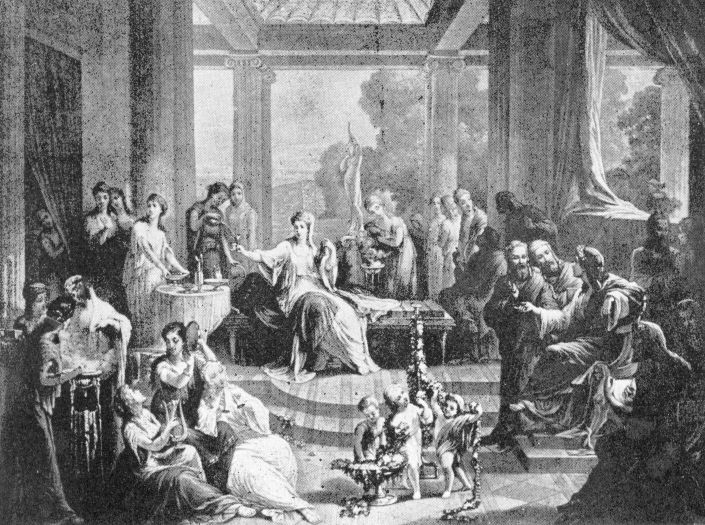
LOVE'S LANGUAGE
IMPATIENCE.
The once fleet mornings linger by the way,
Their sunny smiles touched with malicious glee
At my unrest; they seem to pause, and play
Like truant children, while I sigh and say,
How can I wait?
Refused to pause or loiter with me long;
But now they idly fill their hands with flowers,
And make no haste, but slowly stroll among
The summer blooms, not heeding my one song,
How can I wait?
They reach forth to a future day, and bring
Sweet dreams of you to people all my mind;
And time speeds by on light and airy wing.
I feast upon your face, I no more sing,
How can I wait?
A pitying night has flung upon my soul.
You are not near me, and I know full well
My heart has need of patience and control;
Before we meet, hours, days, and weeks must roll.
How can I wait?
Until the sunlight of your eyes shall shine
Upon my world that seems so desolate?
Until your hand-clasp warms my blood like wine;
Until you come again, oh, love of mine,
How can I wait?
COMMUNISM.
When my heart is asleep and my brain has sway,
It is then that I vow we must part forever,
That I will forget you, and put you away
Out of my life, as a dream is banished
Out of the mind when the dreamer awakes;
That I know it will be, when the spell has vanished,
Better for both of our sakes.
I know it is wiser for us to part;
But Love is a spy who is plotting treason,
In league with that warm, red rebel, the Heart.
They whisper to me that the King is cruel,
That his reign is wicked, his law a sin;
And every word they utter is fuel
To the flame that smoulders within.
With the fever of youth and its mad desires,
When my brain in vain bids my heart be quiet,
When my breast seems the centre of lava-fires,
Oh, then is the time when most I miss you,
And I swear by the stars and my soul and say
That I will have you and hold you and kiss you,
Though the whole world stands in the way.
My fierce emotions roam out of their lair;
They hate King Reason for being royal;
They would fire his castle, and burn him there.
Oh, Love! they would clasp you and crush you and kill you,
In the insurrection of uncontrol.
Across the miles, does this wild war thrill you
That is raging in my soul?
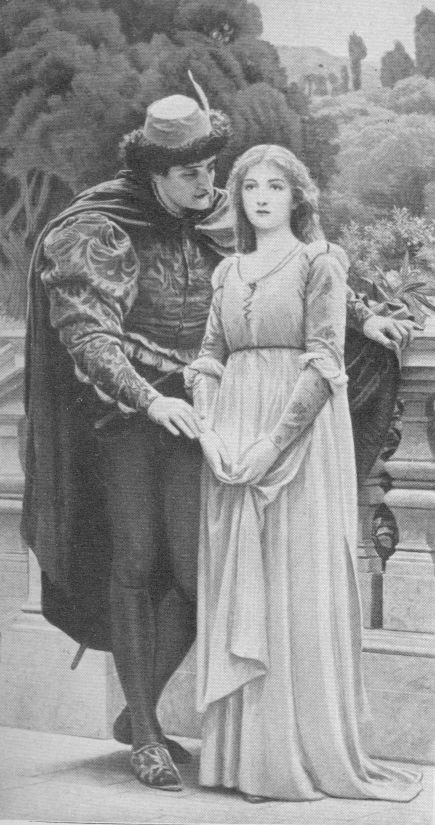
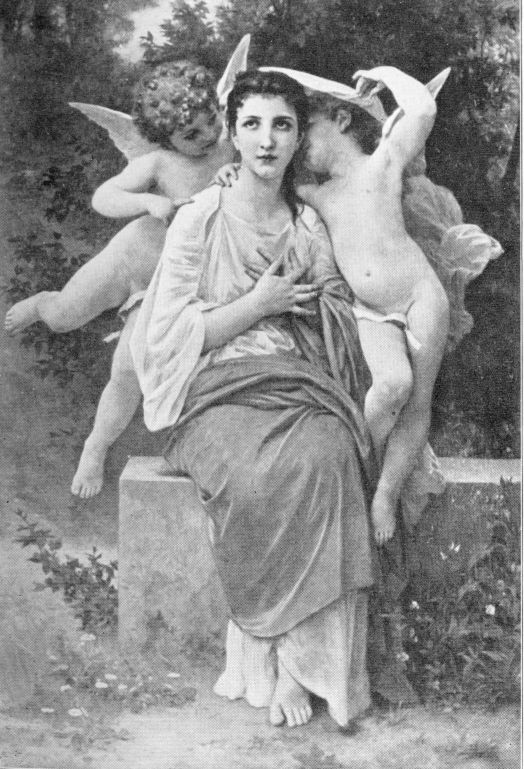
"LOVE'S IMPATIENCE"
THE COMMON LOT.
To waste on one the riches of her soul,
Who takes the wealth she gives him, but cannot
Repay the interest, and much less the whole.
For some response to my fond gaze and touch,
It seems to me there is no sadder fate
Than to be doomed to loving overmuch.
So thoughtful of my comfort, and so true.
Yes, yes, dear heart; but I, not being blind,
Know that I am not loved as I love you.
Will fill my soul with music and with song;
And if you seem abstracted, or I miss
The heart-tone from your voice, my world goes wrong.
When at some thoughtless word the tears will start;
You cannot understand how aught you speak
Has power to stir the depths of my poor heart.
Or feign indifference where I now adore;
For if I seemed to love you less you would,
Manlike, I have no doubt, love me the more.
A constant heart; for fact doth daily prove
That constancy finds oft a cruel sting,
While fickle natures win the deeper love.
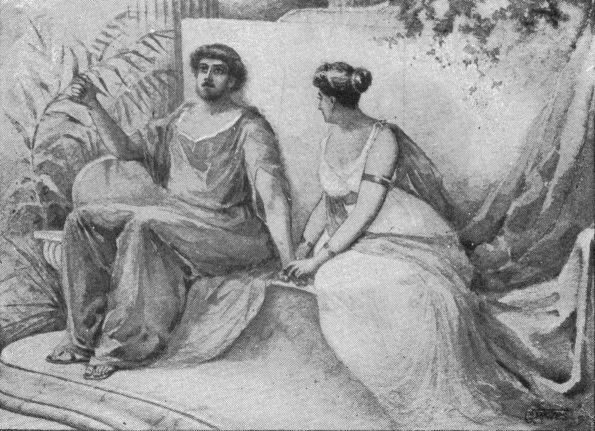
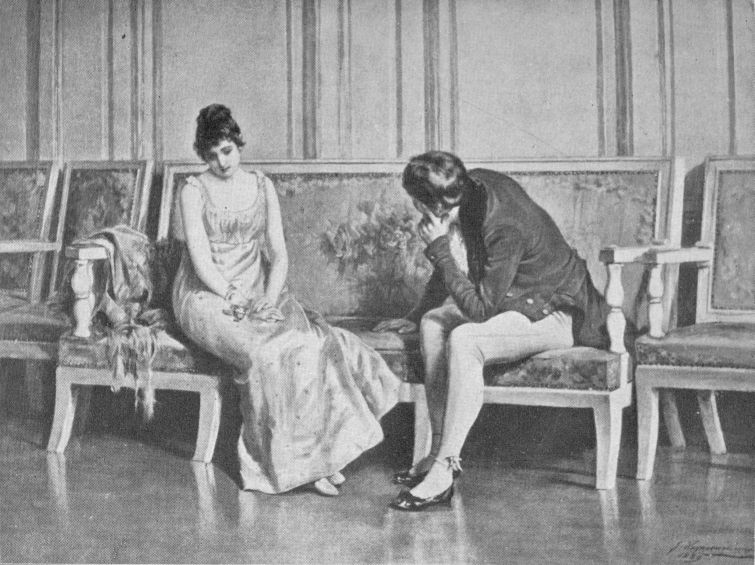
COMMON LOT
INDIVIDUALITY.
Just as a weaker woman loves her own,
Better than I love my beloved art,
Which, till you came, reigned royally, alone,
My king, my master. Since I saw your face
I have dethroned it, and you hold that place.
Your frown can make the whole world like a tomb;
Your smile shines brighter than the sun, by far.
Sometimes I think there is not space or room
In all the earth for such a love as mine,
And it soars up to breathe in realms divine.
Could break my heart, as women's hearts do break.
If my wan days had nothing to expect
From your love's splendor, all joy would forsake
The chambers of my soul. Yes, this is true.
And yet, and yet—one thing I keep from you.
Into my long pursued and worshipped art;
Though your great love fills me with such content
No other love finds room now, in my heart.
Yet that rare essence was my art's alone.
Thank God, you cannot grasp it; 'tis mine own.
With that vast love, as passionate as tender,
I feel an exultation as I know
I have not made you a complete surrender.
Here is my body; bruise it, if you will,
And break my heart; I have that something still.
Or bind the perfume of the rose, as well.
God put it in my soul when I was born;
It is not mine to give away, or sell,
Or offer up on any altar shrine.
It was my art's; and when not art's, 'tis mine,
Or anything which stands 'twixt me and you.
But that strange essence God bestowed, I say,
To permeate the work He gave to do:
And it cannot be drained, dissolved, or sent
Through any channel save the one He meant.
FRIENDSHIP AFTER LOVE.
Has burned itself to ashes, and expires
In the intensity of its own fires,
There come the mellow, mild, St. Martin days,
Crowned with the calm of peace, but sad with haze.
So after Love has led us, till he tires
Of his own throes and torments and desires,
Comes large-eyed friendship: with a restful gaze
He beckons us to follow, and across
Cool, verdant vales we wander free from care.
Is it a touch of frost lies in the air?
Why are we haunted with a sense of loss?
We do not wish the pain back, or the heat;
And yet, and yet, these days are incomplete.
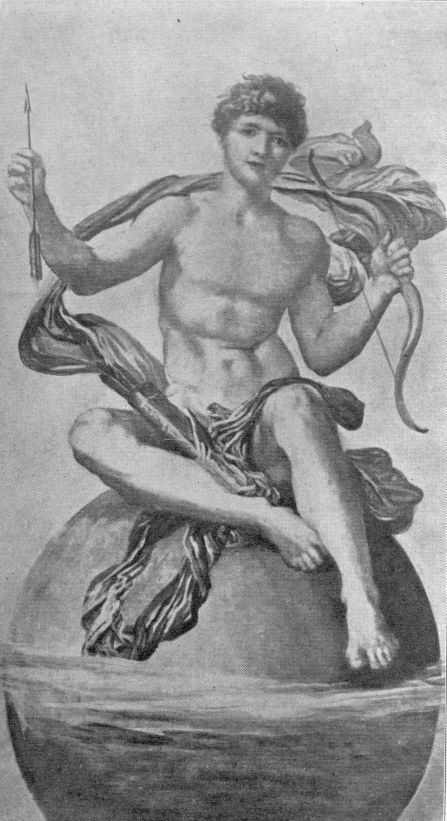
LOVE TRIUMPANT
QUERIES.
That last strange time of a hundred times?
When we met to swear that we could forget—
I your caresses, and you my rhymes—
The rhyme of my lays that rang like a bell,
And the rhyme of my heart with yours, as well?
That was bitter with lees of the wasted wine,
When the tattered remains of a threadbare bliss,
And the worn-out shreds of a joy divine,
With a year's best dreams and hopes, were cast
Into the rag-bag of the Past?
With a chuckle of glee at a bargain made,
Did you discover, like me, one day,
That, hid in the folds of those garments frayed,
Were priceless jewels and diadems—
The soul's best treasures, the heart's best gems?
The place of those jewels so rare and chaste?
Do all that you borrow or beg or buy
Prove to be nothing but skilful paste?
Have you found pleasure, as I found art,
Not all-sufficient to fill your heart?
Of the old delight that we cast away,
And find no worth in the silken threads
Of newer fabrics we wear to-day?
Have you thought the bitter of that last kiss
Better than sweets of a later bliss?
Whatever your answer, I understand
That there is no pathway by which we can go
Back to the dead past's wonderland;
And the gems he purchased from me, from you,
There is no rebuying from Time, the Jew.
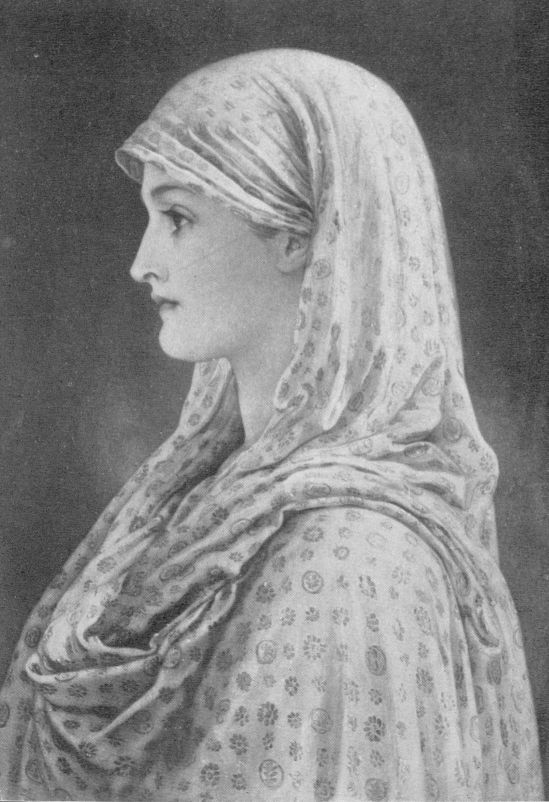
"THE OLD DELIGHT THAT WE CAST AWAY"
UPON THE SAND.
Is like a mansion built upon the sand.
Though brave its walls as any in the land,
And its tall turrets lift their heads in grace;
Though skilful and accomplished artists trace
Most beautiful designs on every hand,
And gleaming statues in dim niches stand,
And fountains play in some flow'r-hidden place:
Of adverse fate is blown, or sad rains fall,
Day in, day out, against its yielding wall,
Lo! the fair structure crumbles to the dust.
Love, to endure life's sorrow and earth's woe,
Needs friendship's solid mason-work below.
REUNITED.
Tie up the broken threads of that old dream,
And go on happy as before, and seem
Lovers again, though all the world may scoff.
Our parting and our meeting, and the tears
That rusted out the gold-work of the years,
The frosts that fell upon our gardens green.
Who made our loving hearts her idle toys,
And once more revel in the old sweet joys
Of happy love. Nay, it is not too late!
Forget the silver gleaming in my hair;
Look only in my eyes! Oh! darling, there
The old love shone no warmer then than now.
I find the lost sweet memory of my youth,
Bright with the holy radiance of thy truth,
And hallowed with the blue of summer skies.
Like reunited lovers, hand in hand,
Back, and yet onward, to the sunny land
Of our To Be, which was our Long Ago.
WHAT SHALL WE DO?
My path leads there, and yours another way.
What shall we do with this fond love, dear heart?
It grows a heavier burden day by day.
There is not room enough to hide it, dear;
Not even the mighty storehouse of the past
Could cover it from our own eyes, I fear.
Merged into one great sea, too shallow then
Would be its waters to sink this emotion
So deep it could not rise to life again.
It would not in a thousand years expire.
Nay! it would thrive, exult, expand, and grow,
For from its very birth it fed on fire.
Give it no food, of glance, or word, or sigh;
No memories, even, of any bygone day;
No crumbs of vain regrets—so let it die.
"THE BEAUTIFUL BLUE DANUBE."
He smiles in her lifted eyes;
Like waves of that mighty river,
The strains of the "Danube" rise.
They float on its rhythmic measure
Like leaves on a summer-stream;
And here, in this scene of pleasure,
I bury my sweet, dead dream.
Like a star, shines out her face,
And the form his strong arm presses
Is sylph like in its grace.
As a leaf on the bounding river
Is lost in the seething sea,
I know that forever and ever
My dream is lost to me.
That grand old wordless rhyme;
And still those two ate swaying
In perfect tune and time.
If the great bassoons that mutter,
If the clarinets that blow,
Were given a voice to utter
The secret things they know,
On the Danube's battle-plains
The unknown hosts outnumber
Who die 'neath the "Danube's" strains?
Those fall where cannons rattle,
'Mid the rain of shot and shell;
But these, in a fiercer battle,
Find death in the music's swell.
Is blended the dying groan;
But here, in the halls of fashion,
Hearts break, and make no moan.
And the music, swelling and sweeping,
Like the river, knows it all;
But none are counting or keeping
The lists of these who fall.
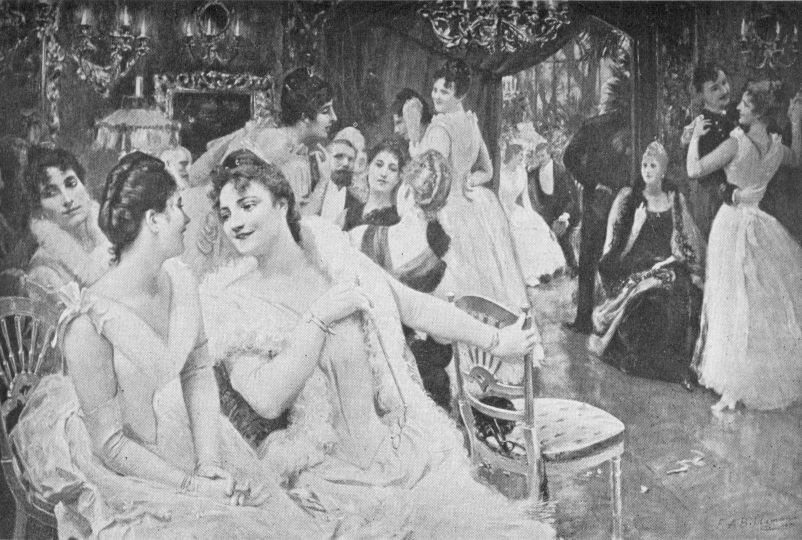
"THEY DRIFT DOWN THE HALL TOGETHER"
ANSWERED.
Sudden? Well, you are right;
But a startling truth came home to me
With sudden force last night.
What is it? Shall I tell you?
Nay, that is why I go.
I am running away from the battlefield
Turning my back on the foe.
Have you not been most kind?
Why, when you question me like that,
What answer can I find?
You fear you failed to amuse me,
Your husband's friend and guest,
Whom he bade you entertain and please—
Well, you have done your best.
Then why am I going?
A friend of mine abroad,
Whose theories I have been acting upon,
Has proven himself a fraud.
You have heard me quote from Plato
A thousand times no doubt;
Well, I have discovered he did not know
What he was talking about.
You cannot understand?
Well, let me look down into your eyes,
And let me take your hand.
I am running away from danger;
I am flying before I fall;
I am going because with heart and soul
I love you—that is all.
There, now you are white with anger;
I knew it would be so.
You should not question a man too close
When he tells you he must go.
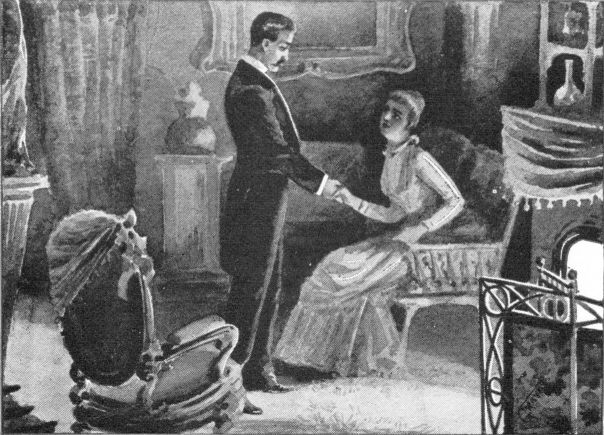
THROUGH THE VALLEY.
[AFTER JAMES THOMSON.]
As I came through the valley, on my sight,
More awful than the darkness of the night,
Shone glimpses of a Past that had been fair,
And memories of eyes that used to smile,
And wafts of perfume from a vanished isle,
As I came through the valley.
As I came through the valley, fair and far,
As drowning men look up and see a star,
The fading shore of my lost Used-to-be;
And like an arrow in my heart I heard
The last sad notes of Hope's expiring bird,
As I came through the valley.
As I came through the valley, like a beam
Of lurid lightning I beheld a gleam
Of Love's great eyes that now were full of hate.
Dear God! Dear God! I could bear all but that;
But I fell down soul-stricken, dead, thereat,
As I came through the valley.
BUT ONE.
The year has but one June;
And when that perfect month doth end,
The robin's song, though loud, though long,
Seems never quite in tune.
By bee and bird is seen,
May yet have lost that subtle grace—
That nameless spell the winds know
Which makes it garden's queen.
Have burned and bloomed for me.
Though still youth's summer sunlight glows;
Though thou art kind, dear friend, I find
I have no heart for thee.
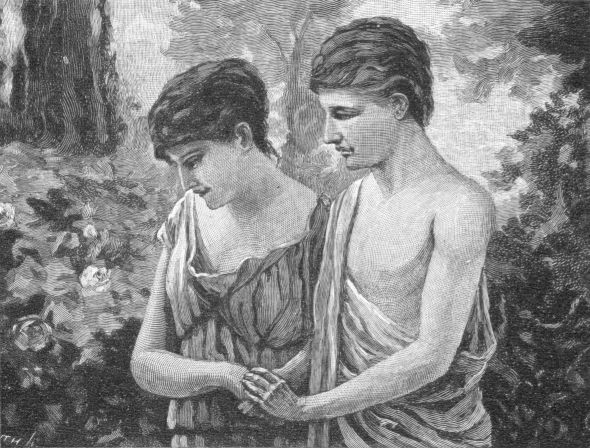
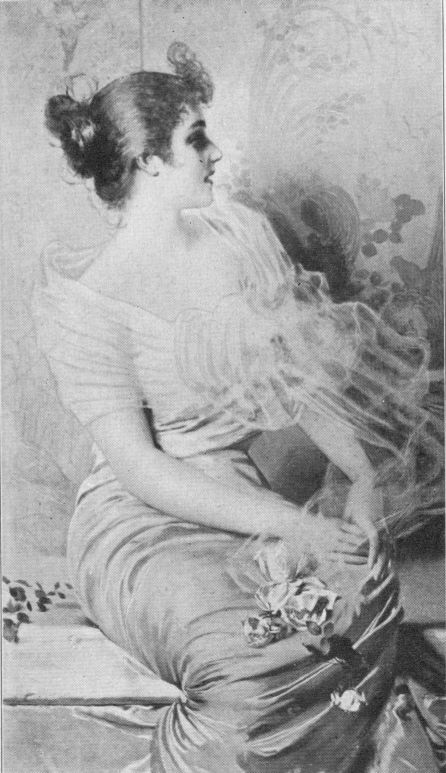
A JUNE ROSE
GUILO.
Why dost thou sigh, and wear that face of sorrow?
The sunshine is to-day's, although it shone
On yesterday, and may shine on to-morrow.
The greediest heart can claim but present pleasure.
The future is thy God's. The past is spent.
To-day is thine; clasp close the precious treasure.
Could never under thy fond gaze dissemble.
I could not feign these passion-laden sighs;
Deceiving thee, my pulses would not tremble.
I should forget him wholly wouldst thou let me;
Or but remember that his day was done
From that supremest hour when first I met thee.
And Romney gray, and thine are darkly tender!
One finds fresh feelings under change of skies—
A new horizon brings a newer splendor.
Believe me, Guilo, for I speak most truly.
What though to Romney and to Paul I swore
The self-same words; my heart now worships newly.
No two ships ever ploughed the self-same billow;
The waters change with every fall and rise;
So, Guilo, go contented to thy pillow.
THE DUET.
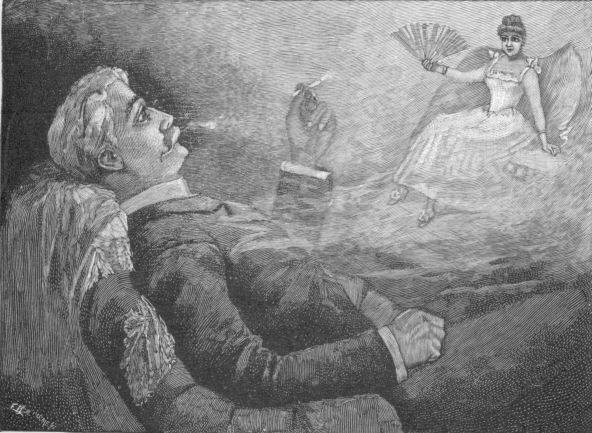
Maud, my wife, and the tenor, McKey,
Were singing together a blithe duet,
And days it were better I should forget
Came suddenly back to me—
Days when life seemed a gay masque ball,
And to love and be loved was the sum of it all.
The room's rich hangings, the sweet home air,
Stately Maud, with her proud blond head,
And I seemed to see in her place instead
A wealth of blue-black hair,
And a face, ah! your face—yours, Lisette;
A face it were wiser I should forget.
But you remember, I know, Lisette.
I saw you, dainty and debonair,
With the very same look that you used to wear
In the days I should forget.
And your lips, as red as the vintage we quaffed,
Were pearl-edged bumpers of wine when you laughed.
Peeped out under your kilt skirt there,
While we sat smoking our cigarettes
(Oh, I shall be dust when my heart forgets')
And singing that self-same an,
And between the verses, for interlude,
I kissed your throat and your shoulders nude.
You were so warm and so sweet, Lisette;
You were everything men admire,
And there were no fetters to make us tire,
For you were—a pretty grisette.
But you loved, as only such natures can,
With a love that makes heaven or hell for a man.
Stately Maud and the tenor, McKey.
"You are burning your coat with your cigarette,
And qu' avez vous, dearest, your lids are wet,"
Maud says, as she leans o'er me.
And I smile, and lie to her, husband-wise,
"Oh, it is nothing but smoke in my eyes."
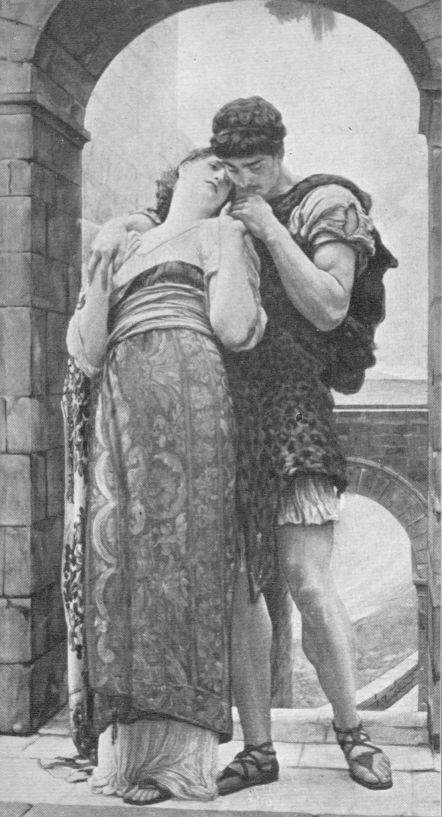
"I LOVE THEE; THEE ALONE"
LITTLE QUEEN.
The old pet-name of Little Queen—
In the dear, dead days that are no more,
The happiest days of our lives, I ween?
For we loved with that passionate love of youth
That blesses but once with its perfect bliss—
A love that, in spite of its trust and truth,
Seems never to thrive in a world like this.
All was centered in "Little Queen;"
And never a thought in our hearts had we
That strife or trouble could come between.
What utter sinking of self it was!
How little we cared for the world of men!
For love's fair kingdom and love's sweet laws
Were all of the world and life to us then.
She rang down the curtain and shifted the scene;
Yet sometimes now, when the day grows late,
I can hear you calling for Little Queen;
For a happy home and a busy life
Can never wholly crowd out our past;
In the twilight pauses that come from strife,
You will think of me while life shall last.
May sing to me of a great world's praise,
I shall long sometimes for the old pet-name
That you gave to me in the dear, dead days;
And nothing the angel band can say,
When I reach the shores of the great Unseen,
Can please me so much as on that day
To hear your greeting of "Little Queen."
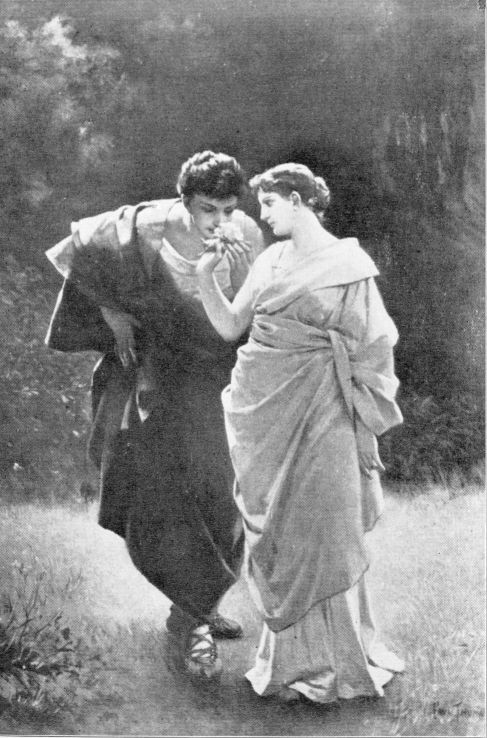
"THAT BLESSES BUT ONCE WITH ITS PERFECT BLISS"
WHEREFORE?
A healed wound opened, or the past revived?
Last night in my deep sleep I dreamed of you;
Again the old love woke in me, and thrived
On looks of fire, and kisses, and sweet words
Like silver waters purling in a stream,
Or like the amorous melodies of birds:
A dream—a dream!
There settled that dread shadow of the cross
That, when hearts love too well, falls in between;
That warns them of impending woe and loss.
Again I saw you drifting from my life,
As barques are rudely parted in a stream;
Again my heart was torn with awful strife:
A dream—a dream!
Alone I groped, and heard strange waters roll,
Lost in that blackness of supreme despair
That comes but once to any living soul.
Alone, afraid, I called your name aloud—
Mine eyes, unveiled, beheld white stars agleam,
And lo! awake, I cried, "Thank God, thank God!
A dream—a dream!"
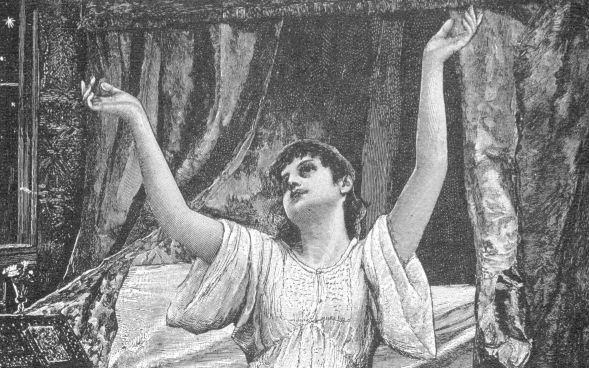
DELILAH.
When I would grope nearer to God,
With my back to a record of error
And the highway of sin I have trod,
There come to me shapes I would banish—
The shapes of the deeds I have done;
And I pray and I plead till they vanish—
All vanish and leave me, save one.
Of the sun in the middle-day skies—
That one with a spell that is tender—
That one with a dream in her eyes—
Cometh close, in her rare Southern beauty,
Her languor, her indolent grace;
And my soul turns its back on its duty,
To live in the light of her face.
I tremble with exquisite pains;
She sighs—like an overcharged river
My blood rushes on through my veins',
She smiles—and in mad-tiger fashion,
As a she-tiger fondles her own,
I clasp her with fierceness and passion,
And kiss her with shudder and groan.
I put away God and the World;
Once more, in the joys of our sinning,
Are the hopes of eternity hurled.
There is nothing my soul lacks or misses
As I clasp the dream shape to my breast;
In the passion and pain of her kisses
Life blooms to its richest and best.
Go back to the dust and the sod!
Too dear and too sweet for repenting,
Ye stand between me and my God.
If I, by the Throne, should behold you,
Smiling up with those eyes loved so well,
Close, close in my arms I would fold you,
And drop with you down to sweet Hell!
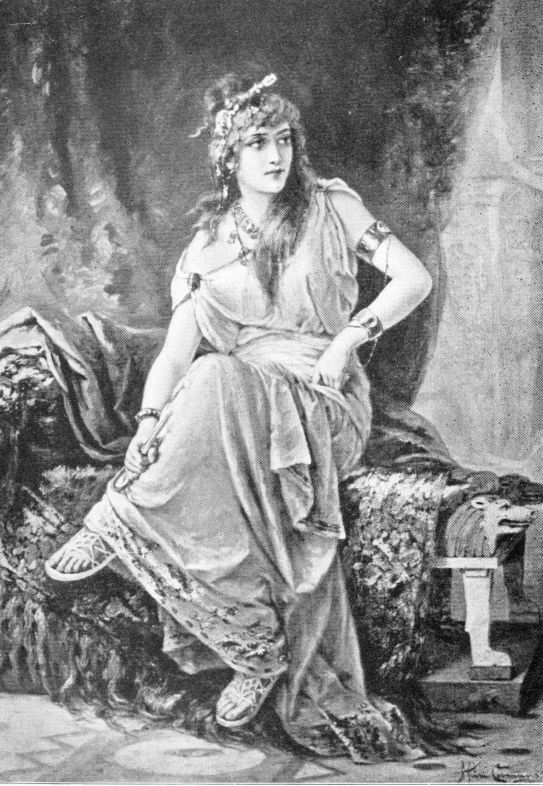
DELILAH
LOVE SONG.
When nothing lived or stirred—
Nothing but new-born Time,
Nor was there even a bird—
The Silence spoke to a Star;
But I do not dare repeat
What it said to its love afar,
It was too sweet, too sweet.
Ere sorrow had drawn breath,
When nothing was known but Truth,
Nor was there even death,
The Star to Silence was wed,
And the Sun was priest that day,
And they made their bridal-bed
High in the Milky Way.
Her silent lover's speech;
It needed no passionate word
To pledge them each to each.
Oh, lady fair and far,
Hear, oh, hear and apply!
Thou, the beautiful Star—
The voiceless Silence, I.
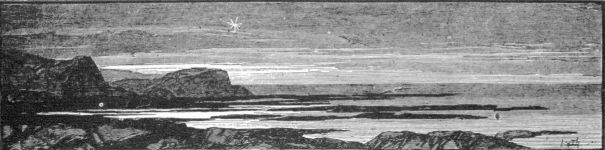
TIME AND LOVE.
And speed us on to untried ways;
New seasons ripen, perish, die,
And yet love stays.
The old, old love—like sweet, at first,
At last like bitter wine—
I know not if it blest or curst
Thy life and mine.
We cannot tempt him to delays;
Down to the past he bears the years,
And yet love stays.
Through changing task and varying dream
We hear the same refrain,
As one can hear a plaintive theme
Run through each strain.
He robs us of our care-free days;
He takes away our trust and truth:
And yet love stays.
O Time! take love! When love is vain,
When all its best joys die—
When only its regrets remain—
Let love, too, fly.
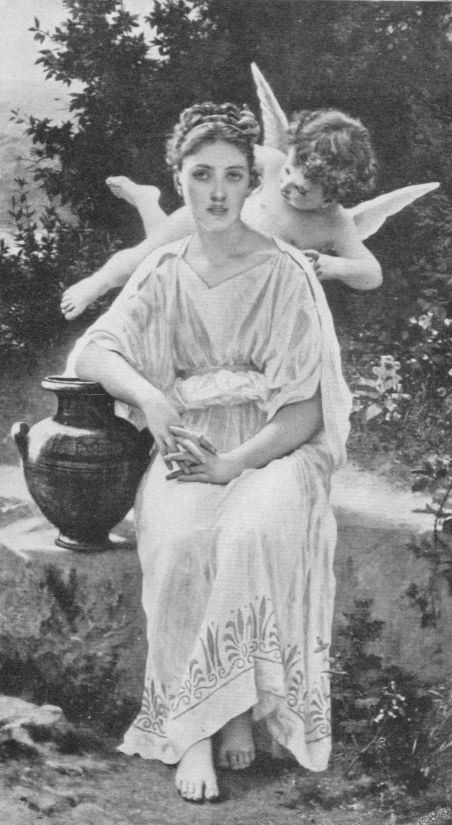
TIME AND LOVE
CHANGE.
I do not love in the old fond way.
I am your friend still—time has not estranged
One kindly feeling of that vanished day.
The rapture of that time, its sweet content,
Like visions of a sleeper's brain they seem—
And yet I cannot tell you how they went.
Upon me, dear? Is it so very strange
That hearts, like all things underneath God's skies
Should sometimes feel the influence of change?
The stars which seem so fixed and so sublime,
Vast continents and the eternal seas—
All these do change with ever-changing time.
Is not the same; our dearest aim or need,
Our lightest thought or feeling, hope or fear,
All, all the law of alteration heed.
Content with fancies of Youth's earliest hours?
The year outgrows the violets of May,
Although, maybe, there are no fairer flowers.
Which lies so cold, so voiceless, and so dumb.
And shall I miss it, dear? Why, yes, we miss
The violets always—till the roses come!
DESOLATION.
Of love unrequited, or cold death's woe,
Is sweet compared to that hour when we know
That some grand passion is on the wane;
Which lent a splendor to night and day
Are surely fading, and showing the gray
And dull groundwork of the commonplace;
When the hands clasp calmly without one thrill,
When we cannot muster by force of will
The old emotions that came at call;
When the heart, like a watch, runs out of gear,
And all the savor goes out of the year,
Oh, then is the time—if we can—to weep!
We must sit and face it with dry, sad eyes.
If we seek to hold it, the swifter joy flies—
We can only be passive, and let it go.
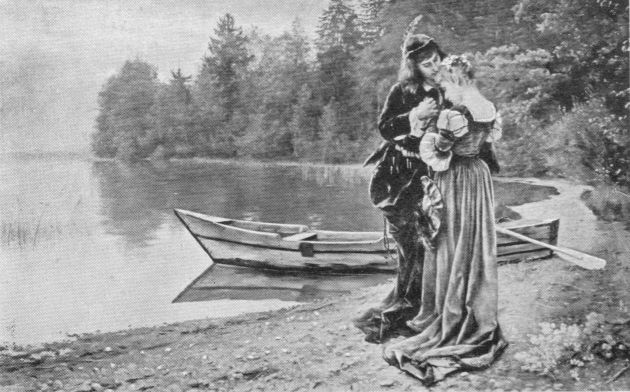
ISAURA.
"What play?" Why, this old play of winning hearts!
Nay, now, lift not thine eyes in that feigned way:
'Tis all in vain—I know thee and thine arts.
A study of thee; and while I admire
The practised skill with which thy plans are laid,
I can but wonder if thou dost not tire.
When overlong the season runs, I find
Those master-scenes of passion, blood, and death,
After a time do pall upon my mind.
To read the story thou hast read so oft—
Of ardent glances and deep quivering sighs,
Of haughty faces suddenly grown soft?
The scene that follows? Hearts are much the same;
The loves of men but vary in degree—
They find no new expressions for the flame.
As I know Hamlet's part, whoever plays.
Oh, does it not seem sometimes poor and weak?
I think thou must grow weary of their ways.
The humblest maiden with her dream untold
Rather than live a Queen of Hearts, like thee,
And find life's rarest treasures stale and old.
Fame, glory, riches, yet life will lack all.
Wherewith can salt be salted? And what way
Can life be seasoned after love doth pall?
THE COQUETTE.
That, like a restless comrade frightened sleep,
And every thought that found her, left a dart
That hurt her so, she could not even weep.
With love's red wine, save for some drops of gall
She knew was empty; though it had not spilled
Its sweets for one, but wasted them on all.
And saw her soul's bright armor red with rust,
And knew that all the riches of her youth
Were Dead Sea apples, crumbling into dust.
Hearthstones despoiled, and homes made desolate,
Made her cry out that she was ever born,
To loathe her beauty and to curse her fate.
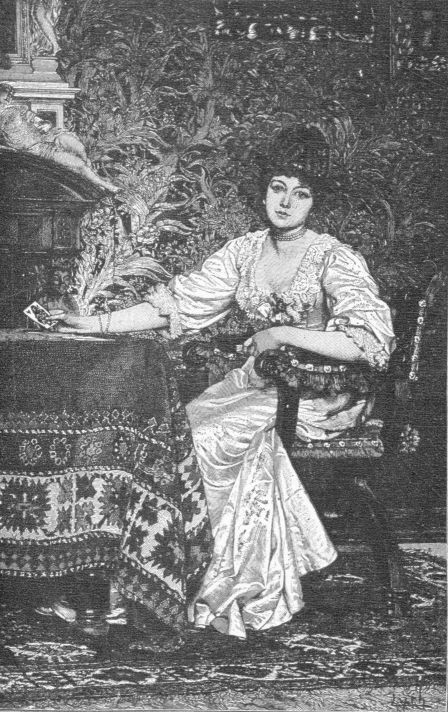
TIRED OF THE OFT-READ STORY
NEW AND OLD.
Sat vis-a-vis, while tender twilight hours
Went softly by us, treading as on flowers.
Then suddenly I saw within the room
The old love, long since lying in its tomb.
It dropped the cerecloth from its fleshless face
And smiled on me, with a remembered grace
That, like the noontide, lit the gloaming's gloom.
About it hung the odor of the dead;
Yet from its cavernous eyes such light was shed
That all my life seemed gilded, as with gold;
Unto the trembling new love '"Go," I said
"I do not need thee, for I have the old."
NOT QUITE THE SAME.
Since that sad season when in separate ways
Our paths diverged. There are no more such days
As dawned for us in that lost time when we
Dwelt in the realm of dreams, illusive dreams;
Spring may be just as fair now, but it seems
Not quite the same.
Knowing it best to go our ways alone.
Fair measures of success we both have known,
And pleasant hours, and yet something departed
Which gold, nor fame, nor anything we win
Can all replace. And either life has been
Not quite the same.
Has formed new ties that are both sweet and true,
But that wild rapture, which of old we knew,
Seems to have been a something set apart
With that lost dream. There is no passion, now,
Mixed with this later love, which seems, somehow,
Not quite the same.
Reasons and knows that all is for the best.
Yet vague regrets stir always in my breast,
As my soul's eyes turn sadly backward, seeing
The vanished self that evermore must be,
This side of what we call eternity,
Not quite the same.
FROM THE GRAVE.
I heard, with a heart that was strangely thrilled,
Out of the grave of a dead Past calling,
A voice I fancied forever stilled.
Silence hung over that grave like a pall,
But, borne on the breath of the last sad comer,
I listen again to the old-time call.
A senseless folly that mocked at me
A reckless passion that lacked all reason,
So I killed it, and hid it where none could see.
Then stabbed it through with a good sharp blade,
And cold and pallid I saw it lying,
And deep—ah' deep was the grave I made.
A thing like Love, for it laughs at Death.
There is no hushing, there is no stilling
That which is part of your life and breath.
The land, the people, that knew your slain;
It will push the sods from its grave, and find you
On wastes of water or desert plain.
You may list to sounds that are strange and new;
But, clear as a silver bell in a steeple,
That voice from the grave shall call to you.
And seem for a space to slay Love so;
But, all in its own good time and season,
It will rise and follow wherever you go.
Alone with your heart, as I sit to-day,
And hear that voice from your dead Past calling
Out of the graves that you hid away.
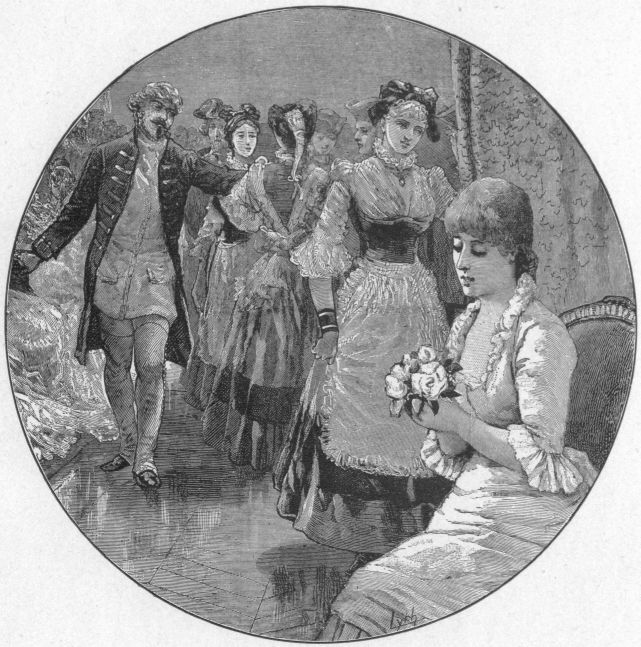
A WALTZ-QUADRILLE.
I felt as light as a wind-blown feather,
As we floated away, at the caller's will,
Through the intricate, mazy dance together.
Like mimic armies our lines were meeting,
Slowly advancing, and then retreating,
All decked in their bright array;
And back and forth to the music's rhyme
We moved together, and all the time
I knew you were going away.
From heart to brain as we gently glided
Like leaves on the wave of that waltz-quadrille;
Parted, met, and again divided—
You drifting one way, and I another,
Then suddenly turning and facing each other,
Then off in the blithe chasse,
Then airily back to our places swaying,
While every beat of the music seemed saying
That you were going away.
Of mirth and music and love and laughter;
For it all must end with this waltz-quadrille,
And life will be never the same life after.
Oh, that the caller might go on calling,
Oh, that the music might go on falling
Like a shower of silver spray,
While we whirled on to the vast Forever,
Where no hearts break, and no ties sever,
And no one goes away."
'Twas the end of the dream, and the end of the measure:
The last low notes of that waltz-quadrille
Seemed like a dirge o'er the death of Pleasure.
You said good-night, and the spell was over—
Too warm for a friend, and too cold for a lover—
There was nothing else to say;
But the lights looked dim, and the dancers weary,
And the music was sad, and the hall was dreary,
After you went away.
BEPPO.
Here at my feet, thy dear head on my breast,
I heard thee say thy heart would no more grieve
Or feel the olden ennui and unrest.
I, so long sought, so sighed for and so dear?
And do I not live but for thee alone?
"Thou hast seen Lippo, whom I loved last year!"
'Tis swallowed in the ocean of the past.
Art thou not glad 'twas Lippo, and not thee,
Whose brief bright day in that great gulf was cast.
Thy day is all before thee. Let no cloud,
Here in the very morn of our delight,
Drift up from distant foreign skies, to shroud
Our sun of love whose radiance is so bright.
Defeats his own heart's dearest purpose then.
No truer truth was ever told to thee—
Who has loved most, he best can love again.
The arts that please thee, wherefore art thou sad?
Since all my vast love-lore to thee is brought,
Look up and smile, my Beppo, and be glad.
TIRED.
The wind maybe, or the rain,
Or the cry of a bird in the copse outside,
Has brought back the past and its pain.
And I feel, as I sit here thinking,
That the hand of a dead old June
Has reached out hold of my heart's loose strings,
And is drawing them up in tune.
And long for you, love, through tears;
And it seems but to-day that I saw you go—
You, who have been gone for years.
And I seem to be newly lonely—
I, who am so much alone;
And the strings of my heart are well in tune,
But they have not the same old tone.
Sweeps down the bed of my soul,
As a turbulent river might sudden'y break
way from a dam's control.
It beareth a wreck on its bosom,
A wreck with a snow-white sail;
And the hand on my heart strings thrums away,
But they only respond with a wail.
THE BURDEN OF DEAR HUMAN TIES
THE SPEECH OF SILENCE.
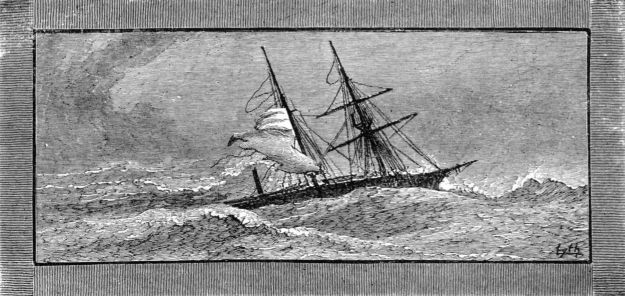
I know thou livest, and them lovest me,
And yet I wish some white ship would come sailing
Across the ocean, beating word from thee.
No anxious doubts or fears disturb my breast;
I only ask some little wave of language,
To stir this vast infinitude of rest.
So much I give, so much receive from thee;
Like subtle incense, rising from a censer,
So floats the fragrance of thy love round me.
Yet such I ask, blown hither by some wind,
To give relief to this too perfect knowledge,
The Silence so impresses on my mind.
To banish doubt or nourish tenderness!
I ask them but to temper love's convictions
The Silence all too fully doth express.
Too vast the knowledge which my soul hath stirred.
Send some white ship across the Sea of Silence,
And interrupt its utterance with a word.
CONVERSION.
I have said the sweetness was less than the gall;
Praising, nor cursing, the Hand that gives it,
I have drifted aimlessly through it all.
I have scoffed at the tale of a so-called heaven;
I have laughed at the thought of a Supreme Friend;
I have said that it only to man was given
To live, to endure; and to die was the end.
Generous-hearted and kind and true;
Since unto a worm like me he deigneth
To send so royal a gift as you.
Bright as a star you gleam on my bosom,
Sweet as a rose that the wild bee sips;
And I know, my own, my beautiful blossom,
That none but a God could mould such lips.
That ever a strong man's heart could hold,
In all the tales of heavenly pleasure
By poets sung or by prophets told;
For in the joy of your shy, sweet kisses,
Your pulsing touch and your languid sigh
I am filled and thrilled with better blisses
Than ever were claimed for souls on high.
Told of the beauties of unseen lands;
Of royal splendors and marvellous glories
Of the golden city not made with hands
For the silken beauty of falling tresses,
Of lips all dewy and cheeks aglow,
With—what the mind in a half trance guesses
Of the twin perfection of drifts of snow;
Carved like a statue in high relief—
These, as the eyes and the thoughts grow bolder,
Leave no room for an unbelief.
So my lady, my queen most royal,
My skepticism has passed away;
If you are true to me, true and loyal,
I will believe till the Judgment-day.
LOVE'S COMING.
With the clash of arms and the bugle's call:
But he came instead with a stealthy tread,
Which she did not hear at all.
As he rode like a prince to claim his bride:
In the sweet dim light of the falling night
She found him at her side.
Would wake her heart to a sudden glow:
She found in his face the familiar grace
Of a friend she used to know.
As the ocean is stirred by the wild storm's strife:
He brought her the balm of a heavenly calm,
And a peace which crowned her life.
OLD AND NEW.
Old times, old loves, old friendship, and old wine.
Why should the old monopolize all praise?
Then let the new claim mine.
Or fail me in my darkest hour of need;
Why perish with the ship that springs a leak
Or lean upon a reed?
When all the grace and beauty leave the old;
When like a rose it withers at my feet,
Or like a hearth grows cold.
In place of old, tear-blotted, burdened days;
I hold a sunlit present far more dear,
And worthy of my praise.
And all too narrow for the broadening soul,
Give me the fine, firm texture of the new,
Fair, beautiful, and whole!
PERFECTNESS.
The autumn wood robed in its scarlet clothes,
The matchless tinting on the royal rose
Whose velvet leaf by no least flaw is flecked,
Love's supreme moment, when the soul unchecked
Soars high as heaven, and its best rapture knows—
These hold a deeper pathos than our woes,
Since they leave nothing better to expect.
Can only mar. The gold will pale to gray;
Nothing remains tomorrow as to-day;
The lose will not seem quite so fait, and love
Must find its measures of delight made less.
Ah, how imperfect is all Perfectness!
LOVE AND LIFE
ATTRACTION.
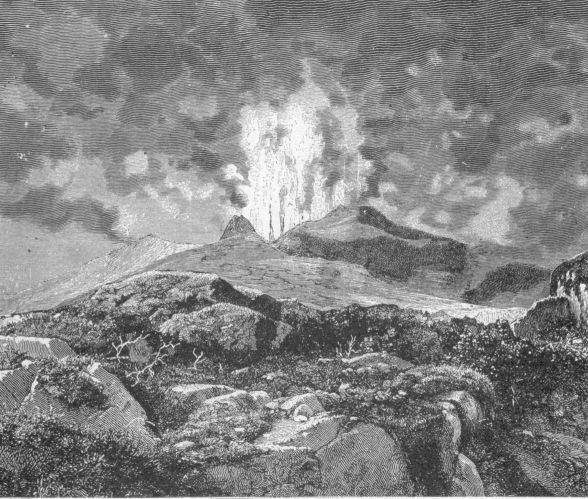
Gazed on each other, till a fierce unrest
Surged 'neath the meadow's seemingly calm breast,
And all the mountain's fissures ran with fire.
What could the mountain do but gaze and burn?
What could the meadow do but look and yearn,
And gem its bosom to conceal despair?
Till, lo! the lands a sudden earthquake shook,
The river fled, the meadow leaped and took
The leaning mountain in a close embrace.
GRACIA.
My Gracia, who hath so deserted me.
Thou art my friend, but if thou dost defame her
I shall not hesitate to challenge thee.
One not so bounteous-natured or so fair;
But she, Antonio, she was like no other—
I curse her not, because she was so rare.
Not blood, but sunshine, through her blue veins ran
Her soul spilled over with its wealth of blisses;
She was too great for loving but a man.
I blame her not for her inconstancy;
When I recall each radiant smile and feature,
I wonder she so long was true to me.
Do hold her not unlike the royal sun,
That, all unmated, roams the wide world over
And lights all worlds, but lingers not with one.
And so had dallied for a time with me,
And then had left me, I, who am but human,
Would slay her and her newer love, maybe.
Of those lost gods (and seeks him all in vain)
And has loved me as well as any other
Of her men loves, why, I do not complain.
AD FINEM.
That scorched my soul with its burning breath
I clutched my fingers in murderous fashion,
And gathered them close in a grip of death;
For why should I fan, or feed with fuel,
A love that showed me but blank despair?
So my hold was firm, and my grasp was cruel—
I meant to strangle it then and there!
It rose from its grave last night, and came
And stood by my bed till the early morning,
And over and over it spoke your name.
Its throat was red where my hands had held it;
It burned my brow with its scorching breath;
And I said, the moment my eyes beheld it,
"A love like this can know no death."
In the lost and beautiful past to me
I would gladly barter my hopes of Heaven
And all the bliss of Eternity.
For never a joy are the angels keeping,
To lay at my feet in Paradise,
Like that of into your strong arms creeping,
And looking into your love-lit eyes.
This thought is a sin of the deepest dye;
But I know, too, if an angel beckoned,
Standing close by the Throne on High,
And you, adown by the gates infernal,
Should open your loving arms and smile,
I would turn my back on things supernal,
To lie on your breast a little while.
Mine in body and soul, my own—
I would bear unending tortures sweetly,
With not a murmur and not a moan.
A lighter sin or a lesser error
Might change through hope or fear divine;
But there is no fear, and hell has no terror,
To change or alter a love like mine.
BLEAK WEATHER.
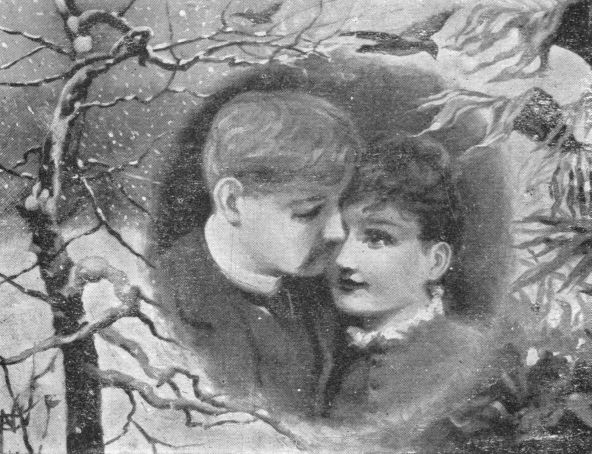
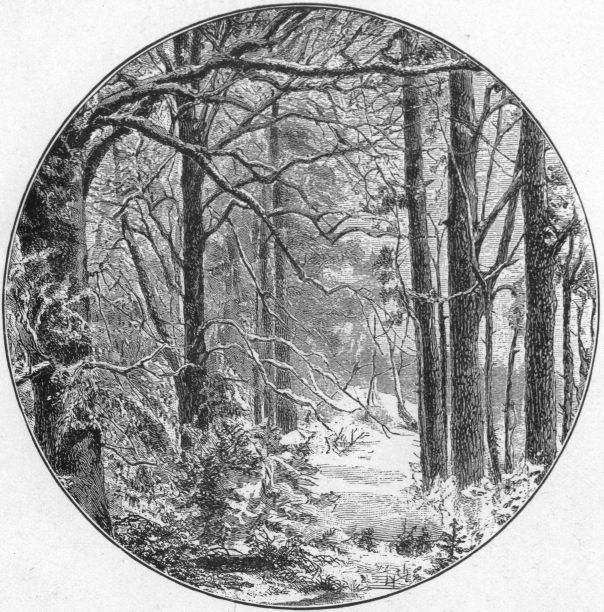
The white snows are falling;
And all through the woods where I wandered with you
The loud winds are calling;
And the robin that piped to us tune upon tune,
Neath the oak, you remember,
O'er hill-top and forest has followed the June
And left us December.
And false in the shadows;
He has found new delights in the land where he's gone,
Greener woodlands and meadows.
Let him go! what care we? let the snow shroud the lea,
Let it drift on the heather;
We can sing through it all: I have you, you have me.
And we'll laugh at the weather.
That is bleaker and colder:
It cannot dismay us; we dare it, we scorn,
For our love makes us bolder.
Ah, Robin! sing loud on your far distant lea,
You friend in fair weather!
But here is a song sung that's fuller of glee,
By two warm hearts together.
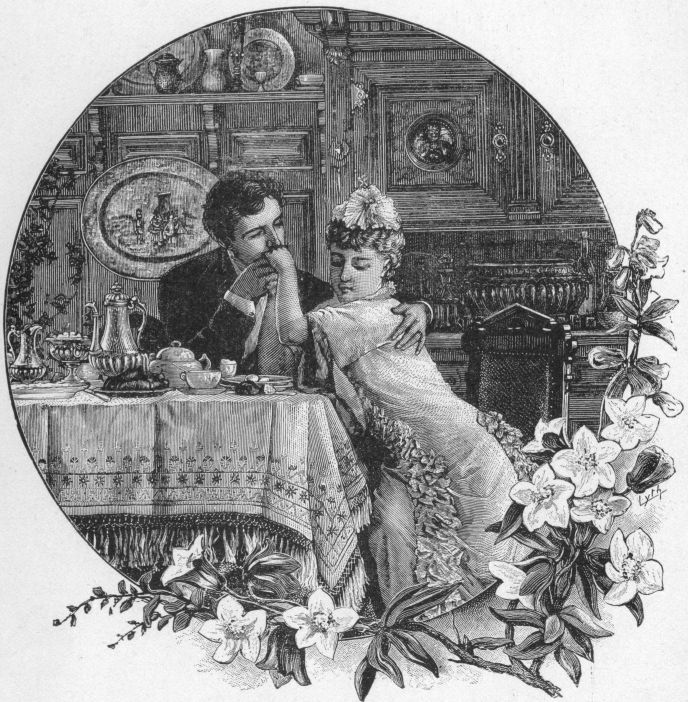
AN ANSWER.
And all the aim of life
Was just to lilt on like a rhyme,
Then I would be your wife.
And crowned with golden weather,
How happy then through green-clad ways
We two could stray together!
And we had naught to do
But just to sit and plan delights,
Then I would wed with you.
Its soberest pace the "glide,"
Then I would choose you for my mate,
And keep you at my side.
And labor half of life,
And all the laughter and good cheer
Give place to wearing strife.
And then a heart that's true
Is better far than grace or gold—
And so, my love, adieu!
I cannot wed with you.
YOU WILL FORGET ME.
They bind up the wounds which we think are so deep;
This dream of our youth will fade out as the splendor
Fades from the skies when the sun sinks to sleep;
The cloud of forgetfulness, over and over
Will banish the last rosy colors away,
And the fingers of time will weave garlands to cover
The scar which you think is a life-mark to-day.
Now above all things will soon seem no prize;
And the heart, which you hold not in keeping to prove it
True or untrue, will lose worth in your eyes.
The one drop to-day, that you deem only wanting
To fill your life-cup to the brim, soon will seem
But a valueless mite; and the ghost that is haunting
The aisles of your heart will pass out with the dream.
The words which you think are so pointed with pain.
Time loves a new lay; and the dirge he is playing
Will change for you soon to a livelier strain.
I shall pass from your life—I shall pass out forever,
And these hours we have spent will be sunk in the past.
Youth buries its dead; grief kills seldom or never,
And forgetfulness covers all sorrows at last.
THE FAREWELL OF CLARIMONDE.
(Suggested by the "Clarimonde" Of Théophile Gautier.
Although no more I haunt thy dreams at night,
Thy hungering heart forever must regret me,
And starve for those lost moments of delight.
Nor fears of Hell, nor hopes of Heaven beyond:
Before the Cross shall rise my fair form's beauties—-
The lips, the limbs, the eyes of Clarimonde.
Shall taste to one who knew my red mouth's bliss,
When Youth and Beauty dwelt in Love's own palace,
And life flowed on in one eternal kiss.
From viewless lands, by paths no man e'er trod!
I braved all fears, all dangers dared, to teach thee
A love more mighty than thy love of God.
Such joys, Romauld, as ours, when fierce yet fond
I clasped thee—kissed thee—crowned thee my one lover:
Thou canst not find another Clarimonde.
Possessed all women, and could never tire;
A new life dawned for him who once caressed me;
Satiety itself I set on fire.
Kings cast by crowns for one hour on my breast:
And all the passionate tide of love within me
I gave to thee, Romauld. Wert thou not blest?
Our welded souls. But not in prayer well conned,
Not in thy dearly-purchased peace of Heaven,
Canst thou forget those hours with Clarimonde.
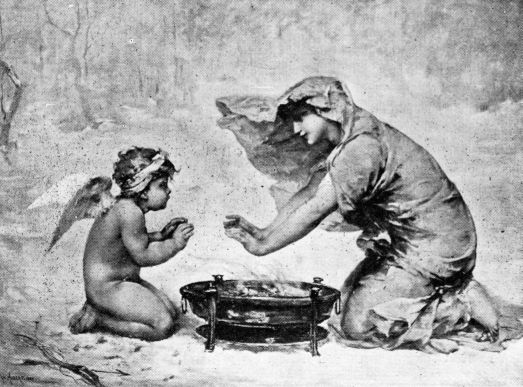
THE TRIO.
From dawn to even-tide doth cast his ray;
But the full splendor of his perfect might
Is reached but once throughout the livelong day.
Do day and night plash on the pebbled shore;
But the strong tide of the resistless ocean
Sweeps in but one hour of the twenty-four.
We may be moved in fancy's fleeting fashion—
May treasure up a word, a tone, a glance;
But only once we feel the soul's great passion.
(The saddest, the unkindest of the three);
And only once while we sojourn on earth
Can that strange trio come to you or me.
MISCELLANEOUS POEMS.
THE LOST GARDEN.
From the south-east side of the mountain-ledge;
And the earliest tint of the dawn came groping
Down through its paths, from the day's dim edge.
The bluest skies and the reddest roses
Arched and varied its velvet sod;
And the glad birds sang, as the soul supposes
The angels sing on the hills of God.
With life's rare rapture and keen delight,
And yet in my heart was a constant thirsting
For something over the mountain-height.
I wanted to stand in the blaze of glory
That turned to crimson the peaks of snow,
And the winds from the west all breathed a story
Of realms and regions I longed to know.
The brightest blossoms that breathe of June;
I saw in the east how the sun was glowing,
And the gold air shook with a wild bird's tune;
I heard the drip of a silver fountain,
And the pulse of a young laugh throbbed with glee
But still I looked out over the mountain
Where unnamed wonders awaited me.
That led to the path I longed to climb;
But a shadow fell on my spirit straightway,
For close at my side stood gray-beard Time.
I paused, with feet that were fain to linger,
Hard by that garden's golden gate,
But Time spoke, pointing with one stern finger;
"Pass on," he said, "for the day groes late."
The heights recede which I thought to find,
And the light seems dim on the mountain yonder,
When I think of the garden I left behind.
Should I stand at last on its summit's splendor,
I know full well it would not repay
For the fair lost tints of the dawn so tender
That crept up over the edge o' day.
If ways there are to that land, in sooth,
For what man succeeds in ever finding
A path to the garden of his lost youth?
But I think sometimes, when the June stars glisten,
That a rose scent dufts from far away,
And I know, when I lean from the cliffs and listen,
That a young laugh breaks on the air like spray.
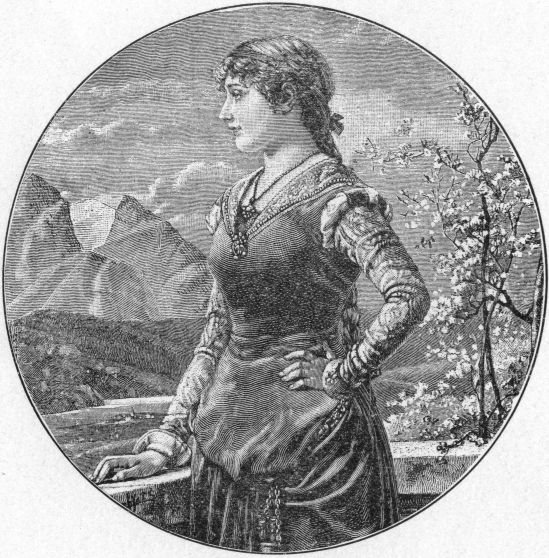
ART AND HEART.
It is not art, but heart, which wins the wide world over.
And the finest phrase falls dead if there is no feeling behind it.
Unless we feel his heart throb through the music he plays us.
Unless he writes from a full, warm heart he gives us little pleasure.
And it is not the words of the prayer, but the yearning back of the praying.
With a joy that is almost pain, but it is the player's feeling.
Which thrills us through and through, but the heart which beats under the rhyming.
That it is not art, but heart, which wins the wide world over.
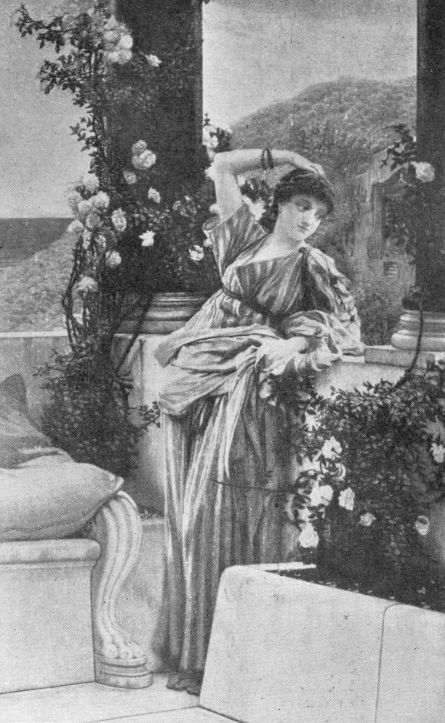
RECOLLECTIONS
MOCKERY.
Who, God knows, find at best too much of gall,
And then with generous, open hands kneel, giving
Unto the dead our all?
With idle jests, or scorn, or cruel sneers,
And when it cannot know, on some to-morrow,
Speak of its woe through tears?
The love, the praise, the floral offerings?
But palpitating, living hearts are broken
For want of just these things.
AS BY FIRE.
For spiritual perfection here below,
This vigorous frame, with healthful fervor burning,
Seems my determined foe,
So cruelly sometimes it wages war
Against a wholly spiritual existence
Which I am striving for.
Some hope it strangles, of divinest birth,
With a swift rush of violent emotions
Which link me to the earth.
Within my bosom in a deadly strife,
One for the loftier aims for souls intended,
One for the earthly life.
Which brings out all my will-power and control,
This very conflict at the last shall win me
The loved and longed-for goal.
Is the white light that shows me my own strength.
A furnace, fed by the divinest fuel,
It may become at length.
I sometimes wonder if we shall not find
That not by deeds, but by what we've resisted,
Our places are assigned.
IF I SHOULD DIE.
RONDEAU.
In that strange hour I would not have one foe.
There are no words too beautiful to say
Of one who goes forevermore away
Across that ebbing tide which has no flow.
If faults were mine, no one would call them so,
Or speak of me in aught but praise that day,
If I should die.
While I can hear and understand, bestow
That gentle treatment and fond love, I pray,
The lustre of whose late though radiant way
Would gild my grave with mocking light, I know,
If I should die.
MÉSALLIANCE.
It is not of the flesh, it is not of the brain,
Nor yet of a heart that is breaking:
But down still deeper, and out of sight—
In the place where the soul and the body unite—
There lies the scat of the aching.
But the soul is fickle, and longs to fly
From the fettering mesalliance:
And she tears at the bonds which are binding her so,
And pleads with the body to let her go,
But he will not yield compliance.
When he wedded the soul; and he holds her fast,
And swears that he will not loose her;
That he will keep her and hide her away
For ever and ever and for a day
From the arms of Death, the seducer.
The strife 'twixt a soul that would be free
And a body that will not let her.
And I say to my soul, "Be calm, and wait;
For I tell ye truly that soon or late
Ye surely shall drop each fetter."
For the soul is not of thy mortal clay,
But is formed in spirit fashion."
And still through the hours of the solemn night
I can hear my sad soul's plea for flight,
And my body's reply of passion.
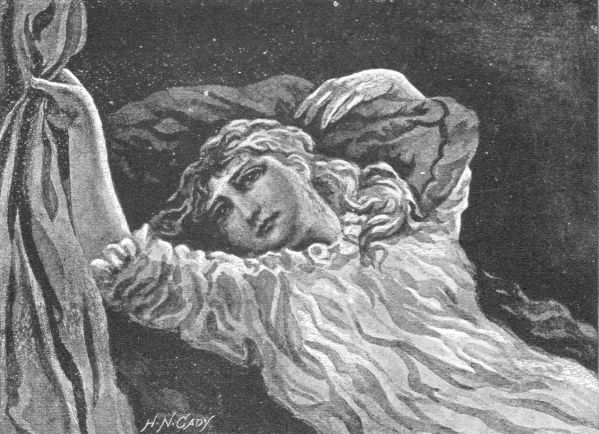
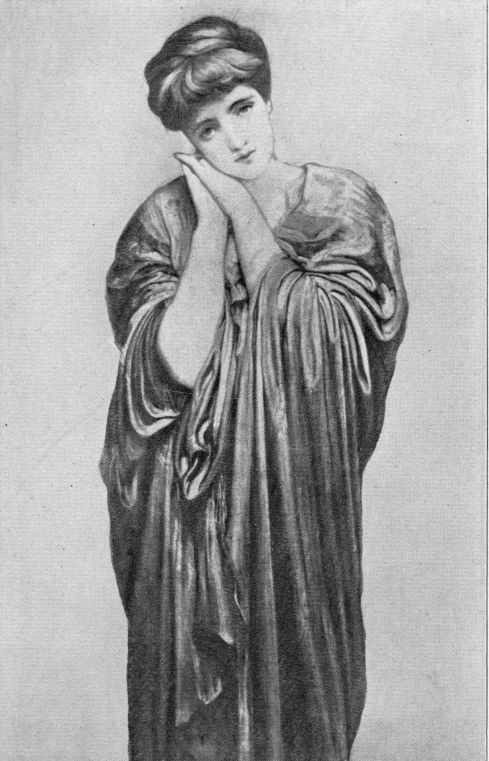
DAY DREAMS
RESPONSE.
My shutters open to the Spring's surprise,
"Tell me, O Earth, how is it that in you
Year after year the same fresh feelings rise?
How do you keep your young exultant glee?
No more those sweet emotions come to me.
Of healthful life goes leaping as of old;
Your royal dawns retain their pomp and pride;
Your sunsets lose no atom of their gold.
How can this wonder be?" My soul's fine ear
Leaned, listening, till a small voice answered near:
My nights encroach not on the rights of dawn.
I rush not breathless after some delight;
I waste no grief for any pleasure gone.
My July noons burn not the entire year.
Heart, hearken well!" "Yes, yes; go on; I hear."
Pave all the dim and distant realms of space.
I do not bid my crimson dawns unfold
To lend the midnight a fictitious grace.
I break no law, for all God's laws are good.
Heart, hast thou heard?" "Yes, yes; and understood."
DROUTH.
That finds a ready outlet in the flow
Of salt and bitter tears is blessed woe,
And does not need our sympathies. The rain
But fits the shorn field for new yield of grain;
While the red, brazen skies, the sun's fierce glow,
The dry, hot winds that from the tropics blow
Do parch and wither the unsheltered plain.
The anguish that through long, remorseless years
Looks out upon the world with no relief
Of sudden tempests or slow-dripping tears—
The still, unuttered, silent, wordless grief
That evermore doth ache, and ache, and ache—
This is the sorrow wherewith hearts do break.
THE CREED.
And came desired and welcome into life,
Is of immaculate conception. He
Whose heart is full of tenderness and truth,
Who loves mankind more than he loves himself,
And cannot find room in his heart for hate,
May be another Christ. We all may be
The Saviours of the world if we believe
In the Divinity which dwells in us
And worship it, and nail our grosser selves,
Our tempers, greeds, and our unworthy aims,
Upon the cross. Who giveth love to all;
Pays kindness for unkindness, smiles for frowns;
And lends new courage to each fainting heart,
And strengthens hope and scatters joy abroad—
He, too, is a Redeemer, Son of God.
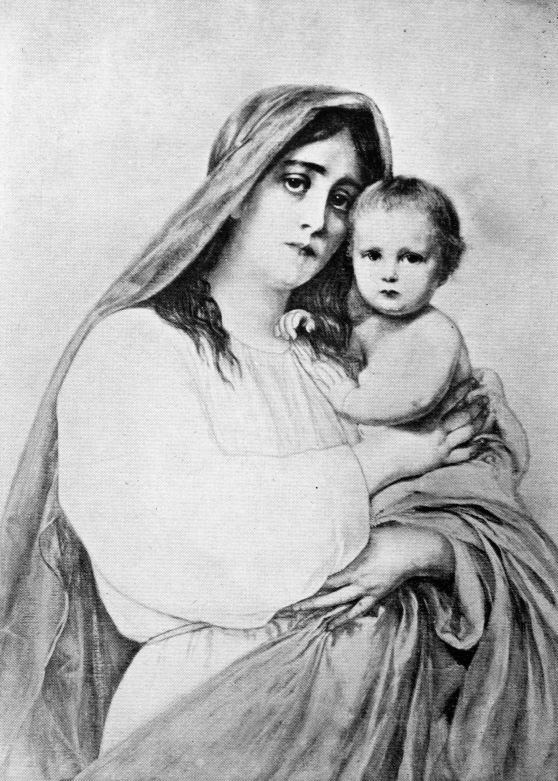
"CAME DESIRED AND WELCOMED INTO LIFE"
PROGRESS.
That all the glory of the universe
May beautify it. Not the narrow pane
Of one poor creed can catch the radiant rays
That shine from countless sources. Tear away
The blinds of superstition; let the light
Pour through fair windows broad as Truth itself
And high as God.
Through some priest-curtained orifice, and grope
Along dim corridors of doubt, when all
The splendor from unfathomed seas of space
Might bathe it with the golden waves of Love?
Sweep up the debris of decaying faiths;
Sweep down the cobwebs of worn-out beliefs,
And throw your soul wide open to the light
Of Reason and of Knowledge. Tune your ear
To all the wordless music of the stars
And to the voice of Nature, and your heart
Shall turn to truth and goodness as the plant
Turns to the sun. A thousand unseen hands
Reach down to help you to their peace-crowned heights.
And all the forces of the firmament
Shall fortify your strength. Be not afraid
To thrust aside half-truths and grasp the whole.
MY FRIEND.
I shrank repelled, as one shrinks from a foe
Who stands with dagger poised, as for a blow.
I was in search of Pleasure and of Gain;
I turned aside to let him pass: in vain;
He looked straight in my eyes and would not go.
"Shake hands," he said; "our paths are one, and so
We must be comrades on the way, 'tis plain."
Through all my veins it sent a strengthening glow.
I straightway linked my arm in his, and lo!
He led me forth to joys almost divine;
With God's great truths enriched me in the end:
And now I hold him as my dearest friend.
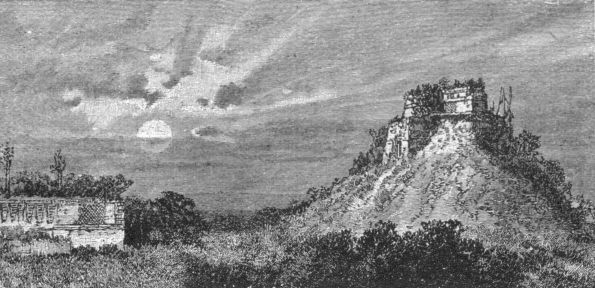
CREATION.
God was so full of love, in his embrace
He clasped the empty nothingness of space,
And low! the solar system! High in state
The mighty sun sat, so supreme and great
With this same essence, one smile of its face
Brought myriad forms of life forth; race on race,
From insects up to men.
All that is grand in nature or in art
Sprang into being. He who would build sublime
And lasting works, to stand the test of time,
Must inspiration draw from his full heart.
And he who loveth widely, well, and much,
The secret holds of the true master touch.
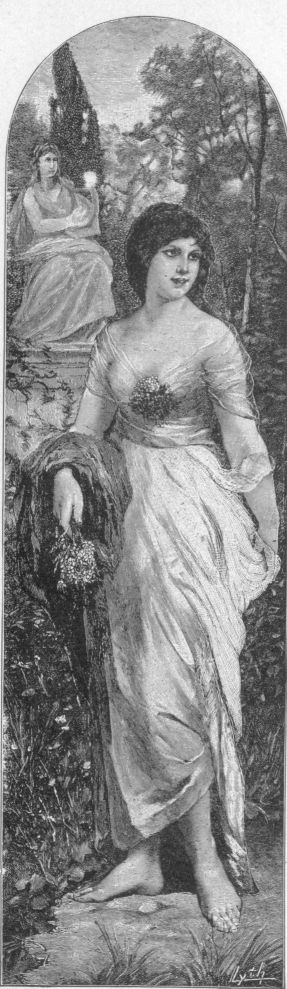
RED CARNATIONS.
There met a bright immortal band,
To choose their emblems from the flowers
That made an Eden of that land.
Strayed down the garden path alone
And gathered sprays of heliotrope,
To place in clusters at her zone.
Forever fresh, forever fair.
Inconstancy with flippant mien
The fading primrose chose to wear.
But Beauty picked it for her hair.
Love paced the garden with a sigh
He found no fitting emblem there.
A conflagration turned to bloom;
It even put the rose to shame,
Both in its beauty and perfume.
He plucked it, and it brighter grew.
In cold or heat, all undismayed,
It kept its fragrance and its hue.
He cried, "embodied in this flower.
This is the emblem I will keep."
Love wore carnations from that hour.
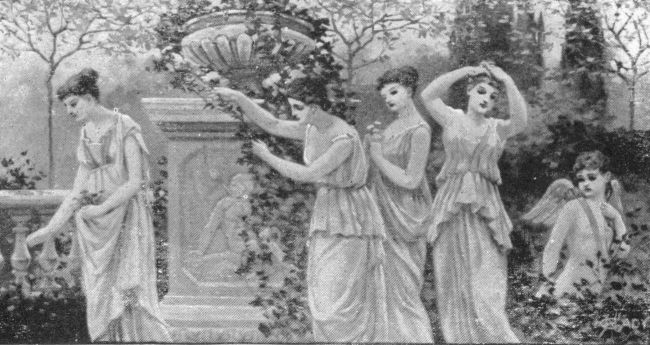
LIFE IS TOO SHORT.
Let dead delight bury its dead, I say,
And let us go upon our way forgetting
The joys and sorrows of each yesterday
Between the swift sun's rising and its setting
We have no time for useless tears or fretting:
Life is too short.
Time is the best avenger if we wait;
The years speed by, and on their wings bear healing;
We have no room for anything like hate.
This solemn truth the low mounds seem revealing
That thick and fast about our feet are stealing:
Life is too short.
Too short for spite, but long enough for love.
And love lives on forever and forever;
It links the worlds that circle on above:
'Tis God's first law, the universe's lever.
In His vast realm the radiant souls sigh never
"Life is too short."
A SCULPTOR.
Chisel and hammer to the block at hand,
Before my half-formed character I stand
And ply the shining tools of mental gifts.
I'll cut away a huge, unsightly side
Of selfishness, and smooth to curves of grace
The angles of ill-temper.
Shall my sure hammer leave of silly pride.
Chip after chip must fall from vain desires,
And the sharp corners of my discontent
Be rounded into symmetry, and lent
Great harmony by faith that never tires.
Unfinished still, I must toil on and on,
Till the pale critic, Death, shall say, "'Tis done."
BEYOND.
Across to that strange country—the Beyond;
And yet, not strange, for it has grown to be
The home of those of whom I am so fond,
They make it seem familiar and most dear,
As journeying friends bring distant regions near.
I think I almost see the gleaming strand.
I know I feel those who have gone from here
Come near enough sometimes to touch my hand.
I often think, but for our veiled eyes,
We should find Heaven right round about us lies.
When from this dear earth I shall journey out
To that still dearer country of the dead,
And join the lost ones, so long dreamed about.
I love this world, yet shall I love to go
And meet the friends who wait for me, I know.
The seal of death set on some well-loved face
But that I think, "One more to welcome me
When I shall cross the intervening space
Between this land and that one 'over there';
One more to make the strange Beyond seem fair."
And so the grave has lost its victory.
It is but crossing—with a bated breath
And white, set face—a little strip of sea
To find the loved ones waiting on the shore,
More beautiful, more precious than before.
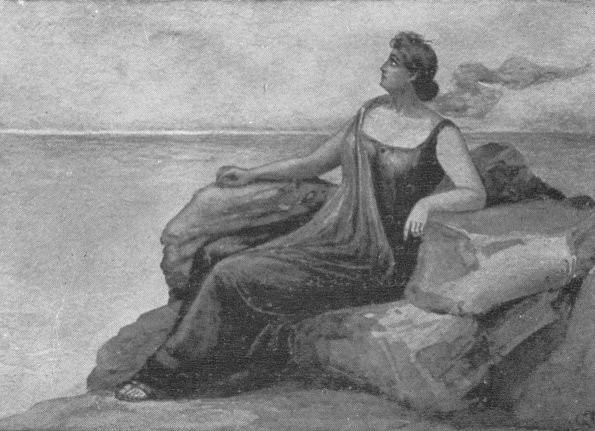
THE SADDEST HOUR.
Is not that season of supreme despair
When we can find no least light anywhere
To gild the dread, black shadow of the Cross;
Not in that luxury of sorrow when
We sup on salt of tears, and drink the gall
Of memories of days beyond recall—
Of lost delights that cannot come again.
We look out on the great, wide world of men,
And, smiling, lean toward a bright to-morrow,
Then backward shrink, with sudden keen regret,
To find that we are learning to forget:
Ah! then we face the saddest hour of sorrow.
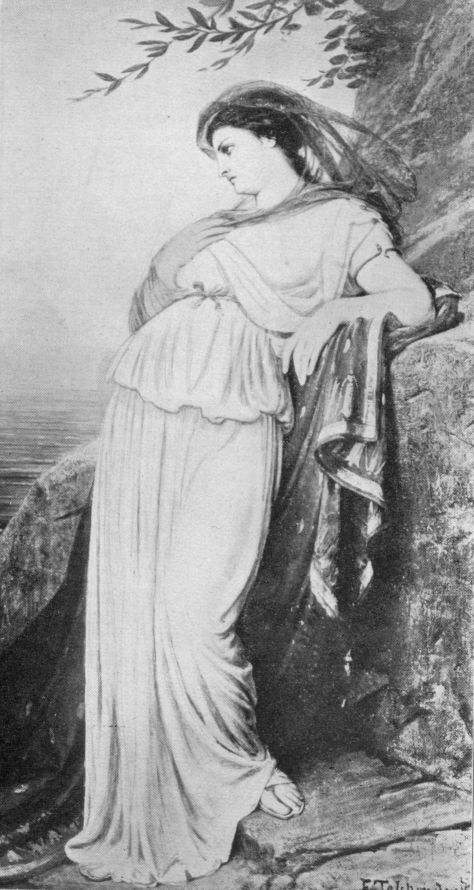
ACROSS THE SEA OF SILENCE
SHOW ME THE WAY.
I do not care what tempests may assail me,
I shall be given courage for the strife;
I know my strength will not desert or fail me;
I know that I shall conquer in the fray:
Show me the way.
Where body shall be servant to the soul.
I do not care what tides of woe or pain
Across my life their angry waves may roll,
If I but reach the end I seek, some day:
Show me the way.
Above vain grievings for unworthy treasures;
Above all sorrow that finds balm in time;
Above small triumphs or belittling pleasures;
Up to those heights where these things seem child's-play:
Show me the way.
Which springs from an inward consciousness of right;
To where all conflicts with the flesh shall cease,
And self shall radiate with the spirit's light.
Though hard the journey and the strife, I pray,
Show me the way.
MY HERITAGE.
That all the shadows which fall on the way
Of every human being could not stay,
But fled before the light my spirit lent.
Men sighed and said, "Those rosy hues will fade
As you pass on into the glare and shade!"
Still beautiful the way seems to mine eyes.
The world is full of sorrow and of wrong.
Full soon your lips shall breathe forth sighs—not song."
The day wears on, and yet I am not sad.
Through wound on wound, grow bitter to your kind."
They were false prophets; day by day I find
More cause for love, and less cause for distrust.
The world will quaff, but it will not repay."
Yet in the emptied flagons, day by day,
True hearts pour back a nectar as divine.
Look to it, then, and keep its soil well tilled.
I hold that my best wishes are fulfilled
Because I love so much, and cannot hate.
RESOLVE.
The structure of thy future. Do not grope
Among the shadows of old sins, but let
Thine own soul's light shine on the path of hope
And dissipate the darkness. Waste no tears
Upon the blotted record of lost years,
But turn the leaf and smile, oh, smile, to see
The fair white pages that remain for thee.
The spark divine dwells in thee: let it grow.
That which the upreaching spirit can achieve
The grand and all-creative forces know;
They will assist and strengthen as the light
Lifts up the acorn to the oak tree's height.
Thou hast but to resolve, and lo! God's whole
Great universe shall fortify thy soul.
AT ELEUSIS.
When early morning's banners were unfurled.
From high Olympus, gazing on the world,
The ancient gods once saw it with delight.
Sad Demeter had in a single night
Removed her sombre garments! and mine eyes
Beheld a 'broidered mantle in pale dyes
Thrown o'er her throbbing bosom. Sweet and clear
There fell the sound of music on mine ear.
And from the South came Hermes, he whose lyre
One time appeased the great Apollo's ire.
The rescued maid, Persephone, by the hand
He led to waiting Demeter, and cheer
And light and beauty once more blessed the land.
COURAGE.
That springs forth from the brow of pain, full-grown,
Minerva-like, and dares all dangers known,
And all the threatening future yet may bring;
Crowned with the helmet of great suffering;
Serene with that grand strength by martyrs shown,
When at the stake they die and make no moan,
And even as the flames leap up are heard to sing:
It wears its sorrows like a coat of mail;
And Fate, the archer, passes by dismayed,
Knowing his best barbed arrows needs must fail
To pierce a soul so armored and arrayed
That Death himself might look on it and quail.
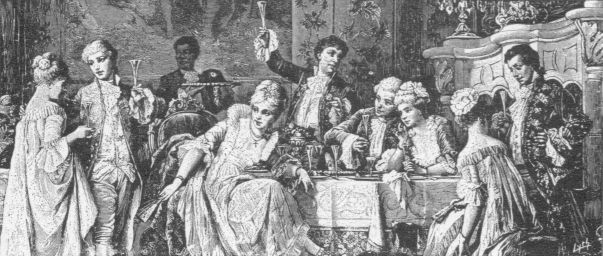
SOLITUDE.
Weep, and you weep alone;
For the sad old earth must borrow its mirth,
But has trouble enough of its own.
Sing, and the hills will answer;
Sigh, it is lost on the air;
The echoes bound to a joyful sound,
But shrink from voicing care.
Grieve, and they turn and go;
They want full measure of all your pleasure,
But they do not need your woe.
Be glad, and your friends are many;
Be sad, and you lose them all;
There are none to decline your nectar'd wine,
But alone you must drink life's gall.
Fast, and the world goes by.
Succeed and give, and it helps you live,
But no man can help you die.
There is room in the halls of pleasure
For a large and lordly train,
But one by one we must all file on
Through the narrow aisles of pain.
THE YEAR OUTGROWS THE SPRING.
And clasps the summer with a new delight,
Yet wearied, leaves her languors and her heat
When cool-browed autumn dawns upon his sight.
And feels new pride in blossoms fully blown.
But even this to deeper joy gives place
When bending boughs 'neath blushing burdens groan.
The heart outgrows old happiness, old grief,
And suns itself in feelings new and strange;
The most enduring pleasure is but brief.
Nothing contents us long, however dear.
The spirit in us, like the grosser frame,
Outgrows the garments which it wore last year.
We tire of well-worn ways we seek for new.
This restless craving in the souls of men
Spurs them to climb, and seek the mountain view.
To meek-browed Constancy, and sing her praise.
Unto enlivening Change I shall build mine,
Who lends new zest and interest to my days.
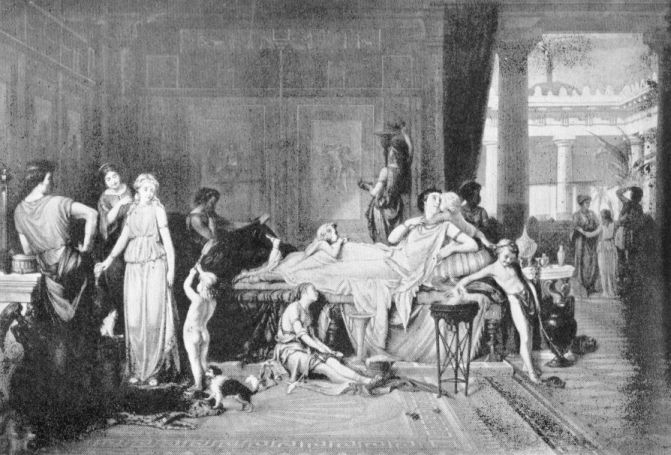
"...AND LIGHT AND BEAUTY BLESSED THE LAND"
THE BEAUTIFUL LAND OF NOD.
Your head like the golden-rod,
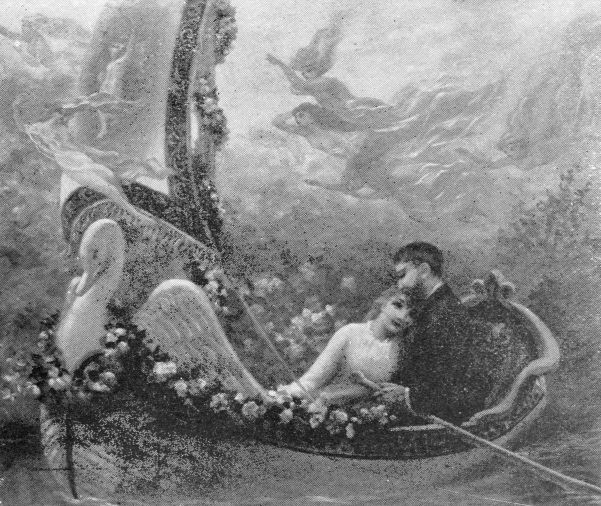
And we will go sailing away from here
To the beautiful Land of Nod.
Away from life's hurry and flurry and worry,
Away from earth's shadows and gloom,
To a world of fair weather we'll float off together,
Where roses are always in bloom.
Your hands like the leaves of a rose,
And we will go sailing to those fair lands
That never an atlas shows.
On the North and the West they are bounded by rest,
On the South and the East, by dreams;
'Tis the country ideal, where nothing is real,
But everything only seems.
Those eyes like a bright bluebell,
And we will sail out under starlit skies,
To the land where the fairies dwell.
Till it reaches that mystical Isle
Which no man hath seen, but where all have been,
And there we will pause awhile.
I will croon you a song as we float along
To that shore that is blessed of God,
Then, ho! for that fair land, we're off for that rare land,
That beautiful Land of Nod.
THE TIGER.
A tiger soundly sleeping, till one day
A bold young hunter chanced to come that way.
I long to rouse him into swift surprise."
The well aimed arrow shot from amorous eyes,
A coal of fire his glowing eyeball burns,
His mighty frame with savage hunger yearns.
Alas! bold hunter, what shall be thy fate?
Thou canst not fly; it is too late, too late.
Woe, woe unto the whole rash world of men.
The wakened tiger will not sleep again.
ONLY A SIMPLE RHYME.
Where "blisses" rhymed with "kisses," "heart," with "dart:"
Yet, reading it, new strength I seemed to borrow,
To live on bravely and to do my part.
Of lonely hours and sorrow's unrelief:
I smiled at first; but there came with the reading
A sense of sweet companionship in grief.
I thought about the singer of that song.
Some other breast felt this same weary aching;
Another found the summer days too long.
I read, and on the singer, all unknown,
I breathed a fervent though a silent blessing,
And seemed to clasp his hand within my own.
And though he never sings another strain,
He has performed the mission of the poet,
In helping some sad heart to bear its pain.

I WILL BE WORTHY OF IT.
My untried strength may fail me,
Or, half-way up the mountain peak,
Fierce tempests may assail me.
But though that place I never gain,
Herein lies comfort for my pain—
I will be worthy of it.
Despite my earnest labor;
I may not grasp results that bless
The efforts of my neighbor;
But though my goal I never see,
This thought shall always dwell with me—
I will be worthy of it.
May never fall on my way;
My path may always lead through night,
Like some deserted by-way;
But though life's dearest joy I miss
There lies a nameless strength in this—
I will be worthy of it.
SONNET.
That goes forth through the summer day and sings.
And gathers honey from all growing things
In garden plot or on the clover lea.
Would seek her hive, she cannot lift her wings.
So heavily the too sweet bin den clings,
From which she would not, and yet would, fly free.
To lift itself to peace crowned heights, above
The common way where countless feet have trod,
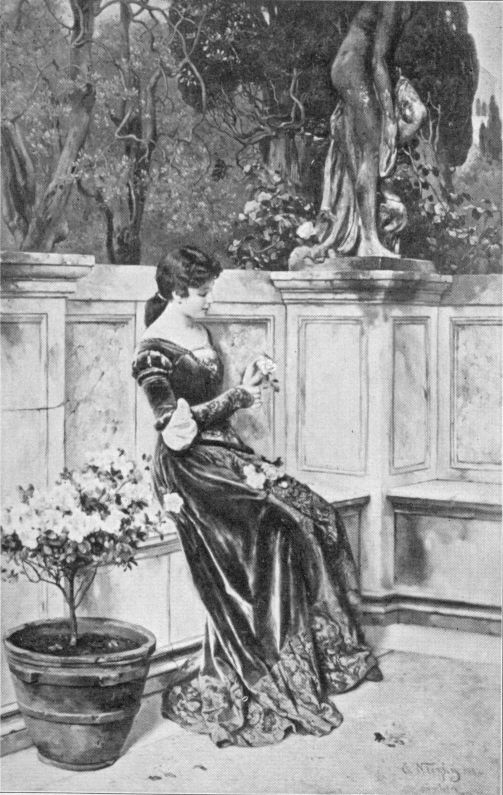
Lo! then, this burden of dear human ties,
This growing weight of precious earthly love,
Binds down the spirit that would soar to God.
REGRET.
A shadowy creature robed somewhat like Woe,
But fairer in the face, whom all men know
By her sad mien and eyes forever wet.
No heart would seek her; but once having met,
All take her by the hand, and to and fro
They wander through those paths of long ago—
Those hallowed ways 'twere wiser to forget.
And bade me enter; but I answered "No!
I will pass on with my bold comrade, Fate;
I have no tears to waste on thee—no time;
My strength I hoard for heights I hope to climb:
No friend art thou for souls that would be great."
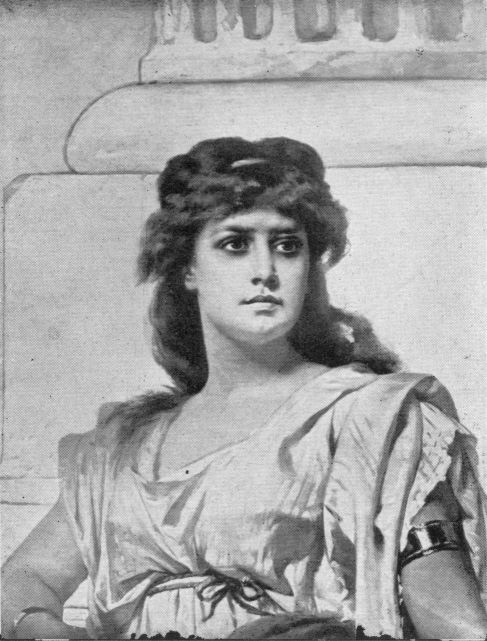
"...THE STRIFE THAT IS WEARYING ME"
LET ME LEAN HARD.
In all earth's devious ways I sought for rest
And found it not. I will be strong, said I,
And lean upon myself. I will not cry
And importune all heaven with my complaint.
But now my strength fails, and I fall, I faint:
Let me lean hard.
I said I will walk on, I fear no harm,
The spark divine within my soul will show
The upward pathway where my feet should go.
But now the heights to which I most aspire
Are lost in clouds. I stumble and I tire:
Let me lean hard.
Which speeds the solar systems on their course
Can take, unfelt, the burden of my woe,
Which bears me to the dust and hurts me so.
I thought my strength enough for any fate,
But lo! I sink beneath my sorrow's weight:
Let me lean hard.
PENALTY.
All that I have seems void and vain.
If I had not been happy I were not sad;
Though my salt is savorless, why complain?
All that is mine seems worse than naught;
Yet I know as I sit in the dark and pine,
No cup could be drained which had not been fraught.
The day that now is seems dull with gloom;
Yet I bear its dullness and darkness because
'Tis but the reaction of glow and bloom.
I am starved on the diet which now is mine;
Yet I could not turn hungry from water and bread,
If I had not been sated on fruit and wine.
SUNSET.
And peer into night's chasm, dark and damp;
High in his hand he held a blazing lamp,
Then dropped it and plunged headlong down the ledge.
I saw the dim skies suddenly flush bright.
'Twas but the expiring glory of the light
Flung from the hand of the adventurous day.
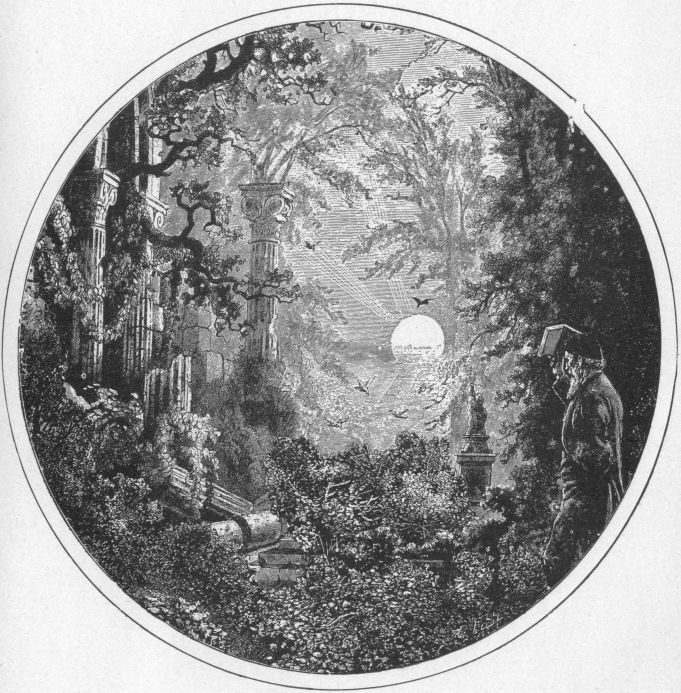
THE WHEEL OF THE BREAST.
The tide of my life goes hurriedly sweeping,
Till it reaches that curious wheel o' the breast,
The human heart, which is never at rest.
Faster, faster, it cries, and leaping,
Plunging, dashing, speeding away,
The wheel and the river work night and day.
This strange tide rushes with such mad force:
It glides on hither, it slides on thither,
Over and over the selfsame course,
With never an outlet and never a source;
And it lashes itself to the heat of passion
And whirls the heart in a mill-wheel fashion.
The ceaseless sound of that mighty river;
I can hear it gushing, gurgling, rushing,
With a wild, delirious, strange delight,
And a conscious pride in its sense of might,
As it hurries and worries my heart forever.
And list to the river that seethes and surges
Over the wheel that it chides and urges—
I wonder oft if that wheel will break
With the mighty pressure it bears, some day,
Or slowly and wearily wear away.
Like the wheel of the mill, as the tide goes tearing
And plunging hurriedly through my breast,
In a network of veins on a nameless quest,
From and forth, unto unknown oceans,
Bringing its cargoes of fierce emotions,
With never a pause or an hour for rest.
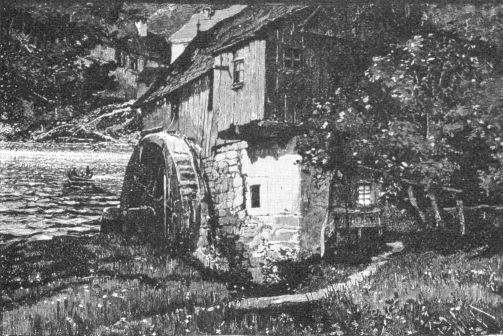
A MEETING.
A song I sang, full many a year ago,
Smiled up at me, as in a busy street
One meets an old-time friend he used to know.
Of all the hope, the transport, and the truth,
Which to the impetuous morn of life belong,
That once again I seemed to grasp my youth.
We woo and cherish ere we meet with woe,
I felt as one who hears a plaintive strain
His mother sang him in the long ago.
That song's birthday and my stern present came
Like phantom forms and swept across the scene,
Bearing their broken dreams of love and fame.
In that old time, with their ideal grace,
Shone for a moment, then were lost to view
Behind the dull clouds of the commonplace.
Ah, little song! the sad and bitter truth
Struck like an arrow when we met that day!
My life has missed the promise of its youth.
EARNESTNESS.
In this swift rushing hour, we crowd and press
And thrust each other backward as we go,
And do not pause to lay sufficient stress
Upon that good, strong, true word, Earnestness.
In our impetuous haste, could we but know
Its full, deep meaning, its vast import, oh,
Then might we grasp the secret of success!
In that receding age when men were great,
The bone and sinew of their purpose lay
In this one word. God likes an earnest soul—
Too earnest to be eager. Soon or late
It leaves the spent horde breathless by the way,
And stands serene, triumphant at the goal.
A PICTURE.
One solitary picture struck my eye:
A distant ploughboy stood against the sky—
How far he seemed above the noisy town!
Laid its bruised cheek as he moved slowly by,
And, watching him, I asked myself if I
In very truth stood half as near to God.
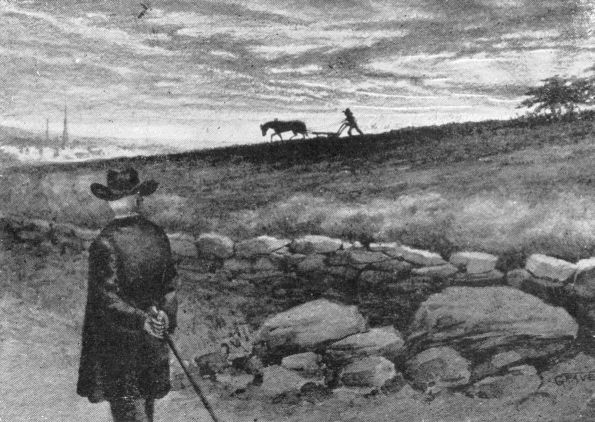
TWIN-BORN.
Or greatness in the true sense of the word,
Has one day started even with that herd
Whose swift feet now speed but at sin's behest.
It is the same force in the human breast
Which makes men gods or demons. If we gird
Those strong emotions by which we are stirred
With might of will and purpose, heights unguessed
Shall dawn for us; or if we give them sway
We can sink down and consort with the lost.
All virtue is worth just the price it cost.
Black sin is oft white truth that missed its way
And wandered off in paths not understood.
Twin-born I hold great evil and great good.
FLOODS.
I wake to hear outside my window-pane
The uncurbed fury of the wild spring rain,
And weird winds lashing the defiant deep,
And roar of floods that gather strength and leap
Down dizzy, wreck-strewn channels to the main.
I turn upon my pillow and again
Compose myself for slumber.
Let them sweep;
I once survived great floods, and do not fear,
Though ominous planets congregate, and seem
To foretell strange disasters.
From a dream—
Ah! dear God! such a dream!—I woke to hear,
Through the dense shadows lit by no star's gleam,
The rush of mighty waters on my ear.
Helpless, afraid, and all alone, I lay;
The floods had come upon me unaware.
I heard the crash of structures that were fair;
The bridges of fond hopes were swept away
By great salt waves of sorrow. In dismay
I saw by the red lightning's lurid glare
That on the rock-bound island of despair
I had been cast. Till the dim dawn of day
I heard my castles falling, and the roll
Of angry billows bearing to the sea
The broken timbers of my very soul.
Were all the pent-up waters from the whole
Stupendous solar system to break free,
There are no floods that now can frighten me.
A FABLE.
A Hawk, a Canary, an old Marsh-Fowl,
One day all meet together
To hold a caucus and settle the fate
Of a certain bird (without a mate),
A bird of another feather.
"The Eagle is soaring too near the skies,
In a way that is quite improper;
Yet the world is praising her, so I'm told,
And I think her actions have grown so bold
That some of us ought to stop her."
"That young lambs died at the glance of her eye,
And I wholly scorn and despise her.
This, and more, I am told they say,
And I think that the only proper way
Is never to recognize her."
"That the Eagle minds no moral law,
She's a most unruly creature."
"She's an ugly thing," piped Canary Bird;
"Some call her handsome—it's so absurd—
She hasn't a decent feature."
She said she was sure—she hadn't a doubt—
Of the truth of each bird's story:
And she thought it a duty to stop her flight,
To pull her down from her lofty height,
And take the gilt from her glory.
That looks out over the smiling land
And over the mighty ocean,
The Eagle is spreading her splendid wings—
She rises, rises, and upward swings,
With a slow, majestic motion.
With a cry of rapture, away she flies,
Close to the Great Eternal:
She sweeps the world with her piercing sight;
Her soul is filled with the infinite
And the joy of things supernal.
The genius-crowned or the power-shod,
Over the dust-world sailing;
And back, like splinters blown by the winds,
Must fall the missiles of silly minds,
Useless and unavailing.