BANTU BELIEFS AND MAGIC
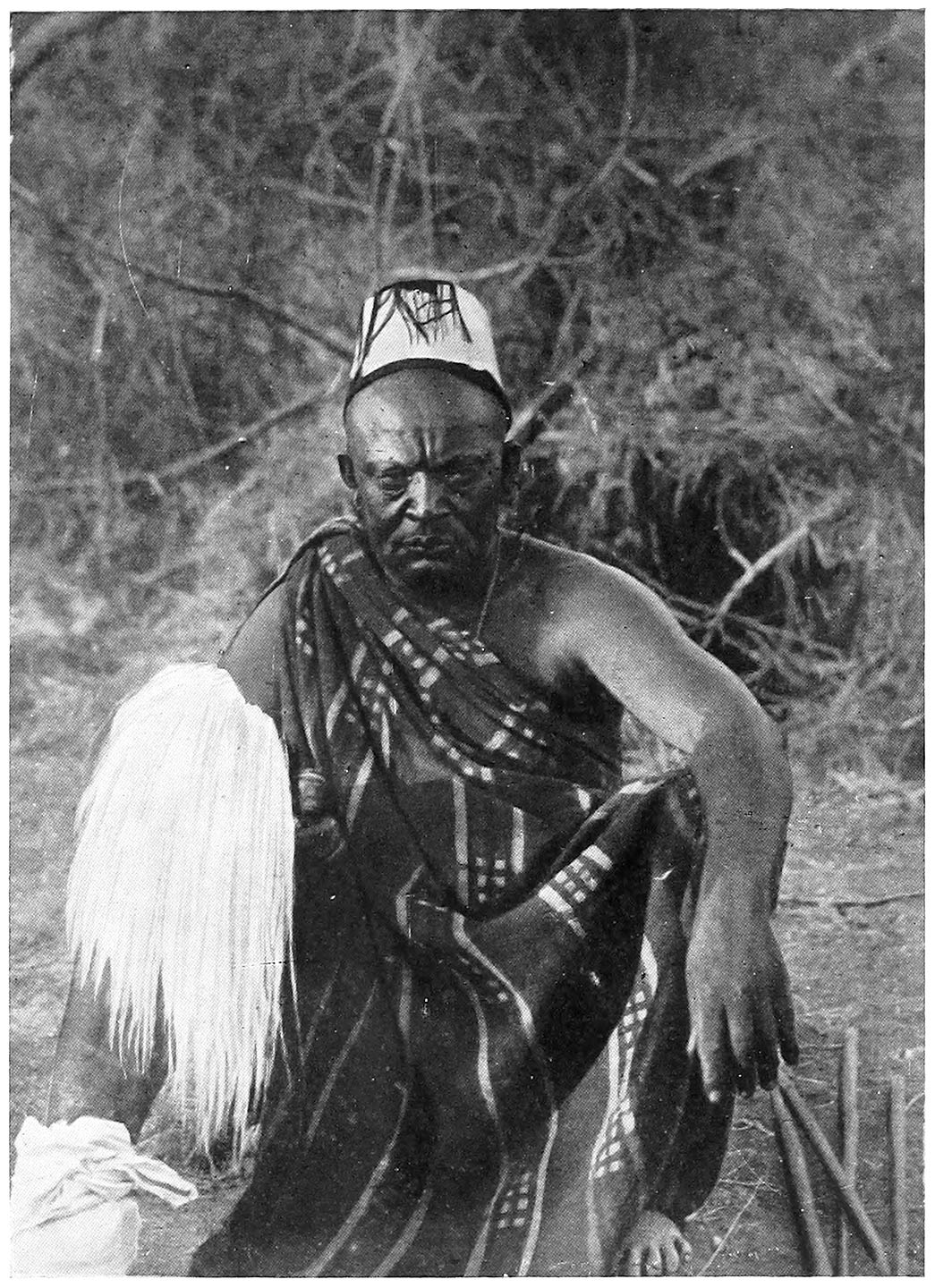
KITUI
A KAMBA CHIEF.
H. F. & G. WITHERBY
326 HIGH HOLBORN, W.C.
1922
PREFACE
It is often said that the longer one knows the native the less one knows, and the less one understands him. This expression is doubtless comforting to persons who have not the patience to systematically study him and his views on life, but it could with convenience be replaced by a saying to the effect that the more one knows of the native the more one realises how much remains to be learnt.
The spirit of this is in accordance with the true attitude to all other branches of knowledge, for the more one learns, the more the map unfolds, and one gradually realises the vastness of the country to be explored.
During long years of service in East Africa my work has brought me into close contact with the native tribes from Lake Victoria to the coast, and I early realised that their administration could not be intelligently conducted without close inquiry into their social organisation and religious beliefs, and in this connection I would here like to express my indebtedness to the kind advice and stimulating assistance which I have received from Sir W. Ridgeway, Sir J. G. Frazer, Professor Haddon and others. I particularly wish to thank Sir J. G. Frazer for his kindness in consenting to write an introduction to this work.
My first researches in this field were conducted among the tribes of Kavirondo, and when some years later I left the Nyanza province for Ukamba I became interested in the people with whom this work mainly deals. [4]
In 1910 I published a small work styled “The Ethnology of the A-Kamba and Other East African Tribes” which was mainly intended as an aide memoire for colleagues working among the people referred to; the study was continued and certain matters were dealt with in papers communicated to the Royal Anthropological Institute and the British Association.
Further research has, however, brought to light a great deal of additional material and has enabled me to piece together the work, and I venture to believe that the light which it attempts to throw upon the inner life of these important tribes may stimulate further inquiry, and help both official and colonist in his relations with them.
It has long been the fashion to look upon such research as being of only academic value; this view, however, is year by year becoming dimmer, and I would ask all those who are interested in Africa to abandon it.
The late war has forcibly demonstrated the importance of understanding the psychology of our enemies, and if that is admitted I would claim that it is quite as important for workers in Africa to endeavour to understand the psychology of the Africans, whose friendship is of vital necessity to all progress in that country.
In presenting this work to the public, I would like to emphasise the belief that the field is by no means exhausted; all that I have been able to do has been done amidst the insistent rush of official duties, and I have often longed for the chance of being able to concentrate my attention for a year or two solely on researches of this nature.
The language difficulty is one of the greatest obstacles with which a European is faced; native languages are numerous and an administrative officer rarely has time to learn one before he is removed to another area and therefore another language. The elders rarely know much Swahili, the language which is the lingua franca of East Africa. Interpreters are often a snare, and an investigator has to work with one [5]for some time before being certain that he has fully realised the spirit of the research, especially when dealing with religious beliefs: indeed many interpreters never grasp the spirit of the inquiry. I had working with me for some years a remarkable interpreter—Juma bin Hamis—who became deeply interested in the subject under investigation, and was of the greatest assistance. When any point was obscure he would go off and unearth an elder who was known to have particular information on the point at issue. Unfortunately, however, I have to mourn his loss, for he died at Nairobi in 1911. Such a man is difficult to replace; his speciality was Kikuyu political organisation and customs, and, although a coast native, he was deeply esteemed by all the people of Southern Kikuyu.
I would here like to express my indebtedness to several of my colleagues and friends, particularly the Hon. C. Dundas, G. H. Osborne, and the late S. W. J. Scholefield, who, living for a long time in the native reserves of Kikuyu and Ukamba in close contact with the people, have given me the greatest assistance upon special points. I am also grateful to Miss du Cros for her kind assistance in revising the MSS. of this work.
With the Hon. C. Dundas’s permission, I have inserted an interesting memorandum by him on Kikuyu dances and certain magical phenomena. He collected the information while in charge of the Kikuyu district.
I also express my gratitude to the many elders who have so fully given me information about many customs and rites which they do not care to discuss with the man in the street. The Kikuyu in particular welcomed my interest in their beliefs. They even urged me to become a recognised elder of the tribe, so that they could impart full information without violation of the rules forbidding the divulging of the ceremonial of their grade to those not initiated to that grade. This election has been of great value, for [6]recognition as an elder in Kikuyu franks one, so to speak, among the Kamba, and the elders of that reticent tribe talked freely to me on their rites and beliefs.
Finally I must express my indebtedness to Professor Robertson Smith’s illuminating work on the “Religion of the Semites,” and to Campbell Thompson’s book on “Semitic Magic.” I have referred to these from time to time, as they throw light upon the principles underlying many of the African ceremonies which I describe.
Any description of the languages spoken by the tribes under review being outside the scope of this work, it has been considered inadvisable to complicate it by the adoption of the modern system of phonetic symbols in the native names. The use of the symbols, though based on sound principles, unfortunately renders unintelligible to the ordinary reader many native words.
As the war has occurred since the bulk of this work was written, I have considered that it might not be out of place to add a chapter of a general nature dealing with the position of native affairs after the great upheaval, for Africa has not escaped its effects any more than other parts of the world, and the future of the relations of black and white needs most thoughtful consideration.
C. W. H. [7]
INTRODUCTION
The author of this book, Mr C. W. Hobley, has long been known to anthropologists as one of our best authorities on the native races of British East Africa, or Kenya Colony, as it is now called, where he resided as Provincial Commissioner for many years. The time he could spare from his official duties he wisely devoted to studying the customs and beliefs of the tribes whom he was appointed to govern, and through the knowledge and experience thus acquired he was able to make a valuable series of contributions to ethnography. In the present work he has resumed and largely supplemented his former studies of two important tribes, the Kikuyu and Kamba, enriching his previous accounts with many fresh details and fruitful observations.
The result is a monograph replete with information of great variety and of the highest interest for the student of savage thought and institutions. But the book has a practical as well as a scientific value. Placed in the hands of British officials engaged in the maintenance of order and the administration of justice among the natives, it must prove of real service to them in their task of affording them an insight into the habits and ideas of the people, and thus greatly facilitating the task of government. Indeed, without some such knowledge of the native’s point of view it is impossible to govern him wisely and well. The savage way of thinking is very different to ours, and Mr Hobley is right in insisting that it is by no means simple, but, on the contrary, highly complex, and that, consequently, it cannot be understood without long and patient study. To legislate for savages on European principles of law [8]and morality, even when the legislator is inspired by none but the most benevolent intentions, is always dangerous, and not seldom disastrous; for it is too often forgotten that native customs have grown up through a long course of experience and adaptation to natural surroundings, that they correspond to notions and beliefs which, whether ill or well founded, are deeply rooted in the native mind, and that the attempt to discard them for others which have been developed under totally different conditions may injure instead of benefiting the people. Even when the new rules and habits, which government seeks to force upon the tribes, are in themselves, abstractly considered, better than the old, they may not be so well adapted to the mental framework of the governed, and the consequence may be that the old moral restraints are abolished without the substitution of any equally effective in their room. To this danger Mr Hobley is fully alive, and he gives a timely warning on the subject to those well-meaning but ill-informed persons at home who would treat the native African in accordance with the latest political shibboleths of democratic Europe. Such treatment, which its ignorant advocates seem to regard as a panacea for all human ills, would almost inevitably produce an effect precisely the opposite of that intended: instead of accelerating the progress of the natives, it would probably precipitate their moral, social, and even physical decline. In practical life few things are so dangerous as abstract ideas, and the indiscriminate application of them to concrete realities is one of the most fatal weapons in the hands of the moral or political revolutionary.
Among the mass of interesting topics dealt with in Mr Hobley’s book it is difficult to single out any for special mention in an introduction. The subjects to which, on the whole, he has paid closest attention are natural religion and magic. In respect of religion the author again and again notes the remarkable similarities which may be traced between East African and [9]Semitic beliefs and rites, and he raises the question how these similarities are to be explained. Are they due to parallel and independent development in the African and the Semitic races? Or are they the consequence of the invasion of Africa either by a Semitic people or at all events by a people imbued with the principles of Semitic religion. In my book “Folk-lore in the Old Testament”1 I had been similarly struck by some of these resemblances, and, while abstaining from speculation on their origin, had remarked that the hypothesis of derivation from a common source was not to be lightly rejected. On the other hand Mr Hobley thinks it safer, in the present state of our knowledge, to assume that the resemblances in question have arisen independently, through parallel development, in the African and Semitic areas. He dismisses as highly improbable the idea that the ancient Semitic beliefs should have originated in East Africa and spread from there to Arabia. Yet recent investigations in this part of Africa, particularly with regard to the native veins of iron and gold, tend in the opinion of some competent inquirers to show that East Central Africa, including the region of the great lakes, was an extremely ancient seat of a rudimentary civilisation, the seeds of which may have been carried, whether by migration or the contact of peoples, to remote parts of Europe and Asia. In regard to iron, which has been wrought in Central Africa from time immemorial, Mr Hobley quotes Professor Gregory who thinks it probable that the art of forging the metal was invented in tropical Africa at a date before Europe had attained to the discovery and manufacture of bronze; he even suggests that the ingenious smith who first fused tin and copper into bronze may have borrowed the hint from the process of working iron which he had learned in Africa.
Among the many curious superstitions recorded by [10]Mr Hobley none is perhaps more interesting and suggestive than by the name of thahu or thabu, and which presents points of similarity to the Polynesian taboo. Mr Hobley thinks that the idea involved in it is best expressed by the English term “curse.” But to this it may be objected that a curse implies a personal agent, human or divine, who has called down some evil on the sufferer; whereas in many, indeed in most, of the cases enumerated by Mr Hobley there is no suggestion of such an agent, and the evil which befalls the sufferer is the direct consequence of his own action or of a simple accident. Thus it would seem that “ceremonial uncleanness” answers better to the meaning of thahu than “curse.” Be that as it may, deliberate cursing apparently plays a prominent part in the superstition of the Kikuyu and Kamba; but it is significant that they give it a different name (kirume, kiume) from that which they apply to ceremonial uncleanness. Great faith is put in the effectiveness of curses, especially the curses of dying persons; and as these latter curses often refer to the disposal of the dying man’s property after his death and are intended to prevent the alienation of land from the family, Mr Hobley is led to make the ingenious suggestion that in some curses we may detect the origin of entail and of testamentary dispositions in general.
Not a few of the customs and beliefs described by Mr Hobley remind us of similar practices and ideas in the religion and mythology of classical antiquity. Thus the warriors who, armed with swords and clubs, dance or hop from foot to foot at the time when the mawele grain is reaped, are curiously reminiscent of the Roman Salii, the dancing or leaping priests of the war-god Mars, who, similarly accoutred with swords and staves, danced or leaped, while they invoked Saturn, the God of Sowing. Again, the strange sort of madness which from time to time seizes on Kamba women and under the influence of which, wrought up to a state of frenzy, they caper about with cow’s tails suspended from their [11]arms, offers a parallel to the Greek legend of the daughters of Prœtus and the other Argive women, who, oddly enough, were said like their African sisters to have been healed of their infirmity by dances and the sacrifice of cattle.2 The study of such hysterical and infectious manias among primitive peoples opens up an interesting field of inquiry to the psychologist.
Such are a few specimens culled from the rich collection of East African folk-lore and religion which the author has presented to his readers in this volume. The facts recorded by him provide much food for thought and suggest many lines of investigation for inquiries in the future. For, as he reminds us, with equal truth and modesty, the field of inquiry is far from being exhausted. Let us hope that it will yet yield an abundant harvest to others, who will follow in Mr Hobley’s footsteps and imitate the example he has set them of patient and open-minded research.
J. G. FRAZER. [13]
CONTENTS
PAGE
Preface 3
PART I
| Introductory | 19 | |||||||
| CHAP. | ||||||||
| I. | Spirit Beliefs | 27 | ||||||
| II. | Sacrifice | 40 | ||||||
| III. | Sacred Stones or Village Shrines | 69 | ||||||
| IV. | The Firstfruits of Harvest and Planting Ceremonial | 73 | ||||||
| V. | Circumcision Ceremonial | 77 | ||||||
| VI. | Death and Burial Ceremonial | 97 | ||||||
| VII. | The Curse and its Manifestations— | |||||||
| (a) | Thahu and its connection with circumcision rites, etc. | 103 | ||||||
| (b) | Purification and blessing | 134 | ||||||
| (c) | The dying curse | 145 | ||||||
| VIII. | Superstitions regarding Children and Women | 154 | ||||||
[14]
PART II
| CHAP. | PAGE | |||||||
| Introductory | 165 | |||||||
| I. | The Guild of Smiths in Kikuyu and Ukamba | 167 | ||||||
| II. | The Evil Eye | 177 | ||||||
| III. | Kikuyu Magic and Magicians | 184 | ||||||
| IV. | Miscellaneous Magical Practices | 192 | ||||||
PART III
| CHAP. | ||||||||
| Introductory | 207 | |||||||
| I. | The Constitution and Working of Councils | 209 | ||||||
| II. | Laws of Compensation for Murder | 230 | ||||||
| III. | Ceremonial Oaths | 239 | ||||||
| IV. | War and Peace | 244 | ||||||
| V. | Miscellaneous Customs and Beliefs | 250 | ||||||
| VI. | Legends | 262 | ||||||
| VII. | Dances | 266 | ||||||
| VIII. | Women as Factor in Tribal Organisation | 274 | ||||||
| IX. | Some General Remarks | 281 | ||||||
| X. | East Africa after the War | 286 | ||||||
L’Envoi 303
Glossary 305
LIST OF ILLUSTRATIONS
PAGE
Kamba Chief, Kitui Frontispiece
Typical Muthuri ya Ukuru Facing 37
(Elder of Grade of Priest)
Kikuyu Muthuri or Elder 65
(Prognathous Type)
Scenes at Mambura (Circumcision Festival) 81
(1) Sugar canes over village gates
(2) Eating ceremonial food
(Photos by A. C. Hollis)
Climbing the “Mugumu,” fig tree 87
(Photo by A. C. Hollis)
Kikuyu Circumcision Feast
(1) Male candidates 113
(2) Female candidates
A Dorobo Elder, Torori 183
(Photo by T. A. Dickson)
Kikuyu—Beehive Marks on Trees 254
(Woodcut in Text)
Kivata Dance at Kyambu, Kikuyu 267
(Photo by Hon. C. Dundas)
Kikuyu Circumcision Shield with Anthropomorphic Figures 273
Kikuyu Methods of carrying the circumcision Shield
(The young men parade the country with these some weeks before the ceremony)
[17]